
Polyurethane Sandwich Panel Production Line Manufacturer
Sinowa is a well-known manufacturer and technical service provider of high-end polyurethane sandwich panel production line, learn more about polyurethane sandwich panel production line manufacturer, please contact Sinowa's technical engineer, tell us what you need, we will contact you as soon as possible!
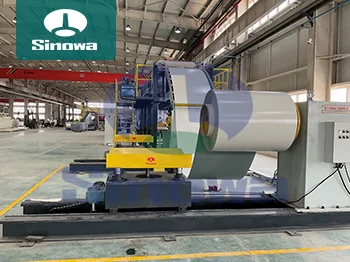
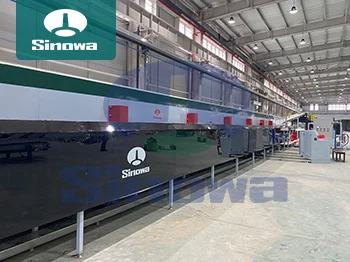
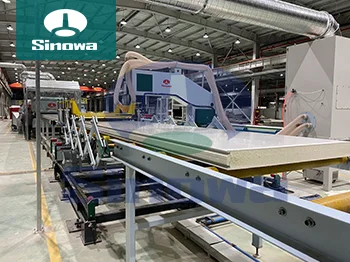
Sinowa is committed to the development and manufacturing of high-end and high-efficiency polyurethane sandwich panel production line. Our polyurethane sandwich panel production line are leading the way in efficiency, automatic control, human-computer interaction, environmental protection and energy consumption. Using system integration and bus control technology, it realizes the automatic integrated linkage control of the entire polyurethane sandwich panel production line, and can achieve remote interactive communication, which has the world-class level and a comprehensive leading high-performance polyurethane sandwich panel production line in the market.
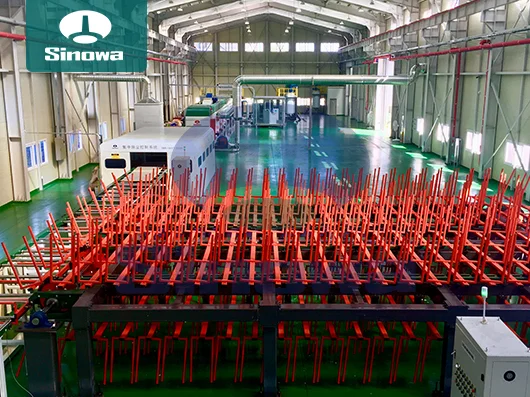
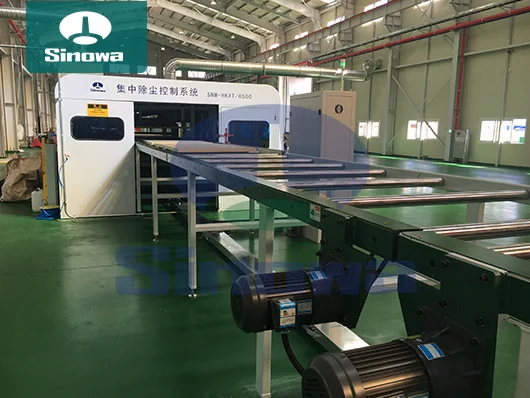
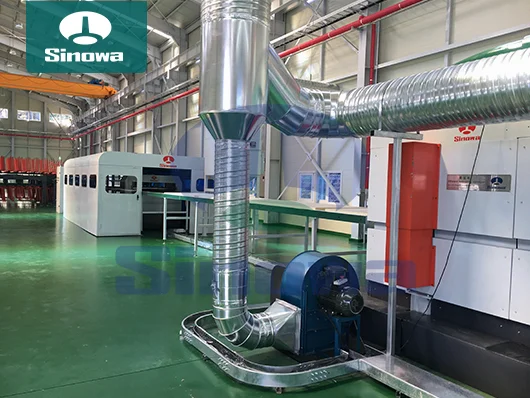
For more than ten years, relying on our innovative manufacturing concept and excellence in quality, reliable and trustworthy service to customers, we cooperate with customers all over the world, exported products to Canada, South Korea, Israel, Australia, the Middle East and other more than 20 countries and regions. contributed to building energy conservation and low-carbon production and have won widespread praise.
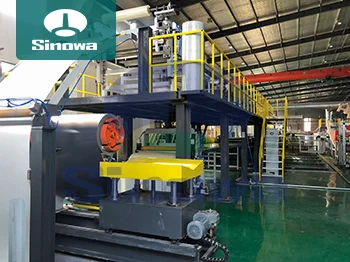
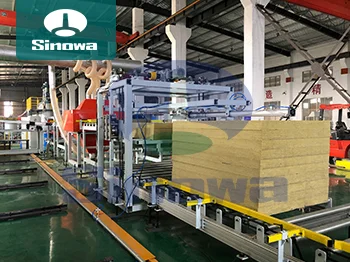
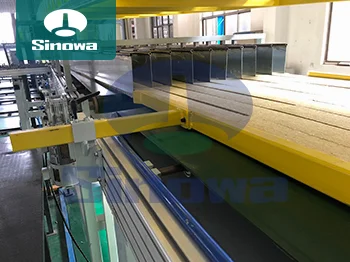
Sinowa has invested outstanding efforts in polyurethane sandwich panel production line, this is why our products are more efficiency, quality, automatic control technology, environmental protection, energy consumption indicators and the appearance and safety protection are comprehensively leading, some subversive design changes in many major technical points, these major innovations make our products excellent in price/performance and user experience.
In the modern construction and industrial fields, polyurethane sandwich panels have become an indispensable material due to their excellent thermal insulation, structural strength, light weight, and durability. These panels, composed of two outer facings and a polyurethane foam core in between, are widely used in various scenarios, from industrial workshops and cold storage facilities to commercial buildings and prefabricated houses. Behind the mass production of high-quality polyurethane sandwich panels lies a highly integrated and automated production system—the polyurethane sandwich panel production line. This system combines mechanical engineering, materials science, and automation control technology, realizing the continuous and efficient production of sandwich panels with stable quality, and providing strong support for the development of the construction and related industries.
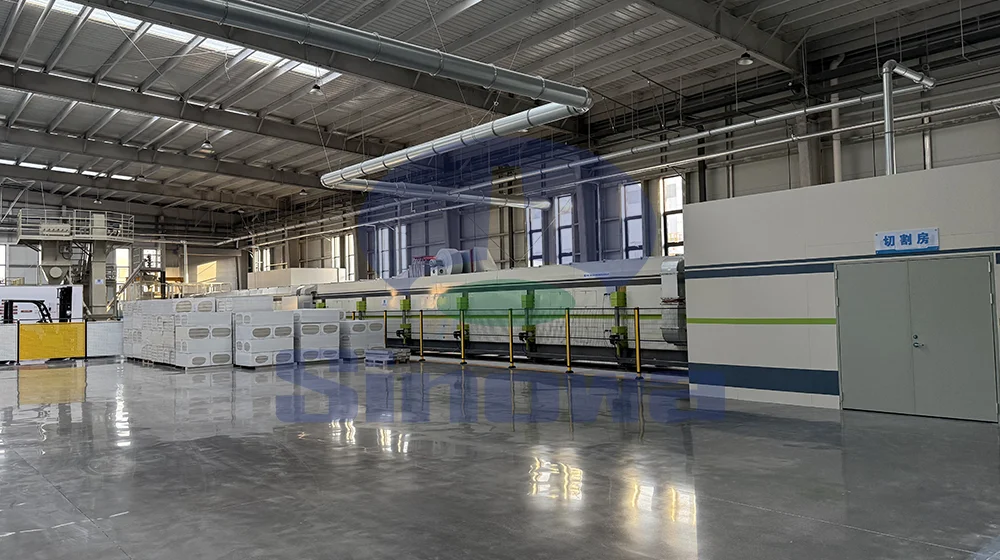
A complete polyurethane sandwich panel production line is a modular system composed of multiple functional units that work in tandem to complete the entire production process from raw material processing to finished product stacking. Each unit undertakes specific tasks, and the coordination and precision between them directly determine the quality and production efficiency of the final products. The production process of polyurethane sandwich panels is a systematic project that requires strict control of each link, from the selection and pretreatment of raw materials to the foaming, laminating, curing, and post-processing of the panels. Every detail in the process will have a profound impact on the performance of the finished panels, such as thermal insulation, structural integrity, and service life.
The raw material processing system is the starting point of the entire production line, responsible for preparing and processing the outer facings and core raw materials. The outer facings of polyurethane sandwich panels are usually metal sheets, such as galvanized steel, aluminum plates, or colored steel plates, which need to go through unwinding, leveling, and cleaning processes before entering the next link. The unwinding machine, equipped with a pneumatic braking system and hydraulic tensioning technology, ensures the smooth unfolding of the metal coils and maintains constant tension, preventing wrinkles or damage to the sheets during the unwinding process. For metal coils with uneven surfaces, a precision leveling machine with a 7-13 roller structure is used to adjust the flatness to within 0.5 mm/m, ensuring that the surface of the finished panel is smooth and flat. In addition, an online cleaning device with a three-tank alkaline degreasing system and high-pressure spray (pressure 0.3-0.5 MPa) is used to remove oil stains, dust, and other impurities on the surface of the metal sheets, which is crucial for improving the adhesion between the outer facings and the polyurethane core. After cleaning, the metal sheets are dried by a hot air circulation drying system with a controllable temperature of 80-120 ℃±5 ℃ to avoid moisture affecting the bonding effect.
The core material of polyurethane sandwich panels is polyurethane foam, which is formed by the reaction of isocyanates and polyols. The foaming system is the core part of the production line, responsible for accurately mixing the two components and injecting them into the gap between the two outer facings to complete the foaming process. The foaming system mainly includes a high-pressure foaming machine, a metering pump, a mixing head, and a temperature control system. The high-pressure foaming machine, with a working pressure of 120-200 bar, uses an independent variable frequency motor to drive the metering pump, which can accurately control the mixing ratio of polyols and isocyanates with a proportioning accuracy of ±1%. The mixing head, with a self-cleaning function and a mixing efficiency of more than 98%, ensures that the two components are fully mixed, laying the foundation for the uniform foaming of the core material. The temperature control system, using plate heat exchangers, controls the temperature of the raw materials within ±1 ℃, because the temperature of the raw materials directly affects the foaming speed and the density of the foam. Too high or too low a temperature will lead to uneven foaming, affecting the thermal insulation performance and structural strength of the core material. In addition, a mobile fabric machine is used to realize the uniform distribution of foaming materials, and its height and position can be adjusted according to the thickness of the panel and the foaming requirements, ensuring that the foam fills the gap between the outer facings evenly.
After the foaming material is injected between the two outer facings, the composite structure enters the laminating and curing system, which is responsible for pressing the outer facings and the foam core together and promoting the curing of the polyurethane foam. The laminating and curing system is mainly composed of a double-track laminator, which is usually 18-24 meters long and equipped with precision hydraulic lifting and insulation units. The chain plate of the laminator is made of high-quality alloy steel, which has been quenched and ground to ensure smooth operation and uniform pressure. During the laminating process, the hydraulic system provides stable pressure (0.05-0.3 MPa) to ensure that the outer facings and the foam core are closely bonded, with a bonding strength of more than 0.15 MPa. The hot air circulation system in the curing zone maintains a process temperature of 60-70 ℃, which accelerates the curing of the polyurethane foam. The curing time is determined according to the thickness of the panel and the type of foaming material, usually ranging from several minutes to more than ten minutes. During the curing process, the foam gradually solidifies and forms a dense closed-cell structure, which gives the panel excellent thermal insulation and moisture-proof performance. The closed-cell rate of the foam core is usually more than 95%, which ensures that the panel has a water absorption rate of ≤1% and can maintain stable performance even in high-humidity environments.
After the panel is cured and formed, it enters the post-processing system, which includes fixed-length sawing, trimming, and automated palletizing. The fixed-length sawing machine adopts servo drive and achieves precise cutting through photoelectric or marking recognition, with a cutting accuracy of ±1 mm. This ensures that the length of the finished panel meets the customer's requirements, whether it is a standard length or a customized length. The trimming device is used to trim the edges of the panel to remove burrs and irregular parts, ensuring the neatness of the panel edges and facilitating subsequent installation. Some production lines are also equipped with a bag dust removal system to handle the cutting dust, which not only protects the environment but also ensures the health of the operators. After trimming and cutting, the automated palletizing equipment stacks the finished panels neatly according to the specified specifications, which is convenient for storage and transportation. The palletizing equipment can adjust the stacking height and quantity according to the weight and size of the panels, improving the efficiency of storage and transportation and reducing labor intensity.
The polyurethane sandwich panel production line is characterized by a high degree of automation, strong continuous production capacity, stable product quality, and energy conservation and environmental protection. According to the production scale and technological level, the production line can be divided into small semi-automatic lines, medium-sized automatic lines, and large fully automatic lines. Small semi-automatic lines are suitable for small-scale production, with lower investment and flexible operation, which is suitable for enterprises just starting to produce polyurethane sandwich panels. Medium-sized automatic lines have a higher degree of automation and production efficiency, which can meet the needs of medium-scale production and balance investment and output. Large fully automatic lines integrate advanced automation technology and intelligent control systems, with high production efficiency and stable product quality, which is suitable for large-scale mass production and can realize 24-hour continuous operation, greatly improving production efficiency and reducing labor costs.
The technical parameters of the production line directly affect the production capacity and product quality. The standard production line can handle panels with a width of 400-1220 mm and a thickness range of 20-250 mm. Specially configured equipment can produce ultra-thick panels with a thickness of up to 300 mm, meeting the needs of special scenarios such as cold storage. The continuous production line speed of polyurethane sandwich panels is usually 3-8 m/min, which is equivalent to a daily output of thousands of square meters, which can meet the large demand of large-scale construction projects. In addition, the production line can be adjusted according to the customer's needs to produce panels with different surface textures, colors, and performance, such as fire-retardant panels, anti-corrosion panels, and high-pressure panels, to adapt to different application scenarios.
The wide application of polyurethane sandwich panels has driven the continuous development and upgrading of the production line. In the industrial field, polyurethane sandwich panels are widely used in the walls and roofs of industrial workshops, warehouses, and cold storage facilities. Their excellent thermal insulation performance can reduce the energy consumption of workshops and cold storage, and their light weight can reduce the structural load of buildings. In the cold storage industry, polyurethane sandwich panels are the preferred material due to their low thermal conductivity (as low as 0.022 W/(m·K)) and good moisture-proof performance, which can maintain a stable low-temperature environment and ensure the quality of stored goods. In the commercial and civil construction fields, polyurethane sandwich panels are used in the exterior walls, roofs, and interior partitions of commercial buildings, office buildings, and prefabricated houses. Their beautiful appearance, fast installation speed, and energy-saving performance have been widely recognized. In addition, polyurethane sandwich panels are also used in special fields such as clean rooms, medical facilities, and transportation hubs, which put forward higher requirements for the performance of the panels, thus promoting the continuous improvement of the production line technology.
With the continuous improvement of global energy conservation and environmental protection requirements, the polyurethane sandwich panel production line is also developing towards the direction of energy conservation, environmental protection, and intelligence. In terms of energy conservation, the production line adopts energy-saving motors and heat recovery systems, which can reduce energy consumption by more than 20% compared with traditional production lines. In terms of environmental protection, the use of environmentally friendly foaming agents (such as water-based foaming agents and HFOs) replaces traditional HCFC141b foaming agents, which reduces environmental pollution and meets the requirements of global environmental protection policies. In terms of intelligence, the production line is equipped with a PLC control system and an online detection system, which can realize real-time monitoring and adjustment of the production process. The online detection system uses laser rangefinders and density detectors to monitor the thickness, density, and other parameters of the panels in real time, and feed back the data to the control system. The control system automatically adjusts the production parameters to ensure the stability of product quality. In addition, some advanced production lines also integrate digital twin technology, which can simulate the production process, predict potential problems, and reduce the waste of raw materials and the rate of defective products.
The development of the polyurethane sandwich panel production line is also closely related to the development of the upstream and downstream industries. The upstream raw material industry, such as the production of isocyanates, polyols, and metal sheets, directly affects the quality and cost of the production line. The stable supply of high-quality raw materials is the basis for the production of high-quality polyurethane sandwich panels. The downstream construction, cold storage, and industrial manufacturing industries determine the market demand for polyurethane sandwich panels, which in turn drives the upgrading and expansion of the production line. In recent years, with the acceleration of global urbanization and the promotion of prefabricated buildings, the demand for polyurethane sandwich panels has been growing, which has brought broad development space for the production line industry. At the same time, the intensification of market competition has also promoted manufacturers to continuously improve production technology, reduce production costs, and improve product quality, promoting the healthy and sustainable development of the entire industry.
In the production process of the polyurethane sandwich panel production line, strict quality control is essential. From the inspection of raw materials to the monitoring of each production link, and then to the inspection of finished products, a complete quality control system needs to be established. The raw materials must be inspected before entering the production line to ensure that their performance meets the production requirements. During the production process, the parameters of each link, such as the mixing ratio of foaming materials, the temperature of the curing zone, and the pressure of the laminator, are monitored in real time to avoid deviations. The finished products are inspected for thickness, density, bonding strength, thermal conductivity, and other indicators to ensure that they meet the relevant standards. Only through strict quality control can the production line produce high-quality polyurethane sandwich panels that meet the needs of customers and the market.
The maintenance and daily management of the production line are also important links to ensure its stable operation. Regular maintenance of the equipment, such as lubrication, cleaning, and replacement of vulnerable parts, can extend the service life of the equipment and reduce the failure rate. The operators need to be trained professionally to master the operation skills and maintenance methods of the equipment, so as to avoid equipment damage caused by improper operation. In addition, the production site should be kept clean and tidy, and the raw materials and finished products should be stored in an orderly manner to ensure the smooth progress of the production process.
Looking forward to the future, the polyurethane sandwich panel production line will continue to develop in the direction of high efficiency, energy conservation, environmental protection, and intelligence. With the continuous advancement of technology, new production processes and equipment will continue to emerge, further improving production efficiency and product quality. At the same time, with the continuous expansion of application scenarios, the production line will be more customized to meet the diverse needs of different industries. The development of the polyurethane sandwich panel production line will not only promote the development of the polyurethane sandwich panel industry but also make greater contributions to the energy conservation and environmental protection cause of the global construction industry.
« Polyurethane Sandwich Panel Production Line Manufacturer » Update Date: 2026/4/16
- Glass Wool Production Line Factory
- PU Isolation Panel Production Line For Sale
- High-tech Sandwich Panel Making Equipment
- PUF Panel Manufacturing Machine On Sales
- Highly Intelligent PU Sandwich Panel Making Machine
- High-tech Glass Wool Sandwich Panel Machine
- PU Sandwich Panel Making Machine For Cold Storage
- Glass Wool Sandwich Panel Machine On Sales
- High-tech PU Insulation Board Production Line
- Sandwich Panel Integrated Production Line Factory
- High-quality PIR Insulated Panel Production Line
- Low Price PUF Panel Manufacturing Machine
- PUF Panel Manufacturing Machine Price
- Sandwich Roof Wall Panel Making Machine Supplier
- Custom PIR Sandwich Panel Production Line
- Highly Intelligent PIR Sandwich Panel Machine
- High-quality Fully Automatic PU Sandwich Panel Line
- PIR Insulated Panel Production Line Manufacturer
- High-quality Polyurethane Insulation Panel Production Line
- High-tech Continuous Sandwich Panel Line
- Links:
- Sandwich Panel Continuous Production Line
- Automatic and Continuous Sandwich Panel Production Line
- Cheap and Low Price Sandwich Panel Production Line
- China Sandwich Panel Production Line Factory
- Color Steel Sandwich Panel Production Line For Cold Storage
- Continuous Composite Foam Sandwich Panel Production Line
- Continuous Production Line For Rockwool and Mineral Wool Sandwich Panels
- Continuous PU Phenolic Insulation Panel Production Line
- Continuous PU PIR Sandwich Panel Production Line
- Continuous PUF PUR Sandwich Panel Production Line
- Continuous Sandwich Panel Production Line For Roof and Wall
- Customized and Design Sandwich Panel Production Line
- Decorative Sandwich Panel Production Line For Glass Wool Boards
- High Quality Sandwich Panel Production Line For Sale
- Polyurethane(PU) Sandwich Panel Production Line
- Sandwich Panel Production Line Manufacturer and Supplier