
Sandwich Panel Line
For several years, we have always continuously explored more and better PU Sandwich Panel Line manufacturing technology and continuous innovative technical strength, deep multi-process understanding and rich industrial knowledge are greatest guarantee for us to customize and implement the pu sandwich panel production line for you.
![Continuous PU/PIR Sandwich Panel Production Line]()
Continuous PU/PIR Sandwich Panel Production Line
Dedicated to the research and development of high-end and high-efficiency sandwich panel production line, Sinowa is comprehensively taking the leading position in terms of efficiency, automation control level, HMI...View More![Continuous PU/Phenolic Insulation Board Production Line]()
Continuous PU/Phenolic Insulation Board Production Line
Continuous Insulation Panel Production Line of the PU and phenolic aldehyde surface has diversified and multifunctional production characteristics, which may produce products with different specifications such as PU, PF, PIR, etc.View More![Continuous Rockwool/Mineral Wool Sandwich Panel Production Line]()
Continuous Rockwool/Mineral Wool Sandwich Panel Production Line
The Rockwool Panel Line includes cement mortar cloth (cement-based cloth) anti-rolling pressure for up and down bidirectional anti-rolling, polyurethane drenching area, up and down bidirectional drenching area which is fully automatic...View More![Multi-component Pentane Foaming Machine]()
Multi-component Pentane Foaming Machine
For over ten years, we have established standard technical configuration standards of 2-component 141B foaming system and multicomponent pentane and 141B component foaming system.View More
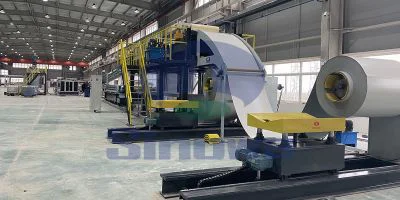
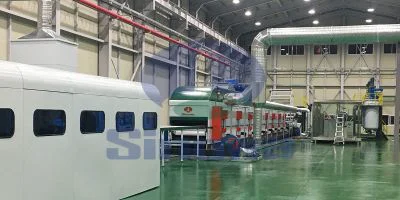
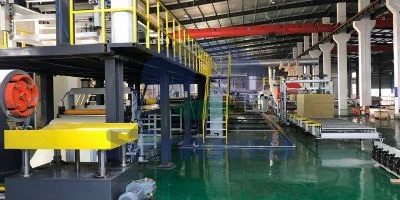
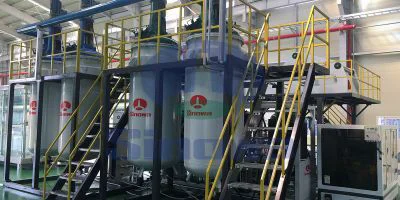
The modern construction and industrial insulation sectors rely heavily on advanced sandwich panel production lines, which streamline the manufacturing of high-performance composite panels designed to meet diverse structural, thermal, fire-resistant, and acoustic requirements. Each specialized production line is engineered to fabricate panels with distinct core materials and structural configurations, tailored to specific environmental conditions, load-bearing demands, and functional needs across residential, commercial, industrial, and agricultural projects. Among the most widely utilized and technically refined options are the PU Sandwich Panel Line, PIR Sandwich Panel Line, Rockwool Sandwich Panel Line, Mineral Wool Sandwich Panel Line, Glass Wool Sandwich Panel Line, Roof Sandwich Panel Line, and Wall Sandwich Panel Line. Each of these seven production systems features unique mechanical structures, processing workflows, material handling mechanisms, and quality control protocols that directly shape the final panel’s physical properties, durability, and application scope, with no overlap in core functional design despite shared basic sandwich panel principles of a dual outer facing layer bonded to a central insulating core. This comprehensive analysis delves into the intrinsic structural characteristics of each production line and the practical, real-world applications of the panels they produce, highlighting the engineering precision and material science that differentiate each system and make them indispensable in modern building and industrial design.
Starting with the PU Sandwich Panel Line, this production system stands as one of the most versatile and widely adopted continuous manufacturing lines for lightweight, high-efficiency insulating sandwich panels, centered on the production of panels with a rigid polyurethane (PU) foam core bonded to two outer facing materials, typically coated steel sheets, aluminum panels, or other rigid composite facings. Structurally, the PU sandwich panel line operates as a fully automated, continuous flow system composed of several interconnected modular units, each calibrated to perform a specific stage of production with synchronized precision to maintain consistent panel quality and dimensional accuracy. The line begins with a dual-axis decoiling unit that unwinds and levels the upper and lower outer facing materials, removing surface imperfections and ensuring flatness before the material enters the gluing and core formation stage. A precision adhesive application system follows, equipped with adjustable spray nozzles and metering pumps that deposit a uniform layer of high-strength structural adhesive across the entire surface of the lower facing, eliminating uneven bonding and preventing delamination over the panel’s service life. The core of the PU line lies in its high-pressure foam mixing and pouring station, where liquid polyurethane raw materials are blended in precise ratios under controlled pressure and temperature to trigger a controlled foaming reaction that expands evenly between the two facing layers without creating voids or uneven density spots. This foaming chamber is enclosed within a double-belt conveyor system, with upper and lower conveyor belts that maintain a fixed, adjustable gap to set the final panel thickness; the belts are heated to optimize the foam curing process, ensuring the PU core solidifies uniformly and forms a rigid, closed-cell structure that maximizes thermal resistance and structural rigidity. Post-curing, the panel moves through a precision cutting unit that trims panels to custom lengths and widths, followed by a stacking and packaging station that prepares finished panels for transport. Unlike discontinuous production systems, the PU line operates with non-stop material feeding and processing, minimizing production downtime and ensuring high output volumes while maintaining tight tolerances for panel thickness, width, and straightness. Structurally, panels produced on this line feature a fully bonded, monolithic sandwich structure with a closed-cell PU core that delivers exceptional thermal insulation performance, low thermal conductivity, and lightweight properties that reduce the overall dead load on building structures. The flexible structural design of the line allows for quick adjustments to core density, panel thickness, and facing material type, making it adaptable to a broad range of applications. In terms of use, PU sandwich panels are ideal for projects where superior thermal efficiency and quick installation are priorities, including cold storage warehouses, refrigerated transport vehicles, prefabricated modular buildings, commercial office partitions, agricultural greenhouses, and small-scale industrial workshops. The panels’ lightweight nature simplifies handling and installation, reducing labor costs and construction timelines, while their excellent insulating properties maintain stable internal temperatures, lowering energy consumption for heating and cooling in both cold and temperate climates. Additionally, the smooth, durable outer facings resist corrosion, weathering, and minor impact damage, making PU panels suitable for both interior and exterior applications where aesthetic appeal and low maintenance are desired.
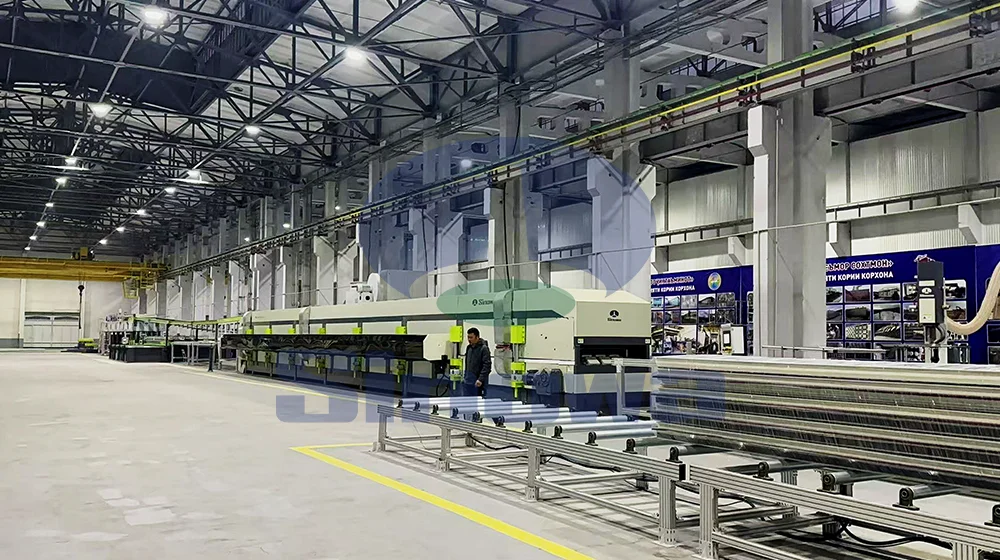
Adjacent to the PU line is the PIR Sandwich Panel Line, a specialized upgrade engineered to produce panels with a polyisocyanurate (PIR) foam core, a chemically modified variant of polyurethane that offers enhanced thermal stability and fire performance compared to standard PU foam. Structurally, the PIR line shares the continuous modular framework of the PU line but incorporates critical modifications to the foam mixing, curing, and temperature control systems to accommodate the unique chemical properties of PIR raw materials. The most prominent structural difference is the upgraded high-pressure mixing unit, which uses a more precise raw material dosing system and higher mixing pressure to ensure complete chemical reaction of PIR components, as PIR foam requires a more controlled blending process to achieve its characteristic rigid, cross-linked molecular structure. The double-belt conveyor system in the PIR line features enhanced temperature regulation capabilities, with independent heating zones along the conveyor length to support the slower, more controlled curing process of PIR foam, preventing overheating that could compromise core integrity and ensuring uniform density across the entire panel surface. The adhesive application system is also modified to use a heat-resistant structural adhesive compatible with PIR’s higher curing temperature, creating a stronger bond between the core and outer facings that withstands prolonged exposure to elevated temperatures without losing adhesion. Unlike PU foam, PIR foam forms a more compact closed-cell structure with a higher melting point and better dimensional stability under high heat, a trait directly enabled by the PIR line’s specialized processing parameters. The line also includes an improved edge-sealing unit that creates tighter, more durable panel edges, reducing moisture penetration and enhancing the panel’s overall structural integrity. Structurally, PIR panels feature a thinner core that delivers equivalent or superior thermal insulation to thicker PU panels, making the line ideal for manufacturing space-efficient panels where maximum insulation is required within a limited profile. The PIR line’s design also allows for the integration of reinforced facing materials, such as thicker coated steel or fiberglass-reinforced panels, to boost load-bearing capacity for heavy-duty applications. In terms of applications, PIR sandwich panels are primarily used in projects that demand enhanced fire resistance, thermal stability, and long-term insulating performance, including large-scale cold storage facilities, pharmaceutical storage warehouses, food processing plants, commercial roofing systems, industrial facilities with high-temperature environments, and public buildings where fire safety regulations are stringent. The panels’ ability to maintain insulating properties at higher temperatures than standard PU panels makes them suitable for tropical and subtropical climates, as well as for industrial settings where equipment generates consistent heat. Additionally, PIR panels are widely used in refrigerated shipping containers and cold chain transport vehicles, where reliable thermal insulation and fire safety are critical for preserving perishable goods and sensitive materials during transit. The PIR line’s focus on high-performance, fire-resistant insulation makes it a staple in commercial and industrial construction projects that prioritize safety and energy efficiency without sacrificing structural durability.
Moving from organic foam core lines to inorganic mineral fiber-based systems, the Rockwool Sandwich Panel Line is engineered to produce panels with a core made from molten rock-derived stone wool, a non-combustible, inorganic material renowned for its exceptional fire resistance, acoustic insulation, and thermal stability. Structurally, this production line differs drastically from PU and PIR lines, as it processes rigid, fibrous core material rather than liquid foam, requiring a specialized material handling and bonding framework. The line begins with a facing decoiling and forming unit, similar to foam-based lines, but immediately transitions to a rock wool core preparation station that processes dense, compressed rock wool boards into uniform, dimensionally consistent core strips. A key structural feature of the rock wool line is the vertical fiber orientation mechanism, which aligns rock wool fibers perpendicular to the outer facing layers to maximize compressive strength, sound absorption, and fire resistance; this vertical laying process is unique to mineral fiber panel lines and cannot be replicated in foam core production systems. The line incorporates a high-strength adhesive spraying system that applies adhesive to both the top and bottom surfaces of the rock wool core, as well as to the inner surfaces of the outer facings, ensuring full contact and bonding between the porous fiber core and the rigid facings. A heavy-duty rolling press follows, applying consistent, controlled pressure to compress the core and facings together, eliminating air gaps and ensuring a tight, durable bond that prevents core shifting or delamination under mechanical stress or weather exposure. Unlike foam lines, the rock wool line does not require a heated curing chamber, as rock wool core material is pre-cured and stable, with bonding relying on adhesive drying and pressure setting; instead, the line includes a room-temperature curing and drying tunnel that allows adhesive to set fully without compromising the fiber structure of the core. The line also features a robust edge trimming and sealing unit, with specialized cutting tools designed to handle the dense, fibrous rock wool core without fraying or damaging edges, followed by a moisture-sealing application that coats panel edges to prevent water absorption, a critical feature for outdoor applications. Structurally, the rock wool line is built to handle heavier materials and higher pressure loads than foam-based lines, with a reinforced steel frame and heavy-duty conveyor belts to support the weight of dense rock wool cores. Panels produced on this line feature a non-combustible, fire-resistant core with excellent sound absorption properties, high compressive strength, and resistance to mold, mildew, and pest infestation. In applications, rock wool sandwich panels are the top choice for projects requiring maximum fire safety, acoustic insulation, and structural durability, including industrial factories, power plants, warehouse partitions, fire-rated wall systems, commercial buildings with strict fire codes, auditoriums, recording studios, and industrial machinery enclosures. The non-combustible nature of the rock wool core makes it ideal for high-risk industrial environments where fire hazards are a concern, while its exceptional acoustic properties reduce noise transmission between spaces, making it suitable for commercial and public buildings where noise control is essential. Additionally, rock wool panels perform well in extreme temperature environments, retaining their structural and insulating properties in both high heat and freezing conditions, making them suitable for outdoor cladding in harsh climates and for industrial facilities with extreme temperature fluctuations.
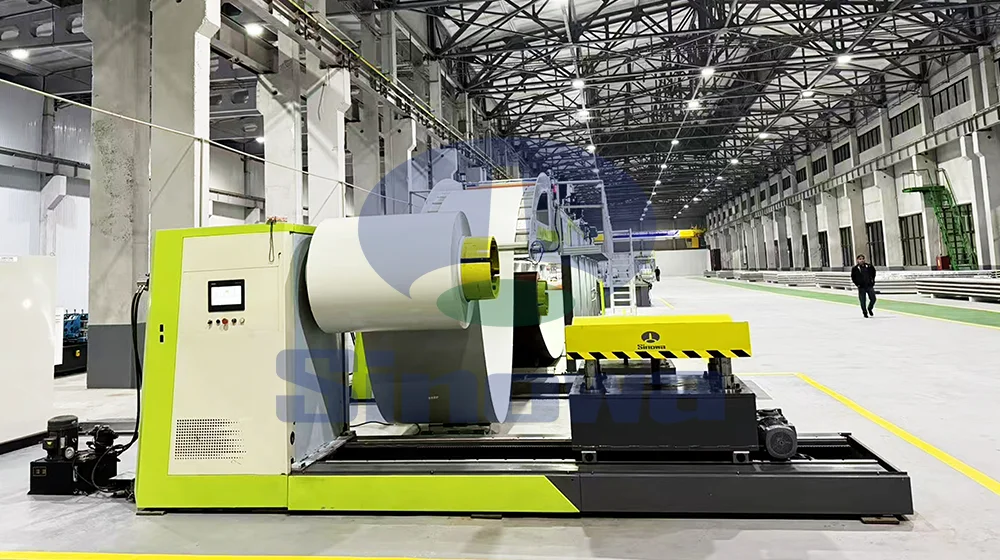
Closely related to the rock wool line is the Mineral Wool Sandwich Panel Line, a broader, more versatile production system designed to manufacture panels using a range of mineral-based fiber cores, including slag wool, basalt wool, and blended mineral fibers, in addition to standard rock wool. Structurally, this line shares the core fiber processing and bonding framework of the rock wool line but offers enhanced flexibility in core material selection, density adjustment, and panel thickness customization, making it a more adaptable option for diverse mineral wool panel requirements. The key structural distinction of the mineral wool line is its modular core feeding system, which can accommodate multiple types of mineral wool cores with varying densities, fiber lengths, and thicknesses, allowing manufacturers to switch between core materials without extensive reconfiguration. The line features an adjustable fiber orientation station that supports both vertical and horizontal fiber laying, depending on the desired panel performance: vertical orientation for maximum compressive strength and fire resistance, and horizontal orientation for enhanced flexibility and acoustic absorption. The adhesive application system is also more versatile, capable of handling both water-based and solvent-based adhesives to match the specific porosity and composition of different mineral wool cores, ensuring consistent bonding across all material types. The rolling press system is calibrated with adjustable pressure settings to accommodate lighter, less dense mineral wool cores without crushing or compressing them beyond their structural limits, as well as denser cores for heavy-duty applications. The mineral wool line also includes a surface profiling unit that can create textured or smooth facing finishes, adding aesthetic versatility for both interior and exterior applications. Unlike the specialized rock wool line, which is optimized for pure stone wool cores, the mineral wool line is engineered for mass production of a range of mineral fiber panels, with a streamlined workflow that balances production speed and material flexibility. Structurally, panels produced on this line offer a balance of fire resistance, thermal insulation, and acoustic performance, with varying density levels to suit light-duty and heavy-duty applications. In terms of use, mineral wool sandwich panels are widely used in general industrial construction, commercial building exteriors, interior partition walls, ceiling systems, agricultural buildings, and storage facilities where reliable fire resistance and moderate thermal insulation are needed. The line’s ability to produce panels with varying core densities makes it suitable for both load-bearing and non-load-bearing applications, from lightweight interior partitions to heavy-duty exterior wall cladding. Mineral wool panels are also preferred for projects with budget considerations while maintaining essential fire safety and insulation requirements, offering a cost-effective alternative to specialized rock wool panels without compromising core performance. Additionally, the panels’ resistance to moisture and rot makes them suitable for humid environments, such as agricultural livestock buildings, food processing facilities, and coastal construction projects where corrosion and moisture damage are common concerns.
Next in the lineup is the Glass Wool Sandwich Panel Line, a specialized production system focused on panels with a glass wool core, a lightweight, inorganic fiber material made from recycled glass and sand, known for its exceptional acoustic insulation, low thermal conductivity, and high flexibility. Structurally, this line combines elements of mineral fiber processing and lightweight material handling, designed to accommodate the delicate, lightweight nature of glass wool without damaging the fine fiber structure. The line begins with a gentle decoiling and facing preparation unit, as glass wool cores require smooth, flat facings to avoid puncturing or compressing the soft fiber core. The core preparation station features a lightweight fiber laying system that distributes glass wool evenly across the lower facing, with a controlled compaction mechanism that lightly compresses the core to achieve consistent density without crushing the fine glass fibers, preserving their insulating and acoustic properties. A low-pressure adhesive application system follows, using a fine spray nozzle to apply a lightweight, flexible adhesive that bonds the glass wool core to the facings without saturating the fibers, which would compromise insulation performance. The rolling press system in the glass wool line uses significantly lower pressure than rock wool or mineral wool lines, with soft, padded conveyor belts to avoid damaging the delicate core, ensuring the glass wool retains its open fiber structure that enables superior sound absorption. The line also includes a precision edge-cutting unit with sharp, fine-toothed blades to create clean, smooth edges without fraying the glass wool fibers, followed by a lightweight edge-sealing process to prevent fiber shedding and moisture penetration. Unlike denser mineral wool lines, the glass wool line features a lighter steel frame and faster conveyor speed, optimized for high-volume production of lightweight panels with consistent quality. Structurally, glass wool sandwich panels are significantly lighter than rock wool or mineral wool panels, with a flexible core that can accommodate minor structural movement without cracking or breaking, and an open fiber structure that excels at trapping air and absorbing sound waves. The panels also offer excellent thermal insulation properties, with low thermal conductivity that reduces heat transfer, and are non-combustible, making them safe for a wide range of applications. In use, glass wool sandwich panels are primarily utilized for interior applications where acoustic comfort and lightweight installation are priorities, including office buildings, residential partitions, hotel rooms, conference rooms, educational facilities, and healthcare facilities. The panels’ exceptional sound absorption properties reduce echo and noise transmission between rooms, creating quiet, comfortable indoor environments, while their lightweight design simplifies installation in multi-story buildings where reducing structural load is important. Glass wool panels are also used in HVAC duct insulation, industrial acoustic enclosures for lightweight machinery, and ceiling panels in commercial and residential buildings. Additionally, the material’s resistance to mold, mildew, and allergens makes it suitable for healthcare facilities, schools, and residential spaces where indoor air quality is a priority. While not designed for heavy load-bearing applications, glass wool panels are highly durable under normal interior use and offer long-term insulation performance with minimal maintenance, making them a staple in interior construction and acoustic design projects.
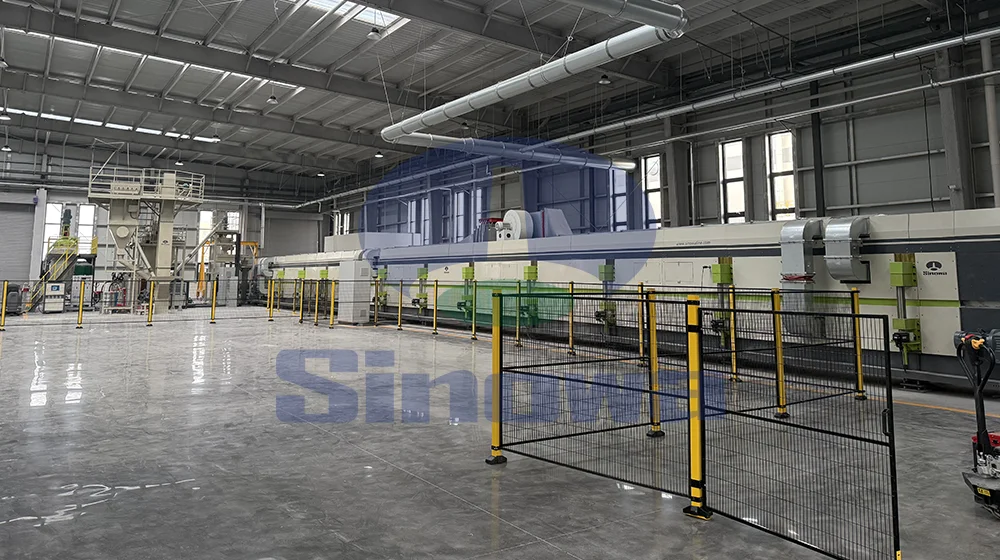
Shifting from core material-specific lines to application-specific production systems, the Roof Sandwich Panel Line is a specialized manufacturing system engineered exclusively to produce sandwich panels optimized for roofing applications, regardless of core material (PU, PIR, rock wool, or glass wool), with structural modifications tailored to the unique demands of roof installation and performance. Structurally, this line is designed to fabricate panels with specific profiles, load-bearing capabilities, and weather-resistant features that distinguish roof panels from wall panels, starting with a specialized facing forming unit that creates corrugated, ribbed, or tapered panel profiles—critical for rooftop water drainage, snow load resistance, and wind uplift protection. Unlike flat panel lines, the roof panel line includes a roll-forming station that shapes the upper facing into a raised rib or corrugated pattern, which enhances the panel’s structural rigidity and allows rainwater, snowmelt, and debris to flow off the roof surface efficiently, preventing water pooling and structural damage. The core bonding and pressing system is adjusted to accommodate the profiled facing, ensuring the core material bonds uniformly to the contoured surface without creating gaps or weak spots. The line also features a reinforced edge-forming unit that creates interlocking tongue-and-groove or clip-on edge profiles, designed to create a tight, waterproof seal between adjacent roof panels during installation, eliminating the need for excessive sealant and reducing the risk of leaks. The double-belt conveyor system is calibrated to maintain consistent thickness across the profiled panel surface, ensuring uniform insulation and structural strength, even in the raised rib sections. Additionally, the roof panel line includes a surface coating application unit that adds a UV-resistant, weatherproof layer to the upper facing, protecting the panel from sun damage, fading, and corrosion over years of outdoor exposure. The cutting unit is programmed to cut panels to sloped lengths and custom angles to fit different roof pitches, a feature unique to roofing-specific production lines. Structurally, roof panels produced on this line are engineered to withstand external environmental stressors, including heavy snow loads, strong wind uplift, hail impact, and prolonged sun exposure, with a sloped or corrugated profile that optimizes drainage and load distribution. The line’s design prioritizes waterproofing, structural rigidity, and weather resistance, with all processing steps focused on enhancing the panel’s performance in outdoor rooftop conditions. In applications, roof sandwich panels are used exclusively for roofing systems across a wide range of building types, including industrial warehouses, commercial buildings, prefabricated homes, agricultural sheds, cold storage facilities, and industrial workshops. The panels’ quick-install interlocking design speeds up roof construction, reducing project timelines and labor costs, while their integrated insulation properties eliminate the need for separate roofing insulation layers, streamlining the roofing assembly process. Roof panels are compatible with all core types, allowing builders to select PU or PIR cores for maximum thermal efficiency in cold storage or temperate climates, or rock wool cores for fire-resistant roofing in industrial facilities. The weather-resistant outer facings and waterproof edge profiles make these panels suitable for all climate zones, from heavy snowfall regions to rainy, tropical areas, providing long-lasting, low-maintenance roofing solutions that combine structural protection and energy efficiency.
Completing the seven core production lines is the Wall Sandwich Panel Line, a dedicated system designed to manufacture sandwich panels specifically for vertical wall applications, both interior and exterior, with structural features tailored to wall installation, aesthetic flexibility, and vertical load-bearing performance. Structurally, this line is optimized for producing flat, smooth, or lightly textured panels with consistent dimensional accuracy, as wall panels require uniform surfaces for seamless alignment and aesthetic appeal, unlike the profiled panels produced on roof lines. The line begins with a precision facing decoiling and leveling unit that creates perfectly flat outer facings, with optional surface texturing or embossing for aesthetic customization, a key feature for exterior wall cladding. The core bonding system is designed to ensure full, uniform adhesion across the entire panel surface, as wall panels rely on consistent structural integrity to support vertical loads and resist lateral wind pressure. The rolling press system applies even pressure to create a flat, rigid panel with no warping or bending, critical for vertical installation where straightness and alignment are essential. A key structural feature of the wall panel line is its versatile edge-forming unit, which produces a range of edge profiles, including square edges, overlapping edges, and interlocking edges, to suit different wall installation methods—from simple butt joints for interior partitions to weatherproof overlapping joints for exterior cladding. The line also includes a customizable cutting system that produces panels of varying heights, widths, and thicknesses to match different wall heights and insulation requirements, with the ability to create cutouts for windows, doors, and utility openings, a feature not required for roof panel production. Unlike roof lines, the wall panel line does not require corrugation or UV-resistant coating for most interior applications, though it can be equipped with weatherproof coating units for exterior wall panels. The line’s workflow is optimized for producing panels with smooth, clean finishes, prioritizing aesthetic versatility and vertical structural stability over drainage and wind uplift resistance. Structurally, wall panels are designed for vertical installation, with balanced rigidity and flexibility to resist lateral wind forces, seismic activity, and minor impact damage, while maintaining a flat, attractive surface for both interior and exterior use. In applications, wall sandwich panels are used for all vertical wall construction needs, including exterior building cladding, interior partition walls, load-bearing exterior walls, cold storage room walls, cleanroom walls in pharmaceutical and food processing facilities, and prefabricated building walls. Exterior wall panels provide durable, insulating cladding that protects buildings from weather, corrosion, and thermal transfer, while interior wall panels create quick, efficient partition spaces in commercial and industrial buildings. The line’s ability to produce panels with different core materials allows for tailored performance: PU or PIR cores for exterior walls in cold climates, rock wool cores for fire-rated exterior walls, and glass wool cores for interior acoustic walls. Wall panels are easy to install, repair, and replace, making them ideal for both new construction and building renovation projects, and their smooth surfaces can be painted or finished to match any architectural design, offering unmatched aesthetic flexibility alongside functional insulation and structural performance. Whether used for industrial warehouse walls, commercial building facades, or residential interior partitions, wall panels produced on this line deliver a perfect balance of durability, insulation, and design adaptability for vertical building components.
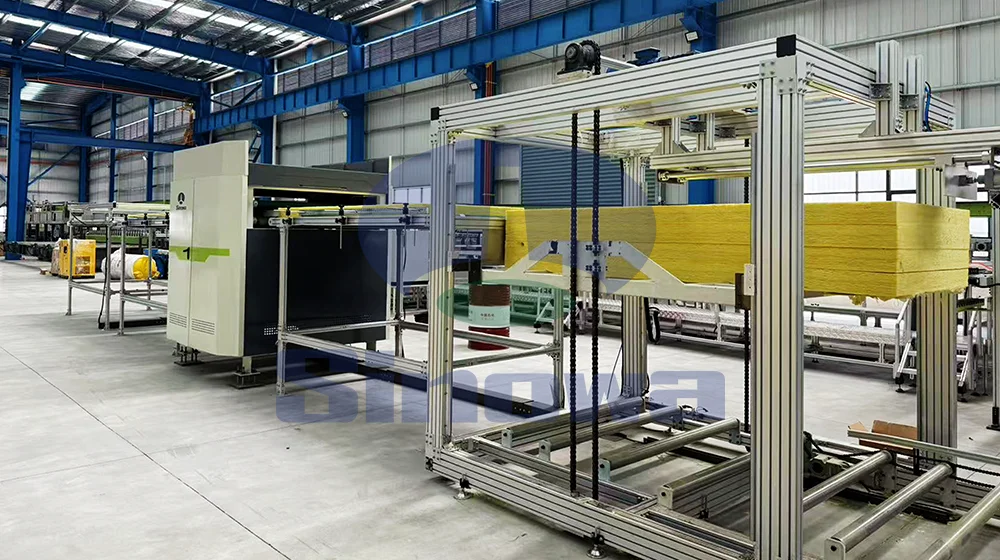
Across all seven sandwich panel production lines, the core engineering principle remains consistent: creating a high-performance composite panel by bonding a specialized insulating core to rigid outer facings, but each line’s unique structural modifications and processing parameters are what define the final panel’s properties and suitable applications. The PU and PIR lines dominate in thermal efficiency and lightweight design, catering to cold storage and energy-efficient construction; the rock wool and mineral wool lines lead in fire resistance and structural durability, serving high-safety industrial and commercial projects; the glass wool line excels in acoustic comfort and lightweight interior use; and the roof and wall lines refine panel design to meet the specific structural and environmental demands of horizontal roofing and vertical wall installation. Together, these seven production lines form the backbone of modern sandwich panel manufacturing, offering a complete range of solutions to meet the diverse needs of the global construction and industrial sectors. Each line is a testament to precision engineering and material science, designed to balance production efficiency, panel quality, and functional performance, ensuring that every panel produced meets the rigorous demands of its intended application, from temperature-controlled cold storage to fire-resistant industrial facilities, quiet interior spaces to weatherproof building exteriors. As the construction industry continues to prioritize energy efficiency, sustainability, and rapid construction, these seven specialized sandwich panel lines will remain essential tools, adapting to evolving material technologies and building requirements to deliver reliable, high-performance composite panels for years to come.
- 2026-10-16PIR Sandwich Panel Production Line
- 2026-10-16Sandwich Panel Production Line
- 2026-10-16Sandwich Panel Manufacturing Line
- 2026-10-16Polyurethane Sandwich Panel Machine
- 2026-10-16Polyurethane Sandwich Panel Line
- 2026-10-16Mineral Wool Sandwich Panel Production Line
- 2026-10-16Rockwool Sandwich Panel Production Line
- 2026-10-16PU Sandwich Panel Line
- 2026-10-16PU Sandwich Panel Machine
- 2026-10-16Continuous PU Sandwich Panel Line
- 2026-10-16Polyurethane Sandwich Panel Production Line
- 2026-10-16PU Sandwich Panel Production Line
- 2026-10-16Sandwich Panel Machine
- 2026-10-16Sandwich Panel Line
- 2026-10-16Rock Wool Sandwich Panel Production Line In China
- 2026-10-16High-end Fully Automatic Rock Wool Sandwich Panel Production Line
- 2026-10-16Mineral Wool Sandwich Panel Production Line For Roof
- 2026-10-16Rockwool Sandwich Panel Production Line For Wall
- 2026-10-16Rockwool Sandwich Panel Production Line Price
- 2026-10-16Custom Rock Wool Sandwich Panel Production Line
- Links:
- Sandwich Panel Continuous Production Line
- Automatic and Continuous Sandwich Panel Production Line
- Cheap and Low Price Sandwich Panel Production Line
- China Sandwich Panel Production Line Factory
- Color Steel Sandwich Panel Production Line For Cold Storage
- Continuous Composite Foam Sandwich Panel Production Line
- Continuous Production Line For Rockwool and Mineral Wool Sandwich Panels
- Continuous PU Phenolic Insulation Panel Production Line
- Continuous PU PIR Sandwich Panel Production Line
- Continuous PUF PUR Sandwich Panel Production Line
- Continuous Sandwich Panel Production Line For Roof and Wall
- Customized and Design Sandwich Panel Production Line
- Decorative Sandwich Panel Production Line For Glass Wool Boards
- High Quality Sandwich Panel Production Line For Sale
- Polyurethane(PU) Sandwich Panel Production Line
- Sandwich Panel Production Line Manufacturer and Supplier
- Sandwich Panel Production Machinery and Equipment