
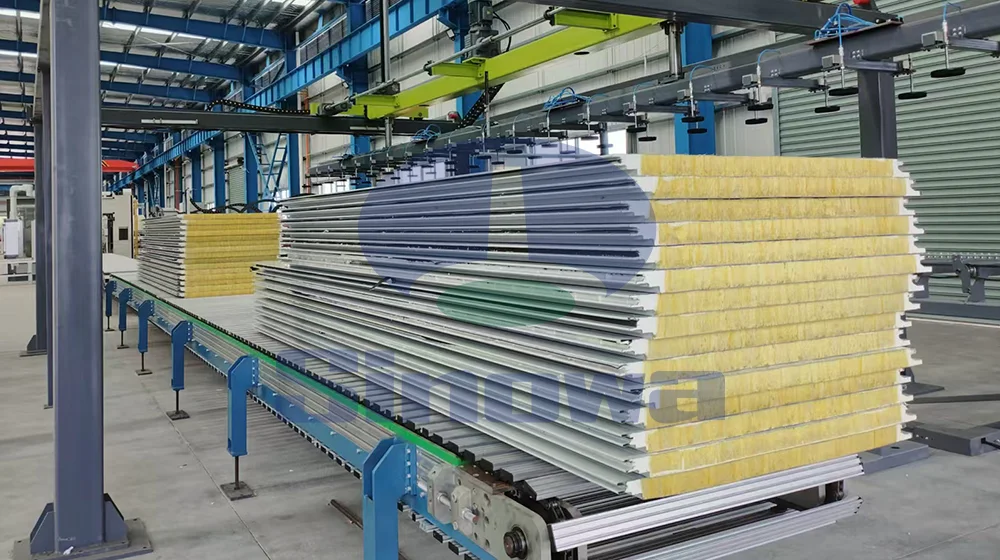
Continuous Rockwool/Mineral Wool Sandwich Panel Production Line
The Rockwool Panel Line includes cement mortar cloth (cement-based cloth) anti-rolling pressure for up and down bidirectional anti-rolling, polyurethane drenching area, up and down bidirectional drenching area which is fully automatic, vertical silk rock wool sliver area, composite board lamination, automatic lifting which can be adjust the required thickness of the insulation board.
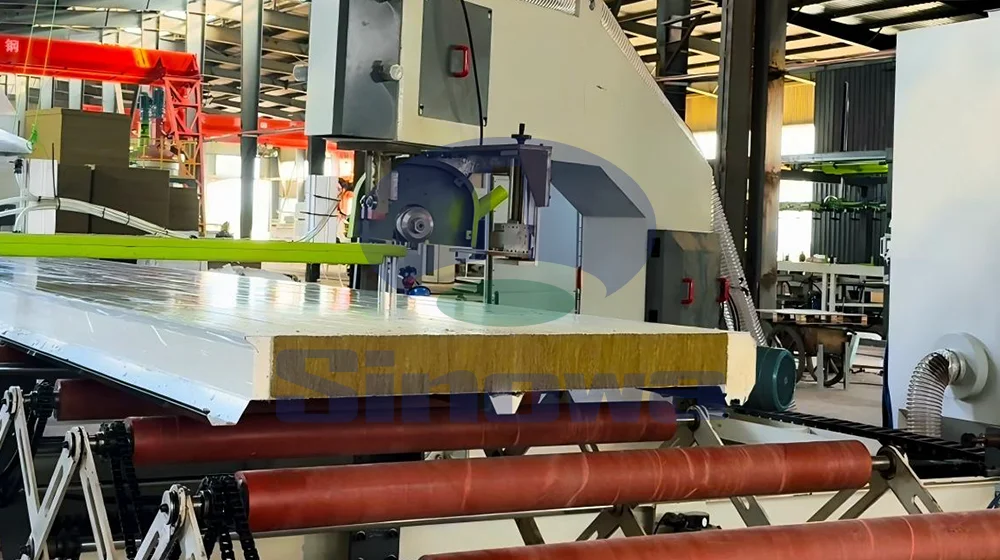
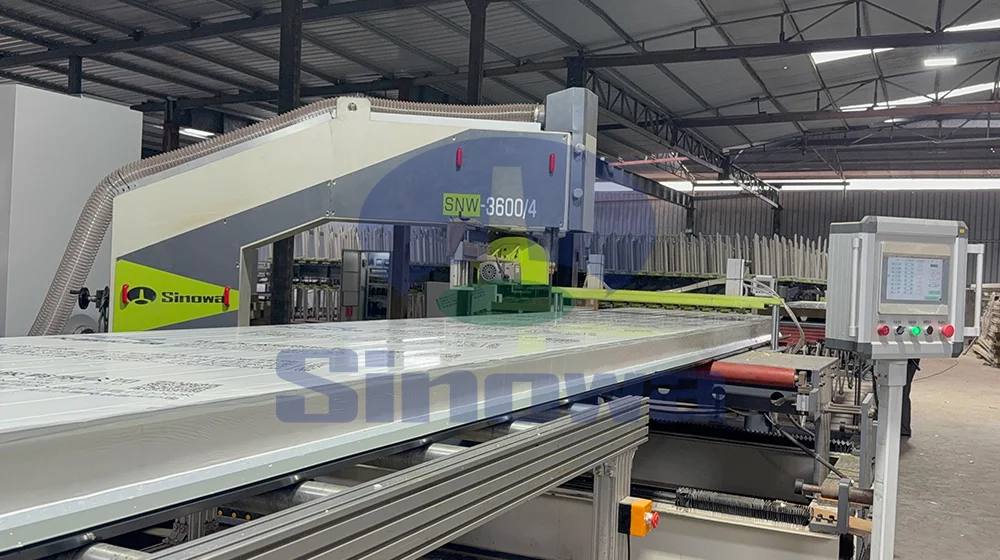
The cutting area is a three-axis vertical cutting thickness from 30-150 cm. The slitting area is commonly known as Fetion, which is used for servo full-automatic reciprocating cutting. The size is accurate, and the length can be adjusted arbitrarily.
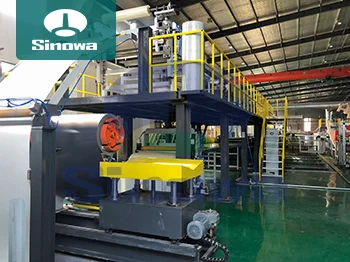
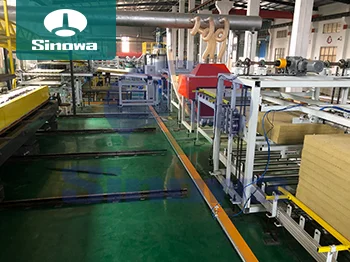
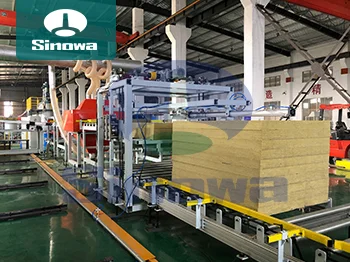
Our Rock Wool Panel Machine has low operating noise and low investment. It is energy saving and the usage of waste materials have enabled the products of extruded board equipment to be widely promoted and applied in areas such as building insulation and road water-proof and anti-freezing in high-cold areas, making the products in short supply in the market.
The Rock Wool Sandwich Panel Line is used for building exterior wall insulation, fire isolation belt, structural insulation integration, strong bonding performance, fireproof, waterproof, and anti-falling. This product solves the difficulty of the previous construction of ordinary rock wool board and it is difficult for workers to find the drawbacks.
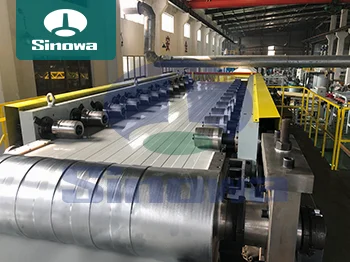
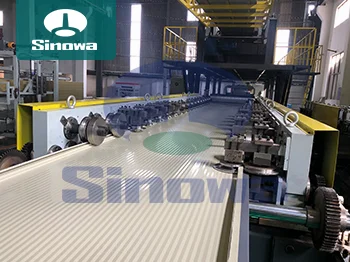
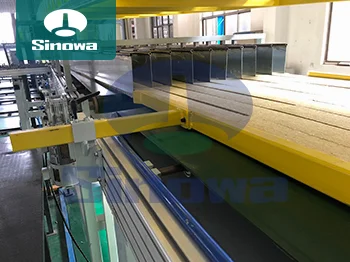
Various types panels can be produced, and optional components can be matched to produce PU thermal insulation panels.
Building-block designed continuous rockwool sandwich panel production line is more reliable and easy to install and maintain. Its core components are imported or domestic first-class product.
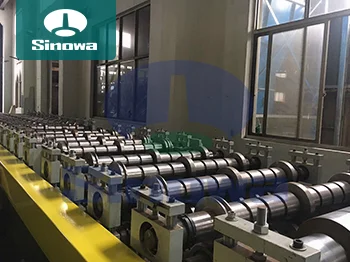
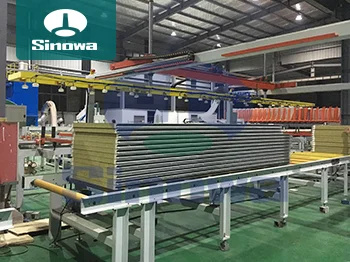
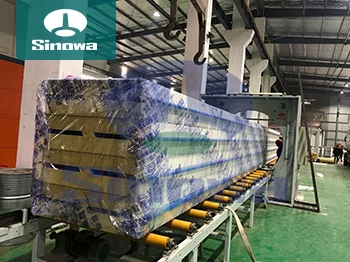
High productivity: the speed of producing 2.5cm thickness PU sandwich insulation panels is not less than 13-15 m/min.
The amount of energy consumption is 40% lower than the competing products. Thermal Insulation room is not required. Automation achieve first class level world around. It is environment-friendly and there is no dust pollution.
In the modern construction and industrial manufacturing sectors, the demand for high-performance, energy-efficient and durable building materials has been rising steadily, driving the innovation and upgrading of composite panel production technology. Among various advanced production systems, Continuous Rockwool Sandwich Panel Production Line and Continuous Mineral Wool Sandwich Panel Production Line stand out as core equipment for manufacturing high-quality mineral fiber-based sandwich panels, representing a major leap from traditional discontinuous, manual or semi-automatic production modes to fully automated, continuous and standardized manufacturing. These two production lines share similar core technical principles and overall process frameworks, while each has targeted optimizations to adapt to the unique physical and chemical properties of rockwool and general mineral wool raw materials, ensuring that the final sandwich panels meet strict performance standards for thermal insulation, fire resistance, sound absorption and structural stability. Unlike fragmented production methods that rely heavily on manual operation and suffer from inconsistent product quality, these continuous production lines integrate mechanical transmission, precision control, adhesive bonding, thermal curing and automatic forming technologies, creating a seamless production workflow that covers every step from raw material input to finished product output, stacking and preliminary inspection. This shift to continuous production not only boosts manufacturing efficiency significantly but also eliminates human-induced errors, stabilizes product dimensions and performance indicators, and meets the large-scale, high-standard supply needs of modern construction projects, cold chain facilities, industrial workshops and other key infrastructure developments.
To fully understand the operational logic and technical advantages of Continuous Rockwool Sandwich Panel Line and Continuous Mineral Wool Sandwich Panel Line, it is essential to first clarify the basic composition of rockwool and mineral wool sandwich panels, as the production line design is entirely tailored to the structural characteristics of these composite panels. A standard mineral wool sandwich panel consists of three main parts: two outer face sheets, usually made of thin metal sheets such as galvanized steel, color-coated steel or aluminum alloy, and a middle core layer made of compacted rockwool or mineral wool fibers bonded together with a small amount of adhesive. Rockwool is primarily produced from natural basalt, diabase and other volcanic rocks melted at high temperatures, spun into fine inorganic fibers and then formed into rigid boards or rolls, featuring exceptional fire resistance, high compressive strength and low thermal conductivity. Mineral wool, on the other hand, is often made from industrial slag, quartz sand and other mineral raw materials through similar melting and fiber-forming processes, with good thermal insulation and sound absorption properties, making it suitable for a wider range of general industrial and construction applications. The core function of both continuous production lines is to bond the upper and lower face sheets firmly with the mineral wool core layer through a series of precise mechanical and chemical processes, forming an integrated composite panel that combines the structural strength of metal sheets with the thermal and acoustic insulation properties of mineral wool, without delamination or deformation under long-term use or extreme environmental conditions.
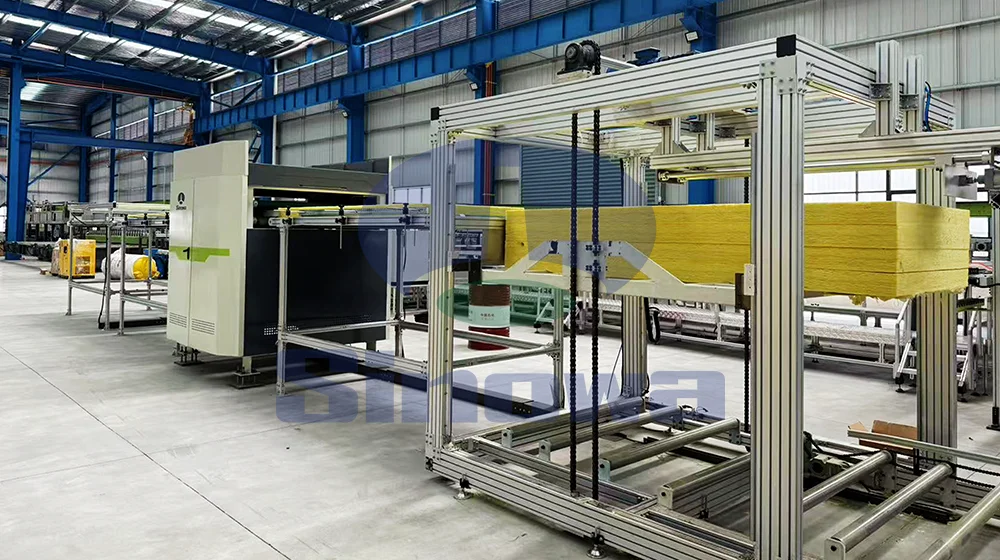
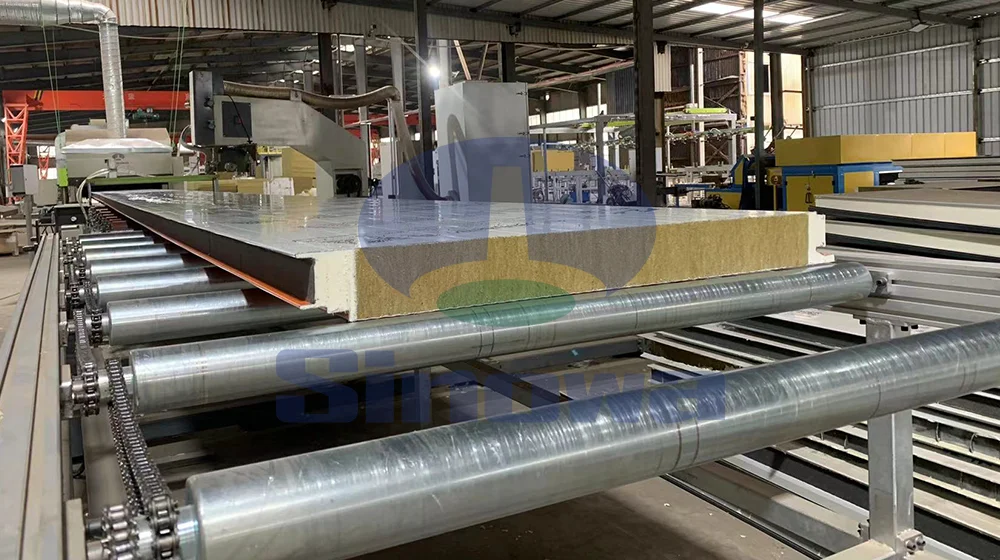
The entire operation of Continuous Rockwool Sandwich Panel Machine and Continuous Mineral Wool Sandwich Panel Machine follows a fully continuous, linear process layout, with each functional module connected in sequence to form a closed-loop production system, and no interruptions occur during normal operation except for routine maintenance and raw material replacement. The first stage of the production process is raw material preparation and feeding, which lays the foundation for stable subsequent production. For the outer metal face sheets, coiled sheet materials are loaded onto automatic uncoiling machines at the starting end of the production line; these uncoilers are equipped with tension control systems to ensure that the metal sheets are unwound smoothly without wrinkles, cracks or offset, and then fed into a leveling and straightening unit to eliminate any bending or deformation caused by coiling, ensuring the flatness of the face sheets. Parallel to the metal sheet feeding system, the mineral wool core layer feeding system operates independently, handling pre-formed rockwool or mineral wool boards or rolls. For rockwool, which has higher density and rigidity, the feeding system includes a precision cutting unit to trim the core layer to the required width matching the metal face sheets, a thickness adjustment mechanism to control the core layer thickness within a fixed tolerance range, and a conveying platform with anti-slip and anti-static features to prevent fiber shedding or damage during transportation. Mineral wool, which is relatively softer and more flexible, has a feeding system with enhanced support and shaping functions to maintain the integrity of the core layer and avoid compression that would reduce its insulation performance. Both production lines are equipped with dust collection devices near the mineral wool handling area to collect loose fibers, keeping the production environment clean and preventing fiber contamination of other equipment components.
After the raw material preparation stage, the production process enters the adhesive application and pre-composite stage, which is a critical step that determines the bonding strength between the face sheets and the mineral wool core layer. The adhesive used in these continuous production lines is a high-performance, environmentally friendly polymer adhesive with fast curing speed, strong bonding force and good aging resistance, suitable for continuous high-speed production without causing corrosion to metal sheets or degradation of mineral wool fibers. The adhesive application system adopts a precision spraying or roller coating method, with automatic metering pumps to control the adhesive output accurately, ensuring a uniform coating on the inner surface of the upper and lower metal face sheets without excess accumulation or missing areas. The spraying width and coating thickness can be adjusted flexibly according to the specifications of the sandwich panel being produced, adapting to different widths and thicknesses of products. For rockwool, which has a porous fiber structure, the adhesive application system is optimized to ensure that the adhesive penetrates slightly into the surface layer of the rockwool core without soaking through the entire core, which would compromise its thermal insulation effect; for mineral wool, the adhesive dosage is adjusted slightly to match its fiber density and porosity, achieving a balance between bonding strength and core layer performance. After adhesive application, the upper and lower metal face sheets and the mineral wool core layer are precisely aligned and fed into the pre-compression zone, where a set of gentle pressure rollers removes air bubbles between the layers and ensures initial close contact, preventing misalignment before entering the main composite curing zone.
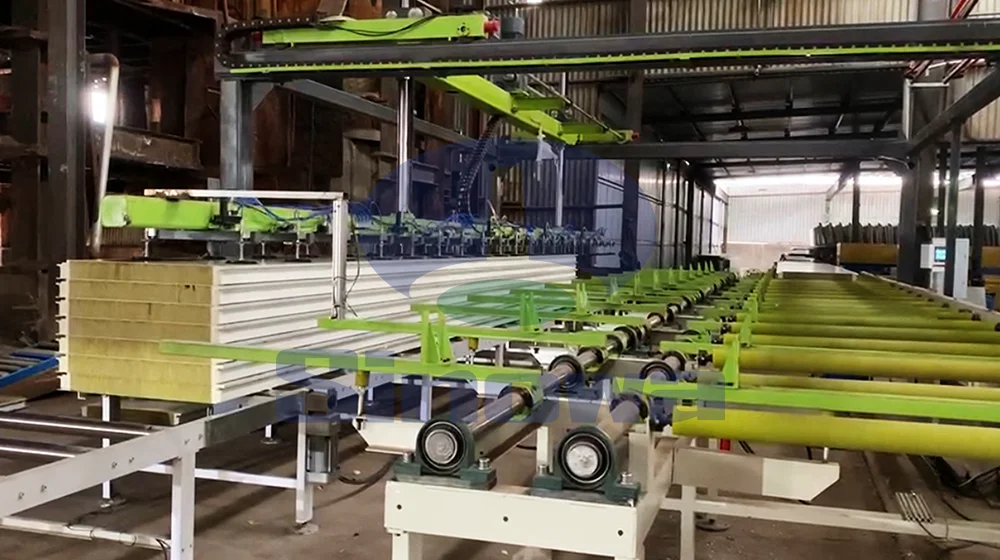
The core processing unit of both Continuous Rockwool Sandwich Panel Production Machine and Continuous Mineral Wool Sandwich Panel Production Machine is the continuous composite pressing and thermal curing system, which is the key to forming a stable, integrated sandwich panel structure. This system consists of a long double-layer conveyor belt press, with the upper and lower conveyor belts made of high-temperature resistant, non-stick materials that can maintain stable operation under continuous heating and pressure conditions. The press applies uniform, adjustable pressure to the pre-composite panel, squeezing out residual air and ensuring that the face sheets and core layer are tightly bonded, while the built-in heating system raises the temperature to the optimal curing range for the adhesive, accelerating the chemical curing reaction and forming a permanent, strong bond between the layers. The pressure and temperature parameters are precisely controlled by a digital control system, with real-time monitoring and adjustment to adapt to the differences between rockwool and mineral wool: rockwool requires slightly higher pressure to ensure compact bonding without crushing the fiber structure, while mineral wool needs a more moderate pressure to avoid excessive compression that would reduce its porosity and insulation performance. The length of the pressing and curing zone is designed to match the production line speed, ensuring that each panel stays in the curing zone for sufficient time to complete the adhesive curing process, so that the panel has enough structural strength when leaving the press and will not deform or delaminate during subsequent handling.
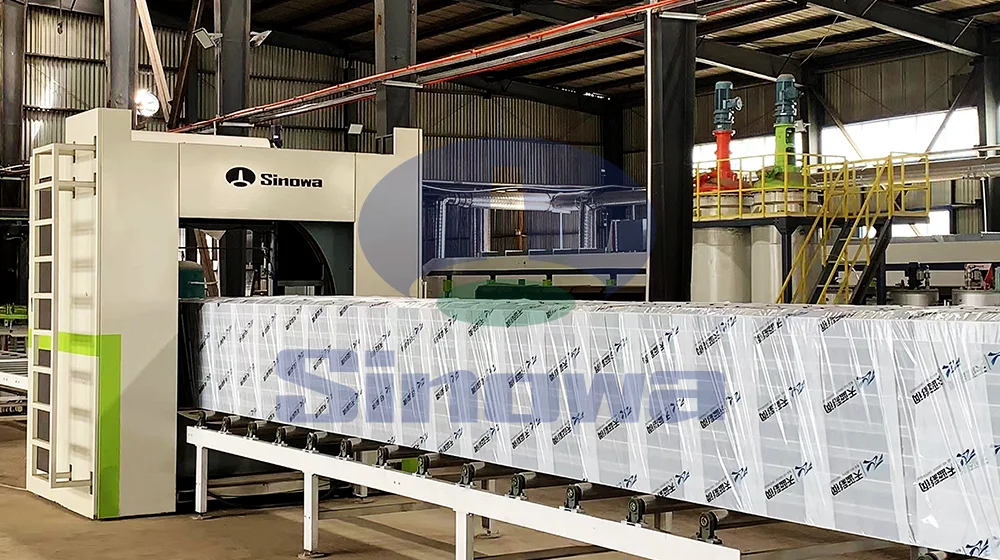
Following the composite curing stage, the continuous long panel enters the post-processing and precision cutting stage, where the semi-finished product is transformed into a finished sandwich panel that meets specific dimensional requirements. The continuous panel is first conveyed through a cooling zone, where natural air cooling or forced air cooling is applied to lower the panel temperature to room temperature quickly, stabilizing the panel dimensions and preventing thermal deformation after cutting. The cooling system is designed with uniform air distribution to avoid local temperature differences that could cause warping. Once cooled, the panel moves to the automatic cutting unit, which uses a high-precision servo-driven cutting saw or blade to cut the continuous panel into fixed lengths as required; the cutting length can be set freely through the control system, with a very small dimensional tolerance to meet the precise installation needs of construction projects. The cutting operation is synchronized with the production line speed, achieving non-stop cutting to maintain the continuity of the entire production process, which is a major advantage over discontinuous production lines that require stopping for cutting, greatly improving overall production efficiency. After cutting, the finished panels are conveyed to an automatic stacking unit, which arranges the panels neatly in batches, with protective layers placed between panels to prevent surface scratches or damage during storage and transportation. Some advanced configurations of these continuous production lines also include an edge trimming unit to smooth the panel edges and remove any burrs, further improving the appearance quality and installation fit of the finished panels.
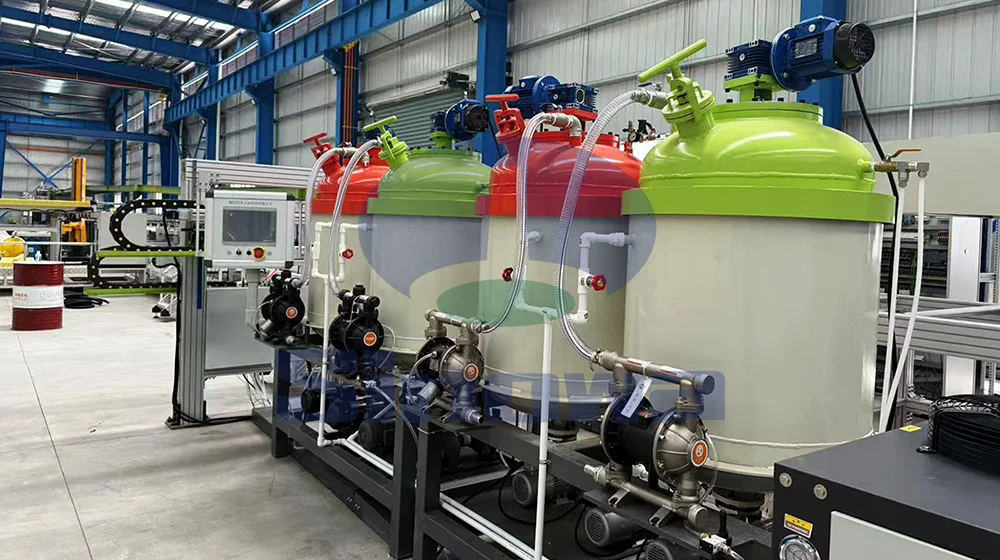
A central feature that elevates Continuous Rockwool Sandwich Panel Manufacturing Line and Continuous Mineral Wool Sandwich Panel Manufacturing Line above traditional production equipment is their intelligent automatic control system, which acts as the "brain" of the entire production line, coordinating the operation of all modules and ensuring stable, efficient and consistent production. The control system is based on a programmable logic controller (PLC) with a user-friendly human-machine interface, allowing operators to set and adjust key production parameters such as line speed, adhesive dosage, pressing pressure, curing temperature, cutting length and core layer thickness with simple operations. All parameters are displayed in real time on the control screen, with data recording and storage functions to track production status and product quality for later analysis and optimization. The system is also equipped with fault self-diagnosis and alarm functions: if any module malfunctions, such as abnormal tension in metal sheet feeding, insufficient adhesive supply, deviation of core layer position or overheating of the curing zone, the system will immediately issue an audible and visual alarm and display the fault location and cause, enabling operators to troubleshoot quickly and minimize downtime. Additionally, the control system supports parameter linkage, meaning that adjustments to one parameter (such as production line speed) will automatically trigger corresponding adjustments to related parameters (such as adhesive feeding speed and curing time), ensuring that all processes remain coordinated and avoiding quality fluctuations caused by parameter mismatches. This high degree of automation reduces the need for manual intervention significantly; only a small number of operators are required to monitor the system and perform routine maintenance, reducing labor costs and improving production safety by minimizing manual contact with moving mechanical parts.
The technical differences between Continuous Rockwool Sandwich Panel Making Line and Continuous Mineral Wool Sandwich Panel Making Line are subtle but targeted, designed to accommodate the distinct material properties of rockwool and mineral wool and maximize the performance of the final panels. Rockwool has a higher density, greater compressive strength and better fire resistance, making it suitable for high-demand applications such as high-rise building exterior wall insulation, fire partition walls and cold storage facilities; therefore, the rockwool production line is equipped with a more robust core layer conveying and shaping system, a higher-precision pressure control mechanism and a heating system with more stable temperature control to preserve the excellent performance of rockwool. The rockwool production line also has enhanced dust removal capabilities, as rockwool fibers are slightly stiffer and may shed more during handling, requiring more effective dust collection to maintain equipment cleanliness and production environment quality. In contrast, mineral wool is more cost-effective and widely used in general industrial workshops, warehouse buildings, roof insulation and interior partition walls, where basic thermal insulation and sound absorption are required; the mineral wool production line is optimized for higher production speed and lower energy consumption, with a simplified but efficient core layer handling system that adapts to the flexibility of mineral wool, ensuring smooth production without compromising product quality. Despite these differences, both production lines share a high degree of modularity, allowing for easy adjustment and conversion between the two production modes with minor modifications to specific modules, providing manufacturers with greater production flexibility to respond to diverse market demands.
The application value of products manufactured by Continuous Rockwool Sandwich Panel Production Equipment and Continuous Mineral Wool Sandwich Panel Production Equipment extends far beyond basic building enclosure, covering multiple industries and solving key technical pain points in modern construction and industrial engineering. One of the most prominent advantages of these sandwich panels is their exceptional thermal insulation performance: the porous fiber structure of rockwool and mineral wool traps large amounts of static air, which is a poor conductor of heat, effectively reducing heat transfer between the interior and exterior of buildings. In cold regions, this reduces the energy consumption of heating systems significantly, while in warm regions, it blocks outdoor heat from entering, lowering the load of air conditioning systems and achieving remarkable energy-saving effects. This energy efficiency aligns with the global trend of green and low-carbon construction, making these panels a preferred choice for sustainable building projects. Secondly, both rockwool and mineral wool are inorganic non-combustible materials, with excellent fire resistance; they do not ignite, melt or release toxic fumes even at high temperatures, acting as a reliable fire barrier to prevent the spread of flames in buildings, which is critical for ensuring building safety and meeting strict fire code requirements. Additionally, the porous fiber structure provides excellent sound absorption and noise reduction performance, effectively blocking airborne noise and impact noise, making these panels ideal for use in hospitals, schools, office buildings, industrial plants and other spaces that require a quiet environment.
Structural performance is another key advantage of sandwich panels produced by these continuous production lines. The combination of rigid metal face sheets and a stable mineral wool core layer creates a composite panel with high bending strength, compressive strength and impact resistance, capable of bearing certain loads without deformation or damage. This structural stability allows the panels to be used not only as non-load-bearing enclosure materials but also as load-bearing components in some low-rise and prefabricated buildings, simplifying the building structure and shortening construction periods. Compared with traditional building materials such as brick walls and concrete blocks, these sandwich panels are lightweight, reducing the overall load on the building foundation and lowering construction costs. The lightweight property also makes transportation and installation easier, as the panels can be cut and processed on-site quickly, with simple connection methods that do not require complex construction equipment or long curing times, greatly accelerating project progress and reducing labor and time costs on construction sites. Moreover, the panels have good weather resistance, resisting corrosion, moisture absorption and aging under long-term exposure to sunlight, rain, wind and other environmental factors, maintaining stable performance and appearance for decades, which reduces the frequency of building maintenance and replacement and lowers the long-term life cycle cost of buildings.
In terms of production efficiency and cost control, Continuous Rockwool Sandwich Panel Line and Continuous Mineral Wool Sandwich Panel Line offer substantial benefits to manufacturers compared with traditional discontinuous production methods. The fully continuous operation mode eliminates the need for manual handling and transfer between different production steps, reducing production time per unit product and increasing daily output significantly; the production line can operate continuously for long hours, with only short stops for routine maintenance, meeting the large-scale supply needs of large construction projects and bulk orders. The high degree of automation minimizes human error, ensuring that every panel produced meets consistent dimensional and performance standards, reducing the rate of defective products and material waste. The precision control of raw material usage, especially adhesive and mineral wool core materials, avoids excess consumption and lowers raw material costs per unit product. Additionally, the modular design of the production lines simplifies equipment maintenance and part replacement, as each functional module can be maintained independently without shutting down the entire line, reducing maintenance time and costs. The energy-saving design of key components such as the heating system and conveyor motors also reduces daily energy consumption, further improving the economic benefits of production.
The market application scope of products from these two continuous production lines is expanding continuously, driven by the global growth of infrastructure construction, prefabricated building development and cold chain logistics industry expansion. In the construction industry, they are widely used in exterior wall insulation, roof insulation, interior partition walls and fire partition walls of residential buildings, commercial buildings, office buildings and public facilities, meeting the requirements of green building energy efficiency standards. In the industrial sector, they are the preferred material for industrial workshops, warehouses, logistics centers and factory buildings, providing excellent thermal insulation, fire protection and noise reduction for industrial production environments. In the cold chain industry, rockwool sandwich panels produced by the continuous rockwool line are particularly suitable for cold storage, refrigerated warehouses and constant-temperature logistics facilities, as their low thermal conductivity and stable performance maintain consistent low-temperature environments and reduce energy consumption for refrigeration. They are also used in temporary buildings such as prefabricated houses, container houses and construction site dormitories, due to their lightweight, easy installation and good durability. Furthermore, these panels are applied in the renovation and upgrading of old buildings, improving the energy efficiency and safety of existing buildings without major structural modifications, providing a practical solution for urban building renewal projects.
Quality control is an integral part of the operation of Continuous Rockwool Sandwich Panel Production Line and Continuous Mineral Wool Sandwich Panel Production Line, with a full-process quality monitoring system embedded in every production stage to ensure that finished products meet industry standards and customer requirements. Before production starts, raw material inspection is carried out to verify that the metal face sheets, rockwool/mineral wool core materials and adhesives meet the specified quality standards, with unqualified raw materials rejected to prevent quality issues in the final product. During production, real-time monitoring sensors track key parameters such as face sheet flatness, core layer thickness, adhesive coating uniformity, pressing pressure, curing temperature and panel dimensions, with any deviations detected immediately and corrected automatically or manually. After production, random sampling inspections are conducted on finished panels, testing indicators such as bonding strength, thermal conductivity, fire resistance, compressive strength and dimensional accuracy to ensure that all products meet the required performance specifications. This full-process quality control system not only guarantees the reliability of individual panels but also maintains consistent quality across large batches of products, building trust with customers and enhancing the market competitiveness of manufacturers.
The environmental performance of these continuous production lines and their products is also a major highlight in line with global environmental protection trends. From a raw material perspective, mineral wool and rockwool are mainly made from natural minerals and industrial waste residues, utilizing recycled materials and reducing the exploitation of natural resources, which is in line with the concept of circular economy. The production process generates minimal waste: loose mineral wool fibers are collected by dust collection systems and can be recycled, excess adhesives are recovered and reused, and metal sheet offcuts from edge trimming can be recycled as scrap metal. The production lines adopt low-emission technologies, with no harmful gases or wastewater discharged during normal operation, and the adhesives used are low in volatile organic compounds (VOCs), reducing air pollution. The finished panels are non-toxic, odorless and do not release harmful substances during use, making them safe for human health and the environment. At the end of their service life, the panels can be disassembled, with metal face sheets recycled and mineral wool core materials reused as insulation filler or raw material for new mineral wool products, realizing resource recycling and reducing construction waste accumulation. This environmentally friendly production and product life cycle make these continuous production lines a sustainable choice for the building materials manufacturing industry.
Looking ahead, the development trend of Continuous Rockwool Sandwich Panel Production Machinery and Continuous Mineral Wool Sandwich Panel Production Machinery is focused on higher intelligence, greater energy efficiency, wider adaptability and more refined process control. With the advancement of Industry 4.0 technologies such as artificial intelligence, big data and Internet of Things (IoT), these production lines will be integrated with more intelligent monitoring and management systems: IoT sensors will collect more comprehensive production data, AI algorithms will analyze the data to optimize production parameters in real time, predict equipment failures before they occur, and further improve production efficiency and product quality. Remote monitoring and control functions will be enhanced, allowing manufacturers to manage and adjust production lines from off-site locations, improving operational flexibility and management efficiency. In terms of energy efficiency, future production lines will adopt more advanced energy-saving components such as high-efficiency servo motors, waste heat recovery systems and intelligent power management systems, further reducing energy consumption and carbon emissions during production. The modular design will be further optimized to enable faster switching between different product specifications, including different panel thicknesses, widths, face sheet materials and core layer densities, meeting the growing demand for customized products in the market.
Process technology will also continue to be upgraded to improve the performance and application range of the final panels. Research and development will focus on new adhesive technologies that offer faster curing speeds, stronger bonding strength and better environmental performance, as well as improved mineral wool and rockwool core processing technologies to enhance their insulation, fire resistance and structural performance. The production lines will be adapted to produce thinner, lighter panels with higher performance, expanding their use in more specialized applications such as aerospace auxiliary facilities, marine building structures and high-end industrial equipment insulation. Additionally, the integration of digital twin technology will allow manufacturers to create virtual models of the production lines, simulating production processes, testing new product designs and optimizing process parameters in a virtual environment before implementing them in actual production, reducing development costs and risks. As global demand for green, energy-efficient and high-performance building materials continues to grow, Continuous Rockwool Sandwich Panel Production Line and Continuous Mineral Wool Sandwich Panel Production Line will play an increasingly important role in the building materials manufacturing industry, driving the transformation of the construction sector towards sustainability, efficiency and high quality.
In conclusion, Continuous Rockwool Sandwich Panel Production Line and Continuous Mineral Wool Sandwich Panel Production Line represent the cutting-edge level of modern composite building material manufacturing, combining advanced mechanical engineering, precision control technology and material science to solve the limitations of traditional mineral wool sandwich panel production. Their fully continuous, automated operation mode delivers high production efficiency, consistent product quality and stable performance, while the products manufactured boast exceptional thermal insulation, fire resistance, sound absorption and structural stability, with wide-ranging applications across construction, industrial, cold chain and infrastructure sectors. The environmental friendliness and energy-saving features of these production lines align with global sustainable development goals, providing a reliable technical solution for the production of green building materials. As the construction industry continues to evolve and market demands become more stringent, these continuous production lines will undergo further technological innovation and optimization, adapting to new challenges and opportunities, and continuing to drive the progress of the mineral wool composite panel industry. Their long-term value lies not only in improving manufacturing efficiency and product quality for manufacturers but also in promoting the development of low-carbon, green and intelligent construction, contributing to the creation of more sustainable, safe and comfortable built environments for society as a whole.
- 2026-09-21Rock Wool Insulation Panel Production Line Manufacturer
- 2026-09-21Rock Wool Board Production Line Supplier
- 2026-09-21Rock Wool Sandwich Panel Line For Roof
- 2026-09-21Rock Wool Sandwich Panel Machine For Construction
- 2026-09-21Rock Wool Sandwich Panel Production Line For House
- 2026-09-21Rockwool Panel Production Line Manufacturer
- 2026-09-21Rockwool Sandwich Panel Line For Sale
- 2026-09-21Rockwool Sandwich Panel Production Line Design
- 2026-09-03Cheap Mineral Wool Sandwich Panel Line
- 2026-09-01Highly Intelligent Mineral Wool Sandwich Panel Production Line
- 2026-09-01High Precision Rockwool Sandwich Panel Production Line
- 2026-09-01High Efficiency Mineral Wool Sandwich Panel Machine
- 2026-09-01Fully Automatic Rock Wool Sandwich Panel Production Line Manufacturer
- 2026-09-01Mineral Wool Sandwich Panel Production Line For Wall
- 2026-08-31Mineral Wool Sandwich Panel Line Manufacturer
- 2026-08-31Rockwool Sandwich Panel Line From China
- 2026-08-31Rockwool Sandwich Panel Machine For Sale
- 2026-08-31Rockwool Sandwich Panel Production Line For Cold Room
- 2026-08-31Cheap Fully Automatic Rock Wool Sandwich Panel Production Line
- 2026-08-28Rock Wool Insulation Panel Production Line
- Links:
- Sandwich Panel Continuous Production Line
- Automatic and Continuous Sandwich Panel Production Line
- Cheap and Low Price Sandwich Panel Production Line
- China Sandwich Panel Production Line Factory
- Color Steel Sandwich Panel Production Line For Cold Storage
- Continuous Composite Foam Sandwich Panel Production Line
- Continuous Production Line For Rockwool and Mineral Wool Sandwich Panels
- Continuous PU Phenolic Insulation Panel Production Line
- Continuous PU PIR Sandwich Panel Production Line
- Continuous PUF PUR Sandwich Panel Production Line
- Continuous Sandwich Panel Production Line For Roof and Wall
- Customized and Design Sandwich Panel Production Line
- Decorative Sandwich Panel Production Line For Glass Wool Boards
- High Quality Sandwich Panel Production Line For Sale
- Polyurethane(PU) Sandwich Panel Production Line
- Sandwich Panel Production Line Manufacturer and Supplier
- Sandwich Panel Production Machinery and Equipment