
Rock Wool Board Production Line
Sinowa is a rock wool board production line supplier from china, customized high-quality & high efficiency rock wool board production line at low price, the adoption of system integration technology and bus control technology accomplishes the full automatization of integrated and coordinated control of the rock wool board production line with accessible remote interactive communication. Ranking the first-class level in the world, it is currently the rock wool board production line in the market taking a comprehensive lead in high performance.
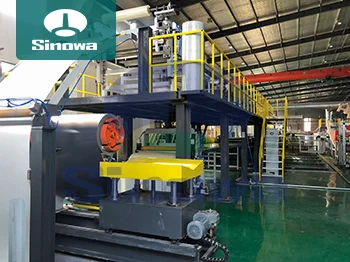
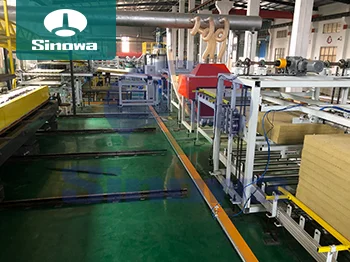
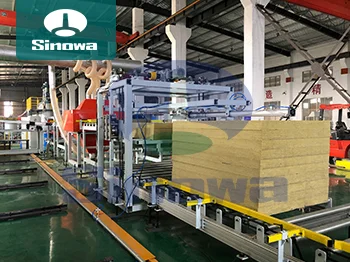
The high-tech rock wool board production line can meet a variety of production needs of customers, the whole rock wool board production line design concept of modularization enables all our components to be integrated and combined at will. Our high efficiency rock wool board production line can easily automate the production of roof sandwich panel, wall sandwich panel, cold storage sandwich panel and other products by different combination and configuration selection and siple switching. The inner core layer can be polyrethane or rock wool, glass wool, an so on. The precision servo hoisting mechanism employed by the main engine without hydraulic system makes the board thickness control flexible and the customer may conveniently change or adjust the board thickness. There will be not such troubles as hydraulic system adjustment, leakage, maintenance, etc.
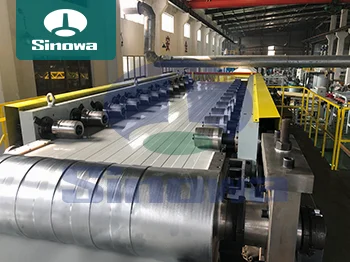
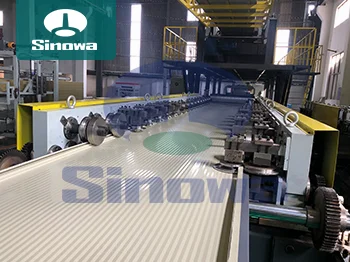
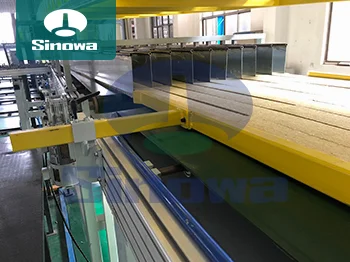
The high precision rock wool board production line has high adaptability, which may produce various sandwich panel of the PU, PIR and rock wool systems. We may design various products according to the customer’s requirements, including various configurations, so as to meet their demands with flexible price system. Highly integrated and linked control system centralizes all control points at the main central center, achieving parameter linkage, fault self-diagnosis controlled by the whole line and shipping distance control. High-level automatic control system also saves the manpower and reduces the manpower loss for customers. High-level energy saving and protection design makes the whole rock wool board production line possible to produce around the clock throughout the year and the customer will save huge budget. In addition, the isolated heat preservation room is constructed for warming the environment. The energy saving and protection design of our manufacturing line may guarantee that the customer’s production line may be freely heated and produce in the main time to save more costs for customers.
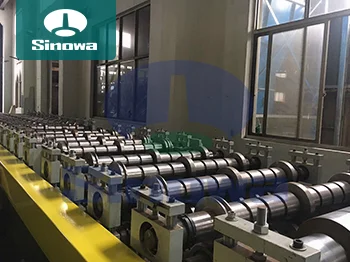
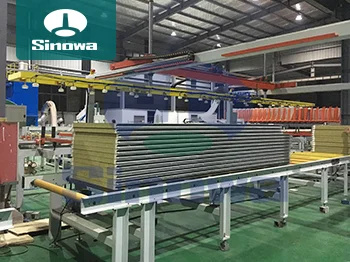
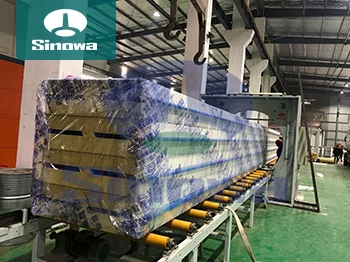
The high-power low-consumption design quickens the reaction of the cheap rock wool board production line while energy consumption is kept low. With the brand-new, fully sealed inner insulation design, the energy consumption is controlled at the minimum level to achieve the design objective of less than an hour for the insulation system to be activated from the room temperature above 5℃ to the production process temperature. The energy consumption is only 40% that of those similar products.
Rock wool board is a kind of high-performance inorganic fiber material with excellent thermal insulation, sound absorption, fire resistance and other characteristics, which is widely used in various fields such as construction, industry, and transportation. The rock wool board production line is a set of integrated equipment that realizes the continuous and automated production of rock wool boards, and its structure design, performance level, and the types of products it can produce directly determine the application scope and use effect of rock wool boards. To fully understand the value and function of rock wool board production lines, it is necessary to systematically explore their structure composition, core performance, product types and practical applications, so as to better grasp the characteristics of this kind of production equipment and promote its rational application in various industries.
The structure of the rock wool board production line is a complex and coordinated system, which is composed of multiple functional sections, each of which undertakes a specific production link, and the close cooperation between the sections ensures the smooth progress of the entire production process. The whole production line starts with the raw material processing section, which is the foundation of production and directly affects the quality of the final rock wool board products. The main raw materials used in the production of rock wool boards are natural rocks such as basalt and dolomite, which need to go through strict screening, crushing and mixing in the raw material processing section. First, the raw rocks are transported to the crusher by the conveyor belt for crushing, and crushed into small particles with uniform size to facilitate subsequent melting. Then, the crushed raw material particles are sent to the mixing machine, and a proper proportion of auxiliary materials are added according to the product performance requirements for uniform mixing. The auxiliary materials mainly include binders, water repellents and dust-proof oils, which can improve the bonding performance, water resistance and construction performance of rock wool boards without affecting their environmental protection and fire resistance. The mixing process needs to be carried out under strict parameter control to ensure that the raw material mixture is uniform and stable, laying a good foundation for the subsequent melting link.
After the raw material processing is completed, the mixture is sent to the melting section, which is the core link of the rock wool board production line. The melting section is mainly composed of a melting furnace, a feeding system and a temperature control system. The melting furnace is usually a cupola furnace or a tank furnace, which uses natural gas, heavy oil or coke as fuel to heat the raw material mixture to a high temperature of 1450℃ or above, so that the solid raw materials are completely melted into a molten liquid state. The feeding system adopts an automatic metering and feeding mode, which can accurately control the feeding amount and feeding speed to ensure the stability of the melting process and avoid the influence of uneven feeding on the melting effect. The temperature control system is an important part of the melting section, which uses advanced temperature sensors and control instruments to monitor and adjust the temperature inside the melting furnace in real time. The temperature during the melting process must be kept within a stable range. If the temperature is too low, the raw materials cannot be completely melted, resulting in impure fiber quality; if the temperature is too high, it will not only increase energy consumption, but also easily damage the furnace body and affect the service life of the equipment. In addition, the melting section is also equipped with a dust removal and waste gas treatment system, which can collect and treat the dust and waste gas generated during the melting process, reduce environmental pollution and meet the requirements of green production.
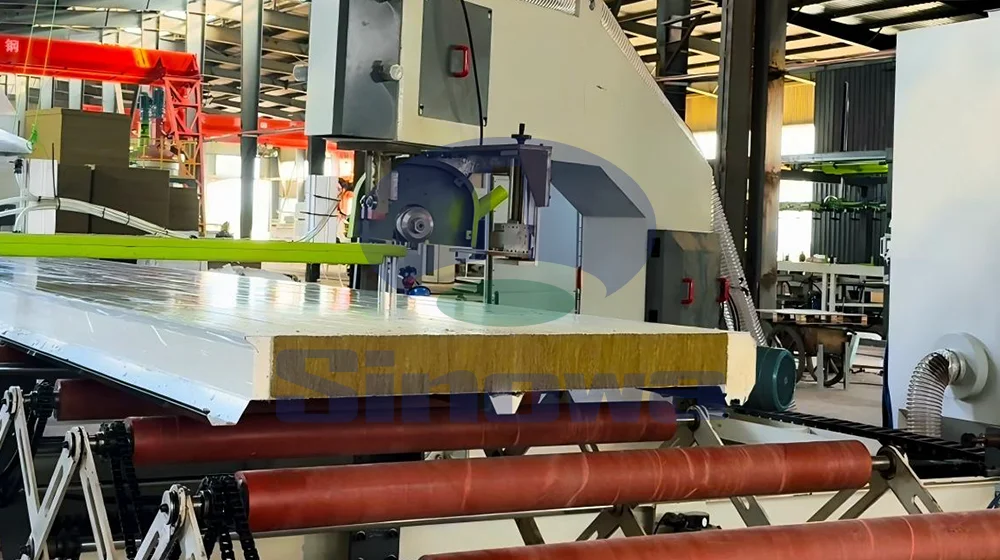
The fiber forming section is the key link to form the basic structure of rock wool boards, which is mainly composed of a centrifuge, a fiber blowing system and a binder spraying system. The molten liquid from the melting furnace is transported to the centrifuge through the launder. The centrifuge is usually a four-axis high-speed centrifuge, which rotates at a high speed to throw the molten liquid out through the small holes on the centrifugal drum. Under the action of centrifugal force, the molten liquid is stretched into fine inorganic fibers with a diameter of 3~7μm. At the same time, the fiber blowing system blows high-pressure air to further stretch the fibers and make them evenly distributed. The binder spraying system sprays a proper amount of binder onto the fibers while the fibers are forming. The binder can make the fibers bond with each other to form a stable cotton layer structure. The amount of binder sprayed needs to be strictly controlled. Too much binder will increase the density of the product and affect its thermal insulation performance; too little binder will lead to poor bonding strength of the cotton layer and easy fragmentation of the product. In addition, a small amount of dust-proof oil and water repellent are also sprayed during the fiber forming process to improve the dust-proof performance and water resistance of the fibers.
After the fiber forming, the cotton layer enters the forming and curing section, which is mainly composed of a cotton collecting machine, a pendulum cotton spreading machine, a pressing machine and a curing furnace. The cotton collecting machine collects the formed fibers to form a preliminary cotton layer, and then the pendulum cotton spreading machine spreads the cotton layer layer by layer through the swing of the pendulum. Compared with the traditional sedimentation method, the pendulum method can make the fibers distribute in a three-dimensional way, which greatly improves the uniformity of the cotton layer and the bonding strength between the fiber layers. After the cotton layer reaches the required thickness, it is sent to the pressing machine for pressing. The pressing machine controls the pressure according to the product density requirements to make the cotton layer dense and uniform. The density of the cotton layer after pressing is usually between 60~200kg/m³, which can be adjusted according to the use needs. Then, the pressed cotton layer is sent to the curing furnace for curing treatment. The curing furnace adopts a continuous heating mode, and the temperature and curing time are strictly controlled. Under the action of high temperature, the binder in the cotton layer undergoes a chemical reaction to form a stable cross-linked structure, so that the cotton layer is cured into a hard rock wool board blank. The curing temperature is usually between 180~220℃, and the curing time is determined according to the thickness and density of the product. The curing process is crucial to the strength and durability of the rock wool board. If the curing is insufficient, the product will have low strength and poor water resistance; if the curing is excessive, the product will become brittle and easy to crack.
The last section of the rock wool board production line is the cutting and finishing section, which is mainly composed of a cooling conveyor, a cutting machine, a waste edge recycling system and a packaging machine. After the curing is completed, the rock wool board blank is sent to the cooling conveyor for cooling. The cooling conveyor uses natural wind or forced air cooling to reduce the temperature of the board blank to room temperature, so as to avoid deformation of the product due to thermal expansion and contraction during the cutting process. The cutting machine cuts the cooled board blank into products of specified size and thickness. The cutting machine usually includes a longitudinal cutting machine and a transverse cutting machine, which can realize accurate cutting of the board blank. The cutting accuracy is high, which can ensure the consistency of the product size. The waste edge generated during the cutting process is collected by the waste edge recycling system, crushed and then reused as raw material, which not only reduces the waste of raw materials, but also reduces the production cost and realizes the recycling of resources. Finally, the cut rock wool boards are sent to the packaging machine for packaging. The packaging machine uses plastic film or waterproof cloth to package the products, which can prevent the products from being damp and damaged during transportation and storage, and also facilitate the transportation and use of the products. In addition, the cutting and finishing section is also equipped with a quality inspection link to check the size, density, strength and other indicators of the finished products. Unqualified products are recycled and reprocessed to ensure the quality of the delivered products.
The performance of the rock wool board production line is mainly reflected in the production efficiency, product quality stability, energy consumption level, environmental protection performance and operational stability, which are the core indicators to measure the advanced nature of the production line. In terms of production efficiency, the modern rock wool board production line adopts full-automatic control technology, which can realize continuous production 24 hours a day. The hourly output can reach 1.5~4.5 tons, and the annual output can reach 15000~30000 tons, which greatly improves the production efficiency compared with the traditional manual production mode. The full-automatic control system can realize the automatic control of each production link, reduce the manual operation intensity, and avoid the influence of human factors on the production efficiency. In terms of product quality stability, the production line is equipped with advanced detection equipment and control systems, which can monitor the key parameters of each production link in real time, such as the temperature of the melting furnace, the amount of binder sprayed, the thickness of the cotton layer, the curing temperature and time, etc., and adjust them in time when deviations occur, so as to ensure that the performance indicators of each batch of products are consistent. The rock wool boards produced by the production line have uniform density, stable strength, low thermal conductivity and high sound absorption coefficient, which can meet the use requirements of different fields.
Energy consumption level is an important indicator to measure the economic performance of the rock wool board production line. With the continuous improvement of energy conservation and environmental protection requirements, the modern rock wool board production line has adopted a variety of energy-saving technologies to reduce energy consumption. For example, the melting furnace is equipped with a heat exchanger, which can recover the waste heat generated during the melting process and use it to preheat the raw materials or the combustion air, so as to reduce the fuel consumption. The insulation layer of the melting furnace is made of high-performance insulation materials, which can reduce heat loss and improve the thermal efficiency of the furnace. In addition, the production line adopts frequency conversion control technology for the motors of various equipment, which can adjust the speed of the motor according to the production load, avoid the waste of energy caused by the idle operation of the equipment. The energy consumption of the advanced rock wool board production line is usually 10~15% lower than that of the traditional production line, which greatly reduces the production cost for enterprises. In terms of environmental protection performance, the production line is equipped with a complete set of dust removal, waste gas and waste water treatment systems. The dust generated during the raw material processing and fiber forming process is collected by the bag filter, and the emission concentration meets the national environmental protection standards. The waste gas generated during the melting process is treated by the waste gas combustion furnace and the desulfurization and denitrification equipment, and then discharged after reaching the standard. The waste water generated during the production process is treated by the sewage treatment system and reused, realizing zero discharge of waste water. These environmental protection measures ensure that the production process is green and environmentally friendly, and reduce the impact on the surrounding environment.
Operational stability is another important performance indicator of the rock wool board production line. The production line is composed of a variety of equipment, and the stable operation of each equipment is the guarantee of the normal operation of the entire production line. The modern rock wool board production line adopts high-quality equipment components and advanced control systems, which have high reliability and stability. The key equipment such as the centrifuge, the curing furnace and the cutting machine are equipped with fault detection and alarm systems, which can find the fault in time and send an alarm, so that the maintenance personnel can deal with it quickly, reducing the downtime of the production line. In addition, the production line is easy to operate and maintain. The full-automatic control system has a friendly man-machine interface, which can realize the centralized control and monitoring of the entire production line. The maintenance of the equipment is simple and convenient, and the maintenance cycle is long, which reduces the maintenance cost and the workload of the maintenance personnel. At the same time, the production line also has good adaptability, which can adjust the production parameters according to the requirements of different types and specifications of rock wool boards, realizing the flexible production of multiple products.
The types of rock wool boards produced by the rock wool board production line are diverse, which can be divided into different categories according to different classification standards, and each type of rock wool board has its own unique performance characteristics and application scope. According to the production process, rock wool boards can be divided into pendulum method rock wool boards and sedimentation method rock wool boards. The pendulum method rock wool board is produced by the pendulum cotton spreading process, and the fibers are distributed in a three-dimensional way, so it has high compressive strength, tensile strength and bonding strength between layers, and the density and thickness are uniform. It is the mainstream product in the market and is widely used in various important fields. The sedimentation method rock wool board is produced by the sedimentation process, and the fibers are distributed in a two-dimensional plane. The density and uniformity of the binder are poor, so its compressive performance and interlayer bonding strength are relatively low. It is mainly used in some auxiliary insulation and sound absorption scenarios with low performance requirements. According to the density, rock wool boards can be divided into low-density rock wool boards, medium-density rock wool boards and high-density rock wool boards. Low-density rock wool boards have a density of 80~100kg/m³, which are mainly focused on thermal insulation and sound absorption performance, with low strength, and are suitable for indoor ceiling, internal wall insulation and non-load-bearing parts. Medium-density rock wool boards have a density of 120~150kg/m³, which balance thermal insulation and strength, are the most versatile type, and are suitable for external wall insulation, roof insulation, fire barrier and most other scenarios. High-density rock wool boards have a density of 160~200kg/m³, which focus on high strength and high temperature resistance, and are suitable for industrial equipment, pipeline insulation and roof load-bearing parts.
According to the use, rock wool boards can be divided into building insulation rock wool boards, industrial insulation rock wool boards, sound absorption rock wool boards, fire barrier rock wool boards and other types. Building insulation rock wool boards are the most widely used type, which are mainly used for the insulation of building external walls, roofs, internal walls and floors. They can effectively reduce the energy consumption of buildings, improve the indoor thermal comfort, and at the same time have good fire resistance, which can improve the fire safety of buildings. Building insulation rock wool boards can be divided into external wall external insulation rock wool boards, roof insulation rock wool boards and curtain wall special rock wool boards according to the specific use parts. External wall external insulation rock wool boards have high compressive strength, pull-out strength and weather resistance, and good compatibility with the external wall system, which can adapt to the outdoor harsh environment and have a long service life. Roof insulation rock wool boards have good hydrophobicity and moisture resistance, can effectively resist the erosion of rain and snow, and have a certain compressive capacity, which can adapt to the load of the roof. Curtain wall special rock wool boards have higher fire resistance temperature and melting point, smaller high-temperature linear shrinkage, and will not corrode the metal curtain wall, which is suitable for the insulation and fire protection of the curtain wall system. Industrial insulation rock wool boards are mainly used for the insulation of industrial equipment, pipelines and industrial furnaces. They have excellent high-temperature resistance, and the long-term use temperature can reach 450~750℃, with low thermal conductivity, which can effectively reduce the heat loss of equipment and pipelines, save energy and protect the environment. At the same time, they can also protect the operators from high-temperature scalds and improve the safety of production.
Sound absorption rock wool boards are mainly used for noise reduction and sound absorption in various places that require quiet environment, such as hospitals, schools, theaters, recording studios, machine rooms and so on. The sound absorption rock wool board has a uniform porous structure, which can absorb the sound waves entering the pores, convert the sound energy into heat energy and dissipate it, so as to achieve the effect of reducing noise. The sound absorption coefficient of the sound absorption rock wool board in the frequency range of 1000~4000Hz is 0.6~0.8, which has excellent sound absorption performance. Fire barrier rock wool boards are mainly used for the fire partition of buildings, such as the fire barrier between floors, the fire partition of workshops and the fireproof wrapping of pipelines. They have excellent fire resistance, can maintain stability in the fire, do not burn, do not produce toxic smoke, and can effectively block the spread of fire, winning valuable time for fire fighting and personnel evacuation. The fire resistance limit of fire barrier rock wool boards can reach 2~3 hours, which meets the high fire protection requirements of various buildings. In addition, according to the special performance requirements, the rock wool board production line can also produce water-repellent rock wool boards, low-chlorine rock wool boards and other special types of products. Water-repellent rock wool boards have a hydrophobic rate of more than 99%, which can effectively prevent moisture absorption and improve the durability of the products. Low-chlorine rock wool boards have low chlorine content, which will not corrode the metal equipment and pipelines, and are suitable for the insulation of metal structures and pipelines.
The wide variety of rock wool boards produced by the rock wool board production line determines their extensive application scope, covering construction, industry, transportation, national defense and other multiple fields, and plays an important role in energy conservation, environmental protection, fire safety and other aspects. In the construction industry, rock wool boards are mainly used for building insulation and fire protection, which is an important material to promote green buildings and energy-saving buildings. With the continuous improvement of the national energy conservation and emission reduction policies, the demand for rock wool boards in the construction industry is increasing. In the external wall insulation project of buildings, the external wall external insulation rock wool board is pasted on the outer surface of the external wall, combined with the protective layer and decorative layer to form a complete external wall insulation system, which can effectively reduce the heat transfer between the indoor and outdoor, reduce the energy consumption of air conditioning and heating, and at the same time improve the thermal comfort of the indoor environment. In the roof insulation project, the roof insulation rock wool board is laid on the roof structure layer, which can prevent the roof from being affected by temperature changes and generate cracks, and at the same time play a role in thermal insulation and waterproofing. In the internal decoration of buildings, the sound absorption rock wool board is used for the decoration of internal walls and ceilings, which can reduce the noise in the room, create a quiet and comfortable living and working environment. In addition, the fire barrier rock wool board is used in the fire partition of buildings, which can effectively improve the fire safety level of buildings and reduce the loss caused by fire.
In the industrial field, rock wool boards are widely used in the insulation of industrial equipment, pipelines, industrial furnaces and other facilities, involving petrochemical, electric power, metallurgy, machinery and other multiple industries. In the petrochemical industry, the pipelines and equipment for transporting high-temperature and high-pressure media need to be insulated with rock wool boards to reduce heat loss, improve the efficiency of the equipment, and at the same time protect the surrounding environment and operators. In the electric power industry, the boilers, steam pipelines and other equipment in thermal power plants need to be insulated with rock wool boards, which can reduce the heat loss of the equipment, save energy, and ensure the safe and stable operation of the equipment. In the metallurgical industry, the industrial furnaces, smelting equipment and other facilities generate a lot of heat during the production process, and the use of rock wool boards for insulation can reduce heat loss, improve the thermal efficiency of the furnace, and reduce the production cost. In addition, rock wool boards are also used for the insulation of cold storage equipment in the refrigeration industry, which can effectively maintain the low temperature environment inside the cold storage, reduce the energy consumption of refrigeration equipment, and extend the service life of the equipment.
In the transportation field, rock wool boards are mainly used for the insulation and noise reduction of vehicles, ships, aircraft and other means of transportation. In the automotive industry, rock wool boards are used for the insulation and noise reduction of the car body, engine compartment and other parts, which can reduce the noise inside the car and improve the comfort of the ride, and at the same time play a role in thermal insulation, reducing the energy consumption of the air conditioning system. In the shipbuilding industry, rock wool boards are used for the insulation and fire protection of the ship's cabin, pipeline and other parts. Due to the harsh marine environment, the rock wool boards used on ships need to have good water resistance, corrosion resistance and fire resistance, which can adapt to the marine environment and ensure the safe operation of the ship. In the aviation industry, the rock wool boards with light weight and high strength are used for the insulation and noise reduction of aircraft cabins, which can reduce the weight of the aircraft, save fuel, and improve the comfort of the passengers.
In addition to the above fields, rock wool boards produced by the rock wool board production line are also used in national defense, aerospace, medical and other special fields. In the national defense field, rock wool boards are used for the insulation and fire protection of military facilities, weapons and equipment, which can adapt to the harsh working environment and ensure the normal operation of military equipment. In the aerospace field, the high-performance rock wool boards with light weight, high strength and high temperature resistance are used for the insulation of aerospace equipment, which can withstand the extreme temperature environment in space and ensure the safe operation of the equipment. In the medical field, the rock wool boards with good environmental protection and sound absorption performance are used for the noise reduction and insulation of medical buildings such as operating rooms and wards, which can create a quiet and clean medical environment and facilitate the treatment and recovery of patients.
It should be noted that although the rock wool board has many excellent performance characteristics, attention should be paid to the safety protection during the production and construction process. The rock wool fiber is thin and easy to fly. Direct contact with the skin may cause skin irritation, such as erythema, itching and swelling. Long-term contact with rock wool dust may induce pneumoconiosis, conjunctivitis and other diseases. Therefore, the operators in the production line need to wear professional protective equipment, such as masks, gloves and protective clothing, to avoid direct contact with rock wool fibers and dust. At the same time, the production workshop should be equipped with good ventilation equipment to reduce the concentration of dust in the air and protect the health of the operators. In the construction process, the construction personnel also need to do a good job in protective measures, and clean up the scattered rock wool fibers in time to avoid environmental pollution and personal injury.
With the continuous development of science and technology and the continuous improvement of industrialization level, the rock wool board production line is also constantly being upgraded and improved. In the future, the rock wool board production line will develop in the direction of higher automation, more energy conservation and environmental protection, and more intelligent. The application of intelligent control technology will make the production line realize more accurate parameter control and fault diagnosis, improve production efficiency and product quality stability. The development of new energy-saving technologies will further reduce the energy consumption of the production line and reduce environmental pollution. The research and development of new raw materials and new processes will enrich the types of rock wool board products, improve the performance of the products, and expand their application scope. At the same time, with the continuous strengthening of the national environmental protection and energy conservation policies, the demand for rock wool boards in various fields will continue to increase, which will promote the rapid development of the rock wool board production line industry and make it play a more important role in the process of national economic development.
In summary, the rock wool board production line is a set of complex and advanced integrated production equipment, whose structure is composed of raw material processing, melting, fiber forming, forming and curing, cutting and finishing and other functional sections. Each section cooperates closely to realize the continuous and automated production of rock wool boards. The production line has excellent performance in production efficiency, product quality stability, energy consumption level, environmental protection performance and operational stability, which lays a good foundation for the production of high-quality rock wool boards. The rock wool boards produced by the production line are diverse in types, which can be divided into different categories according to production process, density, use and other standards, and each type of product has its own unique performance and application scope. Due to their excellent thermal insulation, sound absorption, fire resistance and other characteristics, rock wool boards are widely used in construction, industry, transportation and other multiple fields, playing an important role in energy conservation, environmental protection, fire safety and other aspects. With the continuous progress of technology, the rock wool board production line will be further upgraded and improved, and its application prospect will be more broad.
« Rock Wool Board Production Line » Update Date: 2026/2/24
URL: https://www.sinowamachine.com/tags/rock-wool-board-production-line.html
![Rock Wool Board Production Line Vendor In China]()
Rock Wool Board Production Line Vendor In China
2026-08-28China has emerged as a pivotal global hub for rock wool board production line manufacturing, catering to the surging international demand for high-performance thermal insulation, fireproof, and sound-absorbing building materials. As the global construction and industrial insulation industries continu…![Rock Wool Board Production Line Manufacturer]()
Rock Wool Board Production Line Manufacturer
2026-04-13In the global market of thermal insulation and fire protection materials, rock wool board has long maintained a crucial position due to its excellent comprehensive performance, and the rock wool board production line, as the core equipment for mass production of high-quality rock wool boards, has bec…
- Links:
- Sandwich Panel Continuous Production Line
- Automatic and Continuous Sandwich Panel Production Line
- Cheap and Low Price Sandwich Panel Production Line
- China Sandwich Panel Production Line Factory
- Color Steel Sandwich Panel Production Line For Cold Storage
- Continuous Composite Foam Sandwich Panel Production Line
- Continuous Production Line For Rockwool and Mineral Wool Sandwich Panels
- Continuous PU Phenolic Insulation Panel Production Line
- Continuous PU PIR Sandwich Panel Production Line
- Continuous PUF PUR Sandwich Panel Production Line
- Continuous Sandwich Panel Production Line For Roof and Wall
- Customized and Design Sandwich Panel Production Line
- Decorative Sandwich Panel Production Line For Glass Wool Boards
- High Quality Sandwich Panel Production Line For Sale
- Polyurethane(PU) Sandwich Panel Production Line
- Sandwich Panel Production Line Manufacturer and Supplier
- Sandwich Panel Production Machinery and Equipment