
Continuous Sandwich Panel Manufacturing Line
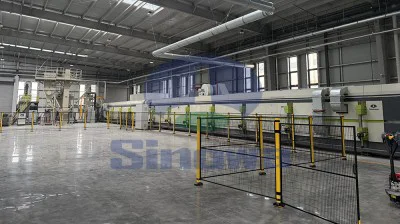
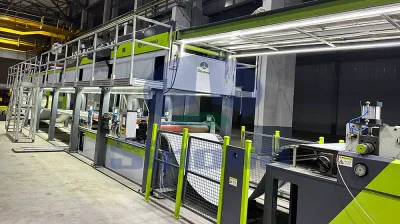
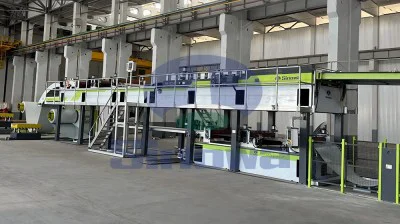
Sinowa is a continuous sandwich panel manufacturing line supplier from china, customized high-quality & high efficiency continuous sandwich panel manufacturing line at low price, the adoption of system integration technology and bus control technology accomplishes the full automatization of integrated and coordinated control of the continuous sandwich panel manufacturing line with accessible remote interactive communication. Ranking the first-class level in the world, it is currently the continuous sandwich panel manufacturing line in the market taking a comprehensive lead in high performance.
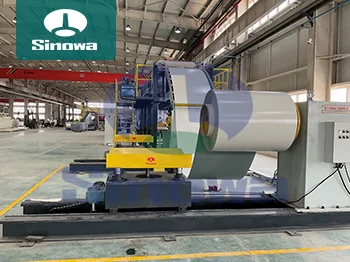
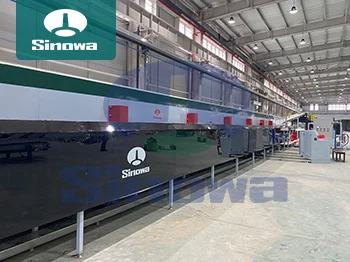
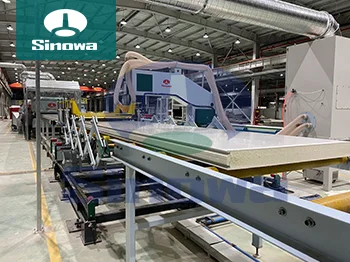
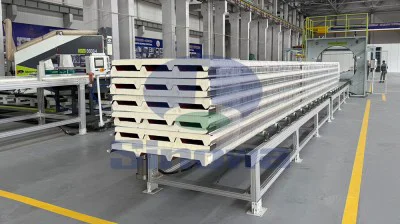
The high-tech continuous sandwich panel manufacturing line can meet a variety of production needs of customers, the whole continuous sandwich panel manufacturing line design concept of modularization enables all our components to be integrated and combined at will. Our high efficiency continuous sandwich panel manufacturing line can easily automate the production of roof sandwich panel, wall sandwich panel, cold storage sandwich panel and other products by different combination and configuration selection and siple switching. The inner core layer can be polyrethane or rock wool, glass wool, an so on.


The high precision continuous sandwich panel manufacturing line has high adaptability, which may produce various sandwich panel of the PU, PIR and rock wool systems. We may design various products according to the customer’s requirements, including various configurations, so as to meet their demands with flexible price system. Highly integrated and linked control system centralizes all control points at the main central center, achieving parameter linkage, fault self-diagnosis controlled by the whole line and shipping distance control. High-level automatic control system also saves the manpower and reduces the manpower loss for customers.


The precision servo hoisting mechanism employed by the main engine without hydraulic system makes the board thickness control flexible and the customer may conveniently change or adjust the board thickness. There will be not such troubles as hydraulic system adjustment, leakage, maintenance, etc.


High-level energy saving and protection design makes the whole continuous sandwich panel manufacturing line possible to produce around the clock throughout the year and the customer will save huge budget. In addition, the isolated heat preservation room is constructed for warming the environment. The energy saving and protection design of our manufacturing line may guarantee that the customer’s production line may be freely heated and produce in the main time to save more costs for customers.


The high-power low-consumption design quickens the reaction of the cheap continuous sandwich panel manufacturing line while energy consumption is kept low. With the brand-new, fully sealed inner insulation design, the energy consumption is controlled at the minimum level to achieve the design objective of less than an hour for the insulation system to be activated from the room temperature above 5℃ to the production process temperature. The energy consumption is only 40% that of those similar products.
A continuous sandwich panel manufacturing line is a highly integrated and automated production system designed to produce sandwich panels in a non-interrupted flow, ensuring high efficiency, consistent quality, and adaptability to diverse production requirements. Unlike traditional intermittent production methods, this kind of manufacturing line connects multiple specialized processing units in a seamless sequence, allowing raw materials to be transformed into finished sandwich panels through a series of coordinated operations without manual intervention at key stages. Sandwich panels themselves consist of two outer facing layers and a core layer bonded together, offering a combination of structural strength, thermal insulation, soundproofing, and other functional properties that make them indispensable in various industries. As such, the continuous manufacturing line that produces these panels plays a crucial role in supporting the supply of high-quality, multi-functional building and industrial materials. To fully understand the value and application of this production system, it is essential to explore its structural composition, core performance characteristics, diverse types, and wide-ranging applications in detail.
The structure of a continuous sandwich panel manufacturing line is a sophisticated assembly of interconnected modules, each designed to perform a specific function in the production process, working together to ensure a smooth and efficient workflow. Every component, from the initial material feeding unit to the final cutting and stacking unit, is carefully integrated to maintain the continuity of production, minimize material waste, and guarantee the uniformity of the finished products. The basic structural components of such a line typically include material uncoiling and feeding units, surface treatment units, core material processing units, bonding and compounding units, shaping and pressing units, cooling and solidifying units, cutting units, and stacking and handling units. Each of these units has a unique role and is equipped with specialized mechanisms to meet the technical requirements of sandwich panel production.
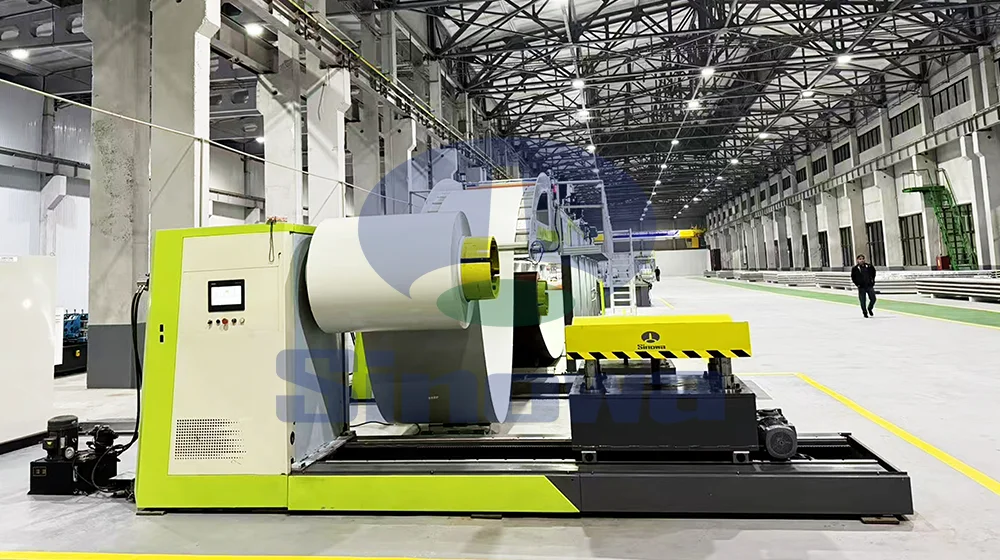
The material uncoiling and feeding unit is the starting point of the production line, responsible for supplying the outer facing materials, which are usually in the form of metal coils such as steel or aluminum. This unit consists of uncoilers, which securely hold the coils and unroll them at a steady and controlled speed, and feeding mechanisms that guide the uncoiled facing sheets into the subsequent processing stages. To ensure stability during uncoiling, the uncoilers are equipped with tension control systems that prevent the coils from loosening or tearing, while the feeding mechanisms are designed to maintain precise alignment of the facing sheets, avoiding deviations that could affect the bonding quality with the core layer. Some advanced feeding units also include automatic coil joining systems, allowing two coils to be connected without stopping the production line, thereby maximizing production efficiency and reducing downtime.
Following the feeding unit is the surface treatment unit, which is critical for enhancing the adhesion between the facing layers and the core layer. The surface of the facing sheets, especially metal sheets, may have oil, dust, or oxide layers that can hinder the bonding process, leading to poor adhesion and potential delamination of the finished panels. The surface treatment unit addresses this issue through processes such as degreasing, cleaning, and corona treatment. Degreasing and cleaning remove contaminants from the surface, while corona treatment increases the surface energy and wettability of the facing sheets, promoting better adhesion of the bonding agent or core material. This unit may also include pre-heating mechanisms that adjust the temperature of the facing sheets to the optimal level for subsequent bonding, ensuring that the bond formed is strong and durable.
The core material processing unit is tailored to the type of core material being used, as different core materials require different processing methods to achieve the desired thickness, density, and structure. Common core materials include polyurethane (PU), polyisocyanurate (PIR), expanded polystyrene (EPS), extruded polystyrene (XPS), and mineral wool, each with unique properties and processing requirements. For foam-based core materials such as PU and PIR, the processing unit includes a multi-component dosing system that accurately measures and mixes the raw materials (such as isocyanate, polyol, catalysts, and blowing agents) in the correct proportions. This system is equipped with high-pressure mixing heads that ensure uniform mixing of the components, which is essential for the formation of a consistent foam structure. For mineral wool core materials, the processing unit includes cutting mechanisms that cut the mineral wool boards into lamellae or trapezoidal shapes of the required thickness, as well as gluing mechanisms that apply adhesive to the surface of the mineral wool to facilitate bonding with the facing layers. Additionally, some core material processing units are equipped with dustless cutting systems to reduce waste and minimize dust contamination of the finished products.
The bonding and compounding unit is the core of the continuous manufacturing line, where the facing layers and the core layer are combined to form the sandwich panel structure. This unit typically consists of a glue application system and a compounding mechanism. The glue application system applies the appropriate amount of adhesive to the inner surfaces of the upper and lower facing sheets, ensuring uniform coverage without excess adhesive that could cause waste or uneven bonding. For foam-based core materials, the compounding mechanism involves feeding the mixed foam material between the two facing sheets, which are then fed into the shaping and pressing unit. For solid core materials such as mineral wool or EPS, the compounding mechanism brings the pre-processed core layer into contact with the adhesive-coated facing sheets, ensuring full adhesion across the entire surface.
The shaping and pressing unit is responsible for ensuring that the combined sandwich panel has the correct thickness, flatness, and surface finish. This unit typically includes a double belt press, which consists of two parallel, continuously moving belts that clamp the sandwich panel between them. The belts are independently heated and insulated, maintaining a controlled temperature and pressure environment that promotes the curing of the adhesive or the expansion and solidification of the foam core. The pressure applied by the belts is adjustable, allowing for the production of panels with different thicknesses and densities, while the heating system ensures that the bonding process is completed efficiently and uniformly. The double belt press also plays a role in shaping the surface of the facing sheets, ensuring that they have the desired profile (such as trapezoidal or corrugated) for specific applications.
After shaping and pressing, the sandwich panel enters the cooling and solidifying unit, where it is cooled to room temperature to ensure that the core layer and adhesive are fully solidified, and the panel maintains its shape and structural integrity. The cooling unit may use air cooling, water cooling, or a combination of both, depending on the type of core material and the production speed. For foam-based cores, gradual cooling is essential to prevent the formation of internal stresses that could lead to warping or cracking, while for solid cores, cooling helps to accelerate the curing of the adhesive. The cooling unit is designed to maintain a consistent cooling rate, ensuring that all panels have the same mechanical properties and dimensional stability.
Once cooled, the continuous panel is fed into the cutting unit, which cuts the long panel into individual sheets of the desired length. The cutting unit is equipped with high-precision cutting tools, such as band saws or disk blades, and may include a flying saw mechanism that can cut the panel while it is still moving, without stopping the production line. This flying saw mechanism is often equipped with a 180-degree rotating function, allowing for cutting in both directions and enabling the production of small-length panels even at high line speeds. The cutting unit is also equipped with position sensors and length measurement systems to ensure that each cut is precise, with minimal dimensional errors.
The final unit in the production line is the stacking and handling unit, which automates the process of collecting, stacking, and packaging the finished panels. This unit includes conveyor belts that transport the cut panels to a stacking area, where robotic arms or automated stacking mechanisms arrange the panels in neat piles, according to the required quantity and orientation. The stacking unit is designed to handle panels of different sizes and weights without causing damage to the surface or structure of the panels. Some advanced handling units also include wrapping mechanisms that wrap the stacked panels in protective film to prevent dust, moisture, and damage during storage and transportation.
In addition to these basic components, many continuous sandwich panel manufacturing lines are equipped with a centralized control system that integrates all the units, allowing for centralized monitoring and control of the entire production process. This control system typically includes a human-machine interface (HMI) that displays real-time production data, such as line speed, temperature, pressure, and material consumption, and allows operators to adjust parameters as needed. The control system may also include automatic fault diagnosis and alarm functions, which can detect abnormalities in the production process (such as material jams, temperature deviations, or pressure fluctuations) and alert operators immediately, minimizing downtime and reducing the risk of defective products. Some advanced lines also support remote control and monitoring, allowing operators to manage the production process from a remote location, further improving operational efficiency and convenience.
The performance of a continuous sandwich panel manufacturing line is determined by a combination of factors, including production efficiency, product quality, adaptability, energy efficiency, and operational stability. These performance characteristics are critical for evaluating the value and applicability of the production line, as they directly affect the cost-effectiveness, productivity, and competitiveness of the manufacturer.
Production efficiency is one of the most important performance indicators of a continuous manufacturing line, as it directly determines the output volume and production cost. Continuous sandwich panel manufacturing lines are designed to operate 24 hours a day, 7 days a week, with minimal downtime, ensuring high continuous production capacity. The production speed of such lines can vary depending on the type of core material, the thickness of the panels, and the complexity of the facing profile, but it typically ranges from a few meters to tens of meters per minute. Compared to intermittent production methods, which require frequent starts and stops, continuous lines can achieve much higher production efficiency, reducing labor costs and increasing output. The automatic coil joining system, flying saw cutting, and automated stacking all contribute to minimizing downtime and maximizing production continuity, further enhancing efficiency.
Product quality consistency is another key performance characteristic of continuous sandwich panel manufacturing lines. Due to the high degree of automation and precise control of all processing parameters, these lines can produce panels with uniform thickness, flatness, bonding strength, and surface finish. The centralized control system ensures that parameters such as temperature, pressure, speed, and adhesive dosage are maintained within strict tolerances, eliminating the variations caused by manual operation. For example, the double belt press maintains a consistent temperature and pressure across the entire width and length of the panel, ensuring that the bonding between the facing layers and the core layer is uniform and strong, with no delamination or weak points. The precise cutting unit ensures that each panel has accurate dimensions, with minimal deviations, making them easy to install and assemble. Additionally, the surface treatment unit ensures that the facing sheets have consistent surface properties, promoting uniform adhesion and a high-quality appearance of the finished panels. This consistency in product quality is essential for meeting the requirements of various applications, especially in the construction industry, where structural integrity and dimensional accuracy are critical.
Adaptability is another important performance feature of continuous sandwich panel manufacturing lines, allowing them to produce a wide range of sandwich panels with different specifications, materials, and properties. These lines are designed with a modular structure, which means that individual units can be adjusted, replaced, or upgraded to meet changing production requirements. For example, the core material processing unit can be modified to handle different types of core materials (such as switching from PU to mineral wool), while the roll forming unit can be adjusted to produce different facing profiles (such as trapezoidal, corrugated, or flat). The thickness of the panels can be easily adjusted by changing the pressure and gap of the double belt press, while the length of the panels can be adjusted through the cutting unit. This adaptability allows manufacturers to respond quickly to market demands, producing panels for different applications without the need for large-scale investments in new production equipment. Some advanced lines can even switch between different product specifications with minimal downtime, further enhancing their flexibility and competitiveness.
Energy efficiency is an increasingly important performance indicator in modern manufacturing, as manufacturers seek to reduce energy consumption, lower operating costs, and minimize their environmental impact. Continuous sandwich panel manufacturing lines are designed with energy-saving features that reduce energy consumption throughout the production process. For example, the double belt press uses insulated heating systems that minimize heat loss, while the cooling unit uses efficient cooling mechanisms that reduce energy consumption. The centralized control system optimizes the operation of all units, ensuring that energy is used efficiently, and reducing unnecessary energy waste. Some lines are also equipped with heat recovery systems that capture and reuse waste heat from the heating and cooling units, further reducing energy consumption. Additionally, the use of high-efficiency motors and drives in all units reduces electricity consumption, while the automatic control of material dosage reduces material waste, which also contributes to overall energy efficiency. These energy-saving features not only lower operating costs but also help manufacturers meet environmental regulations and achieve sustainability goals.
Operational stability and reliability are essential for ensuring continuous production and minimizing maintenance costs. Continuous sandwich panel manufacturing lines are built with high-quality components and robust structures, designed to withstand the rigors of long-term continuous operation. The centralized control system includes automatic fault diagnosis and protection functions, which can detect potential issues before they escalate into major failures, reducing downtime and maintenance costs. For example, if the temperature in the double belt press exceeds the set limit, the control system will automatically adjust it or shut down the unit to prevent damage to the equipment or the product. The modular design also makes maintenance easier, as individual units can be removed and repaired without stopping the entire production line. Additionally, the use of standardized components makes it easy to source replacement parts, reducing maintenance time and costs. This operational stability and reliability ensure that the production line can operate continuously for long periods, maximizing productivity and return on investment.
Continuous sandwich panel manufacturing lines can be classified into different types based on various criteria, including the type of core material processed, the type of facing material used, the production capacity, and the level of automation. Each type of line has its own characteristics and is suitable for specific production requirements and applications.
Based on the type of core material processed, the most common types of continuous sandwich panel manufacturing lines are PU/PIR foam sandwich panel lines, mineral wool sandwich panel lines, EPS sandwich panel lines, and composite core sandwich panel lines. PU/PIR foam sandwich panel lines are designed to produce panels with PU or PIR foam cores, which are known for their excellent thermal insulation, light weight, and high strength. These lines are equipped with high-pressure foaming systems that accurately mix and dispense the foam components, as well as double belt presses that ensure the foam expands and cures properly. PU/PIR lines are widely used in the production of panels for cold storage, roofing, and walls, where thermal insulation is a key requirement.
Mineral wool sandwich panel lines are designed to produce panels with mineral wool cores, which offer excellent fire resistance, soundproofing, and thermal insulation properties. These lines include mineral wool cutting and processing units that cut the mineral wool into the required shape and thickness, as well as gluing and compounding units that bond the mineral wool core to the facing layers. Mineral wool lines often include dustless cutting systems to reduce waste and dust contamination, and are suitable for producing panels for high-rise buildings, industrial workshops, and other applications where fire safety is a priority.
EPS sandwich panel lines are used to produce panels with EPS cores, which are lightweight, cost-effective, and have good thermal insulation properties. These lines typically include an EPS core feeding unit, a gluing unit, and a compounding unit, and are often less complex than PU/PIR or mineral wool lines. EPS lines are suitable for producing panels for low-rise buildings, temporary structures, and packaging applications, where cost and weight are important considerations.
Composite core sandwich panel lines are designed to produce panels with composite cores, which combine two or more types of core materials (such as PU and mineral wool) to achieve a balance of properties. These lines are more complex, as they require separate processing units for each core material, but they offer greater flexibility in terms of product performance. Composite core lines are suitable for applications where multiple properties (such as thermal insulation, fire resistance, and soundproofing) are required.
Based on the type of facing material, continuous sandwich panel manufacturing lines can be classified into metal-faced sandwich panel lines and non-metal-faced sandwich panel lines. Metal-faced lines are the most common, producing panels with steel, aluminum, or other metal facing sheets. These lines include roll forming units that shape the metal sheets into the desired profile, as well as surface treatment units that enhance adhesion. Metal-faced panels are widely used in construction, industrial, and cold storage applications due to their durability, strength, and weather resistance. Non-metal-faced lines produce panels with facing sheets made of materials such as fiberglass, PVC, or wood-based panels. These lines are suitable for applications where metal facing is not required, such as in interior decoration or non-structural applications.
Based on production capacity, continuous sandwich panel manufacturing lines can be divided into small-scale, medium-scale, and large-scale lines. Small-scale lines have a production capacity of less than 1 million square meters per year, suitable for small manufacturers or specialized applications. Medium-scale lines have a production capacity of 1-3 million square meters per year, suitable for medium-sized manufacturers serving regional markets. Large-scale lines have a production capacity of more than 3 million square meters per year, suitable for large manufacturers serving national or international markets, with high demand for sandwich panels. The production capacity of the line is determined by factors such as line speed, width of the panels, and the efficiency of the processing units.
Based on the level of automation, continuous sandwich panel manufacturing lines can be classified into fully automated lines and semi-automated lines. Fully automated lines require minimal manual intervention, with all processing steps (from material feeding to stacking) controlled by the centralized control system and automated mechanisms. These lines offer the highest production efficiency, product quality consistency, and labor savings, but require a higher initial investment. Semi-automated lines require some manual intervention, such as loading coils, adjusting parameters, or stacking panels, and are suitable for manufacturers with lower production volumes or limited budgets. The level of automation can also be upgraded over time, with semi-automated lines being modified to become fully automated as production demands increase.
The applications of continuous sandwich panel manufacturing lines are closely linked to the applications of the sandwich panels they produce, which are widely used in various industries, including construction, cold storage, industrial manufacturing, transportation, and agriculture. The versatility, efficiency, and quality consistency of continuous manufacturing lines make them an essential tool for meeting the growing demand for sandwich panels in these industries.
In the construction industry, sandwich panels produced by continuous manufacturing lines are used for a wide range of applications, including exterior walls, interior partitions, roofing, and ceilings. Exterior wall panels made from sandwich panels offer excellent thermal insulation, weather resistance, and aesthetic appeal, helping to reduce energy consumption in buildings and improve indoor comfort. These panels are lightweight, making them easy to install and reducing the load on the building structure, which is particularly beneficial for high-rise buildings. Interior partition panels offer good soundproofing and fire resistance, creating a comfortable and safe indoor environment, and are widely used in offices, hotels, hospitals, and residential buildings. Roofing panels produced by continuous lines are available in various profiles (such as trapezoidal or corrugated), offering excellent water resistance and structural strength, and are suitable for both industrial and commercial buildings. The consistency in quality and dimensions of panels produced by continuous lines ensures that they are easy to install, reducing construction time and costs.
The cold storage and refrigeration industry is another major application area for continuous sandwich panel manufacturing lines. Sandwich panels with PU or PIR foam cores are ideal for cold storage facilities, as they offer excellent thermal insulation properties, preventing heat transfer between the interior and exterior of the facility. This helps to maintain a stable low temperature inside the cold storage, reducing energy consumption and ensuring the quality of stored goods (such as food, pharmaceuticals, and chemicals). Continuous manufacturing lines can produce cold storage panels with different thicknesses and densities, allowing manufacturers to meet the specific thermal insulation requirements of different cold storage facilities (such as deep-freeze warehouses, refrigerated warehouses, and cold chain logistics centers). The panels are also bonded with high-strength adhesives, ensuring that they can withstand the low temperatures and humidity in cold storage environments without delamination.
In the industrial manufacturing sector, continuous sandwich panel manufacturing lines produce panels for use in industrial workshops, factories, and warehouses. These panels are designed to withstand harsh industrial environments, offering properties such as fire resistance, corrosion resistance, soundproofing, and thermal insulation. Industrial workshop walls and roofs made from sandwich panels can protect workers and equipment from extreme temperatures, noise, and environmental pollutants, improving working conditions. The panels are also lightweight and easy to install, allowing for quick construction of industrial facilities, which is essential for meeting tight project deadlines. Additionally, sandwich panels can be used to create clean rooms in industries such as electronics, pharmaceuticals, and food processing, where a dust-free and sterile environment is required. Panels used in clean rooms are typically made with smooth, easy-to-clean facing sheets and core materials that do not release dust or pollutants.
The transportation industry also benefits from continuous sandwich panel manufacturing lines, with sandwich panels used in the production of vehicles such as trucks, trailers, caravans, and ships. Truck and trailer bodies made from sandwich panels are lightweight, reducing fuel consumption and increasing payload capacity, while offering excellent thermal insulation and structural strength. This is particularly beneficial for refrigerated trucks and trailers, which require stable temperature control to transport perishable goods. Caravans and mobile homes use sandwich panels for walls, floors, and roofs, offering a balance of light weight, thermal insulation, and durability, making them suitable for mobile living. In the marine industry, sandwich panels are used in ship interiors and exteriors, offering corrosion resistance, water resistance, and fire resistance, which are essential for marine environments.
The agricultural industry is another emerging application area for continuous sandwich panel manufacturing lines. Sandwich panels are used in the construction of greenhouses, livestock sheds, and agricultural warehouses. Greenhouses made from sandwich panels offer excellent thermal insulation, allowing for precise control of temperature and humidity inside the greenhouse, which is essential for growing crops year-round. Livestock sheds made from sandwich panels provide a comfortable and safe environment for animals, protecting them from extreme temperatures, wind, and rain, and improving their health and productivity. Agricultural warehouses use sandwich panels for storage of crops, fertilizers, and equipment, offering protection from moisture, pests, and environmental damage. The lightweight and easy installation of sandwich panels make them ideal for agricultural applications, where construction costs and time are important considerations.
In addition to these major application areas, continuous sandwich panel manufacturing lines also produce panels for specialized applications, such as sound barriers along highways and railways, modular buildings, and temporary structures. Sound barriers made from sandwich panels offer excellent soundproofing properties, reducing noise pollution from traffic and railways, and improving the quality of life for nearby residents. Modular buildings, which are prefabricated off-site and assembled on-site, use sandwich panels for walls, floors, and roofs, offering quick construction, flexibility, and sustainability. Temporary structures, such as construction site offices, disaster relief shelters, and event venues, use sandwich panels due to their lightweight, easy installation, and durability, allowing for quick deployment and removal.
In conclusion, continuous sandwich panel manufacturing lines are sophisticated, highly automated production systems that play a crucial role in the production of high-quality, multi-functional sandwich panels. Their modular structure, precise control systems, and advanced processing units ensure high production efficiency, consistent product quality, strong adaptability, energy efficiency, and operational reliability. These lines can be classified into various types based on core material, facing material, production capacity, and automation level, allowing manufacturers to choose the most suitable line for their specific production requirements. The wide range of applications of sandwich panels, spanning construction, cold storage, industrial manufacturing, transportation, agriculture, and specialized fields, ensures that continuous sandwich panel manufacturing lines will continue to be in high demand. As technology advances, these lines will likely become more efficient, flexible, and environmentally friendly, further expanding their applications and contributing to the development of various industries. The ability to produce consistent, high-quality sandwich panels efficiently and cost-effectively makes continuous manufacturing lines an indispensable asset for manufacturers seeking to remain competitive in the global market.
« Continuous Sandwich Panel Manufacturing Line » Update Date: 2026/2/24
URL: https://www.sinowamachine.com/tags/continuous-sandwich-panel-manufacturing-line.html
![Cheap Continuous Sandwich Panel Manufacturing Line]()
Cheap Continuous Sandwich Panel Manufacturing Line
2026-08-31The cheap continuous sandwich panel manufacturing line stands as a cost-effective and high-efficiency production solution tailored for modern lightweight building material manufacturing, balancing affordable equipment investment with stable continuous production performance. Unlike traditional interm…![Continuous Sandwich Panel Manufacturing Line Manufacturer]()
Continuous Sandwich Panel Manufacturing Line Manufacturer
2026-08-24The continuous sandwich panel manufacturing line is a highly integrated, automated industrial production system tailored for the mass fabrication of composite sandwich panels, which are widely adopted in modern construction, industrial enclosure, and cold chain facility sectors. Distinguished from tr…![Continuous Sandwich Panel Manufacturing Line In China]()
Continuous Sandwich Panel Manufacturing Line In China
2026-08-12The continuous sandwich panel manufacturing line has emerged as a core automated production system for the building material industry, delivering efficient, stable, and large-scale production of composite insulation panels widely applied in modern construction, cold chain logistics, and industrial fa…![Continuous Sandwich Panel Manufacturing Line Supplier]()
Continuous Sandwich Panel Manufacturing Line Supplier
2026-01-12In the evolving landscape of modern construction and industrial manufacturing, the demand for efficient, high-quality building materials has driven significant innovations in production technology. Among these advancements, continuous sandwich panel manufacturing lines have emerged as a cornerstone o…
- Links:
- Sandwich Panel Continuous Production Line
- Automatic and Continuous Sandwich Panel Production Line
- Cheap and Low Price Sandwich Panel Production Line
- China Sandwich Panel Production Line Factory
- Color Steel Sandwich Panel Production Line For Cold Storage
- Continuous Composite Foam Sandwich Panel Production Line
- Continuous Production Line For Rockwool and Mineral Wool Sandwich Panels
- Continuous PU Phenolic Insulation Panel Production Line
- Continuous PU PIR Sandwich Panel Production Line
- Continuous PUF PUR Sandwich Panel Production Line
- Continuous Sandwich Panel Production Line For Roof and Wall
- Customized and Design Sandwich Panel Production Line
- Decorative Sandwich Panel Production Line For Glass Wool Boards
- High Quality Sandwich Panel Production Line For Sale
- Polyurethane(PU) Sandwich Panel Production Line
- Sandwich Panel Production Line Manufacturer and Supplier
- Sandwich Panel Production Machinery and Equipment