
Insulated Sandwhich Panel Production Line
Sinowa is a insulated sandwhich panel production line supplier from china, customized high-quality & high efficiency insulated sandwhich panel production line at low price, the adoption of system integration technology and bus control technology accomplishes the full automatization of integrated and coordinated control of the insulated sandwhich panel production line with accessible remote interactive communication. Ranking the first-class level in the world, it is currently the insulated sandwhich panel production line in the market taking a comprehensive lead in high performance.
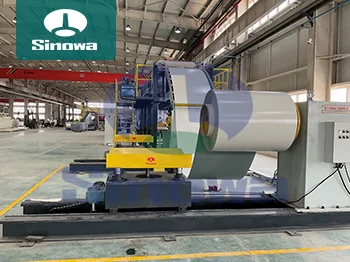
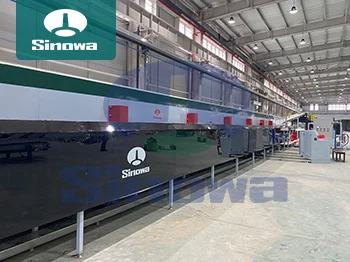
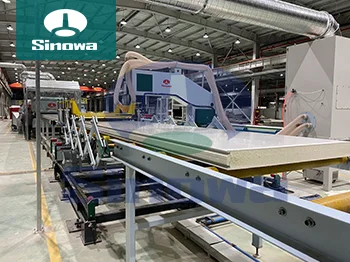
The high-tech insulated sandwhich panel production line can meet a variety of production needs of customers, the whole insulated sandwhich panel production line design concept of modularization enables all our components to be integrated and combined at will. Our high efficiency insulated sandwhich panel production line can easily automate the production of roof sandwich panel, wall sandwich panel, cold storage sandwich panel and other products by different combination and configuration selection and siple switching. The inner core layer can be polyrethane or rock wool, glass wool, an so on.


The high precision insulated sandwhich panel production line has high adaptability, which may produce various sandwich panel of the PU, PIR and rock wool systems. We may design various products according to the customer’s requirements, including various configurations, so as to meet their demands with flexible price system. Highly integrated and linked control system centralizes all control points at the main central center, achieving parameter linkage, fault self-diagnosis controlled by the whole line and shipping distance control. High-level automatic control system also saves the manpower and reduces the manpower loss for customers.


The precision servo hoisting mechanism employed by the main engine without hydraulic system makes the board thickness control flexible and the customer may conveniently change or adjust the board thickness. There will be not such troubles as hydraulic system adjustment, leakage, maintenance, etc.


High-level energy saving and protection design makes the whole insulated sandwhich panel production line possible to produce around the clock throughout the year and the customer will save huge budget. In addition, the isolated heat preservation room is constructed for warming the environment. The energy saving and protection design of our manufacturing line may guarantee that the customer’s production line may be freely heated and produce in the main time to save more costs for customers.


The high-power low-consumption design quickens the reaction of the cheap insulated sandwhich panel production line while energy consumption is kept low. With the brand-new, fully sealed inner insulation design, the energy consumption is controlled at the minimum level to achieve the design objective of less than an hour for the insulation system to be activated from the room temperature above 5℃ to the production process temperature. The energy consumption is only 40% that of those similar products.
Insulated sandwich panel production line is an integrated and automated system that converts raw materials into high-performance insulated panels through continuous and precise processes. It consists of several core modules that work in coordination, covering the entire production cycle from raw material handling to finished product stacking. The production process usually starts with material preparation, where surface materials and core insulation materials are prepared and placed into the feeding system, which transports them stably to the next process with precision control to avoid material waste and contamination. Next, the surface materials are conveyed to the forming section, where they are shaped into the required profiles through precision rollers, while the core insulation materials are evenly distributed between the two surface layers via a dedicated feeding device. The foaming and laminating process is a key link; the mixed foaming materials expand and solidify between the surface layers under controlled temperature and pressure, forming a tight and uniform insulation core that ensures excellent thermal insulation and sound absorption performance. After forming, the continuous panel is cut into the required size by an automatic cutting device, with trimming equipment ensuring neat edges and consistent specifications. This production line features high automation, which greatly reduces manual intervention, improves production efficiency, and ensures stable product quality. The panels produced are widely used in construction, cold chain, industrial workshops and other fields, thanks to their lightweight, high strength, and energy-saving properties. With the development of green and energy-saving concepts, the production line is constantly optimized to be more efficient and environmentally friendly, adapting to diverse market needs.
Insulated sandwich panels have become indispensable components in modern construction, industrial, and commercial sectors, thanks to their exceptional thermal insulation, structural rigidity, and versatility. The production lines that manufacture these panels are sophisticated systems engineered to integrate multiple processes, materials, and technologies, ensuring consistent quality and efficiency. These lines vary in design and functionality to accommodate different panel specifications, core materials, and production scales, but they all share a core objective: to create composite panels with two outer facings and a central insulation core that work in harmony to deliver superior performance. Understanding the structure, performance characteristics, types, and applications of these production lines is essential for anyone involved in the manufacturing, design, or utilization of insulated sandwich panels.
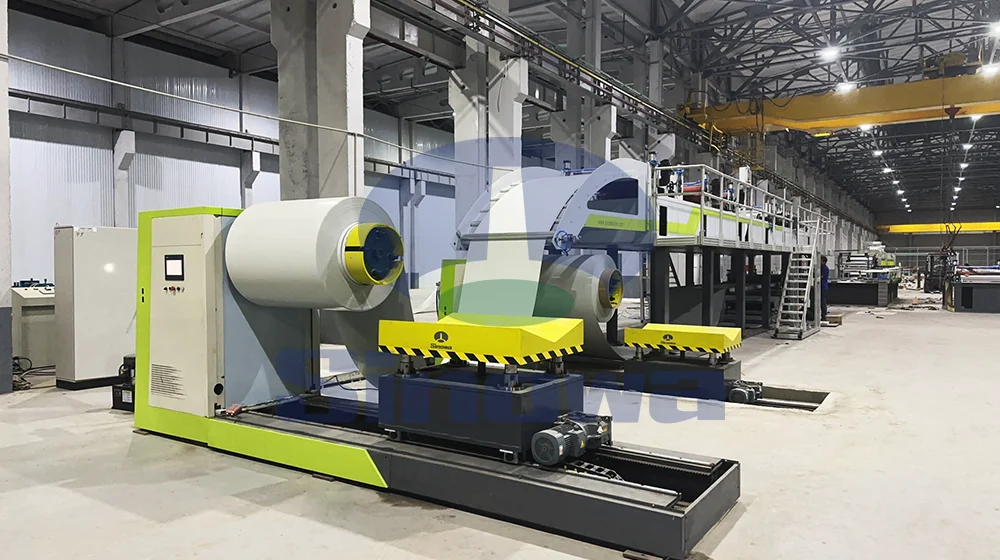
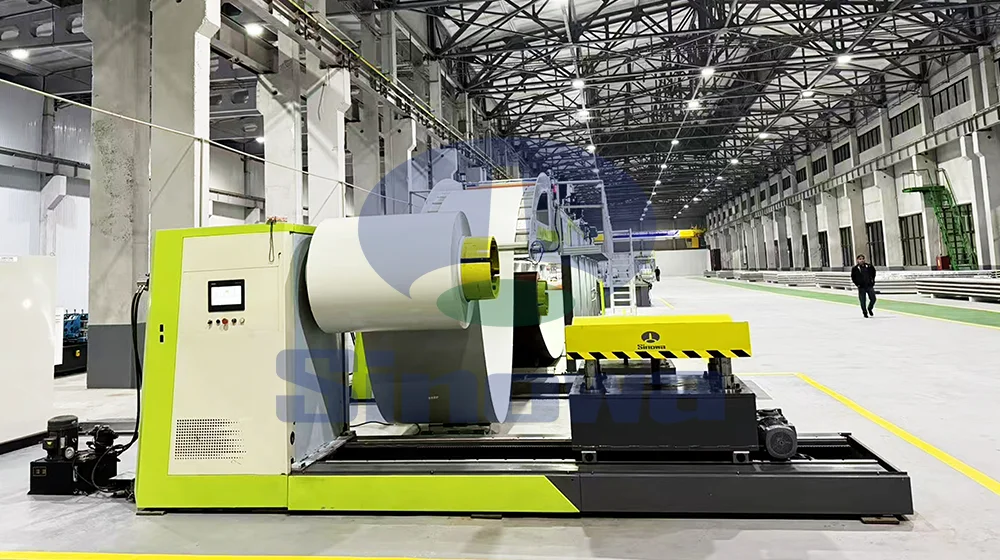
The structure of an insulated sandwich panel production line is a modular assembly of interconnected units, each responsible for a specific stage of the manufacturing process. While configurations may differ based on the type of panel being produced, most lines follow a sequential workflow that begins with raw material preparation and ends with finished product handling. The initial segment typically includes uncoiling equipment, which unwinds large coils of facing materials—commonly steel, aluminum, or fiberglass—into flat sheets. These sheets then pass through leveling and trimming units to ensure uniformity in thickness and width, eliminating any irregularities that could compromise the final panel’s structure. Precision is critical at this stage, as uneven facings can lead to poor bonding with the core material and reduced structural integrity.
Following material preparation, the forming section shapes the outer facings into the desired profile. This is often accomplished using roll forming machines, which use a series of rollers to bend the metal sheets into specific cross-sectional shapes—such as corrugated, trapezoidal, or flat profiles—without compromising their structural strength. The choice of profile depends on the panel’s intended use; for example, corrugated facings are often used for roofing panels to enhance water runoff, while flat facings are preferred for wall cladding in commercial buildings. Some production lines also incorporate embossing units to add decorative textures or patterns to the facings, enhancing both aesthetic appeal and surface grip for subsequent bonding processes.
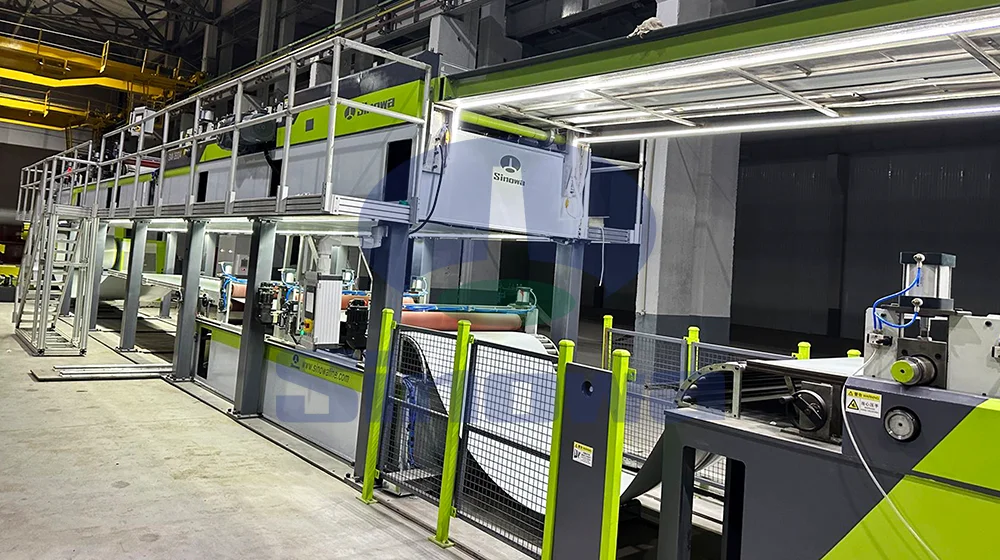
The core of the production line lies in the lamination and bonding section, where the formed facings are combined with the insulation core. This section varies significantly based on the core material and production method. For foam-based cores such as polyurethane (PU) or polyisocyanurate (PIR), the line includes a foaming unit that injects a precise mixture of chemicals between the two facings. These chemicals react to expand and cure, filling the gap between the facings and forming a rigid, insulating core. The lamination process is supported by a pressing or conveyor system that maintains uniform pressure and temperature, ensuring complete bonding and preventing the formation of air bubbles or gaps. For granular or fibrous cores like expanded polystyrene (EPS) or mineral wool, the section may use adhesive application units to coat the facings before the core material is placed between them, followed by a pressing stage to secure the bond.
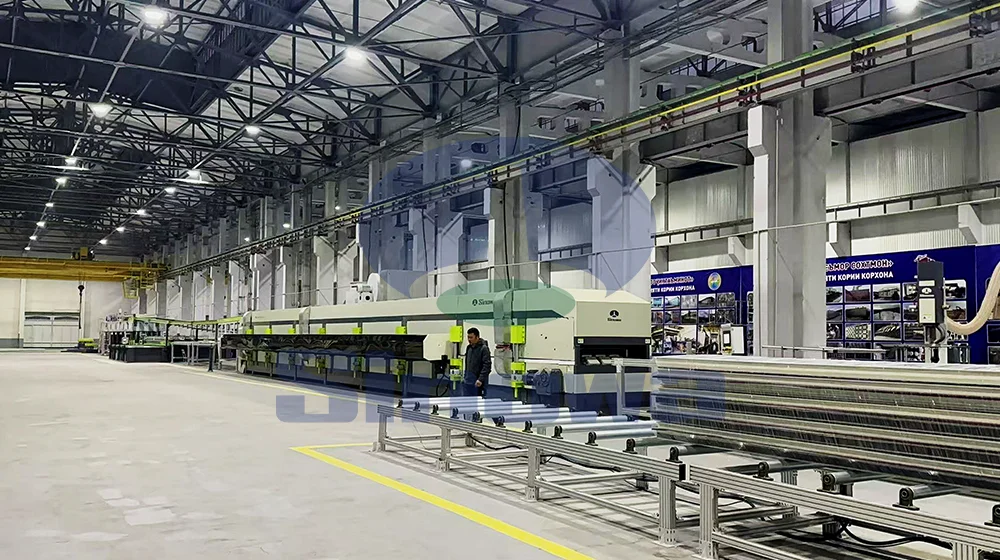
Curing and cooling units are essential components of the production line, particularly for foam-based cores. These units control the temperature and humidity levels to facilitate proper curing of the core material, ensuring it reaches its full structural and insulation potential. For continuous production lines, the curing process occurs as the panel moves through a controlled environment on a conveyor belt, while discontinuous lines may use batch curing chambers. After curing, cooling units—often utilizing forced air or water cooling—stabilize the panel’s temperature, preventing warping or deformation as it transitions to room temperature. The final stages of the production line include cutting, trimming, and stacking units. Cutting equipment, such as flying saws or CNC cutters, trims the panels to precise lengths based on customer specifications, while edge trimming units ensure clean, uniform edges. Stacking systems then arrange the finished panels safely for storage or transportation, often with protective films or spacers to prevent surface damage.
Control systems are the backbone of modern insulated sandwich panel production lines, integrating automation and precision monitoring to optimize performance. These systems typically use programmable logic controllers (PLCs) to regulate every stage of the process, from uncoiling speed and forming pressure to foam injection rates and curing temperatures. Sensors placed throughout the line continuously collect data on material thickness, bond strength, core density, and panel dimensions, feeding this information back to the PLC to make real-time adjustments. This automation not only reduces human error but also ensures consistency across large production runs, maintaining uniform quality in every panel. Advanced control systems may also include human-machine interfaces (HMIs) that allow operators to monitor production metrics, adjust parameters, and troubleshoot issues efficiently, minimizing downtime and maximizing productivity.
The performance of an insulated sandwich panel production line is evaluated based on several key metrics, including production efficiency, precision, material compatibility, and energy consumption. Production efficiency is measured by the line’s output capacity, typically expressed in square meters per year or meters per minute. Continuous production lines, designed for high-volume manufacturing, offer significantly higher efficiency compared to discontinuous lines, with some capable of producing hundreds of thousands of square meters annually. Precision performance is critical for meeting strict dimensional tolerances, as even minor deviations can affect the panel’s fit and functionality in construction applications. High-performance lines maintain tight tolerances for panel thickness, length, and edge straightness, ensuring that each panel aligns perfectly during installation.
Material compatibility is another vital performance characteristic, as production lines must accommodate a wide range of facing and core materials. Versatile lines can handle different thicknesses of metal facings, from thin gauge steel for lightweight panels to thicker aluminum for structural applications, as well as various core materials with distinct properties. For example, a line designed for mineral wool cores must handle fibrous materials without causing degradation, while a line for EPS cores requires specialized equipment for pre-expanding and molding the beads. Energy efficiency is an increasingly important performance metric, driven by sustainability goals and rising energy costs. Modern production lines incorporate energy-saving features such as variable frequency drives for motors, heat recovery systems for curing units, and efficient insulation for heating and cooling chambers, reducing overall energy consumption while maintaining production capacity.
Bond strength and core density uniformity are indirect performance indicators of the production line, as they reflect the quality of the lamination and curing processes. A high-performance line ensures that the bond between the facings and core is strong enough to withstand mechanical stress, temperature fluctuations, and moisture exposure over the panel’s lifespan. Core density uniformity is crucial for consistent insulation performance; lines with precise material handling and injection systems prevent variations in core density, ensuring that the panel provides uniform thermal resistance across its entire surface. Additionally, the line’s ability to minimize material waste contributes to its overall performance, as efficient cutting and material handling reduce scrap rates, lowering production costs and environmental impact.
Insulated sandwich panel production lines can be categorized into several types based on production method, core material, and automation level. The most common distinction is between continuous and discontinuous (batch) production lines. Continuous lines are designed for high-volume, standardized production, operating 24/7 with minimal manual intervention. These lines process materials in a continuous flow, from uncoiling to stacking, making them ideal for large-scale projects such as warehouse construction, industrial facilities, and mass-produced modular buildings. Continuous lines excel at producing panels with consistent dimensions and core density, and they offer higher energy efficiency due to their constant operation and heat recovery systems. However, they require significant initial investment and are less flexible for custom orders or small production runs.
Discontinuous lines, by contrast, operate in batches, with each stage of production completed separately for a set of panels before moving to the next batch. This design offers greater flexibility, allowing manufacturers to produce custom-sized panels, experiment with different core materials, and accommodate small orders or specialized applications. Discontinuous lines are often preferred by small to medium-sized manufacturers due to their lower initial investment and simpler operation. They are well-suited for producing panels for cold storage facilities, modular cabins, and custom industrial applications where flexibility and customization are prioritized over high volume. While discontinuous lines have lower overall production capacity, they enable precise manual quality control at each stage, ensuring high-quality output for specialized projects.
Another classification is based on the core material the line is optimized to process. Foam core production lines are designed for PU, PIR, and EPS cores, each requiring specialized equipment. PU/PIR lines feature high-pressure foaming units that mix and inject the chemical components, while EPS lines include pre-expansion and maturation units for the polystyrene beads, followed by steam molding to bond the beads into a solid core. Mineral wool core lines are equipped with systems to handle the fibrous material, including adhesive application units that ensure uniform bonding between the mineral wool and facings, as well as pressing units to compress the core to the desired thickness. Some advanced lines are multi-purpose, capable of switching between different core materials with minimal reconfiguration, offering manufacturers greater versatility to adapt to market demands.
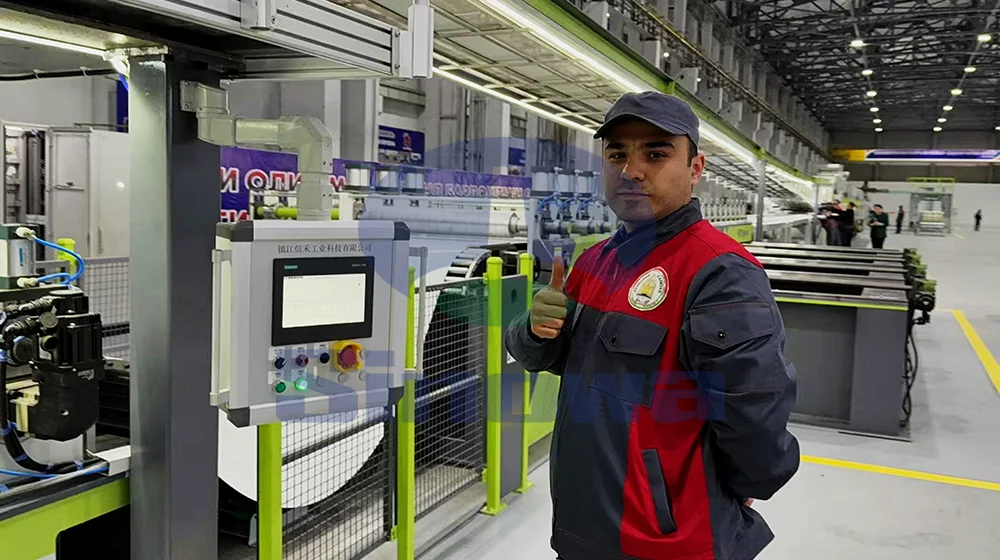
Automation level is also a key factor in categorizing production lines. Fully automatic lines rely on PLCs, robotic systems, and sensors to handle all production stages, from raw material handling to stacking, with minimal operator input. These lines offer the highest efficiency, consistency, and safety, making them ideal for large-scale manufacturing. Semi-automatic lines combine automated processes with manual intervention for specific stages, such as loading core materials or inspecting finished panels. This balance of automation and manual control is often used by manufacturers who need flexibility without sacrificing efficiency. Manual lines, while less common in modern production, are still used for small-scale, highly customized projects where precision craftsmanship is prioritized over volume.
The applications of insulated sandwich panel production lines are closely tied to the end uses of the panels they manufacture, spanning construction, industrial, commercial, and specialized sectors. In the construction industry, production lines that manufacture panels for wall cladding, roofing, and partitions are in high demand. These panels are widely used in residential buildings, commercial complexes, warehouses, and public structures due to their quick installation, thermal insulation, and soundproofing properties. For example, panels produced for roofing applications are designed with water-resistant facings and high-density cores to withstand weather conditions, while wall cladding panels may feature decorative embossing to enhance architectural appeal. Production lines optimized for construction panels often prioritize high volume and consistent quality to meet the demands of large building projects.
Industrial applications represent another major market for insulated sandwich panel production lines. Panels produced for industrial use are often designed to withstand harsh environments, including high temperatures, chemical exposure, and mechanical stress. For example, lines manufacturing panels for industrial boilers, furnaces, and chemical plants may use mineral wool cores for their fire resistance and thermal stability, while panels for cold storage facilities require high-performance PU or PIR cores to maintain low temperatures efficiently. Discontinuous production lines are particularly well-suited for industrial applications, as they can accommodate custom sizes and specialized core materials to meet the unique requirements of each project. Industrial panels may also feature reinforced facings or additional coatings to enhance durability and resistance to corrosion.
Cold chain and refrigeration sectors rely heavily on insulated sandwich panel production lines to manufacture panels for cold storage warehouses, refrigerated trucks, and mobile cooling units. These panels require exceptional thermal insulation to minimize energy consumption and maintain consistent temperatures, making PU and PIR cores the preferred choice. Production lines for cold chain panels are equipped with precise foaming and curing systems to ensure uniform core density, as any gaps or inconsistencies can compromise insulation performance. Additionally, these lines may incorporate specialized coatings or sealants to enhance moisture resistance, preventing condensation and mold growth within the panels. The ability to produce custom-sized panels is critical in this sector, as refrigerated trucks and mobile units have unique dimensions that require tailored solutions.
Modular and prefabricated construction is a rapidly growing sector that benefits from insulated sandwich panel production lines. Modular buildings, including portable cabins, mobile clinics, command centers, and temporary housing, rely on lightweight yet strong sandwich panels for quick assembly and disassembly. Production lines for modular construction panels prioritize flexibility, allowing manufacturers to produce panels of varying sizes and configurations to fit different modular designs. Continuous lines are often used for mass-produced modular units, while discontinuous lines cater to custom modular projects such as mobile medical facilities or disaster relief housing. The panels produced for this sector also require excellent soundproofing and thermal insulation to ensure comfort in temporary or semi-permanent structures.
Specialized applications of insulated sandwich panel production lines include aerospace, automotive, and marine sectors, where lightweight and high-strength panels are essential. While these applications represent a smaller market share, they require highly specialized production lines with strict precision and material compatibility. For example, panels used in aircraft or marine vessels may use aluminum facings and lightweight foam cores to reduce weight without compromising structural integrity. Production lines for these sectors incorporate advanced quality control systems to detect even the smallest defects, as safety is paramount in aerospace and marine applications. Additionally, these lines may use specialized adhesives and curing processes to ensure the panels can withstand extreme pressure, temperature changes, and saltwater exposure.
The versatility of insulated sandwich panel production lines also extends to renewable energy projects, such as solar farms and wind energy facilities. Panels produced for these applications are used in control rooms, equipment enclosures, and maintenance facilities, requiring thermal insulation to protect sensitive electronics and machinery. Production lines may adapt to use eco-friendly core materials, such as recycled EPS or bio-based PU, to align with the sustainability goals of renewable energy projects. Additionally, panels for outdoor renewable energy facilities may feature UV-resistant facings to withstand prolonged exposure to sunlight.
In summary, insulated sandwich panel production lines are complex, versatile systems that play a critical role in manufacturing high-performance composite panels for a wide range of applications. Their structure is a modular assembly of units designed to handle material preparation, forming, lamination, curing, and finishing, with control systems ensuring precision and efficiency. The performance of these lines is evaluated based on efficiency, precision, material compatibility, and energy consumption, with different types—continuous, discontinuous, foam core, mineral wool core, fully automatic, and semi-automatic—catering to varying production needs and market demands. From construction and industrial facilities to cold chain and specialized aerospace applications, these production lines enable the creation of panels that deliver exceptional thermal insulation, structural strength, and versatility, making them indispensable in modern manufacturing and construction. As sustainability and energy efficiency become increasingly important, production lines are evolving to incorporate eco-friendly materials and energy-saving technologies, ensuring their continued relevance in a rapidly changing global market.
« Insulated Sandwhich Panel Production Line » Update Date: 2026/4/16
URL: https://www.sinowamachine.com/tags/insulated-sandwhich-panel-production-line.html
- Links:
- Sandwich Panel Continuous Production Line
- Automatic and Continuous Sandwich Panel Production Line
- Cheap and Low Price Sandwich Panel Production Line
- China Sandwich Panel Production Line Factory
- Color Steel Sandwich Panel Production Line For Cold Storage
- Continuous Composite Foam Sandwich Panel Production Line
- Continuous Production Line For Rockwool and Mineral Wool Sandwich Panels
- Continuous PU Phenolic Insulation Panel Production Line
- Continuous PU PIR Sandwich Panel Production Line
- Continuous PUF PUR Sandwich Panel Production Line
- Continuous Sandwich Panel Production Line For Roof and Wall
- Customized and Design Sandwich Panel Production Line
- Decorative Sandwich Panel Production Line For Glass Wool Boards
- High Quality Sandwich Panel Production Line For Sale
- Polyurethane(PU) Sandwich Panel Production Line
- Sandwich Panel Production Line Manufacturer and Supplier
- Sandwich Panel Production Machinery and Equipment