
Polyurethane Insulation Panel Production Line
Sinowa is a polyurethane insulation panel production line supplier from china, customized high-quality & high efficiency polyurethane insulation panel production line at low price, the adoption of system integration technology and bus control technology accomplishes the full automatization of integrated and coordinated control of the polyurethane insulation panel production line with accessible remote interactive communication. Ranking the first-class level in the world, it is currently the polyurethane insulation panel production line in the market taking a comprehensive lead in high performance.
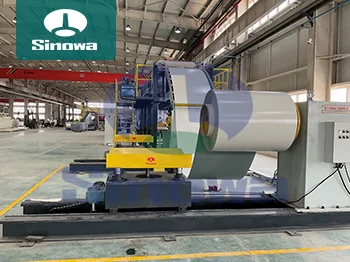
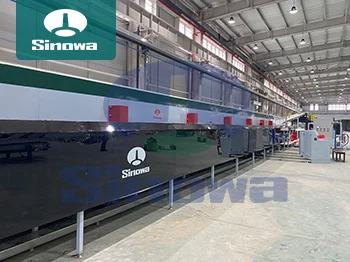
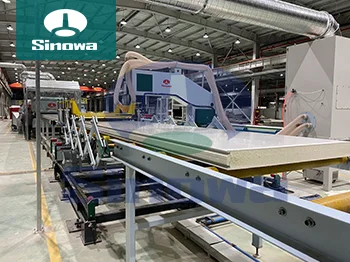
The high-tech polyurethane insulation panel production line can meet a variety of production needs of customers, the whole polyurethane insulation panel production line design concept of modularization enables all our components to be integrated and combined at will. Our high efficiency polyurethane insulation panel production line can easily automate the production of roof sandwich panel, wall sandwich panel, cold storage sandwich panel and other products by different combination and configuration selection and siple switching. The inner core layer can be polyrethane or rock wool, glass wool, an so on.


The high precision polyurethane insulation panel production line has high adaptability, which may produce various sandwich panel of the PU, PIR and rock wool systems. We may design various products according to the customer’s requirements, including various configurations, so as to meet their demands with flexible price system. Highly integrated and linked control system centralizes all control points at the main central center, achieving parameter linkage, fault self-diagnosis controlled by the whole line and shipping distance control. High-level automatic control system also saves the manpower and reduces the manpower loss for customers.


The precision servo hoisting mechanism employed by the main engine without hydraulic system makes the board thickness control flexible and the customer may conveniently change or adjust the board thickness. There will be not such troubles as hydraulic system adjustment, leakage, maintenance, etc.


High-level energy saving and protection design makes the whole polyurethane insulation panel production line possible to produce around the clock throughout the year and the customer will save huge budget. In addition, the isolated heat preservation room is constructed for warming the environment. The energy saving and protection design of our manufacturing line may guarantee that the customer’s production line may be freely heated and produce in the main time to save more costs for customers.


The high-power low-consumption design quickens the reaction of the cheap polyurethane insulation panel production line while energy consumption is kept low. With the brand-new, fully sealed inner insulation design, the energy consumption is controlled at the minimum level to achieve the design objective of less than an hour for the insulation system to be activated from the room temperature above 5℃ to the production process temperature. The energy consumption is only 40% that of those similar products.
The polyurethane insulation panel production line stands as a highly integrated, automated manufacturing system designed to produce rigid and composite polyurethane foam panels, which have become indispensable in modern construction, cold chain logistics, industrial insulation and various energy-saving sectors. Unlike fragmented manual production or small-scale batch processing, this full production line merges mechanical engineering, electrical control, chemical foaming technology and precision processing into a seamless workflow, enabling consistent, large-scale output of insulation panels with stable quality and standardized dimensions. At its core, the production line is built around a modular structural framework, with each segment tailored to complete a specific stage of panel manufacturing, and all modules interconnected through automated conveying systems to eliminate manual handling gaps and ensure continuous, efficient operation from raw material input to finished panel output. The overall structure can be broken down into several key interconnected units, each serving a critical function that directly impacts the final panel’s performance and durability, with no single component operating in isolation but rather in perfect synchronization to maintain production stability and product uniformity.
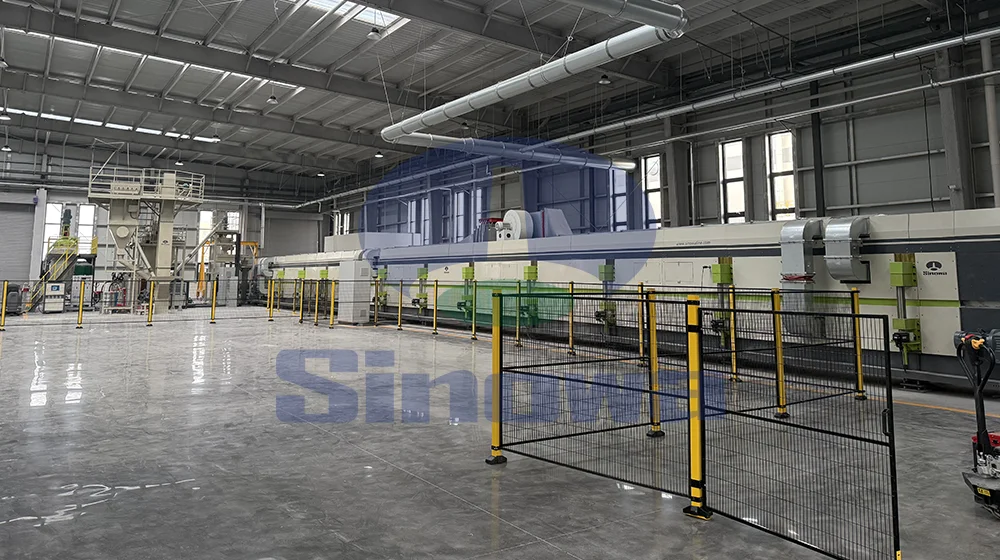
Starting with the raw material handling and preparation unit, this section is responsible for storing, metering and conveying the core chemical components used to form polyurethane foam, including polyols, isocyanates, blowing agents, cross-linking agents and flame retardant additives. Precision is paramount here, as even minor deviations in material ratio can disrupt the foaming reaction, leading to uneven foam density, poor insulation efficiency or weakened structural strength. This unit is equipped with closed storage tanks to prevent moisture contamination and automatic metering pumps that deliver materials at a fixed ratio with high accuracy, ensuring the chemical mixture remains consistent throughout production. Following this is the surface layer processing unit, which handles the outer facing materials of the insulation panels—common options include metal sheets, aluminum foil, fiber cement boards and non-woven fabrics. This unit performs tasks such as uncoiling, leveling, cleaning, surface priming and edge forming, preparing the facing layers to bond tightly with the polyurethane foam core. Proper surface treatment is essential to prevent delamination between the core and outer layers, which would compromise the panel’s structural integrity and long-term performance in harsh environments.
The central and most critical segment of the entire production line is the foaming and composite forming unit, where the liquid polyurethane mixture is injected between the two prepared surface layers and undergoes a rapid chemical reaction to expand into rigid, closed-cell foam. This unit typically features a continuous double-track pressing system that controls the panel’s thickness with precision, maintains uniform pressure across the entire panel surface, and provides controlled heating to accelerate the foaming and curing process. The closed-cell structure formed during this stage is the key to the panel’s exceptional insulation properties, as these tiny, airtight cells trap stationary air and block heat transfer through conduction and convection. After foaming and initial curing, the semi-finished panels move to the curing and shaping unit, where they undergo a controlled temperature and humidity curing process to fully stabilize the foam structure and enhance its mechanical strength. Rushing this stage can result in soft foam, shrinkage or warping, so the production line is designed with adjustable curing time and temperature settings to accommodate different panel thicknesses and foam densities. Finally, the finished panels enter the cutting, trimming and finishing unit, where they are cut to custom lengths and widths, trimmed for smooth edges, and inspected for surface defects, dimensional accuracy and overall quality before being stacked and prepared for storage and transportation. Some advanced production lines also include automated stacking and packaging units to further streamline the post-production process and reduce labor demand.
Beyond its structural design, the performance of the polyurethane insulation panel production line is defined by several core metrics that determine its efficiency, product quality and operational reliability. First and foremost is production stability, which refers to the line’s ability to maintain consistent output quality over long running hours without frequent disruptions or adjustments. High-quality production lines feature robust mechanical components, precise electrical control systems and anti-interference technology, allowing them to operate continuously for extended periods with minimal variation in panel thickness, foam density and physical properties. Production efficiency is another key performance indicator, with modern continuous production lines offering significantly higher output than traditional batch-type equipment, as they eliminate the downtime associated with loading and unloading individual molds and enable non-stop production. This efficiency not only boosts overall output but also reduces per-unit production costs and material waste, making the line a cost-effective solution for large-scale manufacturing. Additionally, the production line offers high flexibility, with adjustable parameters for foaming time, temperature, pressure and panel thickness, allowing manufacturers to switch between different panel specifications and types without major equipment modifications. This adaptability makes it suitable for meeting diverse market demands, from thin interior insulation panels to thick cold storage panels and load-bearing roof panels.
The performance of the end product—polyurethane insulation panels—is equally impressive and directly derived from the precise manufacturing process enabled by the production line. The most prominent performance feature is its exceptional thermal insulation capability, with a very low thermal conductivity coefficient that far surpasses traditional insulation materials like mineral wool, expanded polystyrene and extruded polystyrene. This low thermal conductivity means the panels can effectively block heat flow in both hot and cold environments, reducing energy consumption for heating and cooling and supporting long-term energy conservation in buildings and industrial facilities. The closed-cell foam structure also provides excellent waterproof and moisture-proof properties, preventing water vapor penetration and mold growth, which is especially vital for cold chain applications where moisture can cause insulation failure and product spoilage. Structurally, polyurethane insulation panels offer a balanced combination of lightweight properties and high mechanical strength, including compressive strength, flexural strength and impact resistance. Despite being much lighter than concrete or traditional brick walls, the panels can withstand significant vertical and horizontal loads, making them suitable for wall, roof and floor insulation applications. They also exhibit good dimensional stability, meaning they do not shrink, expand or deform significantly under extreme temperature fluctuations, ensuring a tight fit and long-lasting insulation performance over decades of use. Furthermore, the panels can be formulated with enhanced flame retardant properties through adjusted chemical ratios during production, slowing the spread of fire and reducing smoke emission without compromising insulation performance, making them compliant with strict safety standards in commercial and industrial construction.
Polyurethane insulation panels produced by this specialized production line are categorized into various types based on core structure, surface material, application scenario and performance characteristics, each designed to meet specific functional requirements. The most common classification is based on composite structure, dividing panels into single-layer rigid polyurethane foam panels and double-sided composite sandwich panels. Single-layer panels are typically used for internal insulation, pipe insulation and small-scale thermal insulation projects, offering a cost-effective solution with reliable insulation performance and easy cutting and installation. Sandwich panels, the most widely used type, consist of a rigid polyurethane foam core bonded between two outer facing layers, with the facing materials chosen based on the application environment. Metal-faced sandwich panels, usually with steel or aluminum outer layers, are durable, weather-resistant and suitable for exterior walls, roofs and cold storage facilities, providing both insulation and structural support. Non-metal faced panels, such as those with aluminum foil, fiber cement or gypsum board facings, are ideal for interior insulation, clean room construction and residential projects, offering good insulation with a smooth, finish-ready surface. Panels are also classified by density and thickness, with low-density panels used for lightweight interior insulation and high-density, thick panels designed for heavy-duty cold storage, industrial freezer and external wall insulation in extreme climates.
Another key classification is based on intended application, which directly reflects the versatility of polyurethane insulation panels and the production line’s ability to adapt to diverse market needs. Building insulation panels are the largest category, used for residential, commercial and industrial building exterior walls, roofs, basements and partition walls, improving building energy efficiency, indoor thermal comfort and sound insulation. The excellent thermal performance of these panels helps reduce reliance on heating and air conditioning systems, lowering carbon emissions and operational energy costs for building owners. Cold chain and refrigeration panels are specially formulated for low-temperature environments, including cold storage warehouses, refrigerated trucks, frozen food processing plants and pharmaceutical storage facilities, where maintaining a consistent low temperature is critical. These panels have enhanced waterproofing and thermal stability to prevent heat gain and condensation, ensuring the quality and safety of perishable goods and temperature-sensitive medical supplies. Industrial insulation panels are designed for high-temperature industrial equipment, pipelines, manufacturing plants and warehouse facilities, providing thermal insulation to maintain stable operating temperatures, protect workers from heat exposure and reduce energy waste in industrial processes. Additionally, there are special-purpose panels for clean room construction in electronics, pharmaceutical and food processing industries, featuring smooth, non-porous surfaces that resist dust accumulation and are easy to clean and disinfect, meeting strict hygiene and cleanliness standards.
The applications of polyurethane insulation panels extend far beyond basic insulation, making them a versatile material in modern engineering and construction projects. In the construction industry, they are a cornerstone of prefabricated and green building development, as their lightweight nature reduces the overall structural load of buildings, speeds up construction timelines and minimizes on-site waste. Unlike traditional construction materials that require extensive on-site cutting and installation, pre-cut polyurethane insulation panels can be quickly assembled, significantly reducing construction time and labor costs. In cold chain logistics, the panels are essential for building efficient, low-temperature storage and transportation systems, supporting the global supply of fresh food, seafood, pharmaceuticals and vaccines. The superior insulation performance ensures that temperature-sensitive products remain within the required temperature range throughout storage and transit, preventing spoilage and reducing supply chain losses. In industrial settings, the panels are used to insulate boilers, heating pipelines, chemical storage tanks and manufacturing workshops, improving energy utilization efficiency and extending the service life of industrial equipment by protecting against extreme temperature changes. They also provide effective sound insulation, reducing noise transmission in busy industrial areas, commercial buildings and residential complexes, creating quieter and more comfortable indoor and outdoor environments.
In residential construction, polyurethane insulation panels are increasingly popular for both new builds and retrofits, as they offer a thin profile with high insulation efficiency, allowing homeowners to maximize interior space while reducing energy bills. The moisture-resistant and mold-resistant properties also improve indoor air quality and prevent structural damage to homes caused by dampness. For agricultural applications, the panels are used to build climate-controlled greenhouses and livestock barns, maintaining stable internal temperatures to support crop growth and animal welfare year-round, regardless of external weather conditions. The durability and weather resistance of the panels ensure they can withstand harsh outdoor conditions, including heavy rain, wind, UV exposure and temperature extremes, without significant performance degradation, resulting in a long service life that reduces the need for frequent replacements and maintenance. As global focus on energy conservation and sustainable development continues to grow, the demand for high-performance insulation materials like polyurethane panels is rising, driving continuous innovation in production line technology to improve efficiency, reduce environmental impact and enhance product performance. Modern production lines are designed with eco-friendly features, such as low-emission foaming agents and energy-efficient heating systems, aligning with global environmental standards and supporting sustainable manufacturing practices.
In summary, the polyurethane insulation panel production line is a sophisticated, high-performance manufacturing system that combines precision engineering and chemical expertise to produce insulation panels with exceptional thermal, mechanical and environmental properties. Its modular structure ensures smooth, automated operation from raw material processing to finished product output, while its adjustable design offers the flexibility to produce a wide range of panel types for diverse applications. The panels themselves, with their outstanding insulation, waterproofing, structural strength and durability, have become a vital material in energy-efficient construction, cold chain logistics, industrial insulation and numerous other sectors, addressing critical challenges related to energy consumption, climate control and sustainable development. As the global push for energy efficiency and green building continues, the role of the polyurethane insulation panel production line and its end products will only become more significant, providing reliable, cost-effective and sustainable solutions for a wide range of industrial and commercial needs. The continuous evolution of production line technology will further enhance product quality and production efficiency, making polyurethane insulation panels an even more accessible and essential material for modern infrastructure and energy-saving initiatives worldwide.
« Polyurethane Insulation Panel Production Line » Update Date: 2026/3/24
URL: https://www.sinowamachine.com/tags/polyurethane-insulation-panel-production-line.html
- Links:
- Sandwich Panel Continuous Production Line
- Automatic and Continuous Sandwich Panel Production Line
- Cheap and Low Price Sandwich Panel Production Line
- China Sandwich Panel Production Line Factory
- Color Steel Sandwich Panel Production Line For Cold Storage
- Continuous Composite Foam Sandwich Panel Production Line
- Continuous Production Line For Rockwool and Mineral Wool Sandwich Panels
- Continuous PU Phenolic Insulation Panel Production Line
- Continuous PU PIR Sandwich Panel Production Line
- Continuous PUF PUR Sandwich Panel Production Line
- Continuous Sandwich Panel Production Line For Roof and Wall
- Customized and Design Sandwich Panel Production Line
- Decorative Sandwich Panel Production Line For Glass Wool Boards
- High Quality Sandwich Panel Production Line For Sale
- Polyurethane(PU) Sandwich Panel Production Line
- Sandwich Panel Production Line Manufacturer and Supplier
- Sandwich Panel Production Machinery and Equipment