
Glass Wool Sandwich Panel Line
Sinowa is a glass wool sandwich panel line supplier from china, customized high-quality & high efficiency glass wool sandwich panel line at low price, the adoption of system integration technology and bus control technology accomplishes the full automatization of integrated and coordinated control of the glass wool sandwich panel line with accessible remote interactive communication. Ranking the first-class level in the world, it is currently the glass wool sandwich panel line in the market taking a comprehensive lead in high performance.
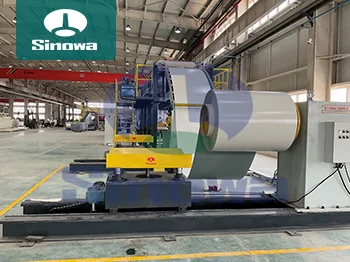
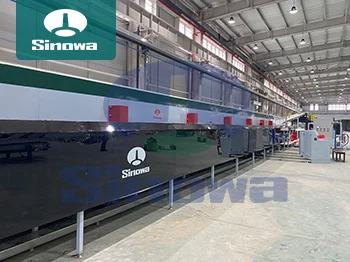
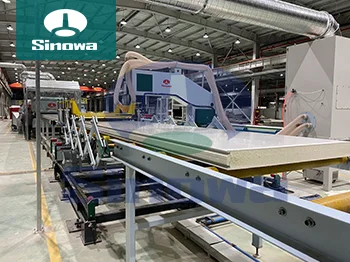
The high-tech glass wool sandwich panel line can meet a variety of production needs of customers, the whole glass wool sandwich panel line design concept of modularization enables all our components to be integrated and combined at will. Our high efficiency glass wool sandwich panel line can easily automate the production of roof sandwich panel, wall sandwich panel, cold storage sandwich panel and other products by different combination and configuration selection and siple switching. The inner core layer can be polyrethane or rock wool, glass wool, an so on.


The high precision glass wool sandwich panel line has high adaptability, which may produce various sandwich panel of the PU, PIR and rock wool systems. We may design various products according to the customer’s requirements, including various configurations, so as to meet their demands with flexible price system. Highly integrated and linked control system centralizes all control points at the main central center, achieving parameter linkage, fault self-diagnosis controlled by the whole line and shipping distance control. High-level automatic control system also saves the manpower and reduces the manpower loss for customers.


The precision servo hoisting mechanism employed by the main engine without hydraulic system makes the board thickness control flexible and the customer may conveniently change or adjust the board thickness. There will be not such troubles as hydraulic system adjustment, leakage, maintenance, etc.


High-level energy saving and protection design makes the whole glass wool sandwich panel line possible to produce around the clock throughout the year and the customer will save huge budget. In addition, the isolated heat preservation room is constructed for warming the environment. The energy saving and protection design of our manufacturing line may guarantee that the customer’s production line may be freely heated and produce in the main time to save more costs for customers.


The high-power low-consumption design quickens the reaction of the cheap glass wool sandwich panel line while energy consumption is kept low. With the brand-new, fully sealed inner insulation design, the energy consumption is controlled at the minimum level to achieve the design objective of less than an hour for the insulation system to be activated from the room temperature above 5℃ to the production process temperature. The energy consumption is only 40% that of those similar products.
A glass wool sandwich panel line is an integrated and automated equipment system specifically designed for the continuous production of glass wool sandwich panels, which are widely used in various fields due to their excellent comprehensive performance. This production line combines multiple functional modules in a seamless manner, transforming raw materials into high-quality finished panels through a series of precise and efficient processing procedures. Unlike traditional fragmented production methods, the glass wool sandwich panel line achieves full-process automation, ensuring consistent product quality, high production efficiency, and stable performance, making it an indispensable core equipment in the modern building materials manufacturing industry. The structure of the glass wool sandwich panel line is scientifically designed, with each component cooperating closely to complete the entire production process from raw material input to finished product output, and its performance indicators directly determine the quality and application effect of the produced glass wool sandwich panels. Meanwhile, different types of production lines are developed to meet diverse market demands, and their wide range of applications covers multiple industries, playing an important role in promoting energy conservation, environmental protection, and industrial upgrading.
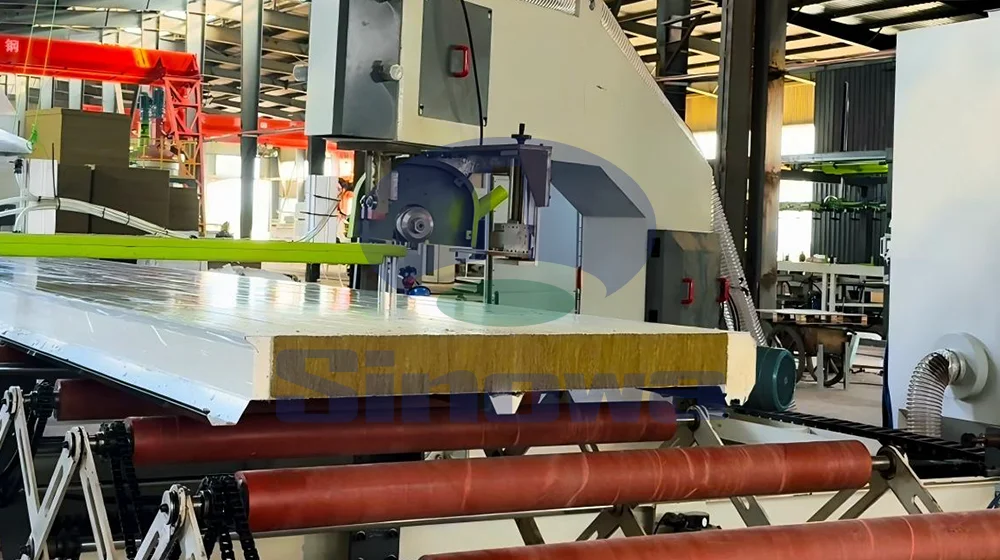
The structure of a glass wool sandwich panel line is composed of several interconnected functional modules, each undertaking a specific processing task to form a complete production chain. The entire line starts with the unwinding system, which is the initial part responsible for the automatic unfolding and leveling of the facing materials, usually metal panels such as color steel plates or stainless steel plates. Modern unwinding systems adopt hydraulic tensioning technology and are equipped with automatic centering devices to ensure the smooth unfolding of metal coils, avoid surface scratches, and maintain the flatness of the panels. Some advanced unwinding systems are also equipped with weld seam detection and automatic splicing functions, enabling seamless connection between different coils without stopping the production line, thus improving production continuity. Following the unwinding system is the preprocessing system, which performs cleaning and surface treatment on the metal facing panels to enhance their adhesion and corrosion resistance. The preprocessing system usually includes a cleaning unit to remove surface oil stains and impurities, a passivation treatment unit to improve the corrosion resistance of the panels, and a primer coating unit in some models to further enhance the bonding strength between the facing and the core material. This preprocessing step is crucial because the surface condition of the facing directly affects the bonding effect and service life of the final sandwich panel.
The forming system is another key component of the glass wool sandwich panel line, which processes the flat metal panels into the desired shape through multiple rolling processes. The forming system usually consists of an upper plate forming machine and a lower plate forming machine, which synchronously complete the forming of the upper and lower facings. The upper plate forming machine can press the metal panels into wave-shaped, trapezoidal, or other designed shapes according to actual needs, while the lower plate forming machine ensures that the lower facing matches the upper one in size and shape. To ensure forming accuracy, the forming system adopts servo drive technology, which can control the forming error within ±0.1 mm, ensuring the dimensional consistency of each panel. After the forming of the facings, the production process enters the glass wool processing system, which is the core part of the entire production line, responsible for the processing and laying of the glass wool core material. The glass wool processing system includes an automatic cotton laying machine, a cotton layer preheating device, and an online density detector. The automatic cotton laying machine can precisely control the laying thickness and density of the glass wool, ensuring uniform distribution of the core material; the cotton layer preheating device optimizes the bonding effect between the glass wool and the facing materials; the online density detector monitors the quality of the cotton core in real time, ensuring that the density of the glass wool meets the required standards, thus guaranteeing the thermal insulation and sound insulation performance of the final product.
The composite system is responsible for bonding the formed upper and lower facings with the glass wool core material to form an integrated sandwich structure. This system adopts advanced hot pressing composite technology, usually equipped with a double belt press that applies synchronous pressure up and down, with the pressure adjustable between 5 and 15 tons. The composite system also adopts temperature zone control technology, with independent temperature control for different zones, and the temperature can be adjusted between 80℃ and 200℃ according to the type of adhesive and the characteristics of the materials, ensuring that the adhesive is fully cured and the three layers are firmly bonded. After the composite process, the continuous sandwich panel blank enters the cutting system, which cuts the blank into panels of the required length according to the customer's requirements. The cutting system is equipped with high-precision cutting tools and automatic positioning devices to ensure the cutting accuracy and avoid burrs or uneven cuts. Finally, the finished panels are conveyed to the stacking and packaging system, which automatically stacks the panels on pallets and wraps them with plastic film to protect the panels from damage during transportation and storage. The entire structure of the glass wool sandwich panel line is designed with modular concepts, allowing each functional module to be integrated and combined freely, facilitating maintenance, replacement, and functional expansion.
The performance of a glass wool sandwich panel line is reflected in multiple aspects, including production efficiency, processing accuracy, stability, environmental protection, and energy conservation, which are important indicators to measure the quality of the production line. In terms of production efficiency, the continuous production line design enables 24-hour uninterrupted production, greatly improving the output of sandwich panels. The fully automated control system reduces manual intervention, shortens the production cycle, and improves production efficiency. The production capacity of a standard glass wool sandwich panel line can meet the needs of large-scale construction projects, and the production speed can be adjusted according to actual production requirements. In terms of processing accuracy, the adoption of advanced servo drive technology, automatic positioning technology, and online detection technology ensures that the dimensional accuracy, flatness, and bonding strength of the produced sandwich panels meet the required standards. The forming accuracy of the facings, the laying density of the glass wool core, and the cutting accuracy of the panels are all strictly controlled, ensuring the consistency and stability of product quality.
Stability is another important performance indicator of the glass wool sandwich panel line. The entire line adopts high-quality components and advanced control systems, which can operate stably for a long time without frequent failures. The modular design makes it easy to maintain and repair, reducing downtime and ensuring continuous production. The control system of the production line is usually equipped with fault self-diagnosis functions, which can timely detect and alarm potential faults, facilitating maintenance personnel to handle them quickly. In terms of environmental protection and energy conservation, the production line is designed with high waste recycling and utilization rates, reducing the waste of raw materials. The heating system adopts energy-saving technologies, which can effectively reduce energy consumption. At the same time, the production process does not produce harmful gases or pollutants, meeting environmental protection requirements. Some advanced production lines also adopt fully sealed inner insulation designs, which can reduce energy loss and control energy consumption at a low level. For example, the energy consumption of some high-efficiency production lines is only 40% of that of similar products, achieving significant energy-saving effects.
In addition, the adaptability of the glass wool sandwich panel line is also an important part of its performance. The production line can produce sandwich panels of different thicknesses, specifications, and surface treatments by adjusting the parameters of each functional module. The thickness of the panels can be customized according to needs, usually ranging from 50 mm to 200 mm, and the width and length can also be adjusted according to project requirements. The production line can also adapt to different types of facing materials, such as color steel plates, stainless steel plates, aluminum plates, and even non-metal facing materials such as PVC and fiber-reinforced panels, providing more choices for customers. The flexibility of the production line enables it to meet the diverse needs of different industries and projects, enhancing its market competitiveness.
There are various types of glass wool sandwich panel lines, which can be divided into different categories according to different classification standards, each with its own characteristics and applicable scenarios. According to the production mode, the production lines can be divided into continuous production lines and intermittent production lines. Continuous production lines are suitable for large-scale, mass production, with high production efficiency, stable product quality, and low labor costs. They are widely used in large-scale building materials factories that need to produce a large number of sandwich panels. Intermittent production lines, on the other hand, are suitable for small-scale production or customized production, with strong flexibility and low investment costs. They are suitable for small and medium-sized enterprises or factories that produce small batches of special-specification sandwich panels.
According to the type of facing materials, glass wool sandwich panel lines can be divided into metal-facing sandwich panel lines and non-metal-facing sandwich panel lines. Metal-facing sandwich panel lines are the most common type, which use metal plates such as color steel plates, galvanized steel plates, and stainless steel plates as facings. These lines are characterized by high production efficiency, good product durability, and strong corrosion resistance, and are widely used in industrial buildings, commercial buildings, and other fields. Non-metal-facing sandwich panel lines use non-metal materials such as PVC, fiber-reinforced panels, and gypsum boards as facings, which are suitable for special scenarios such as indoor partitions and clean rooms, where the requirements for corrosion resistance, sound insulation, and environmental protection are higher.
According to the application field of the finished products, glass wool sandwich panel lines can be divided into roof sandwich panel lines, wall sandwich panel lines, cold storage sandwich panel lines, and clean room sandwich panel lines. Roof sandwich panel lines are designed to produce sandwich panels suitable for roof use, which have good waterproof, windproof, and thermal insulation performance. The produced panels usually have wave-shaped or trapezoidal facings to enhance water flow and wind resistance. Wall sandwich panel lines are used to produce sandwich panels for exterior walls and interior partitions, which have good thermal insulation, sound insulation, and fire resistance. Cold storage sandwich panel lines are specially designed for the production of sandwich panels used in cold storage facilities, which have excellent thermal insulation performance and low thermal conductivity, ensuring the stability of the internal temperature of the cold storage. Clean room sandwich panel lines are used to produce sandwich panels for clean rooms in industries such as electronics, medicine, and food, which have good airtightness, dust-proof performance, and corrosion resistance, meeting the high cleanliness requirements of clean rooms.
In addition, according to the degree of automation, glass wool sandwich panel lines can be divided into fully automated production lines and semi-automated production lines. Fully automated production lines adopt advanced control systems, which can complete the entire production process from raw material input to finished product output without manual intervention, with high production efficiency and stable product quality. Semi-automated production lines require a certain amount of manual operation, such as manual feeding, manual inspection, and manual stacking, which are suitable for small-scale production or factories with limited investment.
The glass wool sandwich panel line has a wide range of applications, covering multiple industries such as construction, transportation, home appliances, and industrial manufacturing, and its produced sandwich panels play an important role in various fields due to their excellent performance. In the construction industry, glass wool sandwich panels produced by the production line are widely used in industrial plants, warehouses, office buildings, shopping malls, exhibition halls, stadiums, airports, train stations, and residential buildings. As exterior wall materials, they have good thermal insulation and sound insulation performance, which can reduce building energy consumption and improve the living and working environment. As interior partition materials, they are lightweight, easy to install, and have good sound insulation effect, which can effectively divide the space and improve the comfort of the interior environment. As roof materials, they have good waterproof, windproof, and thermal insulation performance, which can protect the building from the influence of the external environment and extend the service life of the building. In addition, glass wool sandwich panels are also used in prefabricated houses, which can speed up the construction progress and reduce the construction cost, making them widely used in temporary buildings, disaster relief houses, and other fields.
In the transportation industry, glass wool sandwich panels produced by the production line are used in the interior decoration and insulation of vehicles such as trains, ships, and insulated containers. The lightweight and good thermal insulation performance of the panels can reduce the weight of the vehicle, save fuel consumption, and at the same time provide a comfortable internal environment for passengers and goods. For example, in insulated containers, glass wool sandwich panels can effectively maintain the internal temperature, ensuring the quality of perishable goods during transportation. In ships, the panels can be used for thermal insulation and sound insulation of cabins, improving the comfort of the crew's living environment.
In the home appliance industry, glass wool sandwich panels are used as insulation materials for household appliances such as refrigerators, air conditioners, and water heaters. The excellent thermal insulation performance of the panels can reduce the energy consumption of household appliances, improve their energy efficiency, and extend their service life. For example, in refrigerators, glass wool sandwich panels are used in the inner liner and door body to prevent cold air leakage, ensuring the refrigeration effect and reducing energy consumption.
In the industrial manufacturing field, glass wool sandwich panels are used in the construction of workshops, warehouses, and equipment enclosures. For example, in factories with high temperature, high noise, or strong corrosion, the panels can be used as wall and roof materials to achieve thermal insulation, sound insulation, and corrosion resistance, improving the working environment of the workshop and protecting the equipment. In addition, glass wool sandwich panels are also used in the construction of clean rooms in the electronics, medicine, and food industries, where they can provide a clean, dust-free, and corrosion-resistant environment, ensuring the quality of products.
With the increasing awareness of environmental protection and the promotion of energy-saving and emission reduction policies, the market demand for glass wool sandwich panels as an environmentally friendly and energy-saving building material is constantly growing, which also promotes the continuous development and upgrading of glass wool sandwich panel lines. The future development trend of glass wool sandwich panel lines will focus on higher automation, higher efficiency, more energy conservation, and more environmental protection. The application of digital and intelligent technologies will further improve the production efficiency and product quality of the production line, realize the intelligent monitoring and control of the production process, and reduce manual intervention. At the same time, the development of new materials and new technologies will enable the production line to produce sandwich panels with better performance, such as higher thermal insulation, better fire resistance, and stronger corrosion resistance, expanding the application scope of the products.
In conclusion, the glass wool sandwich panel line is a sophisticated and integrated automated production system, whose structure is composed of multiple functional modules cooperating closely, and its performance is reflected in production efficiency, processing accuracy, stability, environmental protection, and energy conservation. There are various types of production lines, which can be divided into different categories according to production mode, facing material, application field, and degree of automation, to meet diverse market demands. The glass wool sandwich panels produced by the production line have excellent comprehensive performance and are widely used in construction, transportation, home appliances, industrial manufacturing, and other fields, playing an important role in promoting energy conservation, environmental protection, and industrial upgrading. With the continuous advancement of technology, the glass wool sandwich panel line will continue to develop and improve, providing stronger support for the production and application of glass wool sandwich panels, and making greater contributions to the sustainable development of various industries.
« Glass Wool Sandwich Panel Line » Update Date: 2026/4/16
URL: https://www.sinowamachine.com/tags/glass-wool-sandwich-panel-line.html
![Glass Wool Sandwich Panel Line On Sales]()
Glass Wool Sandwich Panel Line On Sales
2026-09-01The glass wool sandwich panel production line stands as a sophisticated and integrated manufacturing system tailored for the mass production of high-performance composite building panels, which have emerged as a core material in modern prefabricated construction industries. This automated production …
- Links:
- Sandwich Panel Continuous Production Line
- Automatic and Continuous Sandwich Panel Production Line
- Cheap and Low Price Sandwich Panel Production Line
- China Sandwich Panel Production Line Factory
- Color Steel Sandwich Panel Production Line For Cold Storage
- Continuous Composite Foam Sandwich Panel Production Line
- Continuous Production Line For Rockwool and Mineral Wool Sandwich Panels
- Continuous PU Phenolic Insulation Panel Production Line
- Continuous PU PIR Sandwich Panel Production Line
- Continuous PUF PUR Sandwich Panel Production Line
- Continuous Sandwich Panel Production Line For Roof and Wall
- Customized and Design Sandwich Panel Production Line
- Decorative Sandwich Panel Production Line For Glass Wool Boards
- High Quality Sandwich Panel Production Line For Sale
- Polyurethane(PU) Sandwich Panel Production Line
- Sandwich Panel Production Line Manufacturer and Supplier
- Sandwich Panel Production Machinery and Equipment