
Glass Wool Sandwich Panel Line On Sales
Sinowa is a well-known manufacturer and technical service provider of high-end glass wool sandwich panel line, learn more about glass wool sandwich panel line on sales, please contact Sinowa's technical engineer, tell us what you need, we will contact you as soon as possible!
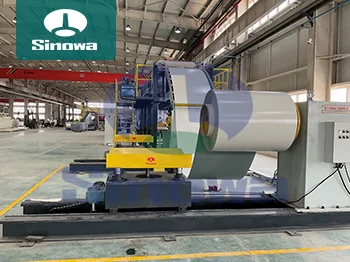
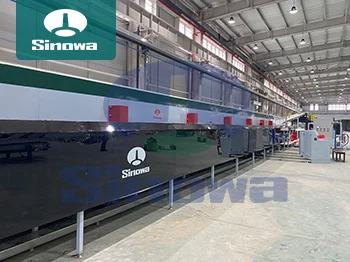
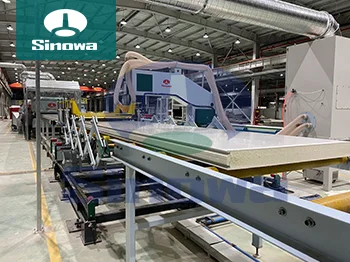
Sinowa is committed to the development and manufacturing of high-end and high-efficiency glass wool sandwich panel line. Our glass wool sandwich panel line are leading the way in efficiency, automatic control, human-computer interaction, environmental protection and energy consumption. Using system integration and bus control technology, it realizes the automatic integrated linkage control of the entire glass wool sandwich panel line, and can achieve remote interactive communication, which has the world-class level and a comprehensive leading high-performance glass wool sandwich panel line in the market.
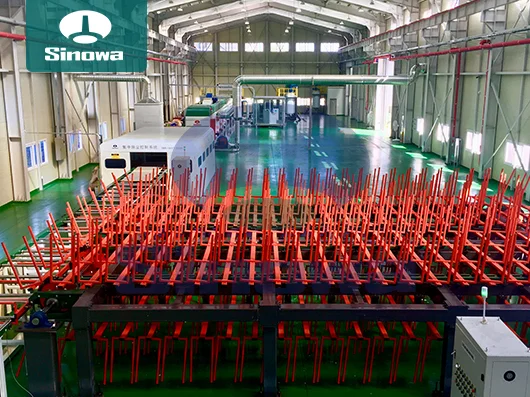
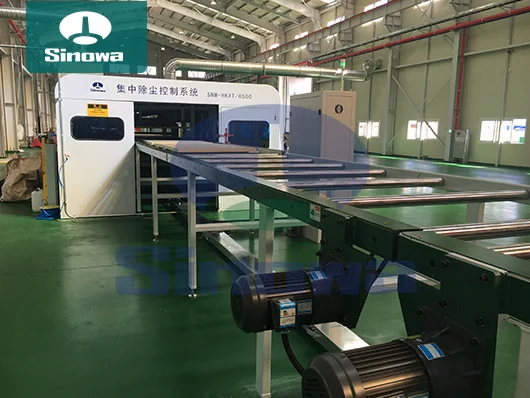
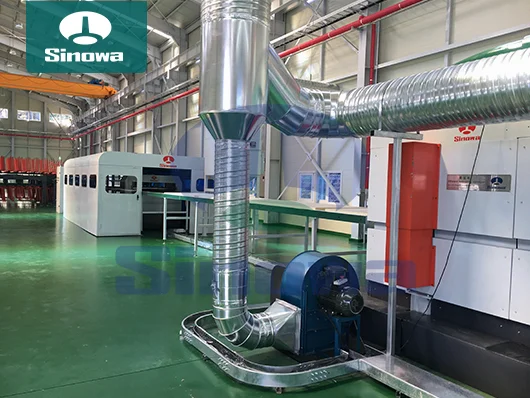
For more than ten years, relying on our innovative manufacturing concept and excellence in quality, reliable and trustworthy service to customers, we cooperate with customers all over the world, exported products to Canada, South Korea, Israel, Australia, the Middle East and other more than 20 countries and regions. contributed to building energy conservation and low-carbon production and have won widespread praise.
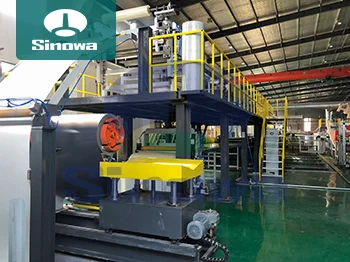
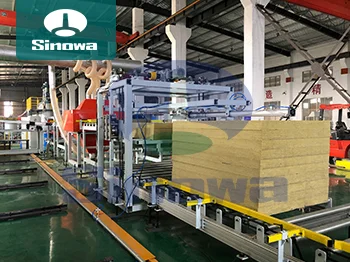
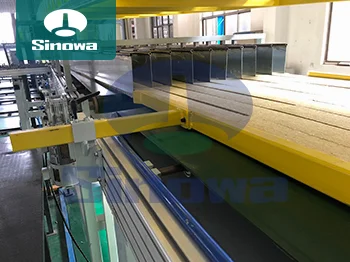
Sinowa has invested outstanding efforts in glass wool sandwich panel line, this is why our products are more efficiency, quality, automatic control technology, environmental protection, energy consumption indicators and the appearance and safety protection are comprehensively leading, some subversive design changes in many major technical points, these major innovations make our products excellent in price/performance and user experience.
The glass wool sandwich panel production line stands as a sophisticated and integrated manufacturing system tailored for the mass production of high-performance composite building panels, which have emerged as a core material in modern prefabricated construction industries. This automated production system integrates raw material feeding, precise cutting, gluing, composite pressing, curing, shaping and finished product cutting into a continuous and streamlined workflow, effectively converting raw glass wool fiber materials and metal surface sheets into standardized, multi-functional sandwich panels. Featuring outstanding thermal insulation, sound absorption, fire resistance and lightweight structural advantages, the panels produced by this line are widely adaptable to various architectural enclosure and decoration scenarios. With the booming demand for energy-saving, environmentally friendly and fast-construction building materials globally, the sales market of glass wool sandwich panel production lines has maintained steady growth. The equipment balances high production efficiency and product quality stability, and its flexible parameter adjustment capability enables it to meet the customized production needs of panels with different specifications, making it a cost-effective and practical production solution for building material manufacturers.
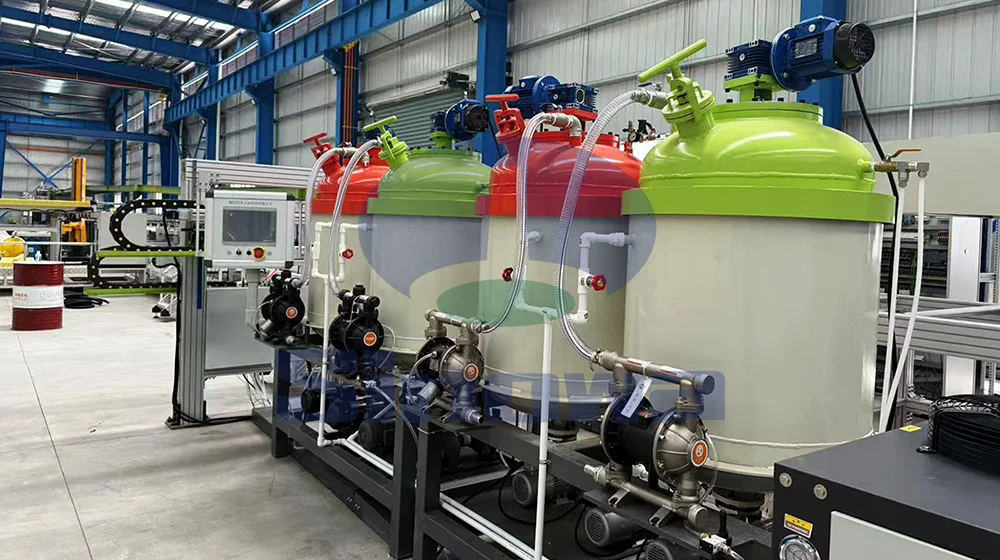
The overall structural design of the glass wool sandwich panel production line focuses on modular integration and operational intelligence, laying a solid foundation for stable and efficient continuous production. The entire production system consists of multiple functional units that operate in seamless coordination, including a surface sheet unwinding and leveling unit, glass wool core material processing unit, automatic gluing unit, high-pressure composite molding unit, constant-temperature curing unit, precise cutting unit and finished product conveying unit. Each functional module is independently adjustable and can be synchronously linked through an intelligent control system to avoid production stagnation caused by mismatched operating rhythms of individual equipment. The surface sheet processing part can flatten and straighten coiled metal sheets to ensure the flatness and uniformity of the panel outer layer, while the core material processing unit precisely cuts and arranges glass wool raw materials to guarantee consistent thickness and density of the sandwich core layer. The integrated structural design not only reduces the occupied space of the production equipment but also simplifies the daily maintenance and overhaul work, greatly lowering the long-term operation cost for manufacturers. In addition, the reserved parameter adjustment space of each module enables the equipment to adapt to the production of panels with different thicknesses and sizes, realizing diversified product production on a single production line.
Raw material pretreatment is a key preliminary process in the operation of the glass wool sandwich panel production line, which directly determines the forming quality and performance consistency of finished panels. Before formal composite processing, the equipment first carries out standardized pretreatment for two core raw materials: metal surface sheets and glass wool core materials. For metal surface materials, the production line is equipped with automatic leveling and cleaning devices to remove surface dust, oil stains and irregular deformations, ensuring a clean and flat bonding surface for subsequent gluing and composite work. This pretreatment step effectively avoids degumming and uneven surface of finished panels caused by surface impurities. For glass wool core materials, the equipment completes precise fixed-size cutting and fiber arrangement optimization according to production requirements. The glass wool raw materials with fluffy fiber structures are sorted and trimmed to ensure uniform overall density and neat edge cutting, eliminating quality defects such as hollow cores and uneven thickness of finished panels. Meanwhile, the system can fine-tune the cutting specifications and arrangement density of glass wool according to different product usage scenarios, so as to adjust the thermal insulation and sound insulation performance of the final panels, realizing targeted production of functional building materials.
Automatic gluing and composite pressing technology is the core functional link of the glass wool sandwich panel production line, which determines the structural firmness and overall durability of finished products. The production line adopts an intelligent quantitative gluing system, which can evenly coat high-performance adhesive on the inner surface of the upper and lower metal sheets with accurate glue amount control. The automatic gluing mode avoids the problems of uneven glue application, excessive glue waste or insufficient bonding force existing in manual gluing, ensuring that the adhesive layer forms a continuous and stable bonding interface. After the gluing process is completed, the metal sheets and glass wool core material are automatically sent to the composite pressing unit for integrated pressing and fitting. The pressing unit adopts uniform pressure distribution design, which can apply stable and balanced pressure on the whole panel surface, making the surface layer and core layer closely bonded without gaps or deviations. The elastic bonding layer formed after adhesive curing can buffer the structural stress generated by external temperature changes and mechanical vibration, effectively improving the anti-deformation and anti-seismic performance of the panels. This efficient composite process ensures that each finished panel has consistent bonding strength and structural stability, greatly reducing the rate of defective products in mass production.
Constant-temperature curing and fixed-length cutting processes further optimize the finished product quality and production precision of the glass wool sandwich panel production line. After composite pressing, the preliminary formed panels enter the intelligent constant-temperature curing system for standardized curing treatment. The curing unit maintains a stable internal temperature environment, which can accelerate the curing and forming of the adhesive, fully exert the bonding performance of the adhesive, and enhance the overall structural tightness of the sandwich panels. The closed curing space avoids the influence of external temperature and humidity changes on the curing effect, ensuring that the bonding performance of each batch of panels remains consistent. After the curing process is completed, the fully formed continuous panel materials are transported to the precision cutting unit through the automatic conveying system. The cutting system supports flexible setting of panel length and width parameters, and can complete fixed-length cutting and edge trimming with high precision. The high-speed cutting equipment features smooth incision and no burrs, which does not damage the surface coating and internal fiber structure of the panels. The integrated operation of curing and cutting realizes one-step forming of finished products, effectively improving production efficiency and ensuring that the dimensional accuracy of each finished panel meets the use requirements of standardized construction projects.
The glass wool sandwich panel production line has remarkable production performance advantages in terms of operational efficiency, product stability and energy-saving environmental protection, making it highly competitive in the building material equipment market. In terms of production efficiency, the fully automated assembly line operation mode realizes uninterrupted continuous production, effectively shortening the single-panel production cycle and greatly improving the daily output compared with traditional semi-automatic equipment. The intelligent linkage control system reduces manual intervention links, not only saves labor costs for enterprises but also avoids quality fluctuations caused by human operation errors. In terms of product performance stability, the whole production process adopts mechanical standardized operation, with precise control of raw material proportion, gluing amount, pressing pressure and curing time, ensuring that the thermal insulation, sound insulation and structural strength of each finished panel maintain high consistency. In terms of environmental protection and energy saving, the production line optimizes the internal air circulation and power operation system, reduces energy consumption during equipment operation, and the closed production space effectively avoids fiber dust leakage during glass wool processing, creating a clean and safe production environment while meeting green production requirements.
The finished glass wool sandwich panels produced by the professional production line have comprehensive functional advantages, covering multiple core performance indicators required for modern building materials. Benefiting from the porous fiber structure of high-quality glass wool core material, the panels possess excellent thermal insulation performance, which can effectively block indoor and outdoor heat transfer, reduce the energy consumption of building heating and cooling, and realize building energy conservation. At the same time, the dense fiber layout and integrated composite structure endow the panels with outstanding sound absorption and noise reduction capabilities, which can effectively isolate external noise and reduce indoor sound echo, creating a quiet and comfortable indoor environment. In terms of safety performance, the glass wool core material has good flame retardant characteristics, which can effectively inhibit the spread of flames and improve the overall fire safety of building enclosure structures. In addition, the composite panel has the advantages of light weight and high structural strength, which can reduce the bearing load of building main structures, and has good corrosion resistance and weather resistance, adapting to different indoor and outdoor building environments and maintaining stable service performance for a long time.
Driven by the rapid development of prefabricated construction and green building industries, the market application prospects of glass wool sandwich panel production lines are extremely broad, and the market sales volume continues to rise steadily. The finished panels produced by the equipment are widely used in various construction scenarios including industrial factory enclosures, warehouse roofing and wall systems, commercial building interior partitions, office space decoration, hotel and hospital indoor engineering, as well as various clean engineering projects. The modular installation feature of the panels can greatly shorten the construction cycle of projects and improve construction efficiency, which is highly recognized by construction enterprises and engineering contractors. With the continuous upgrading of building energy-saving and environmental protection standards, the market demand for high-performance thermal insulation and sound insulation building materials is constantly increasing, which further drives the market demand for professional glass wool sandwich panel production lines. In addition, the equipment’s flexible production capacity can meet the personalized product needs of different engineering projects, helping building material manufacturers expand product coverage and market share, making it a popular investment equipment in the current building material manufacturing field.
« Glass Wool Sandwich Panel Line On Sales » Update Date: 2026/9/1
Tags: Glass Wool Sandwich Panel Line ,
- Good Quality PU Sandwich Roofing Foaming Line
- PIR Sandwich Panel Line For Wall
- High-quality Color Steel Sandwich Panel Production Line
- Soundproofing Sandwich Panel Production Line In China
- Cheap Wall Sandwich Panel Production Line
- Good Price And Quality PU Foam Production Line
- Continuous Sandwich Panel Production Line For Sale
- Insulated Sandwhich Panel Production Line Factory
- Foam Core Sandwich Panel Line On Sales
- High-tech Glass Wool Production Line
- Glass Wool Sandwich Panel Line
- High-tech Polyurethane Sandwich Panel Machine
- Isolation Sandwich Panel Production Line On Sales
- Custom Color Steel Sandwich Panel Production Line
- High-end Glass Wool Sandwich Panel Machine
- Glass Wool Panel Production Line
- Continuous Sandwich Panel Production Line For Clean Room
- Custom PU Sandwich Panel Production Line
- High-tech Insulated Sandwhich Panel Production Line
- Glass Wool Production Line On Sales
- Links:
- Sandwich Panel Continuous Production Line
- Automatic and Continuous Sandwich Panel Production Line
- Cheap and Low Price Sandwich Panel Production Line
- China Sandwich Panel Production Line Factory
- Color Steel Sandwich Panel Production Line For Cold Storage
- Continuous Composite Foam Sandwich Panel Production Line
- Continuous Production Line For Rockwool and Mineral Wool Sandwich Panels
- Continuous PU Phenolic Insulation Panel Production Line
- Continuous PU PIR Sandwich Panel Production Line
- Continuous PUF PUR Sandwich Panel Production Line
- Continuous Sandwich Panel Production Line For Roof and Wall
- Customized and Design Sandwich Panel Production Line
- Decorative Sandwich Panel Production Line For Glass Wool Boards
- High Quality Sandwich Panel Production Line For Sale
- Polyurethane(PU) Sandwich Panel Production Line
- Sandwich Panel Production Line Manufacturer and Supplier