
Continuous PU Sandwich Panel Line
Sinowa is a continuous pu sandwich panel line supplier from china, customized high-quality & high efficiency continuous pu sandwich panel line at low price, the adoption of system integration technology and bus control technology accomplishes the full automatization of integrated and coordinated control of the continuous pu sandwich panel line with accessible remote interactive communication. Ranking the first-class level in the world, it is currently the continuous pu sandwich panel line in the market taking a comprehensive lead in high performance.
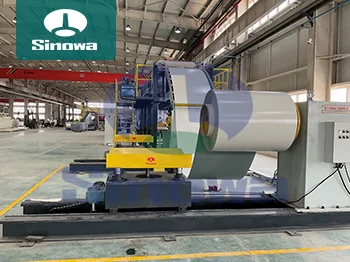
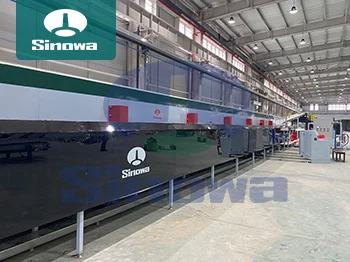
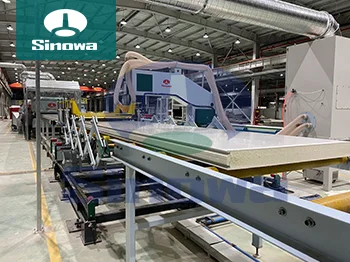
The high-tech continuous pu sandwich panel line can meet a variety of production needs of customers, the whole continuous pu sandwich panel line design concept of modularization enables all our components to be integrated and combined at will. Our high efficiency continuous pu sandwich panel line can easily automate the production of roof sandwich panel, wall sandwich panel, cold storage sandwich panel and other products by different combination and configuration selection and siple switching. The inner core layer can be polyrethane or rock wool, glass wool, an so on.


The high precision continuous pu sandwich panel line has high adaptability, which may produce various sandwich panel of the PU, PIR and rock wool systems. We may design various products according to the customer’s requirements, including various configurations, so as to meet their demands with flexible price system. Highly integrated and linked control system centralizes all control points at the main central center, achieving parameter linkage, fault self-diagnosis controlled by the whole line and shipping distance control. High-level automatic control system also saves the manpower and reduces the manpower loss for customers.


The precision servo hoisting mechanism employed by the main engine without hydraulic system makes the board thickness control flexible and the customer may conveniently change or adjust the board thickness. There will be not such troubles as hydraulic system adjustment, leakage, maintenance, etc.


High-level energy saving and protection design makes the whole continuous pu sandwich panel line possible to produce around the clock throughout the year and the customer will save huge budget. In addition, the isolated heat preservation room is constructed for warming the environment. The energy saving and protection design of our manufacturing line may guarantee that the customer’s production line may be freely heated and produce in the main time to save more costs for customers.


The high-power low-consumption design quickens the reaction of the cheap continuous pu sandwich panel line while energy consumption is kept low. With the brand-new, fully sealed inner insulation design, the energy consumption is controlled at the minimum level to achieve the design objective of less than an hour for the insulation system to be activated from the room temperature above 5℃ to the production process temperature. The energy consumption is only 40% that of those similar products.
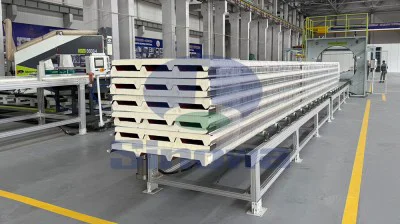
A continuous PU sandwich panel line is an advanced automated production system designed for the seamless manufacturing of PU sandwich panels, integrating multiple functional modules to achieve efficient and consistent production. Unlike traditional discontinuous production methods, it operates without interruption from raw material feeding to finished product stacking, minimizing manual intervention and maximizing production continuity. The core process involves precise coordination of several key stages, starting with the uncoiling of surface materials, which are fed into the line at a steady speed with tension control to prevent deformation. These surface materials, often metal sheets or non-woven fabrics, are then preprocessed to ensure optimal adhesion with the PU foam core. Next, two-component PU raw materials are accurately metered and mixed at high pressure before being evenly poured between the upper and lower surface layers. As the materials move through the double-track laminating conveyor, the PU foam expands and cures, forming a strong bond with the surface layers. The cured panels are then automatically cut to the required length, completing the production cycle. This integrated line not only significantly improves production efficiency but also ensures uniform product quality, with consistent core density and bonding strength. The panels produced are widely used in various fields, including construction for walls and roofs, cold storage and cold chain logistics for insulation, and industrial facilities for soundproofing and thermal protection, thanks to their excellent insulation, structural stability, and lightweight properties. With its energy-saving design and flexible adaptability, the continuous PU sandwich panel line has become an indispensable equipment in modern composite material production, meeting the diverse needs of different industries.
In the modern construction and industrial manufacturing landscape, the demand for efficient, energy-saving, and durable building materials has spurred the continuous advancement of production technologies. Among these, the continuous PU (polyurethane) sandwich panel line stands out as a core equipment system that integrates multiple disciplines, including mechanics, chemistry, electrical control, hydraulics, pneumatics, and temperature control. This fully automated production line is designed to manufacture composite sandwich panels with polyurethane foam as the core material and metal or other sheets as facing layers, offering unparalleled efficiency and consistency compared to traditional discontinuous production methods. Its sophisticated structure, superior performance, diverse types, and wide-ranging applications make it an indispensable part of industries such as construction, cold chain logistics, food processing, and modular building. To gain a comprehensive understanding of this advanced production system, it is essential to explore its structural components, performance characteristics, classification, and practical applications in detail.
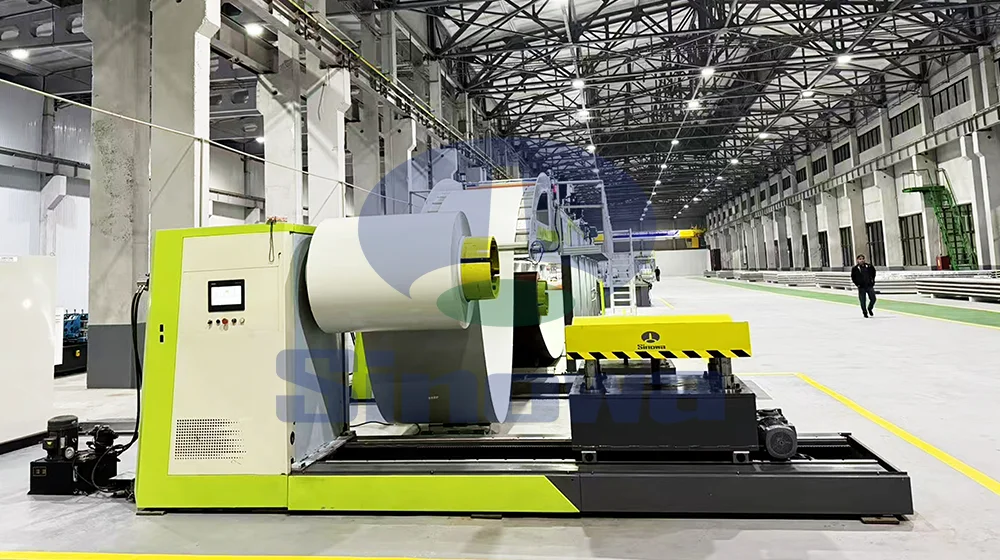
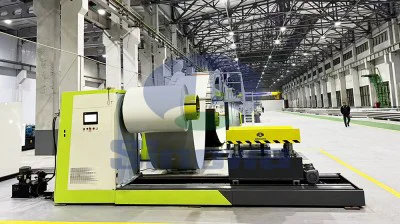
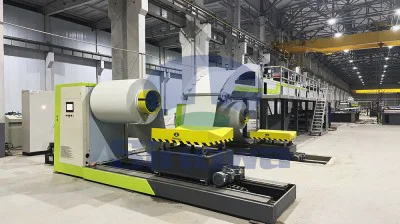
The structure of a continuous PU sandwich panel line is a highly integrated assembly of functional units, each playing a crucial role in ensuring the smooth and efficient production process. The entire line typically starts with the uncoiling system, which is responsible for feeding the facing materials into the production flow. This system consists of decoilers that can handle various coil materials, such as pre-painted steel sheets, galvanized sheets, and aluminum sheets. The decoilers are equipped with tension control devices to ensure stable and uniform uncoiling, preventing wrinkles or deformation of the facing materials. After uncoiling, the facing materials pass through a leveling unit to correct any deviations or unevenness, laying the foundation for precise subsequent processing. Some advanced uncoiling systems also feature automatic coil changing functions, which minimize production interruptions and enhance overall efficiency.
Following the uncoiling and leveling process, the facing materials enter the roll forming system. This system is composed of a series of tandem rolling stands, each equipped with precision rollers and gears that gradually bend and shape the facing materials into the desired profiles. The roll forming process is highly customizable, allowing for the production of panels with different cross-sectional shapes, such as corrugated, trapezoidal, or flat profiles, to meet specific application requirements. The rollers are designed with high wear resistance and precision to ensure consistent profile dimensions across the entire production batch. For double-layer panel production, some lines are equipped with dual roll forming units that process the upper and lower facing materials simultaneously, ensuring synchronization and alignment.
Preheating is a critical intermediate step in the production process, as it optimizes the bonding effect between the facing materials and the PU foam core. The preheating system usually adopts a hot air circulation oven, which uniformly heats the facing materials to a specific temperature range. This temperature control is precise to avoid overheating or underheating—overheating may damage the surface coating of the facing materials, while underheating can affect the adhesion of the PU foam. The preheating temperature is adjustable according to the type of facing material, foam formulation, and production speed, ensuring flexibility and adaptability to different production requirements.
The high-pressure foaming system is the core component that determines the quality of the PU foam core. This system consists of material storage tanks, metering pumps, mixing heads, and injection nozzles. The polyurethane raw materials, including polyol and isocyanate, are stored in separate tanks and transported to the mixing head by high-precision metering pumps. The metering pumps ensure accurate ratio control of the raw materials, which is essential for achieving the desired foam density, thermal insulation performance, and mechanical strength. The mixing head thoroughly blends the two components under high pressure, initiating the polymerization reaction. The foaming agent, which is often an environmentally friendly substance such as pentane instead of chlorofluorocarbons, is incorporated into the mixture to promote foam expansion. The mixed foam is then continuously injected between the upper and lower facing materials, which are moving synchronously on the conveyor system.
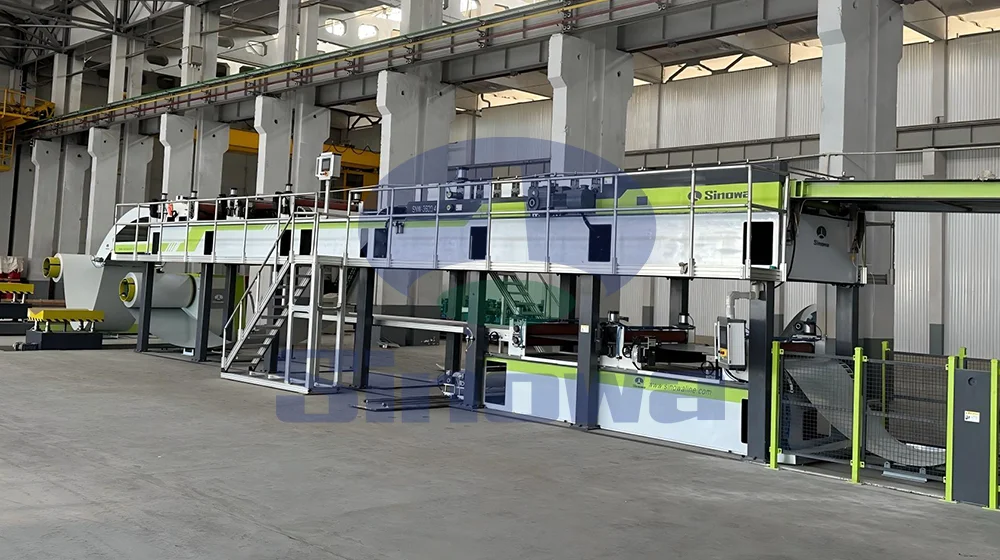
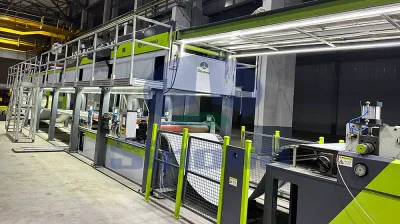
The double-belt conveyor system plays a vital role in the curing and shaping of the sandwich panels. This system consists of two parallel, endless belts that clamp the sandwich panel assembly—facing materials and freshly injected PU foam—as it moves through the production line. The belts are made of high-strength, heat-resistant materials that can withstand the curing temperature and pressure. The double-belt system ensures that the PU foam cures uniformly under constant pressure, resulting in a flat and smooth panel surface with consistent thickness. The length of the double-belt conveyor is determined by the curing time required for the PU foam, which varies based on the foam formulation, panel thickness, and production speed. Some systems are equipped with a heating function in the double-belt section to accelerate the curing process, further improving production efficiency.
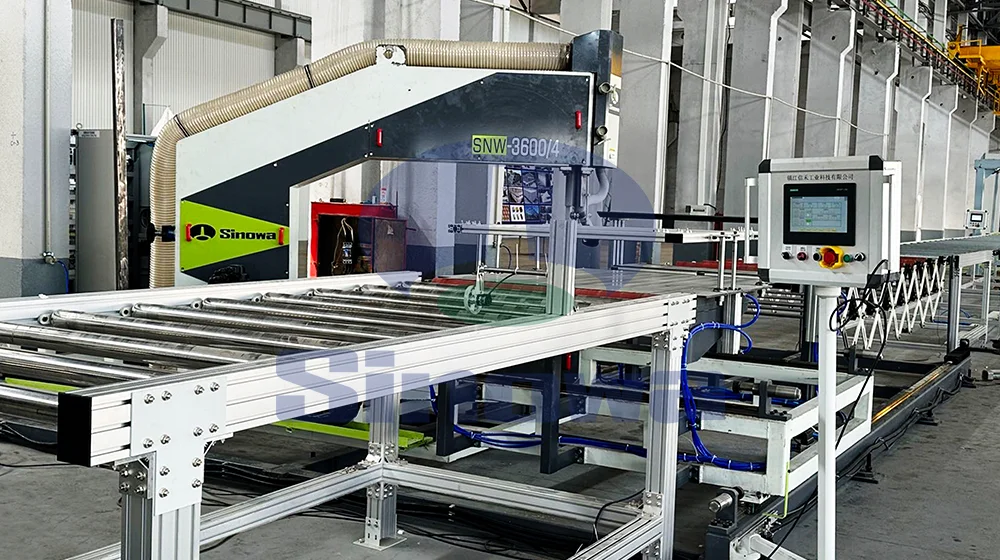
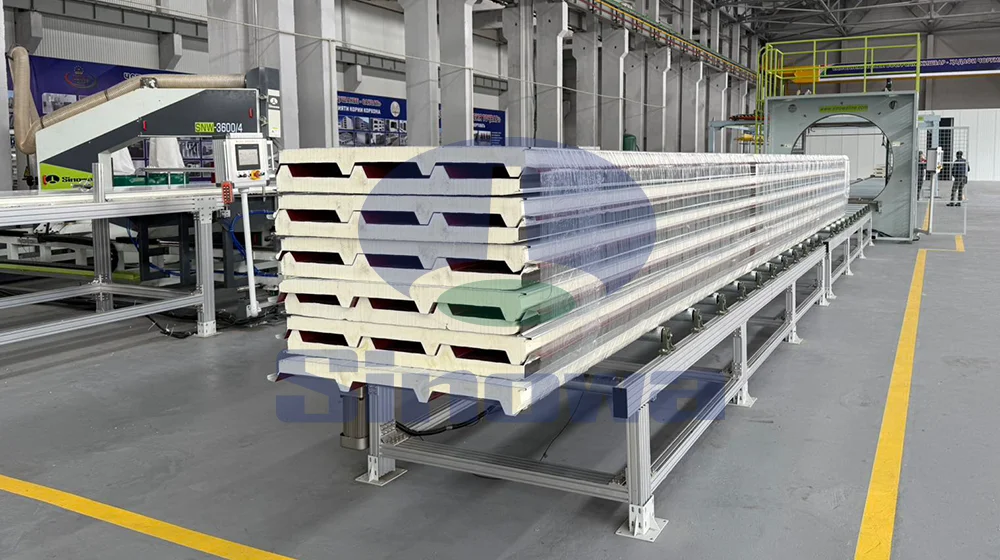
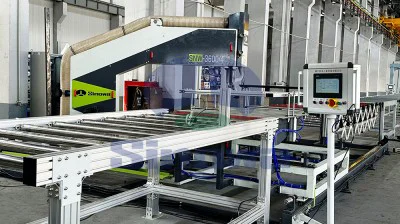
After the PU foam is fully cured, the sandwich panel enters the cutting system. This system typically uses a band saw or circular saw with automatic length control, which cuts the continuous panel into pre-set lengths without stopping the production line. The cutting process is precise, with minimal dust and debris generation, thanks to advanced saw blade design and dust collection devices. The cutting parameters, such as length and cutting speed, are controlled by a PLC (Programmable Logic Controller) system, ensuring accuracy and consistency. Some advanced cutting systems also feature angle cutting capabilities, allowing for the production of panels with beveled edges to facilitate on-site installation.
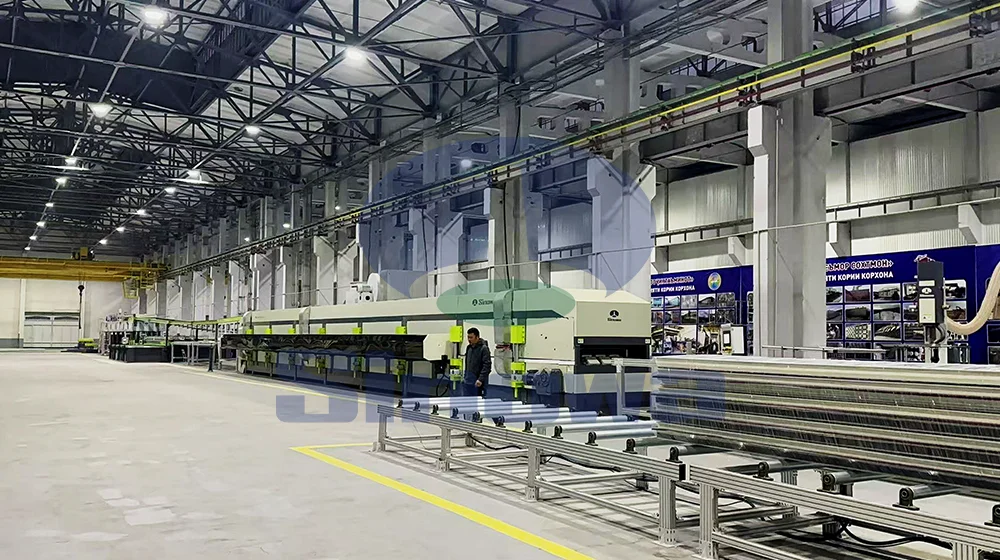
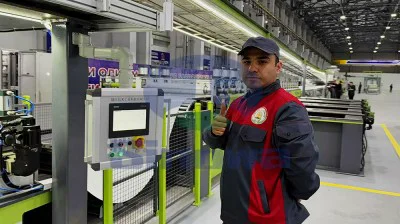
The final stages of the production line include cooling, stacking, and packaging. The cooling system uses forced air or water cooling to reduce the temperature of the cut panels to room temperature, ensuring dimensional stability and preventing post-curing deformation. The stacking system automatically arranges the cooled panels into neat piles, with protective films or spacers inserted between each panel to avoid surface scratches. The packaging system then wraps the stacked panels with waterproof and shockproof materials, preparing them for storage and transportation. Throughout the entire production process, a centralized PLC control system monitors and coordinates all functional units, allowing for real-time adjustment of parameters, fault diagnosis, and production data recording. The user-friendly interface of the control system simplifies operation, reducing the need for manual intervention and minimizing human error.
The performance of a continuous PU sandwich panel line is characterized by a combination of efficiency, precision, stability, and environmental friendliness, which collectively determine the quality of the final products and the overall production cost. High production efficiency is one of the most prominent advantages of this type of production line. Unlike discontinuous batch production methods, which require frequent mold changes and curing pauses, continuous lines operate non-stop, with production speeds ranging from several meters to over ten meters per minute. This high-speed operation enables the production of thousands of square meters of panels per shift, making it ideal for large-scale infrastructure projects and bulk orders. The automated nature of the line further enhances efficiency by reducing labor requirements and eliminating production bottlenecks caused by manual operations.
Precision and consistency are another key performance indicators of continuous PU sandwich panel lines. The integration of advanced technologies, such as PLC control, high-precision metering, and roll forming, ensures that every panel produced meets strict dimensional and quality standards. The foam density is uniformly distributed across the panel, with a closed-cell rate of over 90% in most cases, which enhances thermal insulation and water resistance. The facing materials maintain consistent profile dimensions and surface flatness, with no visible wrinkles or deformations. This level of consistency is difficult to achieve with manual or semi-automated production methods, as human intervention often leads to variations in product quality.
Stability and reliability are essential for long-term industrial production. Continuous PU sandwich panel lines are designed with robust mechanical structures and high-quality components that can withstand prolonged high-load operation. The hot air circulation oven and double-belt conveyor system maintain stable temperatures and pressures, ensuring consistent curing conditions for the PU foam. The high-pressure foaming system features reliable sealing and metering components, preventing raw material leakage and ensuring accurate ratio control. Additionally, the PLC control system provides real-time fault monitoring and alarm functions, allowing operators to quickly identify and resolve issues before they escalate into major production disruptions. This stability translates into reduced downtime and maintenance costs, improving the overall return on investment for manufacturers.
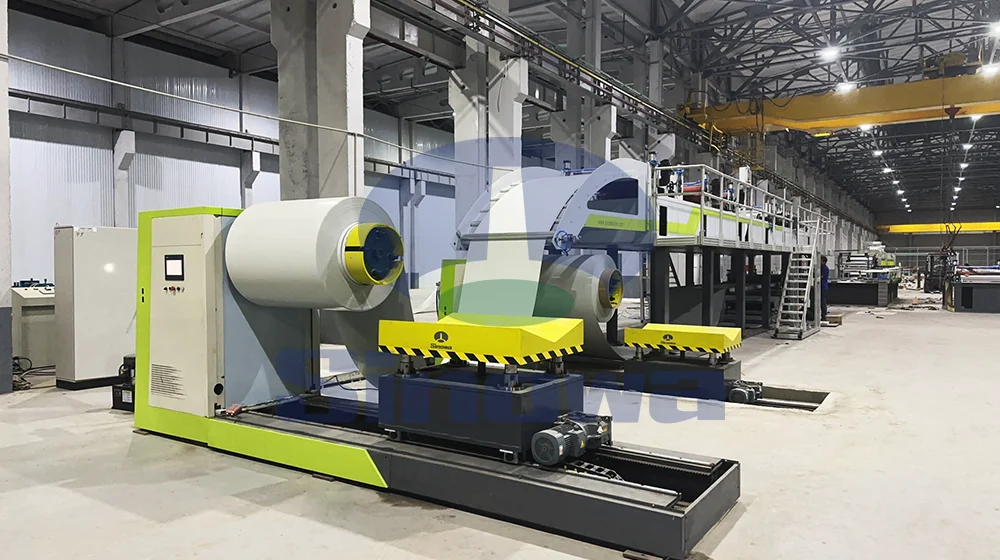
Environmental friendliness has become an increasingly important performance criterion in modern production equipment, and continuous PU sandwich panel lines are designed to meet strict environmental standards. The use of environmentally friendly foaming agents, such as pentane or 141b, replaces harmful chlorofluorocarbons, reducing the environmental impact and complying with global environmental regulations. The high-pressure foaming system also minimizes dust generation on the production site, protecting the health of workers and improving the working environment. Furthermore, the efficient material utilization of continuous lines reduces waste—precise cutting and foam injection ensure that raw materials are used optimally, with minimal scrap. Some advanced lines also incorporate energy-saving designs, such as heat recovery systems in the preheating and curing sections, to reduce energy consumption.
Flexibility and adaptability are additional performance characteristics that make continuous PU sandwich panel lines suitable for diverse production needs. These lines can be customized to produce panels of varying dimensions, including thicknesses ranging from 30mm to 250mm, widths up to 1200mm, and lengths adjustable according to customer requirements. The roll forming system can be reconfigured to produce different panel profiles, such as roof panels, wall panels, and door panels, with simple adjustments. Some lines are also capable of processing multiple core materials, including polyurethane (PU), polyisocyanurate (PIR), mineral wool, and glass wool, by modifying the foaming or material feeding systems. This flexibility allows manufacturers to quickly respond to changing market demands and expand their product portfolios without significant equipment modifications.
Continuous PU sandwich panel lines can be classified into several types based on their production capabilities, core material compatibility, and structural configurations, each designed to meet specific production needs and application scenarios. The most common classification is based on the core material used, resulting in PU-specific lines, PIR lines, and multi-material lines. PU continuous lines are optimized for producing panels with polyurethane foam cores, which offer excellent thermal insulation, light weight, and good mechanical strength. These lines are widely used in cold storage, warehouses, and industrial buildings where thermal efficiency is a priority. PIR continuous lines, on the other hand, are designed for polyisocyanurate foam cores, which have lower thermal conductivity and higher fire resistance compared to PU foam. PIR panels are commonly used in high-temperature environments, clean rooms, and buildings with strict fire safety requirements.
Multi-material continuous lines are versatile systems that can produce panels with different core materials, including PU, PIR, mineral wool, and glass wool. These lines feature modular designs, allowing for easy switching between core materials by adjusting the foaming system or integrating additional material feeding units. For example, a multi-material line can be configured to produce PU foam panels for cold storage one day and mineral wool panels for fire isolation belts the next, making it ideal for manufacturers with diverse product lines. The modular design also facilitates future upgrades and expansions, such as adding embossing units for decorative panels or edge-sealing systems for improved water resistance.
Another classification is based on the number of facing material layers and processing capabilities, resulting in single-layer, double-layer, and composite lines. Single-layer lines process a single facing material, typically used for producing panels with one visible surface, such as interior wall panels. Double-layer lines, which are the most common type, process two facing materials simultaneously, forming the upper and lower layers of the sandwich panel. These lines are suitable for producing roof panels, exterior wall panels, and cold storage panels, where both surfaces require protection and structural integrity. Composite lines are advanced systems that can integrate additional layers, such as waterproof membranes, decorative films, or fire-retardant sheets, into the sandwich panel structure during production. These lines are used for high-end applications, such as luxury prefabricated houses, commercial complexes, and clean rooms, where multi-functional performance is required.
Continuous PU sandwich panel lines can also be categorized based on their production speed and scale, into standard-speed lines and high-speed lines. Standard-speed lines operate at production speeds of 3-8 meters per minute, suitable for medium-scale manufacturers and small to medium-sized projects. High-speed lines, on the other hand, can achieve speeds of 10-14 meters per minute or higher, designed for large-scale production facilities and high-volume orders, such as industrial parks and large-scale cold chain logistics centers. High-speed lines are equipped with more powerful drive systems, advanced cooling technologies, and enhanced control systems to maintain stability and quality at high speeds.
The applications of continuous PU sandwich panel lines are extensive and diverse, spanning multiple industries where high-quality, insulated sandwich panels are in demand. The construction industry is the largest consumer of panels produced by these lines, with applications in both industrial and commercial buildings. Industrial buildings, such as warehouses, factories, and workshops, benefit from the panels' excellent thermal insulation, sound insulation, and structural strength. The quick installation of sandwich panels, made possible by their standardized dimensions and light weight, reduces construction time and labor costs, making them ideal for fast-track industrial projects. Roof panels produced by continuous lines are designed to withstand harsh weather conditions, such as strong winds, heavy rains, and extreme temperatures, ensuring long-term durability.
Commercial buildings, including shopping malls, office buildings, and hotels, also rely on panels from continuous PU sandwich lines for their energy-saving and aesthetic properties. The panels can be customized with decorative surface finishes, such as embossed patterns or colored coatings, to match the architectural design of the building. The thermal insulation performance of the panels helps reduce heating and cooling costs, improving the energy efficiency of the building and complying with green building standards. Additionally, the sound insulation properties of the panels create a comfortable indoor environment, reducing noise pollution from external sources and between different rooms.
The cold chain logistics industry is another major application area for continuous PU sandwich panel lines. Cold storage facilities, refrigerated warehouses, and refrigerated trucks require panels with superior thermal insulation performance to maintain stable low temperatures and reduce energy consumption. Panels produced by continuous lines have a uniform foam core with high closed-cell rates, which minimizes heat transfer and ensures consistent temperature control. The excellent adhesion between the facing materials and the foam core prevents air leakage, further enhancing the thermal efficiency of the cold storage. Additionally, the panels are resistant to moisture and corrosion, making them suitable for the humid environment of cold storage facilities.
Food processing plants and clean rooms have strict requirements for hygiene, fire safety, and environmental control, making panels from continuous PU sandwich lines an ideal choice. These panels have a smooth surface that is easy to clean and disinfect, preventing the accumulation of dust and bacteria. The fire-retardant properties of PU and PIR foam cores, combined with non-combustible facing materials, meet the fire safety standards of food processing facilities. Clean rooms, such as those used in the pharmaceutical and electronics industries, require panels with low particle emission and excellent airtightness, which are achievable with the precise manufacturing process of continuous lines.
Modular and prefabricated buildings have gained significant popularity in recent years due to their speed of construction, flexibility, and sustainability. Continuous PU sandwich panel lines play a key role in the production of modular building components, such as wall panels, roof panels, and floor panels. The standardized dimensions and consistent quality of the panels ensure easy assembly of modular units, reducing on-site construction time and waste. Prefabricated houses, temporary offices, and disaster relief shelters are common applications of these panels, as they can be quickly produced and installed to meet urgent housing needs. The thermal insulation and sound insulation properties of the panels also ensure a comfortable living and working environment in modular buildings.
The automotive and transportation industries also use panels produced by continuous PU sandwich lines for various applications. Refrigerated trucks and trailers rely on these panels to maintain temperature stability during the transportation of perishable goods. The light weight of the panels helps reduce fuel consumption, improving the efficiency of the vehicle. Additionally, the panels are used in the interior of buses, trains, and ships for sound insulation and thermal comfort, enhancing the passenger experience. The high mechanical strength of the panels ensures durability under the vibration and impact conditions of transportation.
Other emerging applications of continuous PU sandwich panel lines include renewable energy projects, such as solar panel support structures and wind turbine nacelles. The light weight and high strength of the panels make them suitable for these applications, where weight reduction and durability are critical. The panels are also used in the construction of greenhouses, providing thermal insulation to maintain optimal growing conditions for plants. Additionally, they are used in the renovation and retrofitting of old buildings, where their easy installation and energy-saving properties help improve the performance of existing structures.
As industries continue to prioritize energy efficiency, sustainability, and production efficiency, the demand for continuous PU sandwich panel lines is expected to grow. Advances in technology, such as the integration of artificial intelligence for predictive maintenance, the development of more environmentally friendly foam formulations, and the enhancement of modular designs for greater flexibility, will further expand the capabilities and applications of these lines. Manufacturers are increasingly adopting continuous production systems to improve product quality, reduce costs, and meet the evolving needs of the market. Whether in construction, cold chain logistics, food processing, or transportation, continuous PU sandwich panel lines will remain a cornerstone of modern manufacturing, driving innovation and sustainability in the production of insulated sandwich panels.
The integration of multiple technologies in continuous PU sandwich panel lines reflects the trend of industrial automation and intelligence. The precise control of each production step, from raw material feeding to final packaging, ensures that the panels meet the highest quality standards while maximizing production efficiency. The diverse types of lines available allow manufacturers to tailor their production systems to specific needs, whether producing large volumes of standard panels or small batches of customized products. The wide range of applications demonstrates the versatility and adaptability of these lines, making them an essential investment for businesses looking to stay competitive in today's fast-paced industrial environment.
In conclusion, continuous PU sandwich panel lines are sophisticated, high-performance production systems that play a vital role in the manufacturing of insulated composite panels. Their integrated structure, superior performance characteristics, diverse types, and extensive applications make them indispensable in modern industry. As environmental regulations become stricter and the demand for energy-efficient materials grows, these lines will continue to evolve, incorporating new technologies and designs to meet the changing needs of the market. By understanding the structure, performance, types, and applications of continuous PU sandwich panel lines, manufacturers can make informed decisions about their production equipment, improving efficiency, quality, and sustainability in their operations.
« Continuous PU Sandwich Panel Line » Update Date: 2026/4/17
URL: https://www.sinowamachine.com/tags/continuous-pu-sandwich-panel-line.html
![High-end Continuous PU Sandwich Panel Line]()
High-end Continuous PU Sandwich Panel Line
2026-09-01The high-end continuous PU sandwich panel line stands as a sophisticated and integrated manufacturing solution tailored for the mass production of high-performance polyurethane composite sandwich panels, redefining the efficiency and quality standards of modern insulation panel manufacturing. Differi…![High-quality Continuous PU Sandwich Panel Line]()
High-quality Continuous PU Sandwich Panel Line
2026-08-27The high-quality continuous PU sandwich panel line stands as a sophisticated, fully automated integrated manufacturing system tailored for the mass production of premium polyurethane sandwich panels, revolutionizing traditional segmented and intermittent panel production modes. This streamlined produ…![Low Price Continuous PU Sandwich Panel Line]()
Low Price Continuous PU Sandwich Panel Line
2026-08-27The low price continuous PU sandwich panel line is a cost-effective and highly automated manufacturing solution tailored for the mass production of polyurethane sandwich panels, balancing stable operational performance, flexible production capacity, and affordable equipment investment for diverse ind…![High Efficiency Continuous PU Sandwich Panel Line]()
High Efficiency Continuous PU Sandwich Panel Line
2026-08-24The high efficiency continuous PU sandwich panel line represents an advanced automated integrated manufacturing system dedicated to the mass production of polyurethane composite sandwich panels. Differing greatly from traditional intermittent production equipment that relies on segmented manual opera…![Continuous PU Sandwich Panel Line Price]()
Continuous PU Sandwich Panel Line Price
2026-08-24The continuous PU sandwich panel line stands as a highly integrated and automated manufacturing system dedicated to the streamlined production of polyurethane composite sandwich panels, a core building and industrial material widely adopted across multiple sectors. Unlike traditional intermittent pro…![Continuous PU Sandwich Panel Line On Sales]()
Continuous PU Sandwich Panel Line On Sales
2026-08-14The continuous PU sandwich panel production line stands as a highly automated, integrated manufacturing solution designed for the mass production of high-performance polyurethane sandwich panels, widely favored in the modern building material and industrial manufacturing sectors. This streamlined pro…![Cheap Continuous PU Sandwich Panel Line]()
Cheap Continuous PU Sandwich Panel Line
2026-08-12The cheap continuous PU sandwich panel line stands as a cost-effective and high-efficiency automated production solution tailored for mass manufacturing of polyurethane sandwich panels, balancing stable operational performance with affordable deployment and maintenance costs. Unlike traditional inter…![High-tech Continuous PU Sandwich Panel Line]()
High-tech Continuous PU Sandwich Panel Line
2026-07-10The high-tech continuous PU sandwich panel line represents a landmark advancement in modern composite material manufacturing, integrating mechanical automation, intelligent control, chemical reaction regulation and precision molding technology to achieve uninterrupted and standardized production of p…![Continuous PU Sandwich Panel Line Supplier]()
Continuous PU Sandwich Panel Line Supplier
2026-03-24In the global landscape of modern construction and industrial insulation solutions, polyurethane (PU) sandwich panels have emerged as a cornerstone material, prized for their exceptional thermal efficiency, structural integrity, lightweight profile, and versatile application across residential, comme…![Continuous PU Sandwich Panel Line Manufacturer]()
Continuous PU Sandwich Panel Line Manufacturer
2026-01-24The global demand for efficient, high-performance building and industrial materials has driven significant advancements in manufacturing technologies, with continuous PU sandwich panel lines emerging as a cornerstone of modern production systems. These integrated lines are engineered to produce compo…![Continuous PU Sandwich Panel Line From China]()
Continuous PU Sandwich Panel Line From China
2026-01-24Continuous PU sandwich panel lines have become a cornerstone in modern manufacturing, especially in the production of composite materials that balance structural strength, thermal insulation, and versatility. Originating from ongoing technological advancements and industrial optimization, these produ…![Continuous PU Sandwich Panel Line For Wall]()
Continuous PU Sandwich Panel Line For Wall
2026-01-24The continuous production line for polyurethane (PU) sandwich wall panels represents a sophisticated integration of advanced engineering, material science, and automated technology, designed to manufacture high-performance composite panels widely used in modern construction. This production system op…![Continuous PU Sandwich Panel Line For Sale]()
Continuous PU Sandwich Panel Line For Sale
2026-01-24Continuous PU sandwich panel lines stand as core equipment in the production of composite insulation panels, integrating multiple processing technologies to realize automated and efficient manufacturing of polyurethane (PU) sandwich panels. Unlike traditional manual or discontinuous production method…![Continuous PU Sandwich Panel Line For House]()
Continuous PU Sandwich Panel Line For House
2026-01-24Polyurethane (PU) sandwich panels produced by continuous lines have become a pivotal material in modern house construction, valued for their integrated performance and adaptability to diverse building needs. The continuous production line ensures consistent quality and efficiency, making these panels…![Continuous PU Sandwich Panel Line For Construction]()
Continuous PU Sandwich Panel Line For Construction
2026-01-12In the evolving landscape of the construction industry, the demand for efficient, high-performance, and sustainable building materials has driven significant advancements in manufacturing technologies. Among these innovations, the continuous PU (polyurethane) sandwich panel line stands out as a corne…![Continuous PU Sandwich Panel Line For Cold Storage]()
Continuous PU Sandwich Panel Line For Cold Storage
2026-01-12In the modern cold chain logistics and food storage industry, the demand for efficient, energy-saving and stable cold storage facilities is increasingly prominent. As the core component of cold storage insulation systems, polyurethane (PU) sandwich panels play a decisive role in maintaining stable in…![Continuous PU Sandwich Panel Line For Clean Room]()
Continuous PU Sandwich Panel Line For Clean Room
2026-01-12In the modern industrial landscape, clean rooms have become indispensable hubs for industries such as pharmaceuticals, electronics, food processing, and precision manufacturing. The integrity of these controlled environments relies heavily on the quality of their enclosure structures, where the deman…![Continuous PU Sandwich Panel Line Factory]()
Continuous PU Sandwich Panel Line Factory
2026-01-12The continuous PU sandwich panel line factory stands as a hallmark of modern industrial manufacturing, blending advanced automation technology, precise chemical engineering, and efficient production management to meet the growing global demand for high-performance insulation and construction material…![Continuous PU Sandwich Panel Line Design]()
Continuous PU Sandwich Panel Line Design
2026-01-12The design of a continuous PU (polyurethane) sandwich panel production line is a sophisticated integration of material science, mechanical engineering, and process optimization, aimed at achieving efficient, consistent, and high-quality manufacturing of composite panels widely used in construction, c…![Continuous PU Sandwich Panel Line For Roof]()
Continuous PU Sandwich Panel Line For Roof
2026-01-12In the modern construction industry, the demand for efficient, high-performance building materials has driven continuous innovation in production technology. Among various building components, roof insulation materials play a crucial role in improving energy efficiency, ensuring structural stability,…![Continuous PU Sandwich Panel Line For Building]()
Continuous PU Sandwich Panel Line For Building
2026-01-09In the evolving landscape of modern construction, the pursuit of energy efficiency, structural integrity, and construction efficiency has driven significant innovations in building materials and production technologies. Among these advancements, the continuous PU sandwich panel line stands out as a p…
- Links:
- Sandwich Panel Continuous Production Line
- Automatic and Continuous Sandwich Panel Production Line
- Cheap and Low Price Sandwich Panel Production Line
- China Sandwich Panel Production Line Factory
- Color Steel Sandwich Panel Production Line For Cold Storage
- Continuous Composite Foam Sandwich Panel Production Line
- Continuous Production Line For Rockwool and Mineral Wool Sandwich Panels
- Continuous PU Phenolic Insulation Panel Production Line
- Continuous PU PIR Sandwich Panel Production Line
- Continuous PUF PUR Sandwich Panel Production Line
- Continuous Sandwich Panel Production Line For Roof and Wall
- Customized and Design Sandwich Panel Production Line
- Decorative Sandwich Panel Production Line For Glass Wool Boards
- High Quality Sandwich Panel Production Line For Sale
- Polyurethane(PU) Sandwich Panel Production Line
- Sandwich Panel Production Line Manufacturer and Supplier
- Sandwich Panel Production Machinery and Equipment