
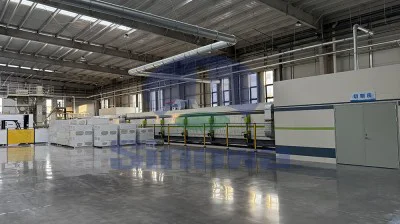
Exterior Wall Insulation Panel Production Line
Sinowa is a exterior wall insulation panel production line supplier from china, customized high-quality & high efficiency exterior wall insulation panel production line at low price, the adoption of system integration technology and bus control technology accomplishes the full automatization of integrated and coordinated control of the exterior wall insulation panel production line with accessible remote interactive communication. Ranking the first-class level in the world, it is currently the exterior wall insulation panel production line in the market taking a comprehensive lead in high performance.
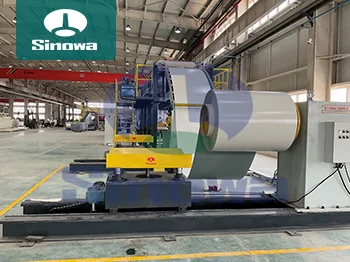
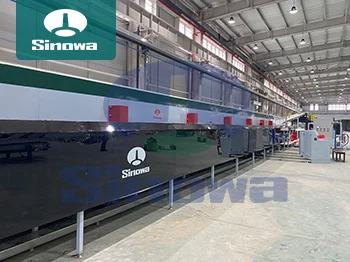
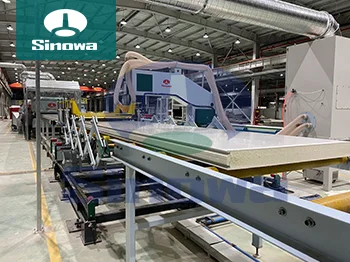
The high-tech exterior wall insulation panel production line can meet a variety of production needs of customers, the whole exterior wall insulation panel production line design concept of modularization enables all our components to be integrated and combined at will. Our high efficiency exterior wall insulation panel production line can easily automate the production of roof sandwich panel, wall sandwich panel, cold storage sandwich panel and other products by different combination and configuration selection and siple switching. The inner core layer can be polyrethane or rock wool, glass wool, an so on.


The high precision exterior wall insulation panel production line has high adaptability, which may produce various sandwich panel of the PU, PIR and rock wool systems. We may design various products according to the customer’s requirements, including various configurations, so as to meet their demands with flexible price system. Highly integrated and linked control system centralizes all control points at the main central center, achieving parameter linkage, fault self-diagnosis controlled by the whole line and shipping distance control. High-level automatic control system also saves the manpower and reduces the manpower loss for customers.


The precision servo hoisting mechanism employed by the main engine without hydraulic system makes the board thickness control flexible and the customer may conveniently change or adjust the board thickness. There will be not such troubles as hydraulic system adjustment, leakage, maintenance, etc.


High-level energy saving and protection design makes the whole exterior wall insulation panel production line possible to produce around the clock throughout the year and the customer will save huge budget. In addition, the isolated heat preservation room is constructed for warming the environment. The energy saving and protection design of our manufacturing line may guarantee that the customer’s production line may be freely heated and produce in the main time to save more costs for customers.


The high-power low-consumption design quickens the reaction of the cheap exterior wall insulation panel production line while energy consumption is kept low. With the brand-new, fully sealed inner insulation design, the energy consumption is controlled at the minimum level to achieve the design objective of less than an hour for the insulation system to be activated from the room temperature above 5℃ to the production process temperature. The energy consumption is only 40% that of those similar products.
In the context of global emphasis on energy conservation and environmental protection, the construction industry is undergoing a profound transformation towards sustainability, and exterior wall insulation panels have emerged as a crucial material in this process, playing an indispensable role in improving building energy efficiency, enhancing indoor comfort, and extending the service life of structures. The exterior wall insulation panel production line, as the core carrier for the mass production of these high-performance panels, has evolved from traditional manual and semi-automatic modes to fully automated, intelligent systems, realizing the leap from low-efficiency, unstable quality to high-precision, large-scale manufacturing.
The fundamental essence of the exterior wall insulation panel production line lies in its ability to integrate multiple technological links into a seamless workflow, converting a variety of raw materials into high-quality insulation panels through precise control of each production stage. Unlike the traditional manual plastering method, which relied heavily on manual labor to apply cement mortar on both sides of polystyrene boards and press in mesh cloth—resulting in unstable quality, low yield, and inefficient production—the modern automatic production line achieves continuous and standardized manufacturing through systematic coordination of mechanical equipment, electrical control systems, and process parameters. This transformation not only addresses the inherent drawbacks of manual production but also meets the growing demand for high-performance exterior wall insulation panels in large-scale construction projects, laying a solid foundation for the popularization of energy-efficient building technologies.
The production process of the exterior wall insulation panel production line is a sophisticated and interrelated system, typically consisting of raw material preparation, precise mixing, automatic forming, roller pressing reinforcement, cutting shaping, curing, and final handling. Each stage is equipped with specialized equipment and strict control standards to ensure the final product meets the required performance indicators. The raw material preparation stage is the first critical link, as the quality and proportion of raw materials directly determine the insulation, fire resistance, and mechanical strength of the finished panels. Common raw materials include binding materials such as cement, slag powder, and fly ash, insulation aggregates like expanded polystyrene (EPS) particles, and auxiliary additives including water reducers, waterproofing agents, and fiber reinforcements. These raw materials need to undergo strict pre-treatment, such as drying, crushing, and sieving, to remove impurities and ensure uniform particle size, which is essential for improving the mixing efficiency and product consistency.
In the precise mixing stage, the pre-treated raw materials are conveyed to the mixing system through automated feeding equipment according to a preset ratio. The mixing system usually consists of a high-efficiency mixer, a feeding hopper, and a rotating discharger. The key to this stage is the accurate control of the mixing ratio and mixing time. For example, the proportion of EPS aggregates in the composite material must be strictly controlled within a specific range to balance the insulation performance and mechanical strength of the panels. The mixer operates at a controlled speed to ensure that the binding materials, aggregates, and additives are fully mixed to form a homogeneous paste. The rotating discharger at the bottom of the mixer ensures uniform feeding of the mixed material onto the subsequent conveyor belt, preventing material accumulation or uneven distribution that could affect the quality of the formed panels.
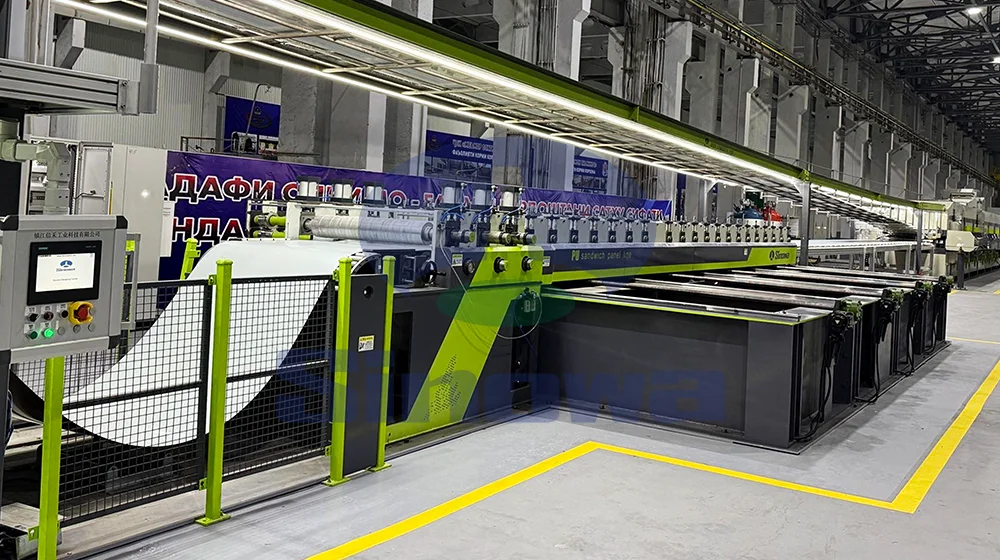
The automatic forming and roller pressing reinforcement stages are crucial for shaping the panels and enhancing their structural stability. The mixed material is first conveyed to the forming area, where the automatic template feeding mechanism places the base templates onto the conveyor belt. The automatic template feeding mechanism typically includes a template support, a traveling trolley with guide rails, a lifting cylinder, and vacuum suction cups. The vacuum suction cups accurately lift the templates from the support and place them on the conveyor belt, which then transports the templates to the material feeding position. The mixed material is evenly distributed onto the templates through the discharging hopper, and then the mesh cloth laying and roller pressing process begins. The mesh cloth, which is essential for improving the tensile strength and crack resistance of the panels, is automatically unrolled, glued, and laid on the surface of the material through the mesh cloth laying system. The gluing process ensures the mesh cloth adheres firmly to the material, while the tensioning roller maintains the flatness of the mesh cloth to avoid wrinkles or gaps.
The roller pressing mechanism is the core equipment in the reinforcement stage, consisting of a roller frame, speed-regulating motors, upper and lower pressure rollers, and a synchronous lifting system. The speed-regulating motors drive the pressure rollers through a transmission chain, and the synchronous lifting system adjusts the distance between the upper and lower rollers according to the required thickness of the panels. The material with the mesh cloth passes through multiple sets of roller pressing mechanisms in sequence, which apply uniform pressure to compact the material, eliminate internal air bubbles, and ensure the tight combination of the mesh cloth and the material. This multi-stage roller pressing process not only improves the density and mechanical strength of the panels but also ensures the uniform thickness of the panels, laying the foundation for subsequent cutting and shaping.
After the roller pressing reinforcement, the continuous panel blank enters the automatic cutting stage. The automatic cutting mechanism is equipped with a longitudinal traveling trolley, a pneumatic clamping device, an electric scissors, and a travel switch. When the panel blank reaches the preset length, the travel switch triggers the clamping device to fix the panel blank, and the electric scissors move along the guide rails to accurately cut the continuous panel blank into individual panels of the required size. The electric rotating head of the cutting mechanism allows the scissors to rotate 180 degrees, enabling quick return to the initial position for the next cutting operation, which improves the cutting efficiency and precision. The cut panels are then conveyed to the curing stage, which is essential for enhancing the structural strength and stability of the panels.
The curing stage typically adopts a combination of natural curing and artificial curing to ensure the panels achieve the required strength within a reasonable time. Artificial curing methods, such as high-temperature baking or constant temperature and humidity curing, are commonly used in modern production lines to accelerate the hydration reaction of the binding materials. For example, some production lines bake the panels at 80-85℃ for at least 8 hours, followed by natural cooling to promote the full reaction of the materials and improve the panel's compressive strength and durability. During the curing process, the temperature and humidity are strictly controlled to avoid rapid drying or excessive moisture, which could lead to cracks or reduced strength in the panels. After curing, the panels are conveyed to the final handling stage, where the automatic panel unloading and racking mechanism lifts the finished panels and places them on the storage racks for subsequent packaging and transportation.
The core components of the exterior wall insulation panel production line work in harmony to ensure the smooth operation of the entire production process. The conveyor belt system, as the backbone of the production line, consists of a workbench, a conveyor belt, drive rollers, and support rollers. The drive rollers drive the conveyor belt to move, ensuring the continuous transportation of templates and panel blanks between different production stages. The speed of the conveyor belt is synchronized with the operation of other equipment to maintain the production rhythm. The mixing system, another core component, relies on the high-efficiency mixer to achieve uniform mixing of raw materials. The mixer's structure and rotating speed are designed to adapt to different types of raw materials, ensuring that the mixed material has the appropriate viscosity and fluidity for subsequent forming.
The automatic control system is the "brain" of the entire production line, integrating sensors, controllers, and actuators to realize the automatic control of each production stage. Sensors monitor parameters such as the weight of raw materials, the speed of the conveyor belt, the temperature of the curing chamber, and the thickness of the panels in real time. The controller processes the sensor signals and adjusts the operation of the equipment accordingly to ensure that all parameters meet the preset standards. For example, if the sensor detects that the thickness of the panel exceeds the allowable range, the controller will adjust the synchronous lifting system of the roller pressing mechanism to correct the roller distance. This automatic control system not only improves the production efficiency but also reduces human errors, ensuring the stability and consistency of product quality.
The exterior wall insulation panel production line offers numerous advantages that make it an indispensable part of the modern construction industry. Firstly, it significantly improves production efficiency. Compared with traditional manual production methods, which can only produce a small number of panels per day, the automatic production line can achieve continuous mass production, with a daily output that is dozens of times higher than manual production. This high-efficiency production capacity meets the large-scale demand for exterior wall insulation panels in urban construction, real estate development, and renovation projects of old buildings.
Secondly, the production line ensures stable product quality. Through precise control of raw material proportions, mixing time, forming pressure, and curing conditions, the finished panels have uniform thickness, density, and performance indicators. The multi-stage roller pressing and mesh cloth reinforcement processes enhance the mechanical strength and crack resistance of the panels, reducing the risk of quality problems such as delamination, cracking, and falling off during use. This stable quality not only improves the safety and reliability of buildings but also reduces maintenance costs in the later stage.
Thirdly, the production line reduces labor intensity and improves work safety. Traditional manual production requires a large number of workers to engage in heavy physical labor such as material mixing, plastering, and carrying, which is not only labor-intensive but also prone to work-related injuries. The automatic production line realizes the automation of key links such as feeding, mixing, forming, and cutting, significantly reducing the number of on-site workers and their labor intensity. Workers only need to monitor the operation of the equipment and perform routine maintenance, which improves the working environment and work safety.
In addition, the exterior wall insulation panel production line is conducive to promoting the application of green and energy-efficient materials. With the continuous advancement of production technology, the production line can process a variety of environmentally friendly raw materials, such as industrial by-products like slag powder and fly ash, which not only reduces the consumption of natural resources but also alleviates environmental pollution. The produced exterior wall insulation panels have excellent thermal insulation performance, which can significantly reduce the energy consumption of buildings for heating and cooling, contributing to the realization of energy conservation and emission reduction goals in the construction industry.
The application of the exterior wall insulation panel production line has a far-reaching impact on the construction industry and the broader society. In terms of promoting energy-efficient buildings, the mass production of high-quality exterior wall insulation panels provides a material guarantee for the popularization of energy-efficient building technologies. These panels can effectively reduce heat transfer through exterior walls, maintain stable indoor temperatures, and reduce energy consumption. In cold regions, they can reduce the heat loss of buildings in winter, while in hot regions, they can block the heat from entering the room in summer, improving indoor comfort and reducing the use of air conditioning and heating equipment.
In terms of improving building durability, the exterior wall insulation panels produced by the production line form a protective layer on the exterior of buildings, which can resist the erosion of environmental factors such as ultraviolet radiation, wind, rain, and frost. This protective layer reduces the direct damage to the main structure of the building, prevents water seepage between building layers, and extends the service life of the building. At the same time, the panels have good fire resistance and can slow down the spread of fire in case of a fire, improving the safety performance of the building.
From the perspective of industrial upgrading, the development and popularization of the exterior wall insulation panel production line promote the transformation of the construction industry from labor-intensive to technology-intensive. The integration of automation, intelligence, and precision control technologies into the production line drives the innovation and upgrading of related equipment manufacturing industries, such as mixer manufacturing, conveyor belt manufacturing, and automatic control system development. This industrial chain upgrading not only improves the overall competitiveness of the construction industry but also creates new economic growth points.
Looking to the future, the exterior wall insulation panel production line will continue to evolve towards higher intelligence, greater energy efficiency, and more diversified product capabilities. With the development of artificial intelligence and the Internet of Things (IoT) technologies, future production lines will be equipped with more advanced monitoring and control systems, enabling real-time data collection, analysis, and remote control. This will further improve production efficiency, reduce energy consumption, and realize predictive maintenance of equipment, minimizing production downtime.
In terms of energy conservation and environmental protection, future production lines will adopt more environmentally friendly production processes, such as using renewable energy for power supply and optimizing material recycling systems to reduce waste emissions. At the same time, the production line will be able to process a wider range of new environmentally friendly materials, such as bio-based insulation materials and recycled materials, further enhancing the green performance of the finished panels. In terms of product diversification, the production line will be able to produce panels of different sizes, shapes, and performance indicators to meet the specific needs of different construction projects, such as high-rise buildings, industrial plants, and residential buildings.
However, the development of the exterior wall insulation panel production line also faces some challenges. For example, the high initial investment in equipment may limit the adoption of advanced production lines by small and medium-sized manufacturers. In addition, the rapid update of building energy efficiency standards requires continuous technological innovation and equipment upgrading of production lines to meet the increasingly stringent performance requirements. To address these challenges, governments, industry associations, and enterprises need to work together to strengthen technological research and development, promote the popularization of advanced technologies, and improve the industrial supporting system.
In conclusion, the exterior wall insulation panel production line is a key equipment system that supports the sustainable development of the construction industry. Through its sophisticated production process, advanced core components, and numerous performance advantages, it realizes the mass production of high-quality exterior wall insulation panels, which play a crucial role in promoting energy-efficient buildings, improving building durability, and protecting the environment. As technology continues to advance, the exterior wall insulation panel production line will undergo further upgrades and improvements, making greater contributions to the transformation and upgrading of the construction industry and the achievement of global energy conservation and environmental protection goals. The continuous innovation and development of this production line will not only drive the progress of the construction industry but also bring more comfortable, safe, and environmentally friendly living and working environments for people.
« Exterior Wall Insulation Panel Production Line » Update Date: 2026/1/16
URL: https://www.sinowamachine.com/tags/exterior-wall-insulation-panel-production-line.html
![Exterior Wall Insulation Panel Production Line Supplier]()
Exterior Wall Insulation Panel Production Line Supplier
2026-08-12The exterior wall insulation panel production line stands as a core automated manufacturing system dedicated to producing high-performance building insulation panels tailored for modern architectural exterior enclosure systems. As sustainable construction concepts gain global popularity, the demand f…
- Links:
- Sandwich Panel Continuous Production Line
- Automatic and Continuous Sandwich Panel Production Line
- Cheap and Low Price Sandwich Panel Production Line
- China Sandwich Panel Production Line Factory
- Color Steel Sandwich Panel Production Line For Cold Storage
- Continuous Composite Foam Sandwich Panel Production Line
- Continuous Production Line For Rockwool and Mineral Wool Sandwich Panels
- Continuous PU Phenolic Insulation Panel Production Line
- Continuous PU PIR Sandwich Panel Production Line
- Continuous PUF PUR Sandwich Panel Production Line
- Continuous Sandwich Panel Production Line For Roof and Wall
- Customized and Design Sandwich Panel Production Line
- Decorative Sandwich Panel Production Line For Glass Wool Boards
- High Quality Sandwich Panel Production Line For Sale
- Polyurethane(PU) Sandwich Panel Production Line
- Sandwich Panel Production Line Manufacturer and Supplier
- Sandwich Panel Production Machinery and Equipment