
Polyurethane Sandwich Panel Line
Sinowa is a polyurethane sandwich panel line supplier from china, customized high-quality & high efficiency polyurethane sandwich panel line at low price, the adoption of system integration technology and bus control technology accomplishes the full automatization of integrated and coordinated control of the polyurethane sandwich panel line with accessible remote interactive communication. Ranking the first-class level in the world, it is currently the polyurethane sandwich panel line in the market taking a comprehensive lead in high performance.
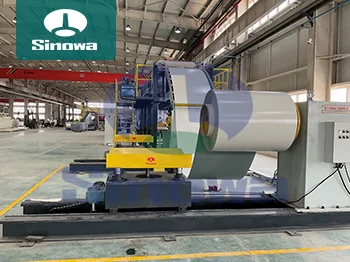
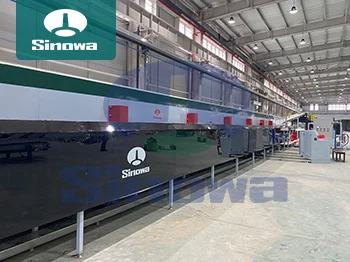
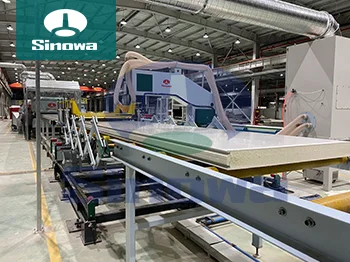
The high-tech polyurethane sandwich panel line can meet a variety of production needs of customers, the whole polyurethane sandwich panel line design concept of modularization enables all our components to be integrated and combined at will. Our high efficiency polyurethane sandwich panel line can easily automate the production of roof sandwich panel, wall sandwich panel, cold storage sandwich panel and other products by different combination and configuration selection and siple switching. The inner core layer can be polyrethane or rock wool, glass wool, an so on.


The high precision polyurethane sandwich panel line has high adaptability, which may produce various sandwich panel of the PU, PIR and rock wool systems. We may design various products according to the customer’s requirements, including various configurations, so as to meet their demands with flexible price system. Highly integrated and linked control system centralizes all control points at the main central center, achieving parameter linkage, fault self-diagnosis controlled by the whole line and shipping distance control. High-level automatic control system also saves the manpower and reduces the manpower loss for customers.


The precision servo hoisting mechanism employed by the main engine without hydraulic system makes the board thickness control flexible and the customer may conveniently change or adjust the board thickness. There will be not such troubles as hydraulic system adjustment, leakage, maintenance, etc.


High-level energy saving and protection design makes the whole polyurethane sandwich panel line possible to produce around the clock throughout the year and the customer will save huge budget. In addition, the isolated heat preservation room is constructed for warming the environment. The energy saving and protection design of our manufacturing line may guarantee that the customer’s production line may be freely heated and produce in the main time to save more costs for customers.


The high-power low-consumption design quickens the reaction of the cheap polyurethane sandwich panel line while energy consumption is kept low. With the brand-new, fully sealed inner insulation design, the energy consumption is controlled at the minimum level to achieve the design objective of less than an hour for the insulation system to be activated from the room temperature above 5℃ to the production process temperature. The energy consumption is only 40% that of those similar products.
A polyurethane sandwich panel line is a highly automated production system designed to manufacture composite panels with a polyurethane foam core sandwiched between two outer facings, integrating multiple processes into a seamless workflow. The production process starts with feeding the outer facing materials into the line, which can be metal sheets, non-woven fabrics or other suitable materials, followed by preheating to ensure better adhesion with the core material. The two-component raw materials of polyurethane are then delivered to the mixing head at a precise ratio by metering pumps, mixed evenly, and uniformly distributed onto the lower facing material. Meanwhile, the upper facing material is fed into the double-track laminating conveyor, where the polyurethane foam undergoes foaming and solidification between the two layers of facing materials. After full curing, the composite panel is cut into the required length by a cutting system without interrupting the continuous production process. This production line features high efficiency, as it can operate continuously for long periods, significantly increasing output compared to discontinuous production methods. It also ensures stable product quality through real-time monitoring and adjustment of process parameters, resulting in panels with uniform foam density, strong structural strength and excellent thermal insulation performance. The panels produced by this line are widely used in various fields, including industrial plants, cold storage facilities, logistics warehouses, prefabricated houses and exterior wall insulation, due to their lightweight, fire resistance, moisture resistance and sound insulation properties. With its modular design, the line can be flexibly adjusted to produce panels of different specifications, meeting the diverse needs of different application scenarios while reducing material waste and labor costs.
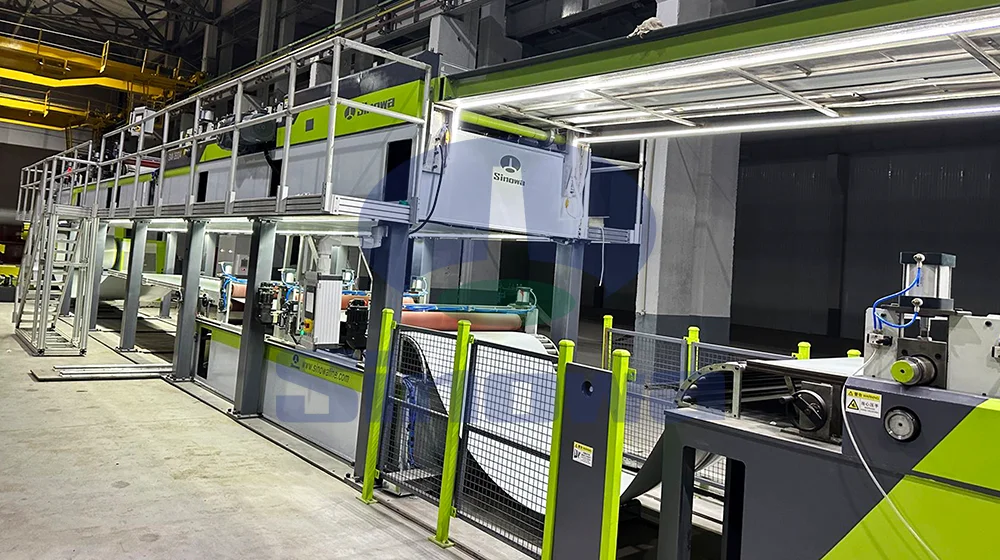
A polyurethane sandwich panel line is a comprehensive and automated equipment system designed for the continuous or discontinuous production of polyurethane sandwich panels, which are composite materials consisting of a polyurethane foam core sandwiched between two surface layers. This equipment integrates multiple technological processes, including raw material preparation, uncoiling, preheating, foaming, compounding, curing, cutting, and stacking, forming a complete production chain that ensures the stability, efficiency, and consistency of the final products. With the increasing demand for energy-saving, lightweight, and high-performance building and industrial materials, polyurethane sandwich panel lines have become an indispensable part of modern manufacturing industries, widely used in construction, cold storage, logistics, and other fields. The structure of a polyurethane sandwich panel line is sophisticated and systematic, with each component playing a crucial role in the production process, while its performance characteristics determine the quality of the panels produced, and its diverse types and wide range of applications make it adaptable to various production needs and industry requirements.
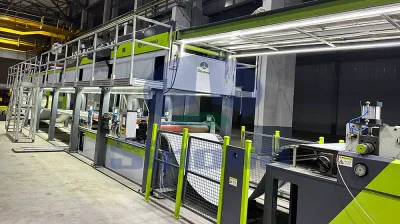
The structure of a polyurethane sandwich panel line is composed of several core functional units that work in coordination to complete the entire production process of polyurethane sandwich panels. These units are closely connected, and the rationality of their layout and the precision of their components directly affect the production efficiency and product quality. At the starting end of the production line is the uncoiling unit, which is mainly used to hold and unroll the surface layer coils, including metal coils, non-woven fabrics, aluminum foil, or other materials. The uncoiling unit is usually equipped with a hydraulic cantilever tensioning device and a lifting car, which can stably transport the coils to the uncoiling machine and adjust the center of the coils through hydraulic cylinders to ensure that the coils unroll smoothly without deviation. The base and frame of the uncoiling machine are usually welded with rectangular pipes to enhance the rigidity of the equipment, and the inner surface of the mandrel can be equipped with pads of different specifications to adapt to coils of different diameters. In addition, the uncoiling unit is often equipped with a pressing mechanism, which can fix the coils through the lifting of the cylinder to prevent loosening during the uncoiling process, ensuring the stability of the subsequent processing steps.
Following the uncoiling unit is the preheating unit, which is an essential part to improve the bonding effect between the surface layer and the polyurethane core. The surface layer materials, especially metal coils, need to be preheated to an appropriate temperature before being compounded with the polyurethane foam, which can not only enhance the adhesion between the surface layer and the foam core but also improve the structural stability of the final panel. The preheating unit usually adopts a combination of protective heating devices and temperature control systems, which can accurately adjust the preheating temperature according to the type and thickness of the surface layer materials, generally controlling it between 40℃ and 60℃. This temperature range can effectively activate the surface of the materials, promote the full combination of the polyurethane raw materials and the surface layer, and avoid problems such as poor bonding or delamination of the panels. Some advanced preheating units are also equipped with online temperature detection devices, which can monitor the temperature of the surface layer in real-time and adjust the heating parameters accordingly to ensure the uniformity of the preheating effect.
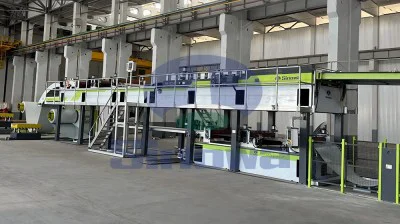
The foaming and compounding unit is the core part of the polyurethane sandwich panel line, which directly determines the performance and quality of the polyurethane sandwich panels. This unit mainly includes a raw material storage and metering system, a mixing and foaming system, and a double-track compounding system. The raw material storage and metering system is used to store and accurately measure the polyurethane raw materials, including isocyanate, polyether polyol, catalysts, foaming agents, flame retardants, and other additives. The metering system adopts high-precision metering pumps, which can strictly control the ratio of various raw materials to ensure the stability of the foam performance. The mixing and foaming system usually uses high-pressure foaming machines, which can fully mix the measured raw materials at high speed to form a uniform foaming mixture. The foaming mixture is then evenly sprayed onto the preheated bottom surface layer through a mobile distributor, and the distributor can adjust its distance and height from the double-track machine according to the width of the panel to ensure the uniform distribution of the raw materials, avoiding local density unevenness of the foam core.
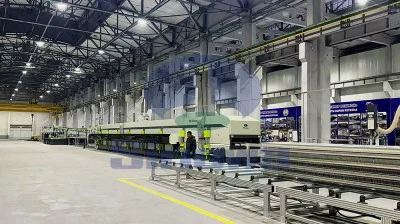
The double-track compounding system is used to complete the compounding and curing of the surface layers and the foam core. After the foaming mixture is sprayed onto the bottom surface layer, the upper surface layer is accurately lowered onto the foam mixture through the upper uncoiling platform and the guide roller device, and then the three are transported to the double-track machine together. The double-track machine is equipped with chain plate units, lifting units, and insulation units. The chain plate units carry the panels forward, the lifting units adjust the height of the machine body through precision hydraulic elevators to accurately control the thickness of the panels, and the insulation units maintain the internal temperature at about 60℃ through electric heating tubes and fuel furnaces, which is the optimal temperature range for the foaming and curing of polyurethane raw materials. During the transportation process of the double-track machine (usually 20 to 30 meters long), the polyurethane raw materials undergo a full foaming reaction and are firmly bonded to the upper and lower surface layers to form a complete composite panel blank. The high-precision processing of the chain plate units ensures the flatness of the panel surface and the consistency of the thickness.
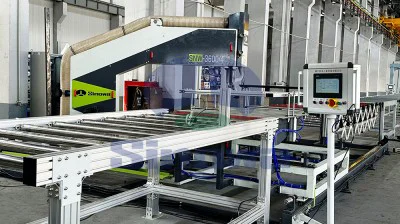
After the compounding and curing process, the panel blank enters the cooling and cutting unit. The cooling unit is used to cool and shape the panel blank after heating and curing, so as to enhance the structural stability of the panel and avoid deformation. The cooling unit usually adopts a natural cooling roller table or a forced cooling system, which can make the panel gradually cool down to room temperature during the transportation process. The cutting unit is used to cut the cooled panel into products of the required length. The cutting unit is usually equipped with an automatic fixed-length cutting machine, which can accurately capture the length signal of the panel through a detection device, clamp the panel through a clamping cylinder, and then complete the horizontal cutting through a sawing motor. After cutting, the clamping device automatically lifts, and the machine body resets to wait for the next cutting instruction. Some advanced production lines are also equipped with edge trimming devices, which can trim the edges of the panels to ensure the neatness of the panel size and the beauty of the appearance.
The final part of the polyurethane sandwich panel line is the stacking and packaging unit, which is used to stack and package the cut finished panels for storage and transportation. The stacking unit can automatically stack the panels according to the specified quantity and specifications through a conveying system and a stacking mechanism, which not only improves the stacking efficiency but also ensures the neatness of the stack. The packaging unit usually adopts a film wrapping machine or a packaging belt binding machine, which can wrap the stacked panels tightly to prevent damage, moisture, or contamination during transportation and storage. In addition, the entire production line is equipped with an intelligent control system, which is divided into multiple control modules corresponding to each functional unit. The control system adopts programmable controllers and touch screens, through which operators can set and adjust production parameters such as production speed, panel thickness, and cutting length in real-time. The system can also monitor the operation status of each unit in real-time, alarm in case of faults, and ensure the safe and stable operation of the entire production line.
The performance of a polyurethane sandwich panel line is mainly reflected in production efficiency, product quality stability, operational flexibility, and energy conservation and environmental protection, which are important indicators to measure the level of the production line. In terms of production efficiency, the polyurethane sandwich panel line adopts a continuous or semi-continuous production mode, with a stable production speed usually ranging from 3 to 6 meters per minute, and the annual output can reach millions of square meters, which is much higher than the traditional manual or semi-automatic production mode. The high automation degree of the production line reduces the participation of manual operations, not only improving production efficiency but also reducing human errors, ensuring the consistency of product quality. For example, the precise metering of raw materials, the uniform control of foaming temperature, and the accurate cutting of panels all rely on the high-performance equipment and intelligent control system of the production line, which can effectively avoid quality problems such as uneven thickness, poor bonding, and inaccurate size of the panels.
Product quality stability is another important performance characteristic of the polyurethane sandwich panel line. The production line adopts advanced technological processes and precision equipment, which can strictly control each link of production, ensuring that the performance indicators of each batch of panels are consistent. The polyurethane foam core produced by the production line has a closed-cell rate of more than 95%, which can effectively block the penetration of moisture, and the water absorption rate is less than 3%. At the same time, the compressive strength of the panels is greater than 150 kPa, and under temperature changes of 30℃, the dimensional change rate is less than 1%, ensuring that the panels do not deform during long-term use. In addition, the production line can adjust the foaming parameters according to the needs, so that the thermal conductivity of the polyurethane foam core can reach 0.017-0.025 W/(m·K), which has excellent thermal insulation performance. A 5-centimeter-thick panel can achieve the same thermal insulation effect as a 1-meter-thick concrete wall, which is an important reason why polyurethane sandwich panels are widely used in cold storage and energy-saving buildings.
Operational flexibility is also an important performance of the polyurethane sandwich panel line. The production line adopts a modular design concept, and each functional unit can be flexibly combined and adjusted according to the production needs. For example, by replacing the uncoiling unit and adjusting the raw material ratio, the production line can produce panels with different surface layer materials and foam core performances; by adjusting the parameters of the double-track machine and the cutting machine, the production line can produce panels of different thicknesses, widths, and lengths to meet the diverse needs of different customers and application scenarios. In addition, the intelligent control system of the production line is easy to operate, and operators can complete parameter setting and equipment operation through simple training, which reduces the difficulty of operation and the cost of personnel training. Some advanced production lines also have the function of automatic product replacement, which can quickly switch between different types of panels without stopping the machine, further improving production efficiency and flexibility.
Energy conservation and environmental protection are important development trends of modern industrial equipment, and polyurethane sandwich panel lines also have excellent performance in this regard. The production line adopts an efficient energy-saving heating system and a heat recovery device, which can fully utilize the waste heat generated during the production process, reduce energy consumption. At the same time, the production line is equipped with a raw material recycling system, which can recycle the excess polyurethane raw materials and the edge scraps generated during the cutting process, reducing material waste. In addition, the polyurethane raw materials used in the production line are usually environmentally friendly and non-toxic, without harmful substances such as CFCs, which can meet the requirements of environmental protection standards. The closed production process of the production line also reduces the emission of waste gas, waste water, and waste residue, minimizing the impact on the environment.
Polyurethane sandwich panel lines can be divided into different types according to their production mode, product specifications, and application scenarios, each of which has its own characteristics and applicable scope. According to the production mode, they can be divided into continuous polyurethane sandwich panel lines and discontinuous polyurethane sandwich panel lines. Continuous production lines are mainly used for large-scale, mass production of standard-sized polyurethane sandwich panels. They have the characteristics of high production efficiency, stable product quality, and low labor intensity. The entire production process is continuous without interruption, and the panels are produced in a continuous length and then cut into the required specifications. Continuous production lines are suitable for large-scale construction projects, cold storage projects, and other scenarios that require a large number of panels, and can meet the demand for rapid supply of products.
Discontinuous polyurethane sandwich panel lines, on the other hand, are mainly used for small-batch, customized production of polyurethane sandwich panels. They have the characteristics of strong flexibility and can produce panels of different sizes, thicknesses, and performance according to the specific needs of customers. The production process of discontinuous production lines is intermittent, and each batch of panels can be adjusted according to the design requirements, which is suitable for small-scale construction projects, renovation projects, and other scenarios that require personalized products. In addition, discontinuous production lines have a smaller floor area and lower investment cost, which is suitable for small and medium-sized enterprises or manufacturers with limited production scale.
According to the type of surface layer materials, polyurethane sandwich panel lines can be divided into metal surface layer polyurethane sandwich panel lines, non-woven surface layer polyurethane sandwich panel lines, aluminum foil surface layer polyurethane sandwich panel lines, and other types. Metal surface layer polyurethane sandwich panel lines are the most common type, which use metal coils such as color steel plates, galvanized steel plates, or aluminum plates as the surface layer materials. The panels produced by this type of production line have the characteristics of high structural strength, corrosion resistance, and beautiful appearance, and are widely used in industrial plants, warehouses, and commercial buildings. Non-woven surface layer polyurethane sandwich panel lines use non-woven fabrics as the surface layer materials, and the panels produced have the characteristics of light weight, good air permeability, and sound insulation, which are suitable for interior decoration, wall insulation, and other scenarios. Aluminum foil surface layer polyurethane sandwich panel lines use aluminum foil as the surface layer materials, and the panels produced have excellent thermal insulation and moisture-proof performance, which are suitable for cold storage, refrigerated trucks, and other low-temperature environments.
In addition, according to the performance of the polyurethane core, polyurethane sandwich panel lines can also be divided into ordinary polyurethane sandwich panel lines and flame-retardant polyurethane sandwich panel lines. ordinary polyurethane sandwich panel lines produce panels with ordinary polyurethane foam as the core, which have excellent thermal insulation and lightweight performance, but their flame-retardant performance is relatively general, suitable for general building insulation scenarios. Flame-retardant polyurethane sandwich panel lines add flame-retardant additives to the polyurethane raw materials during the production process, so that the produced panels have good flame-retardant performance, which can reach the B1 level. The panels will stop burning within 3 seconds after being separated from the flame, which can meet the fire safety requirements of high-risk places such as industrial plants, warehouses, and public buildings.
The application scope of polyurethane sandwich panel lines is extremely wide, covering construction, cold storage, logistics, agriculture, industry, and other fields, which is closely related to the excellent performance of the polyurethane sandwich panels produced by them. In the construction field, polyurethane sandwich panels produced by polyurethane sandwich panel lines are widely used as wall panels, roof panels, and interior decoration panels for industrial plants, warehouses, commercial buildings, residential buildings, and public facilities. Due to their excellent thermal insulation performance, the panels can effectively reduce the energy consumption of buildings, meet the requirements of energy-saving and emission reduction, and at the same time, their lightweight and high-strength characteristics can reduce the structural load of buildings, shorten the construction period, and reduce the construction cost. For example, in the construction of large-span industrial plants, polyurethane sandwich panels can be quickly installed through modular splicing, which not only improves the construction efficiency but also ensures the structural stability of the plant. In the renovation of old residential buildings, polyurethane sandwich panels can be used for exterior wall insulation, which can effectively improve the thermal insulation effect of the buildings and enhance the living comfort of the residents.
In the cold storage and logistics field, polyurethane sandwich panels produced by polyurethane sandwich panel lines are the preferred materials for building cold storage, refrigerated warehouses, and refrigerated trucks. Due to their extremely low thermal conductivity and high closed-cell rate, the panels can effectively block the transfer of heat, maintain a stable low-temperature environment inside the cold storage, and reduce the energy consumption of refrigeration equipment. At the same time, the panels have good moisture-proof and corrosion-resistant performance, which can avoid problems such as frost and moisture inside the cold storage, ensuring the quality and safety of the stored goods. In addition, the lightweight characteristics of the panels also reduce the load of refrigerated trucks, improve the transportation efficiency, and reduce the transportation cost. With the rapid development of the cold chain logistics industry, the demand for polyurethane sandwich panels in this field is increasing, and the role of polyurethane sandwich panel lines is becoming more and more important.
In the industrial field, polyurethane sandwich panels produced by polyurethane sandwich panel lines are widely used in the insulation and protection of industrial equipment, pipelines, and workshops. For example, in petrochemical, electric power, and other industries, polyurethane sandwich panels can be used for the insulation of pipelines and equipment, which can effectively reduce heat loss, improve the efficiency of equipment operation, and ensure the safe and stable operation of the equipment. In the workshop of high-temperature or high-noise industries, polyurethane sandwich panels can be used for wall and roof decoration, which not only has thermal insulation and sound insulation effects but also can improve the working environment of the workshop. In addition, polyurethane sandwich panels can also be used for the construction of temporary buildings in industrial construction sites, such as temporary offices, dormitories, and warehouses, which have the characteristics of quick installation and disassembly, and can be reused, reducing the construction waste and environmental pollution.
In the agricultural field, polyurethane sandwich panel lines are also widely used, mainly for the construction of greenhouses, livestock houses, and agricultural warehouses. The polyurethane sandwich panels used in greenhouses have good thermal insulation and light transmission performance, which can effectively maintain the temperature and light conditions inside the greenhouse, promote the growth of crops, and extend the growing period of crops. In livestock houses, the panels have good thermal insulation, moisture-proof, and sound insulation performance, which can create a comfortable living environment for livestock, improve the survival rate and production performance of livestock. In agricultural warehouses, the panels have good moisture-proof and corrosion-resistant performance, which can effectively protect agricultural products from moisture and mildew, ensuring the quality of agricultural products. With the modernization of agriculture, the application of polyurethane sandwich panels in the agricultural field is becoming more and more extensive, and the demand for polyurethane sandwich panel lines is also increasing.
In addition, polyurethane sandwich panels produced by polyurethane sandwich panel lines also have applications in other fields, such as the construction of mobile homes, prefabricated buildings, and traffic hubs. Mobile homes built with polyurethane sandwich panels have the characteristics of lightweight, quick installation, and good thermal insulation, which are suitable for temporary living in construction sites, disaster-stricken areas, and other places. Prefabricated buildings use polyurethane sandwich panels as the main components, which can be prefabricated in the factory and then assembled on the construction site, greatly shortening the construction period and improving the construction quality. In traffic hubs such as airports, railway stations, and bus stations, polyurethane sandwich panels are used for wall and roof decoration, which not only has beautiful appearance but also has excellent thermal insulation and sound insulation performance, improving the comfort of the waiting environment for passengers.
In conclusion, the polyurethane sandwich panel line is a high-tech, high-efficiency, and multi-functional equipment system, whose structure is sophisticated and systematic, performance is excellent and stable, types are diverse and flexible, and applications are wide and extensive. With the continuous progress of science and technology and the increasing demand for energy-saving and environmental protection materials in various industries, the polyurethane sandwich panel line is constantly being upgraded and improved, developing towards higher automation, higher efficiency, more energy conservation, and more environmental protection. In the future, with the continuous expansion of the application fields of polyurethane sandwich panels, the polyurethane sandwich panel line will play a more important role in modern manufacturing industries, making greater contributions to the development of energy-saving and environmental protection industries and the improvement of people's living and working environments. The continuous innovation and development of polyurethane sandwich panel lines will also promote the upgrading and transformation of the entire composite material industry, leading the industry towards a more sustainable and high-quality development direction.
« Polyurethane Sandwich Panel Line » Update Date: 2026/4/17
URL: https://www.sinowamachine.com/tags/polyurethane-sandwich-panel-line.html
![Polyurethane Sandwich Panel Line Manufacturer]()
Polyurethane Sandwich Panel Line Manufacturer
2026-09-01Polyurethane sandwich panel production lines represent advanced integrated manufacturing systems dedicated to the automated production of high-performance composite building panels, which have become core equipment in the modern construction and industrial insulation material industries. These stream…![Customized Polyurethane Sandwich Panel Line]()
Customized Polyurethane Sandwich Panel Line
2026-08-24Customized polyurethane sandwich panel production lines represent advanced, flexible manufacturing solutions tailored to meet the diverse and personalized production demands of modern lightweight building material industries. Unlike standardized production equipment with fixed parameters, this custom…![Polyurethane Sandwich Panel Line For Construction]()
Polyurethane Sandwich Panel Line For Construction
2026-08-24Polyurethane sandwich panel production lines have become indispensable core equipment in the modern construction industry, specializing in the automated manufacturing of high-performance composite building panels that integrate thermal insulation, structural support and weather resistance. This integ…![Polyurethane Sandwich Panel Line From China]()
Polyurethane Sandwich Panel Line From China
2026-08-17Polyurethane sandwich panel production lines have emerged as core automated manufacturing systems for producing high-performance composite building panels, serving as a pivotal foundation for the modern prefabricated construction industry. This integrated production equipment specializes in the conti…![Polyurethane Sandwich Panel Line For Cold Storage]()
Polyurethane Sandwich Panel Line For Cold Storage
2026-08-14Polyurethane sandwich panel production lines dedicated to cold storage construction are specialized automated manufacturing systems designed to produce high-performance insulation panels tailored for low-temperature storage environments. As the core supporting equipment for modern cold storage infras…![Polyurethane Sandwich Panel Line Supplier]()
Polyurethane Sandwich Panel Line Supplier
2026-01-12In the context of global emphasis on energy conservation, environmental protection and efficient production, polyurethane sandwich panels have emerged as a crucial material in numerous industries, thanks to their exceptional thermal insulation, structural stability and versatility. Behind the wide ap…
- Links:
- Sandwich Panel Continuous Production Line
- Automatic and Continuous Sandwich Panel Production Line
- Cheap and Low Price Sandwich Panel Production Line
- China Sandwich Panel Production Line Factory
- Color Steel Sandwich Panel Production Line For Cold Storage
- Continuous Composite Foam Sandwich Panel Production Line
- Continuous Production Line For Rockwool and Mineral Wool Sandwich Panels
- Continuous PU Phenolic Insulation Panel Production Line
- Continuous PU PIR Sandwich Panel Production Line
- Continuous PUF PUR Sandwich Panel Production Line
- Continuous Sandwich Panel Production Line For Roof and Wall
- Customized and Design Sandwich Panel Production Line
- Decorative Sandwich Panel Production Line For Glass Wool Boards
- High Quality Sandwich Panel Production Line For Sale
- Polyurethane(PU) Sandwich Panel Production Line
- Sandwich Panel Production Line Manufacturer and Supplier
- Sandwich Panel Production Machinery and Equipment