
PUF Sandwich Panel Production Line
Sinowa is a puf sandwich panel production line supplier from china, customized high-quality & high efficiency puf sandwich panel production line at low price, the adoption of system integration technology and bus control technology accomplishes the full automatization of integrated and coordinated control of the puf sandwich panel production line with accessible remote interactive communication. Ranking the first-class level in the world, it is currently the puf sandwich panel production line in the market taking a comprehensive lead in high performance.
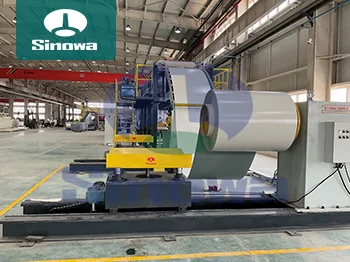
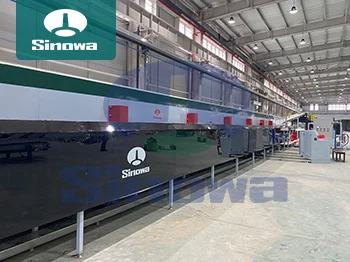
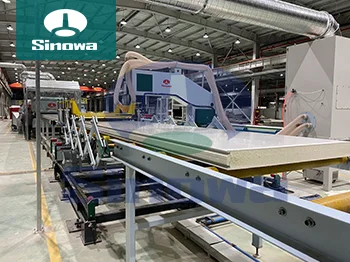
The high-tech puf sandwich panel production line can meet a variety of production needs of customers, the whole puf sandwich panel production line design concept of modularization enables all our components to be integrated and combined at will. Our high efficiency puf sandwich panel production line can easily automate the production of roof sandwich panel, wall sandwich panel, cold storage sandwich panel and other products by different combination and configuration selection and siple switching. The inner core layer can be polyrethane or rock wool, glass wool, an so on.


The high precision puf sandwich panel production line has high adaptability, which may produce various sandwich panel of the PU, PIR and rock wool systems. We may design various products according to the customer’s requirements, including various configurations, so as to meet their demands with flexible price system. Highly integrated and linked control system centralizes all control points at the main central center, achieving parameter linkage, fault self-diagnosis controlled by the whole line and shipping distance control. High-level automatic control system also saves the manpower and reduces the manpower loss for customers.


The precision servo hoisting mechanism employed by the main engine without hydraulic system makes the board thickness control flexible and the customer may conveniently change or adjust the board thickness. There will be not such troubles as hydraulic system adjustment, leakage, maintenance, etc.


High-level energy saving and protection design makes the whole puf sandwich panel production line possible to produce around the clock throughout the year and the customer will save huge budget. In addition, the isolated heat preservation room is constructed for warming the environment. The energy saving and protection design of our manufacturing line may guarantee that the customer’s production line may be freely heated and produce in the main time to save more costs for customers.


The high-power low-consumption design quickens the reaction of the cheap puf sandwich panel production line while energy consumption is kept low. With the brand-new, fully sealed inner insulation design, the energy consumption is controlled at the minimum level to achieve the design objective of less than an hour for the insulation system to be activated from the room temperature above 5℃ to the production process temperature. The energy consumption is only 40% that of those similar products.
A PUF sandwich panel production line is an integrated automated system designed for the continuous manufacturing of composite panels with a polyurethane foam core bonded between two facing materials, usually metal sheets. This production system combines mechanical, chemical, and electrical control technologies to achieve seamless and efficient production from raw material input to finished product output. The entire process involves several interconnected stages that work in harmony to ensure consistent product quality and high production efficiency. First, the facing materials are fed into the line through an uncoiling system, which ensures smooth and stable feeding while preventing material distortion. The materials then go through a preheating process to enhance the bonding strength between the facing sheets and the foam core. Next, the high-pressure foaming system precisely mixes two-component polyurethane raw materials and distributes them evenly onto the bottom facing material. The upper and lower facing materials, along with the foaming mixture, are then conveyed to a laminating system where the foam expands and cures under controlled temperature and pressure conditions. After curing, the formed panels are cut to the required length by an automatic cutting system, followed by cooling treatment to improve structural stability. The production line features a high degree of automation, minimizing manual intervention and ensuring uniform thickness and surface flatness of the finished panels. These panels have excellent thermal insulation, sound insulation, and flame retardant properties, making them widely used in industrial plants, cold storage facilities, commercial buildings, and residential constructions. The production line can be flexibly adjusted to produce panels of different specifications, meeting diverse market demands while adhering to energy-saving and environmental protection requirements.
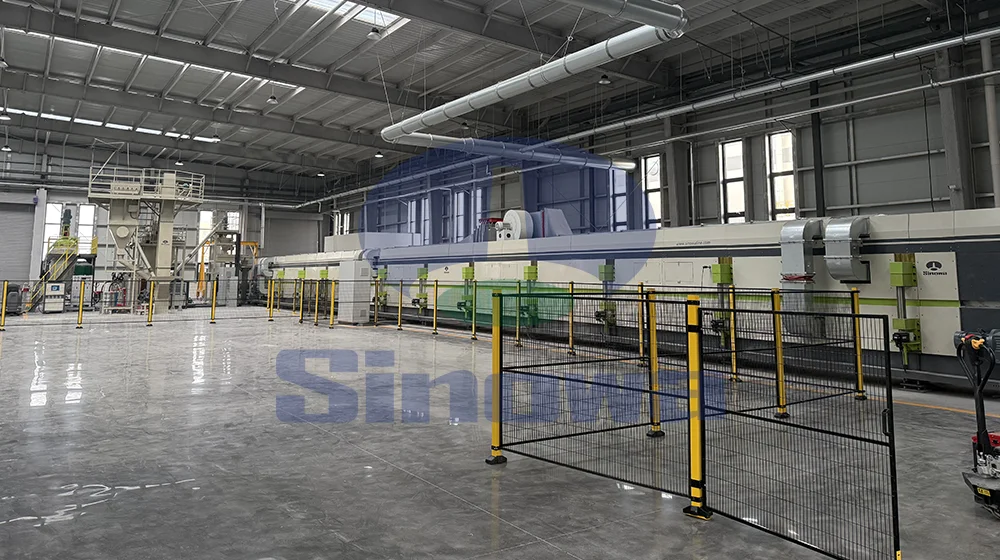
A PUF sandwich panel production line is an integrated and automated industrial system specifically designed for the continuous and efficient manufacturing of polyurethane foam (PUF) sandwich panels, which are widely used in various fields due to their excellent comprehensive performance. This production line combines multiple technologies including mechanical manufacturing, electronic control, chemical material processing, hydraulic and pneumatic transmission, and temperature control, forming a complete set of equipment that can realize the entire production process from raw material input to finished product output with minimal manual intervention. The rationality of its structure directly determines the production efficiency, product quality and stability, while its performance characteristics affect the adaptability to different production needs and the long-term operation reliability. In addition, the diversity of production line types enables it to produce different specifications and types of PUF sandwich panels to meet the differentiated needs of various application scenarios, and the wide range of uses of the produced panels further promotes the continuous development and upgrading of the production line technology. Understanding the structure, performance, types and applications of PUF sandwich panel production lines is of great significance for those engaged in related production, application and research work.
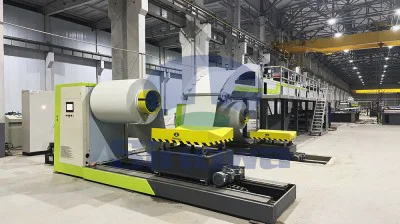
The structure of a PUF sandwich panel production line is composed of multiple functional modules that cooperate closely with each other, forming a systematic and coordinated production system. Each module undertakes specific production tasks, and the smooth connection between modules ensures the continuity and stability of the entire production process. The core modules include the uncoiling system, forming system, preheating system, high-pressure foaming system, composite curing system, cutting system, cooling system, palletizing system and control system, and some production lines will also be equipped with auxiliary modules such as laminating equipment, packaging system and environmental protection equipment according to actual production needs. The uncoiling system is the starting link of the production line, mainly responsible for feeding and unwinding the coil materials used as the surface layer of the sandwich panel, such as color steel plates, galvanized steel plates or aluminum plates. It is usually composed of two sets of uncoilers, roller conveyors, feeding devices and cutting devices, which can realize the stable unwinding of the coil through hydraulic motor drive and tension control, and cut the coil into appropriate lengths according to production needs to avoid material waste. At the same time, the uncoiling system is also equipped with a guiding device to ensure that the uncoiled surface material does not deviate, laying a good foundation for the subsequent forming and composite processes.
The forming system is responsible for processing the uncoiled surface material into the required shape and specifications, which directly affects the flatness and structural strength of the final PUF sandwich panel. This system usually includes upper and lower roll forming machines and a quick-change system, which can flexibly adjust the forming parameters according to the different shapes of the panel surface, such as corrugated, flat or ribbed, so as to produce various types of surface layers to meet the needs of different application scenarios. The roll forming machine adopts precision processing technology, and the surface of the roller is treated with wear resistance to ensure the stability of the forming shape during long-term operation and avoid defects such as deformation or uneven thickness of the surface material. After the forming process, the surface material enters the preheating system, which is mainly used to preheat the surface material to a certain temperature, so as to enhance the bonding strength between the surface material and the polyurethane foam core, and improve the molding effect of the subsequent foaming process. The preheating system is usually composed of a preheating furnace and a temperature control device, which can accurately control the preheating temperature according to the type of surface material and the characteristics of the polyurethane raw material, generally keeping the temperature within a range that is conducive to the bonding of the two materials, and avoiding the problems of poor bonding caused by too low temperature or material damage caused by too high temperature.
The high-pressure foaming system is the core part of the entire PUF sandwich panel production line, which determines the quality of the polyurethane foam core, and thus affects the thermal insulation, sound insulation and mechanical properties of the sandwich panel. This system is mainly composed of a high-pressure foaming machine, a metering pump, a mixing head and a feeding device. The polyurethane raw materials used for foaming are usually two-component materials, namely polyol and isocyanate. The metering pump can accurately control the ratio of the two components according to the production formula, ensuring the uniformity and stability of the foam performance. The two-component raw materials are sent to the mixing head through the pipeline, and fully mixed in the mixing head to generate a chemical reaction, and then evenly sprayed on the surface of the bottom layer material through the moving feeding device. The moving feeding device can adjust the distance and height according to the width of the panel, ensuring that the foaming material is evenly distributed without local density unevenness. The composite curing system is closely connected with the high-pressure foaming system, mainly composed of a double-track laminating conveyor and a heating system. After the bottom layer material is sprayed with foaming material, the upper layer material is accurately laid on the foaming material through the guiding device, and then the three are sent to the double-track laminating conveyor together. The double-track conveyor clamps the upper and lower surface materials and the middle foaming material through the upper and lower chain plates, and at the same time, the heating system controls the internal temperature within the optimal foaming and curing range of the polyurethane. During the conveying process of the double-track conveyor, the polyurethane raw material undergoes a full foaming reaction and is firmly bonded to the upper and lower surface materials, forming a complete PUF sandwich panel blank. The length of the double-track conveyor is usually designed according to the foaming and curing time of the polyurethane, ensuring that the foam can be fully cured and the panel structure is stable.
After the composite curing process, the panel blank enters the cutting system, which is used to cut the continuous panel blank into finished products of specified lengths according to production needs. The cutting system is usually composed of a fixed-length cutting saw, a detection device and a clamping device. The detection device can accurately capture the length signal of the panel blank, and the clamping device clamps the panel to avoid displacement during the cutting process, ensuring the cutting accuracy. The cutting saw adopts high-speed cutting technology, which can quickly and smoothly cut the panel without causing edge damage or material waste. After cutting, the finished panel enters the cooling system, which is mainly used to cool the panel to room temperature, so as to enhance the structural stability and durability of the panel. The cooling system can be divided into natural cooling and forced cooling according to the cooling method. Natural cooling usually uses a non-powered roller conveyor to let the panel cool down naturally during the conveying process, which is suitable for small-scale production or occasions with low cooling requirements; forced cooling uses a fan or a cooling water pipe to accelerate the cooling speed of the panel, which is suitable for large-scale continuous production and can improve production efficiency. After cooling, the panel is sent to the palletizing system, which is composed of a conveyor, an automatic stacker and a positioning device, which can neatly stack the finished panels according to the specified quantity and specifications, facilitating subsequent packaging and transportation. The control system is the "brain" of the entire production line, which integrates programmable controllers, touch screens and detection switches, and is divided into multiple control modules corresponding to each functional module. Operators can set and adjust production parameters such as production speed, panel thickness, foaming ratio and cutting length through the touch screen, and the system can real-time monitor the operation status of each module, timely alarm and handle abnormal situations, ensuring the stable and efficient operation of the entire production line.
The performance of a PUF sandwich panel production line is mainly reflected in automation level, production efficiency, product quality stability, energy conservation and environmental protection, and adaptability, which are important indicators to measure the advanced nature of the production line. The high level of automation is one of the prominent characteristics of modern PUF sandwich panel production lines. The entire production process from uncoiling, forming, preheating, foaming, composite curing, cutting, cooling to palletizing and packaging can be completed automatically, which greatly reduces manual intervention, not only improves production efficiency, but also avoids the influence of human factors on product quality. For example, the automatic uncoiling and feeding system can realize continuous feeding without manual handling of coils; the intelligent control system can automatically adjust production parameters according to the production situation, ensuring the consistency of product specifications. Production efficiency is another important performance indicator of the production line. The continuous production mode adopted by the production line can realize the mass production of PUF sandwich panels. The production speed can be adjusted according to actual needs, usually ranging from 3 to 6 meters per minute, and the annual output can reach millions of square meters, which can meet the large-scale market demand. The stability of product quality is closely related to the precision of each module of the production line. The precise metering system of the high-pressure foaming system ensures the uniform ratio of raw materials; the precision forming and cutting equipment ensures the flatness and size accuracy of the panel; the stable temperature control system ensures the full foaming and curing of the polyurethane foam, so that the performance of each batch of panels is consistent, avoiding quality problems such as uneven thickness, poor bonding and unstable foam density.
Energy conservation and environmental protection are important performance requirements of modern industrial production lines, and PUF sandwich panel production lines also have obvious advantages in this regard. The production line adopts advanced energy-saving technologies, such as frequency conversion control system, which can adjust the motor speed according to production needs, reduce energy consumption; the heat recovery device can recover and reuse the waste heat generated during the preheating and curing process, improving energy utilization efficiency. At the same time, the production line can fully utilize raw materials, reduce waste and emissions. For example, the cutting system adopts precise cutting technology to reduce material waste; the foaming system can accurately control the amount of raw materials to avoid excessive use of foaming materials. In addition, the polyurethane raw materials used in the production process can be selected as environmentally friendly materials without CFC and HFC, which meets the requirements of sustainable development and does not cause pollution to the environment. The adaptability of the production line refers to its ability to produce different types and specifications of PUF sandwich panels according to different customer needs and application scenarios. By adjusting the forming parameters, foaming ratio, cutting length and other parameters, the production line can produce panels of different thicknesses, widths, lengths and surface shapes. The thickness of the produced panels can usually range from 30mm to 120mm, and the length can be adjusted between 1000mm and 15000mm, which can meet the needs of different fields such as construction, cold storage and industrial plants. In addition, the production line can also adapt to different surface materials, such as color steel plates, galvanized steel plates, aluminum plates, etc., and can produce panels with different surface treatments, such as anti-corrosion coating and UV-resistant coating, to improve the service life of the panels in different environments.
PUF sandwich panel production lines can be divided into different types according to different classification standards, and each type has its own characteristics and applicable scenarios, which can better meet the differentiated production needs of the market. According to the production mode, it can be divided into continuous production lines and discontinuous production lines. Continuous production lines are the most widely used type in modern industrial production. They adopt a fully continuous operation mode, which can realize the uninterrupted production of panels from raw material input to finished product output. The production efficiency is high, the product quality is stable, and it is suitable for large-scale mass production. The continuous production line is equipped with a complete set of automated equipment, and the connection between each module is smooth, which can effectively reduce the production cycle and improve production efficiency. Discontinuous production lines, also known as batch production lines, adopt a batch production mode. Each batch of panels is produced independently, and the production process needs to be stopped when changing specifications or raw materials. This type of production line has a simple structure, low investment cost, and is suitable for small-scale production or occasions where the product specifications are frequently changed, such as small factories or custom-made product production.
According to the type of foaming system, PUF sandwich panel production lines can be divided into high-pressure foaming production lines and low-pressure foaming production lines. High-pressure foaming production lines are the mainstream type in the market, which adopt high-pressure foaming technology. The two-component raw materials are mixed at high pressure, the mixing is uniform, the foaming speed is fast, and the produced foam has high density, uniform structure, and excellent thermal insulation and mechanical properties. This type of production line is suitable for producing high-performance PUF sandwich panels, which are widely used in fields with high requirements for panel performance, such as cold storage, high-rise buildings and industrial plants. Low-pressure foaming production lines adopt low-pressure foaming technology, which has lower requirements on equipment precision, simple structure and lower investment cost. The foaming speed is relatively slow, and the foam density is relatively low, which is suitable for producing panels with general performance requirements, such as temporary buildings, simple warehouses and other occasions. According to the type of surface material processing, PUF sandwich panel production lines can be divided into metal surface production lines and non-metal surface production lines. Metal surface production lines are mainly used to process metal materials such as color steel plates, galvanized steel plates and stainless steel plates as the surface layer of sandwich panels. The produced panels have high structural strength, good corrosion resistance and long service life, and are widely used in various industrial and commercial buildings. Non-metal surface production lines use non-metal materials such as glass fiber cloth, non-woven fabric and cement boards as the surface layer, and the produced panels have the characteristics of light weight, corrosion resistance and good fire resistance, which are suitable for special occasions such as chemical plants and coastal areas where corrosion resistance is required.
In addition, according to the degree of automation, PUF sandwich panel production lines can be divided into fully automated production lines and semi-automated production lines. Fully automated production lines realize the full automation of the entire production process, with few manual operations, high production efficiency and stable product quality, but the investment cost is relatively high, which is suitable for large-scale enterprises with strong economic strength. Semi-automated production lines need manual intervention in some links, such as manual feeding, manual stacking and packaging, which have lower investment costs and are suitable for small and medium-sized enterprises with limited funds. The diversity of production line types provides more choices for different enterprises, enabling them to select the most suitable production line according to their own production scale, product positioning and economic strength.
The wide range of applications of PUF sandwich panel production lines is closely related to the excellent performance of the produced PUF sandwich panels. The PUF sandwich panels produced by the production line have the characteristics of lightweight, high strength, excellent thermal insulation, sound insulation, fire resistance, water resistance, corrosion resistance and quick installation, so they are widely used in construction, cold chain logistics, industrial production, transportation and other fields, and have become an important material in modern industrial and civil construction. In the field of construction, PUF sandwich panels are mainly used for external wall enclosures, roofs, partition walls and ceilings of industrial plants, commercial buildings, office buildings, residential buildings and prefabricated buildings. The excellent thermal insulation performance of the panels can effectively reduce the heat exchange between the interior and exterior of the building, reduce the energy consumption of heating and air conditioning, and meet the requirements of building energy conservation. At the same time, the lightweight characteristics of the panels can reduce the load of the building structure, reduce the construction cost, and the quick installation performance can shorten the construction period, enabling the building to be put into use in advance. For example, in the construction of industrial plants, PUF sandwich panels are used as external walls and roofs, which not only have good thermal insulation and sound insulation effects, but also can resist the erosion of harsh environments such as wind and rain, ensuring the service life of the plant.
In the field of cold chain logistics, PUF sandwich panels are an indispensable material for cold storage, refrigerated warehouses, cold chain vehicles and other temperature-controlled facilities. The polyurethane foam core of the panel has extremely low thermal conductivity, which can effectively block heat transfer, maintain a stable low-temperature environment inside the facility, reduce the energy consumption of the refrigeration system, and ensure the quality of stored goods. The panels used in cold storage usually have a thicker thickness, ranging from 100mm to 200mm, and are equipped with a seamless interlocking design, which can eliminate thermal bridges, prevent condensation, and meet the hygiene standards of food and pharmaceutical storage. In the food processing industry, dairy industry, poultry industry, pharmaceutical manufacturing industry and floriculture industry, cold storage facilities made of PUF sandwich panels are widely used to store raw materials, semi-finished products and finished products, ensuring the freshness and quality of the products. For example, in the pharmaceutical industry, PUF sandwich panels are used to build clean and temperature-controlled warehouses, which can maintain a constant temperature and humidity environment, ensuring the stability of pharmaceutical products.
In the field of industrial production, PUF sandwich panels are used to build workshops, warehouses, machine rooms and other facilities. The panels have good corrosion resistance and fire resistance, which can adapt to the harsh environment of industrial production, such as chemical plants, power plants and metallurgical plants. The sound insulation performance of the panels can reduce the noise generated by industrial production, improve the working environment of employees. In addition, PUF sandwich panels can also be used as flooring materials in cold storage and industrial workshops, which have good load-bearing capacity and wear resistance, and can withstand the weight of heavy machinery and equipment. In the field of transportation, PUF sandwich panels are used to manufacture the carriages of refrigerated trucks, insulated containers and other vehicles. The lightweight and high-strength characteristics of the panels can reduce the weight of the vehicle, save fuel consumption, and the excellent thermal insulation performance can ensure the temperature stability of the goods during transportation. For example, refrigerated trucks made of PUF sandwich panels are widely used in the transportation of fresh food, pharmaceuticals and other products, ensuring that the products do not deteriorate during transportation.
In addition to the above fields, PUF sandwich panels produced by PUF sandwich panel production lines are also used in special fields such as hospitals, schools, shopping malls and temporary buildings. In hospitals, PUF sandwich panels are used to build clean rooms and operating rooms, which have good airtightness and hygiene, and can meet the strict requirements of medical environments. In schools and shopping malls, the panels are used as partition walls and ceilings, which have good sound insulation and fire resistance, ensuring the safety and comfort of the environment. In temporary buildings, such as construction site dormitories, temporary offices and disaster relief shelters, PUF sandwich panels are widely used due to their quick installation, lightweight and reusable characteristics, which can meet the needs of temporary use.
With the continuous development of material science and mechanical automation technology, PUF sandwich panel production lines are also constantly being upgraded and optimized. The future production lines will be more intelligent, efficient, energy-saving and environmentally friendly. The intelligent level will be further improved, and technologies such as Internet of Things and artificial intelligence will be integrated to realize real-time monitoring, remote control and intelligent diagnosis of the production process, reducing the labor intensity of operators and improving production efficiency. The production efficiency will be further improved, and the production speed and annual output will be increased through the optimization of equipment structure and process improvement. Energy conservation and environmental protection will be further strengthened, and more advanced energy-saving technologies and environmentally friendly materials will be adopted to reduce energy consumption and environmental pollution. At the same time, the adaptability of the production line will be further enhanced, which can produce more types and specifications of PUF sandwich panels to meet the increasingly diverse market needs. The development of PUF sandwich panel production lines will further promote the popularization and application of PUF sandwich panels, and make greater contributions to the development of the construction industry, cold chain logistics industry and other related fields.
« PUF Sandwich Panel Production Line » Update Date: 2026/4/16
URL: https://www.sinowamachine.com/tags/puf-sandwich-panel-production-line.html
![Continuous PUF Sandwich Panel Production Line]()
Continuous PUF Sandwich Panel Production Line
2026-08-28The continuous PUF sandwich panel production line is a highly integrated automated manufacturing system designed for the streamlined mass production of polyurethane foam sandwich panels, which are widely applied in construction insulation, industrial factory enclosures, cold chain facilities, and por…
- Links:
- Sandwich Panel Continuous Production Line
- Automatic and Continuous Sandwich Panel Production Line
- Cheap and Low Price Sandwich Panel Production Line
- China Sandwich Panel Production Line Factory
- Color Steel Sandwich Panel Production Line For Cold Storage
- Continuous Composite Foam Sandwich Panel Production Line
- Continuous Production Line For Rockwool and Mineral Wool Sandwich Panels
- Continuous PU Phenolic Insulation Panel Production Line
- Continuous PU PIR Sandwich Panel Production Line
- Continuous PUF PUR Sandwich Panel Production Line
- Continuous Sandwich Panel Production Line For Roof and Wall
- Customized and Design Sandwich Panel Production Line
- Decorative Sandwich Panel Production Line For Glass Wool Boards
- High Quality Sandwich Panel Production Line For Sale
- Polyurethane(PU) Sandwich Panel Production Line
- Sandwich Panel Production Line Manufacturer and Supplier
- Sandwich Panel Production Machinery and Equipment