
PUF Insulation Sandwich Panel Line
Sinowa is a puf insulation sandwich panel line supplier from china, customized high-quality & high efficiency puf insulation sandwich panel line at low price, the adoption of system integration technology and bus control technology accomplishes the full automatization of integrated and coordinated control of the puf insulation sandwich panel line with accessible remote interactive communication. Ranking the first-class level in the world, it is currently the puf insulation sandwich panel line in the market taking a comprehensive lead in high performance.
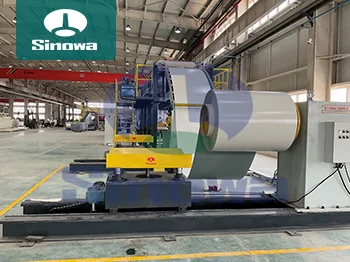
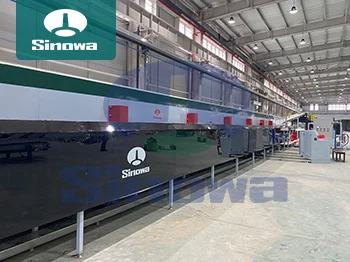
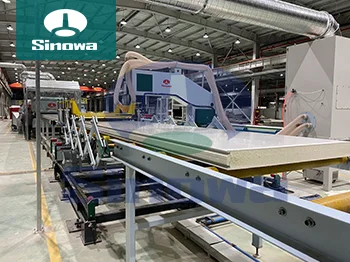
The high-tech puf insulation sandwich panel line can meet a variety of production needs of customers, the whole puf insulation sandwich panel line design concept of modularization enables all our components to be integrated and combined at will. Our high efficiency puf insulation sandwich panel line can easily automate the production of roof sandwich panel, wall sandwich panel, cold storage sandwich panel and other products by different combination and configuration selection and siple switching. The inner core layer can be polyrethane or rock wool, glass wool, an so on.


The high precision puf insulation sandwich panel line has high adaptability, which may produce various sandwich panel of the PU, PIR and rock wool systems. We may design various products according to the customer’s requirements, including various configurations, so as to meet their demands with flexible price system. Highly integrated and linked control system centralizes all control points at the main central center, achieving parameter linkage, fault self-diagnosis controlled by the whole line and shipping distance control. High-level automatic control system also saves the manpower and reduces the manpower loss for customers.


The precision servo hoisting mechanism employed by the main engine without hydraulic system makes the board thickness control flexible and the customer may conveniently change or adjust the board thickness. There will be not such troubles as hydraulic system adjustment, leakage, maintenance, etc.


High-level energy saving and protection design makes the whole puf insulation sandwich panel line possible to produce around the clock throughout the year and the customer will save huge budget. In addition, the isolated heat preservation room is constructed for warming the environment. The energy saving and protection design of our manufacturing line may guarantee that the customer’s production line may be freely heated and produce in the main time to save more costs for customers.


The high-power low-consumption design quickens the reaction of the cheap puf insulation sandwich panel line while energy consumption is kept low. With the brand-new, fully sealed inner insulation design, the energy consumption is controlled at the minimum level to achieve the design objective of less than an hour for the insulation system to be activated from the room temperature above 5℃ to the production process temperature. The energy consumption is only 40% that of those similar products.
The PUF (Polyurethane Foam) Insulation Sandwich Panel Line stands as a cornerstone of modern prefabricated building material manufacturing, integrating precision engineering, automated production technology, and advanced material science to deliver high-performance insulation panels that redefine efficiency and durability in contemporary construction. Unlike traditional building material production systems, this specialized manufacturing line is engineered to produce composite sandwich panels with a rigid polyurethane foam core bonded firmly between two outer facing layers, creating a unified structural component that combines exceptional thermal insulation, mechanical strength, and lightweight properties in a single product. The entire production line is a cohesive system of interconnected machinery and processing units, each designed to perform a specific function with consistent accuracy, ensuring that every finished panel meets strict dimensional, structural, and performance standards without manual intervention at every stage. From raw material handling and surface treatment to foam mixing, continuous lamination, curing, cutting, and final finishing, the line operates in a synchronized, automated flow that minimizes waste, boosts production efficiency, and maintains uniform quality across all output, making it an indispensable solution for large-scale, high-volume manufacturing of insulation panels used across residential, commercial, industrial, and specialized construction sectors.
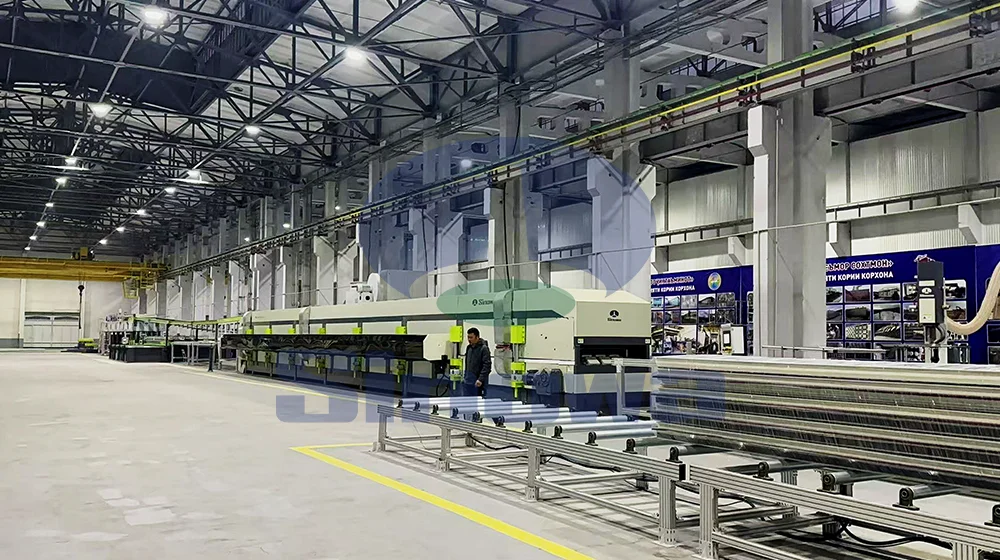
At the core of the PUF Insulation Sandwich Panel Line lies its robust and well-engineered structural framework, which is divided into several key functional modules that work in seamless harmony to deliver a finished product. The initial stage of the line consists of raw material preparation and feeding units, which handle the outer facing materials—typically thin, rigid metal sheets, though non-metallic options are also compatible—and the liquid polyurethane raw materials that form the foam core. The outer facing materials are first unwound from large coils, then fed through a precision leveling and surface treatment process to remove imperfections, clean the surface, and apply a thin bonding agent that ensures strong adhesion between the metal and the foam core; this step is critical to preventing delamination over time and enhancing the overall structural integrity of the panel. Following surface preparation, the facing materials are guided into the continuous lamination chamber, the heart of the production line, where the polyurethane foam is injected in a precise, controlled manner between the two outer layers. The foam formulation is mixed on-demand within a dedicated mixing unit, which combines polyol and isocyanate components with specialized additives to adjust foam density, curing speed, and performance properties, ensuring the foam expands uniformly and fills the entire cavity between the facings without gaps or air pockets.
Immediately after foam injection, the composite assembly moves through a controlled curing and forming section, where temperature and pressure are carefully regulated to facilitate the complete polymerization and solidification of the polyurethane foam. This curing process is vital to establishing the foam’s closed-cell structure, which is responsible for its exceptional thermal insulation and low moisture absorption rates; the closed-cell formation traps tiny, isolated air pockets within the foam matrix, blocking the transfer of heat through conduction, convection, and radiation. The curing section also shapes the panel to precise thickness and width specifications, with adjustable settings to accommodate different product requirements, and ensures that the bond between the foam core and outer facings is permanent and load-bearing. Once fully cured, the continuous panel strip proceeds to the precision cutting and trimming unit, which uses high-precision saws or cutting tools to cut the panel to custom lengths, smooth the edges, and create standardized or custom joint profiles that allow for easy on-site installation and tight sealing between adjacent panels. The final stage of the line includes quality inspection, stacking, and packaging units, where each panel is checked for dimensional accuracy, surface defects, core uniformity, and structural stability before being prepared for storage and shipping; this automated quality control step eliminates inconsistent products and ensures that only panels meeting strict internal performance criteria move to the market.
The performance characteristics of panels produced by the PUF Insulation Sandwich Panel Line are what set them apart from conventional building materials, with a unique combination of thermal, mechanical, and durability properties that address key challenges in modern construction. Foremost among these is exceptional thermal insulation performance, driven by the closed-cell rigid polyurethane foam core, which has an extremely low thermal conductivity rating far superior to traditional insulation materials such as fiberglass, mineral wool, and expanded polystyrene. This low thermal conductivity allows the panels to maintain stable indoor temperatures with minimal energy exchange between the interior and exterior environments, drastically reducing heating and cooling energy consumption in buildings year-round; in cold climates, the panels retain indoor heat efficiently, while in hot climates, they block external heat penetration, making them ideal for energy-efficient construction and temperature-controlled spaces. Beyond thermal insulation, the panels exhibit outstanding mechanical strength and structural rigidity despite their lightweight composition, a result of the composite sandwich design that distributes weight and load evenly across the entire panel surface. The outer facing layers provide tensile and impact resistance, protecting the soft foam core from physical damage, while the cured foam core adds compressive strength, allowing the panels to support significant vertical and horizontal loads without warping, bending, or cracking. This high strength-to-weight ratio is a major advantage in construction, as it reduces the overall structural load on building foundations and frames, enabling the use of lighter support structures and simplifying transportation and handling on job sites.
Additional performance benefits include excellent moisture and water resistance, dimensional stability, and sound insulation properties. The closed-cell structure of the PUF core prevents the absorption of liquid water and water vapor, eliminating the risk of mold growth, mildew formation, and material degradation that often plagues porous insulation materials; this makes the panels highly suitable for humid environments and areas prone to moisture exposure. The panels also maintain consistent dimensional accuracy across a wide range of temperatures, resisting expansion, contraction, warping, or twisting even under extreme thermal fluctuations, ensuring long-term structural stability and a tight, secure fit during installation. Furthermore, the dense foam core and layered composite structure provide effective sound absorption and sound transmission reduction, minimizing noise transfer between interior spaces and from external sources, creating quieter, more comfortable indoor environments for occupants. The panels are also highly resistant to common environmental stressors such as UV radiation, wind, and minor chemical exposure, with the outer facing layers providing a durable protective barrier that retains its appearance and structural integrity over extended periods, reducing the need for frequent maintenance and replacement.
Panels manufactured by the PUF Insulation Sandwich Panel Line are available in a range of classifications, differentiated by core properties, outer facing materials, thickness, design purpose, and specialized performance features, allowing for tailored solutions to meet diverse construction needs. The primary classification is based on core type, with standard rigid PUF cores for general-purpose insulation and modified foam cores engineered for enhanced fire resistance, improved temperature tolerance, or higher compressive strength; fire-retardant foam cores are formulated with specialized additives to slow flame spread, reduce smoke emission, and maintain structural integrity for longer periods in the event of a fire, making them suitable for commercial and industrial buildings with strict safety requirements. Another key classification is based on outer facing material, with the most common option being corrosion-resistant metal sheets such as galvanized steel or aluminum, which offer high durability, impact resistance, and weather protection; non-metallic facings, including fiber-reinforced plastic, oriented strand board, and other composite materials, are also available for applications where metal is not suitable, such as interior partitions or projects with specific aesthetic requirements.
Panels are also categorized by their intended structural use, with distinct variants for wall applications, roof applications, and specialized partition or cladding use. Wall panels are typically designed with a focus on vertical load support, thermal insulation, and airtight sealing, featuring smooth or lightly textured surfaces and standardized edge profiles for easy interlocking; they are available in a range of thicknesses, with thicker panels offering enhanced insulation for extreme temperature environments. Roof panels are engineered to withstand additional loads such as snow, wind, and rain, with a slightly sloped profile option to facilitate water runoff and reinforced core density to support foot traffic during maintenance; these panels often feature a more robust outer facing to resist weathering and UV damage. Thickness variations are another critical classification factor, ranging from thin, lightweight panels for interior partitions and non-load-bearing walls to thick, heavy-duty panels for cold storage facilities, industrial warehouses, and extreme climate buildings, with thickness directly correlating to insulation performance and load-bearing capacity. Additionally, panels can be classified by surface finish, with options including smooth, corrugated, or textured surfaces, and customizable color treatments to match architectural design requirements, blending functional performance with aesthetic appeal.
The versatility of PUF insulation sandwich panels, produced efficiently and consistently by dedicated production lines, has led to their widespread adoption across an extensive range of applications, spanning nearly every sector of modern construction and beyond. One of the most prominent uses is in industrial construction, where the panels are widely used for the walls and roofs of manufacturing facilities, warehouses, logistics centers, and production plants; their lightweight nature reduces construction time and structural costs, while their thermal insulation properties help maintain consistent working temperatures and protect stored goods from temperature fluctuations. The quick installation time of the panels is a major advantage for industrial projects, as it allows buildings to be completed and operational far faster than with traditional brick-and-mortar or concrete construction, minimizing downtime and accelerating return on investment for business owners.
A critical specialized application is in cold chain and temperature-controlled infrastructure, including cold storage warehouses, refrigerated distribution centers, food processing facilities, and pharmaceutical storage units. The superior thermal insulation of PUF panels is essential for maintaining low, consistent temperatures required for preserving perishable goods, vaccines, and temperature-sensitive medical supplies, minimizing energy consumption for refrigeration systems and ensuring product integrity throughout the supply chain. The airtight seal provided by properly installed panels eliminates cold air leakage and warm air infiltration, which is critical for reducing operational costs and meeting strict temperature control standards in the food and pharmaceutical industries. Additionally, the panels’ moisture resistance prevents condensation buildup inside cold storage facilities, avoiding water damage, mold growth, and contamination of stored products, making them the preferred choice for cold chain infrastructure worldwide.
In commercial construction, PUF sandwich panels are used for a variety of structures, including shopping malls, office buildings, exhibition halls, gymnasiums, and retail spaces, where they offer a balance of insulation, durability, and aesthetic flexibility. The panels can be used for exterior cladding, interior partitions, and roof systems, creating open, spacious interiors with flexible layout options and reducing the need for extensive internal support columns. Their sound insulation properties are particularly beneficial for commercial spaces, creating quiet office environments, noise-free retail areas, and comfortable public spaces that enhance user experience. The panels are also ideal for temporary or modular commercial structures, such as portable offices, event booths, and pop-up retail spaces, due to their lightweight design, easy transportation, and quick assembly and disassembly, allowing for flexible, relocatable commercial solutions.
Residential construction applications have grown steadily in recent years, with PUF panels used for prefabricated homes, residential extensions, attic insulation, garage conversions, and low-energy or passive houses. The exceptional thermal efficiency of the panels helps homeowners reduce energy bills for heating and cooling, aligning with global trends toward sustainable, energy-efficient residential construction. The quick construction timeline is also a major benefit for residential projects, allowing homeowners to move into new or renovated spaces in a fraction of the time required for traditional construction, with minimal disruption to surrounding areas. Additionally, the panels’ sound insulation improves residential comfort, reducing noise from neighbors, traffic, and external sources, creating a peaceful living environment.
Specialized niche applications include clean rooms, healthcare facilities, agricultural structures, and transportation components. Clean rooms and pharmaceutical manufacturing facilities rely on the panels’ smooth, non-porous surfaces and airtight construction to maintain sterile, dust-free environments, as the panels do not harbor bacteria, mold, or particulate matter and are easy to clean and sanitize. In healthcare settings such as clinics and hospitals, the panels’ insulation and hygiene properties support patient comfort and infection control protocols. Agricultural applications include poultry farms, dairy facilities, and greenhouse structures, where the panels help maintain stable temperatures for livestock and crop growth, improving agricultural productivity and animal welfare. In the transportation sector, modified PUF panels are used for the construction of refrigerated truck bodies, shipping containers, and insulated rail cars, extending the cold chain beyond fixed facilities and ensuring temperature control during the transit of perishable goods across long distances.
The ongoing evolution of the PUF Insulation Sandwich Panel Line continues to enhance its capabilities, with advancements in automation technology, foam formulation, and material engineering further improving panel performance, production efficiency, and sustainability. Modern production lines incorporate smart monitoring and control systems that allow real-time adjustment of production parameters, ensuring consistent quality and reducing material waste, while eco-friendly foam formulations minimize environmental impact without compromising performance. The shift toward sustainable building practices globally has further increased demand for PUF insulation panels, as their energy-saving properties contribute to reduced carbon emissions from buildings, aligning with international climate goals and green construction standards. As the construction industry continues to prioritize efficiency, sustainability, and cost-effectiveness, the PUF Insulation Sandwich Panel Line remains a vital manufacturing solution, delivering high-performance, versatile panels that meet the diverse needs of modern construction and drive innovation in building material technology. The combination of advanced production engineering, superior panel performance, and wide-ranging applications solidifies the role of PUF insulation sandwich panels as a leading choice for builders, architects, and project managers seeking reliable, efficient, and long-lasting building solutions for nearly every type of construction project.
« PUF Insulation Sandwich Panel Line » Update Date: 2026/3/24
URL: https://www.sinowamachine.com/tags/puf-insulation-sandwich-panel-line.html
- Links:
- Sandwich Panel Continuous Production Line
- Automatic and Continuous Sandwich Panel Production Line
- Cheap and Low Price Sandwich Panel Production Line
- China Sandwich Panel Production Line Factory
- Color Steel Sandwich Panel Production Line For Cold Storage
- Continuous Composite Foam Sandwich Panel Production Line
- Continuous Production Line For Rockwool and Mineral Wool Sandwich Panels
- Continuous PU Phenolic Insulation Panel Production Line
- Continuous PU PIR Sandwich Panel Production Line
- Continuous PUF PUR Sandwich Panel Production Line
- Continuous Sandwich Panel Production Line For Roof and Wall
- Customized and Design Sandwich Panel Production Line
- Decorative Sandwich Panel Production Line For Glass Wool Boards
- High Quality Sandwich Panel Production Line For Sale
- Polyurethane(PU) Sandwich Panel Production Line
- Sandwich Panel Production Line Manufacturer and Supplier
- Sandwich Panel Production Machinery and Equipment