
Glass Wool Panel Production Line
Sinowa is a glass wool panel production line supplier from china, customized high-quality & high efficiency glass wool panel production line at low price, the adoption of system integration technology and bus control technology accomplishes the full automatization of integrated and coordinated control of the glass wool panel production line with accessible remote interactive communication. Ranking the first-class level in the world, it is currently the glass wool panel production line in the market taking a comprehensive lead in high performance.
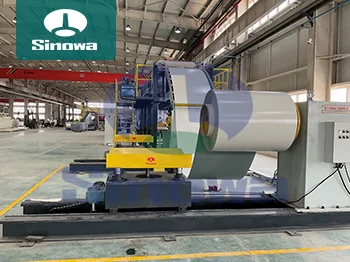
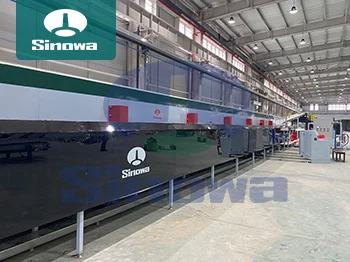
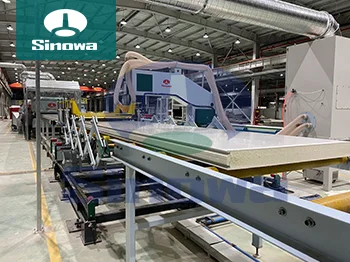
The high-tech glass wool panel production line can meet a variety of production needs of customers, the whole glass wool panel production line design concept of modularization enables all our components to be integrated and combined at will. Our high efficiency glass wool panel production line can easily automate the production of roof sandwich panel, wall sandwich panel, cold storage sandwich panel and other products by different combination and configuration selection and siple switching. The inner core layer can be polyrethane or rock wool, glass wool, an so on.


The high precision glass wool panel production line has high adaptability, which may produce various sandwich panel of the PU, PIR and rock wool systems. We may design various products according to the customer’s requirements, including various configurations, so as to meet their demands with flexible price system. Highly integrated and linked control system centralizes all control points at the main central center, achieving parameter linkage, fault self-diagnosis controlled by the whole line and shipping distance control. High-level automatic control system also saves the manpower and reduces the manpower loss for customers.


The precision servo hoisting mechanism employed by the main engine without hydraulic system makes the board thickness control flexible and the customer may conveniently change or adjust the board thickness. There will be not such troubles as hydraulic system adjustment, leakage, maintenance, etc.


High-level energy saving and protection design makes the whole glass wool panel production line possible to produce around the clock throughout the year and the customer will save huge budget. In addition, the isolated heat preservation room is constructed for warming the environment. The energy saving and protection design of our manufacturing line may guarantee that the customer’s production line may be freely heated and produce in the main time to save more costs for customers.


The high-power low-consumption design quickens the reaction of the cheap glass wool panel production line while energy consumption is kept low. With the brand-new, fully sealed inner insulation design, the energy consumption is controlled at the minimum level to achieve the design objective of less than an hour for the insulation system to be activated from the room temperature above 5℃ to the production process temperature. The energy consumption is only 40% that of those similar products.
The manufacturing of glass wool panels relies on systematic and streamlined production lines that integrate physical melting, fiber forming, chemical curing, and post-processing procedures to produce lightweight, porous, and heat-insulating inorganic fiber materials. These production lines are engineered to maintain continuous production rhythms, stabilize product structural consistency, and optimize raw material utilization, meeting the growing market demand for thermal insulation, sound absorption, and fire-resistant building materials. Every functional section in the production line is closely interconnected, and the coordination of mechanical equipment and process parameters determines the physical properties, surface flatness, and internal fiber uniformity of finished glass wool panels. Unlike intermittent manufacturing equipment, modern glass wool panel production lines adopt a fully continuous operating mode, which minimizes manual intervention errors and ensures that each batch of products maintains stable quality characteristics in terms of fiber fineness, bulk density, and compression resistance.
The initial stage of the production process focuses on raw material preparation and proportioning, which lays a fundamental foundation for the overall quality of glass wool panels. The primary raw materials used in production include silica-based mineral raw materials and various auxiliary raw materials that adjust chemical composition. All raw materials need to undergo strict screening and impurity removal to eliminate granular sundries that may affect fiber forming. After screening, different raw materials are mixed in a specific proportion according to the preset material formula. The proportioning principle follows the physical and chemical characteristics required by finished products, ensuring that the melted glass liquid has appropriate viscosity and surface tension for subsequent fiber drawing. During the mixing process, mechanical stirring equipment continuously agitates the raw material mixture to achieve uniform distribution of various components, avoiding local composition imbalance that could cause inconsistent fiber quality. In addition, raw material drying treatment is carried out before feeding to remove internal moisture, preventing bubble generation in the melting stage which would damage the compactness of glass fibers.
Following raw material preparation, the mixture is transported to the melting system, which serves as the core thermal processing unit of the entire production line. The melting equipment adopts high-temperature heating structures to gradually heat the mixed raw materials until they transform into homogeneous glass liquid. The temperature inside the melting furnace is precisely regulated within a reasonable range, balancing the melting efficiency and liquid fluidity of raw materials. Excessively high temperature will lead to excessive energy consumption and accelerated equipment wear, while insufficient temperature will result in incomplete raw material melting and residual solid particles in the glass liquid. During the melting process, the internal stirring device of the furnace continuously mixes the glass liquid to eliminate temperature stratification and component segregation. After melting, the glass liquid flows out steadily through the diversion channel, and the flow rate is controlled by mechanical adjusting components to maintain a constant liquid supply for the subsequent fiber forming process. The entire melting stage is enclosed in a sealed structure to reduce heat loss and isolate external dust pollution, creating a clean and stable high-temperature reaction environment.
Fiber forming is a key procedure that determines the microscopic structure of glass wool panels. The high-temperature glass liquid flows into the fiber forming equipment, where high-speed rotating mechanical structures throw the liquid into fine fibrous filaments through centrifugal force. In this process, high-speed airflow acts on the newly formed fibers to further stretch and refine them, controlling the fiber diameter within a uniform microscopic range. The airflow direction and wind speed are accurately adjusted to avoid fiber agglomeration and breakage, ensuring that individual fibers maintain complete and slender morphological characteristics. Meanwhile, atomized adhesive liquid is evenly sprayed on the surface of floating fibers through multi-group spraying nozzles. The adhesive forms a thin protective film on the fiber surface, which not only enhances the bonding strength between fibers but also improves the water resistance and structural stability of finished products. The sprayed fiber mixture slowly settles on the conveying mesh belt under the action of gravity and airflow, forming a loose and fluffy fiber blanket with irregular three-dimensional pore structures inside.
The curing and shaping process solidifies the loose fiber blanket into standardized glass wool panels. The fiber blanket covered with adhesive is transported to the constant-temperature curing oven through an automatic conveying system. The internal temperature and air circulation speed of the oven are scientifically set to promote the rapid curing reaction of the adhesive without damaging the fiber structure. Hot air circulates evenly in the closed oven cavity, conducting uniform heat treatment on all parts of the fiber blanket to eliminate local uncured areas. During curing, the fiber blanket is pressed by adjustable rolling components to control panel thickness and surface flatness. The pressure of the rolling parts is flexibly adjusted according to the preset bulk density parameters of products, realizing diversified production of panels with different softness and compression resistance. After curing, the bonding force between fibers is fully strengthened, and the loose fiber structure is fixed into an integral elastic plate with stable shape, which is no longer prone to deformation or fiber shedding during daily use.
Post-processing units undertake the tasks of trimming, cutting and surface finishing to turn cured semi-finished products into standard commercial panels. The continuous conveyed cured wool blanket first passes through edge trimming equipment to cut off irregular rough edges on both sides, ensuring consistent width of the panel. Then, precision cutting devices divide the long strip-shaped wool blanket into finished panels of specified length according to production setting parameters. All cutting tools maintain sharp mechanical conditions to ensure smooth and burr-free cutting sections, avoiding fiber loosening caused by rough cuts. For products requiring enhanced surface performance, the production line is equipped with composite lamination structures, which can attach breathable protective layers or decorative films to the panel surface. This composite processing improves the surface wear resistance and pollution resistance of glass wool panels while retaining their original thermal insulation and sound absorption properties. In addition, dust removal devices are installed in the post-processing section to clean floating fine fibers on the panel surface, optimizing the appearance quality of finished products.
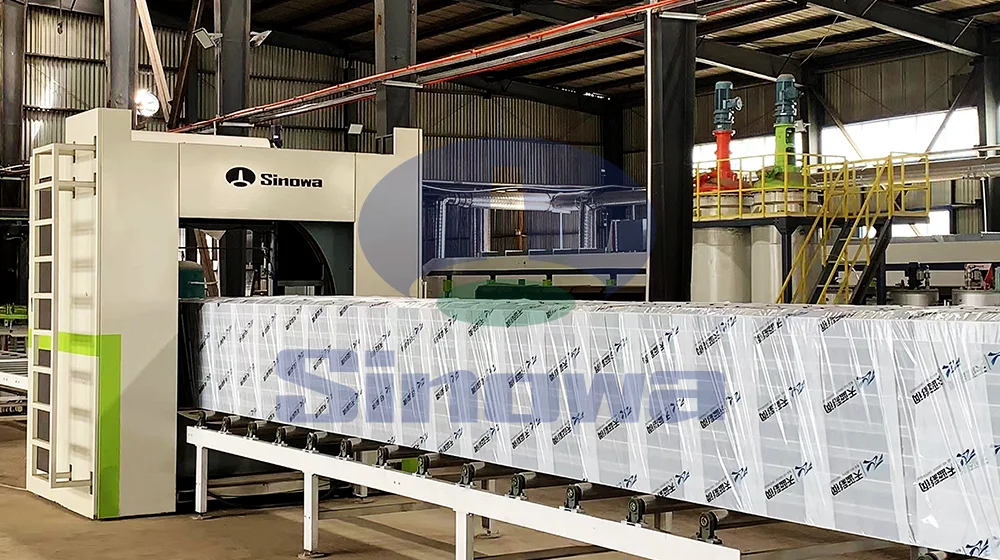
The automatic packaging system is the final link of the production line, realizing sealed storage and standardized transportation of finished glass wool panels. Qualified panels are neatly stacked by mechanical stacking equipment according to fixed quantity specifications, replacing manual stacking to improve stacking uniformity and efficiency. The stacked panels are wrapped with flexible packaging materials through automatic film wrapping machines, which can effectively isolate external moisture, dust and mechanical extrusion damage. The tightness of packaging is adjustable to adapt to the storage requirements of different usage environments. After packaging, coding devices mark production batches and production dates on the packaging surface to facilitate product traceability and subsequent quality management. All packaged finished products are transported to the finished product storage area through conveyor equipment, completing the whole production flow from raw material input to finished product storage.
In addition to the main production processing units, the auxiliary supporting system is an indispensable part of the glass wool panel production line, ensuring stable and safe long-term operation of the entire line. The waste gas and dust treatment system collects fine fibers and volatile organic compounds generated in the production process through sealed air extraction pipelines. After filtration and purification, the gas meets safe emission standards, reducing the impact of production on the surrounding environment. The waste material recovery system collects unqualified semi-finished products, cutting waste materials and residual fibers generated in the production process. These waste materials are crushed and reprocessed, then returned to the raw material mixing link for secondary utilization, which effectively improves raw material utilization rate and reduces production resource consumption. The constant-temperature cooling system conducts circulating cooling on high-temperature equipment such as melting furnaces and forming machines to avoid equipment aging and component damage caused by long-term high-temperature operation. Moreover, the intelligent monitoring system is distributed in each production section, collecting real-time data such as temperature, pressure, flow rate and operating speed of equipment. The data is transmitted to the central control terminal for real-time monitoring, helping production personnel judge the operating state of the production line and adjust process parameters in a timely manner.
The operational characteristics of glass wool panel production lines are highly adaptable to the diversified development needs of the modern building materials industry. In terms of production efficiency, the continuous assembly line design realizes uninterrupted raw material processing and product manufacturing, greatly shortening the single-batch production cycle compared with traditional intermittent production equipment. In terms of product diversification, by adjusting raw material proportioning, fiber forming wind speed, curing temperature and rolling pressure parameters, the same production line can manufacture glass wool panels with different bulk density, thickness, fire resistance and sound absorption coefficients, covering the application needs of construction insulation, industrial pipeline protection, indoor noise reduction and other scenarios. In terms of production intelligence, modern production lines adopt automated transmission and parameter adjustment structures, which reduces manual operation links, lowers labor intensity and human error rate, and maintains long-term stable production consistency.
During the long-term operation of the production line, daily maintenance and parameter optimization are crucial to extend equipment service life and stabilize product quality. Regular cleaning of residual raw materials and condensed fibers inside the melting furnace and forming equipment can prevent pipeline blockage and equipment corrosion. Regular inspection of transmission components such as conveyor belts and rolling rollers ensures stable operating speed and avoids product surface scratches caused by component jitter. The sealing performance of the curing oven needs to be checked periodically to prevent heat loss from reducing curing efficiency and increasing energy consumption. Combined with market application feedback, production technicians continuously optimize raw material proportioning and process parameters to improve the flexibility, tensile strength and hydrophobic performance of glass wool panels. Meanwhile, energy-saving transformation is carried out for heating and power consumption units in the production line, reducing heat loss and electric energy waste through thermal insulation optimization and frequency conversion speed regulation technology, so as to realize low-consumption and environmentally friendly production.
With the continuous upgrading of global environmental protection and energy-saving building standards, the application scope of glass wool panels is constantly expanding, which further promotes the technological iteration of glass wool panel production lines. The future development direction of production lines focuses on intelligent upgrading, energy saving and emission reduction, and high-performance product customization. The intelligent control system will realize automatic parameter matching and fault early warning, relying on big data analysis to optimize production logic and reduce unqualified product rate. The melting and curing equipment will adopt more efficient thermal insulation materials and heating structures to cut down comprehensive energy consumption per unit product. In terms of product research and development, the production line will reserve adjustable process spaces to support the production of high-temperature resistant, ultra-thin and high-density customized glass wool products, adapting to the personalized needs of different industrial and architectural scenarios. While maintaining stable production capacity, the entire production line will continuously optimize the production process flow, reduce intermediate material loss, and realize coordinated development of economic benefits and environmental benefits.
In conclusion, the glass wool panel production line is a highly integrated industrial production system combining thermal processing, mechanical transmission, chemical curing and intelligent control. Each production link from raw material pretreatment to finished product packaging is logically connected and mutually restricted, jointly determining the comprehensive performance of finished glass wool panels. Through standardized process control and reasonable equipment configuration, the production line efficiently produces inorganic fiber insulation materials with stable quality, diverse specifications and environmental protection characteristics. Driven by market demand and technological progress, such production lines will continue to complete technological innovation and structural optimization, providing reliable production support for the sustainable development of the thermal insulation building materials industry, and laying a solid foundation for the popularization and application of high-performance glass wool panels in more industrial and civil fields.
« Glass Wool Panel Production Line » Update Date: 2026/5/8
URL: https://www.sinowamachine.com/tags/glass-wool-panel-production-line.html
- Links:
- Sandwich Panel Continuous Production Line
- Automatic and Continuous Sandwich Panel Production Line
- Cheap and Low Price Sandwich Panel Production Line
- China Sandwich Panel Production Line Factory
- Color Steel Sandwich Panel Production Line For Cold Storage
- Continuous Composite Foam Sandwich Panel Production Line
- Continuous Production Line For Rockwool and Mineral Wool Sandwich Panels
- Continuous PU Phenolic Insulation Panel Production Line
- Continuous PU PIR Sandwich Panel Production Line
- Continuous PUF PUR Sandwich Panel Production Line
- Continuous Sandwich Panel Production Line For Roof and Wall
- Customized and Design Sandwich Panel Production Line
- Decorative Sandwich Panel Production Line For Glass Wool Boards
- High Quality Sandwich Panel Production Line For Sale
- Polyurethane(PU) Sandwich Panel Production Line
- Sandwich Panel Production Line Manufacturer and Supplier
- Sandwich Panel Production Machinery and Equipment