
Corrugated Sandwich Panel Machines
Sinowa is a corrugated sandwich panel machines supplier from china, customized high-quality & high efficiency corrugated sandwich panel machines at low price, the adoption of system integration technology and bus control technology accomplishes the full automatization of integrated and coordinated control of the corrugated sandwich panel machines with accessible remote interactive communication. Ranking the first-class level in the world, it is currently the corrugated sandwich panel machines in the market taking a comprehensive lead in high performance.
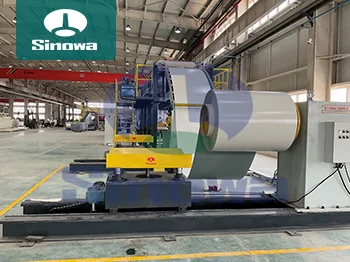
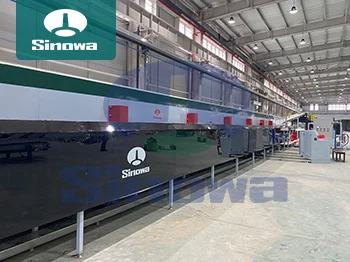
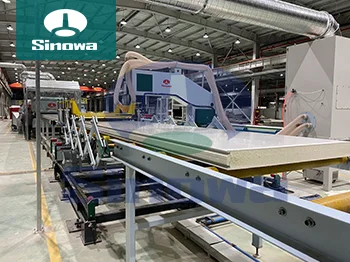
The high-tech corrugated sandwich panel machines can meet a variety of production needs of customers, the whole corrugated sandwich panel machines design concept of modularization enables all our components to be integrated and combined at will. Our high efficiency corrugated sandwich panel machines can easily automate the production of roof sandwich panel, wall sandwich panel, cold storage sandwich panel and other products by different combination and configuration selection and siple switching. The inner core layer can be polyrethane or rock wool, glass wool, an so on.


The high precision corrugated sandwich panel machines has high adaptability, which may produce various sandwich panel of the PU, PIR and rock wool systems. We may design various products according to the customer’s requirements, including various configurations, so as to meet their demands with flexible price system. Highly integrated and linked control system centralizes all control points at the main central center, achieving parameter linkage, fault self-diagnosis controlled by the whole line and shipping distance control. High-level automatic control system also saves the manpower and reduces the manpower loss for customers.


The precision servo hoisting mechanism employed by the main engine without hydraulic system makes the board thickness control flexible and the customer may conveniently change or adjust the board thickness. There will be not such troubles as hydraulic system adjustment, leakage, maintenance, etc.


High-level energy saving and protection design makes the whole corrugated sandwich panel machines possible to produce around the clock throughout the year and the customer will save huge budget. In addition, the isolated heat preservation room is constructed for warming the environment. The energy saving and protection design of our manufacturing line may guarantee that the customer’s production line may be freely heated and produce in the main time to save more costs for customers.


The high-power low-consumption design quickens the reaction of the cheap corrugated sandwich panel machines while energy consumption is kept low. With the brand-new, fully sealed inner insulation design, the energy consumption is controlled at the minimum level to achieve the design objective of less than an hour for the insulation system to be activated from the room temperature above 5℃ to the production process temperature. The energy consumption is only 40% that of those similar products.
Corrugated sandwich panel machines are advanced manufacturing equipment designed to produce composite panels with a corrugated outer layer and a core material, which are widely used in various industries due to their excellent structural stability, thermal insulation, and sound insulation properties. These machines integrate multiple functional modules to realize continuous and automatic production, from raw material feeding to finished product cutting and stacking, ensuring high efficiency and consistent product quality. Understanding the structure, performance, types, and applications of these machines is crucial for selecting the right equipment for specific production needs and maximizing production efficiency.
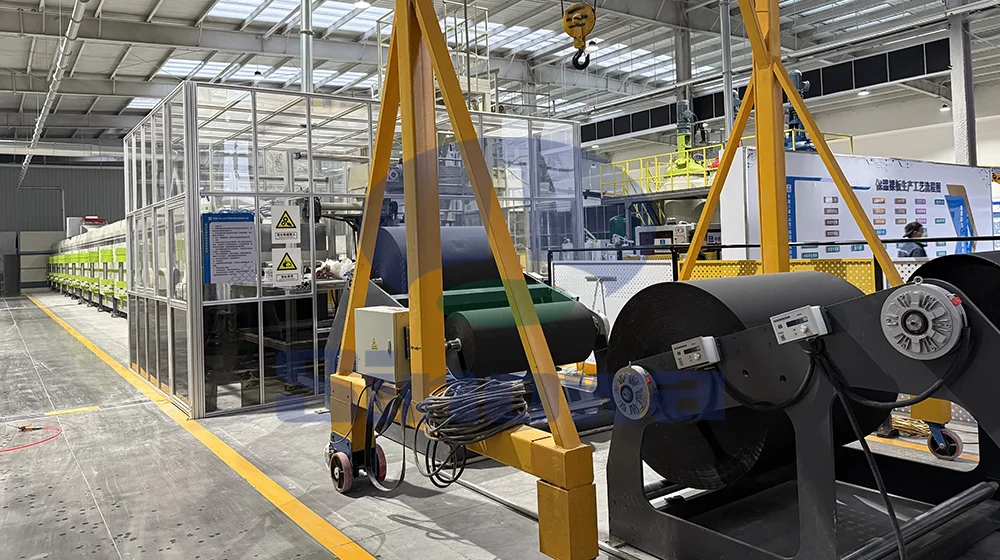
The structure of a corrugated sandwich panel machine is a sophisticated combination of mechanical, electrical, and pneumatic components, each playing a vital role in the production process. The entire machine is usually composed of a feeding system, roll forming system, core material feeding system, laminating system, cutting system, control system, and stacking system, which work together seamlessly to complete the production of corrugated sandwich panels. The feeding system is the starting point of the production line, mainly consisting of decoilers, guiding devices, and leveling machines. Decoilers are used to unroll the metal coils (usually color-coated steel sheets, aluminum sheets, or other metal materials) that form the corrugated outer layers of the panels, while guiding devices ensure that the metal sheets are fed into the subsequent process smoothly and accurately without deviation. Leveling machines are responsible for eliminating internal stress in the metal sheets, which may be generated during the rolling and storage process, to ensure the flatness of the sheets and avoid defects in the final corrugated profile. Some advanced feeding systems are equipped with laser correction devices and constant tension control mechanisms to further improve the feeding accuracy and stability, supporting the processing of metal sheets with different thicknesses, typically ranging from 0.3mm to 0.8mm.
The roll forming system is the core component of the corrugated sandwich panel machine, responsible for shaping the metal sheets into the desired corrugated profile. This system consists of multiple roll forming stations, each equipped with a set of customized roller dies that gradually bend the metal sheets into wave-like corrugations through cold rolling and pressure application. The number of roll forming stations varies depending on the complexity of the corrugated profile; generally, 13 to 20 rows of chrome-plated alloy rollers are used to ensure that the metal sheets are formed incrementally without cracking or deformation. The roller dies are designed with optimized waveform structures, ensuring that the wave height tolerance is within ±0.2mm, which guarantees the uniformity and consistency of the corrugated profile. Some machines are equipped with a quick mold change system, allowing for the production of different corrugated shapes (such as trapezoidal, sinusoidal, or custom-designed profiles) and joint types (such as tongue-and-groove joints) without lengthy downtime, enhancing the flexibility of the production line. The roll forming system also includes a calibration unit, which adjusts the thickness and width of the corrugated sheets to meet the required tolerance levels, ensuring that each panel has the same dimensions and profile.
The core material feeding system is another key part of the corrugated sandwich panel machine, responsible for accurately and uniformly feeding the core material between the two corrugated outer layers. The core material plays a crucial role in the thermal insulation, sound insulation, and fire resistance properties of the final panel, and the feeding system must ensure that the core material is distributed evenly without gaps or unevenness. Common core materials include EPS (expanded polystyrene), rock wool, PU (polyurethane), and phenolic foam, each with different properties and applications. The feeding system is equipped with specialized devices for different core materials: for loose core materials such as rock wool, the system includes a lifting device, slitting device, turning device, and dust collecting device to ensure that the rock wool is cut to the required size and fed evenly between the metal sheets; for foam core materials such as EPS and PU, the system may include a foam injection machine or a pre-foaming device, which can realize on-site foaming and filling to ensure full contact between the core material and the outer layers. The core material feeding system is also integrated with a glue application device, which applies adhesive evenly on the inner surface of the corrugated metal sheets to ensure a strong bond between the outer layers and the core material. The amount of adhesive applied is controlled precisely by the machine’s control system to avoid excessive or insufficient gluing, which could affect the bonding strength and product quality.
The laminating system works in conjunction with the roll forming and core material feeding systems to bond the two corrugated outer layers and the core material into a single composite panel. This system includes guiding devices, laminating rollers, heating devices, and pressure systems. After the core material is fed between the two corrugated sheets, the laminating rollers apply uniform pressure to ensure that the three layers are tightly bonded. Heating devices are used to accelerate the curing of the adhesive, especially for foam core materials that require thermal bonding, ensuring that the bond is strong and durable. The heating system often adopts zone temperature control technology, with a temperature accuracy of ±1℃, to adapt to different types of adhesives and core materials. Some laminating systems also include edge sealing, edge turning, and groove-making devices to process the edges of the panels, improving their waterproof performance and ease of installation. The entire laminating process is controlled automatically to ensure that the bonding strength is consistent across the entire panel, avoiding delamination or separation of the layers during use.
The cutting system is responsible for trimming the continuous composite panel into individual panels of the desired length. This system is equipped with high-precision cutting devices, such as flying saws or laser cutters, which can cut the panels without stopping the production line, ensuring continuous and efficient production. The cutting accuracy is typically within ±0.5mm, ensuring that each panel has a precise length and neat edges. Some advanced cutting systems are equipped with dynamic cutting technology, which can adjust the cutting speed according to the production speed of the line, further improving the cutting accuracy and reducing material waste. The cutting system is also integrated with a waste collection device to collect the cutting scraps, ensuring a clean production environment and reducing material loss.
The control system is the "brain" of the corrugated sandwich panel machine, integrating electrical, electronic, and software components to control the operation of all other systems. Most modern machines adopt a PLC (Programmable Logic Controller) and touch screen control system, which allows operators to set and adjust production parameters (such as production speed, corrugated profile, panel length, glue application amount, and heating temperature) easily. The control system also has automatic monitoring and fault diagnosis functions, which can detect abnormalities in the production process (such as material jams, insufficient glue, or temperature deviations) and issue alarms to remind operators to take timely measures. Some advanced control systems are integrated with IoT remote monitoring modules, allowing for remote operation and maintenance of the machine, reducing the need for on-site personnel and improving production efficiency. The control system also includes automatic counting and correction functions, ensuring that the number of finished panels is accurate and the production process is stable.
The stacking system is the final component of the corrugated sandwich panel machine, responsible for collecting and stacking the finished panels neatly. This system includes conveyor belts, stacking frames, and lifting devices, which automatically transport the cut panels to the stacking area and stack them according to the set height and quantity. The stacking system can be adjusted to accommodate different panel sizes and weights, ensuring that the panels are not damaged during stacking and transportation. Some stacking systems are equipped with automatic packing devices, which wrap the stacked panels with plastic film or other packaging materials to protect them from dust, moisture, and damage during storage and transportation.
The performance of a corrugated sandwich panel machine is evaluated based on several key indicators, including production efficiency, forming accuracy, product quality stability, energy consumption, and operability. Production efficiency is one of the most important performance indicators, usually measured by the production speed and annual production capacity. The production speed of most corrugated sandwich panel machines ranges from 0 to 10 meters per minute, with stepless speed regulation, allowing operators to adjust the speed according to the production needs and the type of core material. The annual production capacity, based on 8 hours of daily operation, is typically around 500,000 to 600,000 square meters, depending on the machine’s configuration and production speed. High production efficiency ensures that large-scale production needs are met, reducing production costs and improving market competitiveness.
Forming accuracy is another critical performance indicator, which directly affects the quality and usability of the finished corrugated sandwich panels. The forming accuracy is reflected in the uniformity of the corrugated profile, the flatness of the panels, and the accuracy of the panel dimensions. As mentioned earlier, the roll forming system with high-precision roller dies ensures that the wave height tolerance is within ±0.2mm, and the cutting system ensures that the panel length accuracy is within ±0.5mm. The leveling and calibration devices in the feeding and roll forming systems also help to improve the flatness of the panels, avoiding warping or deformation. High forming accuracy ensures that the panels can be easily installed and assembled, reducing gaps between panels and improving the overall performance of the structure.
Product quality stability is another important performance indicator, referring to the consistency of the product quality during long-term continuous production. A high-quality corrugated sandwich panel machine should be able to produce panels with consistent bonding strength, thickness, corrugated profile, and surface quality, without significant variations. This is achieved through precise control of the production parameters (such as temperature, pressure, glue application amount, and feeding speed) by the control system, as well as the use of high-quality components and materials in the machine. The automatic monitoring and fault diagnosis functions of the control system also help to maintain product quality stability by detecting and resolving potential issues in a timely manner.
Energy consumption is an important consideration for modern manufacturing equipment, as it directly affects production costs and environmental sustainability. Corrugated sandwich panel machines are designed with energy-saving technologies to reduce power consumption and energy waste. For example, the heating system adopts efficient heating elements and insulation materials to reduce heat loss; the control system optimizes the operation of the machine to avoid unnecessary energy consumption; and the stepless speed regulation system allows the machine to operate at the optimal speed for different production scenarios, reducing energy consumption. The total power of most corrugated sandwich panel machines ranges from 25 to 32 kW, which is relatively low compared to other large-scale manufacturing equipment, making them more energy-efficient and environmentally friendly.
Operability and maintainability are also important performance indicators, as they affect the ease of use and the service life of the machine. Modern corrugated sandwich panel machines are designed with user-friendly interfaces, such as touch screen controls, which allow operators to set and adjust production parameters easily without extensive professional training. The machine’s components are designed to be easy to access and maintain, reducing downtime for maintenance and repair. The automatic fault diagnosis function helps operators quickly identify and resolve issues, further reducing maintenance time and costs. Additionally, the machine’s main structure is usually made of high-tensile strength H-beam, with precision welding and good rigidity, ensuring a long service life and stable operation.
Corrugated sandwich panel machines can be classified into different types based on various standards, including the type of core material, the degree of automation, the production method, and the corrugated profile. Based on the type of core material, the machines can be divided into EPS corrugated sandwich panel machines, rock wool corrugated sandwich panel machines, PU corrugated sandwich panel machines, and phenolic foam corrugated sandwich panel machines. EPS corrugated sandwich panel machines are designed to produce panels with EPS as the core material, which are lightweight, low-cost, and have good thermal insulation properties. These machines are widely used in the production of panels for residential buildings, warehouses, and temporary structures. Rock wool corrugated sandwich panel machines are used to produce panels with rock wool as the core material, which have excellent fire resistance, sound insulation, and thermal insulation properties. These machines are suitable for the production of panels for industrial plants, high-rise buildings, and areas with high fire safety requirements. PU corrugated sandwich panel machines produce panels with PU as the core material, which have superior thermal insulation, waterproof, and mechanical properties. These machines are often used in the production of panels for cold storage, refrigerated warehouses, and industrial buildings that require high thermal insulation performance. Phenolic foam corrugated sandwich panel machines produce panels with phenolic foam as the core material, which have excellent fire resistance, thermal insulation, and corrosion resistance, making them suitable for harsh environments such as chemical plants and coastal areas.
Based on the degree of automation, corrugated sandwich panel machines can be divided into manual, semi-automatic, and fully automatic machines. Manual machines require a large number of operators to complete the feeding, forming, laminating, and cutting processes manually, which is suitable for small-scale production with low output requirements. Semi-automatic machines integrate some automatic components, such as automatic feeding and cutting, but still require manual operation for some processes, such as core material feeding and laminating. Fully automatic machines are the most advanced type, integrating all functional modules into a complete automatic production line, from raw material feeding to finished product stacking, without manual intervention. These machines can operate 24 hours a day continuously, with high production efficiency and stable product quality, suitable for large-scale industrial production. Fully automatic machines are equipped with advanced control systems, automatic monitoring, and fault diagnosis functions, reducing the need for operators and improving production efficiency.
Based on the production method, corrugated sandwich panel machines can be divided into continuous production machines and intermittent production machines. Continuous production machines are designed to produce panels continuously, with the raw materials fed into the machine continuously and the finished panels cut and stacked continuously. These machines have high production efficiency and are suitable for large-scale production of standard-sized panels. Intermittent production machines produce panels in batches, with each batch of panels completed before the next batch starts. These machines are more flexible, suitable for small-scale production of custom-sized panels or panels with special requirements.
Based on the corrugated profile, corrugated sandwich panel machines can be divided into trapezoidal corrugated panel machines, sinusoidal corrugated panel machines, and custom corrugated panel machines. Trapezoidal corrugated panel machines produce panels with a trapezoidal corrugated profile, which is the most common type, widely used in roofing and wall cladding due to its good structural stability and water drainage performance. Sinusoidal corrugated panel machines produce panels with a sinusoidal corrugated profile, which has better aesthetic performance and is often used in architectural decoration. Custom corrugated panel machines can be adjusted to produce panels with special corrugated profiles according to the user’s requirements, suitable for special architectural designs or industrial applications.
The applications of corrugated sandwich panel machines are closely related to the properties of the corrugated sandwich panels they produce, which are widely used in the construction industry, industrial field, cold chain logistics, and other fields. In the construction industry, corrugated sandwich panels produced by these machines are widely used as roofing materials, wall cladding materials, and interior partitioning materials. Due to their lightweight, high strength, thermal insulation, and sound insulation properties, they can reduce the weight of the building structure, improve the energy efficiency of the building, and provide a comfortable living and working environment. In high-rise buildings and first-class office buildings, rock wool or PU corrugated sandwich panels are often used as exterior wall cladding materials, due to their excellent fire resistance and thermal insulation properties, which help to improve the safety and energy efficiency of the building. In residential buildings, EPS corrugated sandwich panels are widely used as roofing and wall materials, due to their low cost and good thermal insulation performance, helping to reduce heating and cooling costs for residents.
In the industrial field, corrugated sandwich panels are widely used in the construction of industrial plants, warehouses, workshops, and other structures. Industrial plants often require large-span structures with good thermal insulation, sound insulation, and fire resistance, and corrugated sandwich panels meet these requirements perfectly. For example, in manufacturing plants, rock wool corrugated sandwich panels are used as wall and roofing materials to provide a safe and comfortable working environment, while also reducing noise pollution from the production process. In warehouses, EPS or PU corrugated sandwich panels are used to maintain a stable internal temperature, protecting the stored goods from moisture, heat, or cold. Additionally, corrugated sandwich panels are used in the construction of temporary structures, such as construction site offices, temporary housing, and exhibition halls, due to their quick installation, lightweight, and reusability.
In the cold chain logistics industry, corrugated sandwich panels produced by PU or EPS corrugated sandwich panel machines are widely used in the construction of cold storage rooms, refrigerated warehouses, and refrigerated containers. These panels have excellent thermal insulation properties, which can effectively maintain the low temperature inside the cold storage, reducing energy consumption and ensuring the quality of the stored goods (such as food, medicine, and agricultural products). The waterproof and moisture-proof properties of these panels also help to prevent condensation inside the cold storage, protecting the structure and the stored goods from damage. In addition, corrugated sandwich panels are used in the construction of cold chain transportation vehicles, such as refrigerated trucks, to maintain the temperature of the goods during transportation.
Corrugated sandwich panels are also used in other fields, such as the petrochemical industry, medical industry, and agricultural industry. In the petrochemical industry, corrugated sandwich panels with good corrosion resistance and fire resistance are used in the construction of workshops and storage facilities for chemicals and oil products. In the medical industry, rock wool or phenolic foam corrugated sandwich panels are used in the construction of hospitals and clean rooms, due to their good fire resistance, sound insulation, and dust-proof properties, ensuring a clean and safe medical environment. In the agricultural industry, corrugated sandwich panels are used in the construction of greenhouses, livestock houses, and agricultural warehouses, due to their lightweight, durability, and thermal insulation properties, helping to create a suitable environment for plant growth and livestock breeding.
In conclusion, corrugated sandwich panel machines are essential equipment in the modern manufacturing industry, with a sophisticated structure consisting of multiple functional modules that work together to produce high-quality corrugated sandwich panels. Their performance is characterized by high production efficiency, precise forming accuracy, stable product quality, low energy consumption, and easy operability and maintainability. Based on different classification standards, these machines can be divided into various types, each suitable for different production needs and application scenarios. The corrugated sandwich panels produced by these machines are widely used in the construction, industrial, cold chain logistics, and other fields, due to their excellent properties such as lightweight, high strength, thermal insulation, sound insulation, and fire resistance. With the continuous development of technology, corrugated sandwich panel machines are constantly being upgraded and improved, with more advanced automation, higher production efficiency, and better product quality, which will further expand their applications and play a more important role in the development of various industries. As the demand for energy-saving, environmentally friendly, and efficient building materials continues to grow, the market prospects for corrugated sandwich panel machines will become increasingly broad, promoting the development of the entire manufacturing and construction industry.
« Corrugated Sandwich Panel Machines » Update Date: 2026/4/16
URL: https://www.sinowamachine.com/tags/corrugated-sandwich-panel-machines.html
- Links:
- Sandwich Panel Continuous Production Line
- Automatic and Continuous Sandwich Panel Production Line
- Cheap and Low Price Sandwich Panel Production Line
- China Sandwich Panel Production Line Factory
- Color Steel Sandwich Panel Production Line For Cold Storage
- Continuous Composite Foam Sandwich Panel Production Line
- Continuous Production Line For Rockwool and Mineral Wool Sandwich Panels
- Continuous PU Phenolic Insulation Panel Production Line
- Continuous PU PIR Sandwich Panel Production Line
- Continuous PUF PUR Sandwich Panel Production Line
- Continuous Sandwich Panel Production Line For Roof and Wall
- Customized and Design Sandwich Panel Production Line
- Decorative Sandwich Panel Production Line For Glass Wool Boards
- High Quality Sandwich Panel Production Line For Sale
- Polyurethane(PU) Sandwich Panel Production Line
- Sandwich Panel Production Line Manufacturer and Supplier
- Sandwich Panel Production Machinery and Equipment