
Phenolic Air Duct Panel Line
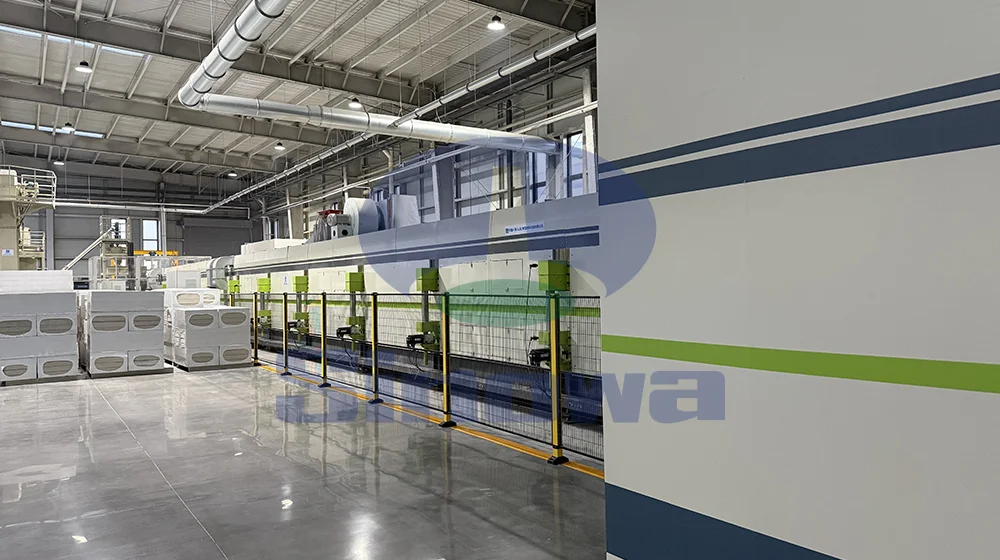
Sinowa is a phenolic air duct panel line supplier from china, customized high-quality & high efficiency phenolic air duct panel line at low price, phenolic air duct panel line has diversified and multifunctional production characteristics, which may produce products with different specifications such as PU, PF, PIR, etc. The surface material may be aluminum foil, colored steel, cement base cloth, kraft paper, non-woven fabrics, etc. The products are widely applied to such occasions as construction, decoration, pipeline ventilation, subway construction, etc.
The phenolic air duct panel line is able to continuously and efficiently produce high-quality PU and Phenolic insulation boards.
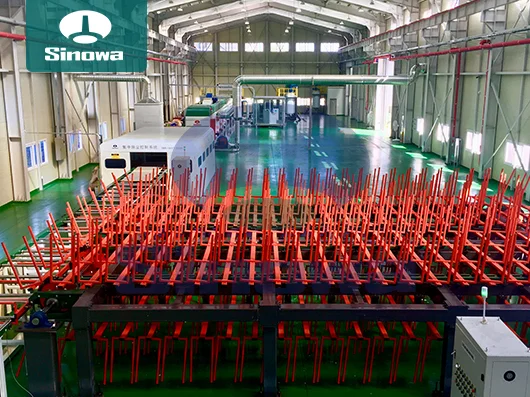
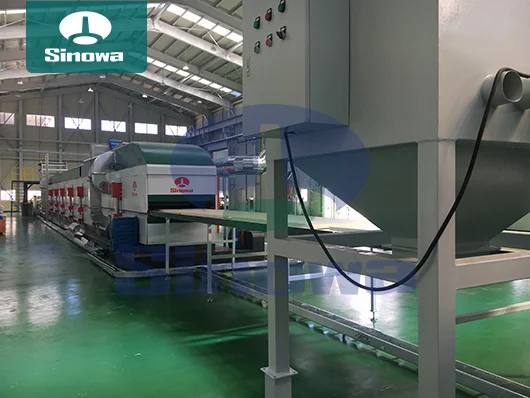
We spare no efforts to improve our product quality and technological reliability by employing the most cutting-edge and the most reliable support and processes to make our products highly reliable and endurable. As a result, the phenolic air duct panel line is highlighted by many perfect qualities. It is the core idea in Sinowa's product roadmap to surpass our competitors in terms of design philosophy, manufacture methods and service level, going for excellence and leading position and making constant improvement on our products and services, which is also our core value system to create efficiency and convenience for our customers.
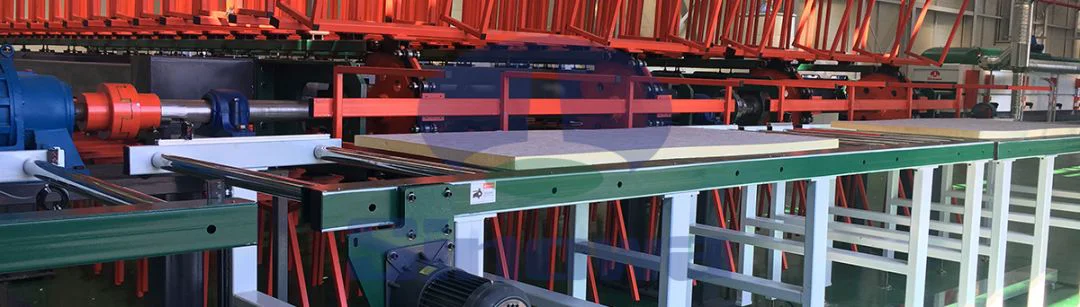
Well-grounded on our solid strength as a renowned large-scale enterprise, Sinowa has a high starting point in developing industrial assembly lines. Based on the advanced science and technology introduced from within and without the country and supported by a great number of first-grade parts and components from the home and aboard, the phenolic air duct panel line has a high-level configuration of supporting products in terms of machinery, electrical control, hydraulic pressure, automatic measurement and tracking, and so on. This is a strong proof of our product’s reliable quality and high efficiency.
The first-class appearance design and excellent energy saving measures make it unnecessary for customers to additionally construct the heat preservation and isolation room for production around the clock throughout the year, so that the customers may save lots of resources and costs.
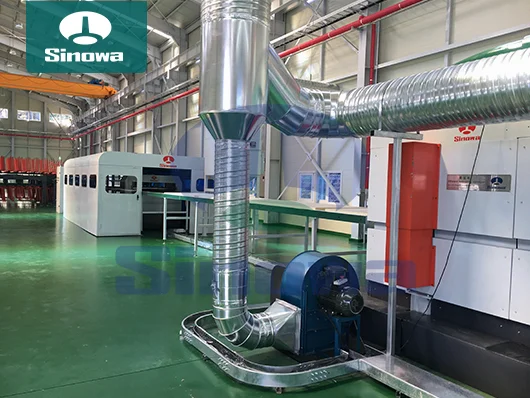
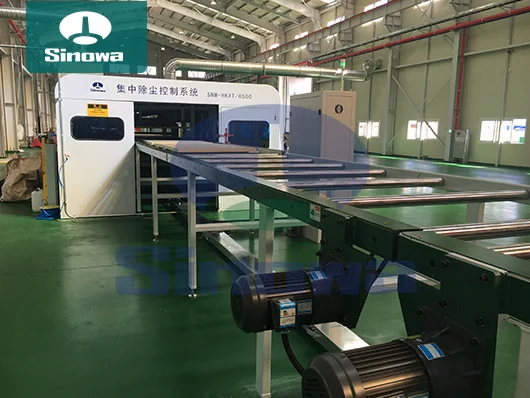
Modularized standard design and important parts machined with CNC machine tool make the phenolic air duct panel line have excellent quality assurance. Dependence on the man-made factors is eliminated. The operation is precision, with the highest operation speed of 30m/min. The phenolic air duct panel line has the world-class production efficiency.
The high performance and reliable multicomponent cyclopentane foaming technology and equipment of Sinowa may be also applied to the foaming process of the phenolic aldehyde board. Therefore, our customers may not only freely adjust the foaming matching according to the raw material, but also save lots of costs. Moreover, they are of significance for environmental protection.
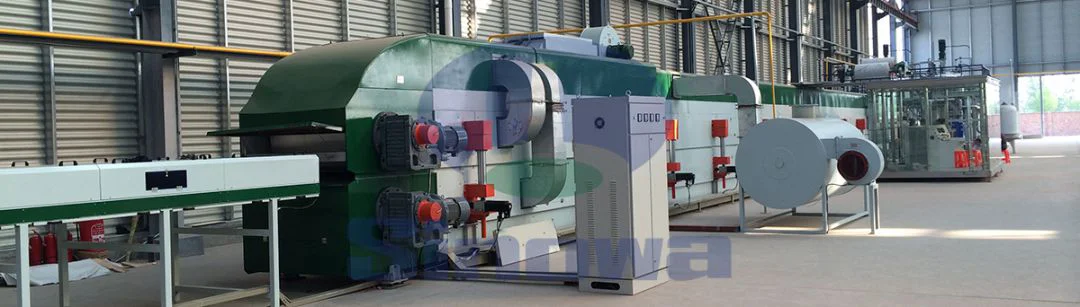
Sinowa's industrial production line of insulation panels is distinguished by its impressive performance of energy conservation. In each high point of energy consumption throughout the entire phenolic air duct panel line are implemented corresponding measures to considerably lower the consumption level. For example, the body of the lamination belt conveyer is covered with insulation panels in very reasonable structures, which doesn’t blemish the overall outlook but greatly increases the insulation performance. The entire phenolic air duct panel line is constantly optimized and improved so that the consumption of each power source is significantly reduced. The motor power of our lamination conveying system is only 3.0 kw, about 50% less than those of the same kind. All in all, the energy consumption of the whole industrial phenolic air duct panel line equals 40% or even less of the equivalent lines in the market.
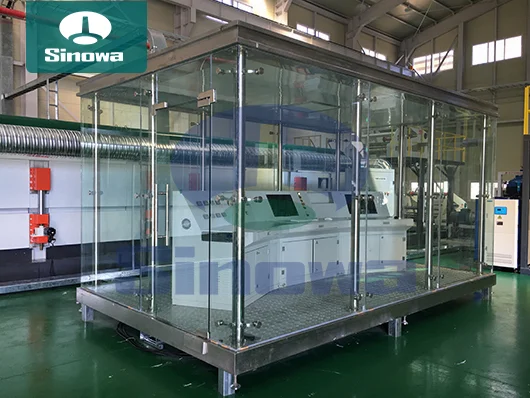
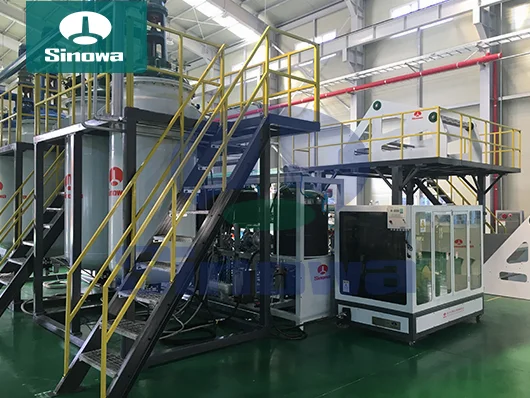
The phenolic air duct panel line of Sinowa adopts the most advanced concepts in the world to realize the modularized design with all the parts bolted together rather than welded. In standardized production, the parts can be dismantled and exchanged, so the production cycle is drastically shortened and the maintenance becomes by far easier. Through finite element analysis, the equipment design is greatly optimized to realize modularization, digitization, and weight-minimalization.
With the continuous advancement of modern construction technology and the escalating demand for energy-efficient and environmentally friendly ventilation systems, the development of high-performance air duct materials has become a pivotal focus in the construction industry. Phenolic air duct panels have gradually replaced traditional ventilation duct materials due to their unique physical and chemical properties, driving the continuous optimization and upgrading of phenolic air duct panel line. This specialized production line is designed to manufacture composite panels tailored for ventilation and air conditioning systems, integrating raw material processing, foaming, compounding, shaping, and cutting into a streamlined production workflow. It not only ensures the stable performance of finished panels but also adapts to the large-scale production demands of the construction sector, laying a solid foundation for the widespread application of phenolic air duct panels in various building scenarios.
The core raw materials for phenolic air duct panel production are derived from modified phenolic resin, which serves as the base material for the foam core layer of the panel. During the production process, auxiliary materials such as foaming agents and curing agents are added to the phenolic resin, and precise physical and chemical reactions are completed under controlled temperature and pressure conditions inside the production line. The entire production process is meticulously regulated to form a closed-cell rigid foam structure with uniform density. The outer layer of the phenolic panel is compounded with durable protective materials, forming a composite structure that combines the thermal insulation advantages of phenolic foam and the surface protection performance of cladding materials. This structural design endows the finished panel with comprehensive performance advantages that single-layer ventilation materials cannot match, and the rational layout of the production line ensures the consistency of each structural layer of the panel.
A complete phenolic air duct panel line consists of multiple interconnected functional units, each undertaking an independent production link while maintaining synchronous operation to improve overall production efficiency. The raw material pretreatment unit is the starting point of the entire production process, responsible for screening, purifying, and proportioning phenolic resin and various auxiliary materials. In this unit, automated feeding equipment accurately conveys raw materials into the mixing device, where high-speed stirring ensures uniform fusion of all components. Strict parameter control is implemented during the mixing stage to avoid raw material agglomeration or uneven proportioning, which could affect the foaming effect and structural stability of subsequent panels. The precision of raw material pretreatment directly determines the basic quality of finished products, making it an indispensable foundational link in the production line.
Following raw material pretreatment, the foaming and curing unit constitutes the core functional section of the production line. After mixing, the raw material mixture is transported to a sealed foaming chamber, where the temperature and pressure environment are dynamically adjusted to initiate foaming reactions. As gas is generated inside the material, a dense closed-cell structure gradually forms, and the material expands steadily to reach the preset thickness and density standards. The curing process is carried out synchronously with foaming, enabling the phenolic foam to rapidly form a stable rigid structure and prevent deformation or shrinkage during subsequent processing. The production line adopts an intelligent temperature control system to maintain a constant temperature difference in the foaming area, ensuring consistent cell size and uniform internal structure of each batch of foam substrates. This stable foaming and curing environment is the key to endowing phenolic panels with excellent thermal insulation and pressure resistance.
The composite lamination unit undertakes the task of combining the foam core layer with surface protective materials. Common surface cladding materials include corrosion-resistant metal foils and high-molecular composite layers, which are bonded to both sides of the phenolic foam substrate through automated laminating equipment. Before lamination, the surface of the foam substrate undergoes fine polishing and dedusting treatment to remove surface impurities and improve the adhesion between the substrate and the cladding materials. The laminating equipment adopts a flat pressing structure with adjustable pressure, which can evenly apply pressure to the composite materials without damaging the internal closed-cell structure of the foam. After hot pressing and bonding, the composite panels enter the constant-temperature curing channel to strengthen the bonding strength between layers, effectively preventing delamination or peeling during long-term use. The composite process enhances the surface durability and air tightness of phenolic panels, making them more adaptable to complex ventilation environments.
Post-processing units including trimming, cutting, and shaping are arranged at the later stage of the production line to process the initially formed composite panels into standardized finished products. Continuous conveying equipment transports the composite panels to the cutting area, where high-precision cutting devices trim the irregular edges of the panels and cut the panels into specified sizes according to production requirements. The entire cutting process adopts non-contact processing technology to avoid surface scratches or structural damage to the panels. Meanwhile, the edge sealing treatment device conducts seamless edge sealing on the cut panels to block the internal foam structure from contacting external air and moisture, further optimizing the moisture resistance and corrosion resistance of the panels. Waste materials generated during trimming and cutting are automatically collected and recycled, realizing the efficient utilization of raw materials and reducing production resource consumption.
The performance advantages of phenolic air duct panels are closely related to the refined production technology of the production line, and the optimized process flow endows the panels with multiple practical properties suitable for ventilation systems. In terms of thermal insulation, the closed-cell foam structure formed by precise foaming technology can effectively block heat transmission, greatly reducing cold and heat loss during air circulation in ventilation pipelines. This performance helps mechanical ventilation and air conditioning systems maintain stable operating efficiency, cutting down energy consumption for long-term building operation. For large commercial buildings and industrial plants with high ventilation demands, this energy-saving characteristic brings significant economic and environmental benefits.
In terms of safety performance, phenolic materials have inherent flame-retardant characteristics, which are further stabilized and optimized during the production process. The specially controlled curing reaction enhances the high-temperature resistance of the panels, enabling them to effectively inhibit flame spread when encountering open flames. Meanwhile, the panels produce extremely low smoke during high-temperature combustion without generating harmful toxic substances, creating safer evacuation conditions for building personnel in case of fire emergencies. Different from flammable traditional foam insulation materials, phenolic panels overcome the defects of easy combustion and excessive smoke, meeting the high safety standards of modern buildings for ventilation components.
Moisture resistance and corrosion resistance are also prominent attributes of phenolic air duct panels. The chemical inertness of modified phenolic resin enables the panels to resist erosion from humid air, acid mist, and weak alkaline substances. The seamless edge sealing and compact composite structure effectively prevent moisture from penetrating into the internal foam layer, avoiding mildew growth and structural deterioration caused by moisture accumulation. This advantage makes the panels applicable to humid environments such as underground spaces and coastal buildings, as well as industrial sites with mild chemical corrosives. Compared with metal ventilation ducts that are prone to rust and corrosion, phenolic panels require fewer anti-corrosion maintenance measures during their service life.
In addition, the production line optimizes the density of finished panels through formula adjustment and process control, making the panels lightweight while maintaining structural strength. The low-density foam core layer and thin-layer protective cladding reduce the overall weight of a single panel, which effectively lowers the load-bearing pressure on building structures. During on-site construction, the lightweight feature simplifies the transportation and installation process of air duct panels, eliminating the need for large-scale mechanical hoisting equipment. Workers can complete cutting, assembly, and installation with simple manual tools, shortening the construction cycle of ventilation projects and reducing auxiliary construction costs. Moreover, the smooth inner wall of the processed panels reduces air flow resistance, improving the circulation efficiency of the ventilation system and lowering the operating noise of the pipeline. The porous foam structure inside the panels can absorb airflow vibration noise, realizing natural noise reduction without additional silencing components.
In terms of production quality control, modern phenolic air duct panel line is equipped with comprehensive real-time monitoring systems to ensure stable product quality. Multiple sensors are installed in each functional unit to collect data such as temperature, pressure, raw material flow rate, and processing speed in real time. The central control system analyzes the collected data and automatically adjusts operating parameters to avoid quality fluctuations caused by manual operation errors. After the panels are produced, random sampling inspections are conducted on thickness uniformity, bonding strength, thermal conductivity, and surface flatness. Unqualified products are automatically screened out and returned to the recycling link, forming a closed-loop quality management system. This strict quality control mode ensures that each batch of finished panels maintains consistent performance indicators.
From the perspective of environmental protection, the entire production flow of the phenolic air duct panel line conforms to green production concepts. The raw materials used in production do not contain harmful volatile substances, and no toxic and harmful waste gas is discharged during the chemical reaction process. The recycled waste materials can be reprocessed and utilized, minimizing solid waste emissions. In the service stage of finished panels, the stable chemical structure prevents the precipitation of harmful substances, ensuring the cleanliness of circulating air in the ventilation pipeline. No fiber dust or particulate impurities fall off during long-term use, which is conducive to maintaining indoor air quality and meeting the environmental health requirements of public buildings, medical facilities, and office spaces.
With the continuous development of the construction industry, the market demand for customized phenolic air duct panels is gradually increasing. Modern production lines have strong flexible production capabilities, which can adjust raw material formulas, foaming density, and composite structures according to different usage scenarios. For high-temperature industrial environments, the production line can optimize the curing process to enhance the high-temperature deformation resistance of panels; for ultra-humid underground projects, it can increase the thickness of waterproof cladding layers to improve moisture resistance. This flexible production mode enables phenolic panels to adapt to diverse application scenarios ranging from civil buildings to special industrial sites, expanding the market coverage of phenolic ventilation products.
In comparison with traditional metal air duct production equipment, phenolic air duct panel line has lower comprehensive operating costs. The production line covers a small floor area and has a high degree of automation, requiring fewer on-site operators to complete continuous production tasks. The simple and compact production process reduces energy consumption in unit production, and the high utilization rate of raw materials cuts down material procurement costs. In addition, the integrated production mode from raw material processing to finished product molding simplifies the production management process, lowering the daily maintenance and operation costs of the production line. These economic advantages make the production line favored by medium and large building material manufacturers, promoting the large-scale popularization of phenolic air duct panels.
Looking into the future, phenolic air duct panel line will continue to evolve towards higher automation, intelligence, and energy-saving levels. With the continuous innovation of material modification technology, new phenolic composite materials will be applied to production, further improving the high-temperature resistance, compression resistance, and durability of panels. The production line will introduce more intelligent detection and control technologies to realize fully automated unmanned production and enhance production efficiency and product precision. Meanwhile, the optimization of energy-saving structures will reduce the energy consumption of individual production equipment, making the production process more environmentally friendly and low-carbon. Driven by technological upgrading, phenolic air duct panel line will provide higher-quality ventilation duct materials for the construction industry, and continuously promote the iterative upgrade of the entire ventilation system manufacturing industry.
In conclusion, phenolic air duct panel line is a professional and systematic production system tailored for high-performance ventilation duct materials. Through standardized raw material proportioning, precise foaming and curing, stable composite lamination, and rigorous post-processing, it manufactures phenolic air duct panels with excellent thermal insulation, safety, durability, and environmental protection performance. The unique production process and flexible production capacity enable the production line to adapt to the diverse development needs of the modern construction industry. As the market's requirements for building energy conservation, safety, and environmental protection continue to rise, phenolic air duct panel line will occupy an increasingly important position in the building material manufacturing field, and continuously contribute to the optimization and upgrading of modern building ventilation systems.
« Phenolic Air Duct Panel Line » Update Date: 2026/5/8
URL: https://www.sinowamachine.com/tags/phenolic-air-duct-panel-line.html
- Links:
- Sandwich Panel Continuous Production Line
- Automatic and Continuous Sandwich Panel Production Line
- Cheap and Low Price Sandwich Panel Production Line
- China Sandwich Panel Production Line Factory
- Color Steel Sandwich Panel Production Line For Cold Storage
- Continuous Composite Foam Sandwich Panel Production Line
- Continuous Production Line For Rockwool and Mineral Wool Sandwich Panels
- Continuous PU Phenolic Insulation Panel Production Line
- Continuous PU PIR Sandwich Panel Production Line
- Continuous PUF PUR Sandwich Panel Production Line
- Continuous Sandwich Panel Production Line For Roof and Wall
- Customized and Design Sandwich Panel Production Line
- Decorative Sandwich Panel Production Line For Glass Wool Boards
- High Quality Sandwich Panel Production Line For Sale
- Polyurethane(PU) Sandwich Panel Production Line
- Sandwich Panel Production Line Manufacturer and Supplier
- Sandwich Panel Production Machinery and Equipment