
Insulation Panel Production Line
Sinowa is a insulation panel production line supplier from china, customized high-quality & high efficiency insulation panel production line at low price, insulation panel production line has diversified and multifunctional production characteristics, which may produce products with different specifications such as PU, PF, PIR, etc. The surface material may be aluminum foil, colored steel, cement base cloth, kraft paper, non-woven fabrics, etc. The products are widely applied to such occasions as construction, decoration, pipeline ventilation, subway construction, etc.
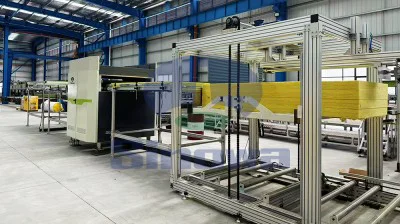
The insulation panel production line is able to continuously and efficiently produce high-quality PU and Phenolic insulation boards.
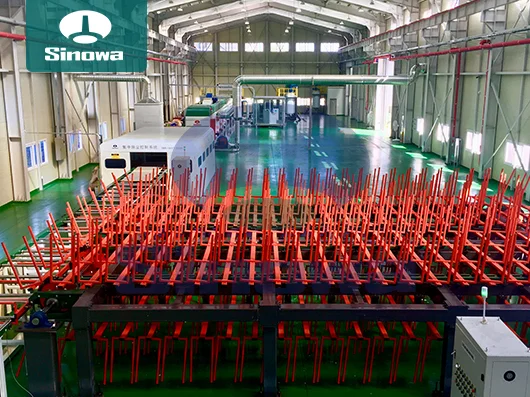
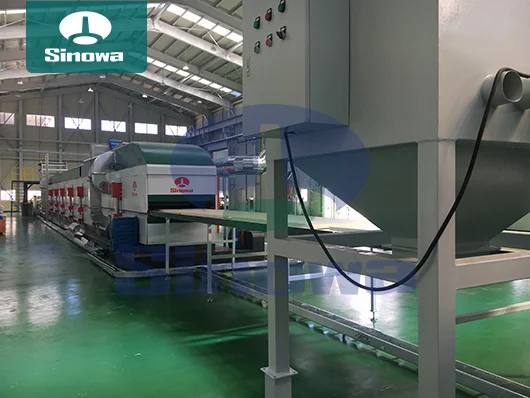
We spare no efforts to improve our product quality and technological reliability by employing the most cutting-edge and the most reliable support and processes to make our products highly reliable and endurable. As a result, the insulation panel production line is highlighted by many perfect qualities. It is the core idea in Sinowa's product roadmap to surpass our competitors in terms of design philosophy, manufacture methods and service level, going for excellence and leading position and making constant improvement on our products and services, which is also our core value system to create efficiency and convenience for our customers.
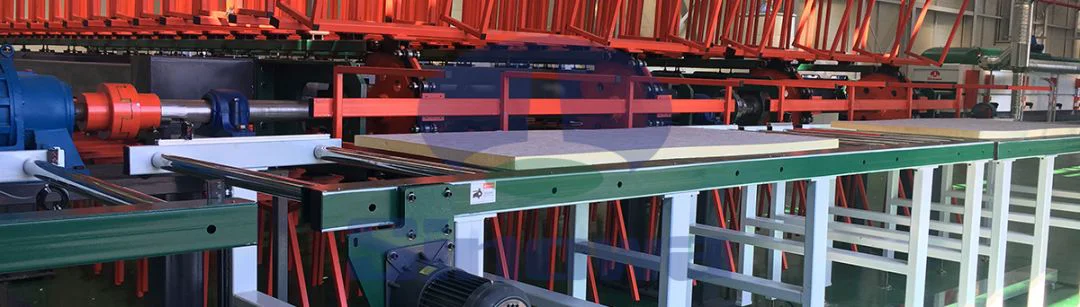
Well-grounded on our solid strength as a renowned large-scale enterprise, Sinowa has a high starting point in developing industrial assembly lines. Based on the advanced science and technology introduced from within and without the country and supported by a great number of first-grade parts and components from the home and aboard, the insulation panel production line has a high-level configuration of supporting products in terms of machinery, electrical control, hydraulic pressure, automatic measurement and tracking, and so on. This is a strong proof of our product’s reliable quality and high efficiency.
The first-class appearance design and excellent energy saving measures make it unnecessary for customers to additionally construct the heat preservation and isolation room for production around the clock throughout the year, so that the customers may save lots of resources and costs.
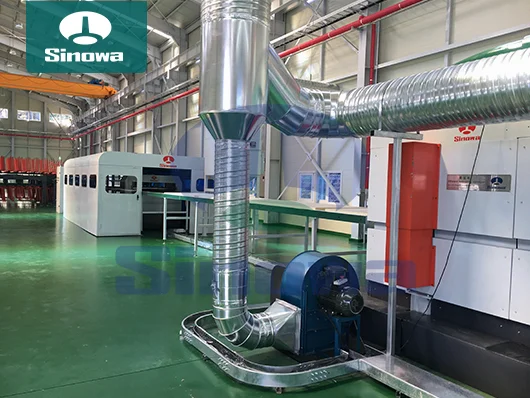
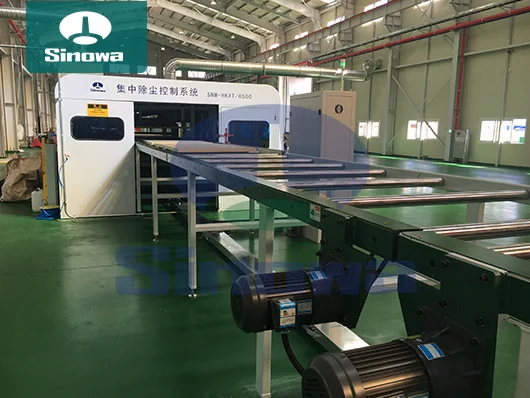
Modularized standard design and important parts machined with CNC machine tool make the insulation panel production line have excellent quality assurance. Dependence on the man-made factors is eliminated. The operation is precision, with the highest operation speed of 30m/min. The insulation panel production line has the world-class production efficiency.
The high performance and reliable multicomponent cyclopentane foaming technology and equipment of Sinowa may be also applied to the foaming process of the phenolic aldehyde board. Therefore, our customers may not only freely adjust the foaming matching according to the raw material, but also save lots of costs. Moreover, they are of significance for environmental protection.
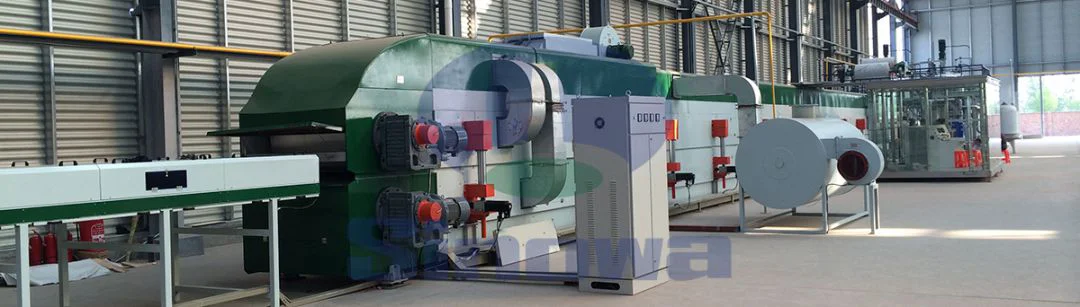
Sinowa's industrial production line of insulation panels is distinguished by its impressive performance of energy conservation. In each high point of energy consumption throughout the entire insulation panel production line are implemented corresponding measures to considerably lower the consumption level. For example, the body of the lamination belt conveyer is covered with insulation panels in very reasonable structures, which doesn’t blemish the overall outlook but greatly increases the insulation performance. The entire insulation panel production line is constantly optimized and improved so that the consumption of each power source is significantly reduced. The motor power of our lamination conveying system is only 3.0 kw, about 50% less than those of the same kind. All in all, the energy consumption of the whole industrial insulation panel production line equals 40% or even less of the equivalent lines in the market.
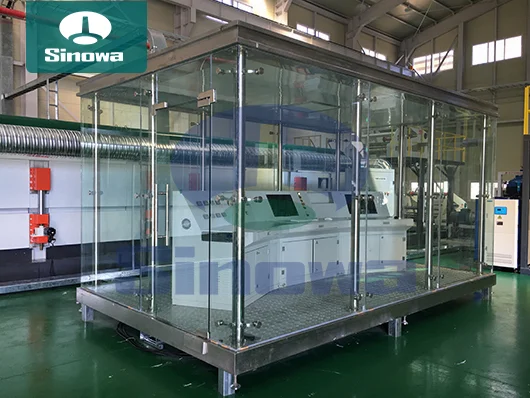
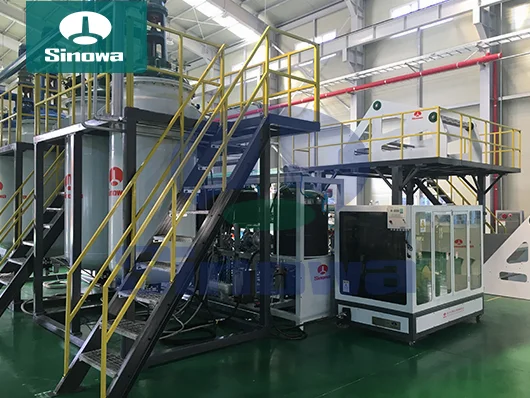
The insulation panel production line of Sinowa adopts the most advanced concepts in the world to realize the modularized design with all the parts bolted together rather than welded. In standardized production, the parts can be dismantled and exchanged, so the production cycle is drastically shortened and the maintenance becomes by far easier. Through finite element analysis, the equipment design is greatly optimized to realize modularization, digitization, and weight-minimalization.
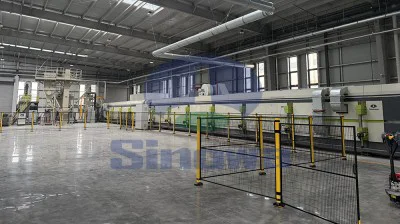
The insulation panel production line is an integrated, automated industrial system dedicated to the mass manufacturing of high-performance thermal insulation panels widely applied in construction, cold chain logistics, industrial manufacturing and energy-saving engineering fields. This streamlined production system integrates raw material processing, composite molding, constant-temperature curing, precision cutting and surface finishing into one continuous workflow, realizing efficient and standardized production of various insulation panel products. Adopting modular mechanical structure and intelligent control technology, the production line can adapt to multiple core insulation materials including polyurethane, polyisocyanurate and rock wool, and flexibly adjust product specifications such as panel thickness and surface styles. By optimizing every production link, the system effectively improves product uniformity and structural stability, while reducing manual intervention and production consumption. As a core equipment system for energy-saving building material production, it lays a solid foundation for the large-scale promotion and application of thermal insulation and energy-saving building materials in modern industrial and civil construction scenarios.
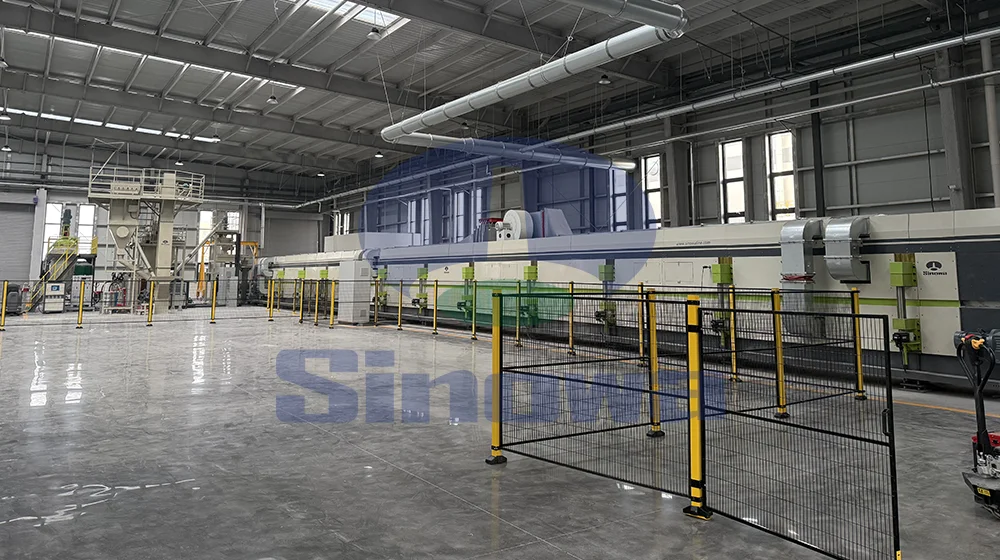
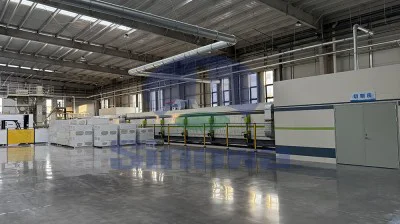
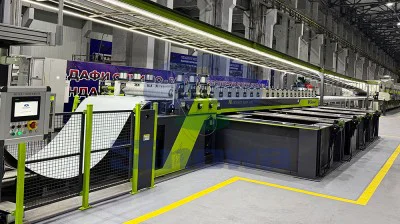
The overall structural design of the insulation panel production line follows the logic of continuous industrial production, with multiple functional modules closely connected and coordinated to form a complete closed-loop production process. Each functional module is independently optimized for mechanical performance and process parameters, ensuring that raw materials can complete orderly processing and transformation without intermittent shutdowns. The front-end module is mainly responsible for raw material storage, sorting and pretreatment, which removes impurities and adjusts the physical state of raw materials to meet subsequent composite processing standards. The middle core modules cover automatic batching, material spraying, surface plate fitting and pressure molding, which are the key links that determine the structural integrity and thermal insulation performance of finished panels. The rear-end modules focus on constant-temperature curing, fixed-size cutting, surface trimming and finished product conveying, realizing final shaping and quality stabilization of panels. The whole line adopts a linear layout with reasonable spatial spacing between equipment units, which not only facilitates daily operation and maintenance but also avoids mutual interference between different production processes, ensuring the stability and continuity of long-term batch production. Meanwhile, the modular design allows for flexible equipment adjustment and function expansion, enabling the production line to adapt to diversified product production demands in different market environments.
Raw material pretreatment is the primary foundational process of the entire insulation panel production line, which directly affects the bonding firmness, surface flatness and overall performance of finished insulation panels. This process mainly includes surface cleaning of metal or non-metal facing materials, raw material drying treatment and quantitative sorting of core insulation materials. For surface facing materials, professional cleaning devices are used to remove dust, oil stains and oxide layers on the surface, eliminating the influence of surface impurities on subsequent bonding processes. The drying treatment controls the moisture content of raw materials within a stable range to prevent bubble generation, delamination and other quality defects caused by excessive moisture during composite molding. For loose core insulation raw materials, automatic sorting and crushing equipment standardizes raw material particle size and fiber uniformity, ensuring consistent material density in each panel product. All pretreatment procedures are completed through automated mechanical equipment, with precise parameter control to avoid manual operation errors. Standardized pretreatment not only improves the qualification rate of subsequent finished products but also extends the service life of insulation panels by enhancing the bonding tightness between core materials and surface facings, laying a reliable foundation for high-quality panel production.
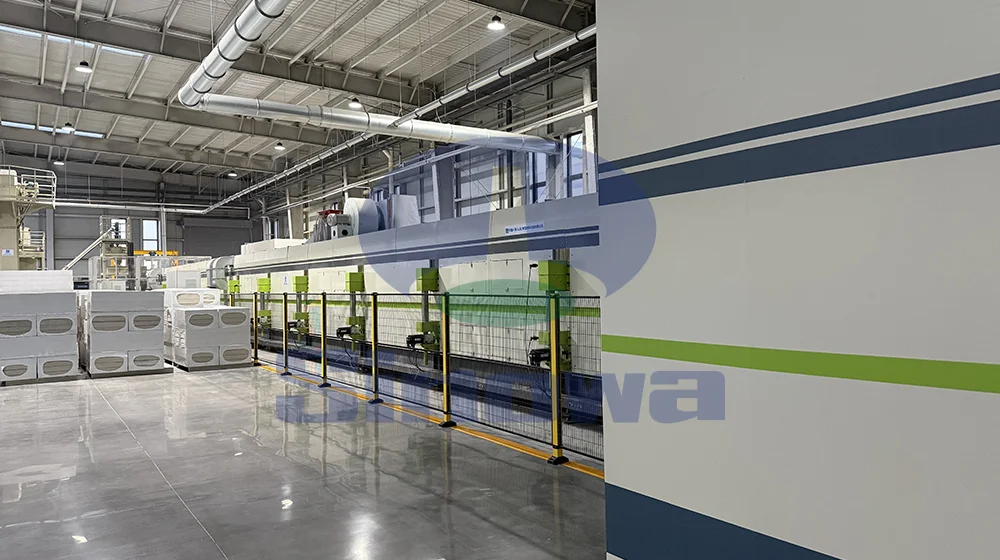
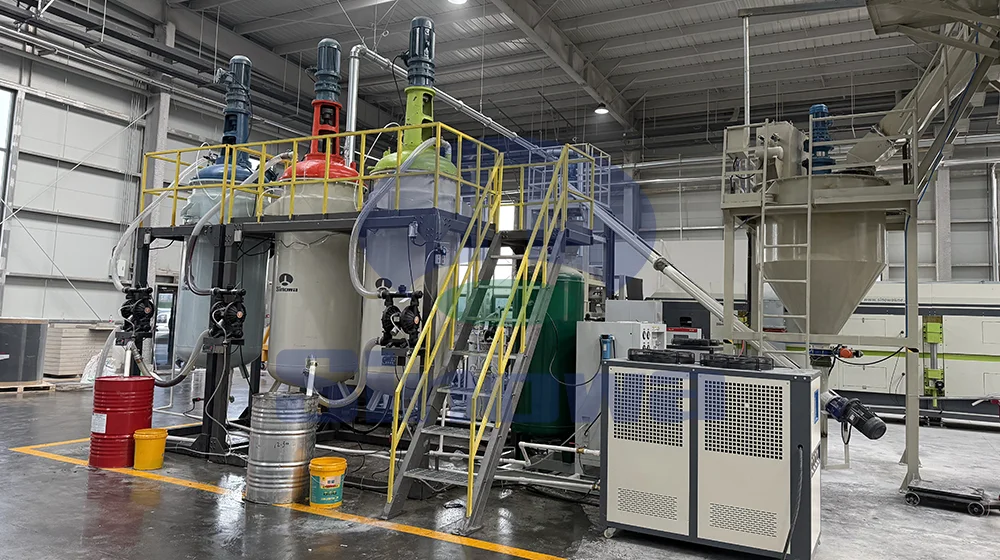
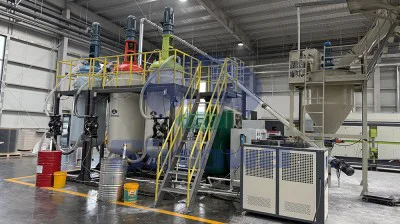
Automatic batching and mixing is a core precision process in the insulation panel production line, specially designed for liquid and powdery insulation core materials. This system adopts intelligent quantitative feeding equipment to realize accurate proportioning of various raw materials according to preset process parameters, effectively avoiding performance differences caused by uneven material ratios. For chemical foaming insulation materials, the equipment completes rapid mixing and uniform stirring of multiple raw materials in a closed environment, ensuring full reaction of raw material components and stable foaming effect. The closed mixing design effectively reduces material volatilization loss and avoids environmental pollution caused by raw material leakage, realizing green and low-consumption production. The system is equipped with real-time parameter monitoring components, which can automatically adjust feeding speed and mixing intensity according to production speed and material state, maintaining the consistency of material performance in continuous production. After uniform mixing, the materials are transported to the molding link through closed pipelines without secondary pollution. The high-precision batching and mixing process ensures that each batch of insulation core materials has stable density, uniform texture and consistent thermal insulation performance, which is the key to guaranteeing the overall quality stability of finished insulation panels.
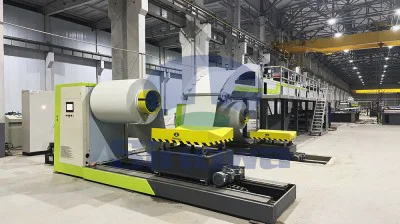
Surface material unwinding and shaping is an essential pre-molding process for insulation panel composite production, responsible for providing flat and standardized surface base materials for subsequent composite processing. The production line is equipped with high-precision automatic unwinding devices, which can stably and continuously release coiled metal sheets or flexible decorative facings at a constant speed. The unwinding system is equipped with tension adjustment components, which can dynamically control the tension of surface materials during operation to avoid material deviation, wrinkling and stretching deformation. After unwinding, the surface materials pass through multi-group leveling and shaping rollers to correct material flatness and eliminate bending deformation generated during coiling and transportation. For surface materials that need edge trimming, the equipment completes precise edge cutting in advance to ensure consistent width of upper and lower surface plates of the panel. The whole process realizes fully automated continuous operation, matching the operating speed of the subsequent composite molding link to avoid production stagnation. Stable surface material shaping ensures the neat appearance and uniform structural size of finished insulation panels, and also provides a flat bonding interface for the composite of core materials and surface materials, effectively improving the overall structural firmness of the panels.
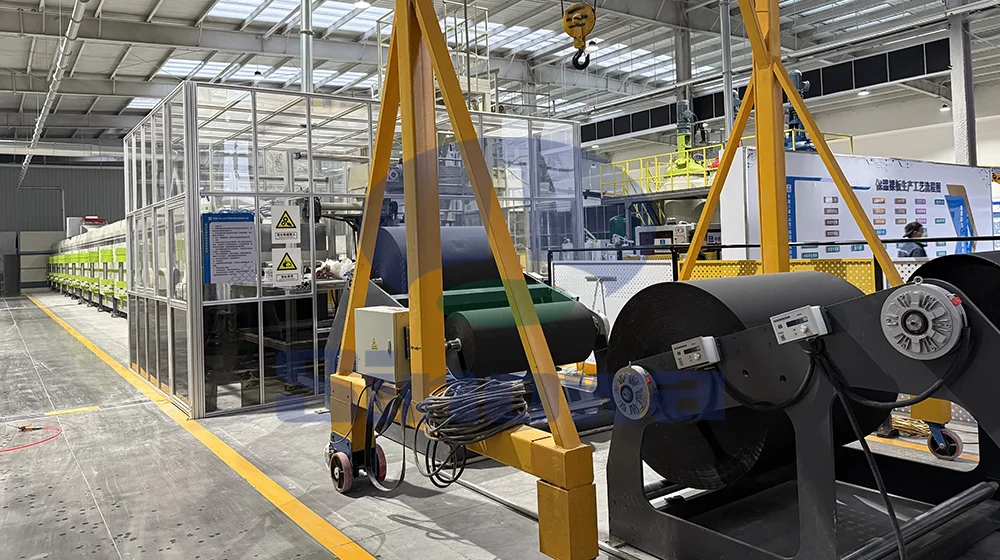
Continuous composite molding is the most critical processing link of the insulation panel production line, determining the core structural performance and dimensional accuracy of insulation panels. This process realizes the tight composite bonding of upper and lower surface materials with intermediate insulation core materials through synchronous mechanical pressure and positioning technology. After the mixed core materials are evenly sprayed or laid between the two layers of surface materials, the composite pressing equipment applies uniform and stable pressure to the whole panel surface. The double-belt conveyor structure adopted by the molding module can maintain consistent pressure in the whole molding area, effectively adapting to the foaming and curing reaction of core materials and preventing local bulging or hollowing of panels. The equipment can flexibly adjust the spacing between upper and lower belts according to the required panel thickness, realizing flexible production of products with different specification thicknesses. In the molding process, the precise positioning system ensures the alignment of upper and lower surface materials, avoiding offset and dislocation. Continuous composite molding realizes one-time integral forming of insulation panels, making the combination of core materials and surface materials more compact and integrated, and significantly improving the structural strength, pressure resistance and overall stability of finished panels.
Constant-temperature curing treatment is a key process to stabilize the physical and chemical performance of insulation panels after composite molding, which is indispensable for improving product durability. The curing module of the production line adopts a closed constant-temperature heating system, which provides a stable temperature environment for the full reaction and shaping of insulation core materials. Different from natural curing, the automated constant-temperature curing system can accurately control the curing temperature and time according to the characteristics of different core materials, ensuring that the internal reaction of insulation materials is fully completed. During the curing process, the internal molecular structure of the foamed or fiber core materials tends to be stable, eliminating residual internal stress generated in the molding process and avoiding later panel deformation, shrinkage or cracking. The closed curing space ensures uniform temperature distribution, making the curing degree of each part of the panel consistent and avoiding local performance differences. Meanwhile, the slow and uniform curing process optimizes the bonding performance between core materials and surface facings, further enhancing the delamination resistance and structural toughness of the panel. Sufficient constant-temperature curing treatment enables the finished insulation panels to maintain stable thermal insulation and mechanical performance in long-term use scenarios.
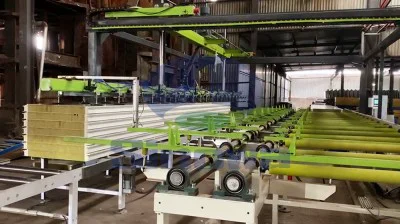
Precision cutting and sizing processing is the post-forming finishing link of the insulation panel production line, responsible for standardizing the appearance size and edge structure of finished panels. After curing and shaping, the continuous long-strip panel materials are transported to the cutting module through the conveying system, and the high-precision cutting equipment completes fixed-length cutting according to preset product size parameters. The cutting system adopts servo positioning technology, which can realize accurate sizing and cutting with tiny dimensional errors, ensuring the consistency of product specifications in batch production. Meanwhile, the equipment is equipped with edge trimming and chamfering functions, which can trim rough edges and burrs generated in the molding process to make the panel edges neat and smooth. For panels that need special edge groove processing, the modular processing equipment can complete one-time groove forming to meet the assembly and connection requirements of on-site construction. The cutting and trimming process maintains the integrity of the panel internal structure without damaging the core insulation layer and surface protective layer. Standardized precision processing makes the finished insulation panels have uniform specifications and beautiful appearance, which is convenient for transportation, stacking and on-site rapid assembly and construction.
Surface finishing and protection treatment is an important process to improve the appearance quality and service durability of insulation panels, further optimizing the comprehensive performance of finished products. After cutting and sizing, the surface of the panels will undergo fine finishing treatment, including surface dust removal, defect inspection and partial repair. The automated dust removal device thoroughly cleans the surface and edge dust and debris generated by cutting, ensuring the cleanliness of the panel surface. For minor surface scratches and indentations generated in the production process, targeted repair treatment is carried out to restore the flat and smooth surface state of the panels. Subsequently, some products will undergo surface protection treatment, such as attaching protective films or carrying out anti-corrosion and anti-oxidation treatment on metal surfaces. These treatments can effectively isolate the erosion of external dust, moisture and corrosive substances, prevent surface oxidation, fading and scratch damage during transportation, storage and use, and extend the service life of insulation panels. The surface finishing process does not change the core thermal insulation and mechanical properties of the panels, but greatly improves the product appearance grade and environmental adaptability, making the panels suitable for various complex construction and use scenarios.
Finished product conveying, sorting and stacking is the final link of the insulation panel production line, realizing automated collection and standardized storage of finished products. After finishing treatment, qualified insulation panels are stably transported to the sorting area through the intelligent conveying system. The production line is equipped with automatic detection and sorting components, which can preliminarily screen products with unqualified size, surface defects and abnormal structures, realizing automatic separation of qualified products and defective products. Qualified finished panels are transported to the stacking platform, and the automated stacking equipment completes orderly layered stacking according to fixed specifications, ensuring neat stacking and stable placement of panels. The stacking system can adjust the stacking quantity and arrangement mode according to product specifications and transportation requirements, avoiding extrusion and collision damage between panels. The whole finished product processing link realizes unmanned automated operation, which greatly improves the efficiency of finished product collection and packaging, reduces manual handling errors and product damage rates. Standardized finished product sorting and stacking facilitates subsequent centralized packaging, warehousing and transportation, and improves the overall operational efficiency of the entire production line.
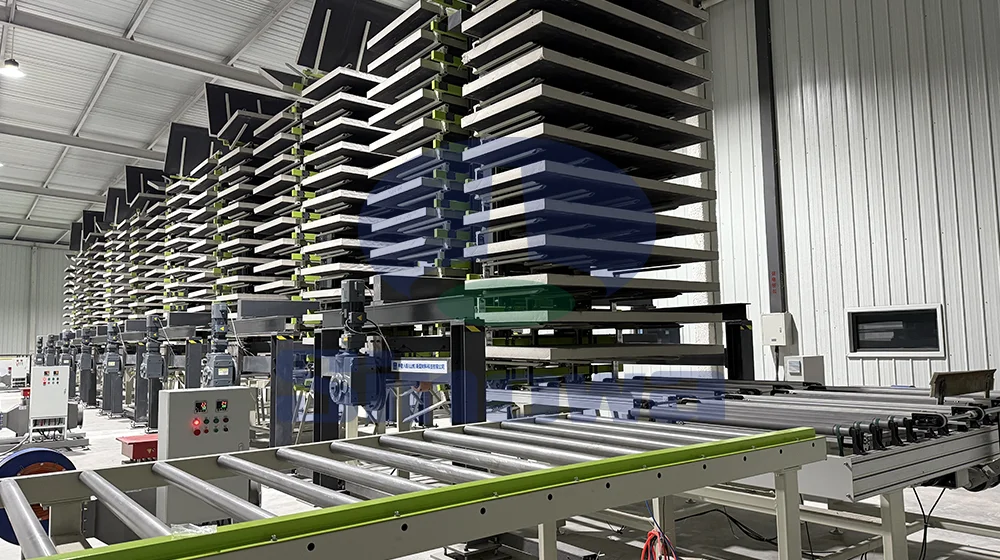
Intelligent control and operation management system is the core brain of the entire insulation panel production line, realizing unified scheduling and precise control of all production links. The system adopts integrated intelligent control technology, which can centrally manage and adjust the operating parameters of feeding, batching, molding, curing, cutting and other equipment modules. Operators can set production specifications, adjust operating speed and monitor real-time production status through the centralized control terminal. The system is equipped with real-time data monitoring and fault self-diagnosis functions, which can automatically collect production data such as equipment operating status, product output and process parameters, and timely alarm and locate abnormal faults such as equipment stalling and parameter deviation. The automatic parameter adjustment function can dynamically optimize the production process according to raw material changes and production load, maintaining the stability of product quality. In addition, the system supports production data statistics and storage, which is convenient for production management, process optimization and quality traceability. The intelligent control system simplifies the production operation process, reduces the dependence on skilled workers, and effectively improves the automation level, production stability and comprehensive production efficiency of the insulation panel production line.
Performance optimization and production upgrade potential endows the insulation panel production line with long-term application value and market adaptability in the evolving building energy-saving industry. With the continuous upgrading of energy-saving building requirements, the production line can realize functional upgrading and process optimization through modular equipment adjustment and parameter iteration. By optimizing the foaming and curing process parameters of core materials, the thermal insulation performance, fire resistance and weather resistance of finished panels can be further improved to adapt to higher-standard building energy-saving and safety requirements. The production line can also match new environmental-friendly raw materials through adjusting the batching and molding process, realizing the production of low-carbon and green insulation panel products and meeting the development trend of green construction. In terms of production efficiency, the continuous production mode can further optimize the production cycle by improving equipment linkage speed and reducing intermediate waiting time, realizing higher-efficiency batch production. Meanwhile, the optimized mechanical structure reduces equipment wear and energy consumption in the production process, realizing energy-saving and low-consumption production. The strong optimization and upgrade potential enables the insulation panel production line to always adapt to market demand changes and industry technological progress, maintaining stable production capacity and product competitiveness in long-term industrial application.
« Insulation Panel Production Line » Update Date: 2026/8/28
URL: https://www.sinowamachine.com/tags/insulation-panel-production-line.html
![Rock Wool Insulation Panel Production Line Manufacturer]()
Rock Wool Insulation Panel Production Line Manufacturer
2026-09-21Rock wool insulation panel production lines are advanced integrated industrial systems dedicated to the automated and continuous manufacturing of high-performance inorganic insulation panels, serving as core equipment for the energy-saving building materials industry. These professional production sy…![Cheap Phenolic Insulation Panel Production Line]()
Cheap Phenolic Insulation Panel Production Line
2026-09-03The cheap phenolic insulation panel production line is a cost-effective, fully automated manufacturing system designed for mass production of high-performance thermal insulation panels suitable for diverse construction and industrial insulation scenarios. Optimized for small and medium-scale producti…![Phenolic Insulation Panel Production Line Manufacturer]()
Phenolic Insulation Panel Production Line Manufacturer
2026-09-01Phenolic insulation panel production lines represent advanced integrated manufacturing systems tailored for the mass production of high-performance phenolic foam insulation panels, which are widely favored in modern construction, industrial insulation, and HVAC engineering fields. This automated prod…![Continuous PU Phenolic Insulation Panel Production Line]()
Continuous PU Phenolic Insulation Panel Production Line
2026-08-29The continuous PU phenolic insulation panel production line is a highly integrated and automated manufacturing system designed for efficient and stable production of high-performance thermal insulation composite panels. This advanced production equipment integrates precision raw material metering, hi…![Rock Wool Insulation Panel Production Line]()
Rock Wool Insulation Panel Production Line
2026-08-28Rock wool insulation panel production line is a fully integrated and continuous industrial manufacturing system designed to convert natural rock-based raw materials into high-performance thermal and acoustic insulation panels. This automated production system covers all core processing procedures fro…![Highly Intelligent Phenolic Insulation Panel Production Line]()
Highly Intelligent Phenolic Insulation Panel Production Line
2026-08-28The highly intelligent phenolic insulation panel production line represents an advanced integrated manufacturing system tailored for the efficient and precise production of high-performance thermal insulation panels. Optimized for modern industrial manufacturing demands, this automated production sys…![High Efficiency Phenolic Insulation Panel Production Line]()
High Efficiency Phenolic Insulation Panel Production Line
2026-08-18The high efficiency phenolic insulation panel production line is an advanced automated manufacturing system tailored for the mass production of high-performance thermal and fire-insulating phenolic panels, integrating chemical foaming, constant-temperature curing, precise forming and intelligent cont…![Phenolic Insulation Panel Production Line]()
Phenolic Insulation Panel Production Line
2026-08-17The phenolic insulation panel production line is a sophisticated, fully automated industrial system designed for the continuous manufacturing of high-performance phenolic foam insulation panels, widely applied in building thermal insulation, ventilation duct systems, and industrial energy-saving proj…![Exterior Wall Insulation Panel Production Line Supplier]()
Exterior Wall Insulation Panel Production Line Supplier
2026-08-12The exterior wall insulation panel production line stands as a core automated manufacturing system dedicated to producing high-performance building insulation panels tailored for modern architectural exterior enclosure systems. As sustainable construction concepts gain global popularity, the demand f…![PU Insulation Panel Production Line]()
PU Insulation Panel Production Line
2026-08-12PU insulation panel production line is a highly automated and integrated manufacturing system designed for the continuous and efficient production of polyurethane insulation sandwich panels, which are indispensable composite materials in modern energy-saving construction, cold chain storage, industri…![Mineral Wool External Wall Insulation Panel Production Line]()
Mineral Wool External Wall Insulation Panel Production Line
2026-05-08The advancement of modern architectural construction has continuously raised demands for building envelope materials, especially for external wall components that undertake thermal regulation, structural protection, and environmental adaptation tasks. Mineral wool external wall insulation panels have…![PIR Insulation Panel Production Line]()
PIR Insulation Panel Production Line
2026-04-16Polyisocyanurate (PIR) insulation panels have become an indispensable material in modern construction, cold chain logistics, and industrial fields due to their excellent thermal insulation, fire resistance, and lightweight properties. The production of high-quality PIR insulation panels relies heavil…![Polyurethane Insulation Panel Production Line]()
Polyurethane Insulation Panel Production Line
2026-03-24The polyurethane insulation panel production line stands as a highly integrated, automated manufacturing system designed to produce rigid and composite polyurethane foam panels, which have become indispensable in modern construction, cold chain logistics, industrial insulation and various energy-savi…![External Wall Insulation Panel Production Line]()
External Wall Insulation Panel Production Line
2026-02-24In the context of global emphasis on energy conservation, environmental protection and green building development, external wall insulation technology has become an indispensable part of modern architectural engineering. As the core equipment for mass production of high-quality external wall insulati…![Exterior Wall Insulation Panel Production Line]()
Exterior Wall Insulation Panel Production Line
2026-01-16In the context of global emphasis on energy conservation and environmental protection, the construction industry is undergoing a profound transformation towards sustainability, and exterior wall insulation panels have emerged as a crucial material in this process, playing an indispensable role in imp…
- Links:
- Sandwich Panel Continuous Production Line
- Automatic and Continuous Sandwich Panel Production Line
- Cheap and Low Price Sandwich Panel Production Line
- China Sandwich Panel Production Line Factory
- Color Steel Sandwich Panel Production Line For Cold Storage
- Continuous Composite Foam Sandwich Panel Production Line
- Continuous Production Line For Rockwool and Mineral Wool Sandwich Panels
- Continuous PU Phenolic Insulation Panel Production Line
- Continuous PU PIR Sandwich Panel Production Line
- Continuous PUF PUR Sandwich Panel Production Line
- Continuous Sandwich Panel Production Line For Roof and Wall
- Customized and Design Sandwich Panel Production Line
- Decorative Sandwich Panel Production Line For Glass Wool Boards
- High Quality Sandwich Panel Production Line For Sale
- Polyurethane(PU) Sandwich Panel Production Line
- Sandwich Panel Production Line Manufacturer and Supplier
- Sandwich Panel Production Machinery and Equipment