
Discontinuous PU Sandwich Panel Production Line
Sinowa is a discontinuous pu sandwich panel production line supplier from china, customized high-quality & high efficiency discontinuous pu sandwich panel production line at low price, the adoption of system integration technology and bus control technology accomplishes the full automatization of integrated and coordinated control of the discontinuous pu sandwich panel production line with accessible remote interactive communication. Ranking the first-class level in the world, it is currently the discontinuous pu sandwich panel production line in the market taking a comprehensive lead in high performance.
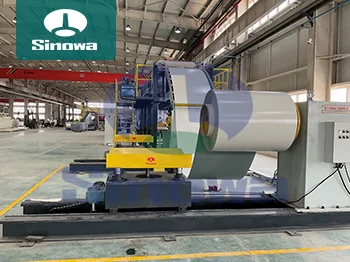
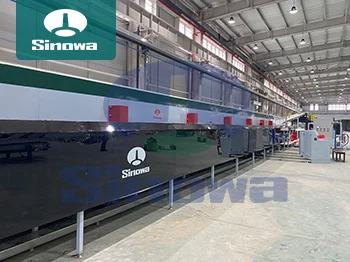
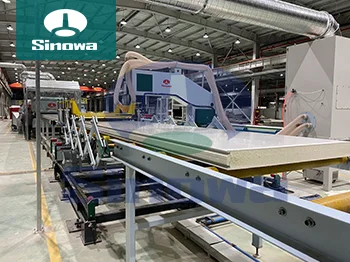
The high-tech discontinuous pu sandwich panel production line can meet a variety of production needs of customers, the whole discontinuous pu sandwich panel production line design concept of modularization enables all our components to be integrated and combined at will. Our high efficiency discontinuous pu sandwich panel production line can easily automate the production of roof sandwich panel, wall sandwich panel, cold storage sandwich panel and other products by different combination and configuration selection and siple switching. The inner core layer can be polyrethane or rock wool, glass wool, an so on.


The high precision discontinuous pu sandwich panel production line has high adaptability, which may produce various sandwich panel of the PU, PIR and rock wool systems. We may design various products according to the customer’s requirements, including various configurations, so as to meet their demands with flexible price system. Highly integrated and linked control system centralizes all control points at the main central center, achieving parameter linkage, fault self-diagnosis controlled by the whole line and shipping distance control. High-level automatic control system also saves the manpower and reduces the manpower loss for customers.


The precision servo hoisting mechanism employed by the main engine without hydraulic system makes the board thickness control flexible and the customer may conveniently change or adjust the board thickness. There will be not such troubles as hydraulic system adjustment, leakage, maintenance, etc.


High-level energy saving and protection design makes the whole discontinuous pu sandwich panel production line possible to produce around the clock throughout the year and the customer will save huge budget. In addition, the isolated heat preservation room is constructed for warming the environment. The energy saving and protection design of our manufacturing line may guarantee that the customer’s production line may be freely heated and produce in the main time to save more costs for customers.


The high-power low-consumption design quickens the reaction of the cheap discontinuous pu sandwich panel production line while energy consumption is kept low. With the brand-new, fully sealed inner insulation design, the energy consumption is controlled at the minimum level to achieve the design objective of less than an hour for the insulation system to be activated from the room temperature above 5℃ to the production process temperature. The energy consumption is only 40% that of those similar products.
The discontinuous polyurethane (PU) sandwich panel production line stands as a cornerstone of modern industrial and construction manufacturing, bridging the gap between flexible small-batch production and high-performance insulated panel output. Unlike continuous production lines that operate in a nonstop, streamlined flow for mass standardized products, this discontinuous system adopts a batch-wise processing model, making it uniquely adaptable to diverse production demands, custom specifications, and variable output scales. It has carved out a critical niche in the global building materials and cold chain infrastructure sectors, thanks to its balanced blend of structural stability, performance reliability, and operational versatility. To fully grasp its value, it is essential to dissect its core structural composition, inherent performance attributes, the range of panel varieties it can manufacture, and the wide-ranging practical applications that define its industrial relevance.
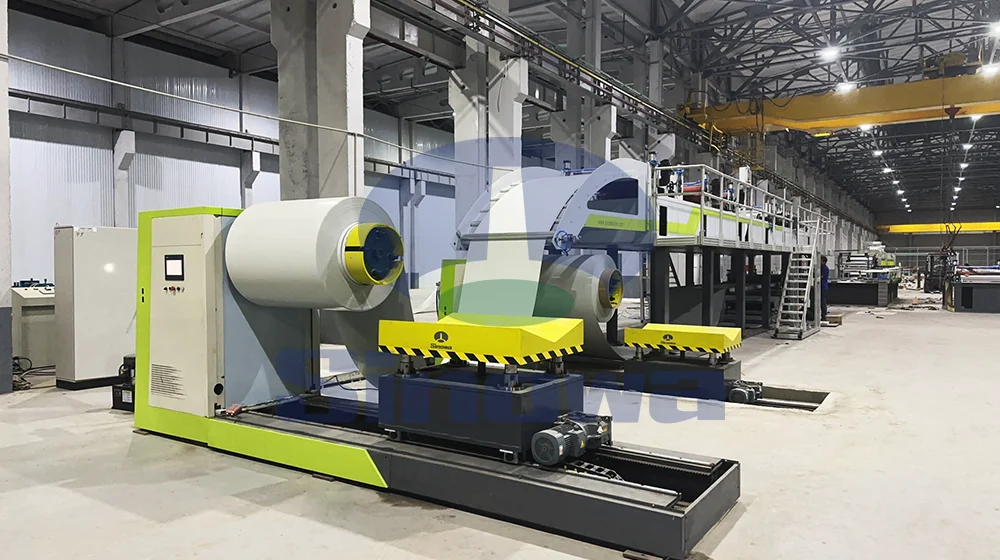
At its core, the discontinuous PU sandwich panel production line is a modular, integrated mechanical system engineered to bond outer facing sheets with a rigid PU foam core through controlled foaming, pressing, and curing processes. Every component is designed to work in tandem to ensure consistent panel quality, even with frequent adjustments to dimensions, core density, or facing materials. The foundational structure begins with the material handling and preparation station, which includes dedicated racks for storing and feeding outer facing materials, typically metal sheets such as steel or aluminum, though non-metallic options can also be accommodated with minor configuration tweaks. This station is equipped with precision leveling and cleaning mechanisms to remove surface contaminants, dust, or minor deformations, as a smooth, uniform facing surface is paramount for strong adhesion between the metal skin and the PU foam core. Following this, the mold positioning and clamping system takes center stage; unlike continuous lines that use moving belts, discontinuous lines rely on fixed or semi-mobile mold frames that can be adjusted to accommodate varying panel thicknesses, widths, and lengths. These molds are engineered with tight tolerance levels to prevent foam leakage during the injection phase and to maintain consistent panel dimensions across every batch.
The heart of the production line lies in the high-pressure PU foaming and injection system, a precision-engineered unit that mixes polyol and isocyanate raw materials in exact ratios to create the expanding foam that forms the panel’s core. This system features temperature and pressure control modules to regulate the foaming reaction, ensuring the foam expands evenly without creating voids, weak spots, or uneven density throughout the panel. After injection, the mold is transferred to the hydraulic pressing station, which applies uniform, controlled pressure across the entire panel surface. The press is designed with heavy-duty structural framing to withstand repeated clamping forces, preventing warping or distortion of the outer facing sheets and compressing the foam to the desired thickness while promoting optimal bonding between the core and the skins. Integrated heating elements within the press plates accelerate the curing process, reducing the time required for the PU foam to fully harden and develop its structural integrity; this temperature control is fully adjustable to match different foam formulations and panel thicknesses, ensuring consistent curing results batch after batch. Once the curing cycle is complete, the mold opens automatically, and the finished panel is transferred to the cooling and finishing station, where it is allowed to stabilize at ambient temperature before undergoing minor trimming, edge processing, or surface protection application. The entire line is overseen by a centralized electrical control system, which automates sequential operations, monitors key parameters like pressure, temperature, and foaming time, and allows operators to adjust settings quickly for different production runs, minimizing manual intervention and human error while maximizing operational consistency.
The structural performance of the discontinuous PU sandwich panel production line is a defining feature that sets it apart from alternative manufacturing systems, directly translating to the quality and durability of the finished panels. One of the most prominent performance advantages is its exceptional dimensional stability and precision. The fixed mold design and uniform hydraulic pressing eliminate the slight variations in thickness and width that can occur in continuous lines during high-speed production, making it ideal for manufacturing panels that require tight fitting for specialized applications. The controlled foaming and curing process ensures that the PU core has a uniform density distribution throughout the panel, eliminating weak zones that could compromise structural strength or thermal insulation efficiency. This uniform density also enhances the panel’s load-bearing capacity, allowing finished panels to withstand static loads from roofing installations, dynamic loads from environmental factors like wind and snow, and impact resistance for high-traffic industrial environments. Structurally, the production line itself is built with heavy-gauge steel framing and reinforced components, enabling long-term continuous operation with minimal wear and tear; it can withstand the repetitive stress of hydraulic pressing and mold movement without losing calibration, ensuring consistent performance over years of use.
Thermal performance consistency is another critical performance metric of the line, as PU foam is primarily valued for its superior insulating properties. The discontinuous production process allows for precise control over foam density and cell structure, which directly impacts thermal conductivity. By fine-tuning the mixing ratio, injection pressure, and curing temperature, manufacturers can produce panels with optimized thermal resistance, making them highly effective at reducing heat transfer in both cold and warm environments. Additionally, the strong adhesive bond between the outer facing sheets and the PU core, facilitated by the controlled pressing and curing phases, prevents delamination over time—a common issue that can degrade both structural and thermal performance. This bond also enhances the panel’s overall rigidity, allowing it to maintain its shape even under mechanical stress or temperature fluctuations. The line also offers strong performance flexibility: it can operate efficiently at low to medium production volumes, making it suitable for small and medium-sized manufacturing facilities that cannot justify the high upfront investment of a continuous line. It can quickly switch between different panel specifications without lengthy reconfiguration, reducing downtime between batches and improving overall production efficiency. Unlike continuous lines that are optimized for mass production of identical panels, the discontinuous system excels at handling variable order sizes, custom dimensions, and specialized panel modifications, aligning perfectly with the diverse needs of modern construction and industrial clients.
Beyond the production line’s own structural and performance traits, its true versatility shines through in the wide range of PU sandwich panel varieties it can produce, each tailored to specific functional requirements and environmental conditions. The most basic classification of these panels is based on core density, which ranges from low-density lightweight panels for non-load-bearing applications to high-density rigid panels for structural and load-bearing uses. Low-density PU panels are lightweight, easy to transport and install, and ideal for interior partitions, cladding, and temporary structures where weight reduction is a priority. High-density panels offer enhanced compressive strength and durability, suitable for roofing, exterior wall systems, and applications that require superior structural support. Another key classification is based on panel thickness, which can be adjusted seamlessly on the discontinuous line from thin profiles for interior insulation to thick profiles for extreme temperature control. Thinner panels, typically ranging from 30mm to 80mm, are commonly used for interior wall partitions, office dividers, and light industrial cladding, while thicker panels, ranging from 100mm to 250mm or more, are engineered for cold storage, refrigeration facilities, and industrial buildings that require maximum thermal insulation.
Panels can also be categorized by the type of outer facing material, with the discontinuous line capable of processing multiple facing options without major modifications. Galvanized steel is the most widely used facing, offering corrosion resistance, durability, and cost-effectiveness for general industrial and construction use; painted or coated steel sheets add an extra layer of weather resistance and aesthetic flexibility for commercial and residential applications. Aluminum-faced panels are lighter than steel, highly corrosion-resistant, and ideal for marine environments, food processing facilities, or projects where weight savings are critical. In some cases, non-metallic facings such as fiberglass-reinforced plastic can be used for specialized applications requiring chemical resistance or non-conductive properties. Additionally, the line can produce modified PU panels with enhanced performance features, such as fire-retardant formulations that slow flame spread and reduce smoke emission, making them suitable for public buildings, industrial facilities, and areas with strict fire safety requirements. Acoustic-insulated PU panels are another variety, designed with modified foam cell structures to absorb sound waves, ideal for office buildings, manufacturing plants, and residential structures near high-noise areas. These varied panel types are all produced on the same discontinuous line with simple adjustments to raw materials, mold settings, and production parameters, highlighting the system’s unparalleled adaptability.
The applications of PU sandwich panels produced via discontinuous production lines span across nearly every sector of modern construction, industrial infrastructure, and cold chain logistics, driven by their unique combination of thermal insulation, structural strength, lightweight design, and installation efficiency. In the construction industry, these panels are a staple for both residential and commercial building projects, used extensively for exterior wall cladding, roofing systems, and interior partition walls. Their lightweight nature reduces the overall structural load on buildings, lowering foundation and framing costs, while their thermal insulation properties reduce energy consumption for heating and cooling, making buildings more energy-efficient and sustainable. For prefabricated and modular construction, PU sandwich panels are the material of choice, as they can be cut to exact dimensions, quickly assembled on-site, and reduce construction time significantly compared to traditional building materials. Modular offices, portable cabins, temporary housing units, and prefabricated commercial structures all rely heavily on panels produced by discontinuous lines, thanks to the ability to manufacture custom sizes and small batches efficiently.
The cold chain and refrigeration sector represents one of the largest and most critical applications for these panels, as PU’s exceptional thermal insulation properties make it indispensable for maintaining consistent low temperatures. Cold storage warehouses, refrigerated transport containers, walk-in freezers, cool rooms for food and beverage processing, pharmaceutical storage facilities, and floral distribution centers all depend on high-performance PU sandwich panels to prevent temperature fluctuations, preserve product quality, and reduce energy costs for refrigeration equipment. The tight, gap-free construction of panels made on discontinuous lines eliminates air leakage, a major factor in energy loss for cold storage facilities, ensuring optimal thermal efficiency and compliance with strict temperature control standards for perishable goods and sensitive pharmaceuticals. In industrial settings, the panels are used for factory wall and roof systems, equipment enclosures, cleanroom partitions, and temperature-controlled manufacturing zones. Cleanrooms in the pharmaceutical, electronics, and food processing industries rely on the smooth, non-porous surface of PU sandwich panels to maintain hygiene standards, prevent dust accumulation, and support easy cleaning and sanitization.
Additional applications extend to agricultural infrastructure, including livestock housing, greenhouse insulation, and grain storage facilities, where the panels help regulate internal temperatures, protect crops and livestock from extreme weather, and improve overall agricultural efficiency. In the logistics and warehousing sector, large-scale distribution centers, shipping yards, and storage facilities use PU sandwich panel roofing and wall systems to create durable, weather-resistant, and energy-efficient storage spaces that can withstand heavy use and harsh environmental conditions. The panels are also used in renovation and retrofitting projects for existing buildings, offering a cost-effective way to upgrade thermal insulation, improve structural integrity, and enhance aesthetic appeal without extensive demolition or reconstruction. This wide-ranging applicability is directly tied to the flexibility of the discontinuous production line, which can produce the exact panel specifications needed for each unique project, from small custom orders for residential renovations to large batch runs for industrial cold storage facilities.
In summary, the discontinuous PU sandwich panel production line is a masterfully engineered system that balances structural robustness, performance consistency, and operational flexibility to meet the evolving demands of the global manufacturing and construction industries. Its modular structural design, precision control systems, and durable components enable it to produce high-quality PU sandwich panels with consistent dimensional accuracy, uniform core density, and reliable thermal and structural performance. Unlike continuous production alternatives, it thrives in environments where custom specifications, variable batch sizes, and quick production adjustments are required, making it accessible to manufacturers of all scales. The diverse range of panel varieties it can produce—from lightweight interior partitions to heavy-duty cold storage panels, fire-retardant modules to acoustic-insulated boards—ensures its relevance across countless applications, from commercial construction and industrial infrastructure to cold chain logistics and agricultural projects. As the demand for energy-efficient, sustainable, and versatile building materials continues to rise globally, the discontinuous PU sandwich panel production line will remain a vital asset, driving innovation in panel manufacturing and supporting the development of durable, cost-effective, and environmentally conscious infrastructure across every corner of the industry. Its ability to adapt to changing market needs, produce high-performance custom products, and deliver consistent quality without the constraints of mass production solidifies its position as an indispensable technology in modern industrial manufacturing.
« Discontinuous PU Sandwich Panel Production Line » Update Date: 2026/3/24
URL: https://www.sinowamachine.com/tags/discontinuous-pu-sandwich-panel-production-line.html