
Rockwool Roof Panels Making Machine
Sinowa is a rockwool roof panels making machine supplier from china, customized high-quality & high efficiency rockwool roof panels making machine at low price, the adoption of system integration technology and bus control technology accomplishes the full automatization of integrated and coordinated control of the rockwool roof panels making machine with accessible remote interactive communication. Ranking the first-class level in the world, it is currently the rockwool roof panels making machine in the market taking a comprehensive lead in high performance.
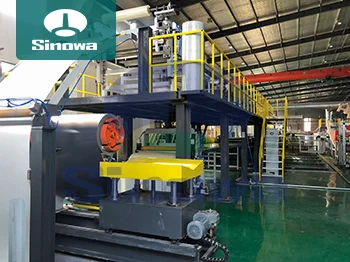
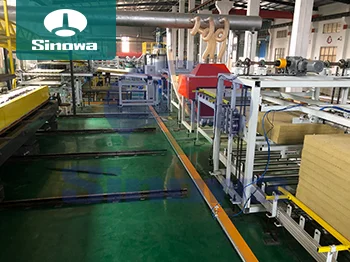
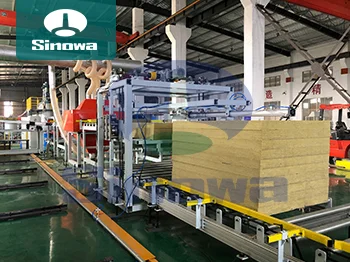
The high-tech rockwool roof panels making machine can meet a variety of production needs of customers, the whole rockwool roof panels making machine design concept of modularization enables all our components to be integrated and combined at will. Our high efficiency rockwool roof panels making machine can easily automate the production of roof sandwich panel, wall sandwich panel, cold storage sandwich panel and other products by different combination and configuration selection and siple switching. The inner core layer can be polyrethane or rock wool, glass wool, an so on. The precision servo hoisting mechanism employed by the main engine without hydraulic system makes the board thickness control flexible and the customer may conveniently change or adjust the board thickness. There will be not such troubles as hydraulic system adjustment, leakage, maintenance, etc.
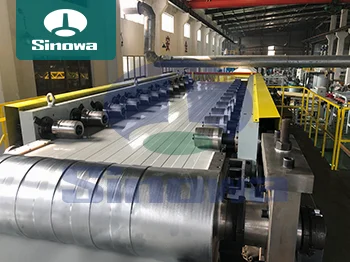
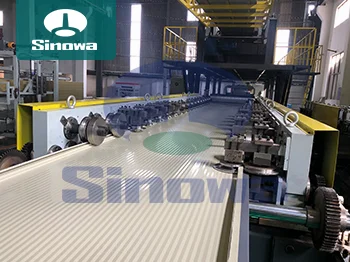
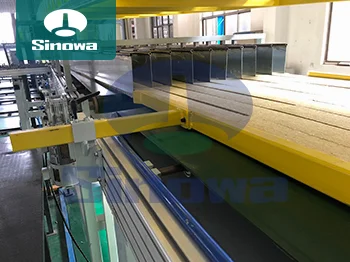
The high precision rockwool roof panels making machine has high adaptability, which may produce various sandwich panel of the PU, PIR and rock wool systems. We may design various products according to the customer’s requirements, including various configurations, so as to meet their demands with flexible price system. Highly integrated and linked control system centralizes all control points at the main central center, achieving parameter linkage, fault self-diagnosis controlled by the whole line and shipping distance control. High-level automatic control system also saves the manpower and reduces the manpower loss for customers. High-level energy saving and protection design makes the whole rockwool roof panels making machine possible to produce around the clock throughout the year and the customer will save huge budget. In addition, the isolated heat preservation room is constructed for warming the environment. The energy saving and protection design of our manufacturing line may guarantee that the customer’s production line may be freely heated and produce in the main time to save more costs for customers.
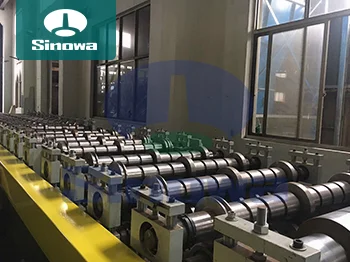
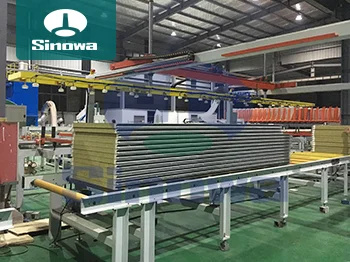
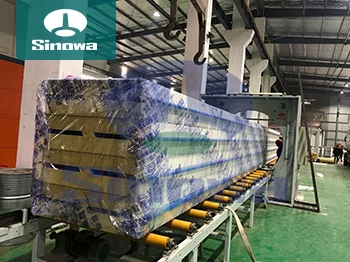
The high-power low-consumption design quickens the reaction of the cheap rockwool roof panels making machine while energy consumption is kept low. With the brand-new, fully sealed inner insulation design, the energy consumption is controlled at the minimum level to achieve the design objective of less than an hour for the insulation system to be activated from the room temperature above 5℃ to the production process temperature. The energy consumption is only 40% that of those similar products.
In the modern construction industry, the demand for energy-efficient, fire-resistant and durable building materials has been on a steady rise, driving the continuous innovation and advancement of manufacturing equipment. Among these essential materials, rockwool roof panels stand out due to their exceptional thermal insulation, sound absorption, and fireproof properties, making them a preferred choice for various residential, commercial, and industrial roofing projects. Behind the mass production of high-quality rockwool roof panels lies a sophisticated and integrated piece of equipment: the rockwool roof panels making machine. This equipment combines mechanical engineering, electrical control, and material science to transform raw materials into finished panels with precise specifications, playing a pivotal role in the construction supply chain.
The rockwool roof panels making machine is a complex system composed of multiple coordinated modules, each designed to perform specific functions in the production workflow. Unlike simple manufacturing equipment, it operates as a continuous and automated line, ensuring that each stage of production is seamlessly connected to maintain efficiency and consistency. The core of the machine lies in its ability to handle raw materials of varying properties, process them through a series of physical and chemical transformations, and finally shape them into roof panels that meet strict quality standards. From raw material feeding to the final packaging of finished products, every step is controlled by advanced electrical systems, which reduce human intervention and minimize the risk of errors. This high level of automation not only improves production efficiency but also ensures that each panel has uniform dimensions, density, and performance, which is essential for the reliability of roofing structures.
The production process of rockwool roof panels using these machines begins with the preparation and handling of raw materials. The primary raw materials for rockwool include natural rock ores such as basalt, blast furnace slag, and dolomite, which are known for their high melting points and excellent fibrous properties when processed. Before entering the machine, these raw materials need to be dried to remove moisture, which could affect the melting process and the quality of the final fibers. The dried raw materials are then transported to storage silos, from which they are automatically weighed by a weighing belt and fed into the melting furnace in a quantitative and uniform manner. This precise feeding mechanism ensures that the melting furnace operates at a stable load, preventing fluctuations in temperature that could compromise the quality of the molten material. The use of quantitative feeding also helps in optimizing raw material usage, reducing waste and improving the overall cost-effectiveness of the production process.
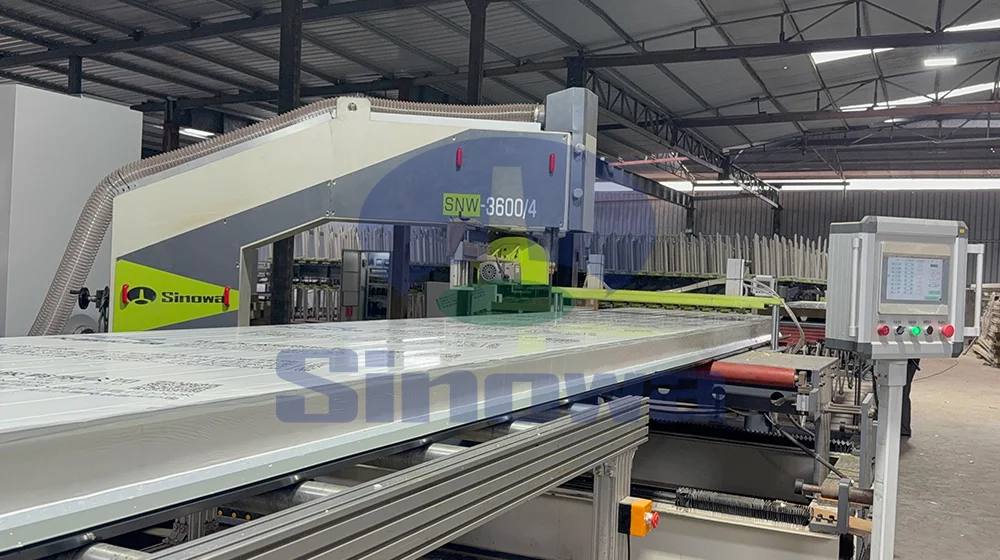
The melting stage is a critical part of the production process, as it directly influences the quality of the rockwool fibers. The melting furnace, which is typically constructed using high-temperature-resistant refractory materials, uses energy sources such as natural gas to heat the raw materials to temperatures above 1500 degrees Celsius, converting them into a homogeneous molten mass. Some advanced machines are equipped with a hot air system that preheats the air using the furnace's own residual heat, enhancing energy efficiency. The furnace is also fitted with a cooling water circulation system to ensure the safety of the equipment and prevent overheating. Once the raw materials are fully melted, the molten mass is guided through a flow channel to a high-speed centrifuge, which is the key component responsible for fiber formation. The centrifuge, often a four-roll design, rotates at extremely high speeds, and under the combined effect of centrifugal force and high-velocity airflow from a wind ring, the molten mass is stretched and fibrillated into fine rockwool fibers. The diameter and length of these fibers are carefully controlled by adjusting the rotation speed of the centrifuge and the intensity of the airflow, as these properties directly affect the thermal insulation and mechanical strength of the final roof panels.
After fiber formation, the next stage involves collecting and forming the fibers into a primary felt. The fine rockwool fibers are blown into a cotton collector, where a negative pressure system draws the fibers onto a moving mesh belt, forming a loose primary felt. This negative pressure collection method ensures that the fibers are evenly distributed on the mesh belt, laying the foundation for a uniform final product. The primary felt is then transported to a pendulum distributor via a transition conveyor. The pendulum distributor swings back and forth, further distributing the fibers to adjust the thickness of the felt and ensure that the fiber distribution is consistent across the entire width of the panel. Before entering the curing furnace, the felt passes through a pleating machine and a pressurizing machine, which compress the felt longitudinally. This compression process helps to improve the density and strength of the felt, enhancing the structural integrity of the final roof panel.
Curing is another vital stage that gives the rockwool felt its final shape and structural stability. The compressed felt is fed into a curing furnace, where it is heated by hot air blown into the furnace. The temperature and residence time in the curing furnace are precisely controlled to ensure that the binder, which is added during the fiber formation stage, fully cures and bonds the fibers together. The curing process transforms the loose felt into a rigid, stable rockwool board with the required mechanical properties. After curing, the rockwool board is cooled down to room temperature to prevent thermal deformation. Once cooled, the board undergoes a series of cutting processes to achieve the desired dimensions. The cutting stage typically includes longitudinal cutting to adjust the width of the panel and transverse cutting to achieve the required length. Advanced machines use precision cutting tools such as band saws and disk saws, which ensure clean cuts and minimal material waste. Some machines also feature edge trimming and recycling devices to process the trimmed edges, further reducing waste and improving sustainability.
In addition to the core production modules, modern rockwool roof panels making machines are equipped with several auxiliary systems that enhance their performance and functionality. One such system is the adhesive spraying system, which applies a uniform layer of adhesive to the upper and lower surfaces of the rockwool core before laminating it with facing materials such as pre-painted steel sheets. This ensures strong bonding between the core and the facing materials, improving the overall durability and structural performance of the roof panels. Some machines also include a polyurethane (PU) side seal foaming system, which seals the edges of the panels to enhance their waterproof and thermal insulation properties. The lamination process, which involves pressing the facing materials and the rockwool core together, is carried out using a double belt conveyor system that applies uniform pressure, ensuring a tight and consistent bond.
The control system of the rockwool roof panels making machine is the brain that coordinates all the production stages. Most modern machines adopt an industrial computer control system with a user-friendly interface, allowing operators to set and adjust production parameters such as line speed, panel thickness, and cutting dimensions with ease. The control system continuously monitors various aspects of the production process, including temperature, pressure, and material flow, and makes real-time adjustments to ensure stability and consistency. This level of automation not only reduces the need for manual intervention but also enables the machine to produce panels of varying specifications quickly, adapting to the diverse needs of different construction projects. The line speed of these machines can be adjusted according to production requirements, with some advanced models capable of operating at speeds up to 8 meters per minute, enabling high-volume production to meet large-scale construction demands.
One of the key advantages of rockwool roof panels making machines is their ability to produce panels with consistent quality and precise dimensions. The automated production process ensures that each panel has the same density, thickness, and fiber distribution, which is essential for ensuring the performance of the roofing system. These machines also offer high production efficiency, enabling the mass production of rockwool roof panels in a short period of time, which is crucial for meeting the tight deadlines of modern construction projects. Additionally, the use of advanced technology in these machines helps to reduce material waste, as the precise feeding and cutting mechanisms minimize the amount of raw material that is discarded. This not only improves the cost-effectiveness of the production process but also contributes to environmental sustainability by reducing resource consumption.
Another significant advantage of these machines is their versatility. They can be adjusted to produce rockwool roof panels of various thicknesses, widths, and lengths, catering to the specific requirements of different roofing designs. The panel thickness can typically be adjusted between 30mm and 200mm, while the width and length can be customized according to the project's needs. This versatility makes the machines suitable for a wide range of applications, from small residential roofs to large industrial warehouses and commercial buildings. Furthermore, some machines are capable of producing sandwich panels with different facing materials, such as steel sheets, aluminum sheets, or composite materials, expanding their range of applications even further.
The rockwool roof panels produced by these machines offer excellent performance characteristics, which are directly attributed to the advanced manufacturing processes enabled by the machines. These panels have exceptional thermal insulation properties, helping to reduce heat transfer between the interior and exterior of buildings, thereby lowering energy consumption for heating and cooling. They also have excellent fire resistance, as rockwool is a non-combustible material that can withstand high temperatures, providing an additional layer of safety to buildings. In addition, rockwool roof panels have good sound absorption properties, reducing noise transmission from the exterior to the interior of buildings, creating a more comfortable living and working environment. The durability of these panels is also noteworthy, as they are resistant to moisture, corrosion, and aging, ensuring a long service life with minimal maintenance requirements.
The application of rockwool roof panels making machines is not limited to a specific region or type of construction. They are widely used in the construction industry across the globe, contributing to the production of high-quality roofing materials for various projects. In cold regions, the thermal insulation properties of rockwool roof panels make them an ideal choice for maintaining indoor temperatures, while in hot regions, they help to keep buildings cool by blocking heat from the sun. In industrial settings, where fire safety is a top priority, rockwool roof panels provide reliable fire protection, reducing the risk of fire spread. The use of these panels also aligns with the growing global focus on sustainable construction, as they are made from natural and recycled materials and contribute to energy efficiency, reducing the carbon footprint of buildings.
Maintenance and operation of rockwool roof panels making machines are designed to be user-friendly, with most manufacturers providing detailed guidelines for routine maintenance. Regular maintenance includes checking and cleaning the centrifuge, inspecting the furnace for wear and tear, lubricating moving parts, and calibrating the control system. Proper maintenance ensures that the machine operates at peak efficiency, extends its service life, and prevents unexpected breakdowns that could disrupt production. The operation of the machine requires minimal training, thanks to the intuitive control interface and automated processes, allowing operators to quickly master the necessary skills to run the machine effectively.
Looking into the future, the development of rockwool roof panels making machines is likely to focus on further improving energy efficiency, enhancing automation, and integrating smart technology. With the increasing emphasis on environmental sustainability, manufacturers are exploring ways to reduce the energy consumption of the machines, such as using more efficient heating systems and renewable energy sources. The integration of smart technology, such as Internet of Things (IoT) sensors and artificial intelligence (AI) algorithms, will enable real-time monitoring and predictive maintenance, further improving the reliability and efficiency of the machines. Additionally, there may be a trend towards developing more compact and flexible machines that can be easily adapted to small-scale production facilities, expanding the accessibility of this technology to a wider range of manufacturers.
In conclusion, the rockwool roof panels making machine is a sophisticated and essential piece of equipment in the modern construction industry. Its integrated and automated production process ensures the efficient and consistent production of high-quality rockwool roof panels, which offer excellent thermal insulation, fire resistance, and durability. The versatility of these machines allows them to cater to the diverse needs of different construction projects, while their energy efficiency and waste reduction capabilities contribute to environmental sustainability. As the construction industry continues to evolve towards more sustainable and efficient practices, the role of rockwool roof panels making machines will become even more important. With ongoing technological advancements, these machines are set to become more efficient, intelligent, and versatile, further driving the growth and development of the rockwool roof panel industry and supporting the global transition to greener construction practices.
« Rockwool Roof Panels Making Machine » Update Date: 2026/1/16
URL: https://www.sinowamachine.com/tags/rockwool-roof-panels-making-machine.html
- Links:
- Sandwich Panel Continuous Production Line
- Automatic and Continuous Sandwich Panel Production Line
- Cheap and Low Price Sandwich Panel Production Line
- China Sandwich Panel Production Line Factory
- Color Steel Sandwich Panel Production Line For Cold Storage
- Continuous Composite Foam Sandwich Panel Production Line
- Continuous Production Line For Rockwool and Mineral Wool Sandwich Panels
- Continuous PU Phenolic Insulation Panel Production Line
- Continuous PU PIR Sandwich Panel Production Line
- Continuous PUF PUR Sandwich Panel Production Line
- Continuous Sandwich Panel Production Line For Roof and Wall
- Customized and Design Sandwich Panel Production Line
- Decorative Sandwich Panel Production Line For Glass Wool Boards
- High Quality Sandwich Panel Production Line For Sale
- Polyurethane(PU) Sandwich Panel Production Line
- Sandwich Panel Production Line Manufacturer and Supplier
- Sandwich Panel Production Machinery and Equipment