
Phenolic Foam Manufacturing Machinery
High-efficiency Phenolic Foam Manufacturing Machinery for fireproof thermal insulation foam, ideal for building insulation & HVAC duct boards. Fully automatic, easy operation.
Sinowa is a phenolic foam manufacturing machinery supplier from china, customized high-quality & high efficiency phenolic foam manufacturing machinery at low price, phenolic foam manufacturing machinery has diversified and multifunctional production characteristics, which may produce products with different specifications such as PU, PF, PIR, etc. The surface material may be aluminum foil, colored steel, cement base cloth, kraft paper, non-woven fabrics, etc. The products are widely applied to such occasions as construction, decoration, pipeline ventilation, subway construction, etc.
The phenolic foam manufacturing machinery is able to continuously and efficiently produce high-quality PU and Phenolic insulation boards.
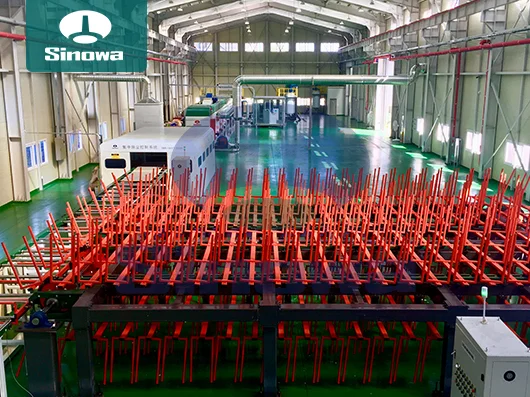
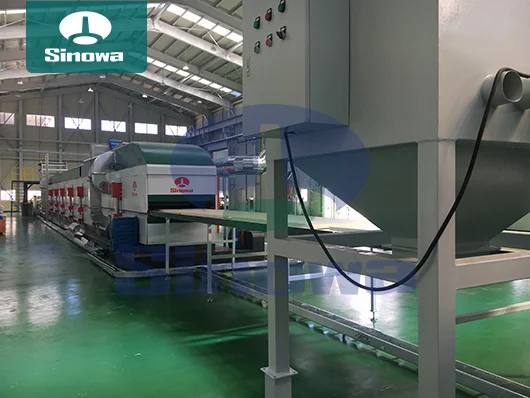
We spare no efforts to improve our product quality and technological reliability by employing the most cutting-edge and the most reliable support and processes to make our products highly reliable and endurable. As a result, the phenolic foam manufacturing machinery is highlighted by many perfect qualities. It is the core idea in Sinowa's product roadmap to surpass our competitors in terms of design philosophy, manufacture methods and service level, going for excellence and leading position and making constant improvement on our products and services, which is also our core value system to create efficiency and convenience for our customers.
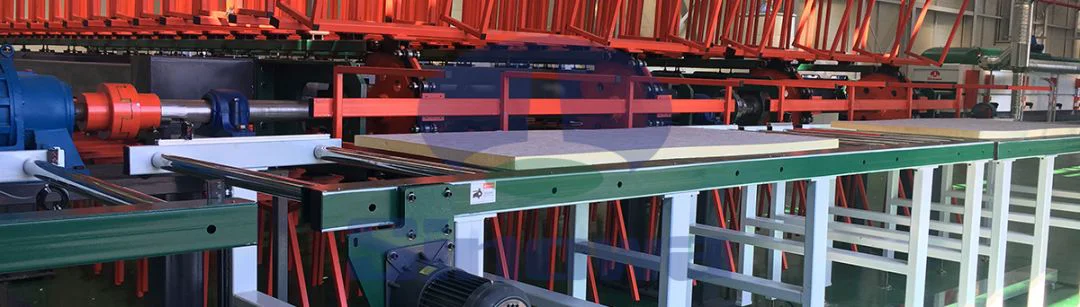
Well-grounded on our solid strength as a renowned large-scale enterprise, Sinowa has a high starting point in developing industrial assembly lines. Based on the advanced science and technology introduced from within and without the country and supported by a great number of first-grade parts and components from the home and aboard, the phenolic foam manufacturing machinery has a high-level configuration of supporting products in terms of machinery, electrical control, hydraulic pressure, automatic measurement and tracking, and so on. This is a strong proof of our product’s reliable quality and high efficiency.
The first-class appearance design and excellent energy saving measures make it unnecessary for customers to additionally construct the heat preservation and isolation room for production around the clock throughout the year, so that the customers may save lots of resources and costs.
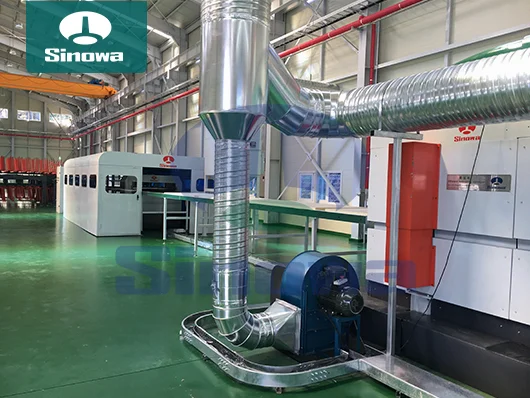
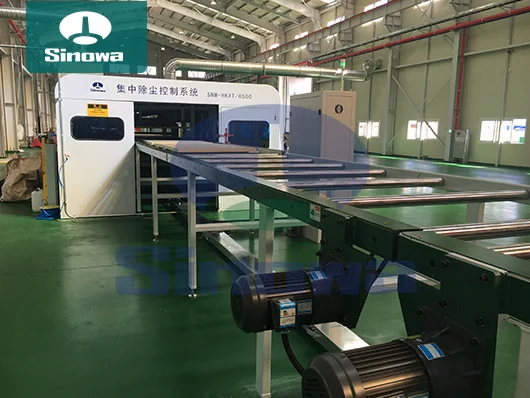
Modularized standard design and important parts machined with CNC machine tool make the phenolic foam manufacturing machinery have excellent quality assurance. Dependence on the man-made factors is eliminated. The operation is precision, with the highest operation speed of 30m/min. The phenolic foam manufacturing machinery has the world-class production efficiency.
The high performance and reliable multicomponent cyclopentane foaming technology and equipment of Sinowa may be also applied to the foaming process of the phenolic aldehyde board. Therefore, our customers may not only freely adjust the foaming matching according to the raw material, but also save lots of costs. Moreover, they are of significance for environmental protection.
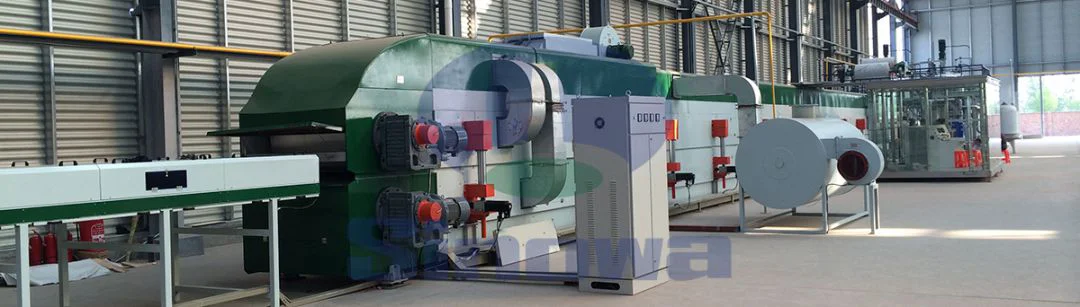
Sinowa's industrial production line of insulation panels is distinguished by its impressive performance of energy conservation. In each high point of energy consumption throughout the entire phenolic foam manufacturing machinery are implemented corresponding measures to considerably lower the consumption level. For example, the body of the lamination belt conveyer is covered with insulation panels in very reasonable structures, which doesn’t blemish the overall outlook but greatly increases the insulation performance. The entire phenolic foam manufacturing machinery is constantly optimized and improved so that the consumption of each power source is significantly reduced. The motor power of our lamination conveying system is only 3.0 kw, about 50% less than those of the same kind. All in all, the energy consumption of the whole industrial phenolic foam manufacturing machinery equals 40% or even less of the equivalent lines in the market.
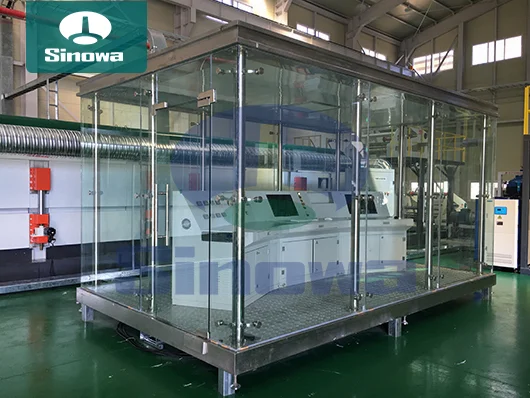
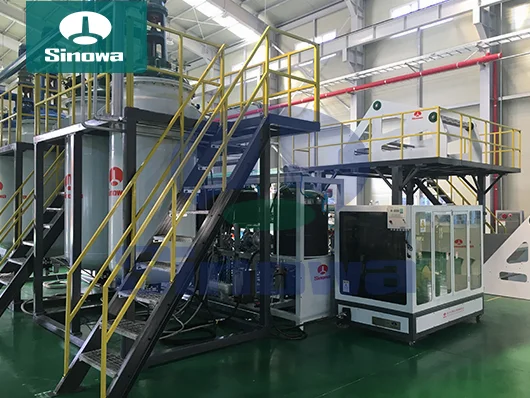
The phenolic foam manufacturing machinery of Sinowa adopts the most advanced concepts in the world to realize the modularized design with all the parts bolted together rather than welded. In standardized production, the parts can be dismantled and exchanged, so the production cycle is drastically shortened and the maintenance becomes by far easier. Through finite element analysis, the equipment design is greatly optimized to realize modularization, digitization, and weight-minimalization.
Phenolic foam manufacturing machinery refers to a complete set of specialized industrial equipment designed for the automated production of high-performance phenolic foam materials, which are widely recognized for their exceptional thermal insulation, flame retardancy, and chemical stability. This integrated machinery system covers the entire production workflow from raw material proportioning and homogeneous mixing to continuous foaming, curing, shaping, and final cutting, forming a closed and efficient production loop for foam fabrication. Unlike general foam production equipment, it is uniquely optimized to adapt to the special chemical reaction characteristics of phenolic resin, featuring precise parameter control, stable reaction environment maintenance, and uniform pore structure molding capabilities. As a core industrial facility for producing energy-saving and fireproof insulation materials, this machinery plays a vital role in modern construction, industrial pipeline insulation, and new energy fields, enabling large-scale, standardized, and high-quality phenolic foam product manufacturing while reducing manual intervention and production instability caused by human operation.
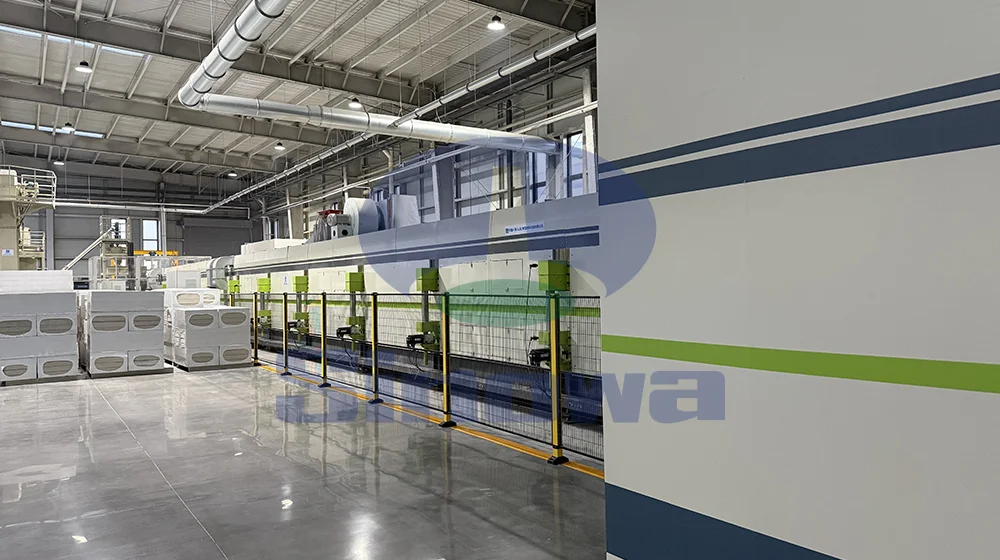
The core operational logic of phenolic foam manufacturing machinery centers on the precise control of chemical foaming and curing reactions based on the inherent properties of phenolic resin. The entire production process relies on the coordinated operation of multiple functional modules to convert liquid raw materials into solid cellular foam materials with stable physical properties. The basic raw materials processed by the equipment include phenolic resin substrates, foaming agents, acidic curing agents, and various functional additives, each of which requires accurate dosage control to ensure the final foam quality. The machinery first completes automatic metering and feeding of all raw material components, eliminating dosage deviations that may affect foam density and structural uniformity. Subsequently, a high-efficiency mixing system integrates all raw materials evenly through high-speed shear and low-speed kneading, fully dispersing additives and avoiding particle agglomeration that could cause defective pore structures. After uniform mixing, the liquid composite materials are transported to the foaming reaction chamber, where controlled temperature and pressure conditions trigger synergistic foaming and curing reactions, forming dense, uniform micro-pore structures that define the excellent insulation performance of phenolic foam products.
Raw material proportioning and feeding systems constitute the foundational functional module of phenolic foam manufacturing machinery, determining the basic performance consistency of finished foam products. This module is professionally designed for the matching ratio requirements of phenolic foam raw materials, adopting sealed and insulated storage tanks to store different liquid and powdery raw materials separately, preventing raw material deterioration or performance changes caused by external temperature and humidity fluctuations. Equipped with high-precision metering and conveying devices, the system realizes stepless speed regulation and quantitative feeding, ensuring that the proportion of resin, foaming agent, curing agent, and additives remains stable throughout long-term continuous production. All feeding processes are fully automated, with real-time monitoring of material flow and pressure parameters to automatically adjust conveying speed and dosage when minor fluctuations occur. In addition, the system adopts an explosion-proof and sealed structural design, which effectively avoids the volatilization of chemical raw materials, reduces material waste, and improves the safety and environmental protection level of the entire production process, laying a solid foundation for stable and continuous subsequent production links.
The mixing system is a key core component that directly affects the pore structure uniformity and comprehensive quality of phenolic foam, representing the core technological advantage of advanced phenolic foam manufacturing machinery. Different from ordinary single-layer stirring equipment, the professional mixing device adopts a composite stirring structure combining high-speed shear and low-speed kneading, which can fully mix high-viscosity phenolic resin with low-viscosity foaming agents and trace additives in a short time. The mixing cavity is equipped with a circulating temperature control jacket, which can dissipate friction heat generated during high-speed mixing in real time and maintain a constant material temperature, effectively preventing premature local curing or invalid foaming of raw materials caused by overheating. This temperature-stable mixing environment ensures that all functional components are evenly distributed in the resin matrix, avoiding regional differences in raw material composition. After sufficient mixing, the liquid material maintains a uniform and stable state, which is a necessary prerequisite for forming fine, closed, and uniform foam pores in the subsequent foaming stage and effectively avoids common product defects such as uneven density and local hollowing.
The continuous foaming reaction system is the central link for the phase transformation and structural molding of phenolic foam materials, undertaking the core task of converting mixed liquid materials into preliminary foam semi-finished products. The fully mixed liquid materials are continuously and quantitatively injected into the closed foaming reaction cabin through a pressure conveying pump, and the integral thermal insulation structure of the cabin isolates external temperature interference to maintain a constant internal reaction environment. Under the dual action of constant temperature induction and catalytic curing, the foaming agent gasifies and expands rapidly, generating a large number of tiny and uniform closed pores inside the material, while the curing agent initiates the cross-linking and solidification reaction of phenolic resin. The internal space of the reaction cabin can be adaptively adjusted according to the required thickness and density of foam products, ensuring that the material expands freely and evenly in a limited space without local over-expansion or insufficient foaming. The whole foaming process is dynamically monitored in real time, with automatic adjustment of temperature, pressure, and material advancing speed to ensure the consistency of foam structure and density in the full-width and full-length range of products.
The curing and laminating shaping module is responsible for completing the final structural stabilization and fixed-size molding of phenolic foam semi-finished products, transforming preliminarily foamed loose materials into rigid and stable finished board materials. After leaving the foaming reaction cabin, the initially formed foam materials enter the constant-temperature curing and laminating unit, where a continuous heat preservation and pressure-maintaining environment is provided to promote thorough cross-linking and curing of the phenolic resin molecular structure. This secondary curing process eliminates internal residual stress of the foam, improves the structural compactness and dimensional stability of finished products, and enhances the overall mechanical strength and deformation resistance of phenolic foam. For composite phenolic foam boards, the laminating function of the module can realize the synchronous compounding of foam core layers and surface protective layers, ensuring tight bonding between layers without delamination. The equipment adopts a segmented temperature control design in the curing area, which can match the different curing reaction rates of materials in different stages, avoiding product quality problems such as surface scorching and internal incomplete curing caused by unreasonable temperature setting.
The post-processing and cutting system is an essential supporting part of phenolic foam manufacturing machinery, realizing the precise sizing and finished product finishing of cured foam materials. After completing curing and shaping, the continuous foam board materials are automatically conveyed to the cutting unit through a synchronous traction device, which adopts high-precision tracking and positioning technology to achieve fixed-length transverse cutting and edge trimming. The cutting device is equipped with smooth and wear-resistant cutting components, which can complete high-precision cutting without damaging the foam pore structure, ensuring flat and neat product sections. In addition to basic sizing cutting, the post-processing module also includes automatic surface finishing and defect detection functions, which can automatically identify and remove defective parts generated in the production process. The whole post-processing process is highly automated, which not only improves the dimensional accuracy and appearance quality of finished products but also greatly improves production efficiency, reduces manual trimming workload, and realizes the integration of production, finishing, and forming of phenolic foam products.
With the continuous upgrading of industrial manufacturing technology, modern phenolic foam manufacturing machinery is evolving toward high automation, intelligent control, and energy-saving environmental protection, continuously optimizing production efficiency and product quality stability. Traditional production equipment relies on manual parameter adjustment and regular inspection, which is prone to parameter fluctuation and unstable product quality, while new-generation machinery adopts a full intelligent control system to realize one-click setting and automatic operation of the entire production process. The system can store multiple production parameter formulas for different specifications of foam products, realizing rapid switching of production varieties and improving equipment versatility. Meanwhile, the optimized structural design reduces heat loss and material residual waste in the production process, effectively lowering comprehensive production energy consumption. In addition, the equipment is equipped with perfect safety protection and fault self-diagnosis functions, which can timely alarm and automatically shut down in case of abnormal operating parameters, ensuring long-term safe and stable operation of the equipment. These technological upgrades make phenolic foam manufacturing machinery more adaptable to the diversified and high-quality production demands of the modern insulation material industry.
Tags:phenolic foam manufacturing machinery, phenolic foam manufacturing machinery manufacturer, phenolic foam manufacturing machinery supplier, phenolic foam manufacturing machinery for sale, customized phenolic foam manufacturing machinery, china phenolic foam manufacturing machinery
URL: https://www.sinowamachine.com/tags/phenolic-foam-manufacturing-machinery.html
![High Efficiency Phenolic Foam Manufacturing Machinery]()
High Efficiency Phenolic Foam Manufacturing Machinery
2026-10-21High Efficiency Phenolic Foam Manufacturing Machinery stands as a cornerstone of modern thermal insulation production, reshaping how lightweight, closed-cell phenolic foam materials are formed from raw resin blends. At the heart of these systems lies a carefully coordinated sequence of material feedi…
- Links:
- Sandwich Panel Continuous Production Line
- Automatic and Continuous Sandwich Panel Production Line
- Cheap and Low Price Sandwich Panel Production Line
- China Sandwich Panel Production Line Factory
- Color Steel Sandwich Panel Production Line For Cold Storage
- Continuous Composite Foam Sandwich Panel Production Line
- Continuous Production Line For Rockwool and Mineral Wool Sandwich Panels
- Continuous PU Phenolic Insulation Panel Production Line
- Continuous PU PIR Sandwich Panel Production Line
- Continuous PUF PUR Sandwich Panel Production Line
- Continuous Sandwich Panel Production Line For Roof and Wall
- Customized and Design Sandwich Panel Production Line
- Decorative Sandwich Panel Production Line For Glass Wool Boards
- High Quality Sandwich Panel Production Line For Sale
- Polyurethane(PU) Sandwich Panel Production Line
- Sandwich Panel Production Line Manufacturer and Supplier
- Sandwich Panel Production Machinery and Equipment