
High Efficiency Phenolic Foam Manufacturing Machinery
Sinowa is a well-known manufacturer and technical service provider of high-end phenolic foam manufacturing machinery, learn more about high efficiency phenolic foam manufacturing machinery, please contact Sinowa's technical engineer, tell us what you need, we will contact you as soon as possible!
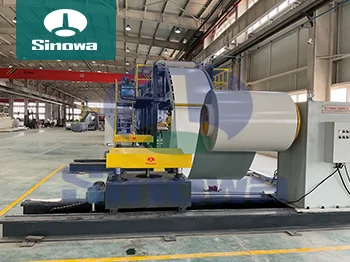
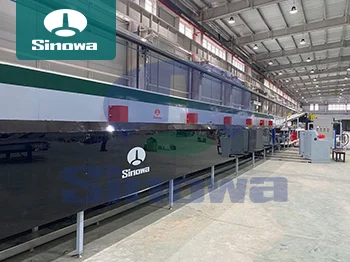
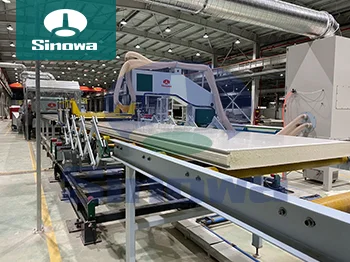
Sinowa is committed to the development and manufacturing of high-end and high-efficiency phenolic foam manufacturing machinery. Our phenolic foam manufacturing machinery are leading the way in efficiency, automatic control, human-computer interaction, environmental protection and energy consumption. Using system integration and bus control technology, it realizes the automatic integrated linkage control of the entire phenolic foam manufacturing machinery, and can achieve remote interactive communication, which has the world-class level and a comprehensive leading high-performance phenolic foam manufacturing machinery in the market.
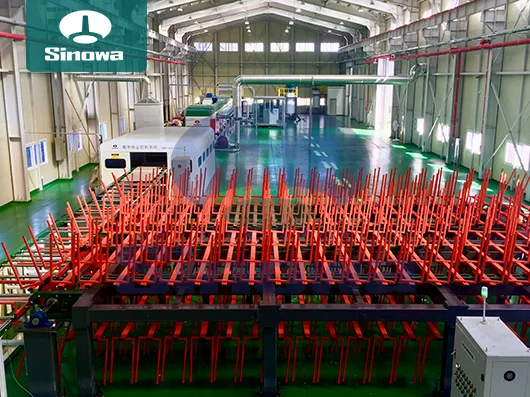
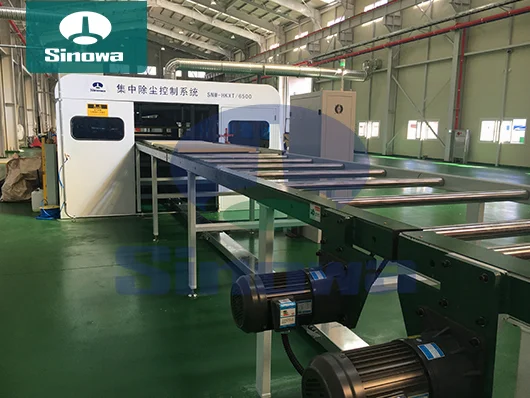
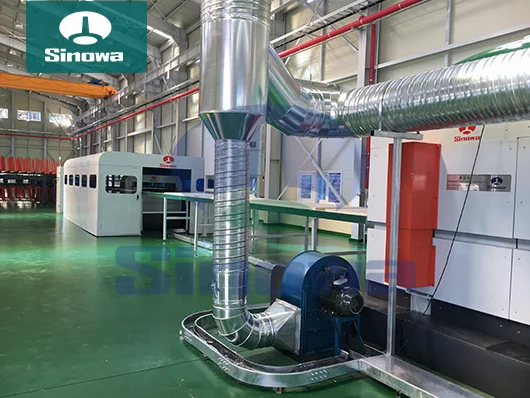
For more than ten years, relying on our innovative manufacturing concept and excellence in quality, reliable and trustworthy service to customers, we cooperate with customers all over the world, exported products to Canada, South Korea, Israel, Australia, the Middle East and other more than 20 countries and regions. contributed to building energy conservation and low-carbon production and have won widespread praise.
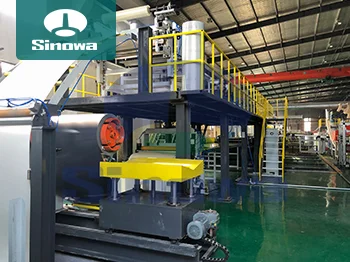
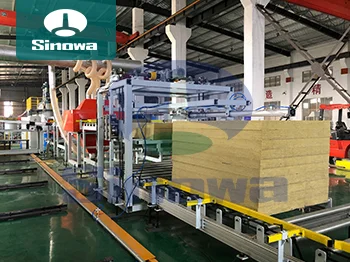
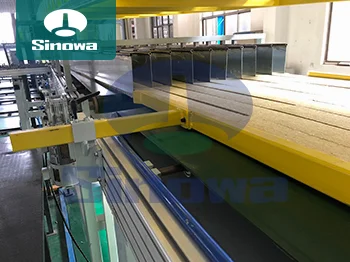
Sinowa has invested outstanding efforts in phenolic foam manufacturing machinery, this is why our products are more efficiency, quality, automatic control technology, environmental protection, energy consumption indicators and the appearance and safety protection are comprehensively leading, some subversive design changes in many major technical points, these major innovations make our products excellent in price/performance and user experience.
High Efficiency Phenolic Foam Manufacturing Machinery stands as a cornerstone of modern thermal insulation production, reshaping how lightweight, closed-cell phenolic foam materials are formed from raw resin blends. At the heart of these systems lies a carefully coordinated sequence of material feeding, mixing, foaming, curing and cutting, all tuned to minimise waste while sustaining consistent output across long production runs. Unlike older setups that rely on manual intervention for ingredient proportioning, contemporary machinery integrates continuous metering modules that regulate the flow of phenolic resin, curing agents, surfactants and blowing agents with exceptional precision. This balanced blend directly influences the cellular structure of the final foam, preventing uneven bubble formation, surface cracking and internal voids that would undermine the material’s functional performance. Operators benefit from streamlined control interfaces that track real-time parameters such as mixing temperature, line speed and chemical ratios, allowing small adjustments to be made without halting the full production cycle. Reduced material spillage and fewer rejected batches translate to better resource utilisation, as less raw feedstock is discarded during normal operation. The mechanical design also prioritises stable heat distribution within the foaming zone, ensuring that the exothermic reaction driving foam expansion progresses steadily rather than surging or stalling unpredictably. Even when running at elevated line speeds, well-engineered equipment preserves the uniform density that phenolic foam is recognised for, creating a reliable base for downstream processing into boards, slabs and custom profiled pieces. Every component in the production line is built to interact harmoniously, eliminating bottlenecks that once limited throughput and created inconsistencies between batches produced hours apart.
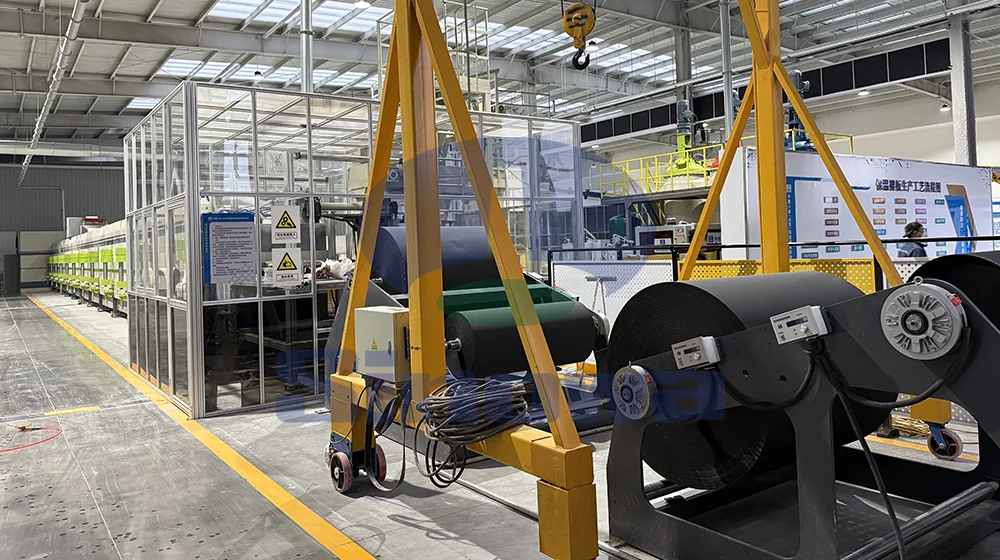
The mixing unit represents one of the most technically refined sections within high efficiency phenolic foam manufacturing machinery, tasked with homogenising reactive chemical streams in a very narrow window before foaming initiates. Rapid yet gentle mixing is essential here, because excessive shear force can break down surfactant structures and disrupt the formation of stable foam cells, while insufficient blending leaves pockets of unmixed chemicals that create defective sections in the finished product. Modern mixing chambers feature specialised static and dynamic mixing elements arranged to encourage thorough intermingling without introducing unnecessary turbulence, paired with temperature control jackets that offset heat fluctuations from the resin reaction. As multi-component materials converge inside the mixer, pressure sensors maintain stable internal conditions to avoid premature expansion before the mixture reaches the foaming conveyor. This controlled transition from liquid blend to rising foam is critical, as phenolic systems react much faster than many other foam chemistries and leave little room for timing errors. Maintenance considerations are also embedded into the mixer design, with quick-release access points that allow residual cured material to be cleared without lengthy disassembly procedures. Frequent and thorough cleaning prevents hardened phenolic deposits from altering internal flow paths, which would gradually degrade mixing quality and reduce overall line efficiency over weeks of continuous operation. By keeping mixing performance consistent, this segment safeguards the core physical traits of the foam and supports sustained high-volume output with minimal downtime for corrective maintenance.
Following the mixing stage, the continuous foaming and curing tunnel provides the controlled environment required for the phenolic mixture to expand, set and develop its characteristic rigid cellular framework. Once the liquid mixture is deposited evenly onto a moving substrate, heat management becomes the primary focus, as the exothermic curing reaction must be guided to completion without overheating the foam core or scorching the outer surfaces. High efficiency machinery utilises segmented temperature zones along the length of the tunnel, adjusting thermal input to match the changing reaction state of the foam as it travels forward. Early zones support expansion and cell stabilisation, while later zones promote full cross-linking of the phenolic resin to build structural integrity. Conveyor speed is synchronised with thermal profiles so that each part of the foam block spends an identical duration inside the curing environment, avoiding under-cured sections that remain soft or over-cured regions that turn brittle. Air circulation systems within the tunnel remove excess vapour generated during the reaction, preventing condensation that could create surface blemishes and adhesion issues. The structural framing of the tunnel is insulated to contain heat, cutting down on external energy consumption and keeping working conditions around the production line more stable. When optimised, this curing process produces foam blocks with consistent dimensional stability, resisting shrinkage or warping after they leave the controlled tunnel environment and move to the cutting area.
Precision cutting and shaping modules integrated into high efficiency phenolic foam manufacturing machinery transform large continuous foam blocks into finished dimensions ready for further fabrication or direct application. After curing, the solid foam slab moves toward cutting stations equipped with sharp, low-friction cutting tools engineered to produce clean edges without compressing or tearing the delicate closed-cell structure. Blade speed, cutting angle and feed rate are synchronised with the speed of the upstream foaming line to maintain workflow continuity, so that cut pieces emerge at a steady rate matching the output of the foaming tunnel. Adjustable cutting parameters allow the same line to produce thin sheets, thick panels and custom-width blocks without major mechanical reconfiguration, supporting flexible production schedules that shift between different product formats. Dust extraction systems run alongside the cutting operation to capture fine foam particles at the source, keeping the work area clear and reducing accumulation on moving mechanical parts that could cause wear or jamming. Many cutting setups also include automatic edge trimming functions to remove minor irregularities from the sides of the foam slab, ensuring every finished piece meets uniform dimensional tolerances. The trimmed offcuts can be collected systematically for appropriate handling, closing the loop on material management and preventing usable foam waste from accumulating on the production floor. Careful calibration of cutting equipment reduces the need for secondary manual trimming, saving labour and ensuring that each finished piece maintains the insulation performance designed into the foam during the foaming stage.
Automation and monitoring systems form the operational nervous system of high efficiency phenolic foam manufacturing machinery, linking every functional station and giving production teams clear oversight of the entire process. Real-time data feeds capture metrics including chemical feed rates, mixing temperatures, tunnel thermal profiles, conveyor velocity and cutting positions, displaying these values on central operator interfaces. When parameters drift outside pre-set operational ranges, the system generates alerts to prompt review before defects develop, rather than waiting until finished foam is inspected to discover quality problems. This proactive monitoring reduces the volume of non-conforming material and reduces the need for extensive post-production quality sorting. Automated adjustment routines can make minor corrections to feed flows or heating outputs, stabilising the process against small variations in raw material properties that naturally occur between supply batches. Data logging functions record production runs over time, creating records that help technical teams identify long-term performance trends and fine-tune operating recipes for better efficiency. While automation handles routine regulation, human operators retain oversight authority to pause production, modify recipes and respond to unexpected events, striking a practical balance between autonomous control and human judgement. The intuitive layout of control panels lowers the learning curve for new staff, allowing skilled operators to supervise multiple production lines without constant physical intervention at each machine station.
Energy efficiency remains a key design objective across all subsystems of advanced phenolic foam manufacturing machinery, as the thermal demands of curing and the continuous operation of pumping, mixing and conveying equipment create substantial power requirements. Engineers target energy savings through passive design choices such as heavily insulated curing tunnels, low-resistance fluid piping for chemical transfer and high-efficiency drive motors that reduce power draw under normal load. Heat recovery arrangements capture waste heat released from the curing tunnel and the exothermic foam reaction, redirecting this thermal energy to preheat incoming raw materials or support auxiliary heating needs elsewhere in the facility. This reuse of waste heat lessens the demand for separate heating sources and lowers the overall energy footprint of each unit of foam produced. Hydraulic and pneumatic circuits are optimised to minimise pressure losses, reducing cycling loads on compressors and pumps that consume significant power during extended runs. Machine idle states are also managed intelligently, scaling back chemical feeds, heating outputs and conveyor speeds during temporary hold periods instead of maintaining full operational power. Collectively, these energy-focused features reduce ongoing operational expenditure while aligning production practices with broader efforts to use resources more responsibly. Efficient energy use does not come at the cost of throughput or product quality; instead, it works hand in hand with precise process control to sustain stable, high-output foam fabrication.
Maintenance and durability engineering extend the service life of high efficiency phenolic foam manufacturing machinery while limiting unplanned downtime that disrupts production schedules. Components exposed to reactive phenolic chemicals are constructed from corrosion-resistant alloys and coated materials that resist resin buildup and chemical degradation, avoiding premature pitting, seal failure and leaks. Critical moving parts such as bearings, drive chains and pump seals are positioned for easy inspection and lubrication, with service intervals clearly defined based on runtime data. Modular construction means that individual functional units, whether a metering pump, mixing insert or cutting blade assembly, can be removed and replaced independently without disassembling the entire production line. This modularity shortens repair time and allows routine maintenance tasks to be scheduled during planned production breaks. Preventive maintenance workflows supported by the machine’s monitoring system flag signs of component wear, such as rising motor current or inconsistent pressure readings, before a full breakdown occurs. Sealing systems are designed to contain reactive chemicals and foam vapours, protecting both equipment integrity and the surrounding working environment. When maintenance is carried out on schedule, the machine retains its original accuracy for years, continuing to produce phenolic foam with consistent cellular structure and reliable physical characteristics across thousands of production hours.
Looking ahead, the evolution of high efficiency phenolic foam manufacturing machinery continues to centre on refining process controllability, expanding product versatility and advancing responsible material handling. Ongoing development focuses on even tighter regulation of the foaming reaction, enabling production of phenolic foam with customised cell structures suited for specialised end uses, without sacrificing line speed or consistency. New generations of equipment are being built to accommodate a wider range of resin formulations and blowing agent systems, giving producers greater flexibility to adapt their output to shifting application requirements. Digital connectivity features are being deepened to support cross-site performance comparison and remote technical support, allowing specialists to review process data and suggest adjustments without travelling to the production location. At the same time, designers keep prioritising waste reduction features, from improved metering accuracy to better capture and management of process by-products generated during foaming and cutting operations. These advances do not fundamentally change the core sequence of mixing, foaming, curing and cutting that defines phenolic foam production, but they raise the ceiling for what can be achieved in terms of output rate, material consistency and operational economy. As demand for high-performance thermal insulation materials continues to grow, well-designed high efficiency phenolic foam manufacturing machinery will remain an indispensable asset, turning liquid chemical inputs into dependable foam products through stable, repeatable and resource-conscious production cycles.
« High Efficiency Phenolic Foam Manufacturing Machinery » Update Date: 2026/10/21
Tags: Phenolic Foam Manufacturing Machinery , phenolic foam manufacturing machinery, phenolic foam manufacturing machinery manufacturer, phenolic foam manufacturing machinery supplier, phenolic foam manufacturing machinery for sale, customized phenolic foam manufacturing machinery, china phenolic foam manufacturing machinery
- Custom Phenolic Air Duct Panel Line
- High-tech Phenolic Insulation Board Production Line
- Phenolic Air Duct Panel Line In China
- Phenolic Resin Panel Production Line Supplier
- High-tech Insulated Panel Machine
- Phenolic Foam Manufacturing Machinery For Clean Room
- Phenolic Air Duct Panel Line Price
- High Efficiency Insulated Panel Machine
- Phenolic Foam Manufacturing Machinery For Building
- High-tech Phenolic Insulation Panel Production Line
- Insulation Board Production Line Manufacturer
- Cheap Phenolic Air Duct Panel Line
- High Efficiency Exterior Wall Insulation Panel Production Line
- Phenolic Foam Manufacturing Machinery For Sale
- Phenolic Cotton Cloth Board Production Line Price
- High-quality Phenolic Foam Production Line
- Phenolic Foam Manufacturing Machinery
- Insulated Panel Machine Supplier
- Low Price Insulation Board Production Line
- High-end Phenolic Insulation Panel Production Line
- Links:
- Sandwich Panel Continuous Production Line
- Automatic and Continuous Sandwich Panel Production Line
- Cheap and Low Price Sandwich Panel Production Line
- China Sandwich Panel Production Line Factory
- Color Steel Sandwich Panel Production Line For Cold Storage
- Continuous Composite Foam Sandwich Panel Production Line
- Continuous Production Line For Rockwool and Mineral Wool Sandwich Panels
- Continuous PU Phenolic Insulation Panel Production Line
- Continuous PU PIR Sandwich Panel Production Line
- Continuous PUF PUR Sandwich Panel Production Line
- Continuous Sandwich Panel Production Line For Roof and Wall
- Customized and Design Sandwich Panel Production Line
- Decorative Sandwich Panel Production Line For Glass Wool Boards
- High Quality Sandwich Panel Production Line For Sale
- Polyurethane(PU) Sandwich Panel Production Line
- Sandwich Panel Production Line Manufacturer and Supplier
- Sandwich Panel Production Machinery and Equipment