
Soundproofing Sandwich Panel Production Line
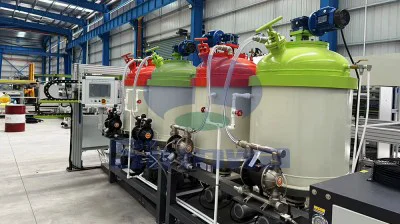
Sinowa is a soundproofing sandwich panel production line supplier from china, customized high-quality & high efficiency soundproofing sandwich panel production line at low price, the adoption of system integration technology and bus control technology accomplishes the full automatization of integrated and coordinated control of the soundproofing sandwich panel production line with accessible remote interactive communication. Ranking the first-class level in the world, it is currently the soundproofing sandwich panel production line in the market taking a comprehensive lead in high performance.
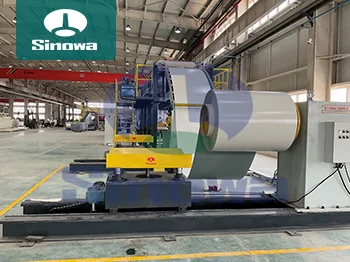
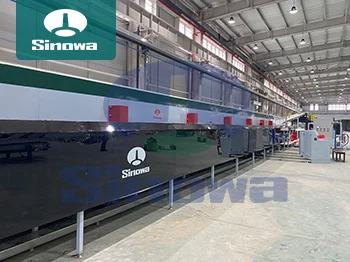
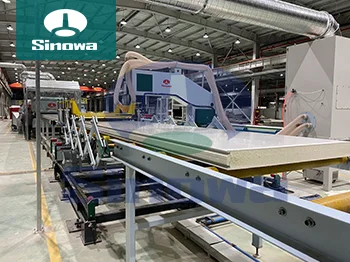
The high-tech soundproofing sandwich panel production line can meet a variety of production needs of customers, the whole soundproofing sandwich panel production line design concept of modularization enables all our components to be integrated and combined at will. Our high efficiency soundproofing sandwich panel production line can easily automate the production of roof sandwich panel, wall sandwich panel, cold storage sandwich panel and other products by different combination and configuration selection and siple switching. The inner core layer can be polyrethane or rock wool, glass wool, an so on.


The high precision soundproofing sandwich panel production line has high adaptability, which may produce various sandwich panel of the PU, PIR and rock wool systems. We may design various products according to the customer’s requirements, including various configurations, so as to meet their demands with flexible price system. Highly integrated and linked control system centralizes all control points at the main central center, achieving parameter linkage, fault self-diagnosis controlled by the whole line and shipping distance control. High-level automatic control system also saves the manpower and reduces the manpower loss for customers.


The precision servo hoisting mechanism employed by the main engine without hydraulic system makes the board thickness control flexible and the customer may conveniently change or adjust the board thickness. There will be not such troubles as hydraulic system adjustment, leakage, maintenance, etc.


High-level energy saving and protection design makes the whole soundproofing sandwich panel production line possible to produce around the clock throughout the year and the customer will save huge budget. In addition, the isolated heat preservation room is constructed for warming the environment. The energy saving and protection design of our manufacturing line may guarantee that the customer’s production line may be freely heated and produce in the main time to save more costs for customers.


The high-power low-consumption design quickens the reaction of the cheap soundproofing sandwich panel production line while energy consumption is kept low. With the brand-new, fully sealed inner insulation design, the energy consumption is controlled at the minimum level to achieve the design objective of less than an hour for the insulation system to be activated from the room temperature above 5℃ to the production process temperature. The energy consumption is only 40% that of those similar products.
A soundproofing sandwich panel production line is an automated system designed to manufacture composite panels with excellent acoustic insulation performance, integrating multiple processes to ensure efficiency and product consistency. The line starts with raw material preparation, where surface materials such as steel or aluminum sheets and core materials like rock wool, glass wool, or polyurethane are carefully selected and inspected to meet soundproofing requirements. These materials are then fed into the line through an automatic feeding system, which ensures stable and accurate conveying without manual intervention. The surface materials undergo preprocessing, including cleaning and surface treatment, to enhance adhesion with the core material, a key step in ensuring the overall structural strength and soundproofing effect of the final panels. Next, an adhesive spraying system precisely applies adhesive to the surface materials, controlling the amount to avoid waste and ensure firm bonding. The core material is then placed between two layers of surface materials, and the composite structure is pressed together using hydraulic or pneumatic methods in a composite pressing system, forming a stable sandwich structure. After pressing, the panels go through a curing process, either by heating or room temperature treatment, to make the adhesive reach optimal strength. Finally, an automatic cutting system trims the panels to the required size with high precision, and edge processing is performed to enhance waterproofing and aesthetics. This production line operates continuously, reducing labor costs and improving production efficiency while ensuring that each panel maintains consistent soundproofing performance, making the panels widely applicable in industrial plants, commercial buildings, residential soundproof walls, and other fields where noise reduction is needed.
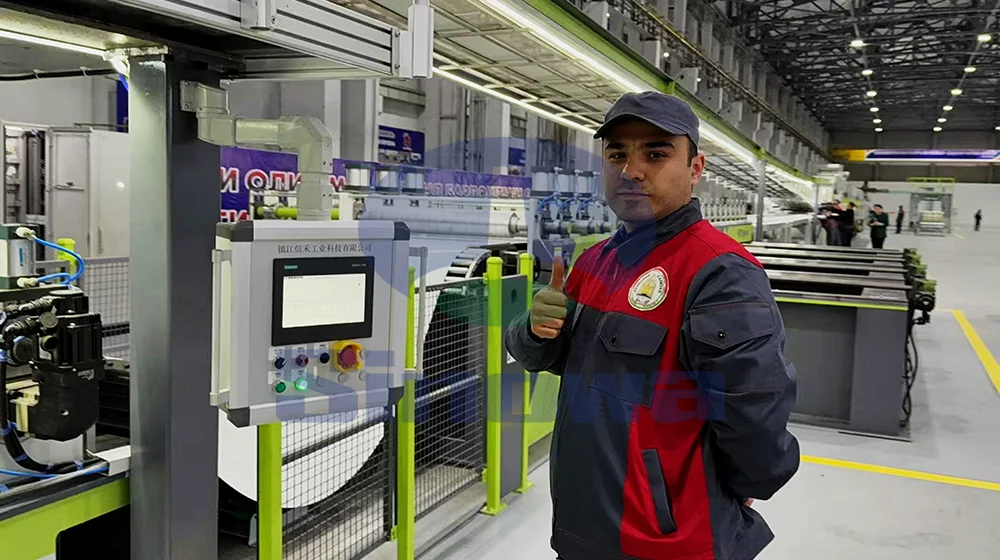
A soundproofing sandwich panel production line is a fully automated integrated system designed specifically for manufacturing composite panels with excellent acoustic insulation performance, combining structural strength with soundproofing capabilities to meet the diverse needs of modern construction and industrial applications. These production lines integrate multiple technological processes into a cohesive workflow, from raw material preparation to finished product output, ensuring that each soundproofing sandwich panel meets consistent quality standards and performance requirements. The core design concept of such production lines revolves around optimizing the combination of surface materials and core materials, while realizing efficient, precise, and stable mass production through automated control and modular structure design. Unlike ordinary sandwich panel production equipment, soundproofing sandwich panel production lines are equipped with specialized components and processes to enhance the acoustic insulation effect of the final products, making them suitable for scenarios where noise control is a key requirement.
The structure of a soundproofing sandwich panel production line is composed of multiple interconnected functional units, each playing a crucial role in the overall production process, and the rational layout and coordination of these units directly determine the efficiency of production and the quality of the finished panels. The basic structural components typically include an automatic feeding system, preprocessing system, adhesive spraying system, composite pressing system, curing device, cutting system, edge processing system, and intelligent control system, forming a complete production chain that covers all links from raw material input to finished product stacking. The automatic feeding system is responsible for the stable and accurate conveying of surface materials and core materials, which can be adjusted according to the type and size of the materials to ensure that the materials are fed into the next process in a precise position. Common surface materials include steel plates, aluminum plates, and other metal sheets with good structural strength, while core materials mainly include rock wool, glass wool, polyurethane, expanded polystyrene (EPS), and other materials with excellent soundproofing and thermal insulation properties. The feeding system is usually equipped with deviation correction and leveling devices to prevent material offset during conveying, which would affect the subsequent composite effect.
The preprocessing system is an essential part of ensuring the bonding quality of soundproofing sandwich panels, mainly including cleaning and surface treatment of the surface materials. The surface of the metal sheets used as surface materials may have dust, oil stains, or oxide layers, which can reduce the adhesion of the adhesive and affect the bonding strength between the surface and core materials. Therefore, the preprocessing system uses cleaning equipment to remove impurities on the surface of the materials, and performs surface activation treatment if necessary to improve the surface roughness and enhance the adhesion performance. This process is carried out automatically, with adjustable cleaning intensity and speed to adapt to different types of surface materials. The adhesive spraying system is responsible for uniformly applying adhesive to the surface of the core materials or surface materials, and its precision directly affects the bonding effect and soundproofing performance of the panels. The system is equipped with precise metering devices to control the amount of adhesive sprayed, ensuring that the adhesive is evenly distributed without excessive or insufficient spraying. Some advanced production lines also adopt automatic spraying robots to achieve more precise and uniform spraying, reducing the waste of adhesive and improving production efficiency.
The composite pressing system is the core link in the production of soundproofing sandwich panels, responsible for combining the surface materials and core materials into an integrated structure through pressure and temperature control. This system usually adopts hydraulic or pneumatic pressing methods, with adjustable pressure and temperature parameters to adapt to different combinations of surface and core materials. For example, when using polyurethane as the core material, the pressing process needs to be combined with a certain temperature to promote the foaming and curing of the polyurethane, ensuring that it is closely bonded to the surface materials. The pressing process is carried out in a closed environment to avoid external interference, and the pressure is evenly applied to the entire surface of the panel to ensure that the thickness of the panel is uniform and the structure is stable. The curing device is used to make the adhesive reach the optimal bonding strength, which can be divided into heating curing and room temperature curing according to the type of adhesive and core material. Heating curing is usually achieved through hot air circulation furnaces or electric heating plates, which can accurately control the curing temperature and time to ensure the stability of the bonding performance. Room temperature curing is suitable for some special adhesives, which can reduce energy consumption and adapt to scenarios with lower energy supply conditions.
The cutting system is used to cut the continuously produced composite panels into the required length and size, adopting fully automatic CNC cutting technology to ensure precise sizing and smooth cutting edges. The cutting device is equipped with a servo tracking system, which can automatically adjust the cutting position according to the running speed of the production line, avoiding cutting errors caused by the movement of the panels. The cutting blade is made of high-hardness materials, which can maintain sharpness for a long time and reduce the frequency of blade replacement. The edge processing system is used to seal or wrap the edges of the cut panels, enhancing the waterproof performance and aesthetic appearance of the panels, while also preventing the core material from being exposed to the air and affecting the soundproofing effect and service life. Common edge processing methods include edge sealing with waterproof tape, wrapping with metal strips, or pouring sealant, which can be selected according to the application scenario of the panels. The intelligent control system is the "brain" of the entire production line, integrating PLC (Programmable Logic Controller) and touch screen human-machine interface to realize precise control of all production parameters, such as feeding speed, spraying amount, pressing pressure, curing temperature, and cutting length. Operators can set and adjust parameters through the touch screen, and the system can automatically monitor the operation status of each unit, alarm in case of faults, and even realize remote monitoring and fault diagnosis through Internet of Things technology, improving the operation efficiency and stability of the production line.
The performance of a soundproofing sandwich panel production line is mainly reflected in four aspects: stability, adaptability, efficiency, and energy saving, which are the key indicators to measure the quality and practical value of the production line. Stability is the core performance of the production line, which is ensured through modular component design and precision transmission mechanisms. The key components of the production line are made of high-strength and wear-resistant materials, which can withstand long-term continuous operation and reduce the failure rate. At the same time, the system is equipped with multiple protection devices, such as overload protection, overheating protection, and deviation protection, to avoid equipment damage and production interruption caused by abnormal conditions. The stability of the production line directly affects the consistency of the specifications and performance of the finished panels, reducing the defective rate caused by equipment fluctuations and ensuring that each panel meets the required soundproofing and structural performance standards.
Adaptability refers to the ability of the production line to be compatible with different raw materials and product specifications, which is an important guarantee for meeting diverse market demands. A high-performance soundproofing sandwich panel production line can flexibly switch between different surface materials, such as color steel plates, galvanized steel plates, aluminum plates, and even non-metal surface materials, according to production needs. It can also adapt to different types of core materials, including rock wool, glass wool, polyurethane, EPS, and phenolic foam, each of which has different soundproofing, thermal insulation, and fire-resistant properties. In addition, the production line can adjust the thickness, width, and length of the panels within a certain range, supporting customized production to meet the specific requirements of different construction projects. For example, some production lines can produce panels with a thickness of 30mm to 200mm, and a width of 600mm to 1200mm, which can be adjusted according to the actual needs of the project. The adaptability of the production line not only improves its utilization rate but also enhances the market competitiveness of the produced panels.
Efficiency is another important performance indicator of the soundproofing sandwich panel production line, which is reflected in the continuity of the production process and the adjustability of the production speed. The fully automated design of the production line integrates all processes from feeding to stacking, reducing manual intervention and improving production efficiency. The production speed can be adjusted steplessly through frequency conversion technology, usually ranging from 3 meters per minute to 10 meters per minute, and some high-efficiency production lines can even reach a higher speed. The continuous production mode avoids the time waste caused by intermittent production, and the automatic stacking system can quickly stack the finished panels, reducing the labor intensity of operators and improving the overall production efficiency. For large-scale construction projects that require a large number of soundproofing sandwich panels, the high efficiency of the production line can ensure the timely supply of materials, shortening the construction period.
Energy saving is an increasingly important performance requirement in modern industrial production, and soundproofing sandwich panel production lines also pay more attention to energy conservation and environmental protection in their design and operation. The energy-saving performance of the production line is mainly realized through the optimization of the heating system and the adoption of energy-saving technologies. For example, the heating system of some production lines only heats the surface of the chain plate instead of the entire machine, reducing energy loss. The heat recovery system can recover the waste heat generated during the curing process and reuse it for heating, reducing energy consumption by more than 20% compared with traditional production lines. In addition, the production line adopts variable frequency motor drive, which can adjust the motor speed according to the production load, avoiding energy waste caused by idling. The adhesive and foaming agent used in the production process are also environmentally friendly materials, such as using cyclopentane or HFC-141b as foaming agents instead of CFCs, which are harmful to the environment, ensuring that the production process meets environmental protection requirements.
Soundproofing sandwich panel production lines can be divided into different types according to various classification standards, each with its own characteristics and applicable scenarios, which can meet the diverse needs of different users and projects. According to the production process, they can be divided into continuous production lines and discontinuous production lines. Continuous production lines are suitable for large-scale mass production, with the advantages of high production efficiency, stable product quality, and low labor intensity. The entire production process is carried out continuously without interruption, from raw material feeding to finished product stacking, and the production speed is fast, which is suitable for projects that require a large number of soundproofing sandwich panels in a short period of time. Discontinuous production lines, on the other hand, are suitable for small-batch and customized production, with the advantages of flexible adjustment and low investment cost. They can produce different types and specifications of panels according to the needs of each order, which is suitable for small and medium-sized enterprises or projects with diverse and small-batch requirements.
According to the type of core material used, soundproofing sandwich panel production lines can be divided into rock wool soundproofing sandwich panel production lines, polyurethane soundproofing sandwich panel production lines, glass wool soundproofing sandwich panel production lines, EPS soundproofing sandwich panel production lines, and phenolic foam soundproofing sandwich panel production lines. Each type of production line is optimized for the characteristics of the corresponding core material to ensure the best soundproofing effect and product quality. For example, rock wool soundproofing sandwich panel production lines are equipped with special core material conveying and compaction devices to ensure that the rock wool is evenly distributed and closely bonded to the surface materials, and the production process pays more attention to the fire-resistant performance of the panels, making them suitable for high-temperature and fire-prone environments. Polyurethane soundproofing sandwich panel production lines are equipped with high-pressure foaming systems to accurately control the foaming process of polyurethane, ensuring that the core material has uniform density and good soundproofing and thermal insulation performance, which is suitable for cold chain logistics, high-rise buildings, and other scenarios that require both soundproofing and thermal insulation.
According to the degree of automation, soundproofing sandwich panel production lines can be divided into fully automatic production lines and semi-automatic production lines. Fully automatic production lines integrate all processes from feeding, preprocessing, spraying, pressing, curing, cutting to stacking into an automated workflow, requiring only 6-8 operators to monitor and operate the entire line, which greatly reduces labor intensity and human errors. Such production lines are usually equipped with intelligent control systems and remote monitoring functions, which are suitable for large-scale production enterprises with high requirements for production efficiency and product quality. Semi-automatic production lines require manual intervention in some links, such as manual feeding, manual stacking, or manual adjustment of some parameters, which has the advantages of low investment cost and simple operation, and is suitable for small and medium-sized enterprises with limited funds and small production scales.
The application of soundproofing sandwich panel production lines is closely related to the application scenarios of the soundproofing sandwich panels they produce, covering a wide range of fields such as construction, industry, transportation, and public facilities. In the construction industry, soundproofing sandwich panels produced by these production lines are widely used in the construction of exterior walls, interior partitions, roofs, and floors of residential buildings, commercial buildings, industrial plants, and public buildings. For example, in residential buildings, soundproofing sandwich panels are used as interior partitions to reduce noise transmission between rooms, improving the living comfort of residents; in commercial buildings such as shopping malls, hotels, and office buildings, they are used to isolate the noise from the outside and between different functional areas, creating a quiet and comfortable environment for customers and employees. In industrial plants, especially those with high noise levels such as machinery manufacturing plants, power plants, and chemical plants, soundproofing sandwich panels are used to build workshop walls and ceilings, reducing the impact of industrial noise on the surrounding environment and the health of employees.
In the field of industrial production, soundproofing sandwich panel production lines also play an important role in the manufacturing of soundproofing equipment and facilities. For example, they are used to produce soundproofing enclosures for mechanical equipment, soundproofing covers for generators, and soundproofing walls for industrial workshops, which can effectively reduce the noise generated by equipment operation and meet the environmental protection noise standards. In the transportation field, soundproofing sandwich panels are used to build soundproofing barriers along highways, railways, and urban rail transit, reducing the impact of traffic noise on nearby residents and buildings. The soundproofing sandwich panels produced by the production lines have the advantages of light weight, high strength, and easy installation, which can be quickly installed on-site, shortening the construction period and reducing the construction cost.
In public facilities, soundproofing sandwich panels are widely used in the construction of hospitals, schools, theaters, libraries, and other places that require a quiet environment. For example, in hospitals, soundproofing sandwich panels are used to build operating rooms, wards, and treatment rooms, reducing noise interference and ensuring the normal operation of medical work and the rest of patients; in schools, they are used to build classrooms, laboratories, and libraries, creating a quiet learning environment for students and teachers. In addition, soundproofing sandwich panels are also used in the construction of temporary buildings, such as prefabricated houses for construction sites and temporary isolation facilities, which not only have good soundproofing performance but also have the advantages of quick installation and disassembly, strong mobility, and reusability.
With the continuous improvement of environmental protection requirements and the increasing emphasis on living and working environments, the demand for soundproofing sandwich panels in various fields is constantly increasing, which also promotes the continuous development and upgrading of soundproofing sandwich panel production lines. The future development trend of these production lines will be more intelligent, efficient, energy-saving, and environmentally friendly. Intelligent upgrading will further improve the automation level of the production line, realize intelligent parameter adjustment, fault prediction, and maintenance, reducing the dependence on manual operation; the improvement of efficiency will be achieved through the optimization of the production process and the adoption of more advanced equipment, further increasing the production speed and output; energy saving and environmental protection will be further strengthened, adopting more environmentally friendly materials and energy-saving technologies, reducing energy consumption and environmental pollution.
In conclusion, a soundproofing sandwich panel production line is a key equipment for manufacturing high-quality soundproofing sandwich panels, with a reasonable structure, excellent performance, diverse types, and a wide range of applications. Its structural design ensures the stability and precision of the production process, its performance indicators meet the needs of modern production, its various types can adapt to different production scales and product requirements, and its wide range of uses covers various fields such as construction, industry, transportation, and public facilities. With the continuous development of science and technology and the increasing demand for soundproofing products, soundproofing sandwich panel production lines will play a more important role in promoting the development of the soundproofing industry and improving the quality of human living and working environments.
« Soundproofing Sandwich Panel Production Line » Update Date: 2026/4/16
URL: https://www.sinowamachine.com/tags/soundproofing-sandwich-panel-production-line.html
![Soundproofing Sandwich Panel Production Line Manufacturer]()
Soundproofing Sandwich Panel Production Line Manufacturer
2026-08-31Soundproofing sandwich panel production lines represent advanced integrated manufacturing systems dedicated to producing high-performance acoustic insulation composite panels widely applied in modern construction, industrial facilities, and noise control engineering. These automated production soluti…
- Links:
- Sandwich Panel Continuous Production Line
- Automatic and Continuous Sandwich Panel Production Line
- Cheap and Low Price Sandwich Panel Production Line
- China Sandwich Panel Production Line Factory
- Color Steel Sandwich Panel Production Line For Cold Storage
- Continuous Composite Foam Sandwich Panel Production Line
- Continuous Production Line For Rockwool and Mineral Wool Sandwich Panels
- Continuous PU Phenolic Insulation Panel Production Line
- Continuous PU PIR Sandwich Panel Production Line
- Continuous PUF PUR Sandwich Panel Production Line
- Continuous Sandwich Panel Production Line For Roof and Wall
- Customized and Design Sandwich Panel Production Line
- Decorative Sandwich Panel Production Line For Glass Wool Boards
- High Quality Sandwich Panel Production Line For Sale
- Polyurethane(PU) Sandwich Panel Production Line
- Sandwich Panel Production Line Manufacturer and Supplier
- Sandwich Panel Production Machinery and Equipment