
Metal Carved Insulated Sandwich Panel Production Line
Sinowa is a metal carved insulated sandwich panel production line supplier from china, customized high-quality & high efficiency metal carved insulated sandwich panel production line at low price, the adoption of system integration technology and bus control technology accomplishes the full automatization of integrated and coordinated control of the metal carved insulated sandwich panel production line with accessible remote interactive communication. Ranking the first-class level in the world, it is currently the metal carved insulated sandwich panel production line in the market taking a comprehensive lead in high performance.
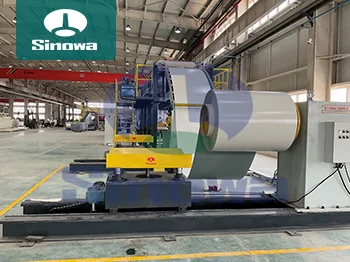
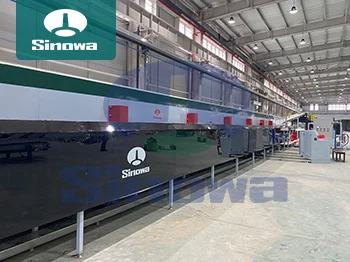
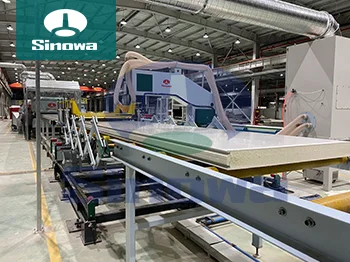
The high-tech metal carved insulated sandwich panel production line can meet a variety of production needs of customers, the whole metal carved insulated sandwich panel production line design concept of modularization enables all our components to be integrated and combined at will. Our high efficiency metal carved insulated sandwich panel production line can easily automate the production of roof sandwich panel, wall sandwich panel, cold storage sandwich panel and other products by different combination and configuration selection and siple switching. The inner core layer can be polyrethane or rock wool, glass wool, an so on.


The high precision metal carved insulated sandwich panel production line has high adaptability, which may produce various sandwich panel of the PU, PIR and rock wool systems. We may design various products according to the customer’s requirements, including various configurations, so as to meet their demands with flexible price system. Highly integrated and linked control system centralizes all control points at the main central center, achieving parameter linkage, fault self-diagnosis controlled by the whole line and shipping distance control. High-level automatic control system also saves the manpower and reduces the manpower loss for customers.


The precision servo hoisting mechanism employed by the main engine without hydraulic system makes the board thickness control flexible and the customer may conveniently change or adjust the board thickness. There will be not such troubles as hydraulic system adjustment, leakage, maintenance, etc.


High-level energy saving and protection design makes the whole metal carved insulated sandwich panel production line possible to produce around the clock throughout the year and the customer will save huge budget. In addition, the isolated heat preservation room is constructed for warming the environment. The energy saving and protection design of our manufacturing line may guarantee that the customer’s production line may be freely heated and produce in the main time to save more costs for customers.


The high-power low-consumption design quickens the reaction of the cheap metal carved insulated sandwich panel production line while energy consumption is kept low. With the brand-new, fully sealed inner insulation design, the energy consumption is controlled at the minimum level to achieve the design objective of less than an hour for the insulation system to be activated from the room temperature above 5℃ to the production process temperature. The energy consumption is only 40% that of those similar products.
The metal carved insulated sandwich panel has gradually become one of the most indispensable composite materials in the modern construction industry due to its unique decorative texture, stable thermal insulation performance and excellent structural durability. As the core manufacturing carrier of this building material, the metal carved insulated sandwich panel production line integrates mechanical transmission, material composite processing, surface molding and intelligent control technologies, realizing continuous and standardized production of high-performance sandwich panels. This production system is designed to adapt to the diversified production demands of building exterior wall decoration, thermal insulation engineering and temporary building construction, and it balances production efficiency, product uniformity and structural stability in the whole processing flow, laying a solid technical foundation for the large-scale application of metal carved insulated panels. The overall structural design of the production line follows the logic of streamlined processing, and each functional unit is closely connected in sequence to complete a series of complex processes including raw material feeding, surface carving pretreatment, thermal insulation core material compounding, pressure shaping, edge trimming and finished product stacking without redundant intermediate links. The mechanical layout abides by the principles of compact structure and convenient operation, which effectively reduces the occupation of production space and simplifies the daily operation and maintenance work of production personnel.
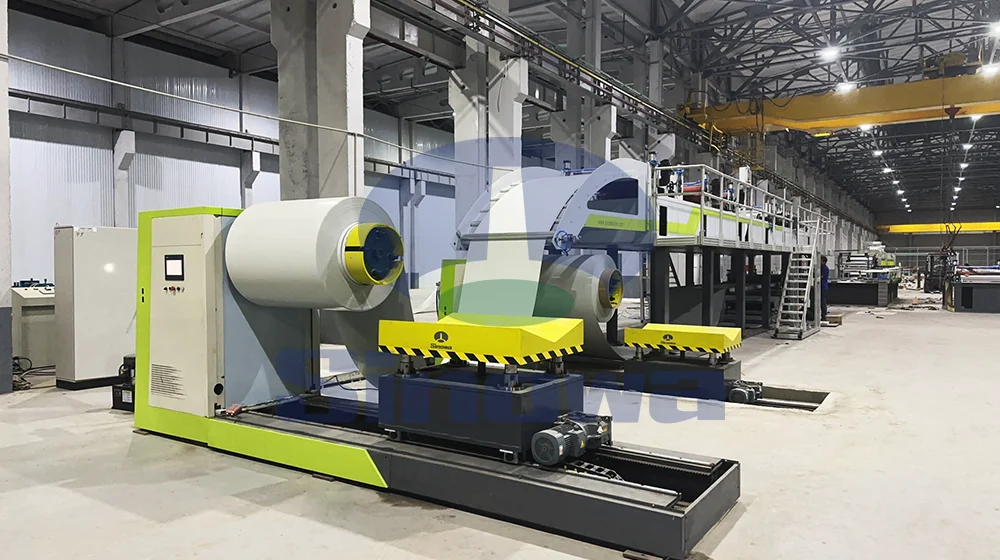
The raw material feeding module serves as the starting point of the entire production line, undertaking the task of stable and orderly transportation of metal base plates and thermal insulation core materials. For metal substrates, high-toughness metal coils with uniform thickness are selected as the raw materials, and the automatic unwinding device in the feeding module can realize passive and active combined discharging to avoid material stretching and deformation caused by uneven feeding speed. Equipped with precision positioning and deviation correction components, this module can dynamically monitor the feeding track of metal plates in real time, and fine-tune the material transmission angle through the servo driving system to ensure that the lateral deviation of metal plates during transportation is controlled within an extremely small range. The feeding mechanism for thermal insulation core materials adopts a flexible conveying structure, which can adapt to the delivery requirements of porous and fluffy core materials. It evenly spreads the core materials on the inner surface of the metal base plate at a fixed thickness, and avoids material accumulation and hollowing through quantitative blanking technology. The whole feeding process realizes automated unmanned intervention in the feeding link, and the intelligent sensing components can automatically identify material breakage and shortage conditions and trigger early warning signals, which effectively improves the stability and continuity of preliminary feeding work.
After the feeding process is completed, the metal plates will enter the surface carving pretreatment station, which is the key process to form the unique decorative texture of metal carved panels. Different from ordinary flat metal sandwich panels, this production line is equipped with professional rolling carving components, which use high-precision engraved molds to extrude and emboss the surface of metal plates. The mold surface is designed with diversified concave-convex texture structures, and under the action of constant rolling pressure, the metal plate produces uniform plastic deformation to form stable and clear decorative lines. The pressure control system of the carving station adopts hydraulic servo driving mode, which can maintain constant pressure output during continuous rolling, avoiding texture blur and local indentation defects caused by pressure fluctuation. Meanwhile, the temperature auxiliary adjustment device is configured in the carving area to appropriately optimize the ductility of metal materials, reduce the internal stress generated during metal extrusion molding, and prevent the metal plates from cracking and warping after long-term use. The processing speed of the carving station keeps synchronous linkage with the front-end feeding speed, and the intelligent synchronization system eliminates the processing errors caused by speed mismatch, ensuring the consistency of texture depth and spacing of each batch of metal plates.
The composite molding process is the core working link of the entire production line, which determines the bonding firmness and overall structural performance between the metal panel and the thermal insulation core material. After the carving pretreatment, the metal plate with decorative texture and the thermal insulation core material are sent to the closed composite pressing area together. The production line adopts a multi-stage gradual pressing process instead of one-time high-pressure molding, which can make the core material fully fit with the metal plate and discharge the internal air gap generated in the lamination process. The internal heating components of the pressing area can maintain a constant processing temperature, which activates the adhesive properties of the composite medium between the metal layer and the core layer, and enhances the interfacial bonding strength through physical thermal compounding. The internal pressure of the composite area is evenly distributed, and the pressure difference of each position of the plate surface is controlled within a tiny range, so that the thickness of the processed sandwich panel remains uniform without local bulging or depression. In order to adapt to different usage scenarios, the pressure and temperature parameters in the composite process can be adjusted independently according to the material characteristics of the core material, realizing flexible production of diversified composite panels.
After the completion of composite pressing, the semi-finished panels will enter the curing and shaping station to complete the stable shaping of the composite structure. The high-temperature composite plates will be naturally cooled at a constant speed in the sealed heat dissipation channel of the station, and the slow cooling mode can effectively eliminate the residual internal stress of the plates generated in the pressing and heating process. During the cooling process, the limit fixing components fix the four sides of the plates to prevent bending and torsion deformation caused by uneven heat dissipation. The internal environment of the curing area keeps dry and dust-free, which avoids impurities adhering to the unfinished plate surface and affecting the surface flatness and appearance quality. The curing time is matched with the production speed of the front-end process to ensure that the molecular structure inside the composite material is fully stabilized, so that the finished panels can maintain stable bonding performance in complex temperature and humidity environments for a long time, and avoid delamination and cracking failures in the later application process.
The edge trimming and precise cutting station undertakes the finishing processing of the plates, realizing the dimensional standardization of finished products. The continuously produced long plates are accurately positioned by the infrared sensing system, and the cutting actuator controlled by the numerical control system completes fixed-length cutting according to preset dimensional parameters. The high-speed rotating cutting tools are made of wear-resistant materials, which can ensure smooth and burr-free cutting sections of metal and composite layers. For the redundant leftover materials on the edges of the plates, the edge trimming mechanism adopts one-time forming trimming technology to cut off the irregular parts on both sides of the plates, so that the overall width of the plates is consistent. In addition, this station is equipped with a locking groove processing component, which can carve stable assembly grooves on the edges of the plates. The precise groove structure enables seamless splicing between adjacent panels during on-site installation, improving the overall sealing performance of the building enclosure structure. All cutting and trimming processes are completed automatically, and the system can record the processing data in real time to provide data support for production parameter optimization.
The post-processing detection and cleaning station is set to screen defective products and optimize the surface quality of finished plates. The intelligent detection system uses optical scanning technology to carry out all-round non-destructive inspection on the plate surface, automatically identifying subtle defects such as texture distortion, surface scratches and composite hollowing. For unqualified products, the system will mark the defect location and automatically separate them from the qualified product conveying line to avoid mixing defective products into the finished product stack. The surface cleaning component uses high-pressure airflow and soft brush structures to remove floating dust and processing residues on the surface of the carved plates, maintaining the clarity and three-dimensional sense of the decorative texture. At the same time, the surface protective film can be automatically pasted in this station. The transparent protective film can prevent scratch damage during transportation and stacking, and effectively prolong the service life of the decorative surface of the plates.
The final stacking and discharging station is responsible for the orderly collection and temporary storage of finished panels. The intelligent stacking manipulator adopts flexible clamping components to avoid extrusion damage to the carved texture on the plate surface. According to the preset stacking rules, the manipulator arranges the plates neatly on the loading platform, and automatically adjusts the stacking spacing and layers to ensure the stability of the finished product stack. The discharging platform is equipped with a movable carrying structure, which is convenient for personnel to transfer finished products to the storage area. The whole stacking process does not require manual auxiliary handling, which greatly reduces the labor intensity of workers and avoids plate damage and safety accidents caused by manual carrying. In addition, the station is equipped with a counting statistics function, which can automatically record the daily output and finished product qualification rate, providing intuitive production data for production management.
In terms of overall performance configuration, this metal carved insulated sandwich panel production line has excellent production flexibility and operational stability. The continuous production speed can be adjusted within a reasonable range to meet the production requirements of different batch sizes. The transmission system adopts servo motor drive, which realizes high-precision synchronous operation of each station, and the positioning accuracy of plate processing reaches a high level. The human-computer interaction control interface is simple and intuitive, and production personnel can complete the switching of production modes and parameter adjustment through simple operation instructions. The built-in safety protection system can automatically cut off the power and stop the operation when material jamming, equipment overload and other abnormal conditions occur, which effectively reduces the failure loss and production safety risks. The internal transmission parts of the equipment are made of high-strength wear-resistant materials, which can adapt to long-term continuous industrial production and reduce the frequency of equipment maintenance and replacement.
From the perspective of production application advantages, the production line has obvious energy-saving and environmental protection characteristics in the production process. The closed processing structure reduces the heat loss in the heating and pressing link, and the optimized power distribution mode reduces the comprehensive energy consumption of unit products. The waste generated in the cutting and trimming process is collected centrally through the automatic waste discharge system, which is convenient for subsequent centralized recycling and treatment, and avoids material waste and environmental pollution. The whole production process does not produce harmful volatile substances, and the composite processing technology is safe and environmentally friendly, which conforms to the development trend of green building material production. In terms of product application, the metal carved panels produced by this production line have weather resistance, heat insulation, sound insulation and decorative properties, and can adapt to different climatic environments. The metal surface has anti-corrosion and anti-oxidation capabilities, and the internal thermal insulation core material can effectively block heat transfer, reducing the energy consumption of building temperature regulation.
With the continuous upgrading of building energy-saving and decorative requirements, the market demand for metal carved insulated sandwich panels is constantly expanding, which also puts forward higher technical requirements for supporting production lines. In the future, this type of production line will develop towards higher intelligence, stronger customization and lower energy consumption. By introducing more refined sensing detection technology and intelligent algorithm control system, the production line can realize real-time monitoring and automatic optimization of processing parameters, further improve the product qualification rate and production efficiency. The modular structural design will make the equipment have stronger expandability, which can meet the personalized production demands of different texture shapes, plate thicknesses and core material types. Meanwhile, the optimized mechanical structure and energy-saving driving technology will further reduce the operating cost of the production line, creating higher economic value for production enterprises. As an important processing equipment in the field of building composite materials, the metal carved insulated sandwich panel production line will continuously promote the technological progress of the building material industry and provide more high-quality and diversified composite panel products for modern architectural engineering.
« Metal Carved Insulated Sandwich Panel Production Line » Update Date: 2026/5/8
URL: https://www.sinowamachine.com/tags/metal-carved-insulated-sandwich-panel-production-line.html
- Links:
- Sandwich Panel Continuous Production Line
- Automatic and Continuous Sandwich Panel Production Line
- Cheap and Low Price Sandwich Panel Production Line
- China Sandwich Panel Production Line Factory
- Color Steel Sandwich Panel Production Line For Cold Storage
- Continuous Composite Foam Sandwich Panel Production Line
- Continuous Production Line For Rockwool and Mineral Wool Sandwich Panels
- Continuous PU Phenolic Insulation Panel Production Line
- Continuous PU PIR Sandwich Panel Production Line
- Continuous PUF PUR Sandwich Panel Production Line
- Continuous Sandwich Panel Production Line For Roof and Wall
- Customized and Design Sandwich Panel Production Line
- Decorative Sandwich Panel Production Line For Glass Wool Boards
- High Quality Sandwich Panel Production Line For Sale
- Polyurethane(PU) Sandwich Panel Production Line
- Sandwich Panel Production Line Manufacturer and Supplier
- Sandwich Panel Production Machinery and Equipment