
PUF Panel Manufacturing Machine
Sinowa is a puf panel manufacturing machine supplier from china, customized high-quality & high efficiency puf panel manufacturing machine at low price, the adoption of system integration technology and bus control technology accomplishes the full automatization of integrated and coordinated control of the puf panel manufacturing machine with accessible remote interactive communication. Ranking the first-class level in the world, it is currently the puf panel manufacturing machine in the market taking a comprehensive lead in high performance.
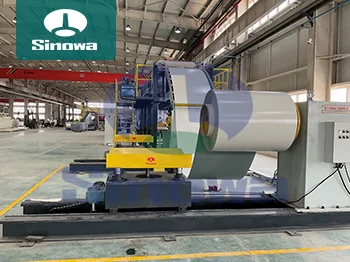
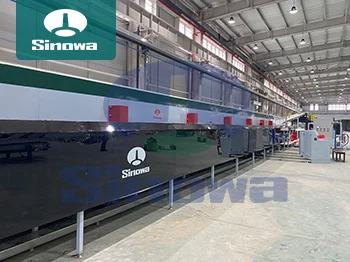
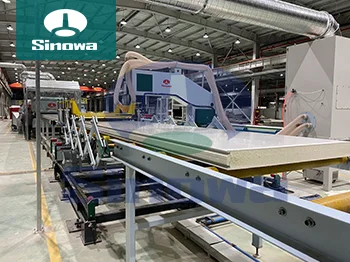
The high-tech puf panel manufacturing machine can meet a variety of production needs of customers, the whole puf panel manufacturing machine design concept of modularization enables all our components to be integrated and combined at will. Our high efficiency puf panel manufacturing machine can easily automate the production of roof sandwich panel, wall sandwich panel, cold storage sandwich panel and other products by different combination and configuration selection and siple switching. The inner core layer can be polyrethane or rock wool, glass wool, an so on.


The high precision puf panel manufacturing machine has high adaptability, which may produce various sandwich panel of the PU, PIR and rock wool systems. We may design various products according to the customer’s requirements, including various configurations, so as to meet their demands with flexible price system. Highly integrated and linked control system centralizes all control points at the main central center, achieving parameter linkage, fault self-diagnosis controlled by the whole line and shipping distance control. High-level automatic control system also saves the manpower and reduces the manpower loss for customers.


The precision servo hoisting mechanism employed by the main engine without hydraulic system makes the board thickness control flexible and the customer may conveniently change or adjust the board thickness. There will be not such troubles as hydraulic system adjustment, leakage, maintenance, etc.


High-level energy saving and protection design makes the whole puf panel manufacturing machine possible to produce around the clock throughout the year and the customer will save huge budget. In addition, the isolated heat preservation room is constructed for warming the environment. The energy saving and protection design of our manufacturing line may guarantee that the customer’s production line may be freely heated and produce in the main time to save more costs for customers.


The high-power low-consumption design quickens the reaction of the cheap puf panel manufacturing machine while energy consumption is kept low. With the brand-new, fully sealed inner insulation design, the energy consumption is controlled at the minimum level to achieve the design objective of less than an hour for the insulation system to be activated from the room temperature above 5℃ to the production process temperature. The energy consumption is only 40% that of those similar products.
PUF panel manufacturing machines are advanced industrial equipment designed to produce polyurethane foam (PUF) panels efficiently and precisely, playing a crucial role in modern construction, industrial, and commercial sectors. These machines integrate multiple technologies, including mechanical engineering, chemical processing, electrical control, and thermal management, to form a complete production system that transforms raw materials into high-quality PUF panels with consistent specifications. Unlike traditional manufacturing equipment, PUF panel manufacturing machines are characterized by their integration of multiple functional units, each working in coordination to ensure the smooth operation of the entire production process, from raw material feeding to finished product output. Understanding the structure, performance, types, and applications of these machines is essential for selecting the right equipment for specific production needs and optimizing the production process to achieve better efficiency and product quality.
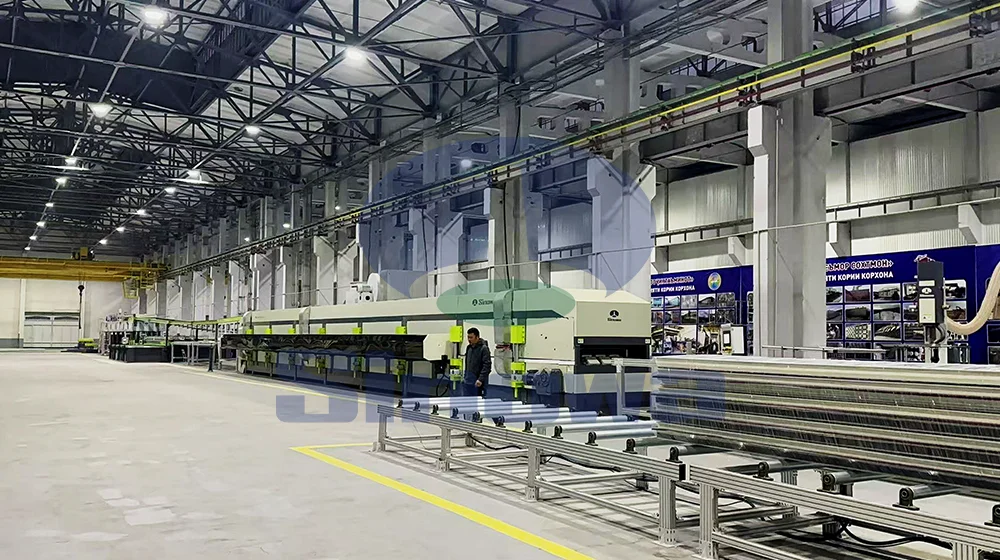
The structure of a PUF panel manufacturing machine is a complex but well-coordinated system composed of several core functional units, each responsible for a specific link in the production process. The basic structure typically includes an uncoiling system, preheating system, foaming system, forming system, cutting system, cooling system, and auxiliary systems, all of which are integrated into a unified production line to ensure continuous and automated operation. The uncoiling system is the starting point of the production process, responsible for unwinding and leveling the surface materials, which are usually metal coils such as galvanized steel sheets or aluminum sheets, as well as non-metallic materials like fiberglass cloth, non-woven fabric, or aluminum foil. Equipped with tension control devices and manual or automatic centering mechanisms, the uncoiling system ensures that the surface materials are unwound smoothly without deviation, providing a stable foundation for subsequent processing. Some advanced uncoiling systems also adopt hydraulic drives to adjust the unwinding speed according to the overall production rhythm, ensuring synchronization with other units.
Following the uncoiling system is the preheating system, which plays a vital role in improving the bonding strength between the surface materials and the foam core. The preheating system usually consists of non-powered roller conveyors with built-in heating elements, which heat the surface materials to a specific temperature before they enter the foaming section. This preheating process not only enhances the adhesion between the surface materials and the polyurethane foam but also accelerates the foaming and curing process of the foam, ensuring that the final PUF panels have a firm and uniform structure. The temperature of the preheating system is adjustable according to the type of surface materials and the properties of the foam raw materials, typically ranging from 40 to 80 degrees Celsius, to avoid overheating or insufficient heating that could affect product quality. In some cases, the preheating system also includes thermal insulation units to maintain a stable temperature and reduce energy loss, improving the overall energy efficiency of the machine.
The foaming system is the core component of the PUF panel manufacturing machine, responsible for mixing and spraying the polyurethane raw materials to form the foam core of the panels. The foaming system mainly includes a foaming machine, which can be either a low-pressure continuous foaming machine or a high-pressure foaming machine, depending on the production requirements. The foaming machine is equipped with independent metering pumps driven by variable frequency motors, which precisely control the output flow of the two main raw materials—polyols and isocyanates—ensuring that they are mixed in the required ratio. This precise metering is crucial for the quality of the foam core, as an incorrect ratio can lead to uneven foaming, poor insulation performance, or reduced structural strength. The foaming machine also includes a mixing head that uniformly mixes the raw materials and sprays them onto the lower surface material, ensuring that the foam is evenly distributed across the entire width of the panel. Some advanced foaming systems also adopt environmentally friendly foaming agents instead of traditional CFCs, reducing environmental impact while maintaining the performance of the foam core.
After the foam is sprayed, the surface materials and the foam core enter the forming system, which is responsible for shaping the PUF panels and ensuring their flatness and thickness consistency. The forming system usually consists of a double-track machine (also known as a double-belt conveyor) and a compression molding machine. The double-track machine is composed of chain plate units, lifting units, and insulation units, which work together to compress the upper and lower surface materials and the foam core under a specific temperature and pressure. The chain plate units provide a stable conveying surface, while the lifting units adjust the distance between the upper and lower tracks to control the thickness of the panels, which can typically be adjusted within a range of 30 to 200 millimeters. The insulation units of the double-track machine maintain the temperature required for foam curing, ensuring that the foam core solidifies uniformly and achieves the desired density and strength. The compression molding machine, meanwhile, presses the surface materials into the desired shape, such as corrugated or flat, to meet different application needs, and enhances the structural stability of the panels.
Once the PUF panels are formed and cured, they enter the cutting system, which cuts the continuous panel into fixed lengths according to the required specifications. The cutting system usually includes a sawing machine or a CNC-controlled cutting device, which ensures high cutting accuracy and minimizes material waste. The cutting process is synchronized with the production line, allowing for continuous cutting without interrupting the production process. Some cutting systems are equipped with automatic length measurement devices, which can adjust the cutting length in real-time according to the production requirements, improving the flexibility and efficiency of the machine. After cutting, the panels enter the cooling system, which uses horizontal cooling conveyors to cool the panels to room temperature, enhancing their stability and durability. The cooling system may also include fans or water cooling devices to accelerate the cooling process, ensuring that the panels can be stacked and packaged immediately after cooling.
In addition to the core functional units, PUF panel manufacturing machines also include various auxiliary systems that ensure the smooth operation of the entire production line. These auxiliary systems include electrical control systems, hydraulic systems, pneumatic systems, and safety systems. The electrical control system is the "brain" of the machine, adopting advanced PLC and touch screen control technology to monitor and adjust all production parameters, such as temperature, pressure, speed, and material ratio, in real-time. The touch screen interface allows operators to input parameters easily and view the operation status of the machine, making it simple to operate even for inexperienced personnel. The hydraulic system is responsible for providing the necessary pressure for the forming and lifting units, ensuring stable and precise operation, while the pneumatic system controls the movement of various components, such as the uncoiling mechanism and the cutting device. The safety system includes emergency stop buttons installed at each operating position, as well as protective covers and sensors, to ensure the safety of operators and prevent equipment damage in case of emergencies.
The performance of PUF panel manufacturing machines is reflected in several key aspects, including automation level, production efficiency, product quality stability, energy efficiency, and operational flexibility. High automation level is one of the most prominent features of modern PUF panel manufacturing machines, as they can achieve fully automated operation from raw material feeding to finished product stacking and packaging. This not only reduces the need for manual operation, lowering labor costs and human errors, but also improves production efficiency by ensuring continuous operation without interruptions. The automation system can also be equipped with fault detection and alarm functions, which can quickly identify and notify operators of any malfunctions, minimizing downtime and ensuring stable production.
Production efficiency is another important performance indicator of PUF panel manufacturing machines, which is usually measured by the production speed and output. The production speed of these machines can typically be adjusted within a range of 3 to 10 meters per minute, depending on the type of machine and the specifications of the panels. Continuous production lines can produce a large quantity of PUF panels in a short period, meeting the high demand of large-scale construction projects. The output of the machine is also affected by the width of the panels, with wider panels allowing for higher output per unit time. In addition, the efficient design of the machine, such as the integration of multiple functional units and the optimization of the production process, further improves production efficiency by reducing the time required for each production link.
Product quality stability is crucial for PUF panel manufacturing machines, as it directly affects the performance and durability of the final products. These machines achieve stable product quality through precise control of various production parameters, such as the ratio of foam raw materials, the preheating temperature, the forming pressure, and the curing time. The precise metering system of the foaming machine ensures that the foam core has a uniform density, which is essential for the insulation and structural performance of the panels. The double-track forming system ensures that the panels have a flat surface and consistent thickness, avoiding defects such as warping or unevenness. Moreover, the use of high-quality materials and components in the machine, such as corrosion-resistant steel for the frame and high-precision bearings for the conveyors, ensures the long-term stability of the machine, reducing the frequency of maintenance and improving the consistency of product quality.
Energy efficiency is an increasingly important performance indicator in modern industrial equipment, and PUF panel manufacturing machines are no exception. These machines adopt various energy-saving technologies to reduce energy consumption, such as efficient heating systems with thermal insulation, variable frequency motors that adjust power according to production needs, and energy recovery systems that reuse waste heat. The preheating system, for example, uses thermal insulation materials to reduce heat loss, while the variable frequency motors of the metering pumps and conveyors adjust their speed according to the production load, avoiding unnecessary energy consumption. Some advanced machines also use environmentally friendly foaming agents that require less energy for foaming, further reducing the overall energy consumption of the production process. These energy-saving measures not only reduce operating costs but also contribute to environmental protection, aligning with the global trend of sustainable development.
Operational flexibility is another key performance feature of PUF panel manufacturing machines, allowing them to produce a variety of PUF panels with different specifications and properties to meet diverse application needs. The machines can be adjusted to produce panels of different widths, thicknesses, and surface shapes, simply by changing the parameters of the uncoiling system, forming system, and cutting system. For example, by adjusting the lifting unit of the double-track machine, the thickness of the panels can be changed from 30 millimeters to 200 millimeters, while changing the surface material can produce panels with different properties, such as fire-resistant or waterproof panels. In addition, many machines have strong scalability, allowing for the addition of auxiliary equipment such as drying boards, palletizing systems, and packaging systems to achieve fully automated production and adapt to changing production needs.
PUF panel manufacturing machines can be classified into different types based on several criteria, including production mode, automation level, and application scope. The most common classification is based on production mode, which divides the machines into continuous production lines and discontinuous (batch) production lines. Continuous production lines are designed for large-scale, high-volume production, featuring a fully automated and continuous operation process that can produce PUF panels of unlimited length (before cutting) and consistent quality. These lines are suitable for large construction projects or manufacturing facilities that require a steady supply of PUF panels, as they can operate 24 hours a day with minimal manual intervention. Continuous production lines are typically equipped with advanced automation systems, high-pressure foaming machines, and long double-track conveyors to ensure efficient and stable production.
Discontinuous production lines, on the other hand, are designed for small-scale or customized production, producing PUF panels in batches rather than continuously. These machines are more flexible and suitable for producing panels with special specifications or small quantities, as they can be easily adjusted between batches to meet different requirements. Discontinuous production lines usually have a simpler structure, with manual or semi-automatic operation, and are more cost-effective for small and medium-sized enterprises. They are often used for producing customized panels for special applications, such as cold storage units, modular homes, or small industrial buildings.
Another classification of PUF panel manufacturing machines is based on automation level, which includes fully automatic, semi-automatic, and manual machines. Fully automatic machines are the most advanced, with all production links controlled by the electrical system, requiring minimal manual operation except for parameter setting and equipment monitoring. These machines are characterized by high production efficiency, stable product quality, and low labor costs, making them ideal for large-scale production. Semi-automatic machines require some manual intervention, such as loading raw materials or adjusting the machine during operation, but still have a high degree of automation for key production links. Manual machines, on the other hand, rely heavily on manual operation for most production links, such as feeding, foaming, and cutting, and are suitable for small-scale production or workshops with limited budget.
PUF panel manufacturing machines can also be classified based on the type of PUF panels they produce, such as wall panels, roof panels, cold storage panels, and decorative panels. Wall panel manufacturing machines are designed to produce panels with high structural strength and insulation performance, suitable for the exterior and interior walls of buildings. Roof panel machines produce panels with anti-corrosion and waterproof properties, designed to withstand harsh weather conditions such as rain, snow, and strong winds. Cold storage panel machines are specialized in producing panels with excellent thermal insulation performance, used for cold storage units, ice factories, and vegetable storage facilities. Decorative panel machines produce panels with various surface patterns and colors, suitable for interior decoration, such as partition walls, ceilings, and machine enclosures.
The applications of PUF panel manufacturing machines are closely related to the properties of the PUF panels they produce, which are known for their excellent insulation, heat insulation, sound insulation, fire resistance, waterproofing, and lightweight properties. As a result, PUF panels are widely used in various fields, including construction, industrial, commercial, and agricultural sectors, and the manufacturing machines play a crucial role in meeting the demand for these panels.
In the construction industry, PUF panel manufacturing machines are widely used to produce panels for prefabricated buildings, which have become increasingly popular due to their fast construction speed, low cost, and energy efficiency. PUF panels produced by these machines are used as exterior wall enclosures, interior partitions, roofs, and floors of prefabricated buildings, including residential buildings, office buildings, schools, and hospitals. The lightweight nature of PUF panels reduces the load on the building structure, while their excellent insulation performance reduces energy consumption for heating and cooling, making prefabricated buildings more energy-efficient and environmentally friendly. PUF panels are also used in the renovation of old buildings, as they can be easily installed and provide improved insulation and soundproofing effects.
In the industrial sector, PUF panel manufacturing machines are used to produce panels for industrial plants, warehouses, workshops, and machine enclosures. Industrial plants and warehouses require panels with high structural strength, corrosion resistance, and insulation performance to protect the equipment and goods inside. PUF panels produced by these machines meet these requirements, as they are durable, lightweight, and have excellent thermal and sound insulation properties. Machine enclosures made of PUF panels are used to reduce noise pollution and protect operators from harmful substances, improving the working environment in industrial facilities. In addition, PUF panels are used in the construction of clean rooms, which require a dust-free and temperature-controlled environment, such as in the pharmaceutical, electronic, and food processing industries.
The cold storage and refrigeration industry is another important application field for PUF panel manufacturing machines. PUF panels produced by these machines have excellent thermal insulation performance, which is essential for maintaining low temperatures in cold storage units, ice factories, mushroom grow chambers, and vegetable storage facilities. The foam core of the panels has a low thermal conductivity, preventing heat from entering the cold storage and reducing the energy consumption of the refrigeration system. PUF panels used in cold storage are also designed to be waterproof and moisture-proof, preventing condensation and ensuring the quality of the stored goods. The manufacturing machines can produce cold storage panels of different thicknesses and sizes, adapting to the diverse needs of the cold storage industry.
In the commercial sector, PUF panel manufacturing machines are used to produce panels for shopping malls, supermarkets, hotels, and restaurants. These panels are used as interior partitions, ceilings, and decorative walls, as they are aesthetically pleasing, easy to clean, and have good sound insulation performance. PUF panels with decorative surface patterns and colors can enhance the interior design of commercial spaces, creating a comfortable and attractive environment for customers. In addition, PUF panels are used in the construction of temporary commercial buildings, such as exhibition booths and pop-up stores, due to their quick installation and easy relocation.
The agricultural sector also benefits from PUF panel manufacturing machines, as they are used to produce panels for greenhouses, farmhouses, and agricultural storage facilities. Greenhouses made of PUF panels provide a stable temperature and humidity environment for crop growth, extending the growing season and improving crop yields. The insulation performance of PUF panels helps to maintain the required temperature in the greenhouse, reducing energy consumption for heating in cold weather. Farmhouses and agricultural storage facilities made of PUF panels are durable, lightweight, and easy to construct, providing a cost-effective solution for agricultural applications.
In addition to these main application fields, PUF panel manufacturing machines are also used in the production of panels for special applications, such as insulated containers, mobile homes, and disaster relief shelters. Insulated containers made of PUF panels are used for transporting temperature-sensitive goods, such as food, pharmaceuticals, and chemicals, ensuring that the goods remain at the required temperature during transportation. Mobile homes and disaster relief shelters made of PUF panels are lightweight, portable, and quick to install, providing temporary housing for people affected by natural disasters or construction projects. These special applications highlight the versatility of PUF panels and the importance of manufacturing machines in meeting diverse market needs.
As the demand for energy-efficient and sustainable building materials continues to grow, the development of PUF panel manufacturing machines is also evolving towards higher automation, better energy efficiency, and greater flexibility. Modern machines are equipped with advanced intelligent control systems that can optimize production parameters in real-time, improving production efficiency and product quality. The use of environmentally friendly materials and energy-saving technologies is also becoming more widespread, aligning with the global trend of sustainable development. In addition, the integration of digital technologies, such as IoT and big data, is enabling remote monitoring and maintenance of the machines, reducing downtime and improving the overall operational efficiency.
In conclusion, PUF panel manufacturing machines are complex and advanced industrial equipment that play a crucial role in the production of high-quality PUF panels. Their structure is composed of multiple core functional units and auxiliary systems, working together to ensure continuous and efficient production. The performance of these machines is reflected in their automation level, production efficiency, product quality stability, energy efficiency, and operational flexibility, which determine their suitability for different production needs. Based on production mode, automation level, and application scope, PUF panel manufacturing machines can be classified into various types, each with its own characteristics and advantages. The applications of these machines are widespread, covering construction, industrial, commercial, agricultural, and special fields, and they are essential for meeting the growing demand for energy-efficient and sustainable building materials. With the continuous advancement of technology, PUF panel manufacturing machines will continue to improve, providing more efficient, reliable, and environmentally friendly solutions for the production of PUF panels.
« PUF Panel Manufacturing Machine » Update Date: 2026/4/16
URL: https://www.sinowamachine.com/tags/puf-panel-manufacturing-machine.html
![PUF Panel Manufacturing Machine For Sale]()
PUF Panel Manufacturing Machine For Sale
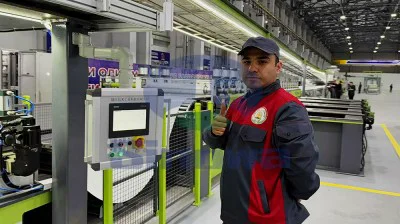
2026-08-12PUF panel manufacturing machines have emerged as core automated production equipment for the modern energy-saving building material industry, specially developed for the integrated molding of polyurethane foam sandwich panels. This type of integrated production system integrates mechanical transmissi…
- Links:
- Sandwich Panel Continuous Production Line
- Automatic and Continuous Sandwich Panel Production Line
- Cheap and Low Price Sandwich Panel Production Line
- China Sandwich Panel Production Line Factory
- Color Steel Sandwich Panel Production Line For Cold Storage
- Continuous Composite Foam Sandwich Panel Production Line
- Continuous Production Line For Rockwool and Mineral Wool Sandwich Panels
- Continuous PU Phenolic Insulation Panel Production Line
- Continuous PU PIR Sandwich Panel Production Line
- Continuous PUF PUR Sandwich Panel Production Line
- Continuous Sandwich Panel Production Line For Roof and Wall
- Customized and Design Sandwich Panel Production Line
- Decorative Sandwich Panel Production Line For Glass Wool Boards
- High Quality Sandwich Panel Production Line For Sale
- Polyurethane(PU) Sandwich Panel Production Line
- Sandwich Panel Production Line Manufacturer and Supplier
- Sandwich Panel Production Machinery and Equipment