
Isolation PU Sandwich Panel Line
Sinowa is a isolation pu sandwich panel line supplier from china, customized high-quality & high efficiency isolation pu sandwich panel line at low price, the adoption of system integration technology and bus control technology accomplishes the full automatization of integrated and coordinated control of the isolation pu sandwich panel line with accessible remote interactive communication. Ranking the first-class level in the world, it is currently the isolation pu sandwich panel line in the market taking a comprehensive lead in high performance.
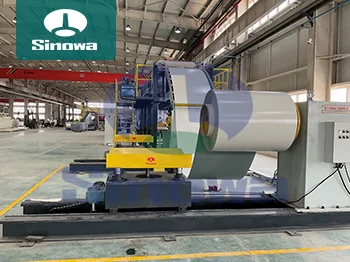
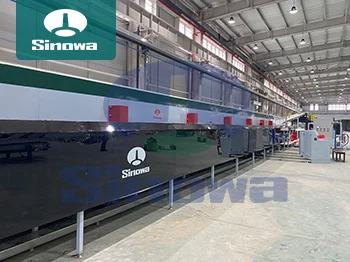
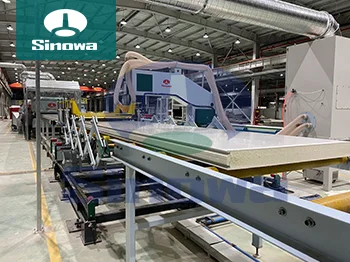
The high-tech isolation pu sandwich panel line can meet a variety of production needs of customers, the whole isolation pu sandwich panel line design concept of modularization enables all our components to be integrated and combined at will. Our high efficiency isolation pu sandwich panel line can easily automate the production of roof sandwich panel, wall sandwich panel, cold storage sandwich panel and other products by different combination and configuration selection and siple switching. The inner core layer can be polyrethane or rock wool, glass wool, an so on.


The high precision isolation pu sandwich panel line has high adaptability, which may produce various sandwich panel of the PU, PIR and rock wool systems. We may design various products according to the customer’s requirements, including various configurations, so as to meet their demands with flexible price system. Highly integrated and linked control system centralizes all control points at the main central center, achieving parameter linkage, fault self-diagnosis controlled by the whole line and shipping distance control. High-level automatic control system also saves the manpower and reduces the manpower loss for customers.


The precision servo hoisting mechanism employed by the main engine without hydraulic system makes the board thickness control flexible and the customer may conveniently change or adjust the board thickness. There will be not such troubles as hydraulic system adjustment, leakage, maintenance, etc.


High-level energy saving and protection design makes the whole isolation pu sandwich panel line possible to produce around the clock throughout the year and the customer will save huge budget. In addition, the isolated heat preservation room is constructed for warming the environment. The energy saving and protection design of our manufacturing line may guarantee that the customer’s production line may be freely heated and produce in the main time to save more costs for customers.


The high-power low-consumption design quickens the reaction of the cheap isolation pu sandwich panel line while energy consumption is kept low. With the brand-new, fully sealed inner insulation design, the energy consumption is controlled at the minimum level to achieve the design objective of less than an hour for the insulation system to be activated from the room temperature above 5℃ to the production process temperature. The energy consumption is only 40% that of those similar products.
The isolation PU sandwich panel line stands as a cornerstone of modern industrial manufacturing for high-performance composite building and insulation materials, integrating precision engineering, automated production processes, and material science innovation to deliver consistent, durable, and thermally efficient polyurethane (PU) sandwich panels. Unlike traditional building material production lines, this specialized manufacturing system is engineered to streamline the entire production cycle from raw material preparation to finished panel packaging, ensuring uniformity in structural integrity, insulation performance, and dimensional accuracy across every unit produced. At its core, the isolation PU sandwich panel line is designed to fabricate composite panels that feature a rigid PU foam core securely bonded between two outer facing layers, a structural configuration that unlocks a unique combination of lightweight properties, mechanical strength, and exceptional thermal isolation—traits that have made these panels indispensable across residential, commercial, industrial, and specialized sectors worldwide. To fully understand the value and versatility of these panels, it is essential to explore the intricate structure of the production line, the inherent performance characteristics of the finished PU sandwich panels, the diverse varieties tailored to distinct functional needs, and the wide-ranging applications that leverage their unique properties.
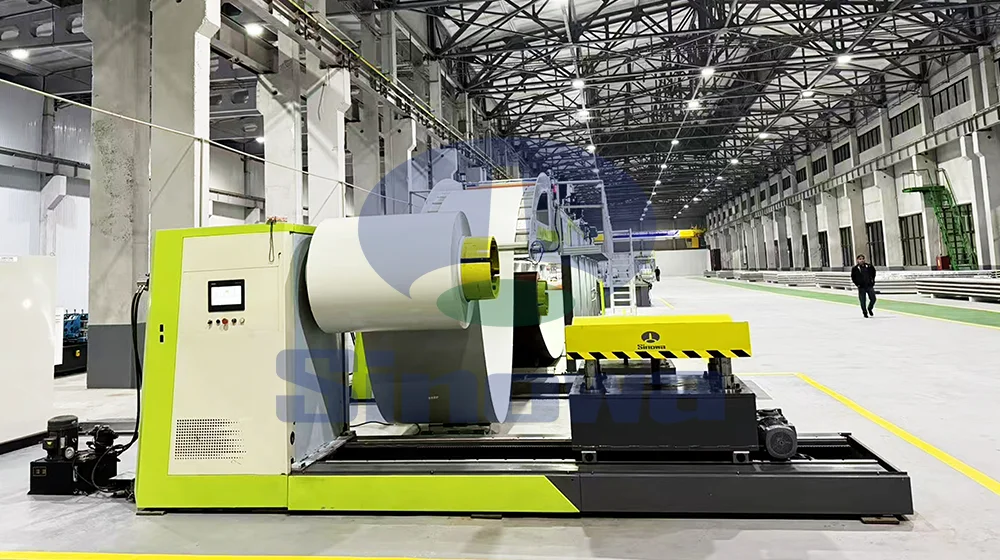
Starting with the structural composition of the isolation PU sandwich panel line, the system is a fully integrated, continuous or semi-continuous production assembly that comprises several interconnected core modules, each serving a critical role in the panel manufacturing process. The line typically begins with a raw material handling and feeding unit, which manages the storage and controlled delivery of the key components: the outer facing materials, PU foam raw materials (including polyols, isocyanates, and auxiliary additives), and bonding agents. This unit is calibrated to maintain precise material ratios and flow rates, a critical factor in ensuring the consistency of the foam core density and bonding strength between the core and facings. Following the feeding system is the panel forming and laminating section, the heart of the production line, where the outer facing sheets are unwound, leveled, and pre-treated to enhance adhesion before the PU foam mixture is injected or poured between the two layers in a controlled, continuous manner. The laminating process operates under specific temperature and pressure parameters to facilitate the rapid foaming and curing of the PU core, creating a permanent, monolithic bond between the core and the outer skins without the need for additional adhesives in most cases. Adjacent to the laminating unit is the curing and cooling section, where the newly formed sandwich panels are conveyed through a temperature-regulated chamber to complete the foam curing process, stabilizing the panel’s structure, dimensional shape, and internal molecular structure to prevent warping, shrinkage, or delamination over time. The line also includes a precision cutting and trimming module, equipped with automated cutting tools that slice the continuous panel strip into custom lengths, widths, and profiles according to project specifications, ensuring tight dimensional tolerances and clean, uniform edges. Finally, the production line features a quality inspection and packaging unit, where finished panels undergo visual and mechanical checks to verify surface integrity, core uniformity, and overall structural stability before being packaged for storage and distribution. The seamless coordination of these modules eliminates manual errors, reduces production waste, and enables high-volume output while maintaining strict quality standards, making the isolation PU sandwich panel line a highly efficient and reliable manufacturing solution.
Beyond the production line structure, the performance attributes of the PU sandwich panels themselves are what define their practical utility, with a set of inherent properties that stem directly from their composite sandwich structure and PU foam core material. The most prominent performance feature is exceptional thermal insulation, driven by the closed-cell structure of the rigid PU foam, which traps tiny air pockets within the core to minimize heat transfer through conduction, convection, and radiation. This low thermal conductivity makes the panels highly effective at maintaining stable internal temperatures, whether blocking external heat ingress in warm climates or retaining internal heat in colder environments, significantly reducing energy consumption for heating, ventilation, and air conditioning (HVAC) systems in any enclosed space. In addition to thermal isolation, these panels exhibit outstanding mechanical performance despite their lightweight nature; the dual outer facing layers (typically made of durable metal or other rigid materials) provide tensile and compressive strength, while the rigid PU core adds structural rigidity and load-bearing capacity, allowing the panels to withstand wind loads, snow loads, and minor mechanical impacts without bending or cracking. This high strength-to-weight ratio is a key advantage, as it reduces the overall structural load on building frameworks, foundations, and supporting structures, simplifying construction and lowering the need for heavy-duty support systems. Another critical performance trait is moisture and water resistance, as the closed-cell PU foam core absorbs minimal to no moisture, preventing the growth of mold, mildew, and bacteria, and avoiding the degradation of insulation efficiency that often occurs with porous insulation materials. The sealed, continuous structure of the panels also acts as a reliable vapor barrier, preventing condensation buildup within wall or roof assemblies, a common issue in temperature-controlled environments. Additionally, PU sandwich panels offer effective acoustic insulation, dampening airborne and impact noise transmission between spaces, thanks to the dense foam core that absorbs sound waves and breaks up sound vibration paths. They also demonstrate good dimensional stability over time, resisting expansion, contraction, or deformation when exposed to fluctuating temperatures and humidity levels, ensuring long-term performance and structural integrity throughout their service life. While the base PU material has inherent flame-retardant properties, modified formulations can further enhance fire resistance by slowing flame spread, reducing smoke emission, and limiting structural damage in the event of a fire, making the panels suitable for a wide range of safety-conscious applications.
The versatility of isolation PU sandwich panels is further reflected in the diverse varieties produced by the specialized production line, with classifications based on core density, outer facing material, panel thickness, profile design, and functional modifications to suit specific operational requirements. One primary classification is based on outer facing material, which directly impacts the panel’s durability, weather resistance, and aesthetic appeal. The most common facing material is coated metal, typically steel or aluminum, which offers exceptional durability, weather resistance, and structural strength, making it ideal for exterior applications exposed to harsh environmental conditions such as wind, rain, snow, and UV radiation. Metal-faced panels are available in various surface finishes, from smooth to textured, and can be customized with different color coatings to match architectural design needs without compromising performance. For interior applications or environments with less severe weather exposure, non-metal facing materials such as fiberglass, reinforced plastic, or composite boards are also used, offering lighter weight, smoother surfaces, and easier cleaning, making them suitable for indoor partitions, cleanrooms, and temperature-controlled storage areas. Another key classification is based on panel thickness, which ranges from thin, lightweight panels for interior partitioning and small-scale insulation projects to thick, heavy-duty panels for high-performance thermal isolation in extreme temperature environments. Thinner panels, typically between 50mm and 75mm, are ideal for interior walls, ceiling cladding, and lightweight partition systems, balancing space efficiency with basic insulation and structural support; thicker panels, ranging from 100mm to 200mm or more, are engineered for maximum thermal isolation, making them the preferred choice for cold storage facilities, refrigerated spaces, and industrial buildings requiring strict temperature control. Panels are also categorized by core density, with low-density cores offering superior insulation efficiency and lighter weight, and high-density cores providing enhanced mechanical strength and load-bearing capacity for structural applications. Additionally, the production line can manufacture panels with different edge profiles, including tongue-and-groove edges, flat edges, and interlocking edges, which simplify on-site installation, create airtight and watertight joints between panels, and eliminate thermal bridging at connection points—an essential feature for maintaining consistent insulation performance across entire building envelopes. Functional modifications further expand the variety of PU sandwich panels, including fire-retardant formulations for high-safety environments, anti-corrosion coatings for coastal or industrial areas with high humidity and chemical exposure, and sound-dampening enhancements for noise-sensitive spaces such as offices, schools, and healthcare facilities.
The combination of robust structural performance, exceptional thermal isolation, and diverse product varieties has led to the widespread adoption of PU sandwich panels across countless industries and applications, with each sector leveraging specific panel properties to address unique operational needs. One of the most prominent applications is in the construction of industrial and commercial buildings, where the panels are used for exterior wall cladding, roof systems, and interior partition walls. Industrial facilities such as warehouses, manufacturing plants, logistics centers, and factory workshops benefit from the panels’ quick installation, lightweight design, and thermal efficiency, reducing construction timelines and long-term energy costs while providing durable, low-maintenance building envelopes. Commercial buildings including office complexes, retail spaces, shopping malls, and exhibition halls use these panels to create modern, energy-efficient structures with clean architectural lines, while also benefiting from their acoustic insulation properties to create comfortable indoor environments. The fastest-growing application sector is temperature-controlled storage and cold chain logistics, where PU sandwich panels are the material of choice for cold storage warehouses, refrigerated rooms, blast freezers, and controlled-atmosphere storage facilities. The panels’ ultra-low thermal conductivity ensures minimal heat transfer, maintaining consistent low temperatures ranging from mild refrigeration to deep freezing, preserving perishable goods such as food, pharmaceuticals, and biological samples, and reducing the energy load on refrigeration systems. In the transportation sector, these panels are widely used in the fabrication of refrigerated truck bodies, insulated shipping containers, and refrigerated rail cars, providing lightweight, durable insulation that maintains temperature stability during transit, protecting sensitive cargo from temperature fluctuations. The modular construction industry also relies heavily on PU sandwich panels, as their prefabricated, easy-to-install design makes them perfect for modular homes, portable offices, temporary housing, emergency shelters, and site cabins. These modular structures can be assembled and disassembled quickly, offering flexible, cost-effective housing and workspace solutions for remote locations, disaster relief efforts, and temporary project sites. In agricultural applications, the panels are used to construct climate-controlled livestock barns, poultry houses, greenhouses, and agricultural storage facilities, maintaining optimal temperature and humidity levels for animal welfare and crop growth, while also resisting moisture and corrosion from agricultural chemicals and waste. Specialized high-hygiene environments, including pharmaceutical cleanrooms, food processing plants, healthcare facilities, and laboratories, utilize smooth, easy-to-clean PU sandwich panels for wall and ceiling cladding, as the non-porous surface prevents dust accumulation, bacterial growth, and contamination, meeting strict hygiene and cleanliness standards. Additionally, these panels are used in renovation and retrofitting projects for existing buildings, providing a cost-effective way to upgrade thermal insulation, improve energy efficiency, and enhance structural durability without extensive demolition or reconstruction. Even in recreational and infrastructure applications, such as sports facilities, gymnasiums, airport hangars, and bus terminals, PU sandwich panels deliver a unique blend of performance, durability, and design flexibility, making them a versatile solution for nearly any project requiring thermal isolation, structural strength, and efficient construction.
In summary, the isolation PU sandwich panel line represents a pinnacle of automated composite material manufacturing, combining precise engineering and material science to produce panels that redefine performance standards in thermal insulation, structural integrity, and versatility. The streamlined, integrated structure of the production line ensures consistent, high-quality output, while the inherent properties of the PU sandwich panels—including exceptional thermal efficiency, lightweight strength, moisture resistance, acoustic insulation, and dimensional stability—address critical needs across modern construction and industrial sectors. The wide range of panel varieties, tailored to different facing materials, thicknesses, densities, and functional requirements, ensures that there is a suitable PU sandwich panel for every application, from basic interior partitioning to extreme-temperature cold storage and high-safety industrial facilities. As global demand for energy-efficient, sustainable, and cost-effective building materials continues to rise, the isolation PU sandwich panel line and the products it manufactures will remain a vital solution, driving innovation in construction, cold chain logistics, modular housing, and countless other industries. Their ability to balance performance, durability, and practicality not only reduces long-term operational costs for businesses and homeowners but also contributes to broader sustainability goals by lowering energy consumption and minimizing environmental impact, solidifying their position as a foundational material in modern infrastructure and industrial development.
« Isolation PU Sandwich Panel Line » Update Date: 2026/3/24
URL: https://www.sinowamachine.com/tags/isolation-pu-sandwich-panel-line.html
![High-end Isolation PU Sandwich Panel Line]()
High-end Isolation PU Sandwich Panel Line
2026-01-12In the evolving landscape of modern construction and industrial manufacturing, the demand for efficient, high-performance building materials has driven significant advancements in production technology. Among these innovations, the high-end isolation PU sandwich panel line stands out as a cornerstone…
- Links:
- Sandwich Panel Continuous Production Line
- Automatic and Continuous Sandwich Panel Production Line
- Cheap and Low Price Sandwich Panel Production Line
- China Sandwich Panel Production Line Factory
- Color Steel Sandwich Panel Production Line For Cold Storage
- Continuous Composite Foam Sandwich Panel Production Line
- Continuous Production Line For Rockwool and Mineral Wool Sandwich Panels
- Continuous PU Phenolic Insulation Panel Production Line
- Continuous PU PIR Sandwich Panel Production Line
- Continuous PUF PUR Sandwich Panel Production Line
- Continuous Sandwich Panel Production Line For Roof and Wall
- Customized and Design Sandwich Panel Production Line
- Decorative Sandwich Panel Production Line For Glass Wool Boards
- High Quality Sandwich Panel Production Line For Sale
- Polyurethane(PU) Sandwich Panel Production Line
- Sandwich Panel Production Line Manufacturer and Supplier
- Sandwich Panel Production Machinery and Equipment