
Phenolic Insulated Panel Production Line
Sinowa is a phenolic insulated panel production line supplier from china, customized high-quality & high efficiency phenolic insulated panel production line at low price, phenolic insulated panel production line has diversified and multifunctional production characteristics, which may produce products with different specifications such as PU, PF, PIR, etc. The surface material may be aluminum foil, colored steel, cement base cloth, kraft paper, non-woven fabrics, etc. The products are widely applied to such occasions as construction, decoration, pipeline ventilation, subway construction, etc.
The phenolic insulated panel production line is able to continuously and efficiently produce high-quality PU and Phenolic insulation boards.
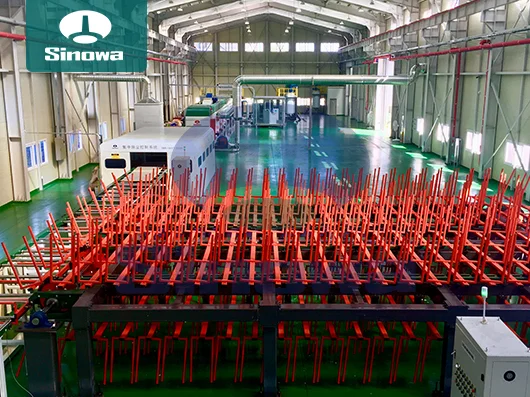
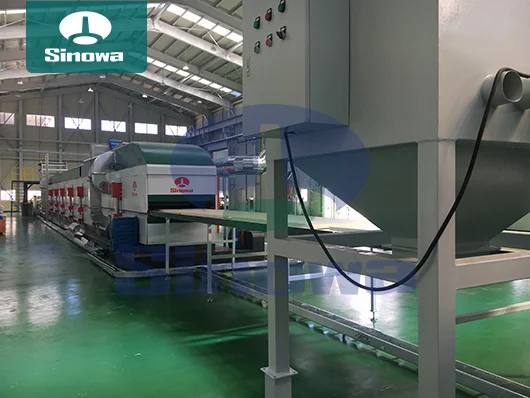
We spare no efforts to improve our product quality and technological reliability by employing the most cutting-edge and the most reliable support and processes to make our products highly reliable and endurable. As a result, the phenolic insulated panel production line is highlighted by many perfect qualities. It is the core idea in Sinowa's product roadmap to surpass our competitors in terms of design philosophy, manufacture methods and service level, going for excellence and leading position and making constant improvement on our products and services, which is also our core value system to create efficiency and convenience for our customers.
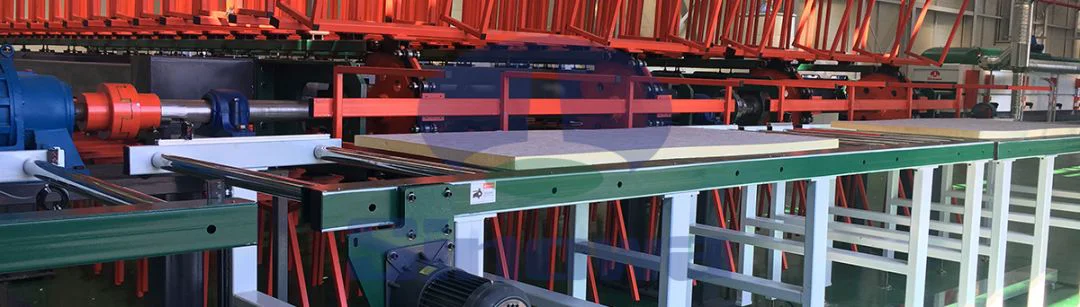
Well-grounded on our solid strength as a renowned large-scale enterprise, Sinowa has a high starting point in developing industrial assembly lines. Based on the advanced science and technology introduced from within and without the country and supported by a great number of first-grade parts and components from the home and aboard, the phenolic insulated panel production line has a high-level configuration of supporting products in terms of machinery, electrical control, hydraulic pressure, automatic measurement and tracking, and so on. This is a strong proof of our product’s reliable quality and high efficiency.
The first-class appearance design and excellent energy saving measures make it unnecessary for customers to additionally construct the heat preservation and isolation room for production around the clock throughout the year, so that the customers may save lots of resources and costs.
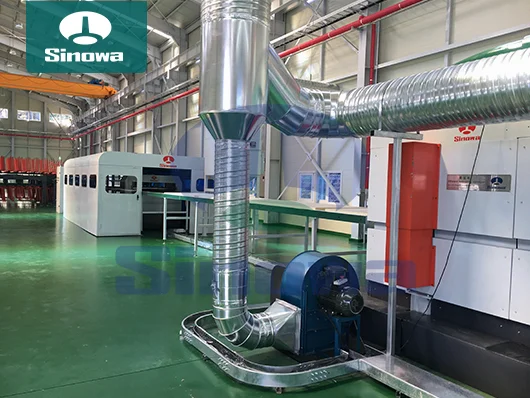
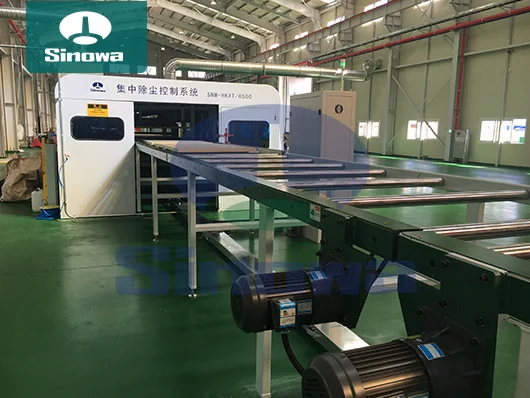
Modularized standard design and important parts machined with CNC machine tool make the phenolic insulated panel production line have excellent quality assurance. Dependence on the man-made factors is eliminated. The operation is precision, with the highest operation speed of 30m/min. The phenolic insulated panel production line has the world-class production efficiency.
The high performance and reliable multicomponent cyclopentane foaming technology and equipment of Sinowa may be also applied to the foaming process of the phenolic aldehyde board. Therefore, our customers may not only freely adjust the foaming matching according to the raw material, but also save lots of costs. Moreover, they are of significance for environmental protection.
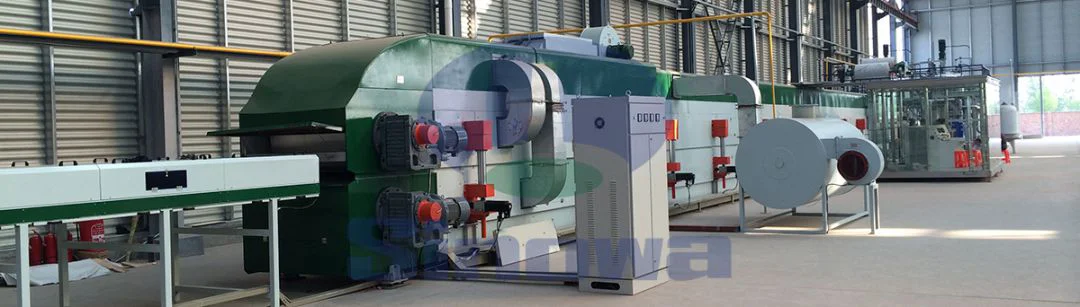
Sinowa's industrial production line of insulation panels is distinguished by its impressive performance of energy conservation. In each high point of energy consumption throughout the entire phenolic insulated panel production line are implemented corresponding measures to considerably lower the consumption level. For example, the body of the lamination belt conveyer is covered with insulation panels in very reasonable structures, which doesn’t blemish the overall outlook but greatly increases the insulation performance. The entire phenolic insulated panel production line is constantly optimized and improved so that the consumption of each power source is significantly reduced. The motor power of our lamination conveying system is only 3.0 kw, about 50% less than those of the same kind. All in all, the energy consumption of the whole industrial phenolic insulated panel production line equals 40% or even less of the equivalent lines in the market.
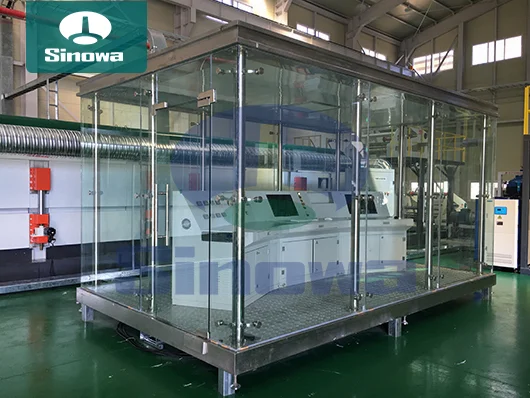
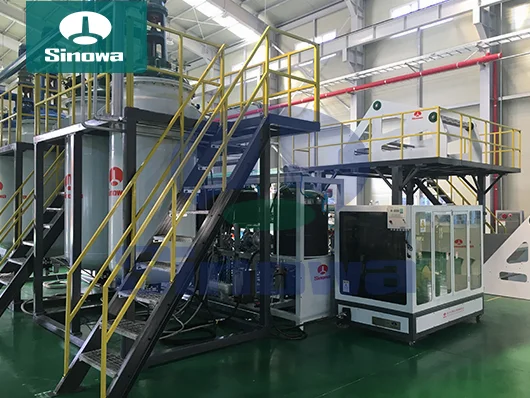
The phenolic insulated panel production line of Sinowa adopts the most advanced concepts in the world to realize the modularized design with all the parts bolted together rather than welded. In standardized production, the parts can be dismantled and exchanged, so the production cycle is drastically shortened and the maintenance becomes by far easier. Through finite element analysis, the equipment design is greatly optimized to realize modularization, digitization, and weight-minimalization.
The phenolic insulated panel production line is a sophisticated, fully integrated manufacturing system designed to produce high-performance composite insulation panels with superior thermal retention, fire resistance, and structural durability. Engineered for continuous automated operation, this streamlined production setup combines precise raw material processing, chemical reaction control, mechanical lamination, thermal curing, and finished product finishing to deliver consistent phenolic foam core panels widely used in building envelopes, ventilation systems, and industrial insulation projects. Unlike conventional insulation panel manufacturing equipment, the line is optimized for the unique thermosetting properties of phenolic resin, featuring adaptive temperature and pressure regulation systems that stabilize foam cell structure and enhance composite bonding performance. Every operational module is interconnected to minimize manual intervention, reduce production fluctuations, and ensure uniform product quality across batches. By integrating intelligent parameter monitoring and automatic error correction functions, the production line balances high production efficiency with reliable product performance, meeting the growing market demand for safe, energy-saving, and long-service-life insulation building materials.
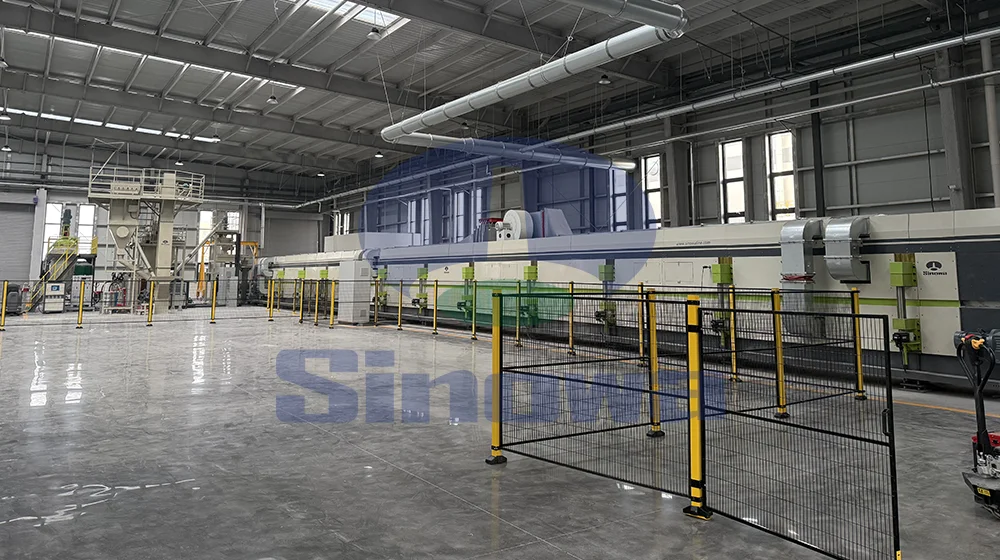
Raw material preparation serves as the foundational starting point of the entire phenolic insulated panel production process, directly determining the basic performance and stability of finished panels. The core materials deployed in the production line include phenolic resin substrates, high-efficiency foaming agents, specialized curing agents, flame-retardant additives, and surface modification auxiliaries, each selected to coordinate with the thermosetting foaming mechanism of phenolic materials. The production system adopts fully enclosed automatic storage and conveying devices to isolate raw materials from external dust and temperature interference, effectively preventing resin deterioration, additive volatilization, and material moisture absorption that may compromise product quality. Equipped with a high-precision batching and metering system, the line achieves accurate proportional distribution of all raw material components, eliminating quality deviations caused by manual weighing errors. The system maintains constant temperature and humidity conditions in the raw material processing area to stabilize the activity of phenolic resin and additives, ensuring that each batch of mixed materials maintains consistent reaction activity. Strict raw material pretreatment screening is also implemented to remove impurities and unqualified particles, laying a solid foundation for uniform foaming, complete curing, and firm composite bonding in subsequent production stages.
Precision raw material mixing and homogeneous foaming constitute the core preliminary processing stage that shapes the internal structure of phenolic insulation panels. After accurate batching, all raw materials are automatically transported to a high-speed sealed mixing unit, where multi-dimensional stirring and blending technology is applied to achieve micro-level uniform fusion of resin, curing agents, foaming components, and functional additives. The mixing process is dynamically adjusted according to real-time material viscosity and fluidity, avoiding local component accumulation or uneven dispersion that could cause inconsistent foam density. Once mixing is completed, the homogeneous material mixture is immediately delivered to the continuous foaming system, where controlled physical and chemical reactions occur to form fine, closed-cell foam structures. The production line precisely regulates foaming temperature, material injection speed, and reaction time to ensure uniform cell size and dense internal structure of the phenolic foam core. This controlled foaming process eliminates hollow gaps, coarse pores, and structural defects inside the core material, effectively improving the thermal insulation performance, compressive strength, and dimensional stability of the finished panel. The continuous foaming design also ensures uninterrupted material supply for subsequent lamination processes, maintaining the continuity and efficiency of overall production.
Surface substrate pretreatment is an indispensable procedural step to enhance the composite bonding strength of phenolic insulated panels. The production line is compatible with multiple common surface substrates used for insulation panels, and adopts professional automated pretreatment equipment to process substrate surfaces before compounding. The pretreatment system first conducts automatic surface cleaning to remove dust, oil stains, and residual impurities generated during substrate storage and transportation, eliminating barriers to tight bonding between the substrate and phenolic foam core. Subsequently, uniform surface roughening and activation treatment are performed to increase the surface contact area and enhance molecular adhesion activity. For substrates with smooth surfaces that are prone to bonding failure, the equipment implements micro-coating of special interface auxiliaries to further optimize the bonding interface environment. The entire pretreatment process operates in a continuous synchronous manner matching the production rhythm, avoiding delayed processing or repeated handling that may affect production efficiency. Standardized substrate pretreatment effectively solves common quality problems such as delamination, hollow layers, and edge peeling of composite panels in long-term use, greatly improving the overall structural integrity and service durability of phenolic insulated panels.
Automatic continuous lamination and compounding is the key molding stage that integrates surface substrates with phenolic foam core materials. After pretreatment, upper and lower surface substrates are synchronously conveyed to the lamination station through a stable double-belt transmission system, maintaining flat tension and accurate alignment throughout the transportation process to prevent offset, wrinkling, or uneven fitting. At the same time, the freshly foamed phenolic core material is evenly injected and paved between the two layers of substrates, with automatic thickness adjustment devices precisely controlling the core material paving thickness to meet different product specifications. The lamination unit adopts segmented pressure regulation technology to apply uniform and stable composite pressure on the integrated panel blank, ensuring full contact and preliminary bonding between the core material and substrates without squeezing damage to the internal foam structure. The synchronous transmission speed of the lamination system is perfectly matched with the foaming and curing rhythm, realizing seamless connection between processes and avoiding stagnation deformation of semi-finished panels. This automated continuous lamination mode replaces traditional intermittent manual compounding, significantly improving production continuity while ensuring consistent flatness, thickness uniformity, and bonding tightness of each panel blank.
Gradient temperature curing and thermosetting shaping determine the final structural stability and core performance of phenolic insulated panels. As phenolic resin is a typical thermosetting material, the semi-finished composite panel blanks after lamination must pass through a multi-stage curing tunnel to complete irreversible chemical cross-linking reactions. The production line adopts segmented gradient temperature control, dividing the curing tunnel into preheating, high-temperature curing, and constant-temperature heat preservation zones to realize gradual and thorough curing. The preheating stage slowly raises the panel temperature to eliminate internal stress generated during lamination and prevent rapid temperature rise from causing foam structure cracking. The high-temperature curing stage provides stable reaction conditions to promote complete cross-linking of phenolic resin molecules, forming a rigid, high-strength foam core structure with excellent fire resistance and thermal insulation. The final heat preservation stage stabilizes the molecular structure to avoid performance attenuation caused by incomplete reaction. The entire curing process is intelligently monitored in real time, with automatic adjustment of temperature, transmission speed, and curing time according to panel thickness and density, ensuring consistent curing effect for all products and eliminating batch quality differences.
Constant-temperature cooling and stress relief processing is a critical post-curing procedure to optimize panel dimensional accuracy and structural stability. After high-temperature curing, the phenolic insulated panel semi-finished products carry significant internal thermal stress, which may cause warping, deformation, or dimensional shrinkage if directly processed and used. The production line is equipped with an independent sealed cooling zone, adopting natural uniform cooling and air circulation auxiliary cooling modes to slowly reduce the panel temperature to ambient level. The cooling zone maintains stable airflow and temperature balance to ensure the upper and lower surfaces and internal layers of the panel cool synchronously, avoiding uneven stress release caused by inconsistent cooling speed. During the cooling process, the panel maintains flat fixed transmission to prevent secondary deformation. Sufficient stress relief treatment effectively locks the stable structural state of the cured phenolic foam, improving the flatness and long-term dimensional stability of finished panels. This process also further solidifies the bonding interface between the core material and substrates, enhancing the overall toughness and anti-peeling performance of the composite panel, laying a good foundation for subsequent precision cutting and finishing processing.
High-precision fixed-length cutting and edge finishing realize the final shaping of phenolic insulated panel finished products. After complete cooling and shaping, continuous long-strip panel blanks are stably transmitted to the precision cutting station, where an automatic numerical control cutting system executes fixed-length cutting according to set product specifications. The cutting equipment features high-speed and high-precision cutting functions, with smooth and neat cutting sections that avoid burrs, cracks, and edge collapse common in traditional cutting processes. The system supports flexible switching of cutting sizes, adapting to diversified production requirements of panels with different lengths and widths. After cutting, the panels enter the edge finishing process, where automated trimming equipment polishes and repairs the four edges of the panels to eliminate residual burrs, uneven edges, and tiny structural defects generated during cutting. Edge finishing also optimizes the tightness of panel assembly docking, making the products more suitable for on-site installation and splicing. The integrated cutting and finishing process operates synchronously with the front-end production rhythm, realizing continuous molding from long blanks to standard finished panels while ensuring consistent dimensional accuracy and surface quality of all products.
Intelligent quality inspection and real-time process monitoring run through the entire production line to achieve full-process quality control. The production system is equipped with multi-dimensional online detection modules that conduct real-time monitoring of key indicators including panel thickness, flatness, bonding compactness, and surface uniformity during operation. Thickness detection sensors continuously scan the running panels to feed back data to the control system, which automatically fine-tunes foaming volume and lamination pressure to avoid thickness deviation. Flatness and surface defect detection devices identify tiny cracks, depressions, and uneven bonding areas that are difficult to detect manually, realizing automatic screening of defective products. The core control system adopts programmable logic control and human-computer interaction touch screens, recording all production parameter data in real time and supporting automatic error alarm and parameter correction. The full-process intelligent monitoring mode eliminates quality risks caused by human judgment errors, realizes traceable production data, and ensures that every finished phenolic insulated panel meets consistent performance and appearance quality standards.
Automatic sorting, stacking and packaging processing complete the final standardized output of finished products. After passing quality inspection, qualified phenolic insulated panels are automatically sorted by the conveying system according to product specifications, realizing classified transmission of different sizes of panels to avoid mixed stacking. The automatic stacking equipment adopts precise positioning and stable lifting technology to stack panels neatly and orderly, with adjustable stacking height and spacing to prevent extrusion damage and surface friction scratches between panels. The stacking process maintains uniform force on each panel, protecting the finished product surface and structural integrity. Subsequently, the stacked panel groups enter the automatic packaging station, where professional packaging materials are used for overall sealing and protection to isolate dust, moisture, and external collision damage during transportation and storage. The automated post-processing process greatly reduces manual handling links, improves packaging efficiency and standardization, and ensures that finished products maintain excellent appearance and performance quality when delivered to the application site. The orderly finished product output system also optimizes production site management and improves overall operational efficiency.
System operation optimization and daily maintenance mechanisms ensure the long-term stable and efficient operation of the phenolic insulated panel production line. The entire production system adopts modular integrated design, with each functional module independently adjustable and mutually coordinated, facilitating targeted parameter optimization and equipment maintenance. The intelligent control system supports flexible switching of production formulas, enabling rapid adjustment of product density, thickness, and performance indicators to adapt to diverse market application needs. The equipment is equipped with automatic lubrication, dust removal, and temperature dissipation devices to reduce mechanical wear and operational failure rates during long-term continuous operation. Daily systematic maintenance includes regular inspection of raw material conveying pipelines, mixing unit sealing performance, curing tunnel temperature uniformity, and cutting equipment precision, with timely cleaning and replacement of vulnerable parts to avoid production stagnation caused by equipment aging or failure. Scientific operation optimization and standardized maintenance management effectively extend the service life of the production line, maintain stable production efficiency and product quality consistency, and reduce long-term production and operation costs.
Application adaptability and technical upgrading potential endow the phenolic insulated panel production line with sustainable market value. The panels produced by the line feature excellent thermal insulation, outstanding fire resistance, low smoke emission, and stable chemical corrosion resistance, making them adaptable to complex application scenarios including building exterior wall insulation, central air conditioning ventilation ducts, clean workshop enclosure structures, and industrial equipment insulation. The modular production structure allows flexible technical upgrading and functional expansion according to evolving market and application requirements, such as optimizing foaming formulas to enhance energy-saving performance or upgrading lamination systems to adapt to new environmental-friendly surface materials. The production line’s automated and intelligent design conforms to the development trend of modern green building material manufacturing, achieving low energy consumption, low waste, and high resource utilization in the production process. With the continuous improvement of energy-saving and safety requirements in the construction industry, the production line’s scalable technical advantages and stable product output capacity enable it to continuously meet the iterative upgrading needs of high-performance insulation materials, maintaining long-term production and application competitiveness.
« Phenolic Insulated Panel Production Line » Update Date: 2026/8/27
URL: https://www.sinowamachine.com/tags/phenolic-insulated-panel-production-line.html
![High Efficiency Phenolic Insulated Panel Production Line]()
High Efficiency Phenolic Insulated Panel Production Line
2026-08-28The high efficiency phenolic insulated panel production line is an advanced integrated manufacturing system tailored for the mass production of high-performance thermal and fire insulation building panels, standing out for its automated operation, stable processing performance and superior product fo…![Phenolic Insulated Panel Production Line Manufacturer]()
Phenolic Insulated Panel Production Line Manufacturer
2026-08-14Phenolic insulated panel production lines represent advanced integrated manufacturing systems dedicated to the mass production of high-performance phenolic foam insulation panels, which are widely utilized in building thermal insulation, HVAC ventilation systems, and clean environment construction. A…
- Links:
- Sandwich Panel Continuous Production Line
- Automatic and Continuous Sandwich Panel Production Line
- Cheap and Low Price Sandwich Panel Production Line
- China Sandwich Panel Production Line Factory
- Color Steel Sandwich Panel Production Line For Cold Storage
- Continuous Composite Foam Sandwich Panel Production Line
- Continuous Production Line For Rockwool and Mineral Wool Sandwich Panels
- Continuous PU Phenolic Insulation Panel Production Line
- Continuous PU PIR Sandwich Panel Production Line
- Continuous PUF PUR Sandwich Panel Production Line
- Continuous Sandwich Panel Production Line For Roof and Wall
- Customized and Design Sandwich Panel Production Line
- Decorative Sandwich Panel Production Line For Glass Wool Boards
- High Quality Sandwich Panel Production Line For Sale
- Polyurethane(PU) Sandwich Panel Production Line
- Sandwich Panel Production Line Manufacturer and Supplier
- Sandwich Panel Production Machinery and Equipment