
Customized Phenolic Insulated Panel Production Line
Sinowa is a well-known manufacturer and technical service provider of high-end phenolic insulated panel production line, learn more about customized phenolic insulated panel production line, please contact Sinowa's technical engineer, tell us what you need, we will contact you as soon as possible!
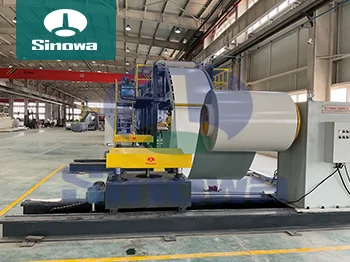
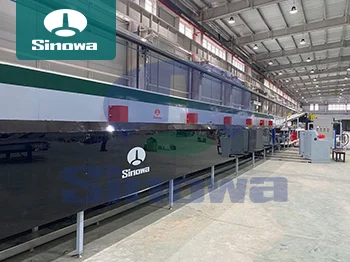
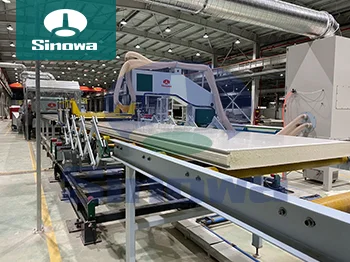
Sinowa is committed to the development and manufacturing of high-end and high-efficiency phenolic insulated panel production line. Our phenolic insulated panel production line are leading the way in efficiency, automatic control, human-computer interaction, environmental protection and energy consumption. Using system integration and bus control technology, it realizes the automatic integrated linkage control of the entire phenolic insulated panel production line, and can achieve remote interactive communication, which has the world-class level and a comprehensive leading high-performance phenolic insulated panel production line in the market.
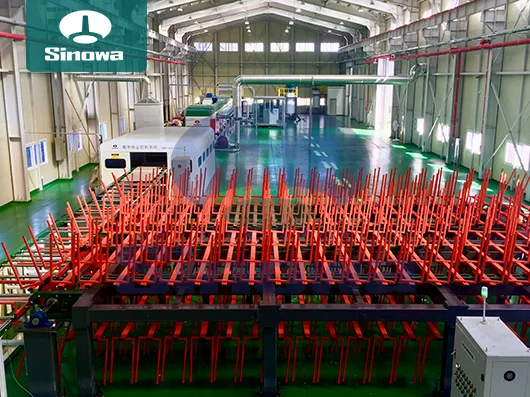
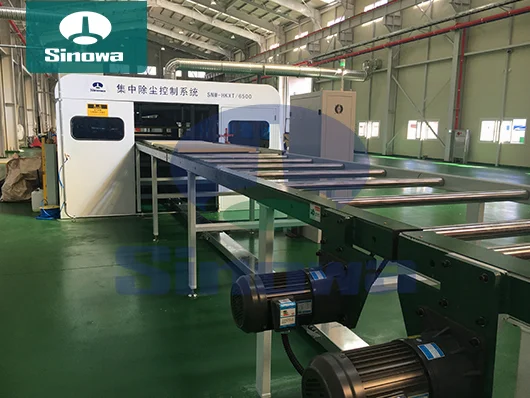
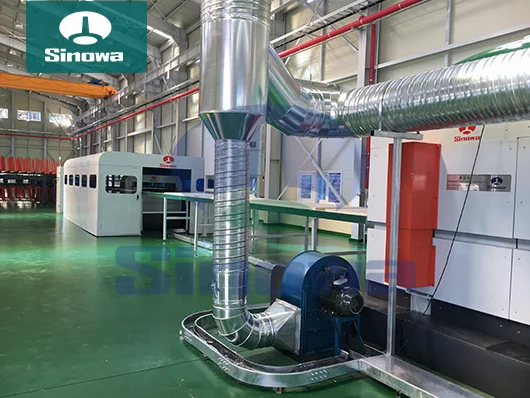
For more than ten years, relying on our innovative manufacturing concept and excellence in quality, reliable and trustworthy service to customers, we cooperate with customers all over the world, exported products to Canada, South Korea, Israel, Australia, the Middle East and other more than 20 countries and regions. contributed to building energy conservation and low-carbon production and have won widespread praise.
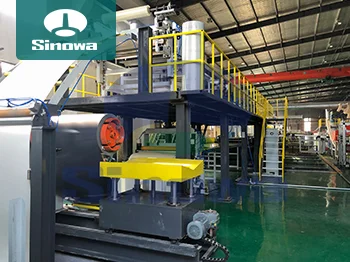
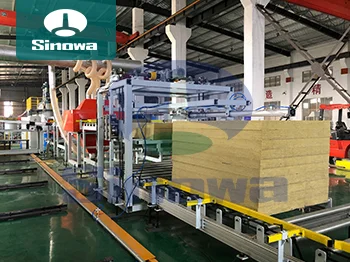
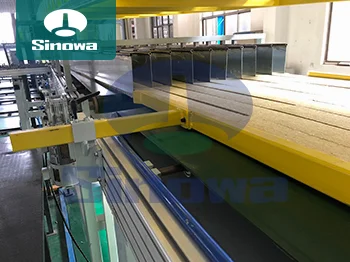
Sinowa has invested outstanding efforts in phenolic insulated panel production line, this is why our products are more efficiency, quality, automatic control technology, environmental protection, energy consumption indicators and the appearance and safety protection are comprehensively leading, some subversive design changes in many major technical points, these major innovations make our products excellent in price/performance and user experience.
A customized phenolic insulated panel production line represents a flexible, integrated manufacturing ecosystem built to adapt to diverse functional demands rather than delivering only a single fixed product specification. Unlike standard production setups that operate within narrow preset parameters, this tailored system allows every core module to be adjusted according to the intended end use of the finished panels, covering changes in foam density, panel thickness, surface facer materials and overall structural layout. The whole workflow begins with raw material feeding and metering, where multi-component phenolic formulations are pumped into a mixing unit with adjustable flow rates, so operators can fine-tune the ratio of resin, curing agents, foaming additives and modifiers to shape the final cellular structure. Each adjustment directly influences thermal performance, mechanical rigidity and surface bonding strength, making it possible to produce lightweight panels for ventilation ductwork alongside denser variants designed for heavy-exposure industrial enclosure insulation. The conveying and lamination sections are also redesigned for flexibility, supporting continuous bonding with aluminium foil, fibre fabrics and other facing substrates without major mechanical rework. This adaptability eliminates the need for separate standalone machines for different panel types, cutting downtime between product switches and supporting small-batch custom orders as smoothly as large-volume continuous runs. Engineers who configure these lines spend considerable time mapping process variables to application requirements, ensuring every modification to equipment settings aligns with the performance profile the finished panels need to maintain in service environments with fluctuating temperature, humidity and chemical exposure. Even basic elements such as belt tension, spreading width and dispensing pattern can be reprogrammed, giving the line a dynamic range that generic phenolic production equipment cannot match, and creating a practical foundation for manufacturers to respond quickly to shifting market preferences for composite insulation materials.
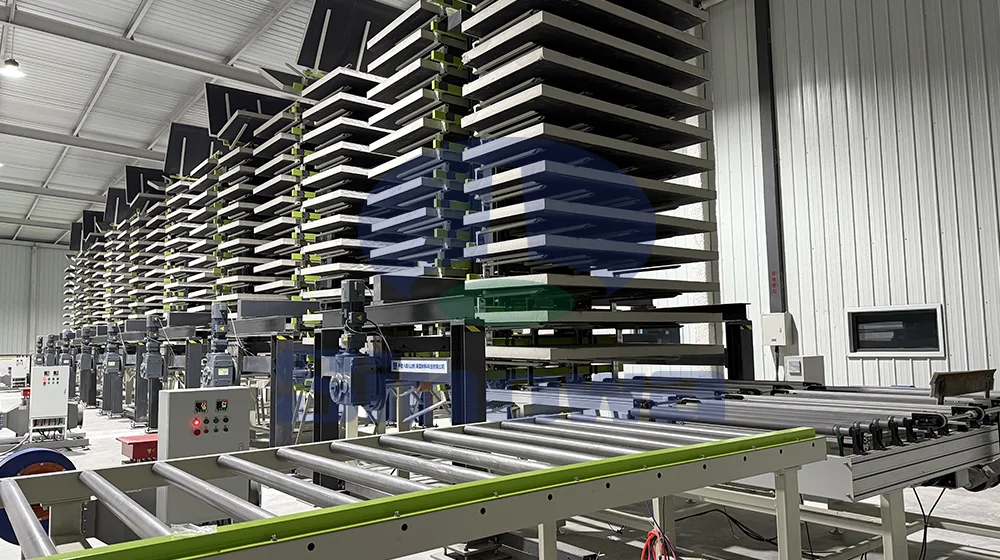
The precision mixing and foaming station forms the technical heart of any customized phenolic insulated panel production line, where controlled chemical reactions turn liquid phenolic blends into stable closed-cell foam cores. The mixing head is engineered to achieve instantaneous, homogeneous blending of all raw streams before the mixture is deposited evenly across the moving lower facing material. Since phenolic foaming reactions are highly sensitive to mixing consistency, uneven blending leads to irregular cell size, localized shrinkage and inconsistent thermal performance across the finished panel, which is why customised lines prioritise closed-loop flow monitoring for every ingredient channel. Once the mixed formulation spreads onto the substrate, the foaming stage proceeds under carefully managed thermal conditions, allowing gradual expansion rather than rapid uncontrolled rise. Operators can adjust reaction speed by modifying local temperature zones and line travel speed, which directly controls foam expansion ratio and final core density. This level of control matters greatly for customised output, because a panel intended for interior wall insulation demands a softer, lower-density foam, while a panel installed in locations subject to frequent impact needs a compact, rigid foam matrix with higher compressive resistance. Adjustable nozzle arrays can distribute material across different panel widths, and auxiliary smoothing attachments ensure the rising foam forms a flat, uniform layer ready to receive the top facing sheet. Operators monitor reaction behaviour in real time, tweaking parameters whenever visual or sensor data shows deviation from the target foam profile. By separating mixing, distribution and foaming control into independently adjustable sub-systems, the customised line avoids the compromises built into simpler fixed-setting machines, and creates repeatable foaming behaviour even when switching between multiple phenolic recipes within a single production shift.
Continuous lamination and gradient curing modules define the next critical phase of production, as the assembled sandwich structure travels through staged thermal zones to complete cross-linking and stabilise the phenolic foam core. Phenolic polymerisation cannot be rushed evenly across the entire panel; sudden high heat triggers internal stress, cell rupture and long-term dimensional instability, so customised lines use segmented ovens with independently controlled temperature regions. The first zone supports initial setting to lock the foam shape as bonding between the core and facers takes place, intermediate zones accelerate molecular cross-linking to build structural integrity, and later zones finish curing to reduce residual chemical activity inside the foam. The duration spent inside each zone is modified by adjusting conveyor speed, which can be slowed for thicker panels requiring extended curing time or increased for thinner products that stabilise quickly. Hydraulic or pneumatic pressure systems above and below the double-belt conveyor maintain consistent clamping force across the panel surface during curing, preventing warping, delamination or uneven thickness. Pressure settings are fully customisable to suit different facing materials: delicate thin foil substrates need gentle pressure to avoid tearing, while rigid composite facers tolerate higher pressure for stronger interfacial bonding. Thermal distribution inside the curing tunnel is balanced through circulated air systems, eliminating hot spots that would create uneven ageing behaviour in finished panels. This staged curing approach is one of the clearest distinctions between a customised phenolic insulated panel line and basic continuous machines, because it enables manufacturers to tune the ageing resistance and dimensional stability of each panel variant without reformulating raw materials entirely.
After curing, the cutting, trimming and post-processing section converts the continuous long panel web into discrete finished boards while accommodating custom dimensional requirements. Cross-cutting saws and longitudinal edge trimmers operate with programmable positioning, so panel length, width and edge profile can be reconfigured without mechanical retooling. Some customised lines integrate grooving, notching and chamfering attachments for panels that will be assembled into prefabricated duct sections or interlocking wall assemblies, removing secondary workshop processing steps for customers who need ready-to-fit components. Sensors track the position of the moving panel web constantly, triggering cutting actions precisely to maintain tight dimensional tolerance regardless of small variations in line speed. Dust collection systems work alongside cutting tools to capture fine phenolic particles, maintaining a clean working environment and reducing accumulation on moving mechanical parts. Following cutting, automated sorting and stacking units can separate different product variants onto distinct output conveyors, which proves valuable when the line runs mixed custom orders in sequence. Surface finishing stations may be incorporated as optional add-ons, providing light surface brushing or protective coating application for panels bound for corrosive or high-moisture environments. Every post-processing unit is modular, meaning additional functions can be added later if new custom product requirements emerge, rather than locking the production system into a permanent processing sequence. This modular design preserves the long-term value of the line, allowing its capability set to grow alongside evolving product portfolios instead of becoming obsolete when new panel formats enter the production schedule.
Intelligent monitoring and closed-loop control systems underpin the reliable operation of a customized phenolic insulated panel production line, turning manual guesswork into data-driven process management. A central control interface aggregates readings from thickness gauges, temperature probes, pressure transducers and visual inspection cameras distributed across every production stage. When sensors detect drift from target values, such as thinning foam core or uneven surface coverage, the system sends adjustment signals back to feeding pumps, heating units or conveyor drives automatically before defective material accumulates. High-speed visual scanning identifies surface blemishes, bonding gaps and facer wrinkles that human inspection would easily miss at full operating speed. The platform stores process logs for each batch of panels, recording the complete set of parameters used during manufacture, which supports performance review and helps engineers refine recipes for future custom orders. Access rights for the control system can be layered, so frontline operators adjust routine running parameters while process engineers access deeper recipe configuration functions. Alarm notifications highlight abnormal conditions such as blocked feed lines, inconsistent mixing pressure or curing zone temperature drift, minimising material waste and unplanned downtime. While the automation carries out routine corrections, skilled technicians still oversee overall operation, interpreting trends in sensor data to make strategic adjustments for new custom formulations. This balance between autonomous regulation and human oversight makes the line suitable for both consistent mass runs and experimental development of novel phenolic panel configurations, lowering the risk associated with testing new product designs on the production floor.
Material efficiency and operational sustainability stand as important benefits built into the design philosophy of modern customized phenolic insulated panel production lines. Precise metering systems reduce excess consumption of phenolic resin and additives by dispensing only the exact volume required for the target foam thickness, cutting raw material waste compared with less accurate batch-style equipment. Edge trimmings generated during the cutting stage can be collected and routed for controlled disposal or recovery workflows, preventing unnecessary material loss. The segmented heating layout in curing tunnels directs thermal energy only where it is needed, avoiding the continuous heating of large empty chamber volumes that raises energy demand in older single-oven lines. Adjustable operating speed also supports energy conservation: running at reduced throughput for small custom orders avoids wasting power on a full-speed cycle when output demand is low. Many line configurations recover waste heat from curing exhaust streams to preheat incoming process water or raw material feed tanks, further shrinking overall energy consumption per square metre of finished panel. Reduced waste directly translates to lower environmental impact, as phenolic foam residues demand careful handling, and fewer rejected panels mean less material destined for disposal. Manufacturers leveraging these efficiency features can produce customised insulation panels without accepting the heavy resource waste often associated with flexible, low-volume production. These sustainable features are not fixed add-ons; they can also be modified during line customisation, with heat recovery capacity and scrap handling arrangements scaled to match the site’s available space and waste management infrastructure.
The application flexibility unlocked by a customized phenolic insulated panel production line extends across a wide spectrum of end-use environments where balanced thermal performance, structural stability and resistance to harsh conditions are essential. Panels produced on these lines serve building envelope systems, forming wall and roof insulation layers that limit heat transfer across temperature differentials, while specially adapted variants form pre-insulated air duct components for ventilation networks. Other customised versions are engineered for industrial plant insulation, where exposure to vapours, intermittent moisture and mechanical abrasion calls for reinforced facing layers and denser foam cores. Some formulations target semi-outdoor structures, where panels must retain stable dimensions through cycles of warming and cooling without excessive shrinkage or delamination. The ability to match panel properties to site conditions removes the common compromise of selecting a general-purpose insulation material that only partially meets project needs. Design teams can specify surface texture, rigidity, weight and bonding behaviour, and the production line is reconfigured to deliver panels aligned with those specifications. This close alignment between manufacturing capability and application requirement helps simplify installation work, because custom-cut sizes and pre-finished edges reduce on-site modification. Contractors benefit from predictable panel behaviour after installation, as the controlled curing and consistent cell structure minimise long-term performance drift. Over time, this broad applicability makes the customized phenolic insulated panel line a strategic asset for material producers aiming to serve multiple insulation sectors from a single manufacturing footprint.
Looking forward, the development trajectory for customized phenolic insulated panel production lines continues to centre on deeper modularity, smarter process adaptation and expanded formulation compatibility. Future iterations will feature faster recipe switching, allowing operators to transition between vastly different panel types with fewer manual reset steps and shorter transition periods between batches. Integration with digital simulation tools will let engineers model foaming, curing and bonding behaviour virtually before running physical trials on the line, cutting the material and time cost of developing new custom panel variants. New modular stations will support novel facing materials and composite skin structures, opening up phenolic insulation for use in emerging low-carbon construction concepts that prioritise lightweight, high-performance building components. At the same time, control frameworks will grow more intuitive, distilling complex process data into clear guidance for operators without sacrificing the fine granular adjustments needed for precise customisation. Even as automation advances, the core value of the customized phenolic insulated panel production line remains unchanged: it offers a responsive manufacturing platform that does not force application needs to fit rigid machine limits. Instead, the equipment adapts to the product vision, turning tailored phenolic insulation solutions from niche custom requests into repeatable, scalable industrial output. This mindset of flexible manufacturing will keep phenolic insulated panels relevant as energy efficiency requirements evolve, and as builders and industrial operators seek insulation materials that perform reliably, safely and consistently within increasingly diverse and demanding operating environments.
« Customized Phenolic Insulated Panel Production Line » Update Date: 2026/10/23
Tags: Phenolic Insulated Panel Production Line , phenolic insulated panel production line, phenolic insulated panel production line manufacturer, phenolic insulated panel production line supplier, phenolic insulated panel production line for sale, customized phenolic insulated panel production line, china phenolic insulated panel production line
- Phenolic Resin Panel Production Line Factory
- Phenolic Duct Panel Production Line Price
- Customized Phenolic Insulated Panel Production Line
- Phenolic Air Duct Panel Line
- Phenolic Foam Manufacturing Machinery For House
- Low Price Phenolic Insulation Panel Production Line
- Phenolic Duct Panel Production Line Factory
- High-tech Phenolic Foam Manufacturing Machinery
- Phenolic Cotton Cloth Board Production Line From China
- Phenolic Foam Production Line From China
- Phenolic Foam Production Line Supplier
- High-quality External Wall Insulation Panel Production Line
- Phenolic Duct Panel Production Line
- Phenolic Foam Production Line For Cold Storage
- Phenolic Insulated Panel Production Line Supplier
- Phenolic Insulation Panel Production Line In China
- High-quality Sandwich Duct Panel Machine
- Phenolic Insulation Board Production Line
- High-end Sandwich Duct Panel Machine
- Custom Sandwich Duct Panel Machine
- Links:
- Sandwich Panel Continuous Production Line
- Automatic and Continuous Sandwich Panel Production Line
- Cheap and Low Price Sandwich Panel Production Line
- China Sandwich Panel Production Line Factory
- Color Steel Sandwich Panel Production Line For Cold Storage
- Continuous Composite Foam Sandwich Panel Production Line
- Continuous Production Line For Rockwool and Mineral Wool Sandwich Panels
- Continuous PU Phenolic Insulation Panel Production Line
- Continuous PU PIR Sandwich Panel Production Line
- Continuous PUF PUR Sandwich Panel Production Line
- Continuous Sandwich Panel Production Line For Roof and Wall
- Customized and Design Sandwich Panel Production Line
- Decorative Sandwich Panel Production Line For Glass Wool Boards
- High Quality Sandwich Panel Production Line For Sale
- Polyurethane(PU) Sandwich Panel Production Line
- Sandwich Panel Production Line Manufacturer and Supplier
- Sandwich Panel Production Machinery and Equipment