
PIR Sandwich Panel Production Line
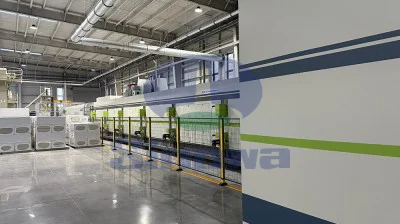
Sinowa is a pir sandwich panel production line supplier from china, customized high-quality & high efficiency pir sandwich panel production line at low price, the adoption of system integration technology and bus control technology accomplishes the full automatization of integrated and coordinated control of the pir sandwich panel production line with accessible remote interactive communication. Ranking the first-class level in the world, it is currently the pir sandwich panel production line in the market taking a comprehensive lead in high performance.
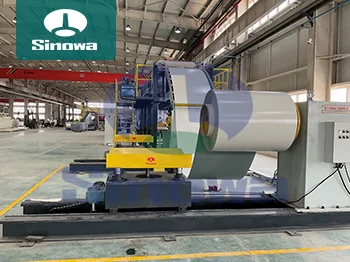
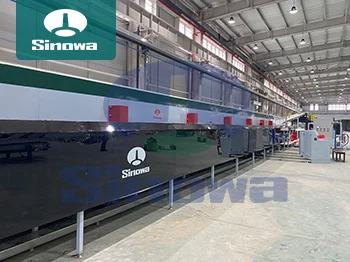
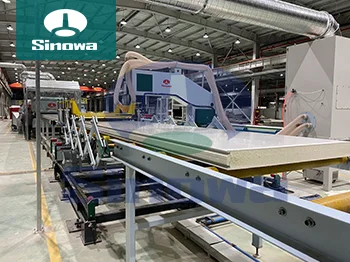
The high-tech pir sandwich panel production line can meet a variety of production needs of customers, the whole pir sandwich panel production line design concept of modularization enables all our components to be integrated and combined at will. Our high efficiency pir sandwich panel production line can easily automate the production of roof sandwich panel, wall sandwich panel, cold storage sandwich panel and other products by different combination and configuration selection and siple switching. The inner core layer can be polyrethane or rock wool, glass wool, an so on.


The high precision pir sandwich panel production line has high adaptability, which may produce various sandwich panel of the PU, PIR and rock wool systems. We may design various products according to the customer’s requirements, including various configurations, so as to meet their demands with flexible price system. Highly integrated and linked control system centralizes all control points at the main central center, achieving parameter linkage, fault self-diagnosis controlled by the whole line and shipping distance control. High-level automatic control system also saves the manpower and reduces the manpower loss for customers.


The precision servo hoisting mechanism employed by the main engine without hydraulic system makes the board thickness control flexible and the customer may conveniently change or adjust the board thickness. There will be not such troubles as hydraulic system adjustment, leakage, maintenance, etc.


High-level energy saving and protection design makes the whole pir sandwich panel production line possible to produce around the clock throughout the year and the customer will save huge budget. In addition, the isolated heat preservation room is constructed for warming the environment. The energy saving and protection design of our manufacturing line may guarantee that the customer’s production line may be freely heated and produce in the main time to save more costs for customers.


The high-power low-consumption design quickens the reaction of the cheap pir sandwich panel production line while energy consumption is kept low. With the brand-new, fully sealed inner insulation design, the energy consumption is controlled at the minimum level to achieve the design objective of less than an hour for the insulation system to be activated from the room temperature above 5℃ to the production process temperature. The energy consumption is only 40% that of those similar products.
A PIR sandwich panel production line is a highly integrated and automated industrial system designed to manufacture composite sandwich panels with polyisocyanurate as the core material. It combines mechanical engineering, materials science and automation control technologies to realize continuous and efficient production from raw material input to finished product output. The production process starts with the pretreatment of facing materials, usually thin-gauge metal sheets, which are uncoiled, leveled and preheated to ensure good adhesion with the core material. Next, the PIR foam mixture, made by mixing polyisocyanurate with eco-friendly blowing agents and additives, is injected between two layers of preprocessed facing materials through a high-pressure foaming system. The mixture expands and cures under precisely controlled temperature and pressure conditions, forming a dense and stable core with excellent thermal insulation and fire-retardant properties. After foaming, the composite panel goes through forming, cooling and precision cutting processes to meet different size requirements, followed by stacking for storage and transportation. These production lines adopt modular design, allowing flexible switching between different panel specifications and types, while the intelligent control system realizes parameter linkage and fault self-diagnosis, reducing labor costs and ensuring product consistency. The panels produced are widely used in building enclosure systems, cold chain logistics, industrial factories and other fields that require high fire prevention and insulation performance, contributing to energy conservation and sustainable development in the construction industry.
In the modern construction and industrial manufacturing fields, the demand for high-performance thermal insulation and fire-resistant materials is constantly rising, driven by the global pursuit of energy conservation, environmental protection and construction efficiency. Polyisocyanurate (PIR) sandwich panels have emerged as a preferred material in various industries due to their excellent comprehensive properties, including ultra-low thermal conductivity, superior fire resistance, light weight and high structural strength. Behind the large-scale, standardized and high-quality production of these panels lies the PIR sandwich panel production line, a sophisticated integration of mechanical automation, material science and precision control technology. This production line realizes the continuous combination of surface materials and PIR core materials through a series of coherent and precise process links, providing reliable material support for the sustainable development of architecture, cold chain logistics, industrial workshops and other fields.
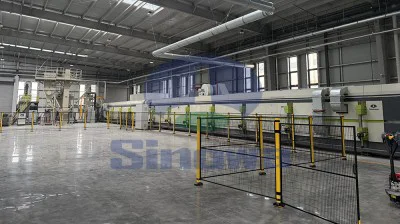
The structure of a PIR sandwich panel production line is a systematic and integrated design, consisting of multiple functional units that cooperate closely to complete the entire production process from raw material input to finished product output. Each unit undertakes specific tasks, and the coordination and precision between units directly determine the quality and efficiency of the final products. The basic structural composition of the production line mainly includes raw material pretreatment units, core material foaming and mixing units, composite forming units, post-processing units and automatic control units. These units are connected in a continuous and seamless manner, forming a highly automated production flow that minimizes manual intervention and ensures the stability and consistency of product quality.
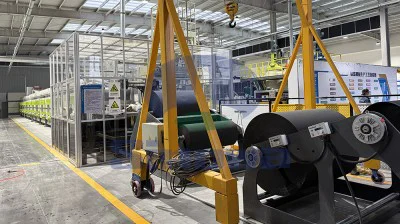
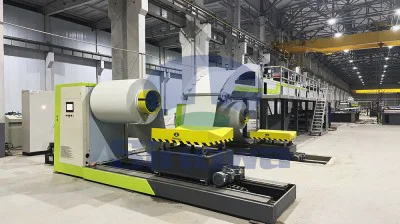
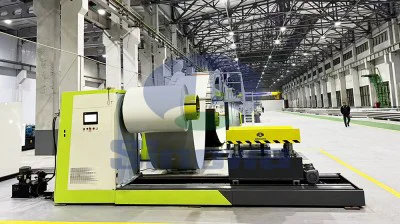
The raw material pretreatment unit is the starting point of the entire production line, responsible for preparing and processing the surface materials and core material raw materials to meet the requirements of subsequent production links. The surface materials of PIR sandwich panels are usually metal sheets, including galvanized steel sheets, color-coated steel sheets and aluminum sheets, which provide structural support and external protection for the panels. In the pretreatment unit, the metal coils first enter the uncoiling equipment, which unfolds the coiled metal sheets stably and evenly. The uncoiling process is equipped with tension control devices to avoid wrinkles or deformation of the metal sheets during uncoiling. After uncoiling, the metal sheets are conveyed to the leveling machine, which eliminates the internal stress generated during the rolling process of the metal sheets and corrects any unevenness, ensuring that the surface flatness of the metal sheets meets the bonding requirements with the core material. Subsequently, the metal sheets undergo surface cleaning and activation treatment; special cleaning equipment removes oil stains, dust and other impurities on the surface of the metal sheets, and the activation treatment enhances the surface adhesion of the metal sheets, laying a solid foundation for the tight bonding between the surface materials and the PIR core material. For the raw materials of the PIR core material, which mainly include isocyanate, polyol, catalysts and additives, the pretreatment unit is equipped with special storage tanks and conveying systems. The storage tanks are equipped with temperature control devices to maintain the raw materials at a stable temperature, preventing changes in their chemical properties that may affect the foaming effect. The conveying system uses precision metering pumps to ensure the accurate delivery of each raw material, laying the foundation for the precise proportioning of the core material.
The core material foaming and mixing unit is the core part of the entire production line, directly determining the performance of the PIR core material. PIR core material is a modified polyurethane material with a cross-linked structure formed by the reaction of isocyanate and polyol under the action of catalysts and additives, and its chemical structure contains more isocyanate groups, which endow it with superior fire resistance and thermal insulation performance compared with traditional polyurethane (PU) core material. In this unit, the raw materials delivered by the pretreatment unit are accurately proportioned according to the preset formula through a precision metering system. The proportioning accuracy of the raw materials is crucial; even a small deviation may lead to changes in the foaming effect of the core material, affecting its density, thermal conductivity and fire resistance. After proportioning, the raw materials enter the high-pressure mixing head, where they are fully mixed under high pressure. The high-pressure mixing ensures that the raw materials react uniformly, avoiding local uneven mixing that may cause defects such as bubbles and cracks in the core material. The mixed raw materials are then injected into the composite forming unit through a conveying pipeline, and the foaming reaction starts under the action of temperature and catalysts. The foaming process is accompanied by the release of heat, so the mixing unit is equipped with a temperature control system to adjust the temperature of the mixing process, ensuring that the foaming reaction proceeds stably and controllably.
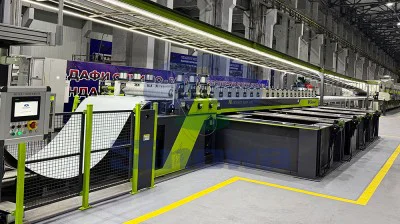
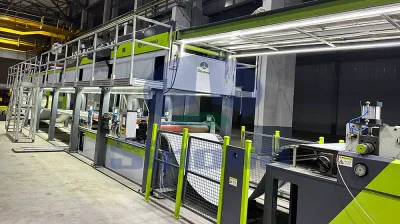
The composite forming unit is responsible for combining the pretreated surface materials with the foaming PIR core material to form the initial shape of the PIR sandwich panel. This unit mainly includes a conveying platform, a double-belt pressing machine and a profile forming device. The pretreated upper and lower surface metal sheets are conveyed to the composite area through the conveying platform at a uniform speed, and the mixed PIR raw materials are evenly injected between the two layers of metal sheets through the injection device. At this time, the PIR raw materials start the foaming reaction and gradually expand to fill the gap between the two layers of metal sheets. The double-belt pressing machine provides a stable pressure and temperature environment for the composite forming process; the upper and lower pressing belts clamp the surface materials and the foaming core material, ensuring that the core material is closely bonded to the surface materials and preventing the core material from foaming and bulging. The temperature of the pressing belts is precisely controlled to promote the rapid curing of the PIR core material while ensuring the bonding strength between the core material and the surface materials. At the same time, the profile forming device processes the surface metal sheets into the required shape, such as flat, corrugated or trapezoidal, according to the application needs. The corrugated or trapezoidal surface can enhance the structural strength of the sandwich panel, making it more suitable for roof or wall applications that need to bear wind and snow loads. The composite forming process is carried out continuously, which ensures the continuity of the production line and improves production efficiency.
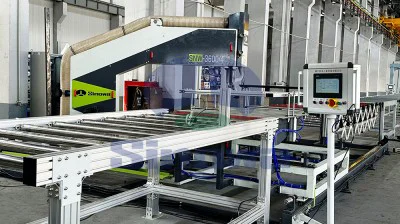
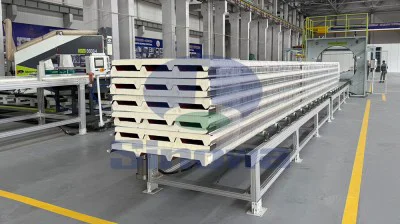
The post-processing unit is used to process the initially formed PIR sandwich panels into finished products that meet the application requirements, mainly including cutting, cooling, trimming, cleaning and inspection links. After composite forming, the continuous sandwich panel coil is conveyed to the fixed-length cutting equipment. The cutting equipment usually adopts flying saw cutting technology, which can cut the continuous panel into finished products of specified length while the panel is moving, ensuring the flatness of the cut and avoiding damage to the core material caused by static cutting. The cutting length can be flexibly adjusted according to the actual application needs, adapting to different construction scenarios. After cutting, the finished products enter the cooling and shaping area. The cooling process can be natural cooling or forced cooling; forced cooling uses fans or cooling water circulation systems to accelerate the cooling speed of the PIR core material, ensuring that the core material is fully cured and the size of the panel is stable. If the core material is not fully cooled and cured, it may cause deformation of the panel during storage or use. After cooling, the trimming equipment trims the edges of the panel to remove burrs or irregular parts generated during cutting, ensuring the neatness of the panel edges and facilitating subsequent installation. The cleaning equipment then removes dust, debris and other impurities on the surface of the panel, improving the appearance quality of the finished product. Finally, the inspection link checks the finished products, including appearance inspection, size inspection and performance sampling inspection. The appearance inspection checks for defects such as bubbles, cracks, delamination and surface scratches; the size inspection verifies whether the length, width and thickness of the panel meet the preset standards; the performance sampling inspection randomly selects samples to test their thermal conductivity, fire resistance and compressive strength, ensuring that the finished products meet the application performance requirements. Qualified finished products are neatly stacked by the stacking equipment for subsequent storage and transportation.
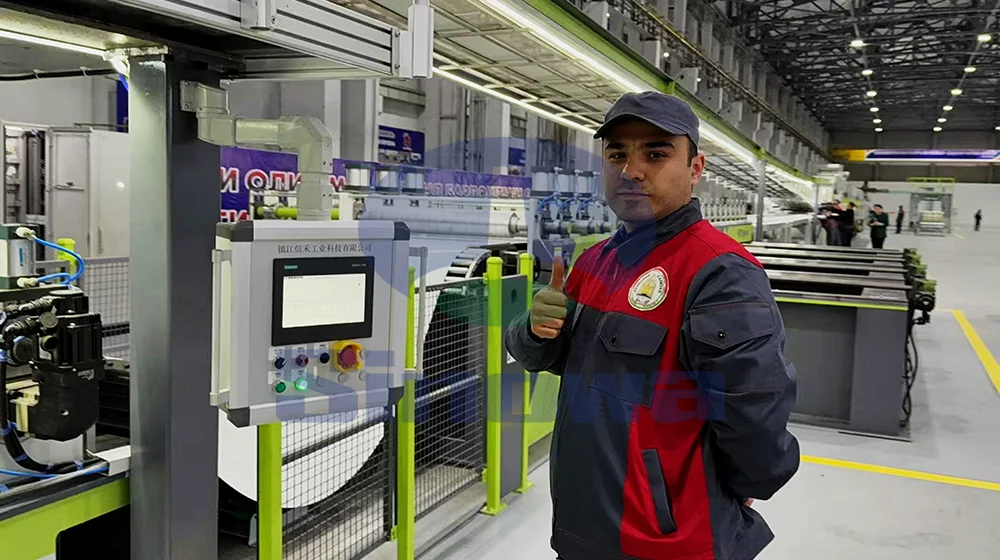
The automatic control unit is the "brain" of the entire PIR sandwich panel production line, responsible for coordinating and controlling the operation of each functional unit, ensuring the stability, accuracy and efficiency of the production process. With the continuous development of automation technology, modern PIR sandwich panel production lines have basically realized full automatic control, adopting PLC (Programmable Logic Controller) + human-machine interface + servo drive system. The PLC controller collects real-time operation data of each unit, such as the speed of the conveying platform, the temperature and pressure of the foaming process, the proportioning accuracy of the raw materials and the cutting length, and adjusts the operation parameters of each unit according to the preset program to ensure that the production process is carried out in an orderly manner. The human-machine interface provides a visual operation platform for operators, through which operators can set production parameters, monitor the operation status of the production line, view fault alarms and historical operation data, and realize convenient operation and management of the production line. The servo drive system ensures the precision control of each moving part, such as the precision of the cutting length, the flatness of the surface material conveying and the uniformity of the core material injection, improving the overall production quality of the panels. Some advanced production lines also integrate digital twin technology and AI quality inspection systems; digital twin technology simulates the entire production process through a virtual model, optimizes production parameters in advance, predicts potential faults and reduces production risks; AI quality inspection systems use machine vision technology to automatically detect the appearance defects of finished products, improve the efficiency and accuracy of quality inspection, and reduce the workload of manual inspection.
The performance of the PIR sandwich panel production line is reflected in multiple aspects, including production efficiency, product quality stability, raw material utilization rate, energy conservation and environmental protection, and adaptability, which are the key indicators to measure the level of the production line. Production efficiency is an important performance indicator of the production line, usually expressed by the production speed and annual output. Modern continuous PIR sandwich panel production lines have high production speed, which can reach 3-16 meters per minute, and the annual output can reach millions of square meters, which can meet the large-scale demand of the market for PIR sandwich panels. The high production efficiency is mainly due to the continuous production mode adopted by the production line, the high degree of automation and the close cooperation between each unit, which minimizes the downtime and improves the utilization rate of the production line.
Product quality stability is another core performance indicator of the PIR sandwich panel production line. The production line with excellent performance can ensure that the performance and size of each batch of PIR sandwich panels are consistent, avoiding large fluctuations in product quality. This stability is mainly guaranteed by the precision control of the production line, including the precision proportioning of raw materials, the precise control of the foaming temperature and pressure, the precision cutting of finished products and the strict quality inspection system. For example, the precision metering system of the raw materials ensures that the proportion of each component of the PIR core material is accurate, so that the density, thermal conductivity and fire resistance of the core material are stable; the precise control of the foaming temperature and pressure ensures that the core material foams uniformly and cures fully, avoiding defects such as bubbles and delamination; the precision cutting equipment ensures that the size of the finished products is accurate, facilitating subsequent installation. In addition, the online inspection system of the production line can detect potential quality problems in real time, take timely adjustment measures, and ensure the stability of product quality.
Raw material utilization rate is an important indicator reflecting the economic performance of the production line. Excellent PIR sandwich panel production lines can effectively improve the utilization rate of raw materials, reduce material waste and reduce production costs. In the raw material pretreatment link, the surface material cutting equipment adopts optimized cutting schemes to reduce the waste of metal sheets; in the core material foaming link, the precision metering and uniform injection system ensures that the PIR raw materials are fully utilized, avoiding waste caused by uneven injection or excessive injection; in the post-processing link, the trimming waste can be recycled and reused after treatment, further improving the utilization rate of raw materials. The improvement of raw material utilization rate not only reduces the production cost of enterprises, but also conforms to the concept of energy conservation and environmental protection.
Energy conservation and environmental protection are important performance requirements of modern production lines, and PIR sandwich panel production lines are no exception. With the increasing emphasis on environmental protection globally, production lines are constantly optimizing their design to reduce energy consumption and environmental pollution. In terms of energy conservation, the production line adopts energy-saving motors and frequency conversion control systems, which can adjust the power output according to the production load, reducing unnecessary energy consumption; the temperature control system adopts heat recovery technology, which recycles the waste heat generated during the foaming process to heat the raw materials or the production environment, improving energy utilization efficiency. In terms of environmental protection, the production line adopts environmentally friendly foaming agents, such as pentane, replacing traditional chlorofluorocarbon foaming agents that are harmful to the ozone layer, reducing environmental pollution; the waste gas and waste water generated during the production process are treated through professional equipment to meet the national environmental protection discharge standards before being discharged; the solid waste, such as trimming waste and raw material packaging waste, is classified and recycled, reducing environmental pollution and realizing the recycling of resources.
Adaptability is the performance indicator that reflects the flexibility of the production line to meet different production needs. Modern PIR sandwich panel production lines have strong adaptability, which can produce different types, specifications and performance of PIR sandwich panels by adjusting production parameters and replacing related equipment components, adapting to the diverse needs of different application fields. For example, by adjusting the proportion of raw materials, the production line can produce PIR core materials with different densities (usually 38-45 kg/m³), so as to meet the different requirements of thermal insulation and structural strength; by replacing the profile forming device, the production line can produce sandwich panels with different surface shapes, such as flat panels, corrugated panels and trapezoidal panels, which are suitable for different installation scenarios such as walls and roofs; by adjusting the cutting length and thickness, the production line can produce panels of different sizes, adapting to the needs of different construction projects. In addition, some advanced production lines adopt modular design, through the combination of different functional modules, they can not only produce PIR sandwich panels, but also produce sandwich panels with other core materials such as rock wool and EPS, further improving the adaptability and comprehensive utilization rate of the production line.
The types of PIR sandwich panel production lines can be divided into different categories according to different classification standards, and each type of production line has its own characteristics and applicable scenarios, which can meet the diverse production needs of enterprises of different scales and industries. According to the production mode, PIR sandwich panel production lines can be divided into continuous production lines and intermittent production lines. Continuous production lines are the most widely used type in the current market, which adopt a fully continuous production mode, from raw material input to finished product output, the entire process is carried out continuously without interruption. This type of production line has the advantages of high production efficiency, stable product quality, low manual intervention and high automation degree, which is suitable for large-scale production enterprises with large output demand. Continuous production lines are usually equipped with complete functional units, such as automatic uncoiling, precision mixing, continuous composite forming and automatic cutting, which can realize the full automatic control of the production process. Intermittent production lines, on the other hand, adopt an intermittent production mode, which completes a batch of product production through separate operation of each process link. This type of production line has a simple structure, low investment cost and flexible operation, which is suitable for small and medium-sized enterprises with small output demand, small production space or diverse product types. However, compared with continuous production lines, intermittent production lines have low production efficiency, high manual intervention and large fluctuations in product quality, which are not suitable for large-scale mass production.
According to the automation degree, PIR sandwich panel production lines can be divided into fully automatic production lines, semi-automatic production lines and manual production lines. Fully automatic production lines are equipped with a complete automatic control system and automatic operation equipment, which can realize the full automatic operation of the entire production process, from raw material input, proportioning, foaming, composite forming to finished product cutting, cooling and stacking, with almost no manual intervention. This type of production line has the advantages of high production efficiency, stable product quality, low labor intensity and high safety, which is the development direction of modern PIR sandwich panel production lines. Semi-automatic production lines are equipped with partial automatic equipment and control systems, and some process links still need manual operation, such as raw material feeding, finished product inspection and stacking. This type of production line has a moderate investment cost, which is suitable for enterprises with limited funds and certain production scale. Manual production lines rely mainly on manual operation to complete each production link, with simple equipment, low investment cost, but low production efficiency, high labor intensity, large fluctuations in product quality and poor safety, which are gradually being eliminated by the market and are only used in a small number of small enterprises or workshops with extremely limited funds.
According to the type of surface materials, PIR sandwich panel production lines can be divided into metal surface PIR sandwich panel production lines, non-metal surface PIR sandwich panel production lines and mixed surface PIR sandwich panel production lines. Metal surface PIR sandwich panel production lines are the most common type, which are mainly used to produce PIR sandwich panels with metal surface materials such as galvanized steel sheets, color-coated steel sheets and aluminum sheets. This type of production line is equipped with special pretreatment equipment and profile forming equipment for metal sheets, which can meet the processing needs of different metal surface materials. Metal surface PIR sandwich panels have the advantages of high structural strength, good weather resistance and long service life, which are widely used in various construction and industrial fields. Non-metal surface PIR sandwich panel production lines are used to produce PIR sandwich panels with non-metal surface materials such as fiber cement boards, gypsum boards and composite boards. This type of production line is equipped with special processing equipment for non-metal materials, which can avoid damage to non-metal surface materials during production. Non-metal surface PIR sandwich panels have the advantages of light weight, good sound insulation effect and environmental protection, which are suitable for interior decoration, partition walls and other fields. Mixed surface PIR sandwich panel production lines can produce PIR sandwich panels with different surface materials on the upper and lower surfaces, such as metal surface on the upper surface and non-metal surface on the lower surface, which can meet the special application needs of different scenarios and have strong flexibility.
According to the thickness of the core material, PIR sandwich panel production lines can be divided into thin-core production lines, medium-core production lines and thick-core production lines. Thin-core production lines are mainly used to produce PIR sandwich panels with core material thickness of 20-50 mm, which are suitable for interior decoration, partition walls and other fields that have low requirements on thermal insulation performance but high requirements on light weight and thin thickness. Medium-core production lines are used to produce PIR sandwich panels with core material thickness of 50-150 mm, which have balanced thermal insulation performance and structural strength, and are widely used in industrial workshops, warehouses, ordinary buildings and other fields. Thick-core production lines are used to produce PIR sandwich panels with core material thickness of 150-300 mm, which have excellent thermal insulation performance, and are mainly used in cold storage, refrigerated warehouses, low-temperature workshops and other fields that have high requirements on thermal insulation performance.
The applications of PIR sandwich panel production lines are closely related to the application fields of PIR sandwich panels, and with the continuous improvement of the performance of PIR sandwich panels and the continuous expansion of application fields, the application scope of PIR sandwich panel production lines is also constantly expanding. At present, PIR sandwich panel production lines are widely used in construction, cold chain logistics, industrial manufacturing, municipal engineering and other fields, providing high-quality PIR sandwich panels for these fields and promoting the development and upgrading of related industries.
In the construction field, PIR sandwich panel production lines play an important role, and the produced PIR sandwich panels are widely used in the exterior walls, interior partitions, roofs, ceilings and other parts of buildings. With the rapid development of prefabricated buildings in recent years, PIR sandwich panels, as a kind of prefabricated building material with excellent performance, have been more and more widely used. The PIR sandwich panels produced by the production line have the advantages of light weight, high structural strength, fast installation speed and good thermal insulation performance, which can effectively shorten the construction period, reduce the construction cost and improve the energy-saving effect of buildings. In the exterior wall application, PIR sandwich panels can not only provide excellent thermal insulation performance, reduce the energy consumption of building heating and air conditioning, but also have good weather resistance and decorative effect, which can adapt to different climate environments and meet the aesthetic requirements of buildings. In the interior partition application, PIR sandwich panels have the advantages of light weight, good sound insulation effect and convenient installation, which can improve the space utilization rate and create a comfortable indoor environment. In the roof application, the corrugated or trapezoidal PIR sandwich panels produced by the production line have strong bearing capacity, which can bear wind and snow loads, and at the same time have excellent waterproof and thermal insulation performance, ensuring the safety and comfort of the building interior. In addition, PIR sandwich panels are also used in the construction of modular buildings, temporary buildings and prefabricated houses, which can realize the rapid assembly of buildings and meet the needs of emergency construction and temporary use.
In the cold chain logistics field, PIR sandwich panel production lines have become an indispensable core equipment, and the produced PIR sandwich panels are mainly used in the construction of cold storage, refrigerated warehouses, refrigerated trucks and other cold chain facilities. Cold chain logistics has high requirements on the thermal insulation performance of facilities, and PIR sandwich panels have ultra-low thermal conductivity (usually 0.022-0.038 W/m·K) and good air tightness, which can effectively reduce the heat exchange between the interior and exterior of the cold storage, reduce the energy consumption of refrigeration equipment, and maintain a stable low-temperature environment inside the cold storage. The PIR sandwich panels produced by the production line can be made into thick-core panels according to the requirements of cold storage temperature, which can meet the thermal insulation needs of different low-temperature levels (from -25°C to normal temperature). In addition, PIR sandwich panels have good water resistance and moisture resistance, which can avoid the core material from absorbing moisture and reducing the thermal insulation performance in the humid environment of the cold storage, ensuring the long-term stable operation of the cold storage. With the continuous development of the cold chain logistics industry, the demand for PIR sandwich panels is increasing, which also promotes the continuous upgrading and development of PIR sandwich panel production lines.
In the industrial manufacturing field, PIR sandwich panel production lines are widely used in the construction of industrial workshops, warehouses, chemical plants, pharmaceutical factories, food processing factories and other facilities. Industrial workshops and warehouses often have high requirements on the thermal insulation, fire resistance and corrosion resistance of the building envelope, and PIR sandwich panels produced by the production line just meet these requirements. For example, in chemical plants and pharmaceutical factories, the production environment often has corrosive gases and high temperature and humidity, and PIR sandwich panels with anti-corrosion surface materials have good corrosion resistance, which can ensure the service life of the workshop envelope; at the same time, their excellent fire resistance can improve the safety of the workshop. In food processing factories, PIR sandwich panels have good hygiene performance, are easy to clean, and can meet the hygiene requirements of food processing; their thermal insulation performance can maintain a stable temperature and humidity environment in the workshop, ensuring the quality of food processing. In addition, PIR sandwich panels are also used in the heat insulation and sound insulation of industrial equipment and pipelines, reducing the energy loss of equipment and the noise pollution of the production environment.
In the municipal engineering field, PIR sandwich panel production lines are used in the construction of municipal public facilities such as public toilets, garbage transfer stations, bus shelters and toll booths. These public facilities have the characteristics of small volume, fast construction speed and high requirements on thermal insulation and sound insulation, and PIR sandwich panels are very suitable for their construction. For example, public toilets and garbage transfer stations need good thermal insulation and odor insulation performance, and PIR sandwich panels can effectively isolate odor and maintain a stable indoor temperature; bus shelters and toll booths need good weather resistance and thermal insulation performance, and PIR sandwich panels can adapt to different climate environments, providing a comfortable environment for staff and passengers. In addition, PIR sandwich panels are also used in the renovation of old buildings, which can improve the thermal insulation performance of old buildings, reduce energy consumption, and extend the service life of old buildings, conforming to the concept of building energy conservation and renovation.
In addition to the above fields, PIR sandwich panel production lines also have potential applications in new energy, transportation and other fields. In the new energy field, PIR sandwich panels are used in the construction of solar greenhouses, photovoltaic power station workshops and other facilities, their thermal insulation performance can improve the utilization rate of solar energy, and their light weight and high strength can reduce the load of the facility structure. In the transportation field, PIR sandwich panels are used in the interior decoration and thermal insulation of trains, ships and other means of transportation, which can reduce the weight of the means of transportation, save energy consumption, and at the same time provide a comfortable riding environment. With the continuous progress of technology and the continuous expansion of application demand, the application scope of PIR sandwich panel production lines will be further expanded, and they will play a more important role in various fields.
In conclusion, the PIR sandwich panel production line is a sophisticated and integrated automated production equipment, whose structure, performance, types and applications are closely related to the quality and application effect of PIR sandwich panels. The reasonable structural design ensures the smooth progress of the production process, the excellent performance ensures the efficiency and stability of production, the diverse types meet the diverse needs of different enterprises and fields, and the wide range of applications promotes the development and upgrading of related industries. With the continuous development of global energy conservation and environmental protection strategies and the continuous progress of automation and material science and technology, PIR sandwich panel production lines will also develop in the direction of higher automation, higher efficiency, more energy conservation and environmental protection, and stronger adaptability. In the future, the PIR sandwich panel production line will not only continue to provide high-quality materials for the traditional construction, cold chain logistics and industrial manufacturing fields, but also adapt to the new application needs of emerging fields, making greater contributions to the sustainable development of society and economy.
« PIR Sandwich Panel Production Line » Update Date: 2026/4/16
URL: https://www.sinowamachine.com/tags/pir-sandwich-panel-production-line.html
![PIR Sandwich Panel Production Line Design]()
PIR Sandwich Panel Production Line Design
2026-09-03PIR sandwich panel production line design focuses on creating a highly integrated, automated, and precision-oriented manufacturing system tailored to the unique physical and chemical properties of polyisocyanurate foam composite materials. This systematic design aims to achieve continuous, stable, an…![PIR Sandwich Panel Production Line Manufacturer]()
PIR Sandwich Panel Production Line Manufacturer
2026-09-01PIR sandwich panel production lines represent advanced automated manufacturing systems dedicated to the mass production of high-performance polyisocyanurate sandwich panels, which are widely applied in modern construction, cold chain logistics, industrial warehousing, and clean room engineering. As c…![Continuous PU PIR Sandwich Panel Production Line]()
Continuous PU PIR Sandwich Panel Production Line
2026-08-29The continuous PU and PIR sandwich panel production line represents an advanced automated manufacturing system designed for the streamlined fabrication of high-performance insulation composite panels. The entire production process operates in a seamless cyclic mode, starting with the automatic feedin…![High-end PIR Sandwich Panel Production Line]()
High-end PIR Sandwich Panel Production Line
2026-08-28The high-end PIR sandwich panel production line represents advanced integrated manufacturing equipment tailored for the continuous production of high-performance polyisocyanurate composite panels. Differing greatly from conventional ordinary production lines, this premium production system integrates…![High Efficiency PIR Sandwich Panel Production Line]()
High Efficiency PIR Sandwich Panel Production Line
2026-08-24High efficiency PIR sandwich panel production line represents advanced automated manufacturing equipment tailored for the mass production of high-performance polyisocyanurate composite panels, integrating continuous feeding, precise material mixing, uniform foaming, constant-temperature curing, and a…![PIR Sandwich Panel Production Line From China]()
PIR Sandwich Panel Production Line From China
2026-08-21Chinese-manufactured PIR sandwich panel production lines have emerged as a core industrial solution for modern lightweight building material manufacturing, catering to the booming global demand for energy-efficient, durable, and versatile construction panels. These fully automated integrated producti…![PIR Sandwich Panel Production Line For Building]()
PIR Sandwich Panel Production Line For Building
2026-08-17PIR sandwich panel production lines are advanced automated manufacturing systems tailored for the mass production of high-performance building insulation composite panels, serving as core equipment for modern green construction material production. Integrating mechanical transmission, intelligent pre…![PIR Sandwich Panel Production Line For Wall]()
PIR Sandwich Panel Production Line For Wall
2026-08-14The PIR sandwich panel production line for wall applications is a sophisticated, fully automated continuous manufacturing system tailored to produce high-performance polyisocyanurate insulated wall panels for modern construction projects. Integrating multiple precision functional units into a seamles…![Cheap PIR Sandwich Panel Production Line]()
Cheap PIR Sandwich Panel Production Line
2026-08-14The cheap PIR sandwich panel production line has emerged as a practical and cost-efficient manufacturing solution for the modern construction and insulation material industry, catering to the growing market demand for affordable, high-performance building panels. Optimized for small and medium-scale …![Highly Intelligent PIR Sandwich Panel Production Line]()
Highly Intelligent PIR Sandwich Panel Production Line
2026-05-08The continuous evolution of modern building insulation and structural manufacturing has driven profound upgrades in production technologies for composite building materials, among which the highly intelligent PIR sandwich panel production line stands out as an advanced manufacturing system tailored f…![PIR Sandwich Panel Production Line Factory]()
PIR Sandwich Panel Production Line Factory
2026-04-16A PIR sandwich panel production line factory is a highly integrated industrial facility dedicated to the continuous and efficient manufacturing of polyisocyanurate (PIR) sandwich panels, a type of composite material widely recognized for its exceptional thermal insulation, fire resistance, and struct…![PIR Sandwich Panel Production Line Supplier]()
PIR Sandwich Panel Production Line Supplier
2026-04-16Polyisocyanurate (PIR) sandwich panels have become an indispensable component in modern construction and industrial fields, valued for their superior thermal insulation, structural stability, fire resistance, and versatility. The production of high-quality PIR sandwich panels relies heavily on advanc…
- Links:
- Sandwich Panel Continuous Production Line
- Automatic and Continuous Sandwich Panel Production Line
- Cheap and Low Price Sandwich Panel Production Line
- China Sandwich Panel Production Line Factory
- Color Steel Sandwich Panel Production Line For Cold Storage
- Continuous Composite Foam Sandwich Panel Production Line
- Continuous Production Line For Rockwool and Mineral Wool Sandwich Panels
- Continuous PU Phenolic Insulation Panel Production Line
- Continuous PU PIR Sandwich Panel Production Line
- Continuous PUF PUR Sandwich Panel Production Line
- Continuous Sandwich Panel Production Line For Roof and Wall
- Customized and Design Sandwich Panel Production Line
- Decorative Sandwich Panel Production Line For Glass Wool Boards
- High Quality Sandwich Panel Production Line For Sale
- Polyurethane(PU) Sandwich Panel Production Line
- Sandwich Panel Production Line Manufacturer and Supplier
- Sandwich Panel Production Machinery and Equipment