
Insulation Sandwich Panel Machines
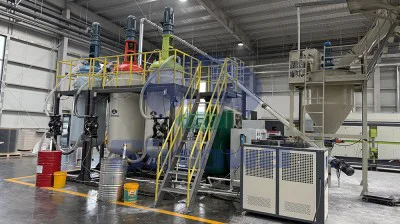
Sinowa is a insulation sandwich panel machines supplier from china, customized high-quality & high efficiency insulation sandwich panel machines at low price, the adoption of system integration technology and bus control technology accomplishes the full automatization of integrated and coordinated control of the insulation sandwich panel machines with accessible remote interactive communication. Ranking the first-class level in the world, it is currently the insulation sandwich panel machines in the market taking a comprehensive lead in high performance.
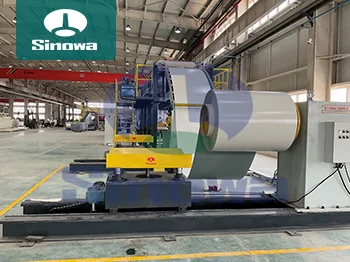
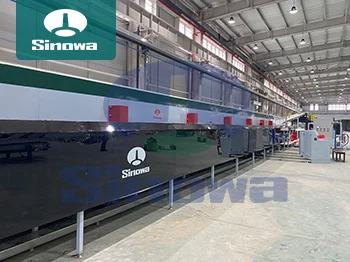
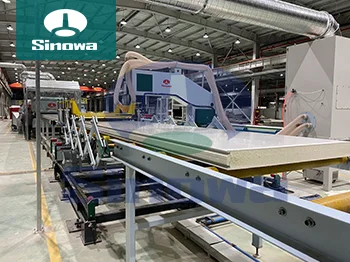
The high-tech insulation sandwich panel machines can meet a variety of production needs of customers, the whole insulation sandwich panel machines design concept of modularization enables all our components to be integrated and combined at will. Our high efficiency insulation sandwich panel machines can easily automate the production of roof sandwich panel, wall sandwich panel, cold storage sandwich panel and other products by different combination and configuration selection and siple switching. The inner core layer can be polyrethane or rock wool, glass wool, an so on.


The high precision insulation sandwich panel machines has high adaptability, which may produce various sandwich panel of the PU, PIR and rock wool systems. We may design various products according to the customer’s requirements, including various configurations, so as to meet their demands with flexible price system. Highly integrated and linked control system centralizes all control points at the main central center, achieving parameter linkage, fault self-diagnosis controlled by the whole line and shipping distance control. High-level automatic control system also saves the manpower and reduces the manpower loss for customers.


The precision servo hoisting mechanism employed by the main engine without hydraulic system makes the board thickness control flexible and the customer may conveniently change or adjust the board thickness. There will be not such troubles as hydraulic system adjustment, leakage, maintenance, etc.


High-level energy saving and protection design makes the whole insulation sandwich panel machines possible to produce around the clock throughout the year and the customer will save huge budget. In addition, the isolated heat preservation room is constructed for warming the environment. The energy saving and protection design of our manufacturing line may guarantee that the customer’s production line may be freely heated and produce in the main time to save more costs for customers.


The high-power low-consumption design quickens the reaction of the cheap insulation sandwich panel machines while energy consumption is kept low. With the brand-new, fully sealed inner insulation design, the energy consumption is controlled at the minimum level to achieve the design objective of less than an hour for the insulation system to be activated from the room temperature above 5℃ to the production process temperature. The energy consumption is only 40% that of those similar products.
Insulation sandwich panel machines stand as core industrial equipment dedicated to the mass production of high-performance composite insulation panels, which have become indispensable materials in modern construction, cold chain logistics, industrial manufacturing, and multiple other sectors due to their dual advantages of thermal insulation and structural stability. Unlike single-layer building materials, insulation sandwich panels feature a three-layer composite structure, typically consisting of two rigid outer face sheets and a lightweight, insulating core material in between, and the specialized production machines are designed to integrate multiple processing procedures into a coordinated, automated workflow, ensuring consistent product quality, high production efficiency, and stable performance across long-term operation. To fully understand the value and application scope of these machines, it is essential to explore their internal structural composition, key performance indicators, mainstream classification standards, and diverse practical uses, as each aspect directly determines the machine’s adaptability to different production demands and the final quality of the sandwich panels produced.
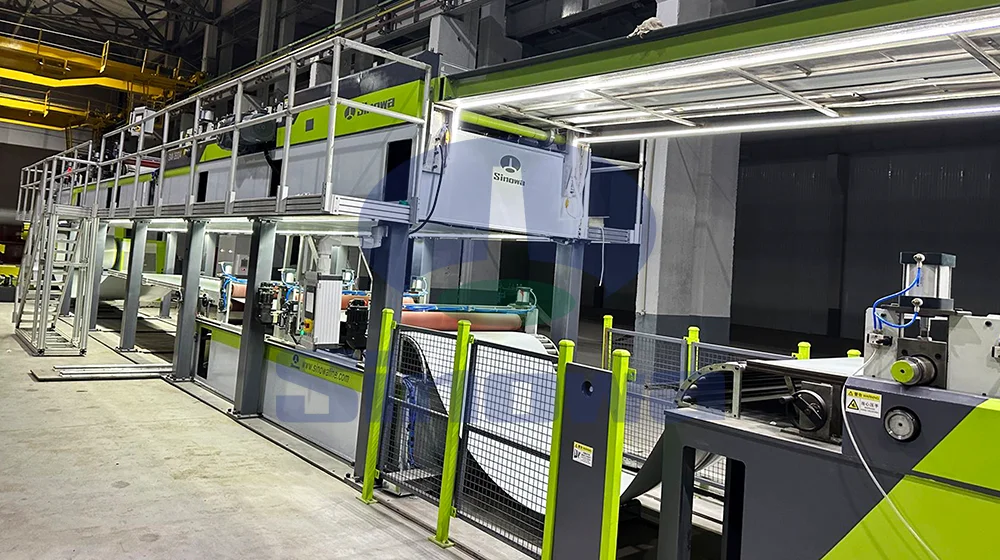
Starting with the structural design of insulation sandwich panel machines, the entire equipment system is a modular and integrated assembly composed of several interconnected functional units, each performing a specific task while maintaining precise synchronous operation to avoid production interruptions or product defects. The first core component is the raw material feeding and uncoiling unit, which is responsible for storing and continuously supplying the outer face sheet materials, most commonly metal sheets such as color-coated steel, galvanized steel, or aluminum sheets, as well as non-metal face sheets for special scenarios. This unit is equipped with tension control devices to ensure that the face sheets are fed smoothly without wrinkling, deviation, or excessive stretching, which lays a solid foundation for the flatness and dimensional accuracy of the final panels. Following the feeding unit is the surface treatment and pre-processing station, where the face sheets undergo cleaning, degreasing, and primer coating treatments to enhance the bonding strength between the outer layers and the core material; this step is critical to prevent delamination of the composite panels under long-term use, temperature changes, or mechanical stress.
The central and most complex part of the machine is the core material forming and composite laminating system, which varies slightly depending on the type of core material but follows the same basic principle of tightly bonding the core material to the two face sheets under controlled pressure and temperature. For foam core panels, this system includes a precise mixing and foaming unit that accurately proportions the liquid raw materials of the foam, controls the foaming temperature and reaction speed, and injects the uniform foam mixture between the two face sheets in a closed molding space. For fiber-based core materials such as rock wool, glass wool, or mineral wool, the system features a core material cutting, arranging, and compacting unit that cuts the bulk fiber insulation into fixed sizes, arranges them neatly between the face sheets, and compresses them to a specified density to ensure uniform insulation performance and structural strength. The laminating pressure and temperature are precisely adjustable through hydraulic and temperature control systems, with the pressure maintained at a level that ensures full contact between layers without crushing the core material, and the temperature set to match the curing requirements of the adhesive or foaming agent, promoting rapid and stable bonding.
Downstream of the laminating system is the continuous molding and curing unit, which is designed to shape the semi-finished composite panels into fixed specifications and complete the final curing of the core material and adhesive. This unit usually consists of a set of continuous forming rollers with adjustable spacing and profile, which can press the panels into flat sheets or profiled shapes such as corrugated or tongue-and-groove panels for easier on-site installation and sealing. The curing section is equipped with a constant temperature drying channel that uses circulating hot air to provide a stable thermal environment, accelerating the solidification of the core material and adhesive without causing thermal deformation of the face sheets. After curing, the panels enter the precision cutting and trimming unit, which uses high-precision cutting tools controlled by digital systems to cut the continuous panels into fixed lengths or custom sizes according to production needs, with minimal edge burrs and high dimensional tolerance control. The final component of the machine structure is the stacking and conveying unit, which automatically stacks the finished panels neatly, separates them with protective layers to avoid surface scratches, and conveys them to the storage or packaging area, completing the entire automated production line.
In terms of performance, insulation sandwich panel machines are engineered to meet strict industrial production standards, with several key performance indicators that define their operational efficiency and product quality. First and foremost is production stability, which refers to the machine’s ability to maintain continuous and consistent operation for long hours, usually ranging from 8 to 24 hours of non-stop production, with low failure rates and minimal downtime for maintenance. This stability is achieved through robust mechanical structure design, high-quality transmission components such as gearboxes, chains, and servo motors, and reliable electrical control systems that prevent sudden breakdowns caused by continuous load operation. Second is production efficiency, measured by the length or number of panels produced per unit time; modern automated machines can achieve high-speed continuous production, significantly outpacing traditional manual or semi-automatic production methods, and the efficiency can be adjusted flexibly to match different core material curing speeds and production batch sizes.
Precision performance is another critical aspect, as it directly affects the dimensional consistency, flatness, and composite quality of the sandwich panels. The machine’s feeding system, laminating system, and cutting system are all equipped with digital control modules, usually programmable logic control systems, that enable precise adjustment of parameters such as feeding speed, laminating pressure, curing temperature, and cutting length, with dimensional errors controlled within a very narrow range to meet the strict installation requirements of construction and industrial projects. Thermal insulation performance matching is also a unique performance feature of these machines; unlike general sheet metal processing equipment, insulation sandwich panel machines are designed to preserve the inherent insulation properties of the core material during production, avoiding damage to the internal structure of foam or fiber cores through excessive pressure or high temperature, thus ensuring that the finished panels maintain excellent thermal resistance, heat preservation, and cold insulation effects.
Additional performance advantages include energy efficiency and operational safety. Modern machines are optimized for energy consumption, with energy-saving designs in the heating system, transmission system, and control system to reduce power and fuel consumption during production, lowering the overall production cost for manufacturers. Safety performance is enhanced through multiple protective devices, including emergency stop buttons, safety guards for moving parts, temperature and pressure overload protection, and dust and gas extraction systems for foam production scenarios, ensuring a safe working environment for operators and complying with industrial production safety norms. Durability is also a key performance indicator, as the machine’s main body and core components are made of high-strength steel and wear-resistant materials, capable of withstanding the wear and tear of long-term production and maintaining stable performance for years with regular maintenance.
Insulation sandwich panel machines are classified into several main types based on the core material they process, the production process adopted, and the application scenarios of the finished panels, each with distinct structural features and performance focuses to suit different production needs. The most common classification is based on core material type, which includes foam core sandwich panel machines, fiber core sandwich panel machines, and special core material sandwich panel machines. Foam core machines are further divided into polyurethane (PU) foam panel machines, polyisocyanurate (PIR) foam panel machines, and expanded polystyrene (EPS) foam panel machines, each tailored to the unique foaming and curing characteristics of the corresponding foam material. PU foam panel machines are widely used for their balanced insulation and bonding performance, with a mixing system that ensures uniform foam density and stable reaction; PIR foam panel machines are designed with higher temperature control precision and fire-resistant foaming technology, suitable for producing panels with enhanced fire performance; EPS foam panel machines focus on pre-expansion and molding of EPS beads, with a compact structure and lower energy consumption.
Fiber core sandwich panel machines, mainly rock wool and glass wool panel machines, are characterized by a robust core material handling system, as fiber insulation materials are brittle and require gentle processing to avoid breakage and dust generation. These machines are equipped with dust collection devices to maintain a clean production environment and a precise compaction system to ensure the fiber core is evenly distributed and tightly bonded to the face sheets, making them ideal for producing high-fire-resistance and high-temperature-resistant insulation panels. Special core material machines include those for producing aluminum honeycomb core panels and phenolic foam core panels, which feature more precise control systems and specialized molding processes to handle the unique physical properties of these high-performance core materials, catering to niche industrial and construction needs with strict requirements for lightweight, high strength, or extreme temperature resistance.
Another classification method is based on the production process, dividing machines into continuous production lines and discontinuous (batch) production machines. Continuous production lines are large-scale, fully automated systems that integrate all processing procedures from feeding to stacking, enabling uninterrupted production of long-length panels, suitable for large-scale industrial manufacturing plants with high annual output demands. These lines have higher production efficiency and more consistent product quality but require a larger production space and higher initial investment. Discontinuous production machines are smaller in size, with a more compact structure, and produce panels in batches, making them suitable for small and medium-sized enterprises or manufacturers with diversified small-batch production needs; they are more flexible in parameter adjustment and can quickly switch between different panel specifications and core materials with minimal setup time.
Additionally, machines can be classified by the type of finished panels, including flat wall panel machines, corrugated roof panel machines, and profiled decorative panel machines. Wall panel machines focus on producing flat, smooth panels with precise tongue-and-groove structures for easy installation and airtight sealing; roof panel machines are designed to produce corrugated or trapezoidal profiled panels with enhanced load-bearing capacity to withstand wind, snow, and rain; decorative panel machines add surface embossing or coating functions to produce panels with aesthetic surface textures, suitable for public buildings and commercial facilities requiring both insulation and visual appeal.
The applications of insulation sandwich panel machines are extremely extensive, covering almost all fields that require high-performance thermal insulation, cold insulation, sound insulation, and structural building materials, driven by the growing demand for energy-efficient and sustainable construction and industrial solutions. In the construction industry, the panels produced by these machines are widely used in the exterior walls and roofs of industrial plants, warehouses, logistics centers, and prefabricated buildings, replacing traditional brick and concrete structures to shorten construction cycles, reduce building weight, and improve building energy efficiency. The excellent thermal insulation performance of the panels helps reduce heating and cooling energy consumption in buildings, meeting global energy conservation and emission reduction targets, while their high structural strength ensures the safety and durability of the building envelope.
In the cold chain logistics sector, insulation sandwich panel machines produce specialized cold storage panels that are essential for constructing refrigerated warehouses, cold chain distribution centers, pharmaceutical storage facilities, and food processing plants. These panels have ultra-high thermal resistance and airtight performance, effectively preventing heat transfer and maintaining stable low-temperature environments, which is critical for preserving the quality and freshness of perishable food, pharmaceuticals, and biological products. The panels are also easy to clean and disinfect, complying with the hygiene standards of the food and pharmaceutical industries, and can be customized into different sizes to fit various cold storage designs, from small cold rooms to large-scale logistics cold storage complexes.
In the industrial manufacturing sector, the panels are used for insulating industrial furnaces, heat treatment equipment, drying tunnels, and thermal insulation pipelines, thanks to their high-temperature resistance and fire performance, especially those produced by rock wool and PIR foam panel machines. They can withstand high temperatures for long periods, reduce heat loss from industrial equipment, improve energy utilization efficiency in industrial production, and protect surrounding equipment and workers from high-temperature hazards. In the transportation industry, specialized lightweight insulation panels produced by compact machines are used in the body of refrigerated trucks, shipping containers, and railway refrigerated carriages, providing reliable cold insulation for long-distance transportation of temperature-sensitive goods while reducing the overall weight of the transportation tool to improve fuel efficiency.
Other important applications include agricultural and livestock breeding facilities, such as climate-controlled greenhouses, poultry houses, and dairy farms, where the insulation panels help maintain stable indoor temperature and humidity, promoting healthy growth of crops and livestock and improving agricultural production efficiency. Public facilities such as airport hangars, exhibition centers, stadiums, and hospital sterile rooms also rely on these panels for their sound insulation, fire resistance, and thermal insulation properties, creating a comfortable and safe indoor environment. In recent years, with the development of green and sustainable building concepts, the application scope of insulation sandwich panels has been further expanded to residential buildings, portable houses, and emergency shelter facilities, thanks to the continuous optimization of insulation sandwich panel machines, which can produce panels with lower environmental impact and higher performance.
In summary, insulation sandwich panel machines are highly integrated and professional industrial equipment that combines mechanical engineering, automatic control, material processing, and thermal insulation technology, with a rational and modular structural design, stable and efficient performance, diverse classifications to meet different production needs, and a wide range of applications across multiple key industries. The continuous development and upgrading of these machines have promoted the innovation and popularization of insulation composite panel materials, providing strong support for energy conservation, sustainable development, and efficient construction and industrial production worldwide. As technology advances, these machines will continue to evolve towards higher automation, precision, and energy efficiency, further expanding their application potential and playing an increasingly important role in global industrial and construction development.
« Insulation Sandwich Panel Machines » Update Date: 2026/3/24
URL: https://www.sinowamachine.com/tags/insulation-sandwich-panel-machines.html
![Top Insulation Sandwich Panel Machines]()
Top Insulation Sandwich Panel Machines
2026-08-31Top insulation sandwich panel machines represent advanced integrated manufacturing systems tailored for the continuous production of high-performance composite insulation panels widely adopted in modern construction and industrial sectors. Unlike traditional fragmented processing equipment, these aut…
- Links:
- Sandwich Panel Continuous Production Line
- Automatic and Continuous Sandwich Panel Production Line
- Cheap and Low Price Sandwich Panel Production Line
- China Sandwich Panel Production Line Factory
- Color Steel Sandwich Panel Production Line For Cold Storage
- Continuous Composite Foam Sandwich Panel Production Line
- Continuous Production Line For Rockwool and Mineral Wool Sandwich Panels
- Continuous PU Phenolic Insulation Panel Production Line
- Continuous PU PIR Sandwich Panel Production Line
- Continuous PUF PUR Sandwich Panel Production Line
- Continuous Sandwich Panel Production Line For Roof and Wall
- Customized and Design Sandwich Panel Production Line
- Decorative Sandwich Panel Production Line For Glass Wool Boards
- High Quality Sandwich Panel Production Line For Sale
- Polyurethane(PU) Sandwich Panel Production Line
- Sandwich Panel Production Line Manufacturer and Supplier
- Sandwich Panel Production Machinery and Equipment