
Metal Sandwich Panel Production Line
Sinowa is a metal sandwich panel production line supplier from china, customized high-quality & high efficiency metal sandwich panel production line at low price, the adoption of system integration technology and bus control technology accomplishes the full automatization of integrated and coordinated control of the metal sandwich panel production line with accessible remote interactive communication. Ranking the first-class level in the world, it is currently the metal sandwich panel production line in the market taking a comprehensive lead in high performance.
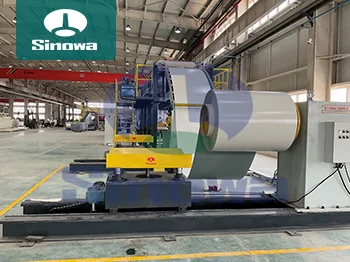
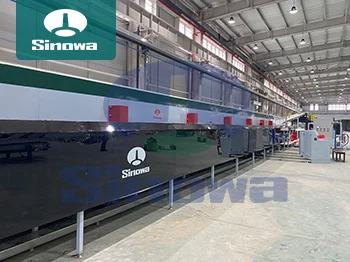
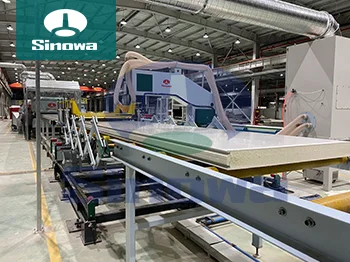
The high-tech metal sandwich panel production line can meet a variety of production needs of customers, the whole metal sandwich panel production line design concept of modularization enables all our components to be integrated and combined at will. Our high efficiency metal sandwich panel production line can easily automate the production of roof sandwich panel, wall sandwich panel, cold storage sandwich panel and other products by different combination and configuration selection and siple switching. The inner core layer can be polyrethane or rock wool, glass wool, an so on.


The high precision metal sandwich panel production line has high adaptability, which may produce various sandwich panel of the PU, PIR and rock wool systems. We may design various products according to the customer’s requirements, including various configurations, so as to meet their demands with flexible price system. Highly integrated and linked control system centralizes all control points at the main central center, achieving parameter linkage, fault self-diagnosis controlled by the whole line and shipping distance control. High-level automatic control system also saves the manpower and reduces the manpower loss for customers.


The precision servo hoisting mechanism employed by the main engine without hydraulic system makes the board thickness control flexible and the customer may conveniently change or adjust the board thickness. There will be not such troubles as hydraulic system adjustment, leakage, maintenance, etc.


High-level energy saving and protection design makes the whole metal sandwich panel production line possible to produce around the clock throughout the year and the customer will save huge budget. In addition, the isolated heat preservation room is constructed for warming the environment. The energy saving and protection design of our manufacturing line may guarantee that the customer’s production line may be freely heated and produce in the main time to save more costs for customers.


The high-power low-consumption design quickens the reaction of the cheap metal sandwich panel production line while energy consumption is kept low. With the brand-new, fully sealed inner insulation design, the energy consumption is controlled at the minimum level to achieve the design objective of less than an hour for the insulation system to be activated from the room temperature above 5℃ to the production process temperature. The energy consumption is only 40% that of those similar products.
Metal sandwich panel production lines represent a highly integrated and sophisticated manufacturing system designed to produce composite building and industrial panels that combine structural strength, thermal efficiency, and lightweight properties into a single product. Unlike fragmented manual production processes, these automated lines streamline the entire workflow from raw material handling to finished panel packaging, creating a seamless and consistent manufacturing environment that meets the demands of modern construction, logistics, and industrial sectors. The core structural design of a standard metal sandwich panel production line is built around modular functional units, each engineered to perform a specific task while maintaining full compatibility with adjacent modules to ensure smooth material flow and synchronized operation across the entire line. At the most basic level, the line begins with raw material feeding and uncoiling systems, which are tasked with handling large coils of metal facing materials, most commonly galvanized steel, color-coated steel, and aluminum alloy sheets. These uncoiling units are equipped with precision tension control mechanisms to prevent wrinkling, deformation, or misalignment of the thin metal sheets as they are fed into the subsequent processing stages, a critical feature to maintain the flatness and dimensional accuracy of the final panels. Following the uncoiling section, the metal sheets move through a profiling and forming station, where specialized roll forming machines shape the flat metal strips into predefined profiles, such as trapezoidal, corrugated, or flat edge designs, depending on the intended use of the finished panels. This forming process is fully automated, with adjustable roller sets that allow for quick changes to profile shapes and dimensions without requiring extensive manual reconfiguration, enhancing the line’s overall flexibility.
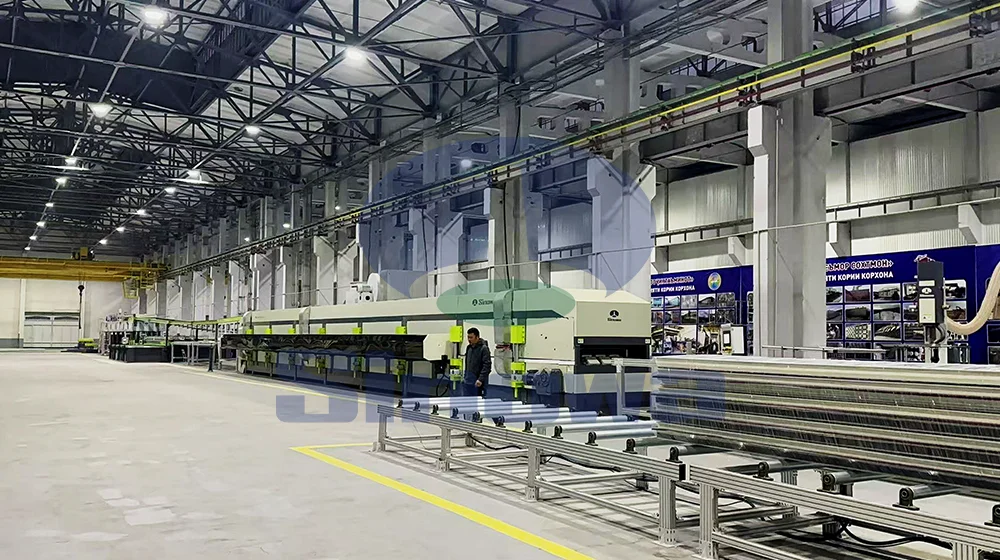
Moving deeper into the production line structure, the central composite bonding section stands as the heart of the entire system, where the metal face sheets are permanently bonded to the core insulation material to form the sandwich structure. This section integrates multiple sub-systems, including core material feeding, adhesive application, heating and pressing, and laminating units, all working in perfect coordination to ensure a strong, uniform bond between the outer metal layers and the inner core. For different core materials, the configuration of this bonding section varies slightly, with dedicated feeding mechanisms for rigid foam cores, fibrous mineral cores, and honeycomb cores to accommodate their unique physical characteristics. After the composite bonding process, the continuous panel strip proceeds to a precision cutting and trimming unit, which uses high-speed cutting tools to slice the continuous panel into fixed lengths as required by customer specifications, with minimal material waste and clean, burr-free edges. The final stages of the production line include cooling, quality inspection, stacking, and packaging units, which cool the newly formed panels to room temperature, conduct visual and dimensional checks to filter out defective products, stack the qualified panels in neat batches, and prepare them for storage or direct shipment. The entire line is governed by a centralized electrical control system, typically powered by programmable logic controllers (PLC) and human-machine interface (HMI) screens, which monitor real-time operating parameters, adjust production speed, regulate temperature and pressure levels, and track production output, reducing the need for manual intervention and minimizing human error in the manufacturing process. The structural layout of the line is designed for space efficiency as well, with a linear or slightly curved configuration that optimizes floor space usage in manufacturing facilities, while also allowing for easy access to each module for routine maintenance, cleaning, and minor repairs.
In terms of operational performance, metal sandwich panel production lines are engineered to deliver exceptional reliability, efficiency, and consistency, making them indispensable for large-scale and high-volume panel production. One of the most prominent performance attributes is continuous operational stability, as these lines are built to run for extended periods—often multiple consecutive shifts—without significant downtime or performance degradation. This stability is achieved through the use of heavy-duty structural frames, high-quality transmission components, and precision engineering that reduces mechanical wear and tear, even under the stress of continuous production. The lines also boast high production efficiency, with adjustable operating speeds that can be tailored to match the curing and bonding requirements of different core materials, balancing speed with product quality to maximize output without compromising panel integrity. Dimensional accuracy is another key performance metric, with the entire production process calibrated to maintain tight tolerances for panel thickness, width, length, and profile consistency, ensuring that every finished panel meets strict dimensional standards and fits seamlessly during on-site installation. This precision eliminates the need for on-site cutting or modification, saving time and labor in construction projects and reducing material waste.
Thermal and pressure control performance is equally critical, especially for lines producing foam-core sandwich panels, as the bonding and curing processes rely on precise temperature and pressure regulation to achieve optimal adhesive strength and core material density. The integrated heating and pressing systems maintain uniform temperature distribution across the entire width of the panel, preventing uneven curing, delamination, or air pockets that could weaken the panel’s structural and insulation properties. Additionally, these production lines offer strong adaptability, capable of handling a wide range of metal facing thicknesses, widths, and core material types with minimal retooling, making them suitable for small-batch customized production as well as large-scale mass production. Energy efficiency is also a notable performance feature, with modern lines designed to minimize energy consumption through optimized heating systems, low-friction transmission components, and intelligent power management that reduces energy waste during idle or low-load periods. The lines also feature low noise emission and dust generation, complying with general industrial environmental standards and creating a safer and more comfortable working environment for on-site operators. Overall, the performance of a metal sandwich panel production line directly translates to the quality of the finished panels, with well-designed and properly maintained lines producing panels that exhibit consistent structural strength, reliable insulation performance, and long-term durability.
Metal sandwich panel production lines are categorized primarily based on the type of core material they process, as the core material defines the key properties of the finished panels and dictates specific production process requirements. The most common category is the polyurethane (PUR) and polyisocyanurate (PIR) foam core panel production line, which is designed to manufacture panels with closed-cell foam cores that offer exceptional thermal insulation properties, low thermal conductivity, and moderate structural strength. These lines feature specialized high-pressure foaming systems that inject liquid polyurethane raw materials between the metal face sheets, where the material expands and cures rapidly to form a dense, uniform foam core. PUR and PIR panel lines are highly efficient, with fast curing times that support high production speeds, and the resulting panels are lightweight, easy to handle, and ideal for applications where thermal insulation is the top priority. Another major category is the mineral wool core panel production line, which processes rigid mineral wool or rock wool cores, known for their outstanding fire resistance, sound insulation, and high-temperature stability. Unlike foam core lines, these lines require gentle handling of the brittle mineral wool cores to prevent breakage, with dedicated core feeding and positioning systems that ensure the wool is evenly placed between the metal sheets without compression or damage. The adhesive application process for mineral wool panels is also adjusted to penetrate the fibrous core and create a strong bond with the metal facings, resulting in panels that are non-combustible, sound-absorbent, and structurally stable even in high-temperature environments.
Expanded polystyrene (EPS) core panel production lines represent a third common category, designed for producing cost-effective, lightweight panels with basic thermal insulation and structural properties. EPS cores are pre-formed rigid blocks that are fed into the line and bonded to the metal sheets using adhesive lamination systems, making the production process relatively straightforward and suitable for high-volume, budget-friendly panel production. These lines are more compact and require less complex equipment compared to PUR or mineral wool lines, making them a popular choice for entry-level panel manufacturers. Additionally, there are specialized production lines for honeycomb core metal sandwich panels, typically using aluminum or paper honeycomb cores, which deliver an exceptional strength-to-weight ratio. These lines require ultra-precise core positioning and adhesive application to maintain the integrity of the honeycomb structure, producing panels that are extremely lightweight yet rigid enough to withstand heavy mechanical loads, making them suitable for specialized industrial and transportation applications. Beyond core material-based categories, production lines can also be divided into continuous and discontinuous types: continuous lines operate with a constant material flow, producing panels in a seamless, uninterrupted process for maximum efficiency and large output, while discontinuous lines are designed for smaller batch sizes and customized panel production, with intermittent material feeding and processing that allows for greater flexibility in panel size and design changes.
The versatility of metal sandwich panels produced by these automated lines has led to their widespread adoption across a vast range of industries and application scenarios, with each panel type tailored to meet the unique demands of specific use cases. In the construction industry, these panels are among the most widely used materials for industrial and commercial building projects, serving as both wall cladding and roofing systems for factories, warehouses, logistics centers, shopping malls, and office buildings. The combination of structural strength, weather resistance, and thermal insulation makes them ideal for large-span buildings, as they reduce the need for additional support structures and speed up construction timelines significantly compared to traditional building materials. For cold storage and refrigeration facilities, including food processing plants, pharmaceutical warehouses, and cold chain logistics centers, PUR and PIR foam core panels are the material of choice due to their superior thermal insulation performance, which helps maintain stable low temperatures, reduce energy consumption for cooling, and prevent temperature fluctuations that could damage perishable goods. The airtight and moisture-resistant properties of these panels also prevent condensation and frost buildup inside cold storage structures, extending the service life of the facility and maintaining hygienic storage conditions.
In the realm of prefabricated and modular construction, metal sandwich panels play a pivotal role, as they are used to construct prefab houses, temporary accommodation units, site offices, and emergency shelters. The lightweight nature of the panels simplifies transportation and on-site assembly, with interlocking edge designs that allow for quick, tool-free installation, making them perfect for rapid construction projects in remote areas or post-disaster reconstruction. The panels also offer good sound insulation, creating comfortable living and working spaces even in noisy industrial or urban environments. For agricultural buildings, such as livestock barns, greenhouses, and agricultural product storage facilities, metal sandwich panels provide a cost-effective solution for temperature control and structural durability, protecting crops and livestock from extreme weather conditions while maintaining optimal internal environmental conditions.
Beyond the construction sector, metal sandwich panels find extensive use in transportation and industrial engineering applications. In the transportation industry, they are used to fabricate body panels for refrigerated trucks, shipping containers, and railway carriages, leveraging their lightweight and insulation properties to reduce vehicle weight, improve fuel efficiency, and maintain stable temperatures for cargo transportation. Honeycomb core sandwich panels, in particular, are used in aerospace and marine applications for their lightweight and high-strength characteristics, though on a smaller scale compared to construction uses. In industrial settings, these panels are used to build clean rooms, dust-free workshops, and soundproof enclosures for heavy machinery, as they can be customized to meet strict cleanliness, sound insulation, and static control requirements. They are also used for interior partition walls in commercial buildings, exhibition halls, and sports facilities, offering a flexible and aesthetically pleasing solution for space division without compromising on structural stability or insulation.
The enduring popularity of metal sandwich panel production lines stems from their ability to transform basic raw materials into high-value, multi-functional composite panels that address key challenges in modern construction and industrial design, including energy efficiency, construction speed, durability, and cost optimization. As global demand for sustainable and energy-efficient building materials continues to rise, these production lines are evolving with advanced technologies, such as intelligent automation, digital monitoring, and eco-friendly material processing, to further enhance performance, reduce environmental impact, and expand the range of panel types and applications. Whether used in large-scale industrial complexes, critical cold storage infrastructure, or modular residential units, metal sandwich panels produced by these integrated lines deliver a unique combination of properties that cannot be matched by single-layer building materials, solidifying their position as a cornerstone of modern manufacturing and construction. The continuous refinement of production line structure and performance ensures that these panels will remain a preferred choice for engineers, architects, and manufacturers seeking reliable, efficient, and versatile building solutions for years to come.
« Metal Sandwich Panel Production Line » Update Date: 2026/3/24
URL: https://www.sinowamachine.com/tags/metal-sandwich-panel-production-line.html
- Links:
- Sandwich Panel Continuous Production Line
- Automatic and Continuous Sandwich Panel Production Line
- Cheap and Low Price Sandwich Panel Production Line
- China Sandwich Panel Production Line Factory
- Color Steel Sandwich Panel Production Line For Cold Storage
- Continuous Composite Foam Sandwich Panel Production Line
- Continuous Production Line For Rockwool and Mineral Wool Sandwich Panels
- Continuous PU Phenolic Insulation Panel Production Line
- Continuous PU PIR Sandwich Panel Production Line
- Continuous PUF PUR Sandwich Panel Production Line
- Continuous Sandwich Panel Production Line For Roof and Wall
- Customized and Design Sandwich Panel Production Line
- Decorative Sandwich Panel Production Line For Glass Wool Boards
- High Quality Sandwich Panel Production Line For Sale
- Polyurethane(PU) Sandwich Panel Production Line
- Sandwich Panel Production Line Manufacturer and Supplier
- Sandwich Panel Production Machinery and Equipment