
Foam Core Sandwich Panel Line
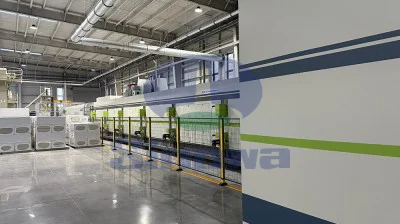
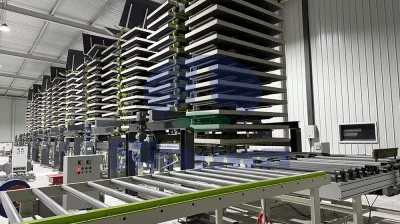
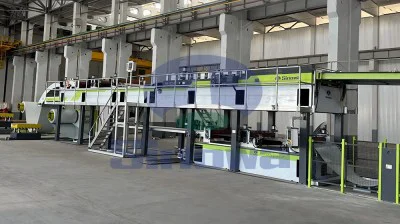
Sinowa is a foam core sandwich panel line supplier from china, customized high-quality & high efficiency foam core sandwich panel line at low price, the adoption of system integration technology and bus control technology accomplishes the full automatization of integrated and coordinated control of the foam core sandwich panel line with accessible remote interactive communication. Ranking the first-class level in the world, it is currently the foam core sandwich panel line in the market taking a comprehensive lead in high performance.
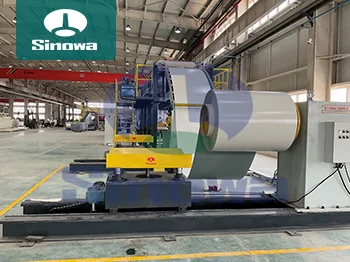
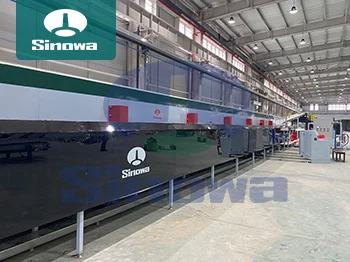
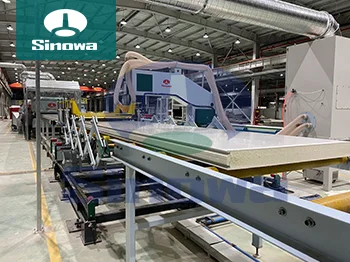
The high-tech foam core sandwich panel line can meet a variety of production needs of customers, the whole foam core sandwich panel line design concept of modularization enables all our components to be integrated and combined at will. Our high efficiency foam core sandwich panel line can easily automate the production of roof sandwich panel, wall sandwich panel, cold storage sandwich panel and other products by different combination and configuration selection and siple switching. The inner core layer can be polyrethane or rock wool, glass wool, an so on.


The high precision foam core sandwich panel line has high adaptability, which may produce various sandwich panel of the PU, PIR and rock wool systems. We may design various products according to the customer’s requirements, including various configurations, so as to meet their demands with flexible price system. Highly integrated and linked control system centralizes all control points at the main central center, achieving parameter linkage, fault self-diagnosis controlled by the whole line and shipping distance control. High-level automatic control system also saves the manpower and reduces the manpower loss for customers.


The precision servo hoisting mechanism employed by the main engine without hydraulic system makes the board thickness control flexible and the customer may conveniently change or adjust the board thickness. There will be not such troubles as hydraulic system adjustment, leakage, maintenance, etc.


High-level energy saving and protection design makes the whole foam core sandwich panel line possible to produce around the clock throughout the year and the customer will save huge budget. In addition, the isolated heat preservation room is constructed for warming the environment. The energy saving and protection design of our manufacturing line may guarantee that the customer’s production line may be freely heated and produce in the main time to save more costs for customers.


The high-power low-consumption design quickens the reaction of the cheap foam core sandwich panel line while energy consumption is kept low. With the brand-new, fully sealed inner insulation design, the energy consumption is controlled at the minimum level to achieve the design objective of less than an hour for the insulation system to be activated from the room temperature above 5℃ to the production process temperature. The energy consumption is only 40% that of those similar products.
Foam core sandwich panels represent a pinnacle of modern composite material engineering, designed to deliver exceptional functional and structural performance through a thoughtfully engineered layered configuration that has transformed industries ranging from commercial construction and industrial manufacturing to transportation, marine engineering, and renewable energy. Unlike solid single-material panels, these sandwich-structured composites operate on a fundamental principle of material synergy, combining the distinct strengths of outer facing layers and a lightweight foam core to create a product that outperforms traditional building and industrial materials in nearly every key metric. Produced via specialized continuous panel production lines, these panels are manufactured with precision and consistency, ensuring uniform thickness, strong adhesive bonding, and reliable structural integrity across every unit, making them suitable for large-scale, high-demand projects worldwide. The core design of a foam core sandwich panel consists of three essential components: two rigid, durable outer skins that bear tensile and compressive loads, a thick, lightweight foam core that provides insulation, rigidity, and bulk without excessive weight, and a high-performance adhesive layer that permanently bonds the core and skins together, creating a unified, monolithic structure that distributes stress evenly across the entire panel surface. This layered architecture is not arbitrary; it is engineered to maximize strength-to-weight ratio, a critical advantage that sets sandwich panels apart from solid metal, wood, or concrete panels, as it allows for significant load-bearing capacity while keeping overall material weight to a minimum, reducing transportation costs, simplifying installation, and lessening structural strain on supporting frameworks.
The structural performance of foam core sandwich panels is defined by a unique set of mechanical, thermal, acoustic, and environmental properties that stem directly from their composite design and the characteristics of the foam core and facing materials used. At the core of their structural superiority is the exceptional strength-to-weight ratio, which enables panels to withstand bending, shear, and impact loads far greater than their weight would suggest, a trait that makes them ideal for applications where both structural stability and light weight are non-negotiable. The outer skins, typically crafted from rigid materials such as galvanized steel, aluminum, fiber-reinforced polymer (FRP), cement board, or fiberglass, act as the primary load-bearing elements, resisting bending, stretching, and surface damage, while the foam core serves to separate the two skins and maintain panel rigidity, preventing warping, buckling, or deformation under static and dynamic loads. This separation of the skins creates a high moment of inertia, a key mechanical property that enhances the panel’s ability to resist bending without adding extra mass, a design principle borrowed from natural structural forms like bone and wood, which optimize strength through hollow or layered structures. Beyond mechanical strength, foam core sandwich panels offer unparalleled thermal insulation performance, a direct result of the closed-cell structure of most foam core materials, which trap stationary air within tiny, sealed pockets to minimize heat transfer through conduction, convection, and radiation. This thermal efficiency drastically reduces energy consumption for heating and cooling in built environments, making panels a cornerstone of energy-efficient and sustainable construction practices, while also maintaining stable internal temperatures for temperature-sensitive applications such as cold storage, pharmaceutical facilities, and refrigerated transportation.
Additional performance attributes include excellent acoustic insulation, as the thick foam core absorbs and dampens sound waves, reducing noise transmission between interior and exterior spaces or between separate compartments, a valuable feature for commercial buildings, industrial facilities, residential structures, and transportation vehicles. These panels also exhibit strong dimensional stability, meaning they retain their shape and size even when exposed to extreme temperature fluctuations, high humidity, or prolonged environmental exposure, eliminating issues like expansion, contraction, or warping that plague many traditional building materials. Environmental resistance is another hallmark of high-quality foam core sandwich panels, with resistance to moisture absorption, mold and mildew growth, rot, corrosion, and chemical degradation, depending on the core and facing materials selected. Closed-cell foam cores repel liquid water, preventing water penetration and subsequent structural damage, while metal or FRP facings offer protection against UV radiation, wind, rain, snow, and abrasive environmental factors, extending the service life of the panel and reducing long-term maintenance requirements. Structural durability is further enhanced by the continuous bonding process used in panel production lines, which ensures a uniform, void-free adhesive bond between the core and skins, eliminating weak points or delamination risks that could compromise structural integrity over time. When properly installed and maintained, foam core sandwich panels can maintain their performance characteristics for decades, making them a cost-effective long-term investment despite initial material considerations.
Foam core sandwich panels are available in a wide range of varieties, differentiated primarily by the type of foam core material, the composition of the outer facing layers, and the specific performance properties tailored to distinct application needs, with each variety engineered to address unique functional, structural, and environmental requirements. The most common foam core materials include expanded polystyrene (EPS), extruded polystyrene (XPS), rigid polyurethane (PUR), polyisocyanurate (PIR), polyvinyl chloride (PVC), polyethylene terephthalate (PET), and expanded polypropylene (EPP), each offering distinct advantages in terms of insulation, strength, weight, moisture resistance, and environmental compatibility. EPS foam cores are among the most widely used, valued for their lightweight nature, cost-effective production, and reliable thermal insulation, making them suitable for general construction, temporary structures, and low-load bearing applications; they are easy to fabricate and compatible with a wide range of facing materials, though they have lower compressive strength compared to denser foam options. XPS foam cores, by contrast, offer higher compressive strength, lower water absorption rates, and better dimensional stability than EPS, with a denser closed-cell structure that makes them ideal for applications requiring enhanced structural support and moisture resistance, such as roofing systems, foundation insulation, and marine structures. PUR foam cores deliver superior thermal insulation with lower thermal conductivity than EPS and XPS, along with good mechanical strength and flexibility, making them a top choice for cold storage facilities, refrigerated transportation, and energy-efficient commercial buildings, where maximum thermal efficiency is critical.
PIR foam cores are a modified version of PUR, engineered with improved thermal stability and fire-resistant properties, maintaining their insulation performance at higher temperatures and offering better resistance to flame spread and smoke generation, making them suitable for buildings with stricter safety requirements and industrial facilities. PVC foam cores are known for their exceptional structural rigidity, high compressive and shear strength, and excellent resistance to moisture and chemicals, making them a preferred option for high-load bearing applications in aerospace, marine, and transportation sectors, where durability and structural performance are paramount. PET foam cores stand out for their environmental sustainability, as they are often made from recycled plastic materials, offering good mechanical strength, thermal insulation, and recyclability, aligning with modern green building and circular economy goals; they are resistant to moisture and chemicals, making them versatile for both indoor and outdoor applications. EPP foam cores offer superior impact resistance and flexibility, able to absorb shock and deform under pressure without permanent damage, making them ideal for transportation vehicles, protective enclosures, and applications prone to physical impact. The outer facing materials further diversify panel varieties, with metal facings (steel and aluminum) providing exceptional structural strength, fire resistance, and weather durability, suitable for industrial warehouses, commercial building facades, and transportation vehicle bodies; FRP and fiberglass facings offering corrosion resistance, lightweight performance, and design flexibility, ideal for marine, chemical industrial, and coastal construction applications; and cement or fiber cement facings providing fire resistance, breathability, and compatibility with traditional building aesthetics, suitable for residential and public building projects.
Panel varieties are also categorized by production line specifications, including panel thickness, width, length, and core density, all of which are customizable to meet specific project requirements. Thickness ranges from thin panels used for interior partitions and cladding to thick panels designed for heavy-duty insulation and structural load-bearing, with core density varying from low-density options for maximum light weight to high-density cores for enhanced strength. The continuous production line manufacturing process allows for precise control over these variables, ensuring that each panel meets exact design specifications and performance standards, with consistent quality across large production runs. This customization capability means that foam core sandwich panels can be tailored to virtually any application, from small-scale residential renovations to large-scale industrial complexes and specialized transportation projects, without compromising on performance or reliability.
The versatility of foam core sandwich panels is reflected in their extensive range of applications across global industries, where their unique combination of structural performance, insulation, light weight, and durability addresses critical design and operational challenges. In the construction and building sector, these panels are a staple for both residential and commercial projects, used extensively for exterior wall cladding, roofing systems, interior partitions, ceiling panels, and prefabricated modular buildings. Their quick and efficient installation, enabled by lightweight design and interlocking edge profiles, reduces construction timelines and labor costs significantly compared to traditional masonry or concrete construction, making them ideal for rapid building projects, emergency shelters, and modular housing solutions. For industrial construction, foam core sandwich panels are the material of choice for warehouses, manufacturing facilities, logistics centers, and distribution hubs, where they provide durable, low-maintenance exterior envelopes, effective thermal and acoustic insulation, and resistance to heavy wear and environmental exposure. Cold storage and temperature-controlled facilities, including food processing plants, pharmaceutical warehouses, and refrigerated warehouses, rely heavily on PUR and PIR foam core panels for their superior thermal insulation properties, which maintain consistent low temperatures, prevent heat gain, and reduce energy costs for refrigeration systems, ensuring product integrity and compliance with strict temperature control standards.
In the transportation industry, foam core sandwich panels play a vital role in reducing vehicle weight while maintaining structural integrity and insulation performance, directly improving fuel efficiency and payload capacity for commercial vehicles. Refrigerated trucks, vans, and shipping containers use insulated foam core panels to create temperature-controlled cargo spaces, preserving perishable goods such as food, pharmaceuticals, and floral products during long-distance transportation; the lightweight design reduces vehicle weight, lowering fuel consumption and operational costs without sacrificing insulation or structural strength. These panels are also widely used in the production of recreational vehicles (RVs), campers, and mobile homes, where their light weight eases towing and mobility, while their insulation and acoustic properties enhance passenger comfort and living space functionality. In marine and offshore engineering, foam core sandwich panels with water-resistant cores and corrosion-resistant facings are used for boat hulls, decks, bulkheads, cabin interiors, and offshore platform structures, offering buoyancy, moisture resistance, and high strength-to-weight performance that withstands the harsh marine environment, including saltwater exposure, humidity, and wave-induced stress. Unlike traditional wood or metal marine materials, these panels resist rot, corrosion, and water absorption, extending the lifespan of marine vessels and reducing maintenance needs.
Beyond construction and transportation, foam core sandwich panels find critical applications in aerospace, renewable energy, agricultural, and industrial equipment sectors. In aerospace and aviation, high-performance PVC and PET foam core panels with lightweight, high-strength facings are used for interior components, cargo compartments, and non-structural aircraft parts, where weight reduction is essential for fuel efficiency and flight performance. The renewable energy sector utilizes these panels for protective enclosures, support structures, and insulation for solar energy systems, wind turbine components, and battery storage units, leveraging their weather resistance and thermal insulation to protect sensitive equipment and enhance operational efficiency. Agricultural applications include livestock housing, greenhouse structures, and grain storage facilities, where panels provide thermal insulation to maintain stable internal temperatures, resist moisture and agricultural chemicals, and create a hygienic, low-maintenance environment for livestock and crop production. Industrial equipment manufacturers use foam core sandwich panels for protective enclosures, machinery covers, and sound-dampening barriers, benefiting from their acoustic insulation, impact resistance, and customizability to fit complex equipment shapes.
The ongoing evolution of foam core sandwich panel production lines and material science continues to expand their potential applications, with ongoing innovations focused on enhancing sustainability, improving mechanical performance, and reducing environmental impact. Modern production lines prioritize energy efficiency and waste reduction, with manufacturing processes that minimize material scrap and optimize resource use, while recycled and bio-based foam core materials are becoming increasingly prevalent, aligning with global sustainability goals and green building initiatives. Advances in adhesive technology and bonding processes further improve panel durability and structural integrity, eliminating delamination risks and extending service life, while new facing material combinations enhance fire resistance, UV stability, and aesthetic versatility, allowing panels to blend seamlessly with diverse architectural designs and functional requirements.
In summary, foam core sandwich panels represent a transformative composite material solution, defined by their innovative layered structure, exceptional performance versatility, and wide-ranging industrial and commercial applications. Produced via precision continuous production lines, these panels combine the strength of rigid outer facings with the light weight and insulation of foam cores to deliver a unique balance of mechanical strength, thermal efficiency, acoustic dampening, and environmental resistance that cannot be matched by traditional single-material panels. The diverse range of core and facing material varieties ensures that there is a specialized foam core sandwich panel solution for nearly every application, from general construction and cold storage to transportation, marine engineering, and renewable energy. As global demand for sustainable, energy-efficient, and high-performance building and industrial materials continues to rise, foam core sandwich panels are poised to remain a leading choice for engineers, architects, manufacturers, and project developers, offering long-term value, reliability, and performance across countless projects worldwide. Their ability to adapt to evolving industry needs, combined with ongoing technological advancements in production and material design, cements their role as a foundational material in modern engineering and construction, driving efficiency, sustainability, and innovation across multiple sectors for years to come.
« Foam Core Sandwich Panel Line » Update Date: 2026/3/24
URL: https://www.sinowamachine.com/tags/foam-core-sandwich-panel-line.html
![Foam Core Sandwich Panel Line Manufacturer]()
Foam Core Sandwich Panel Line Manufacturer
2026-08-24Foam core sandwich panel production lines have emerged as core automated manufacturing systems for producing high-performance composite building and industrial panels, driving the standardized and large-scale production of lightweight, insulated, and structurally stable sandwich panels. This integrat…![Foam Core Sandwich Panel Line For Sale]()
Foam Core Sandwich Panel Line For Sale
2026-08-12The foam core sandwich panel production line stands as a sophisticated, integrated manufacturing system tailored for the mass production of high-performance composite building panels, widely sought after in the global industrial and construction equipment market. This automated production unit integr…![Foam Core Sandwich Panel Line On Sales]()
Foam Core Sandwich Panel Line On Sales
2026-05-08The growing demand for lightweight, durable, and thermally efficient building components has driven steady market expansion for foam core sandwich panel production lines across global construction and manufacturing sectors. These integrated production systems serve as essential industrial equipment d…
- Links:
- Sandwich Panel Continuous Production Line
- Automatic and Continuous Sandwich Panel Production Line
- Cheap and Low Price Sandwich Panel Production Line
- China Sandwich Panel Production Line Factory
- Color Steel Sandwich Panel Production Line For Cold Storage
- Continuous Composite Foam Sandwich Panel Production Line
- Continuous Production Line For Rockwool and Mineral Wool Sandwich Panels
- Continuous PU Phenolic Insulation Panel Production Line
- Continuous PU PIR Sandwich Panel Production Line
- Continuous PUF PUR Sandwich Panel Production Line
- Continuous Sandwich Panel Production Line For Roof and Wall
- Customized and Design Sandwich Panel Production Line
- Decorative Sandwich Panel Production Line For Glass Wool Boards
- High Quality Sandwich Panel Production Line For Sale
- Polyurethane(PU) Sandwich Panel Production Line
- Sandwich Panel Production Line Manufacturer and Supplier
- Sandwich Panel Production Machinery and Equipment