
Continuous PUF Panel Production Line
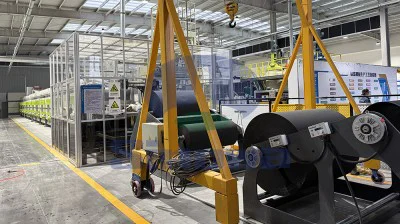
Sinowa is a continuous puf panel production line supplier from china, customized high-quality & high efficiency continuous puf panel production line at low price, the adoption of system integration technology and bus control technology accomplishes the full automatization of integrated and coordinated control of the continuous puf panel production line with accessible remote interactive communication. Ranking the first-class level in the world, it is currently the continuous puf panel production line in the market taking a comprehensive lead in high performance.
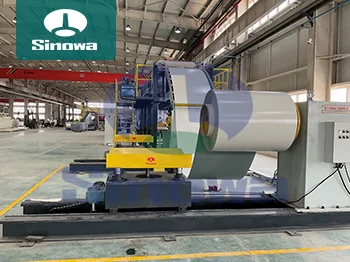
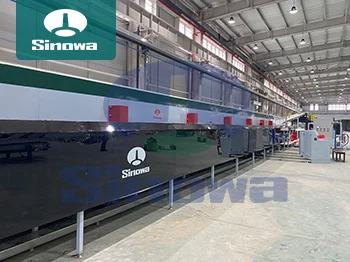
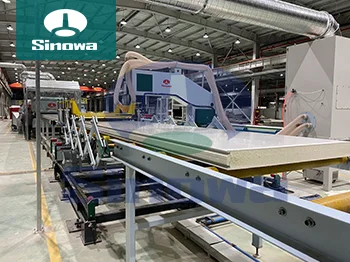
The high-tech continuous puf panel production line can meet a variety of production needs of customers, the whole continuous puf panel production line design concept of modularization enables all our components to be integrated and combined at will. Our high efficiency continuous puf panel production line can easily automate the production of roof sandwich panel, wall sandwich panel, cold storage sandwich panel and other products by different combination and configuration selection and siple switching. The inner core layer can be polyrethane or rock wool, glass wool, an so on.


The high precision continuous puf panel production line has high adaptability, which may produce various sandwich panel of the PU, PIR and rock wool systems. We may design various products according to the customer’s requirements, including various configurations, so as to meet their demands with flexible price system. Highly integrated and linked control system centralizes all control points at the main central center, achieving parameter linkage, fault self-diagnosis controlled by the whole line and shipping distance control. High-level automatic control system also saves the manpower and reduces the manpower loss for customers.


The precision servo hoisting mechanism employed by the main engine without hydraulic system makes the board thickness control flexible and the customer may conveniently change or adjust the board thickness. There will be not such troubles as hydraulic system adjustment, leakage, maintenance, etc.


High-level energy saving and protection design makes the whole continuous puf panel production line possible to produce around the clock throughout the year and the customer will save huge budget. In addition, the isolated heat preservation room is constructed for warming the environment. The energy saving and protection design of our manufacturing line may guarantee that the customer’s production line may be freely heated and produce in the main time to save more costs for customers.


The high-power low-consumption design quickens the reaction of the cheap continuous puf panel production line while energy consumption is kept low. With the brand-new, fully sealed inner insulation design, the energy consumption is controlled at the minimum level to achieve the design objective of less than an hour for the insulation system to be activated from the room temperature above 5℃ to the production process temperature. The energy consumption is only 40% that of those similar products.
A continuous PUF (Polyurethane Foam) panel production line is a fully automated integrated system designed to manufacture composite sandwich panels with polyurethane foam as the core material, combined with various surface facings, through a series of continuous and coordinated processes. Unlike traditional intermittent production equipment, this kind of production line realizes uninterrupted operation from raw material feeding to finished product stacking, integrating mechanical, electrical, hydraulic and chemical process technologies to ensure high efficiency, stability and consistency of production. The structure of a continuous PUF panel production line is composed of multiple functional modules that are closely connected and synergistically operated, each of which undertakes a specific production link, and the rationality and advanced nature of the overall structure directly determine the production efficiency, product quality and adaptability of the production line to different market demands. The performance of the production line is reflected in many aspects such as automation level, production efficiency, product performance control and energy conservation, which are the core indicators to measure the comprehensive competitiveness of the production line. According to the differences in product types, production processes and application fields, continuous PUF panel production lines can be divided into various types, each of which has its own characteristics and applicable scenarios. Meanwhile, with the continuous development of construction, cold chain logistics, clean room and other industries, the application scope of continuous PUF panel production lines is constantly expanding, providing important material support for the high-quality development of related industries.
The structure of a continuous PUF panel production line is a systematic combination of functional modules, and each module is designed according to the requirements of the production process, ensuring the smooth flow of the whole production process and the stability of product quality. The basic structure usually includes uncoiling and feeding system, surface treatment system, foaming system, rolling and curing system, cutting system, stacking and packaging system, and central control system, and some production lines will be equipped with additional functional modules according to specific production needs. The uncoiling and feeding system is the starting link of the production line, mainly composed of uncoilers, leveling machines and feeding conveyors, which are used to uncoil the coiled surface facings (such as color steel plates, aluminum plates, kraft paper, non-woven fabrics, etc.) stably and continuously, and level the deformed facings through the leveling machine to ensure that the surface of the facings is flat and meets the production requirements. The uncoiler is usually equipped with an automatic coil changing device, which can connect two coils without stopping the production line, realizing uninterrupted feeding and improving production efficiency. The feeding conveyor transports the leveled facings to the next process at a constant speed, ensuring the coordination and synchronization between each link.
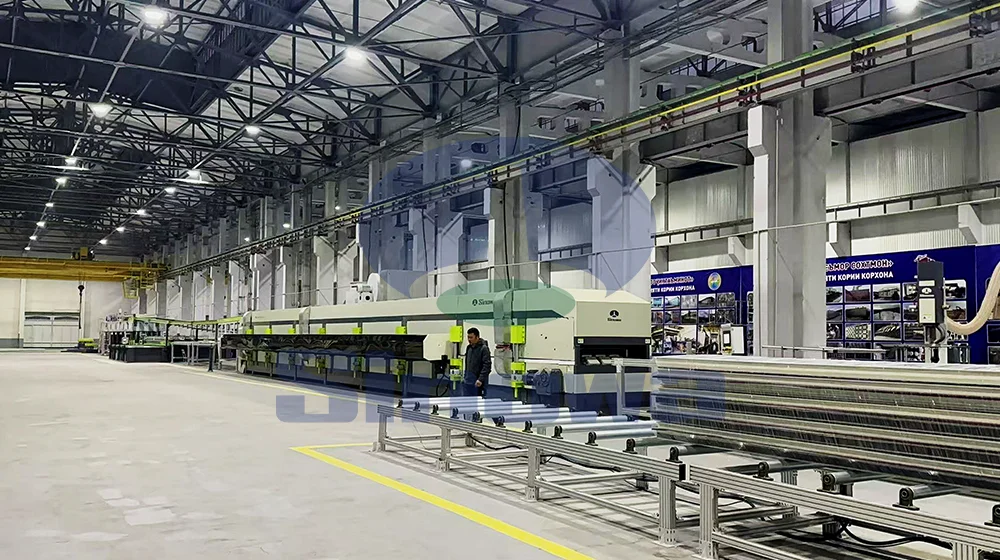
The surface treatment system is an important link to improve the bonding strength between the surface facing and the PUF core material, and its structure is designed according to the type of facing and the bonding requirement. Common surface treatment methods include coating, corona treatment and preheating. The coating module is equipped with a precise glue spraying device, which can evenly spray the adhesive on the surface of the facing according to the process requirements, enhancing the adhesion between the facing and the foam core; the corona treatment module is mainly used for non-metallic facings, which can increase the surface wettability of the facing, eliminate static electricity, and make the foam core and the facing bond more firmly; the preheating module heats the facing to an appropriate temperature through the heating device, which can promote the reaction between the adhesive and the foam material, further improving the bonding effect and ensuring the structural integrity of the composite panel. The surface treatment system is usually connected with the uncoiling and feeding system in a seamless manner, and the processing parameters can be adjusted according to the production needs to adapt to different types of facings.
The foaming system is the core module of the continuous PUF panel production line, which determines the performance of the PUF core material and the overall quality of the composite panel. Its structure mainly includes raw material storage tanks, metering pumps, mixing heads and foaming distributors. The raw material storage tanks are used to store polyurethane composite materials (mainly polyol and isocyanate) and various additives (such as catalysts, foaming agents, flame retardants, etc.), and are equipped with temperature control devices to ensure that the raw materials are kept at a stable temperature, avoiding the influence of temperature changes on the foaming reaction. The metering pump is a key component to ensure the precise proportion of raw materials. It can transport polyol, isocyanate and additives to the mixing head according to the preset proportion and flow rate. The measurement accuracy directly affects the foaming quality, density and mechanical properties of the PUF core material. The mixing head fully mixes the various raw materials injected into it through high-speed stirring, ensuring that the raw materials react uniformly. The foaming distributor evenly spreads the mixed raw materials between the upper and lower facings through fixed plastic rakes or oscillating pokers, laying a foundation for the formation of a uniform and dense foam core. Some advanced foaming systems are also equipped with online density feedback devices, which can real-time monitor the density of the foam core and adjust the metering parameters in time to ensure the consistency of the foam density.
The rolling and curing system is used to shape the foaming material and promote its curing, which is composed of a double-track press, a heating device and a conveying device. After the mixed raw materials are distributed between the upper and lower facings, they enter the double-track press along with the conveyors. The double-track press controls the thickness and flatness of the composite panel through the pressure of the upper and lower tracks, and at the same time, the heating device adopts a segmented temperature control strategy to adjust the temperature of different sections according to the foaming and curing characteristics of the polyurethane material. The front section maintains an appropriate low temperature to control the reaction rate of the foaming material and avoid the phenomenon of violent polymerization; the middle section increases the temperature to promote the rearrangement of the hard segments of the polyurethane and the phase separation, improving the density and strength of the foam; the rear section adopts high-temperature post-curing to make the hydrogen bond network of the foam fully formed, ensuring that the foam structure is dense and stable, and enhancing the mechanical properties and durability of the composite panel. The conveying device of the rolling and curing system runs at a constant speed, ensuring that the composite panel stays in each temperature section for a sufficient time to achieve complete curing.
The cutting system is used to cut the continuously formed composite panel into finished products of the specified length, which is composed of a cutting machine, a positioning device and a control system. The cutting machine is usually equipped with two types of saw blades: band saw and circular saw, which can meet the cutting needs of different types of facings (hard facings such as metal plates and soft facings such as non-woven fabrics), and has the function of trimming the soft facings to ensure that the cut surface is flat and the size is accurate. The positioning device accurately positions the composite panel according to the preset length, and sends a signal to the cutting machine to complete the cutting operation. The cutting process is carried out continuously without stopping the production line, which ensures the continuity of production and the consistency of the length of the finished products. After cutting, the finished products are transported to the stacking and packaging system through the conveyor.
The stacking and packaging system is the final link of the production line, which is composed of a stacking platform, an automatic stacking machine and a packaging device. The automatic stacking machine transports the cut finished products to the stacking platform according to the preset stacking mode, and stacks them neatly, which can adapt to the stacking needs of different specifications and types of composite panels, reducing manual operation and improving stacking efficiency. The packaging device wraps the stacked finished products with packaging materials (such as plastic film) to prevent the finished products from being damp, polluted or damaged during transportation and storage, ensuring the integrity of the products. Some advanced stacking and packaging systems are also equipped with weight detection and fault alarm functions, which can detect the weight of the stacked products in real time and alarm in time when a fault occurs, ensuring the normal operation of the system.
The central control system is the "brain" of the continuous PUF panel production line, which integrates electrical control, hydraulic control and computer control technologies, and is connected with all functional modules of the production line. The central control system can realize real-time monitoring and centralized control of the whole production process, including raw material feeding, foaming reaction, curing temperature, cutting length, stacking and packaging and other parameters. Operators can set and adjust various production parameters through the operation interface, and the system can automatically adjust the operation state of each module according to the set parameters to ensure the stability of production. At the same time, the central control system is equipped with a fault self-diagnosis function, which can timely detect the fault points in the production line and send out fault prompts, facilitating operators to carry out maintenance and reducing the downtime of the production line. Some advanced central control systems also support remote interactive communication, allowing operators to monitor and control the production line remotely, further improving the convenience and efficiency of production management.
The performance of a continuous PUF panel production line is a comprehensive reflection of its structure, technology and equipment level, which mainly includes automation level, production efficiency, product performance control, energy conservation and environmental protection, and adaptability. The automation level is one of the core performance indicators of the production line. The high degree of automation can reduce manual operation links, avoid human errors, and improve the stability and consistency of product quality. The modern continuous PUF panel production line realizes full-process automation from raw material feeding to finished product packaging through the central control system and various automatic devices, and the key links such as raw material metering, foaming reaction and cutting length are all controlled by precision instruments, which greatly reduces the dependence on manual labor. Some production lines even realize unmanned operation, further improving production efficiency and reducing labor costs.
Production efficiency is another important performance indicator, which is usually measured by the output per unit time. Compared with traditional intermittent production equipment, the continuous PUF panel production line realizes uninterrupted production, and the coordination between each module is high, so the production efficiency is greatly improved. The production efficiency of the production line is related to the speed of the conveyor, the foaming and curing time, the cutting speed and other factors. Through the optimization of the structure and the improvement of the process, the modern continuous PUF panel production line can adjust the production speed according to the production needs, and the output can meet the large-scale production demand of enterprises. At the same time, the production line has a low failure rate, and the maintenance time is short, which further ensures the continuity of production and improves the overall production efficiency.
Product performance control ability is the key to measuring the quality of the production line. The continuous PUF panel production line can accurately control the performance indicators of the composite panel through the precision control of each production link. In terms of foam core performance, the metering accuracy of the foaming system ensures that the raw materials are mixed in the optimal proportion, and the segmented temperature control of the curing system ensures that the foam core has a uniform structure and stable performance. The foam density can be controlled between 28 kg/m³ and 45 kg/m³ according to the production needs, the closed-cell rate is higher than 92%, and the thermal conductivity is as low as 0.018-0.020 W/(m·K), which has excellent thermal insulation performance. In terms of mechanical properties, the rolling and curing system ensures that the composite panel has sufficient compression strength (maintained at 0.25-0.35 MPa) and bending strength, and the bonding strength between the facing and the foam core is high, which can avoid the phenomenon of delamination. In terms of dimensional accuracy, the cutting system and positioning device ensure that the length, width and thickness of the finished product meet the preset requirements, and the dimensional error is small, which can meet the installation needs of different fields.
Energy conservation and environmental protection are important performance indicators that conform to the development trend of the times. The modern continuous PUF panel production line adopts a series of energy-saving and environmental protection designs to reduce energy consumption and environmental pollution. In terms of energy conservation, the production line adopts a full-closed internal insulation structure, which reduces heat loss during the heating and curing process; the driving system adopts a high-power and low-energy-consumption motor, which reduces the energy consumption of the equipment during operation; some production lines also adopt waste heat recovery devices, which recover the waste heat generated during the production process and reuse it for heating, further improving energy utilization efficiency. In terms of environmental protection, the production line adopts environmentally friendly foaming agents (such as pentane and its mixtures) to replace traditional high-pollution foaming agents, reducing the emission of harmful substances; the dust removal and environmental protection devices equipped can effectively treat the dust and harmful gases generated during the production process, ensuring that the emissions meet the environmental protection requirements; at the same time, the production line can realize the recycling of raw materials, reducing the waste of raw materials and environmental pollution.
Adaptability is the performance indicator that reflects the flexibility of the production line. The continuous PUF panel production line adopts a modular design, and each functional module can be flexibly combined and adjusted according to the production needs, which can adapt to the production of different types, specifications and performance of composite panels. In terms of facing types, the production line can adapt to the production of composite panels with different facings such as metal plates, non-woven fabrics, kraft paper and aluminum foil; in terms of core material types, it can not only produce composite panels with PUF as the core material, but also produce composite panels with rock wool, glass wool and other insulation materials as the core material by adjusting the equipment configuration; in terms of product specifications, the thickness, length and width of the composite panel can be adjusted according to the market demand, which can meet the diversified production needs of enterprises. The strong adaptability of the production line enables enterprises to quickly respond to changes in market demand, improve market competitiveness.
According to the differences in product types, production processes and application fields, continuous PUF panel production lines can be divided into various types, each of which has its own unique structure and characteristics, and is applicable to different production scenarios. According to the type of core material, it can be divided into continuous PUF core panel production line and continuous composite core panel production line. The continuous PUF core panel production line is mainly used to produce composite panels with pure PUF as the core material, which has excellent thermal insulation performance and lightweight characteristics, and is suitable for the production of panels used in cold storage, building insulation and other fields. The continuous composite core panel production line can produce composite panels with PUF and other insulation materials (such as rock wool, glass wool) as the core material. The composite core panel combines the advantages of various insulation materials, has better thermal insulation performance and flame retardant performance, and is suitable for the production of panels used in high-rise buildings, industrial workshops and other fields with high requirements for flame retardancy.
According to the type of surface facing, continuous PUF panel production lines can be divided into metal facing PUF panel production line, non-metallic facing PUF panel production line and mixed facing PUF panel production line. The metal facing PUF panel production line is the most common type, which uses metal plates (such as color steel plates, aluminum plates) as the surface facing. The produced composite panels have the advantages of high strength, corrosion resistance and beautiful appearance, and are widely used in building exterior walls, roofs, cold storage and other fields. The non-metallic facing PUF panel production line uses non-metallic materials (such as kraft paper, non-woven fabrics, cement mortar) as the surface facing. The produced composite panels have the advantages of lightweight, sound insulation and moisture resistance, and are suitable for the production of panels used in interior decoration, partition walls and other fields. The mixed facing PUF panel production line can use both metal and non-metallic materials as the surface facing (such as metal plate as the outer facing and non-woven fabric as the inner facing), which can meet the different performance requirements of the inner and outer surfaces of the panel, and is suitable for the production of panels used in special fields such as clean rooms and refrigerated containers.
According to the production capacity, continuous PUF panel production lines can be divided into small, medium and large production lines. The small production line has a simple structure, small floor area and low production capacity, which is suitable for small and medium-sized enterprises with small production demand and limited funds. It can meet the production of small-batch and multi-specification composite panels. The medium production line has a relatively complete structure, moderate production capacity and strong adaptability, which is suitable for medium-sized enterprises with certain production scale. It can meet the large-scale production of common specifications of composite panels and has a certain ability to produce customized products. The large production line has a complex structure, large floor area and high production capacity, which is equipped with advanced equipment and technology, and can realize full-process automation and unmanned operation. It is suitable for large enterprises with large production demand and high product quality requirements. It can meet the mass production of composite panels and has strong customization ability, which can produce high-performance composite panels used in special fields.
In addition, according to the application field, continuous PUF panel production lines can be divided into construction-oriented PUF panel production line, cold chain-oriented PUF panel production line, clean room-oriented PUF panel production line and industrial-oriented PUF panel production line. The construction-oriented PUF panel production line is mainly used to produce composite panels for building insulation, exterior walls, roofs and partition walls. The produced panels have excellent thermal insulation performance and mechanical properties, which can help buildings achieve energy conservation and emission reduction goals and improve the comfort of the living environment. The cold chain-oriented PUF panel production line is mainly used to produce composite panels for cold storage, refrigerated containers, walk-in freezers and other cold chain facilities. The produced panels have extremely low thermal conductivity and good airtightness, which can effectively maintain the internal low temperature environment of the cold chain facilities, reduce energy consumption and ensure the quality of cold chain goods. The clean room-oriented PUF panel production line is mainly used to produce composite panels for clean rooms in electronics, medicine, food and other industries. The produced panels have the advantages of dust-free, corrosion resistance and easy cleaning, which can meet the strict requirements of clean rooms for cleanliness and environmental stability. The industrial-oriented PUF panel production line is mainly used to produce composite panels for industrial workshops, warehouses, garages and other industrial facilities. The produced panels have high strength, wear resistance and corrosion resistance, which can adapt to the harsh industrial environment and extend the service life of the facilities.
The application of continuous PUF panel production lines is closely related to the development of various industries, and its wide application fields provide important support for the development of related industries. In the construction industry, continuous PUF panel production lines play an important role. With the continuous improvement of global energy conservation and environmental protection requirements, the demand for building insulation materials is increasing. The composite panels produced by continuous PUF panel production lines have excellent thermal insulation performance, which can reduce the energy consumption of buildings for heating and cooling, help achieve the goal of building energy conservation, and are widely used in the exterior walls, roofs, partition walls and other parts of industrial and civil buildings. In addition, the composite panels produced by the production line have the advantages of lightweight, high strength and quick installation, which can shorten the construction period, reduce the labor intensity of construction workers and the construction cost, and are also suitable for the construction of temporary buildings such as prefabricated houses and temporary shelters, which are widely used in engineering construction, disaster relief and other fields.
In the cold chain logistics industry, continuous PUF panel production lines are indispensable key equipment. Cold chain logistics is an important part of the modern logistics industry, which is related to the quality and safety of goods such as food, medicine and fresh products. The composite panels produced by continuous PUF panel production lines have extremely low thermal conductivity and good airtightness and moisture resistance, which can effectively isolate the internal and external temperature exchange of cold chain facilities, maintain the internal low temperature environment stably, reduce the energy consumption of refrigeration equipment, and ensure the freshness and quality of cold chain goods. These composite panels are widely used in the construction of cold storage warehouses, refrigerated containers, refrigerated trucks, walk-in freezers and other cold chain facilities, and with the rapid development of the cold chain logistics industry, the demand for continuous PUF panel production lines in this field is also increasing, promoting the upgrading and development of the cold chain logistics industry.
In the clean room industry, continuous PUF panel production lines provide high-quality material support for the construction of clean rooms. Clean rooms are widely used in electronics, semiconductor, medicine, food, aerospace and other industries, which have strict requirements for the cleanliness, temperature, humidity and airtightness of the environment. The composite panels produced by continuous PUF panel production lines have the advantages of dust-free, corrosion resistance, easy cleaning and good airtightness, which can meet the strict requirements of clean rooms for the environment. The surface of the panels is smooth and flat, not easy to accumulate dust and bacteria, and can be cleaned and disinfected easily, ensuring the cleanliness of the clean room. These composite panels are widely used in the walls, roofs, partition walls and other parts of clean rooms, and play an important role in ensuring the normal operation of production in related industries.
In the industrial field, continuous PUF panel production lines are also widely used. Industrial workshops, warehouses, garages and other facilities have high requirements for the strength, corrosion resistance and durability of the panels. The composite panels produced by continuous PUF panel production lines have high strength, wear resistance and corrosion resistance, which can adapt to the harsh industrial environment (such as high temperature, humidity, corrosion) and extend the service life of the facilities. At the same time, the composite panels have good thermal insulation and sound insulation performance, which can improve the working environment of the industrial workshop, reduce noise pollution and energy consumption. In addition, the composite panels produced by the production line can also be used in the production of industrial equipment insulation parts, such as the insulation layer of boilers, pipelines and other equipment, which can reduce energy loss and improve the efficiency of equipment operation.
With the continuous progress of science and technology and the continuous development of related industries, the continuous PUF panel production line is also constantly upgrading and improving. In the future, the production line will develop in the direction of higher automation, intelligence, energy conservation and environmental protection. The intelligence level of the central control system will be further improved, and technologies such as artificial intelligence and big data will be integrated to realize intelligent monitoring, intelligent adjustment and intelligent maintenance of the production line, further improving production efficiency and product quality. In terms of energy conservation and environmental protection, more advanced energy-saving technologies and environmentally friendly materials will be adopted to further reduce energy consumption and environmental pollution, and realize green production. In terms of product adaptability, the production line will have stronger customization ability, which can meet the more stringent performance requirements of composite panels in emerging fields such as zero-carbon buildings, deep-sea equipment and new energy. At the same time, the structure of the production line will be more modular and integrated, which is convenient for installation, maintenance and upgrading, reducing the investment cost of enterprises.
In conclusion, the continuous PUF panel production line is a kind of high-efficiency, stable and intelligent production equipment, whose reasonable structure ensures the smooth progress of the production process, excellent performance ensures the quality and efficiency of production, various types meet the diversified market demands, and wide applications provide important support for the development of related industries. With the continuous expansion of the application scope and the continuous improvement of the technology level, the continuous PUF panel production line will play a more important role in the future industrial production and social development, and promote the sustainable development of the insulation material industry and related industries.
« Continuous PUF Panel Production Line » Update Date: 2026/2/24
URL: https://www.sinowamachine.com/tags/continuous-puf-panel-production-line.html
![Continuous PUF Panel Production Line Supplier]()
Continuous PUF Panel Production Line Supplier
2026-05-08In the evolving landscape of modern construction and industrial manufacturing, insulated building panels have become indispensable materials for diverse infrastructure projects, driving steady market demand for advanced production equipment tailored to panel fabrication. Continuous PUF panel producti…
- Links:
- Sandwich Panel Continuous Production Line
- Automatic and Continuous Sandwich Panel Production Line
- Cheap and Low Price Sandwich Panel Production Line
- China Sandwich Panel Production Line Factory
- Color Steel Sandwich Panel Production Line For Cold Storage
- Continuous Composite Foam Sandwich Panel Production Line
- Continuous Production Line For Rockwool and Mineral Wool Sandwich Panels
- Continuous PU Phenolic Insulation Panel Production Line
- Continuous PU PIR Sandwich Panel Production Line
- Continuous PUF PUR Sandwich Panel Production Line
- Continuous Sandwich Panel Production Line For Roof and Wall
- Customized and Design Sandwich Panel Production Line
- Decorative Sandwich Panel Production Line For Glass Wool Boards
- High Quality Sandwich Panel Production Line For Sale
- Polyurethane(PU) Sandwich Panel Production Line
- Sandwich Panel Production Line Manufacturer and Supplier
- Sandwich Panel Production Machinery and Equipment