
PIR Sandwich Panel Machine
Sinowa is a pir sandwich panel machine supplier from china, customized high-quality & high efficiency pir sandwich panel machine at low price, the adoption of system integration technology and bus control technology accomplishes the full automatization of integrated and coordinated control of the pir sandwich panel machine with accessible remote interactive communication. Ranking the first-class level in the world, it is currently the pir sandwich panel machine in the market taking a comprehensive lead in high performance.
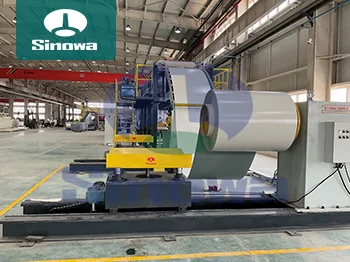
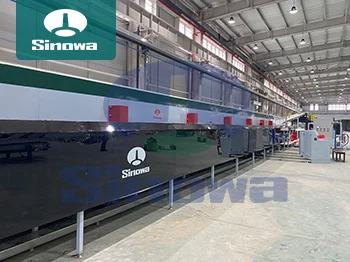
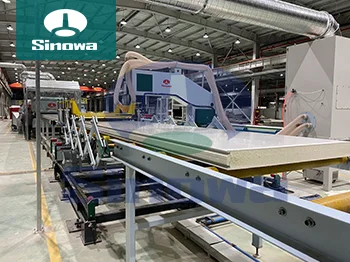
The high-tech pir sandwich panel machine can meet a variety of production needs of customers, the whole pir sandwich panel machine design concept of modularization enables all our components to be integrated and combined at will. Our high efficiency pir sandwich panel machine can easily automate the production of roof sandwich panel, wall sandwich panel, cold storage sandwich panel and other products by different combination and configuration selection and siple switching. The inner core layer can be polyrethane or rock wool, glass wool, an so on.


The high precision pir sandwich panel machine has high adaptability, which may produce various sandwich panel of the PU, PIR and rock wool systems. We may design various products according to the customer’s requirements, including various configurations, so as to meet their demands with flexible price system. Highly integrated and linked control system centralizes all control points at the main central center, achieving parameter linkage, fault self-diagnosis controlled by the whole line and shipping distance control. High-level automatic control system also saves the manpower and reduces the manpower loss for customers.


The precision servo hoisting mechanism employed by the main engine without hydraulic system makes the board thickness control flexible and the customer may conveniently change or adjust the board thickness. There will be not such troubles as hydraulic system adjustment, leakage, maintenance, etc.


High-level energy saving and protection design makes the whole pir sandwich panel machine possible to produce around the clock throughout the year and the customer will save huge budget. In addition, the isolated heat preservation room is constructed for warming the environment. The energy saving and protection design of our manufacturing line may guarantee that the customer’s production line may be freely heated and produce in the main time to save more costs for customers.


The high-power low-consumption design quickens the reaction of the cheap pir sandwich panel machine while energy consumption is kept low. With the brand-new, fully sealed inner insulation design, the energy consumption is controlled at the minimum level to achieve the design objective of less than an hour for the insulation system to be activated from the room temperature above 5℃ to the production process temperature. The energy consumption is only 40% that of those similar products.
A PIR sandwich panel machine is an integrated and automated production equipment designed to manufacture high-performance composite panels with polyisocyanurate as the core material. These machines play a vital role in modern construction by streamlining the production process of panels that offer excellent thermal insulation, fire resistance, and structural integrity. The working process of the machine is a seamless combination of multiple stages, starting with the preparation and feeding of raw materials. The outer facing materials, usually metal sheets, are unwound and leveled to ensure a smooth and uniform surface, while the liquid PIR foam is stored in tanks for easy access. In the foaming system, the PIR foam is mixed with blowing agents and other additives under precise control to form a uniform mixture, which is then injected between the two outer layers. As the mixture expands and cures, it bonds tightly with the outer facings to form a solid sandwich structure. The forming and trimming system then shapes the panel to the desired dimensions, ensuring precision and consistency. These machines feature a high degree of automation, reducing manual intervention and improving production efficiency while maintaining stable product quality. They are highly flexible, allowing for customization of panel thickness and specifications to meet diverse needs in construction fields such as industrial plants, cold storage, and building exterior walls. With energy-saving and environmentally friendly designs, they adopt advanced technologies to reduce energy consumption and minimize harmful emissions, aligning with the trend of sustainable building development. The panels produced by these machines are lightweight yet durable, making them an ideal choice for energy-efficient and safe construction projects worldwide.
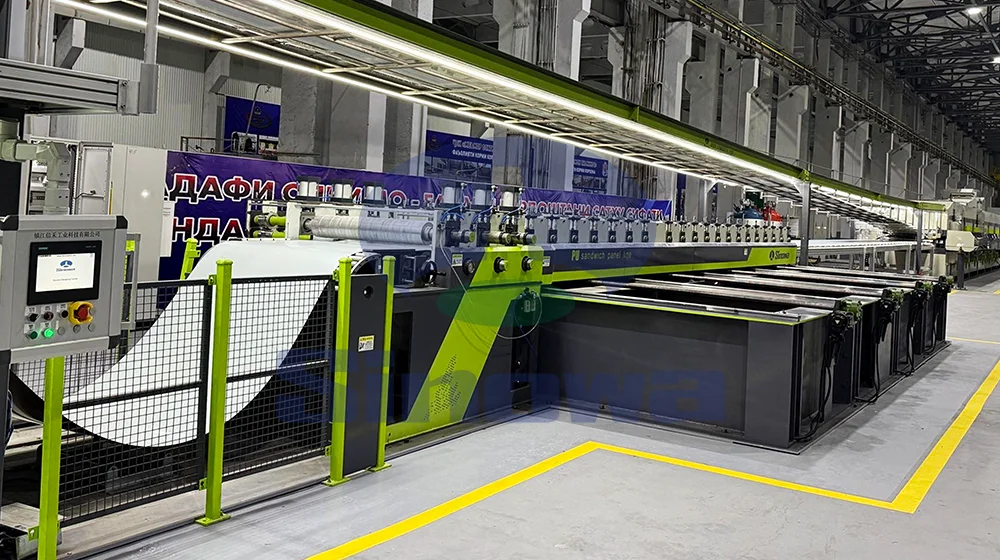
In the modern construction and industrial manufacturing fields, the demand for efficient, energy-saving and environmentally friendly insulation materials is constantly rising, and PIR (Polyisocyanurate) sandwich panels have become a preferred choice in many industries due to their excellent thermal insulation, fire resistance, light weight and high strength. As the core equipment for the large-scale and standardized production of PIR sandwich panels, the PIR sandwich panel machine integrates multiple technologies such as mechanics, chemistry, electrical control, hydraulic pressure and temperature control, realizing the automatic and continuous production of high-quality PIR sandwich panels.
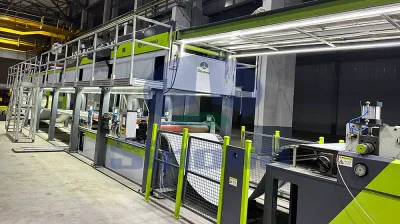
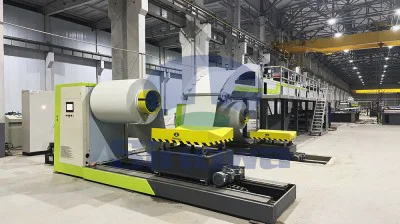
The structure of a PIR sandwich panel machine is a systematic combination of multiple functional components, each of which undertakes a specific task in the production process, and the close cooperation between components ensures the smooth operation of the entire production line. Generally speaking, the basic structure of the machine includes an uncoiling system, a panel pretreatment system, a roll forming system, a foaming system, a composite solidification system, a cutting system, a cooling system, a stacking system and an electrical control system. The uncoiling system is the starting link of the production line, mainly composed of an uncoiler, a coil lifting device and a guiding mechanism. Its main function is to stably uncoil the metal coil (usually galvanized steel coil or color steel coil) used as the surface layer of the sandwich panel, and transport it to the next process through the guiding mechanism. The uncoiler is equipped with a transverse positioning device and a pressing arm, which can effectively prevent the metal coil from shifting during the uncoiling process and ensure the flatness of the panel. The coil lifting device adopts a lifting platform structure, which can easily hoist the heavy metal coil to the uncoiler, reducing manual labor intensity and improving operation safety.
The panel pretreatment system is an important link to ensure the bonding strength between the metal panel and the PIR core material. It mainly includes a surface cleaning device, a preheating device and a film coating device. The surface cleaning device uses a brush or air blowing method to remove oil, dust and other impurities on the surface of the metal panel, so as to activate the surface of the panel and improve the adhesion of the subsequent adhesive and foaming material. The preheating device adopts a heated air circulation oven, which can preheat the metal panel to a suitable temperature (usually 40-60℃) according to the production process requirements. Proper preheating can not only accelerate the foaming and solidification speed of the PIR material, but also ensure the uniformity of the core material and avoid the occurrence of defects such as delamination. The film coating device is used to coat a layer of protective film on the surface of the metal panel, which can prevent the panel from being scratched or corroded during the production and transportation process, and maintain the beauty of the panel surface. Some advanced pretreatment systems are also equipped with a corona treatment unit, which further improves the surface activity of the metal panel through corona discharge, making the bonding between the panel and the core material more firm.
The roll forming system is responsible for processing the pretreated metal panel into the required shape and size, which is mainly composed of a roll forming machine, a guiding system and a transmission system. The roll forming machine is usually a double-head structure, equipped with two sets of forming rollers, which can process the upper and lower metal panels at the same time. The forming rollers are designed according to the specific shape of the sandwich panel (such as flat panel, corrugated panel, trapezoidal panel), and the metal panel is gradually formed into the desired profile through the continuous rolling of multiple groups of rollers. The guiding system ensures that the metal panel moves along a fixed track during the forming process, avoiding deviation and ensuring the dimensional accuracy of the panel. The transmission system adopts a frequency conversion speed regulation mechanism, which can adjust the forming speed according to the production efficiency requirements, realizing the synchronization with the other processes of the production line. For the production of special-shaped sandwich panels, the roll forming system can be customized according to the customer's requirements, and the forming rollers can be replaced to produce panels of different specifications and shapes.
The foaming system is the core component of the PIR sandwich panel machine, which directly determines the performance of the PIR core material. It mainly includes a raw material storage tank, a metering pump, a mixing head and a foaming agent supply device. The raw materials of the PIR core material mainly include isocyanate, polyol, catalyst, foaming agent and other additives. These raw materials are stored in separate storage tanks, and the metering pump accurately delivers the raw materials to the mixing head according to the preset proportion. The metering pump adopts a high-precision design, which can ensure the accuracy of the raw material ratio, thus ensuring the stability of the core material performance. The mixing head is a high-pressure mixing device, which can fully mix the various raw materials in a short time to form a uniform foaming mixture. The foaming agent supply device usually uses 141b or pentane as the foaming agent, which replaces the traditional chlorofluorocarbon foaming agent, making the foaming process more environmentally friendly and in line with the requirements of energy conservation and emission reduction. Some advanced foaming systems are also equipped with a high-pressure air nucleator, which can generate uniform bubbles in the foaming mixture, improving the density and uniformity of the PIR core material.
The composite solidification system is responsible for bonding the formed upper and lower metal panels with the foamed PIR core material and completing the solidification process, which is mainly composed of a double belt press and a solidification oven. The double belt press is composed of two parallel conveyor belts, which are independently heated and insulated. The foaming mixture is evenly injected between the upper and lower metal panels, and then enters the double belt press. Under the action of constant temperature and pressure, the PIR mixture foams and expands, and is closely bonded with the metal panels. The conveyor belt of the double belt press has a flat surface and good wear resistance, which can ensure the flatness and thickness uniformity of the sandwich panel. The solidification oven is connected with the double belt press, and the sandwich panel after initial composite enters the oven for further solidification. The oven adopts a heated air circulation system, which can accurately control the temperature and humidity in the oven, ensuring that the PIR core material is fully solidified. The solidification time can be adjusted according to the production speed and the thickness of the core material, generally ranging from a few minutes to more than ten minutes. After full solidification, the sandwich panel has good structural stability and mechanical strength.
The cutting system is used to cut the continuously produced sandwich panel into the required length, which is mainly composed of a flying saw cutting machine and a positioning device. The flying saw cutting machine adopts a 180° rotating mechanism, which can perform cutting in both directions, ensuring that the cutting operation can be carried out smoothly even when the production line is running at high speed. The cutting blade is usually a band saw or a disk blade, which has high hardness and wear resistance, and can ensure the flatness of the cutting surface and avoid damage to the core material. The positioning device adopts a photoelectric sensor or a mechanical positioning structure, which can accurately position the sandwich panel according to the preset length, ensuring the accuracy of the cutting length. The cutting process is fully automatic, and the cutting length can be adjusted freely through the electrical control system, which is suitable for the production of sandwich panels of different specifications.
The cooling system and stacking system are the final links of the production line. The cooling system is composed of a cooling conveyor and a fan, which cools the fully solidified sandwich panel to room temperature. Natural cooling or forced cooling can be adopted according to the ambient temperature and production requirements. Forced cooling uses a fan to blow air to the surface of the sandwich panel, which can accelerate the cooling speed and improve production efficiency. After cooling, the sandwich panel enters the stacking system. The stacking system is equipped with a conveyor, a robotic arm and a sensor, which can automatically stack the sandwich panels into neat stacks according to the specified quantity and specifications. The robotic arm has high positioning accuracy and fast operation speed, which can effectively reduce manual labor and avoid damage to the panel during stacking. The stacked sandwich panels are convenient for storage and transportation, improving the overall efficiency of the production line.
The electrical control system is the "brain" of the entire PIR sandwich panel machine, which is responsible for controlling the operation of all components and ensuring the coordination and synchronization of the entire production line. It mainly includes a PLC controller, a touch screen, a frequency converter and various sensors. The PLC controller is the core of the control system, which can execute the preset program to control the start, stop, speed regulation and parameter adjustment of each component. The touch screen provides a humanized operation interface, and the operator can set production parameters (such as production speed, cutting length, preheating temperature, foaming ratio, etc.) through the touch screen, and monitor the operation status of the production line in real time. The frequency converter is used to adjust the speed of the motor, realizing the stepless speed regulation of the uncoiling, forming, conveying and other processes, which can adapt to different production efficiency requirements. The sensors (such as temperature sensor, pressure sensor, photoelectric sensor) are used to collect various parameters in the production process, and feed them back to the PLC controller in real time. The PLC controller adjusts the relevant components according to the feedback signals, ensuring the stability and reliability of the production process. Some advanced electrical control systems also support remote control and fault diagnosis functions, which can realize remote monitoring of the production line and timely handling of faults, reducing the maintenance cost and downtime.
The performance of the PIR sandwich panel machine is an important indicator to measure its quality and production capacity, which is mainly reflected in production efficiency, product quality stability, energy saving and environmental protection, operation convenience and reliability. In terms of production efficiency, the modern PIR sandwich panel machine adopts a continuous automatic production mode, and the production speed can be adjusted according to the actual needs, generally ranging from 3m/min to 25m/min. The annual output can reach hundreds of thousands to millions of square meters, which can meet the large-scale production needs of manufacturers. The high production efficiency is mainly due to the optimization of the production process, the high degree of automation of the equipment and the coordination of each component. For example, the synchronization of the uncoiling, forming, foaming and cutting processes avoids the waiting time between processes, and the automatic stacking system reduces the time of manual handling and stacking.
Product quality stability is another important performance indicator of the PIR sandwich panel machine. The machine adopts high-precision components and advanced control technology, which can effectively ensure the uniformity of the sandwich panel's thickness, flatness, bonding strength and core material density. The high-precision metering pump in the foaming system ensures the accuracy of the raw material ratio, avoiding the performance deviation of the core material caused by the uneven ratio. The double belt press with constant temperature and pressure control ensures the flatness and thickness uniformity of the sandwich panel, and avoids defects such as uneven thickness and delamination. The online detection device (optional) can monitor the product quality in real time during the production process, and automatically alarm and stop when defects are found, ensuring that the qualified rate of the product is above 99%. In addition, the machine adopts a modular design, and the parts have good interchangeability, which can reduce the impact of parts wear on product quality and ensure the long-term stability of production.
Energy saving and environmental protection are important development trends of modern mechanical equipment, and the PIR sandwich panel machine also has excellent performance in this regard. In terms of energy saving, the machine adopts a high-efficiency and low-energy consumption motor, which can reduce the energy consumption during operation. The heated air circulation oven in the preheating and solidification system can recycle the waste heat, reducing the energy loss caused by heat emission. The insulation layer of the equipment is made of high-quality insulation materials, which can reduce the heat loss of the oven and preheating device, further saving energy. The production line can be heated to the process temperature within 1 hour when the ambient temperature is above 5℃, which avoids the need for additional insulation rooms and environmental heating equipment, saving a lot of energy and cost for manufacturers. In terms of environmental protection, the machine uses environmentally friendly foaming agents (such as pentane, 141b) instead of traditional chlorofluorocarbon foaming agents, which does not damage the ozone layer and meets the global environmental protection requirements. The dust collecting device in the production line can collect the dust generated during the panel processing, reducing the pollution to the environment and protecting the health of operators. In addition, the machine adopts a closed production structure, which can reduce the emission of harmful gases and noise, creating a clean and safe production environment.
Operation convenience and reliability are also important aspects of the performance of the PIR sandwich panel machine. The machine adopts a humanized design, and the touch screen operation interface is simple and intuitive, which is easy for operators to learn and master. The parameters can be set and adjusted with one key, and the operation process is simple and fast. The machine is equipped with a complete safety protection device, such as emergency stop button, safety door, photoelectric protection device, etc., which can effectively prevent the occurrence of safety accidents and ensure the personal safety of operators. In terms of reliability, the machine is made of high-quality materials and components, and undergoes strict quality inspection before leaving the factory. The modular design makes the maintenance and repair of the machine more convenient. The parts are easy to disassemble and replace, and the maintenance cycle is long, which can reduce the maintenance cost and downtime. The electrical control system has a fault self-diagnosis function, which can quickly locate the fault point and prompt the operator to handle it, improving the efficiency of fault handling and ensuring the continuous operation of the production line.
According to the production mode, structure type, production capacity and application scope, the PIR sandwich panel machine can be divided into various types, each of which has its own characteristics and applicable scenarios, and manufacturers can choose the appropriate type according to their own production needs and market positioning. According to the production mode, it can be divided into continuous production line and intermittent production line. The continuous production line is the most common type in the market, which adopts a fully automatic continuous production mode, with high production efficiency, stable product quality and suitable for large-scale mass production. The entire production process from uncoiling to stacking is completed automatically, with little manual intervention, which can greatly reduce labor costs and improve production efficiency. The continuous production line is usually equipped with a complete set of functional components, such as uncoiling, pretreatment, forming, foaming, solidification, cutting, cooling and stacking, and the production line length is usually 45-100 meters, which can be customized according to the factory area and production requirements.
The intermittent production line is mainly suitable for small-batch and multi-variety production. It adopts a semi-automatic operation mode, and each production process is carried out intermittently. The production speed is relatively slow, and the production efficiency is lower than that of the continuous production line, but it has the advantages of flexible operation, small floor area and low investment cost. The intermittent production line is suitable for small and medium-sized manufacturers or manufacturers that need to produce a variety of special-shaped sandwich panels. The operator can adjust the production process and parameters according to the product requirements, and the equipment can be easily switched between different production specifications, which has strong flexibility.
According to the structure type, the PIR sandwich panel machine can be divided into modular production line and integrated production line. The modular production line adopts a modular design concept, and each functional component (such as uncoiling module, forming module, foaming module, cutting module) is an independent module. These modules can be freely combined and matched according to the production needs, which is convenient for manufacturers to expand the production capacity or add new functions. The modular design also makes the maintenance and repair of the equipment more convenient. If a certain module fails, it can be disassembled and replaced independently without affecting the operation of other modules. In addition, the modular production line has good compatibility, and the parts of different modules can be interchanged, which reduces the inventory cost of spare parts. The integrated production line is a kind of integrated structure, in which all functional components are integrated into a whole, with compact structure and small floor area. The integrated production line is designed according to the specific production requirements, and the coordination between components is better, which can ensure the stability and reliability of the production process. However, the integrated production line has poor flexibility, and it is difficult to adjust the production process or add new functions after leaving the factory, which is suitable for manufacturers with fixed production specifications and large production volume.
According to the production capacity, the PIR sandwich panel machine can be divided into low-speed production line, medium-speed production line and high-speed production line. The low-speed production line has a production speed of 3-6m/min, an annual output of 100,000-300,000 square meters, which is suitable for small manufacturers with small production demand. The medium-speed production line has a production speed of 6-12m/min, an annual output of 300,000-600,000 square meters, which is suitable for medium-sized manufacturers with moderate production demand. The high-speed production line has a production speed of 12-25m/min, an annual output of more than 600,000 square meters, which is suitable for large-scale manufacturers with large production demand and high market share. The production capacity of the production line is mainly determined by the performance of the foaming system, the roll forming system and the electrical control system. The high-speed production line usually adopts more advanced components and control technology to ensure the stability of the production process at high speed.
According to the application scope, the PIR sandwich panel machine can be divided into general-purpose production line and special-purpose production line. The general-purpose production line can produce a variety of PIR sandwich panels, such as wall panels, roof panels, cold storage panels, etc., which has a wide range of applications and is suitable for manufacturers that need to produce multiple types of sandwich panels. The special-purpose production line is designed for a specific type of sandwich panel, such as cold storage panel production line, roof panel production line, clean room panel production line, etc. The special-purpose production line is optimized according to the performance requirements of the specific sandwich panel, and has higher production efficiency and product quality stability for the specific product. For example, the cold storage panel production line is equipped with a more advanced cooling system and foaming system, which can produce sandwich panels with better thermal insulation performance, meeting the special requirements of cold storage and refrigeration facilities.
The application scope of the PIR sandwich panel machine is very wide, which is closely related to the application fields of PIR sandwich panels. Due to the excellent performance of PIR sandwich panels (such as good thermal insulation, fire resistance, light weight, high strength, easy installation, etc.), they are widely used in construction, cold storage and refrigeration, industrial manufacturing, transportation and other fields, and the PIR sandwich panel machine, as the production equipment of this kind of material, has also been widely used in these fields.
In the construction field, the PIR sandwich panel machine is one of the most widely used equipment. PIR sandwich panels produced by the machine are widely used in the exterior walls, interior walls, roofs and partitions of various buildings, such as commercial buildings, residential buildings, schools, hospitals, shopping malls, office buildings, etc. In commercial buildings and office buildings, PIR sandwich panels are used as exterior wall and roof materials, which can effectively improve the thermal insulation performance of the building, reduce the energy consumption of air conditioning and heating, and achieve the effect of energy saving and emission reduction. At the same time, the light weight of the sandwich panel can reduce the load of the building structure, reduce the construction cost. In residential buildings, PIR sandwich panels are used as interior partitions and exterior walls, which not only have good thermal insulation and sound insulation performance, but also have the advantages of quick installation, which can shorten the construction period. In schools and hospitals, PIR sandwich panels have good fire resistance and environmental protection performance, which can ensure the safety of the building and the health of the occupants. The PIR sandwich panel machine can produce sandwich panels of different colors, shapes and specifications according to the design requirements of the building, which can meet the aesthetic needs of different buildings.
In the cold storage and refrigeration field, the PIR sandwich panel machine has an irreplaceable role. Cold storage and refrigeration facilities (such as cold storage warehouses, refrigerated trucks, refrigerated containers, etc.) have strict requirements on the thermal insulation performance of materials, and PIR sandwich panels have excellent thermal insulation performance (thermal conductivity as low as 0.022W/(m·K)), which can effectively maintain the low temperature environment inside the facility and reduce the energy consumption of refrigeration equipment. The PIR sandwich panel machine produced by the cold storage panel production line has good air tightness and water resistance, which can prevent the entry of external hot air and moisture, ensuring the stability of the internal environment of the cold storage. In addition, the PIR core material has good frost resistance and corrosion resistance, which can adapt to the low temperature working environment and prolong the service life of the cold storage. The PIR sandwich panels produced by the machine can be customized according to the size and temperature requirements of the cold storage, which is suitable for various types of cold storage and refrigeration facilities.
In the industrial manufacturing field, the PIR sandwich panel machine is widely used in the construction of industrial plants, warehouses, workshops and other facilities. Industrial plants and warehouses usually have large space and high requirements on the thermal insulation, fire resistance and durability of the building materials. PIR sandwich panels produced by the machine can meet these requirements well. In the manufacturing workshops with high temperature or low temperature requirements (such as chemical workshops, food processing workshops, electronic component workshops), PIR sandwich panels are used as wall and roof materials, which can effectively isolate the external temperature and maintain a stable working environment inside the workshop, ensuring the normal operation of production. In addition, the PIR sandwich panel has good corrosion resistance, which can adapt to the harsh working environment of industrial plants (such as chemical corrosion, dust pollution, etc.), and prolong the service life of the plant. The PIR sandwich panel machine can produce large-size sandwich panels, which can speed up the construction progress of industrial plants and reduce the construction cost.
In the transportation field, the PIR sandwich panel machine is mainly used in the production of thermal insulation materials for refrigerated trucks, refrigerated containers and other transportation equipment. With the rapid development of the logistics industry, the demand for refrigerated transportation is increasing, and the thermal insulation performance of transportation equipment directly affects the quality of refrigerated goods. PIR sandwich panels produced by the machine have the advantages of light weight, good thermal insulation, high strength and easy installation, which are very suitable for the production of refrigerated truck carriages and refrigerated container walls. The light weight of the sandwich panel can reduce the fuel consumption of the refrigerated truck, improve the transportation efficiency. The excellent thermal insulation performance can ensure that the refrigerated goods are kept at a low temperature during transportation, avoiding spoilage. The PIR sandwich panel machine can produce sandwich panels of different thicknesses and sizes according to the specifications of the transportation equipment, which has strong adaptability.
In addition to the above fields, the PIR sandwich panel machine is also used in the construction of prefabricated buildings, modular buildings, clean rooms, exhibition halls and other facilities. Prefabricated buildings and modular buildings have the advantages of quick installation, energy saving and environmental protection, and are widely promoted and applied in recent years. PIR sandwich panels are important components of prefabricated buildings, and the PIR sandwich panel machine can produce standardized sandwich panels, which can meet the assembly requirements of prefabricated buildings and speed up the construction progress. Clean rooms (such as pharmaceutical workshops, electronic workshops, food processing workshops) have strict requirements on the air tightness, cleanliness and thermal insulation performance of the building materials. PIR sandwich panels produced by the machine have good air tightness and easy cleaning performance, which can meet the requirements of clean rooms. Exhibition halls and temporary buildings have the characteristics of short service life and frequent disassembly and assembly. PIR sandwich panels are light weight and easy to disassemble and assemble, which is very suitable for the construction of these facilities. The PIR sandwich panel machine can produce sandwich panels of different styles and colors, which can meet the aesthetic needs of exhibition halls.
With the continuous development of science and technology and the increasing demand for energy conservation and environmental protection, the PIR sandwich panel machine is also constantly upgrading and improving. In the future, the machine will develop in the direction of higher automation, more intelligence, more energy saving and more environmental protection. The intelligent upgrade of the electrical control system will realize the automatic adjustment of production parameters and the intelligent diagnosis of faults, further improving the production efficiency and stability of the equipment. The application of new materials and new technologies will reduce the energy consumption of the machine and improve the environmental protection performance. At the same time, the flexibility and adaptability of the machine will be further improved, which can better meet the personalized production needs of manufacturers. The development of the PIR sandwich panel machine will also drive the development of the PIR sandwich panel industry, providing more high-quality, efficient and environmentally friendly insulation materials for various fields, and making greater contributions to the development of energy conservation and environmental protection and the construction of green buildings.
« PIR Sandwich Panel Machine » Update Date: 2026/4/17
URL: https://www.sinowamachine.com/tags/pir-sandwich-panel-machine.html
![PIR Sandwich Panel Machine For Sale]()
PIR Sandwich Panel Machine For Sale
2026-09-03The PIR sandwich panel machine stands as a cutting-edge automated production system tailored for the continuous manufacturing of high-performance polyisocyanurate composite sandwich panels, widely favored in modern energy-efficient construction, industrial enclosure, cold chain storage, and commercia…![PIR Sandwich Panel Machine Supplier]()
PIR Sandwich Panel Machine Supplier
2026-09-01PIR sandwich panel machines have emerged as core automated production equipment for manufacturing high-performance composite building panels, catering to the booming global demand for energy-efficient, thermally insulated, and structurally stable construction materials. This integrated production sys…
- Links:
- Sandwich Panel Continuous Production Line
- Automatic and Continuous Sandwich Panel Production Line
- Cheap and Low Price Sandwich Panel Production Line
- China Sandwich Panel Production Line Factory
- Color Steel Sandwich Panel Production Line For Cold Storage
- Continuous Composite Foam Sandwich Panel Production Line
- Continuous Production Line For Rockwool and Mineral Wool Sandwich Panels
- Continuous PU Phenolic Insulation Panel Production Line
- Continuous PU PIR Sandwich Panel Production Line
- Continuous PUF PUR Sandwich Panel Production Line
- Continuous Sandwich Panel Production Line For Roof and Wall
- Customized and Design Sandwich Panel Production Line
- Decorative Sandwich Panel Production Line For Glass Wool Boards
- High Quality Sandwich Panel Production Line For Sale
- Polyurethane(PU) Sandwich Panel Production Line
- Sandwich Panel Production Line Manufacturer and Supplier
- Sandwich Panel Production Machinery and Equipment