
Sandwich Duct Panel Machine
Sinowa is a sandwich duct panel machine supplier from china, customized high-quality & high efficiency sandwich duct panel machine at low price, sandwich duct panel machine has diversified and multifunctional production characteristics, which may produce products with different specifications such as PU, PF, PIR, etc. The surface material may be aluminum foil, colored steel, cement base cloth, kraft paper, non-woven fabrics, etc. The products are widely applied to such occasions as construction, decoration, pipeline ventilation, subway construction, etc.
The sandwich duct panel machine is able to continuously and efficiently produce high-quality PU and Phenolic insulation boards.
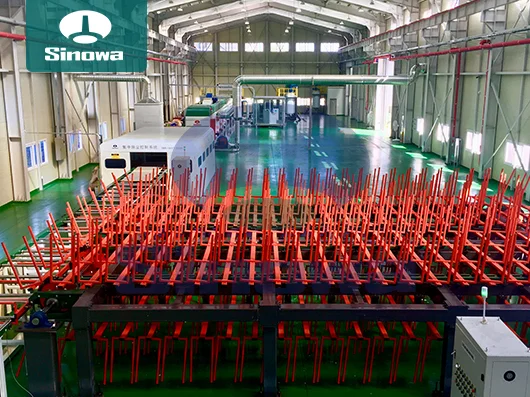
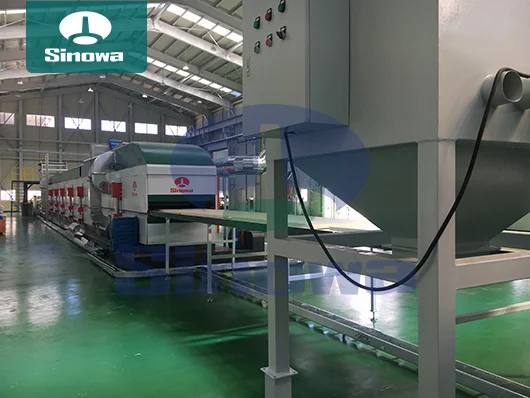
We spare no efforts to improve our product quality and technological reliability by employing the most cutting-edge and the most reliable support and processes to make our products highly reliable and endurable. As a result, the sandwich duct panel machine is highlighted by many perfect qualities. It is the core idea in Sinowa's product roadmap to surpass our competitors in terms of design philosophy, manufacture methods and service level, going for excellence and leading position and making constant improvement on our products and services, which is also our core value system to create efficiency and convenience for our customers.
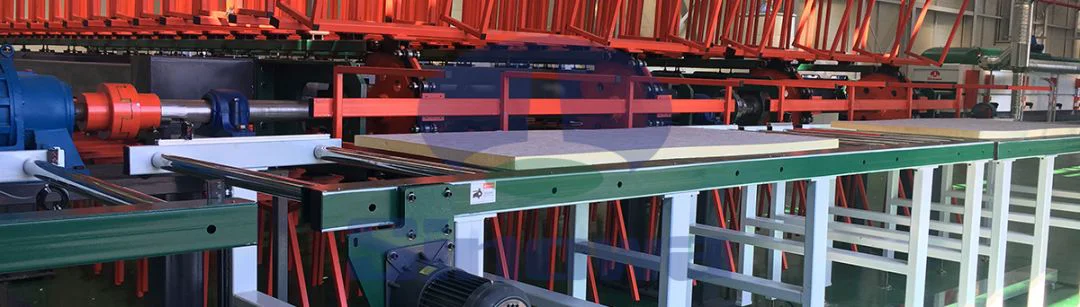
Well-grounded on our solid strength as a renowned large-scale enterprise, Sinowa has a high starting point in developing industrial assembly lines. Based on the advanced science and technology introduced from within and without the country and supported by a great number of first-grade parts and components from the home and aboard, the sandwich duct panel machine has a high-level configuration of supporting products in terms of machinery, electrical control, hydraulic pressure, automatic measurement and tracking, and so on. This is a strong proof of our product’s reliable quality and high efficiency.
The first-class appearance design and excellent energy saving measures make it unnecessary for customers to additionally construct the heat preservation and isolation room for production around the clock throughout the year, so that the customers may save lots of resources and costs.
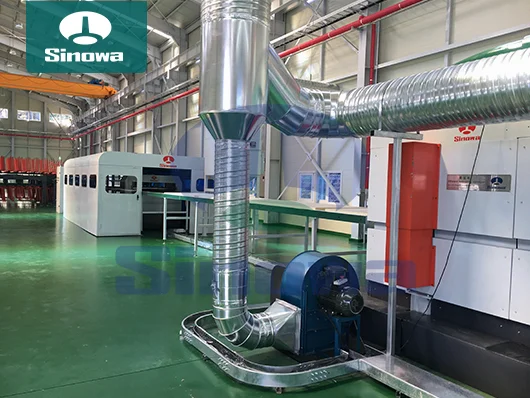
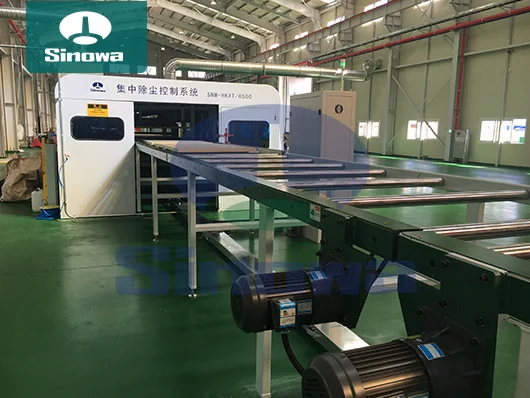
Modularized standard design and important parts machined with CNC machine tool make the sandwich duct panel machine have excellent quality assurance. Dependence on the man-made factors is eliminated. The operation is precision, with the highest operation speed of 30m/min. The sandwich duct panel machine has the world-class production efficiency.
The high performance and reliable multicomponent cyclopentane foaming technology and equipment of Sinowa may be also applied to the foaming process of the phenolic aldehyde board. Therefore, our customers may not only freely adjust the foaming matching according to the raw material, but also save lots of costs. Moreover, they are of significance for environmental protection.
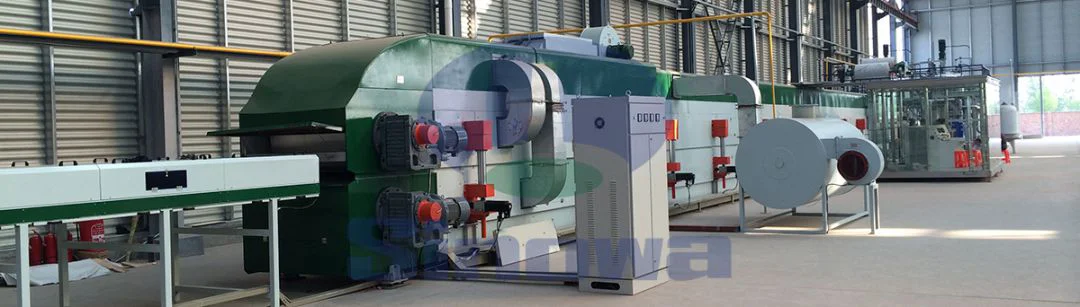
Sinowa's industrial production line of insulation panels is distinguished by its impressive performance of energy conservation. In each high point of energy consumption throughout the entire sandwich duct panel machine are implemented corresponding measures to considerably lower the consumption level. For example, the body of the lamination belt conveyer is covered with insulation panels in very reasonable structures, which doesn’t blemish the overall outlook but greatly increases the insulation performance. The entire sandwich duct panel machine is constantly optimized and improved so that the consumption of each power source is significantly reduced. The motor power of our lamination conveying system is only 3.0 kw, about 50% less than those of the same kind. All in all, the energy consumption of the whole industrial sandwich duct panel machine equals 40% or even less of the equivalent lines in the market.
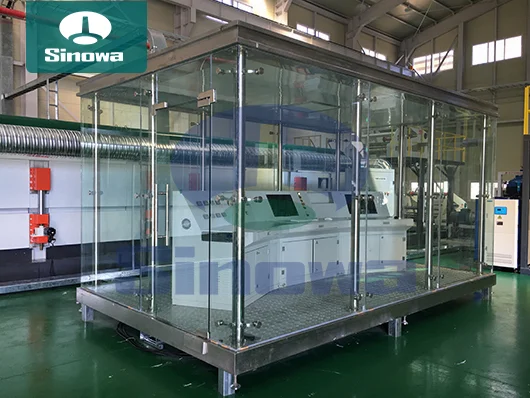
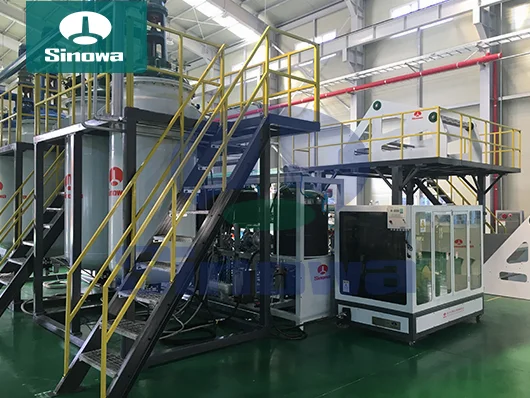
The sandwich duct panel machine of Sinowa adopts the most advanced concepts in the world to realize the modularized design with all the parts bolted together rather than welded. In standardized production, the parts can be dismantled and exchanged, so the production cycle is drastically shortened and the maintenance becomes by far easier. Through finite element analysis, the equipment design is greatly optimized to realize modularization, digitization, and weight-minimalization.
Sandwich duct panel machines are specialized industrial equipment designed to produce composite sandwich panels that are widely used in ventilation, air conditioning, and building insulation systems. These machines integrate advanced mechanical, electrical, and hydraulic technologies to achieve automated and efficient production of high-quality sandwich duct panels, which consist of two outer facing layers and a core insulation layer bonded together. The rational design of the machine’s structure, excellent performance, diverse types, and wide range of applications make it an indispensable piece of equipment in modern construction, industrial manufacturing, and HVAC (Heating, Ventilation, and Air Conditioning) industries. Understanding the structure, performance, types, and applications of these machines is crucial for selecting the right equipment for specific production needs and ensuring the quality and efficiency of the produced sandwich duct panels.
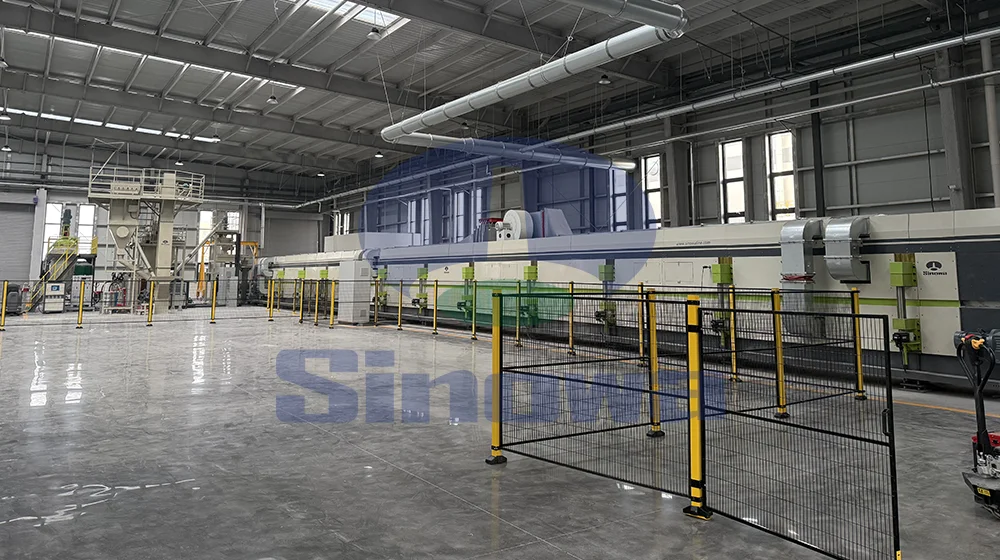
The structure of a sandwich duct panel machine is a complex integration of multiple functional systems, each playing a vital role in the production process. At the core of the machine is the feeding system, which is responsible for supplying raw materials stably and continuously to the subsequent production links. This system typically includes a decoiler, leveling machine, and feeding device. The decoiler is used to unroll the coiled outer facing materials, which are usually metal sheets such as colored steel, stainless steel, or aluminum foil, ensuring smooth and consistent feeding without wrinkles or deformation. The leveling machine eliminates internal stress in the metal sheets, corrects any unevenness, and ensures that the surface of the facing materials is flat and smooth, which is essential for the bonding quality between the facing layers and the core material. The feeding device controls the speed and precision of material delivery, coordinating with other systems to maintain a stable production rhythm. In addition to the feeding system, the forming unit is another key component of the machine. Composed of multiple sets of rolling rolls, the forming unit processes the metal sheets into the desired profile through continuous rolling, which can be adjusted according to the specific requirements of the sandwich duct panels, such as flat panels, corrugated panels, or other customized shapes. The rolling rolls are designed with high precision to ensure that the formed facing layers have consistent dimensions and shape, laying a solid foundation for the subsequent composite process.
The foaming or filling system is a critical part of the sandwich duct panel machine, especially for machines producing panels with foam or fiber core materials. For machines using polyurethane (PU), polyisocyanurate (PIR), or other foam core materials, the foaming system includes a high-pressure foaming machine, mixing head, and injection device. The high-pressure foaming machine precisely controls the mixing ratio of raw materials, ensuring that the foam has uniform density and excellent insulation performance. The mixing head fully mixes the raw materials and injects the foam into the gap between the two facing layers, where it expands and cures to form a tight and firm core. For machines producing panels with rock wool, glass wool, or mineral wool core materials, the filling system includes a material lifting device, slitting device, and laying mechanism. The lifting device transports the bulk insulation material to the slitting device, which cuts the material into strips of the required width and thickness, and the laying mechanism evenly spreads the cut insulation material between the two facing layers, ensuring uniform thickness and full coverage. The composite system is responsible for bonding the outer facing layers and the core material into an integrated sandwich panel. This system usually includes a composite press or double belt conveyor, which applies uniform pressure and, in some cases, appropriate temperature to the three layers, promoting the bonding between the facing layers and the core material. The pressure and temperature are precisely controlled to avoid gaps, delamination, or damage to the materials, ensuring that the finished sandwich panel has high structural integrity and stability.
The cutting system and stacking system are the final links in the production process of the sandwich duct panel machine. The cutting system is equipped with high-precision flying saws or laser cutting equipment, which can perform fixed-length cutting of the continuous sandwich panel during the production process without interrupting the production flow. The cutting precision is controlled within a small tolerance range, ensuring that the length of each finished panel meets the design requirements. The stacking system automatically collects, arranges, and stacks the cut finished panels according to the set quantity, reducing manual labor and improving production efficiency. Some advanced machines are also equipped with an automatic packaging system, which wraps the stacked panels to protect them from damage during transportation and storage. In addition to these main systems, the machine also includes an intelligent control system, which integrates PLC (Programmable Logic Controller) and industrial computer technology to coordinate the operation of all components. The control system allows for precise adjustment of production parameters such as feeding speed, forming pressure, foaming temperature, and cutting length, and can real-time monitor the production status, alarm for faults, and record production data, providing convenience for production management and maintenance.
The performance of a sandwich duct panel machine directly determines the quality of the produced panels and the efficiency of the production process, and it is reflected in multiple aspects such as production efficiency, precision, stability, adaptability, and energy conservation. Production efficiency is one of the most important performance indicators, which is usually measured by the production speed and daily output. Advanced sandwich duct panel machines can achieve continuous production, with a production speed of up to 15-20 meters per minute and a daily output of thousands of square meters, which is much higher than traditional manual or semi-automatic production methods. This high efficiency can significantly reduce production costs and meet the large-scale production needs of enterprises. Production precision is another key performance indicator, which involves the precision of the panel’s thickness, length, width, and shape. The machine’s precise control system and high-precision components ensure that the thickness tolerance of the sandwich panel can be controlled within ±0.2 mm, and the length and width errors are within a small range, ensuring the consistency and interchangeability of the products. This is particularly important for the installation of sandwich duct panels, as precise dimensions can reduce installation errors and improve construction efficiency.
Stability and reliability are essential for the long-term operation of the sandwich duct panel machine. The machine’s modular design and high-quality components reduce the failure rate, ensuring continuous and stable production. The core components such as the rolling rolls, foaming machine, and cutting equipment are made of high-strength materials, which have good wear resistance and durability, extending the service life of the machine. The intelligent control system can real-time monitor the operation status of each component, detect potential faults in advance, and issue alarms, facilitating timely maintenance and reducing downtime. Adaptability is another important performance feature of the sandwich duct panel machine. Modern machines have a high degree of flexibility and can produce different types of sandwich duct panels by adjusting parameters or replacing molds. They can adapt to different core materials, such as PU, PIR, rock wool, glass wool, and EPS (Expanded Polystyrene), and different outer facing materials, such as colored steel, stainless steel, aluminum foil, and cement base cloth. In addition, the machine can produce panels of different widths and thicknesses according to customer requirements, meeting the diverse needs of different projects. Energy conservation and environmental protection are also important performance indicators in today’s industrial production. Advanced sandwich duct panel machines adopt energy-saving technologies such as heat recovery systems, which can reduce energy consumption during the production process. At the same time, the machine’s production process is environmentally friendly, with no obvious waste gas, waste water, or waste residue emissions, complying with the global requirements for sustainable development.
Sandwich duct panel machines can be divided into different types according to various classification standards, such as production mode, core material type, and automation level, each with its own characteristics and applicable scenarios. According to the production mode, the machines can be divided into continuous type and discontinuous type. Continuous sandwich duct panel machines are designed for mass production, with a high degree of automation and production efficiency. They can achieve continuous feeding, forming, foaming/filling, composite, cutting, and stacking, suitable for large-scale production of standard sandwich duct panels. The continuous production mode ensures the consistency of product quality and reduces production costs, making it widely used in large factories and construction projects. Discontinuous sandwich duct panel machines, on the other hand, are suitable for small-batch production or customized products. They adopt a manual or semi-automatic production process, with flexible operation and low investment cost. This type of machine is suitable for small enterprises or projects that require specialized panels with unique specifications or shapes, as it can easily adjust the production process according to specific requirements.
According to the type of core material used, sandwich duct panel machines can be divided into PU sandwich duct panel machines, PIR sandwich duct panel machines, rock wool sandwich duct panel machines, glass wool sandwich duct panel machines, and EPS sandwich duct panel machines. PU sandwich duct panel machines are mainly used to produce panels with polyurethane foam as the core material. Polyurethane foam has excellent thermal insulation performance, low thermal conductivity, and good moisture resistance, making the produced panels suitable for HVAC systems and cold storage insulation. PIR sandwich duct panel machines are similar to PU machines but use polyisocyanurate foam as the core material, which has better flame retardant performance, making it suitable for projects with high fire safety requirements. Rock wool sandwich duct panel machines produce panels with rock wool as the core material, which has excellent fire resistance, sound insulation, and thermal insulation properties, suitable for building exterior walls, fire isolation belts, and industrial workshops. Glass wool sandwich duct panel machines use glass wool as the core material, which is lightweight, non-toxic, and corrosion-resistant, suitable for indoor ventilation ducts and clean rooms. EPS sandwich duct panel machines produce panels with expanded polystyrene as the core material, which is lightweight, low-cost, and has good thermal insulation performance, suitable for general construction and ventilation projects.
According to the automation level, sandwich duct panel machines can be divided into fully automatic, semi-automatic, and manual types. Fully automatic machines integrate all production links from raw material feeding to finished product stacking, requiring little manual intervention. They are equipped with advanced intelligent control systems, which can realize automatic parameter adjustment, fault diagnosis, and production data recording, suitable for large-scale, high-efficiency production. Semi-automatic machines require a certain amount of manual operation, such as manual feeding of core materials or manual adjustment of some parameters, which is suitable for small and medium-sized enterprises with moderate production scale. Manual machines are mainly operated by hand, with low production efficiency and high labor intensity, and are gradually being replaced by automatic and semi-automatic machines, but they are still used in some small workshops or remote areas with limited investment capacity.
The applications of sandwich duct panel machines are closely related to the performance of the sandwich duct panels they produce, covering a wide range of fields such as construction, industrial manufacturing, HVAC systems, and special infrastructure projects. In the construction industry, sandwich duct panels produced by these machines are widely used in the construction of exterior walls, roofs, partitions, and cold storage. The panels have excellent thermal insulation and sound insulation performance, which can reduce building energy consumption and improve indoor comfort. For example, in residential complexes, commercial buildings, and office buildings, sandwich duct panels are used as exterior wall insulation materials, which can effectively reduce the energy consumption of air conditioning and heating systems, achieving energy conservation and environmental protection. In cold storage construction, sandwich duct panels with good thermal insulation and moisture resistance are used to maintain a stable low temperature inside the cold storage, ensuring the quality of stored goods.
In the industrial manufacturing field, sandwich duct panel machines play an important role in the production of insulation materials for industrial workshops, warehouses, and production lines. Industrial workshops often have high requirements for temperature and noise control, and sandwich duct panels produced by these machines can provide effective thermal insulation and sound insulation, creating a comfortable working environment. In addition, the panels are lightweight and high-strength, which can reduce the load of the building structure and facilitate construction. For example, in chemical plants, power plants, and manufacturing factories, sandwich duct panels are used as wall and roof materials, which can not only insulate heat and sound but also resist corrosion and fire, ensuring the safety and stability of the production environment. In the HVAC industry, sandwich duct panels are the core materials for manufacturing ventilation ducts. The panels have good airtightness and thermal insulation performance, which can reduce air leakage and heat loss during the transportation of air, improving the efficiency of the HVAC system. Ventilation ducts made of sandwich panels are widely used in commercial buildings, hospitals, schools, and public facilities, providing clean and comfortable air for indoor spaces.
Sandwich duct panel machines also have important applications in special infrastructure projects, such as subway construction, tunnel engineering, and mobile home manufacturing. In subway construction, sandwich duct panels are used as insulation and sound insulation materials for subway stations and tunnels, reducing the impact of external noise and maintaining a stable temperature inside the subway. In tunnel engineering, the panels are used to line the tunnel walls, providing thermal insulation, fire resistance, and corrosion resistance, ensuring the safety and durability of the tunnel. In mobile home manufacturing, sandwich duct panels are used as wall and roof materials, which are lightweight, easy to install, and have good thermal insulation performance, making mobile homes suitable for temporary living or construction sites. In addition, sandwich duct panels produced by these machines are also used in ship cabin partitions, clean rooms, and other fields, where their excellent performance meets the specific requirements of these fields.
With the continuous development of the construction and industrial industries, the demand for high-quality, energy-saving, and environment-friendly sandwich duct panels is increasing, which promotes the continuous upgrading and improvement of sandwich duct panel machines. The future development trend of these machines is towards higher automation, intelligence, and environmental protection. More advanced intelligent control systems will be adopted to realize full-process intelligent monitoring and control, further improving production efficiency and product quality. At the same time, the machine will be more energy-saving and environmentally friendly, adopting new materials and technologies to reduce energy consumption and environmental impact. In addition, the machine will be more flexible and versatile, able to produce more types of sandwich duct panels to meet the increasingly diverse needs of different projects. The development of sandwich duct panel machines will not only promote the progress of the sandwich panel industry but also make important contributions to the sustainable development of the construction and industrial fields.
In summary, sandwich duct panel machines are advanced industrial equipment with a reasonable structure, excellent performance, diverse types, and wide applications. Their structure integrates feeding, forming, foaming/filling, composite, cutting, and stacking systems, ensuring the efficient and stable production of sandwich duct panels. The performance of the machines is reflected in production efficiency, precision, stability, adaptability, and energy conservation, which directly affects the quality and cost of the products. The different types of machines are suitable for different production scales and product requirements, providing flexible choices for enterprises. The applications of the machines cover construction, industrial manufacturing, HVAC systems, and special infrastructure projects, playing an indispensable role in modern industrial production and construction. With the continuous advancement of technology, sandwich duct panel machines will continue to develop and innovate, bringing more convenience and value to the industry.
« Sandwich Duct Panel Machine » Update Date: 2026/4/16
URL: https://www.sinowamachine.com/tags/sandwich-duct-panel-machine.html
![Sandwich Duct Panel Machine Factory]()
Sandwich Duct Panel Machine Factory
2026-08-31Sandwich duct panel machines are core automated production equipment dedicated to manufacturing high-performance composite duct panels for modern building ventilation and HVAC systems. As integrated industrial production systems, they integrate raw material processing, composite molding, curing, cutt…![Sandwich Duct Panel Machine On Sales]()
Sandwich Duct Panel Machine On Sales
2026-08-26Sandwich duct panel machines have emerged as core automated production equipment for the modern ventilation and air conditioning industry, dedicated to the continuous manufacturing of high-performance insulated duct panels. These integrated production systems streamline the entire panel forming proce…
- Links:
- Sandwich Panel Continuous Production Line
- Automatic and Continuous Sandwich Panel Production Line
- Cheap and Low Price Sandwich Panel Production Line
- China Sandwich Panel Production Line Factory
- Color Steel Sandwich Panel Production Line For Cold Storage
- Continuous Composite Foam Sandwich Panel Production Line
- Continuous Production Line For Rockwool and Mineral Wool Sandwich Panels
- Continuous PU Phenolic Insulation Panel Production Line
- Continuous PU PIR Sandwich Panel Production Line
- Continuous PUF PUR Sandwich Panel Production Line
- Continuous Sandwich Panel Production Line For Roof and Wall
- Customized and Design Sandwich Panel Production Line
- Decorative Sandwich Panel Production Line For Glass Wool Boards
- High Quality Sandwich Panel Production Line For Sale
- Polyurethane(PU) Sandwich Panel Production Line
- Sandwich Panel Production Line Manufacturer and Supplier
- Sandwich Panel Production Machinery and Equipment