
Continuous Sandwich Panel Line
Sinowa is a continuous sandwich panel line supplier from china, customized high-quality & high efficiency continuous sandwich panel line at low price, the adoption of system integration technology and bus control technology accomplishes the full automatization of integrated and coordinated control of the continuous sandwich panel line with accessible remote interactive communication. Ranking the first-class level in the world, it is currently the continuous sandwich panel line in the market taking a comprehensive lead in high performance.
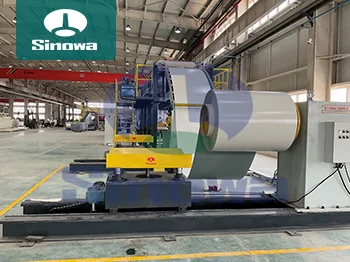
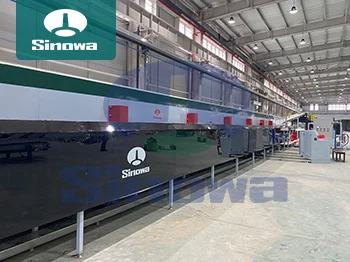
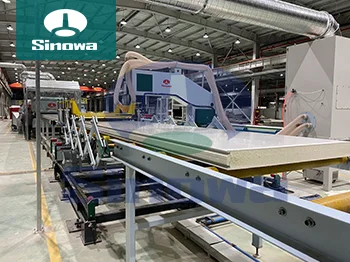
The high-tech continuous sandwich panel line can meet a variety of production needs of customers, the whole continuous sandwich panel line design concept of modularization enables all our components to be integrated and combined at will. Our high efficiency continuous sandwich panel line can easily automate the production of roof sandwich panel, wall sandwich panel, cold storage sandwich panel and other products by different combination and configuration selection and siple switching. The inner core layer can be polyrethane or rock wool, glass wool, an so on.


The high precision continuous sandwich panel line has high adaptability, which may produce various sandwich panel of the PU, PIR and rock wool systems. We may design various products according to the customer’s requirements, including various configurations, so as to meet their demands with flexible price system. Highly integrated and linked control system centralizes all control points at the main central center, achieving parameter linkage, fault self-diagnosis controlled by the whole line and shipping distance control. High-level automatic control system also saves the manpower and reduces the manpower loss for customers.


The precision servo hoisting mechanism employed by the main engine without hydraulic system makes the board thickness control flexible and the customer may conveniently change or adjust the board thickness. There will be not such troubles as hydraulic system adjustment, leakage, maintenance, etc.


High-level energy saving and protection design makes the whole continuous sandwich panel line possible to produce around the clock throughout the year and the customer will save huge budget. In addition, the isolated heat preservation room is constructed for warming the environment. The energy saving and protection design of our manufacturing line may guarantee that the customer’s production line may be freely heated and produce in the main time to save more costs for customers.


The high-power low-consumption design quickens the reaction of the cheap continuous sandwich panel line while energy consumption is kept low. With the brand-new, fully sealed inner insulation design, the energy consumption is controlled at the minimum level to achieve the design objective of less than an hour for the insulation system to be activated from the room temperature above 5℃ to the production process temperature. The energy consumption is only 40% that of those similar products.
A continuous sandwich panel line is an advanced automated production system designed to manufacture high-quality composite sandwich panels in an uninterrupted flow, significantly improving production efficiency compared to traditional batch or manual methods. It integrates a series of coordinated processes, starting from the feeding and uncoiling of surface materials, followed by precise forming, preheating, and the uniform injection or placement of core materials such as polyurethane, rock wool, or glass wool between the two surface layers. The entire process is controlled by intelligent systems, ensuring consistent bonding between the surface and core materials, as well as accurate thickness and dimension control throughout production. These production lines feature modular designs, allowing flexible adjustment to produce different types of panels for various applications, including building walls, roofs, cold storage facilities, and clean rooms. The panels produced by this line possess excellent properties such as thermal insulation, sound insulation, fire resistance, and light weight, making them widely used in construction, industrial, and even transportation fields. With energy-saving and environmentally friendly designs, modern continuous sandwich panel lines reduce material waste and energy consumption, while minimizing human interference to ensure stable product quality. They can be customized to meet specific size and performance requirements, adapting to the diverse needs of different projects and promoting the development of efficient and sustainable building materials.
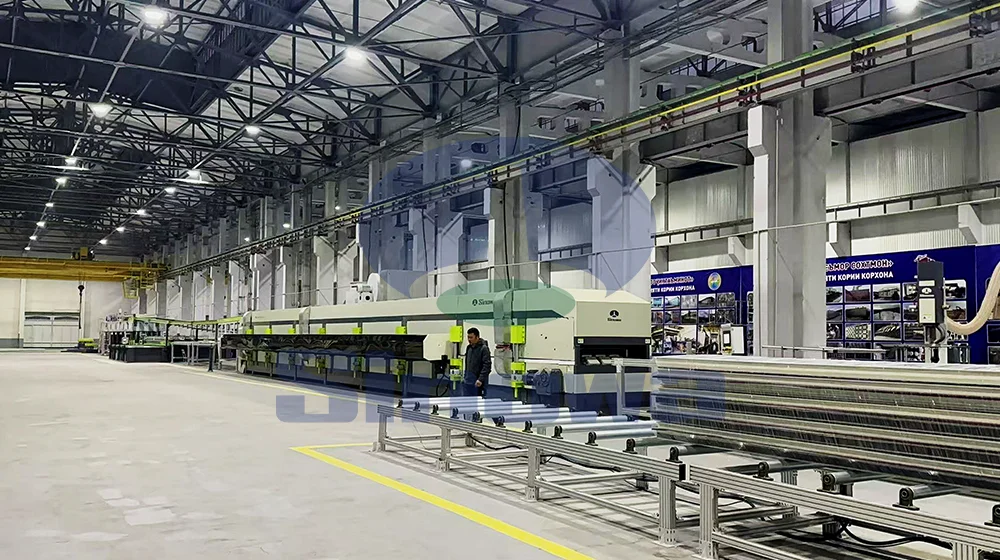
The continuous sandwich panel line is a highly integrated automated production system designed for the mass manufacturing of sandwich panels, a type of composite material widely used in construction, cold chain, industrial and commercial fields. Unlike discontinuous or batch production lines, which operate in intermittent cycles, continuous sandwich panel lines enable an uninterrupted workflow from raw material feeding to finished product packaging, ensuring high efficiency, consistent quality, and scalability.
The structure of a continuous sandwich panel line is a sophisticated assembly of interconnected functional units, each engineered to perform a specific task in the production process while maintaining seamless coordination with adjacent components. The core structure can be divided into several key modules, including material handling units, forming systems, foaming or core material integration sections, curing and pressing mechanisms, cutting systems, cooling and finishing units, and automated control systems. Each module is designed to work in harmony, minimizing production interruptions and ensuring uniform output.
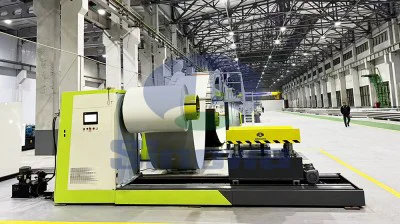
Material handling units form the starting point of the production line, responsible for feeding and preparing the facing materials that form the outer layers of sandwich panels. These units typically include decoilers, which hold large coils of facing materials such as color steel sheets, galvanized sheets, aluminum sheets, or composite films. The decoilers are equipped with automatic tension control and correction systems to ensure the material is fed smoothly and evenly into the subsequent processes without wrinkles or misalignment. Some advanced lines also feature automatic coil joining systems, allowing two coils to be connected without stopping the production flow, thus maintaining continuous operation. After decoiling, the facing materials pass through leveling rollers to remove any residual curvature from the coiling process, ensuring flatness before forming.
The forming system is responsible for shaping the facing materials into the desired profile, which can vary based on the application of the final panel. This system usually consists of upper and lower roll forming groups, each with individually controlled rollers that gradually bend the facing materials into specific shapes—such as corrugated, trapezoidal, or flat profiles. The roll forming process is precise, with adjustable roller positions to accommodate different panel widths and profile designs. Prior to forming, some lines incorporate preheating units, which heat the facing materials to a controlled temperature. This preheating step is crucial for improving the adhesion between the facing and the core material, especially when using foam-based cores that require specific temperature conditions for optimal bonding.
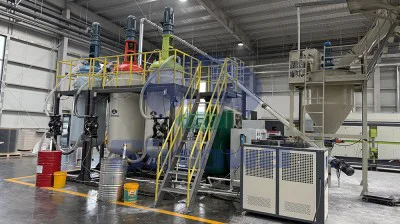
The core material integration section is the heart of the continuous sandwich panel line, as it determines the primary functional properties of the finished panel, such as thermal insulation, sound absorption, and structural strength. Depending on the type of core material used, this section varies in design. For foam-based cores like polyurethane (PU), polyisocyanurate (PIR), or expanded polystyrene (EPS), the section includes a high-pressure foaming system. This system consists of metering pumps that accurately mix two or more chemical components—such as isocyanate, polyol, foaming agents, catalysts, and additives—at a precise ratio. The mixed foam is then uniformly dispensed onto the lower facing material as it moves through the line. For mineral-based cores like rock wool or glass wool, the section includes mechanisms for feeding, cutting, and positioning the core material between the two facing layers. These mechanisms ensure the core is evenly distributed and properly aligned, with side sealing systems to prevent gaps that could compromise insulation performance.
Following core material application, the panels move into the curing and pressing section, which is critical for stabilizing the structure and ensuring strong bonding between layers. For foam-based cores, this section typically features a double-belt conveyor system, consisting of two parallel, endless belts that apply uniform pressure to the panel from the top and bottom. The belts are heated using hot air circulation or electric heating elements to maintain a consistent temperature range, which accelerates the foaming and curing process of the core material. The length of the double-belt conveyor is designed to provide sufficient residence time for the foam to fully cure and expand, ensuring the panel reaches its final structural integrity. For mineral core panels, the pressing section applies controlled pressure to bond the core with the facing materials, often using adhesive systems that require specific temperature and pressure conditions for optimal adhesion.
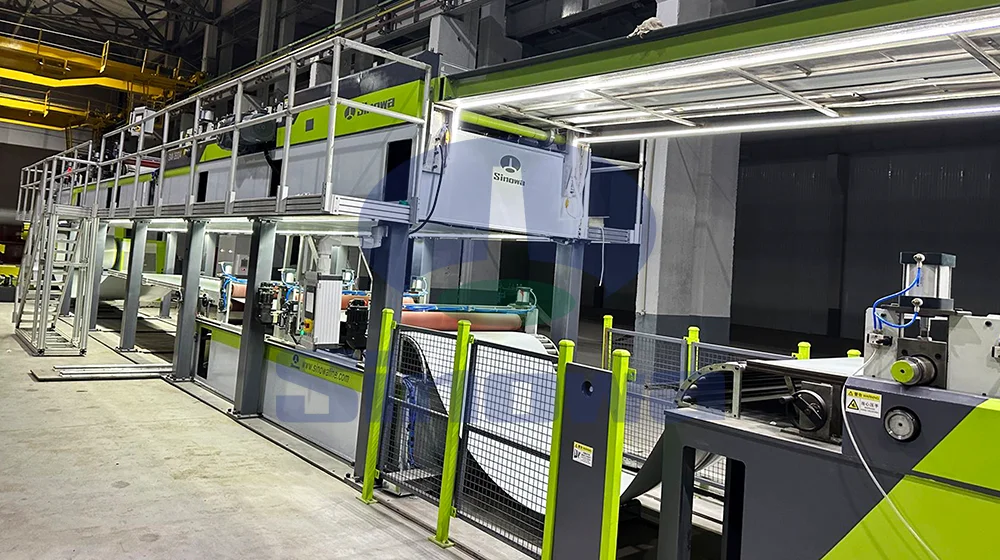
Once the panels are fully cured and formed, they enter the cutting system, which trims the panels to the required length and width. The cutting system typically uses a band saw or circular saw with automatic tracking capabilities, ensuring precise cuts that match the desired dimensions. Advanced lines incorporate fly cutting technology, which allows the saw to move synchronously with the moving panel, enabling continuous cutting without slowing down the production line. After cutting, the panels pass through trimming units to remove any excess material from the edges, ensuring clean, uniform edges that facilitate easy installation.
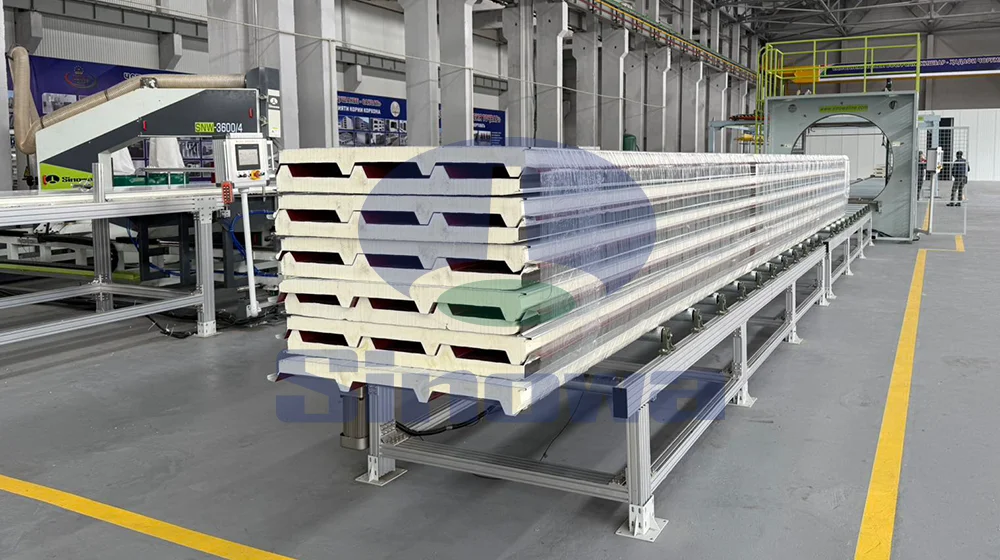
The cooling and finishing units complete the production process by cooling the panels to ambient temperature and preparing them for packaging. Cooling is often achieved using air cooling systems or water-cooled rollers, which rapidly reduce the temperature of the panels without causing thermal stress or deformation. Some lines include additional finishing processes, such as surface cleaning to remove dust or debris, or the application of protective films to prevent scratches during transportation and storage. Finally, automated stacking and packaging units sort the finished panels by size, stack them neatly, and wrap them in protective materials—such as plastic film or cardboard—to ensure they remain undamaged during transit.
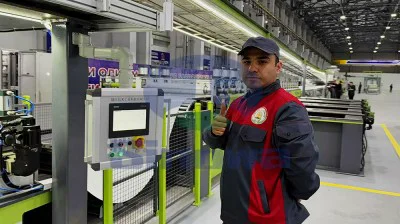
The control system is the brain of the continuous sandwich panel line, integrating all functional modules into a cohesive unit. It typically uses a programmable logic controller (PLC) with a human-machine interface (HMI) that allows operators to monitor and adjust production parameters in real time. Key parameters controlled include production speed, temperature of preheating and curing sections, foam mixing ratio, pressure applied by the double-belt system, and cutting dimensions. The control system also includes safety interlocks and alarm systems to detect and respond to potential issues—such as material jams, temperature deviations, or pressure fluctuations—minimizing downtime and ensuring operator safety. Advanced systems may incorporate data collection and analysis capabilities, allowing manufacturers to track production efficiency, material usage, and product quality over time, facilitating continuous process optimization.
The performance of a continuous sandwich panel line is defined by a set of key characteristics that determine its efficiency, reliability, and the quality of the panels it produces. These performance metrics are closely linked to the design and integration of the line’s components, and they play a critical role in meeting the demands of large-scale manufacturing.
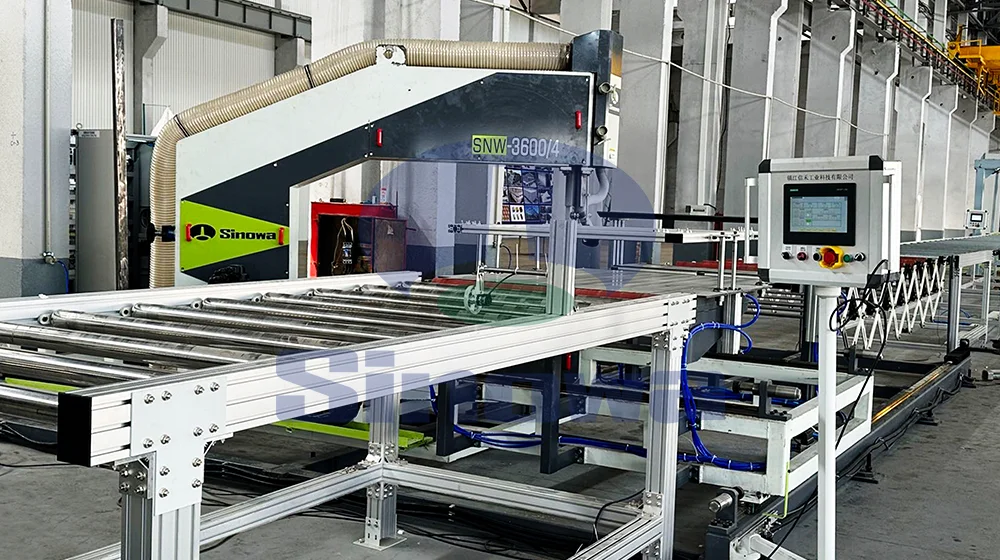
Production efficiency is one of the most prominent performance indicators of continuous sandwich panel lines. Unlike batch lines, which require downtime between production runs to change materials or adjust settings, continuous lines operate 24/7 with minimal interruptions, achieving high output rates. Production speed is typically adjustable, ranging from a few meters per minute to over 15 meters per minute, depending on the type of panel, core material, and thickness. The annual output capacity of a continuous line can reach millions of square meters, making it ideal for large-scale projects and high-volume orders. This high efficiency translates to lower production costs per unit over time, as fixed costs are spread across a larger number of panels.
Quality consistency is another critical performance attribute. The automated nature of continuous lines minimizes human intervention, reducing the risk of errors and variations in panel quality. Precise control over parameters such as foam mixing ratio, curing temperature, and pressing pressure ensures that each panel has uniform thickness, density, and structural integrity. The closed-loop control systems in modern lines continuously monitor production variables and make real-time adjustments, ensuring that deviations from set standards are quickly corrected. This consistency results in panels with predictable performance characteristics—such as thermal conductivity, compressive strength, and fire resistance—which is essential for applications where reliability is paramount, such as cold storage or industrial buildings.
Flexibility and customization capabilities are increasingly important performance factors, as manufacturers seek to meet diverse customer requirements. While continuous lines are often associated with standardized production, modern designs offer a high degree of flexibility in terms of panel dimensions, core materials, and facing profiles. Adjustable roll forming systems allow for changes in panel width and profile design with minimal downtime, while modular foaming systems can be adapted to produce panels with different core materials—such as PU, PIR, EPS, or rock wool. Some lines also support variable panel thickness, ranging from 30mm to 300mm or more, depending on the application. This flexibility enables manufacturers to switch between product types quickly, catering to both large-scale standardized orders and smaller custom projects.
Energy efficiency is a key performance consideration in today’s sustainable manufacturing landscape. Continuous sandwich panel lines are designed with energy-saving features to minimize power consumption and environmental impact. Hot air circulation systems in the curing section reuse heat, reducing energy waste, while high-efficiency motors and drives optimize power usage throughout the line. Additionally, the use of low-global-warming-potential (GWP) foaming agents—such as pentane instead of traditional chlorofluorocarbons (CFCs)—reduces the environmental footprint of the production process. These energy-efficient designs not only lower operational costs but also align with global efforts to reduce carbon emissions in the manufacturing sector.
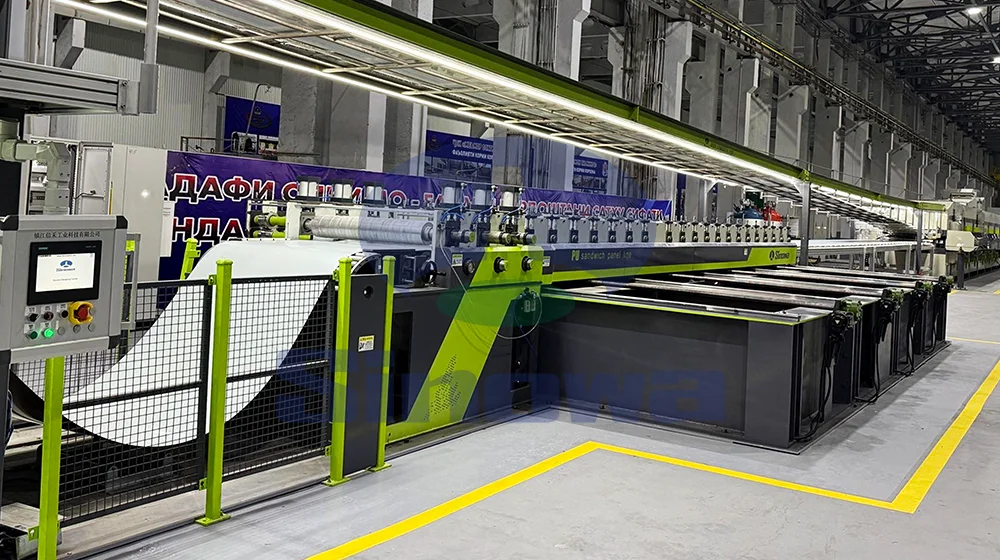
Reliability and durability are essential for ensuring long-term productivity. Continuous lines are constructed using high-quality materials and components, such as heavy-duty steel frames, wear-resistant conveyor belts, and precision-engineered cutting tools, which are designed to withstand the rigors of 24/7 operation. Regular maintenance requirements are minimized through the use of self-lubricating components and advanced monitoring systems that predict potential failures before they occur. This reliability ensures that manufacturers can meet tight project deadlines and maintain consistent supply chains, reducing the risk of costly downtime.
Continuous sandwich panel lines can be classified into several types based on various criteria, including the type of core material processed, the level of automation, and the specific application of the finished panels. Each type is designed to optimize production for a particular set of requirements, ensuring that manufacturers can select the most suitable line for their needs.
Based on core material type, the most common types of continuous sandwich panel lines are foam-based lines and mineral-based lines. Foam-based lines are designed for producing panels with polyurethane (PU), polyisocyanurate (PIR), or expanded polystyrene (EPS) cores. PU/PIR lines are equipped with high-pressure foaming systems that mix chemical components to form a rigid foam core with excellent thermal insulation and structural properties. These lines are widely used in the production of cold storage panels, wall panels, and roof panels due to the superior insulation performance of PU/PIR foam. EPS lines, on the other hand, use pre-expanded polystyrene beads or boards as the core material, which are bonded between facing layers using adhesive. EPS lines are often used for producing lightweight panels for residential buildings, prefabricated structures, and clean rooms.
Mineral-based continuous lines are designed for cores such as rock wool or glass wool, which offer excellent fire resistance and sound absorption. These lines feature specialized systems for handling mineral fibers, including feeding, cutting, and positioning mechanisms that ensure the core is evenly distributed without fiber degradation. Rock wool lines are commonly used in the production of fire-rated panels for industrial buildings, commercial complexes, and public facilities, where fire safety is a top priority. Glass wool lines are preferred for applications requiring sound insulation, such as acoustic panels for theaters, offices, and residential buildings.
Another classification criterion is the level of automation, which ranges from semi-automated to fully automated lines. Semi-automated lines require some manual intervention, such as loading coils, adjusting settings, or packaging finished panels. These lines are suitable for small to medium-scale manufacturers with limited production volume or budget constraints. Fully automated lines, by contrast, integrate all processes from material feeding to packaging, with minimal human input. These lines use advanced robotics, PLC control systems, and automatic material handling to maximize efficiency and quality consistency. Fully automated lines are ideal for large-scale manufacturers, export-oriented businesses, and companies serving high-demand markets where speed and reliability are critical.
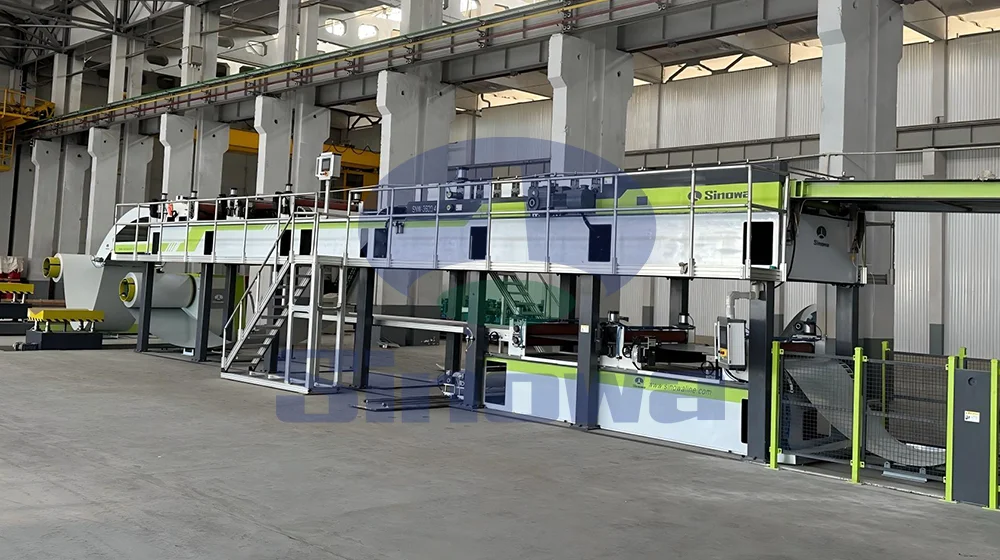
Continuous sandwich panel lines can also be classified based on the type of facing material they process. Metal-facing lines are the most common, processing materials such as color steel sheets, galvanized sheets, stainless steel sheets, and aluminum sheets. These lines are equipped with roll forming systems optimized for metal materials, ensuring precise profiling and strong bonding with the core. Composite-facing lines process non-metal facing materials, such as fiberglass-reinforced plastic (FRP), plywood, or cementitious boards. These lines require specialized adhesive systems and pressing mechanisms to ensure proper bonding between the composite facing and the core material, and they are often used for producing panels for decorative applications, chemical-resistant environments, or low-weight structures.
Additionally, there are specialized continuous sandwich panel lines designed for specific applications. For example, cold storage panel lines are optimized for producing panels with thick foam cores (up to 250mm or more) and tight sealing edges, ensuring maximum thermal insulation. Container panel lines are designed to produce panels for shipping containers, with enhanced structural strength and corrosion resistance. Clean room panel lines produce panels with smooth, dust-free surfaces and airtight joints, meeting the strict hygiene requirements of pharmaceutical, food processing, and electronics manufacturing facilities.
The applications of continuous sandwich panel lines are diverse, spanning multiple industries where high-quality, efficient, and cost-effective sandwich panels are in demand. The panels produced by these lines offer a unique combination of properties—including thermal insulation, sound absorption, fire resistance, structural strength, and lightweight design—that make them suitable for a wide range of uses.
The construction industry is the largest consumer of sandwich panels produced by continuous lines. In commercial and industrial construction, these panels are used for building walls, roofs, and partitions in warehouses, factories, logistics centers, and commercial complexes. The fast installation speed of sandwich panels—enabled by their large size and lightweight design—reduces construction time and labor costs, making them ideal for large-scale projects with tight deadlines. The thermal insulation properties of the panels also help reduce energy consumption for heating and cooling, lowering operational costs for building owners. In addition, sandwich panels produced by continuous lines offer consistent quality and structural integrity, ensuring compliance with building codes and standards for safety and durability.
The cold chain industry is another major application area for panels from continuous sandwich panel lines. Cold storage facilities, refrigerated warehouses, and transport vehicles (such as refrigerated trucks and containers) require panels with superior thermal insulation to maintain stable low temperatures. PU/PIR and EPS panels produced by continuous lines offer excellent thermal conductivity values, ensuring minimal heat transfer between the interior and exterior of the cold storage unit. The tight sealing edges and uniform core density of these panels prevent temperature fluctuations, which is critical for preserving perishable goods such as food, pharmaceuticals, and chemicals. Continuous lines produce cold storage panels in large volumes with consistent insulation performance, making them essential for the expansion of the global cold chain network.
Prefabricated construction is a rapidly growing field that relies heavily on continuous sandwich panel lines. Prefabricated buildings—including modular homes, temporary offices, construction site cabins, and disaster relief shelters—are assembled from pre-manufactured panels, offering fast construction, flexibility, and cost savings. Continuous lines produce panels in standardized sizes and designs, ensuring compatibility and easy assembly. The lightweight nature of the panels reduces transportation costs and simplifies on-site installation, even in remote areas. Additionally, the customization capabilities of modern continuous lines allow for the production of panels with different finishes and properties, enabling the creation of prefabricated buildings that meet diverse aesthetic and functional requirements.
The industrial sector uses sandwich panels from continuous lines for a variety of applications, including machine enclosures, sound barriers, and clean rooms. Machine enclosures require panels with structural strength and sound absorption to protect workers from noise and debris, while sound barriers—used along highways, railways, and industrial facilities—rely on the sound insulation properties of mineral core panels. Clean rooms in pharmaceutical, electronics, and food processing plants require panels with smooth, non-porous surfaces and airtight joints to prevent contamination. Continuous lines produce clean room panels with precise dimensions and consistent quality, meeting the strict standards of these industries.
The agricultural industry is also a growing user of sandwich panels from continuous lines. Livestock barns, greenhouses, and storage facilities for agricultural products benefit from the thermal insulation and durability of these panels. In livestock barns, the panels help maintain a stable internal temperature, improving animal welfare and productivity. Greenhouses use panels with controlled light transmission and thermal insulation to create optimal growing conditions for plants. Storage facilities for grains, fruits, and vegetables use panels to protect products from moisture, pests, and temperature fluctuations, reducing spoilage and waste.
Other applications of continuous sandwich panel lines include the production of panels for modular buildings, such as container homes and portable offices, which are popular for their mobility and sustainability. The automotive industry uses sandwich panels for the interior and exterior of vehicles, such as RVs and buses, due to their lightweight design and structural strength. The marine industry uses corrosion-resistant panels for ship interiors and offshore structures, while the renewable energy sector uses panels for solar panel mounting structures and wind turbine enclosures.
The widespread adoption of continuous sandwich panel lines is driven by several key trends in the manufacturing and construction sectors. The growing demand for energy-efficient buildings, driven by global sustainability goals, has increased the need for high-performance insulation panels, which continuous lines produce efficiently. The shift toward prefabricated construction, fueled by the need for faster, more cost-effective building methods, has also boosted demand for continuous lines, as they enable mass production of prefabricated panels. Additionally, advancements in automation and control technology have improved the performance and flexibility of continuous lines, making them accessible to a wider range of manufacturers.
Despite their many advantages, continuous sandwich panel lines also face some challenges. The high upfront investment required to purchase and install a continuous line can be a barrier for small to medium-scale manufacturers, although the long-term cost savings from increased efficiency often offset this investment. Additionally, the complexity of the line requires specialized technical expertise for operation and maintenance, which can be a challenge in regions with limited skilled labor. However, ongoing technological advancements—such as simplified control systems and remote monitoring capabilities—are addressing these challenges, making continuous lines more accessible and user-friendly.
Looking ahead, the future of continuous sandwich panel lines is promising, with several emerging trends shaping their development. The integration of artificial intelligence (AI) and machine learning into control systems will enable predictive maintenance, real-time process optimization, and enhanced quality control, further improving efficiency and reliability. The development of new, sustainable core materials—such as bio-based foams and recycled mineral fibers—will align continuous lines with global efforts to reduce environmental impact. Additionally, the expansion of the cold chain industry in emerging markets, coupled with the growing demand for prefabricated buildings, will drive increased adoption of continuous sandwich panel lines worldwide.
In conclusion, continuous sandwich panel lines are a critical component of modern manufacturing, enabling the efficient, consistent production of sandwich panels for diverse applications. Their sophisticated structure, advanced performance characteristics, and varied types make them adaptable to the needs of different industries, from construction and cold storage to agriculture and automotive. As sustainability and efficiency become increasingly important in manufacturing, continuous sandwich panel lines will continue to evolve, playing a key role in meeting the global demand for high-quality, sustainable composite materials. Whether used to produce energy-efficient building panels, cold storage solutions, or prefabricated structures, continuous sandwich panel lines are poised to remain a cornerstone of the manufacturing industry for years to come.
« Continuous Sandwich Panel Line » Update Date: 2026/4/20
URL: https://www.sinowamachine.com/tags/continuous-sandwich-panel-line.html
![Continuous Sandwich Panel Line In China]()
Continuous Sandwich Panel Line In China
2026-09-01The continuous sandwich panel line has emerged as a core automated manufacturing solution in the modern building material industry, driving the large-scale and high-quality production of composite insulation panels. As the global construction sector shifts toward energy-saving, lightweight, and prefa…![Continuous Sandwich Panel Line Supplier]()
Continuous Sandwich Panel Line Supplier
2026-08-14The continuous sandwich panel line has become a core pillar of modern composite material manufacturing, serving as an integrated automated production system designed for large-scale, uninterrupted fabrication of multi-functional sandwich panels. Unlike traditional intermittent production equipment th…![Continuous Sandwich Panel Line Manufacturer]()
Continuous Sandwich Panel Line Manufacturer
2026-05-08In the evolving landscape of modern construction and industrial manufacturing, sandwich panels have emerged as indispensable composite materials that balance structural stability, thermal insulation, and installation convenience. Behind the widespread application of these panels lies the sophisticate…![Cheap Continuous Sandwich Panel Line]()
Cheap Continuous Sandwich Panel Line
2026-05-08In the evolving manufacturing sector of building decorative and thermal insulation materials, continuous sandwich panel production lines have emerged as essential industrial equipment for mass-producing composite panels. A cheap continuous sandwich panel line stands out among various production equip…
- Links:
- Sandwich Panel Continuous Production Line
- Automatic and Continuous Sandwich Panel Production Line
- Cheap and Low Price Sandwich Panel Production Line
- China Sandwich Panel Production Line Factory
- Color Steel Sandwich Panel Production Line For Cold Storage
- Continuous Composite Foam Sandwich Panel Production Line
- Continuous Production Line For Rockwool and Mineral Wool Sandwich Panels
- Continuous PU Phenolic Insulation Panel Production Line
- Continuous PU PIR Sandwich Panel Production Line
- Continuous PUF PUR Sandwich Panel Production Line
- Continuous Sandwich Panel Production Line For Roof and Wall
- Customized and Design Sandwich Panel Production Line
- Decorative Sandwich Panel Production Line For Glass Wool Boards
- High Quality Sandwich Panel Production Line For Sale
- Polyurethane(PU) Sandwich Panel Production Line
- Sandwich Panel Production Line Manufacturer and Supplier
- Sandwich Panel Production Machinery and Equipment