
PUR Sandwich Panel Line
Sinowa is a pur sandwich panel line supplier from china, customized high-quality & high efficiency pur sandwich panel line at low price, the adoption of system integration technology and bus control technology accomplishes the full automatization of integrated and coordinated control of the pur sandwich panel line with accessible remote interactive communication. Ranking the first-class level in the world, it is currently the pur sandwich panel line in the market taking a comprehensive lead in high performance.
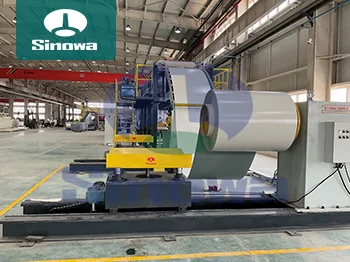
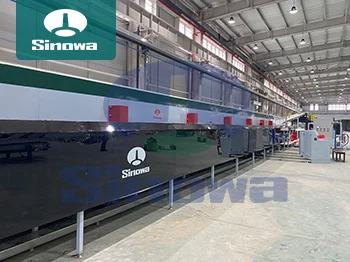
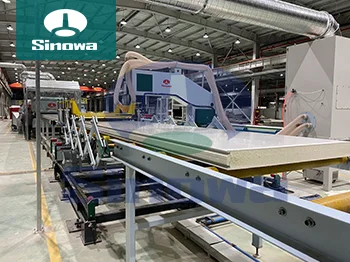
The high-tech pur sandwich panel line can meet a variety of production needs of customers, the whole pur sandwich panel line design concept of modularization enables all our components to be integrated and combined at will. Our high efficiency pur sandwich panel line can easily automate the production of roof sandwich panel, wall sandwich panel, cold storage sandwich panel and other products by different combination and configuration selection and siple switching. The inner core layer can be polyrethane or rock wool, glass wool, an so on.


The high precision pur sandwich panel line has high adaptability, which may produce various sandwich panel of the PU, PIR and rock wool systems. We may design various products according to the customer’s requirements, including various configurations, so as to meet their demands with flexible price system. Highly integrated and linked control system centralizes all control points at the main central center, achieving parameter linkage, fault self-diagnosis controlled by the whole line and shipping distance control. High-level automatic control system also saves the manpower and reduces the manpower loss for customers.


The precision servo hoisting mechanism employed by the main engine without hydraulic system makes the board thickness control flexible and the customer may conveniently change or adjust the board thickness. There will be not such troubles as hydraulic system adjustment, leakage, maintenance, etc.


High-level energy saving and protection design makes the whole pur sandwich panel line possible to produce around the clock throughout the year and the customer will save huge budget. In addition, the isolated heat preservation room is constructed for warming the environment. The energy saving and protection design of our manufacturing line may guarantee that the customer’s production line may be freely heated and produce in the main time to save more costs for customers.


The high-power low-consumption design quickens the reaction of the cheap pur sandwich panel line while energy consumption is kept low. With the brand-new, fully sealed inner insulation design, the energy consumption is controlled at the minimum level to achieve the design objective of less than an hour for the insulation system to be activated from the room temperature above 5℃ to the production process temperature. The energy consumption is only 40% that of those similar products.
A PUR sandwich panel line is a specialized and integrated manufacturing system designed to produce high-quality polyurethane (PUR) sandwich panels in a continuous, efficient manner. These panels, characterized by a three-layer structure consisting of a PUR foam core sandwiched between two facing materials, have become indispensable in various industries due to their exceptional combination of structural strength, thermal insulation, and durability. The PUR sandwich panel line encompasses a series of interconnected components and processes that work in tandem to ensure consistent production of panels that meet diverse application requirements, without relying on specific brand technologies or certified components.
The structure of a PUR sandwich panel line is a complex assembly of specialized units, each designed to perform a specific function in the continuous production process. At the core of the line is the uncoiling and feeding unit, which is responsible for supplying the facing materials to the production line. This unit typically consists of two or more uncoilers that hold large coils of facing materials, such as steel, aluminum, or non-woven fabrics, and feed them into the subsequent processing stages at a steady, controlled speed. To ensure the facing materials are flat and free from wrinkles, a leveling unit is often integrated after the uncoilers, which uses a series of rollers to smooth out any imperfections and maintain consistent thickness across the width of the material. Some lines also include a corona treatment unit at this stage, which enhances the wettability of the facing materials and eliminates static electricity, thereby improving the adhesion between the facing and the PUR foam core later in the process.
Following the leveling stage, the facing materials move to the roll forming unit, where they are shaped into the desired profile. This unit consists of a series of tandem rolling stands equipped with specialized rollers that gradually bend and form the flat facing materials into profiles such as flat, trapezoidal, or corrugated designs, depending on the intended application of the final panel. The roll forming process is precise and customizable, allowing for the production of panels with different widths, thicknesses, and profile patterns to suit specific project needs. The upper and lower facing materials are formed simultaneously in this unit, ensuring they align perfectly when they meet the PUR foam core in the next stage.
The foaming unit is the most critical component of the PUR sandwich panel line, as it is responsible for producing and applying the PUR foam core that gives the sandwich panels their unique properties. This unit includes a high-pressure foaming machine, which accurately meters and mixes the two main components of PUR foam—polyol and isocyanate—along with additives such as foaming agents, catalysts, and flame retardants, in precise proportions. The mixing process occurs in a high-speed mixing head, which ensures the components are thoroughly blended to form a homogeneous liquid mixture. This mixture is then continuously poured or sprayed between the upper and lower facing materials as they move through the line, forming the core of the sandwich panel.
After the foam is applied, the combined structure moves into the double belt pressing unit, which plays a key role in shaping and curing the foam core. This unit consists of two parallel, heated conveyor belts that apply uniform pressure and temperature to the sandwich structure as it moves through. The controlled pressure ensures the foam expands evenly and adheres firmly to both facing materials, while the regulated temperature accelerates the curing process of the PUR foam, transforming it from a liquid mixture into a rigid, stable core. The double belt pressing unit also ensures the final panel has a flat, smooth surface and consistent thickness, as the belts maintain a fixed distance between them throughout the process. Some advanced lines are equipped with independently heated belts, allowing for precise control of the curing temperature across different sections of the panel, which further enhances the quality and consistency of the final product.
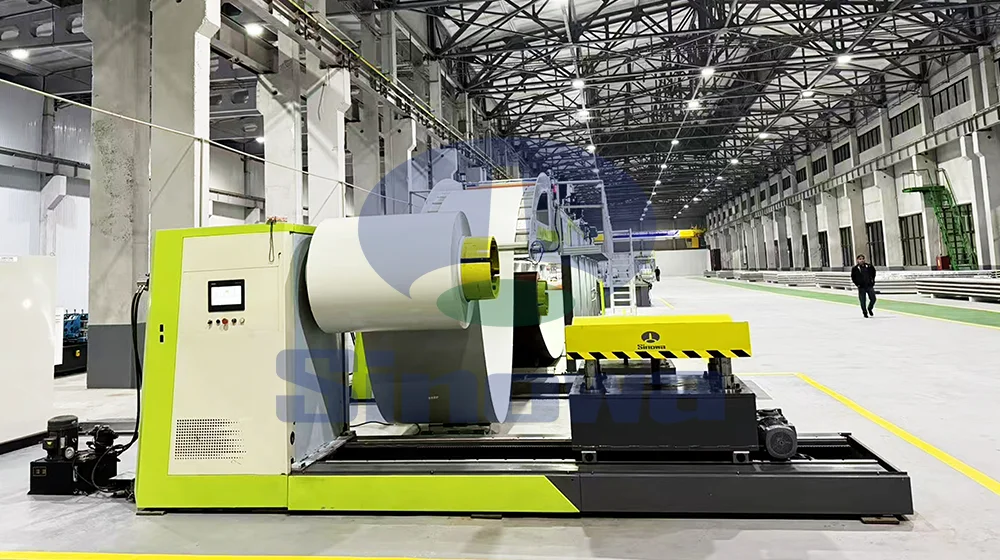
Once the foam core is fully cured, the sandwich panel moves to the trimming and cutting unit. This unit includes side trimming devices that remove any excess material from the edges of the panel, ensuring it meets the required width specifications. Following trimming, an automatic tracking cutting machine cuts the continuous panel into individual lengths according to preset dimensions. These cutting machines are often equipped with band saws or disk blades and may feature a 180-degree rotating mechanism, allowing for efficient cutting of both short and long panel lengths even at high production speeds. Finally, the finished panels are moved to a handling and packaging unit, which may include cooling stations to allow the panels to cool completely, turning stations to orient the panels correctly, and wrapping machines to protect them during storage and transportation. The entire structure of the PUR sandwich panel line is designed to operate continuously, minimizing downtime and maximizing production efficiency, with each unit working in harmony to ensure the consistent quality of the final product.
The performance of a PUR sandwich panel line is determined by its ability to produce high-quality panels consistently, efficiently, and reliably, while adapting to different production requirements. One of the key performance metrics of these lines is production efficiency, which is influenced by factors such as line speed, automation level, and the integration of different units. Modern PUR sandwich panel lines are highly automated, with advanced control systems that monitor and adjust each stage of the production process in real-time. This automation reduces the need for manual intervention, minimizes human error, and allows for higher line speeds, typically ranging from a few meters to over ten meters per minute, depending on the type of panel being produced and the desired thickness. The continuous production design also ensures that there is minimal waste, as the line produces panels in a continuous stream without the need for batch processing, which further enhances efficiency.
Another critical performance aspect is production flexibility, which refers to the line’s ability to produce different types of PUR sandwich panels with varying specifications. High-quality PUR sandwich panel lines are highly customizable, allowing for adjustments to panel thickness, width, length, facing material, and foam core density. For example, the foaming unit can be adjusted to produce foam cores with densities ranging from 30 to 45 kg/m³, depending on the required structural strength and thermal insulation properties of the panel. The roll forming unit can also be reconfigured to produce different profile patterns, making it possible to manufacture panels for diverse applications, from wall panels to roof panels and cold storage panels. This flexibility is essential for manufacturers who need to cater to a wide range of customer needs and adapt to changing market demands.
Precision and consistency are also key performance characteristics of PUR sandwich panel lines. The advanced control systems integrated into these lines ensure that each stage of the production process is monitored and adjusted with high precision, from the metering of foam components to the cutting of finished panels. This precision ensures that the panels produced have consistent thickness, width, and length, with uniform foam core density and strong adhesion between the facing materials and the core. The dimensional accuracy of the panels is crucial, as it ensures they can be easily installed without the need for additional trimming or adjustment on-site. For example, the length tolerance of panels produced by high-performance lines is typically ±5 mm for panels up to 3 meters in length and ±10 mm for panels longer than 3 meters, with width tolerance of ±2 mm and thickness tolerance of ±2 mm for panels up to 100 mm thick and ±2% for thicker panels. This level of precision ensures the reliability and usability of the panels in various applications.
Durability and reliability are also important performance factors of PUR sandwich panel lines. These lines are constructed using high-quality materials and components that can withstand the harsh conditions of industrial manufacturing, including constant operation, high temperatures, and exposure to chemicals used in the foaming process. The components are designed to be low-maintenance, reducing downtime and ensuring long-term reliable operation. Additionally, the lines are equipped with safety features such as emergency stop buttons, protective guards, and temperature monitoring systems, which ensure the safety of operators and prevent accidents. The durability and reliability of the production line directly impact the overall productivity and cost-effectiveness of the manufacturing process, as they minimize the need for repairs and replacements and ensure consistent production output.
The thermal and structural performance of the panels produced by the line is also a reflection of the line’s performance capabilities. PUR foam has excellent thermal insulation properties, with a thermal conductivity of ≤0.025 W/m·K, which makes it highly effective at reducing heat transfer. The production line’s ability to ensure uniform foam core density and thickness directly impacts the thermal insulation performance of the final panels, as inconsistencies in the foam core can create thermal bridges and reduce energy efficiency. Similarly, the line’s ability to ensure strong adhesion between the facing materials and the foam core enhances the structural strength of the panels, allowing them to withstand high loads, wind pressure, and other environmental stresses. The panels produced by high-performance PUR sandwich panel lines typically have a compressive strength of ≥0.22 MPa and a bond strength of ≥0.09 MPa, making them suitable for use in structural applications.
PUR sandwich panel lines can be classified into different types based on various criteria, including production mode, automation level, and the type of panels they produce. One of the main classifications is based on production mode, with continuous and batch production lines being the two primary types. Continuous production lines are the most common type, designed to produce panels in a continuous stream without interruption. These lines are highly efficient and suitable for large-scale production, as they can operate 24 hours a day with minimal downtime. Continuous lines are ideal for manufacturing standard-sized panels in large quantities, such as those used in industrial warehouses, commercial buildings, and cold storage facilities. Batch production lines, on the other hand, produce panels in batches, with each batch consisting of a specific number of panels with the same specifications. These lines are less efficient than continuous lines but offer greater flexibility, making them suitable for small-scale production or for manufacturing custom-sized panels with unique specifications.
Another classification is based on the level of automation, with fully automated, semi-automated, and manual lines available. Fully automated lines are equipped with advanced control systems that monitor and adjust all stages of the production process automatically, requiring minimal manual intervention. These lines are highly efficient, precise, and consistent, making them ideal for large-scale manufacturing operations. They typically include features such as automatic coil changing, real-time quality monitoring, and automated packaging, which further enhance productivity. Semi-automated lines require some manual intervention, such as loading and unloading materials or adjusting certain parameters, but still incorporate automated components for key processes such as foaming and cutting. These lines are suitable for medium-scale production operations that require a balance between efficiency and flexibility. Manual lines, on the other hand, rely heavily on human labor for most stages of the production process, making them less efficient and less consistent than automated lines. They are typically used for small-scale production or in regions where labor costs are low.
PUR sandwich panel lines can also be classified based on the type of panels they produce, which is determined by the facing material, foam core density, and profile design. Wall panel production lines are designed to produce panels used for building exterior and interior walls. These lines typically produce panels with flat or small-wave profiles, using facing materials such as steel or aluminum with a polyester or PVDF finish. The foam core of wall panels is often designed to provide a balance of thermal insulation and structural strength, with densities ranging from 35 to 45 kg/m³. Roof panel production lines, on the other hand, produce panels with trapezoidal or roof-tile profiles, which are designed to withstand wind pressure and prevent water leakage. These panels often have a thicker foam core for enhanced thermal insulation and may use facing materials with higher corrosion resistance to withstand exposure to the elements.
Cold storage panel production lines are specialized lines designed to produce panels used in cold storage facilities, refrigerated warehouses, and freezers. These lines produce panels with a high-density foam core (typically 40 to 45 kg/m³) and facing materials that have excellent moisture resistance and airtightness, such as aluminum foil or galvanized steel. The foam core of cold storage panels is often treated with additives to enhance its low-temperature performance, allowing it to maintain its structural integrity and thermal insulation properties at temperatures as low as -185 °C. Sectional door panel production lines are another specialized type, designed to produce panels used in garage doors and industrial sectional doors. These lines produce panels with a lightweight yet durable structure, often with a ribbed profile for added strength, and may use facing materials that are resistant to scratches and impact.
Additionally, there are modular PUR sandwich panel lines, which are designed to be easily assembled and disassembled, making them suitable for temporary manufacturing facilities or for manufacturers who need to relocate their production operations. These lines consist of pre-engineered components that can be quickly installed and configured, allowing for rapid startup and production. Modular lines offer greater flexibility in terms of production capacity, as additional modules can be added to increase output as needed.
The applications of PUR sandwich panel lines are diverse and span across multiple industries, driven by the exceptional properties of the panels they produce. The construction industry is the largest consumer of PUR sandwich panels, and thus the primary application area for these production lines. In commercial and industrial construction, PUR sandwich panels produced by these lines are widely used for building walls, roofs, and partitions in warehouses, factories, shopping malls, office buildings, and exhibition centers. The panels’ excellent thermal insulation properties help reduce energy consumption for heating and cooling, making buildings more energy-efficient and environmentally friendly. Their lightweight nature also reduces the overall weight of the building structure, which can lower construction costs by reducing the need for heavy structural supports. Additionally, the quick and easy installation of PUR sandwich panels, which are prefabricated in the production line, accelerates the construction process, reducing project timelines and labor costs.
In the cold storage and refrigeration industry, PUR sandwich panel lines play a crucial role in producing panels used for constructing cold storage warehouses, refrigerated trucks, shipping containers, and freezer rooms. The high-density PUR foam core of these panels provides exceptional thermal insulation, allowing for the maintenance of stable low temperatures inside the storage facility while minimizing energy consumption. The airtight and moisture-resistant properties of the panels prevent condensation and mold growth, ensuring the quality and safety of stored products such as food, pharmaceuticals, and chemicals. The panels’ structural strength also makes them suitable for use in large cold storage facilities, where they can withstand the weight of heavy equipment and stored goods.
The prefabricated building industry is another important application area for PUR sandwich panel lines. Prefabricated buildings are constructed using pre-manufactured components that are assembled on-site, and PUR sandwich panels are a key component of these buildings due to their lightweight, durability, and ease of installation. PUR sandwich panel lines produce panels that are used for walls, roofs, and floors of prefabricated houses, modular offices, temporary shelters, and disaster relief housing. The ability of these lines to produce custom-sized panels with different profiles and specifications makes them ideal for meeting the diverse design requirements of prefabricated buildings. Additionally, the quick production and installation of PUR sandwich panels allow for the rapid construction of prefabricated buildings, which is particularly beneficial in emergency situations or for projects with tight timelines.
The HVAC (Heating, Ventilation, and Air Conditioning) industry also uses panels produced by PUR sandwich panel lines for manufacturing air ducts and ventilation systems. These panels have excellent thermal insulation and airtightness properties, which help reduce heat loss in air ducts and improve the efficiency of HVAC systems. The smooth inner surface of the panels, often made of aluminum foil, reduces air resistance and prevents the accumulation of dust and debris, ensuring good indoor air quality. PUR sandwich panels used in HVAC systems are also resistant to corrosion and chemical damage, making them suitable for use in harsh environments such as industrial facilities and chemical plants.
In the automotive industry, specialized PUR sandwich panels produced by these lines are used for manufacturing lightweight yet durable components such as vehicle interiors, door panels, and cargo liners. The lightweight nature of the panels helps reduce the overall weight of the vehicle, improving fuel efficiency and reducing emissions. The panels’ excellent impact resistance and sound insulation properties also enhance the comfort and safety of the vehicle interior. Additionally, the corrosion resistance of the facing materials makes the panels suitable for use in automotive applications, where they may be exposed to moisture and other environmental factors.
Other applications of PUR sandwich panel lines include the production of panels for industrial equipment enclosures, clean rooms, and agricultural buildings. Industrial equipment enclosures made from PUR sandwich panels provide thermal insulation and sound absorption, protecting sensitive equipment from extreme temperatures and reducing noise pollution. Clean rooms, which require a controlled environment with minimal dust and contaminants, use PUR sandwich panels with smooth, easy-to-clean surfaces that prevent the accumulation of particles. Agricultural buildings such as greenhouses, barns, and livestock shelters use PUR sandwich panels for their thermal insulation properties, which help maintain optimal temperatures for plant growth and animal welfare.
In conclusion, PUR sandwich panel lines are advanced manufacturing systems that play a vital role in producing high-quality, versatile panels used across numerous industries. Their complex structure, consisting of interconnected units for uncoiling, leveling, roll forming, foaming, pressing, trimming, and cutting, ensures continuous and efficient production. The performance of these lines, characterized by high efficiency, flexibility, precision, and reliability, allows for the production of panels with consistent quality and diverse specifications. The different types of PUR sandwich panel lines, classified by production mode, automation level, and panel type, cater to a wide range of production needs, from large-scale continuous manufacturing to small-scale custom production. The diverse applications of these lines, spanning construction, cold storage, prefabricated buildings, HVAC, automotive, and other industries, highlight their importance in modern manufacturing and construction practices. As the demand for energy-efficient, durable, and sustainable building materials continues to grow, PUR sandwich panel lines will remain a key technology, driving innovation and providing solutions for diverse application needs.
« PUR Sandwich Panel Line » Update Date: 2026/2/24
URL: https://www.sinowamachine.com/tags/pur-sandwich-panel-line.html
![PUR Sandwich Panel Line Manufacturer]()
PUR Sandwich Panel Line Manufacturer
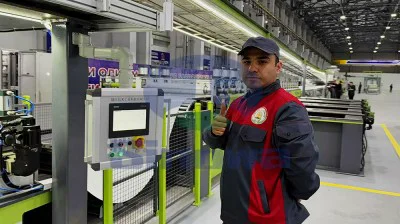
2026-08-28PUR sandwich panel production lines represent advanced integrated manufacturing systems dedicated to the continuous fabrication of high-performance polyurethane composite panels widely applied in construction, industrial enclosure, cold chain storage and modular building fields. This automated produc…
- Links:
- Sandwich Panel Continuous Production Line
- Automatic and Continuous Sandwich Panel Production Line
- Cheap and Low Price Sandwich Panel Production Line
- China Sandwich Panel Production Line Factory
- Color Steel Sandwich Panel Production Line For Cold Storage
- Continuous Composite Foam Sandwich Panel Production Line
- Continuous Production Line For Rockwool and Mineral Wool Sandwich Panels
- Continuous PU Phenolic Insulation Panel Production Line
- Continuous PU PIR Sandwich Panel Production Line
- Continuous PUF PUR Sandwich Panel Production Line
- Continuous Sandwich Panel Production Line For Roof and Wall
- Customized and Design Sandwich Panel Production Line
- Decorative Sandwich Panel Production Line For Glass Wool Boards
- High Quality Sandwich Panel Production Line For Sale
- Polyurethane(PU) Sandwich Panel Production Line
- Sandwich Panel Production Line Manufacturer and Supplier
- Sandwich Panel Production Machinery and Equipment