
Sandwich Panel Production Machinery
Sinowa is a sandwich panel production machinery supplier from china, customized high-quality & high efficiency sandwich panel production machinery at low price, the adoption of system integration technology and bus control technology accomplishes the full automatization of integrated and coordinated control of the sandwich panel production machinery with accessible remote interactive communication. Ranking the first-class level in the world, it is currently the sandwich panel production machinery in the market taking a comprehensive lead in high performance.
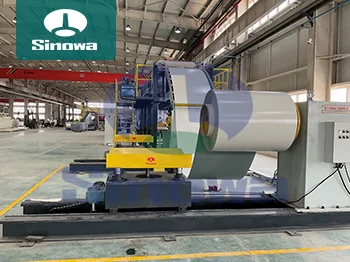
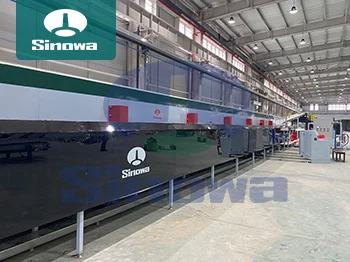
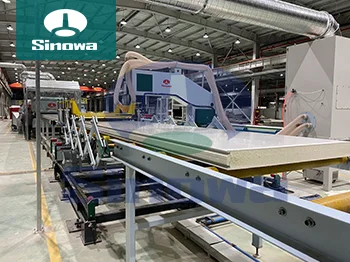
The high-tech sandwich panel production machinery can meet a variety of production needs of customers, the whole sandwich panel production machinery design concept of modularization enables all our components to be integrated and combined at will. Our high efficiency sandwich panel production machinery can easily automate the production of roof sandwich panel, wall sandwich panel, cold storage sandwich panel and other products by different combination and configuration selection and siple switching. The inner core layer can be polyrethane or rock wool, glass wool, an so on.


The high precision sandwich panel production machinery has high adaptability, which may produce various sandwich panel of the PU, PIR and rock wool systems. We may design various products according to the customer’s requirements, including various configurations, so as to meet their demands with flexible price system. Highly integrated and linked control system centralizes all control points at the main central center, achieving parameter linkage, fault self-diagnosis controlled by the whole line and shipping distance control. High-level automatic control system also saves the manpower and reduces the manpower loss for customers.


The precision servo hoisting mechanism employed by the main engine without hydraulic system makes the board thickness control flexible and the customer may conveniently change or adjust the board thickness. There will be not such troubles as hydraulic system adjustment, leakage, maintenance, etc.


High-level energy saving and protection design makes the whole sandwich panel production machinery possible to produce around the clock throughout the year and the customer will save huge budget. In addition, the isolated heat preservation room is constructed for warming the environment. The energy saving and protection design of our manufacturing line may guarantee that the customer’s production line may be freely heated and produce in the main time to save more costs for customers.


The high-power low-consumption design quickens the reaction of the cheap sandwich panel production machinery while energy consumption is kept low. With the brand-new, fully sealed inner insulation design, the energy consumption is controlled at the minimum level to achieve the design objective of less than an hour for the insulation system to be activated from the room temperature above 5℃ to the production process temperature. The energy consumption is only 40% that of those similar products.
In the modern construction and manufacturing industries, sandwich panels have emerged as a pivotal material renowned for their exceptional combination of light weight, high strength, thermal insulation, and soundproofing capabilities. These panels, typically composed of two outer facer sheets and a core insulation layer, find widespread application in diverse sectors ranging from industrial warehouses and cold storage facilities to commercial complexes and modular housing. Behind the mass production of high-quality sandwich panels lies a sophisticated array of production machinery, whose precision, efficiency, and adaptability directly determine the performance and reliability of the final products. As the demand for energy-efficient and rapid-assembly construction solutions continues to rise globally, the technology and design of sandwich panel production machinery have undergone continuous innovation, evolving to meet the increasingly diverse requirements of material compatibility, production scale, and product customization.
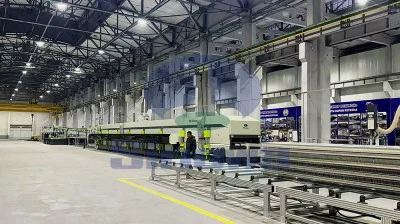
The fundamental functionality of sandwich panel production machinery revolves around the seamless integration of multiple production stages, from raw material preparation and processing to lamination, curing, and final cutting. Unlike traditional manual or semi-mechanical production methods, modern production lines are characterized by high automation, which not only enhances production efficiency but also ensures consistent product quality by minimizing human error. The core working principle varies slightly depending on the type of core material used—such as polyurethane (PU), phenolic foam, rock wool, or polystyrene—but the overall production process follows a logical sequence of material feeding, shaping, core injection or lamination, curing, and trimming. For continuous production lines, which are widely adopted for large-scale manufacturing, the entire process is synchronized to ensure a steady flow of materials, enabling the production of panels in continuous lengths that can be cut to specific dimensions as required.
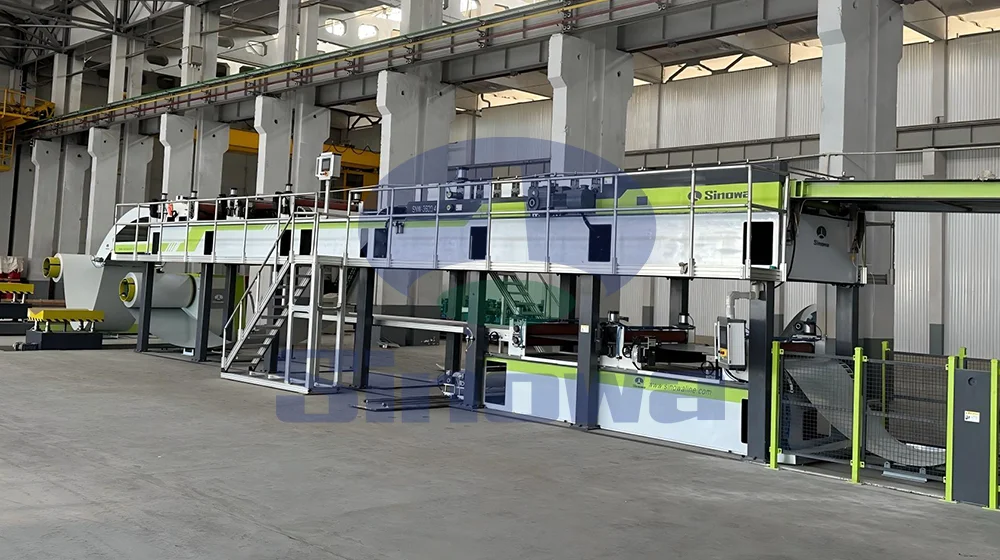
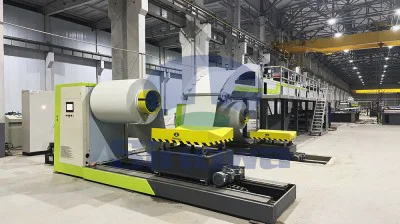
A typical sandwich panel production line comprises several key components that work in tandem to achieve the desired panel properties. The material feeding system is the starting point of the production process, primarily consisting of decoilers designed to handle large coils of facer materials, usually metal sheets such as steel or aluminum. These decoilers are equipped with tension control mechanisms to ensure smooth and consistent uncoiling, preventing material warping or tearing. In many advanced systems, gas liquid servo correction systems are integrated into the feeding unit to adjust the position of the facer sheets in real-time, ensuring precise alignment throughout the production process. This alignment is critical because any deviation can lead to uneven lamination and compromised structural integrity of the final panel. Additionally, some production lines include pre-heating devices for the facer sheets, which help improve the adhesion between the facers and the core material, especially when using thermosetting adhesives or foam cores that require specific temperature conditions for optimal bonding.
Following the feeding and alignment stage, the facer sheets undergo shaping processes, particularly when the outer layers require specific profiles or textures. Roll forming machines are commonly used for this purpose, consisting of a series of tandem rolling stands that progressively bend and shape the flat metal sheets into the desired profile. The roll forming process is highly precise, allowing for the creation of consistent profiles with tight dimensional tolerances, which is essential for ensuring the structural stability of the sandwich panels when installed. For applications such as roof panels or wall cladding, the shaped facer sheets not only enhance the aesthetic appeal but also improve the panel's resistance to external environmental factors such as wind and rain. In some cases, additional processes such as embossing or punching can be integrated into this stage to create decorative patterns or pre-drilled holes for easy installation, further expanding the functional versatility of the final products.
The core formation and lamination stage is the most critical part of the production process, as it determines the thermal insulation and structural performance of the sandwich panels. For foam core panels such as PU or phenolic foam, this stage involves the precise mixing and injection of foam materials between the two facer sheets. High-pressure foaming machines are used to meter and mix the two components of the foam material in accurate proportions before delivering the mixture to a spreading unit or injection head. The spreading unit, often mounted on a movable carriage, distributes the foam mixture evenly across the surface of the bottom facer sheet. The top facer sheet, which has already undergone shaping, is then brought into contact with the foam layer, and the entire assembly is fed into a lamination unit, typically a double-track laminating conveyor. This conveyor consists of upper and lower conveyor chains or belts that apply uniform pressure to the panel assembly, ensuring proper bonding between the facers and the foam core. Simultaneously, the conveyor is equipped with heating systems—such as hot air circulation or heated chain plates—that maintain a specific temperature environment to facilitate the foaming and curing of the core material. The temperature and pressure parameters during this stage are carefully controlled, as they directly affect the density, thermal conductivity, and bonding strength of the foam core.
For non-foam core panels, such as those using rock wool or glass wool as the insulation layer, the lamination process differs slightly, focusing on the precise application of adhesives rather than foam injection. In these cases, automatic glue laminating machines are used to apply adhesive to the core material or the facer sheets. Advanced adhesive application systems feature precise coating control, allowing for adjustable coating thickness and width to accommodate different panel sizes and material types. The adhesive is applied evenly to ensure strong bonding between the core and the facers, preventing delamination during use. After adhesive application, the core material is placed between the two facer sheets, and the assembly is passed through a laminating press. Multi-layer vacuum presses are often used in this context, as they apply uniform pressure across the entire panel surface, ensuring flatness and consistent bonding. These presses can handle multiple panels simultaneously, significantly improving production efficiency, and the vacuum environment helps eliminate air bubbles between the layers, further enhancing the structural integrity of the panels.
Curing is another essential stage in the production process, particularly for foam core panels where the chemical reaction of the foam material needs to be completed to achieve its final properties. The curing process typically takes place within the double-track laminating conveyor, which provides a controlled temperature environment for the foam to expand and solidify. The length of the conveyor and the temperature settings are tailored to the specific type of foam material, ensuring sufficient curing time. For example, PU foam typically requires a curing temperature of around 80℃, and the conveyor length is designed to allow the foam to fully cure as it moves through the line at the production speed. In some cases, additional post-curing processes may be required for certain core materials to ensure optimal performance, although modern continuous production lines are designed to integrate the curing process seamlessly into the main production flow, minimizing production time.
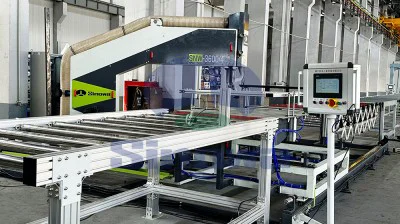
Once the sandwich panel assembly is fully cured, it proceeds to the cutting stage, where it is trimmed to the required length and width. Automatic tracking cross-cutting saws are commonly used for this purpose, equipped with sensors that track the movement of the continuous panel and adjust the cutting position accordingly. These saws are capable of making precise, clean cuts without damaging the panel edges or compromising the core material. In addition to cross-cutting, some production lines include edge trimming machines to remove any excess material from the sides of the panels, ensuring uniform width and a neat finish. The cutting parameters, such as cutting speed and blade position, are controlled by the central control system, which is synchronized with the rest of the production line to maintain consistency in panel dimensions. After cutting, the finished panels are transferred to a conveying and stacking system, which sorts and stacks the panels automatically, preparing them for packaging and transportation.
The versatility of sandwich panel production machinery is one of its most notable features, allowing for the production of panels with a wide range of material combinations and dimensions. Modern production lines can be configured to handle various facer materials, including different types of metals, composite materials, or even non-metallic sheets, depending on the application requirements. Similarly, the core material can be easily switched between PU, phenolic foam, rock wool, glass wool, or polystyrene by adjusting the parameters of the foaming or lamination systems. This adaptability is particularly valuable for manufacturers who need to produce multiple types of panels to meet different customer needs, such as panels with high fire resistance for public buildings or panels with enhanced thermal insulation for cold storage facilities. Additionally, modular design has become a key trend in the development of sandwich panel production machinery, allowing components to be integrated and combined arbitrarily. This modularity not only facilitates easy maintenance and replacement of parts but also enables manufacturers to expand or modify their production lines according to changes in production scale or product specifications.
Automation and intelligent control systems have become integral to modern sandwich panel production machinery, significantly improving production efficiency and operational convenience. The central control system, often equipped with a human-machine interface (HMI), integrates all production stages, allowing operators to monitor and adjust key parameters such as production speed, temperature, pressure, and cutting dimensions in real-time. Advanced systems utilize bus control technology to achieve coordinated control of the entire production line, ensuring seamless synchronization between different components. Fault self-diagnosis functions are also commonly incorporated, enabling the system to detect and alert operators to potential issues such as material jams, temperature deviations, or mechanical malfunctions. This proactive monitoring not only minimizes production downtime but also helps prevent the production of defective products. In some high-end production lines, remote monitoring and control capabilities are available, allowing technical personnel to access the system from a distance, perform maintenance checks, and adjust parameters as needed, further enhancing the flexibility and reliability of the production process.
Energy efficiency and environmental friendliness have become increasingly important considerations in the design and operation of sandwich panel production machinery. As global awareness of environmental protection grows, manufacturers are focusing on reducing energy consumption and minimizing environmental impact. Many modern production lines are equipped with energy-saving motors and heating systems that optimize energy use without compromising production performance. For example, the heating systems in laminating conveyors may use thermal insulation materials to reduce heat loss, or adopt variable frequency drives to adjust energy input according to production demand. Additionally, the use of low-VOC (volatile organic compound) adhesives and foam materials, combined with efficient exhaust treatment systems, helps reduce air pollution during the production process. Waste reduction is another key focus, with machinery designed to minimize material waste through precise cutting and material utilization. Some systems even incorporate recycling mechanisms for excess core material or offcuts, further enhancing the environmental sustainability of the production process.
The application of sandwich panel production machinery extends across a wide range of industries, each with specific requirements that drive the customization of the machinery. In the cold storage and refrigeration industry, for example, the production machinery must be capable of manufacturing panels with exceptional thermal insulation properties, often using PU or phenolic foam cores with high density and low thermal conductivity. The machinery may also need to ensure tight bonding between the facers and the core to prevent air leakage, which could compromise the insulation performance. In the construction of industrial warehouses and factories, the focus is on producing panels with high structural strength and durability, requiring machinery that can handle thicker facer sheets and denser core materials. For modular housing and portable cabins, the machinery must be adaptable to producing panels of various sizes and shapes, often with integrated features such as pre-installed fixtures or wiring channels. The transportation industry also utilizes sandwich panels for vehicle bodies and trailers, requiring production machinery that can produce lightweight yet strong panels to improve fuel efficiency.
Looking ahead, the development of sandwich panel production machinery is poised to be driven by several key trends. The ongoing advancement of automation technology will lead to even higher levels of production integration, with the potential for fully autonomous production lines that require minimal human intervention. Artificial intelligence (AI) and machine learning algorithms may be integrated into the control systems to optimize production parameters in real-time based on material properties and environmental conditions, further improving product quality and efficiency. The trend towards customization will continue, with machinery becoming more flexible to accommodate a wider range of material combinations and panel designs, including curved panels and panels with complex profiles. Additionally, the integration of digital twin technology may become more prevalent, allowing manufacturers to create virtual models of the production line to simulate and optimize the production process before physical implementation, reducing development time and costs.
Another important trend is the development of machinery capable of handling new and advanced materials. As research into sustainable and high-performance materials continues, new core materials with enhanced properties—such as improved fire resistance, better thermal insulation, or increased durability—are likely to emerge. The production machinery will need to adapt to these new materials, requiring modifications to the foaming, lamination, and curing processes. For example, the production of panels using bio-based foam cores may require adjustments to the mixing and curing parameters to ensure optimal bonding and performance. Additionally, the integration of smart materials, such as panels with built-in sensors for temperature or structural health monitoring, will drive the development of production machinery capable of incorporating these components during the manufacturing process.
In conclusion, sandwich panel production machinery plays a vital role in the modern construction and manufacturing industries, enabling the efficient and high-quality production of versatile sandwich panels. From the precise feeding and alignment of raw materials to the final cutting and stacking of finished products, each component and stage of the production line is designed to ensure consistency, efficiency, and adaptability. As the demand for energy-efficient, sustainable, and customized construction solutions grows, the technology of sandwich panel production machinery will continue to evolve, incorporating advanced automation, energy-saving features, and flexible design. These advancements will not only improve the performance and reliability of the machinery but also expand the application scope of sandwich panels, contributing to the development of more sustainable and efficient industries worldwide. Whether in large-scale industrial production or small-batch custom manufacturing, sandwich panel production machinery will remain a cornerstone of the global construction and manufacturing landscape, driving innovation and progress in material science and production technology.
« Sandwich Panel Production Machinery » Update Date: 2026/1/16
URL: https://www.sinowamachine.com/tags/sandwich-panel-production-machinery.html
![Sandwich Panel Production Machinery and Equipment]()
Sandwich Panel Production Machinery and Equipment
2026-09-03Sandwich panel production machinery represents a sophisticated integrated production system tailored for automated manufacturing of composite building panels, combining multiple functional modules to realize continuous and streamlined production workflows. The complete equipment set mainly covers raw…![Sandwich Panel Production Machinery Manufacturer]()
Sandwich Panel Production Machinery Manufacturer
2026-09-01Sandwich panel production machinery serves as the core backbone of the modern lightweight building material industry, specializing in the automated manufacturing of composite sandwich panels that integrate metal surface layers and porous core materials. This professional production equipment system i…![Sandwich Panel Production Machinery On Sales]()
Sandwich Panel Production Machinery On Sales
2026-08-31Sandwich panel production machinery has emerged as a core industrial equipment in the modern lightweight construction industry, serving as the fundamental support for manufacturing high-performance composite building panels. This integrated production system is designed to complete continuous and aut…![Sandwich Panel Production Machinery Supplier]()
Sandwich Panel Production Machinery Supplier
2026-08-26Sandwich panel production machinery serves as the core industrial equipment for manufacturing high-performance composite building panels, which are widely applied in modern construction, industrial workshops, cold storage facilities, and prefabricated building projects. This integrated production sys…![High-tech Sandwich Panel Production Machinery]()
High-tech Sandwich Panel Production Machinery
2026-08-18High-tech sandwich panel production machinery stands as a cornerstone of modern lightweight composite material manufacturing, driving the iterative upgrading of the construction, cold chain, and clean energy industries with its intelligent, efficient, and integrated production capabilities. Unlike tr…
- Links:
- Sandwich Panel Continuous Production Line
- Automatic and Continuous Sandwich Panel Production Line
- Cheap and Low Price Sandwich Panel Production Line
- China Sandwich Panel Production Line Factory
- Color Steel Sandwich Panel Production Line For Cold Storage
- Continuous Composite Foam Sandwich Panel Production Line
- Continuous Production Line For Rockwool and Mineral Wool Sandwich Panels
- Continuous PU Phenolic Insulation Panel Production Line
- Continuous PU PIR Sandwich Panel Production Line
- Continuous PUF PUR Sandwich Panel Production Line
- Continuous Sandwich Panel Production Line For Roof and Wall
- Customized and Design Sandwich Panel Production Line
- Decorative Sandwich Panel Production Line For Glass Wool Boards
- High Quality Sandwich Panel Production Line For Sale
- Polyurethane(PU) Sandwich Panel Production Line
- Sandwich Panel Production Line Manufacturer and Supplier
- Sandwich Panel Production Machinery and Equipment