
High Efficiency Phenolic Insulated Panel Production Line
Sinowa is a well-known manufacturer and technical service provider of high-end phenolic insulated panel production line, learn more about high efficiency phenolic insulated panel production line, please contact Sinowa's technical engineer, tell us what you need, we will contact you as soon as possible!
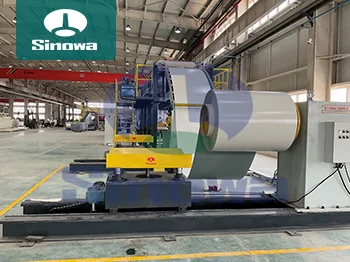
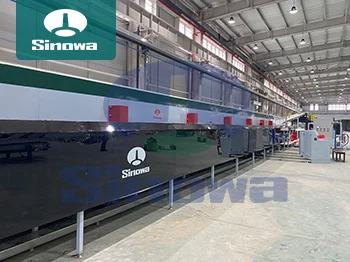
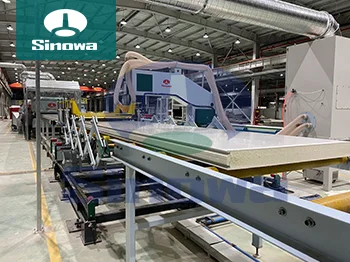
Sinowa is committed to the development and manufacturing of high-end and high-efficiency phenolic insulated panel production line. Our phenolic insulated panel production line are leading the way in efficiency, automatic control, human-computer interaction, environmental protection and energy consumption. Using system integration and bus control technology, it realizes the automatic integrated linkage control of the entire phenolic insulated panel production line, and can achieve remote interactive communication, which has the world-class level and a comprehensive leading high-performance phenolic insulated panel production line in the market.
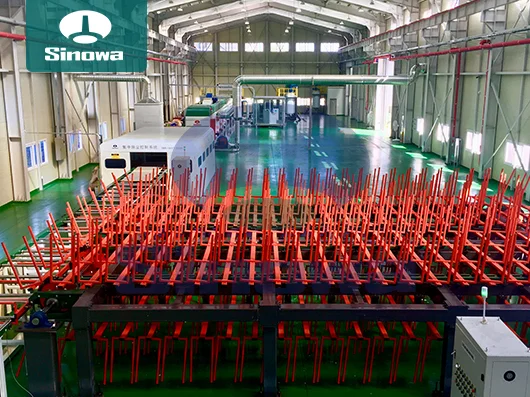
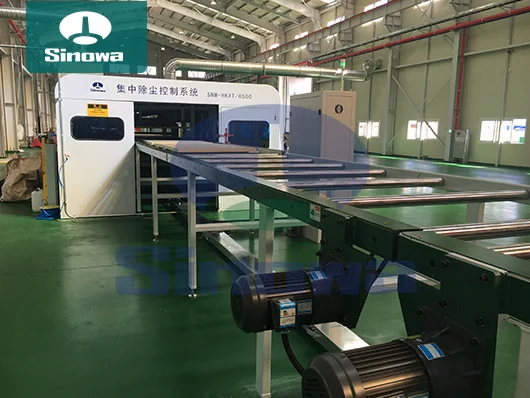
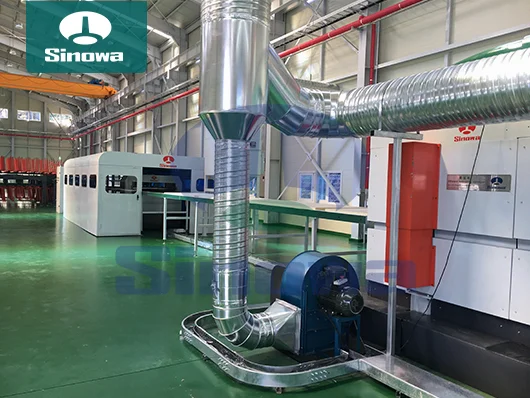
For more than ten years, relying on our innovative manufacturing concept and excellence in quality, reliable and trustworthy service to customers, we cooperate with customers all over the world, exported products to Canada, South Korea, Israel, Australia, the Middle East and other more than 20 countries and regions. contributed to building energy conservation and low-carbon production and have won widespread praise.
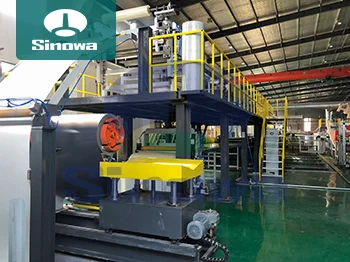
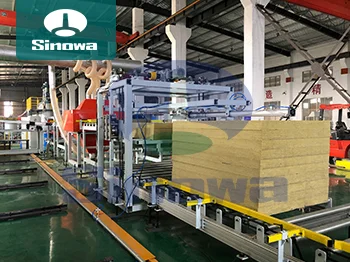
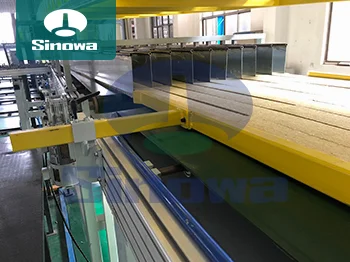
Sinowa has invested outstanding efforts in phenolic insulated panel production line, this is why our products are more efficiency, quality, automatic control technology, environmental protection, energy consumption indicators and the appearance and safety protection are comprehensively leading, some subversive design changes in many major technical points, these major innovations make our products excellent in price/performance and user experience.
The high efficiency phenolic insulated panel production line is an advanced integrated manufacturing system tailored for the mass production of high-performance thermal and fire insulation building panels, standing out for its automated operation, stable processing performance and superior product forming quality. This streamlined production system integrates raw material metering, dynamic mixing, continuous foaming, composite laminating, constant-temperature curing, precision cutting and finished product sorting into one seamless workflow, completely overcoming the drawbacks of traditional intermittent production modes such as low output, inconsistent product quality and high manual intervention. Optimized structural design and intelligent control technology enable the line to maintain long-term stable operation, effectively improving the compactness and uniformity of phenolic foam core layers while ensuring tight bonding between core materials and various surface substrates. Widely adaptable to multiple application scenarios including building envelope insulation, ventilation duct thermal preservation and clean space insulation, the production line balances production efficiency and product performance, becoming a core equipment choice for modern insulation material manufacturing and greatly promoting the upgrading of phenolic insulation panel industrial production technology.
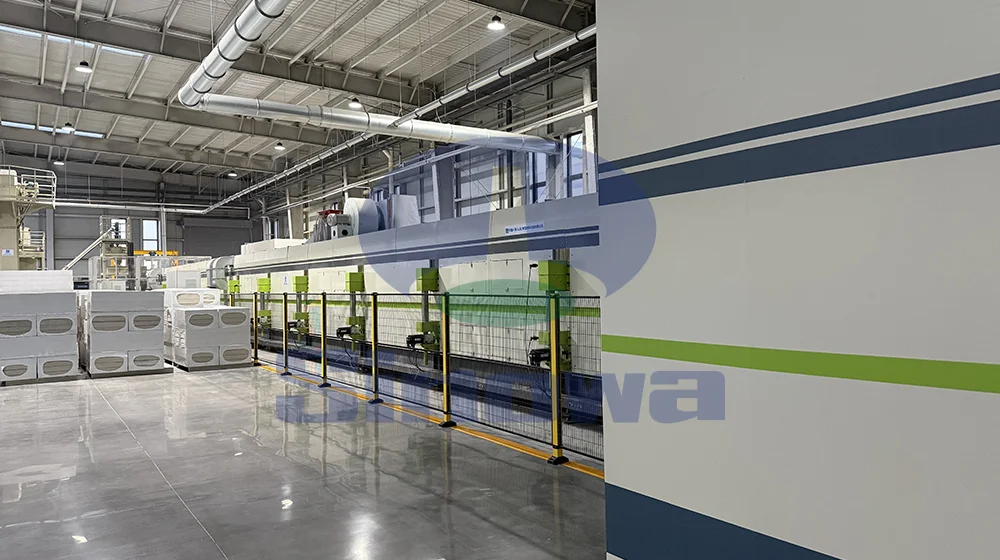
The core competitiveness of the high efficiency phenolic insulated panel production line first lies in its precise and intelligent raw material metering and feeding system, which lays a solid foundation for consistent product performance in batch production. Different from ordinary insulation panel production equipment, phenolic foam forming requires extremely accurate proportioning of raw materials including phenolic resin, curing agents, foaming agents and functional additives, as subtle proportion deviations will directly affect foam pore structure, curing degree and overall insulation performance. This production line adopts fully automated closed metering units with independent servo control for each raw material component, realizing real-time quantitative feeding and dynamic proportion adjustment throughout the production process. The system eliminates manual metering errors and material waste caused by traditional manual batching, maintaining highly uniform raw material ratios in every production cycle. Meanwhile, the sealed feeding structure effectively prevents raw material volatilization and external impurity contamination, protecting the chemical stability of phenolic raw materials. The continuous circulating feeding mode matches the subsequent continuous foaming and forming process perfectly, avoiding production pause caused by intermittent feeding, significantly improving overall production continuity and laying a reliable foundation for standardized and high-quality panel production.
Dynamic mixing and uniform foaming technology constitutes the key functional module that determines the internal quality of phenolic insulated panels, and the high efficiency production line achieves revolutionary optimization in mixing uniformity and foaming stability. Phenolic resin features unique thermosetting cross-linking chemical characteristics, requiring instantaneous and sufficient mixing of various components to avoid local uneven reaction, incomplete curing or irregular pore formation. The production line is equipped with high-speed dynamic mixing heads with optimized flow channel structures, which can stir and blend liquid raw materials and functional additives evenly in an extremely short time, realizing microscopic homogeneous mixing of all components. Different from static mixing equipment that is prone to material precipitation and layered mixing, the dynamic mixing system supports real-time material circulation and stirring, ensuring no component precipitation or segregation during long-term continuous production. After mixing, the homogeneous colloid is evenly injected into the gap between upper and lower substrates through quantitative distributing ports. With precise temperature and pressure control in the foaming area, the foaming agent stably vaporizes and decomposes to form fine, closed and uniform foam pore structures. This standardized foaming process effectively avoids common defects such as large pore gaps, hollow layers and uneven core layer density in traditional products, greatly enhancing the thermal insulation and structural stability of finished panels.
The continuous composite laminating system is a key link to realize integral forming of phenolic insulated panels, and the high efficiency production line adopts an optimized double-belt conveying and laminating structure to ensure overall panel flatness and structural firmness. Surface substrates such as color steel plates, aluminum foils and non-woven fabrics are automatically conveyed, preheated and leveled through the front-end substrate processing unit, removing surface moisture and tiny impurities to enhance bonding adhesion with the phenolic foam core layer. The double-belt laminating device operates at a constant stable speed with uniform pressure distribution across the entire working surface, enabling synchronous composite pressing of the continuously foamed phenolic core layer and double-sided substrates. The equipment undergoes strict stress relief treatment on the transmission and pressing components, maintaining stable pressing precision under long-term high-load and constant-temperature working conditions. This continuous composite molding mode eliminates splicing gaps and structural cracks caused by segmented production, forming an integrated seamless panel structure. The synchronous speed matching of conveying and pressing links avoids material stretching, wrinkling and offset problems, ensuring consistent thickness, flatness and bonding firmness of each batch of panels, and effectively improving the overall mechanical strength and service durability of finished products.
The segmented constant-temperature curing and cooling system of the production line precisely controls the molding process of phenolic panels, realizing stable shaping and performance solidification of products. As a typical thermosetting material, phenolic foam requires staged temperature control to complete molecular cross-linking and curing; excessive temperature will cause local carbonization and brittle core layers, while insufficient temperature leads to incomplete curing and poor structural stability. The high efficiency production line divides the curing area into multiple independent temperature control sections, with each section equipped with independent temperature sensing and heating adjustment modules to realize gradient temperature rise and constant-temperature maintenance. This staged curing mode enables the phenolic foam to complete uniform molecular reaction from inside to outside, fully optimizing the internal cross-linking structure and enhancing the compactness and toughness of the core layer. After curing and forming, the panels enter the intelligent cooling area for gradual constant-temperature cooling, avoiding product deformation and internal stress concentration caused by rapid temperature difference changes. The whole curing and cooling process operates automatically according to preset production parameters, without manual parameter adjustment, ensuring consistent curing degree and dimensional stability of each panel, and effectively reducing product deformation rate and defective rate in batch production.
The high-precision fixed-length cutting and post-processing system endows the production line with flexible production capacity and excellent product dimensional accuracy, meeting diverse customized production demands. After completing curing and cooling molding, the continuous long-size integral panels are conveyed to the cutting unit, which adopts intelligent tracking and fixed-length cutting technology. The system can freely set cutting specifications according to different application requirements, realizing accurate cutting of panels of various lengths and widths. Equipped with high-speed alloy cutting tools and stable positioning fixtures, the cutting unit ensures smooth and flat panel sections without burrs, cracks or edge warping, avoiding secondary trimming processing. Meanwhile, the equipment supports automatic edge trimming and fine polishing of panels, optimizing the overall appearance and assembly precision of finished products. The post-processing link also includes automatic surface inspection and sorting functions, with intelligent sensing devices detecting surface flatness, dimensional deviation and bonding defects of panels in real time. Qualified products are automatically conveyed to the stacking area, while defective products are intelligently screened and isolated. This integrated post-processing mode simplifies production procedures, reduces manual detection errors, greatly improves product qualification rate and production efficiency, and supports large-scale standardized delivery.
The intelligent centralized control system runs through the entire production process of the line, realizing full-process automation, real-time monitoring and efficient operation management. The production line adopts PLC core control and human-machine touch screen interactive mode, integrating parameter setting, process monitoring, fault diagnosis and data statistics into one operating system. Operators can complete one-click setting of production parameters such as raw material proportion, operating speed, curing temperature and cutting specifications through the touch screen, and the system automatically matches the optimal production process scheme according to product types. The real-time data monitoring module tracks the operating status of each equipment unit, material consumption and product processing quality indicators throughout the process, realizing visual production management. When minor parameter deviations or equipment abnormal conditions occur, the system automatically triggers early warning and fine adjustment to ensure uninterrupted stable production. In addition, the system supports production data storage and query, facilitating production process optimization and production efficiency analysis. The highly intelligent control mode reduces manual operation links, lowers labor intensity and human error rate, realizes unmanned continuous production for long hours, and comprehensively improves the intelligent and standardized level of phenolic insulated panel production.
In terms of production efficiency, energy conservation and environmental protection, the high efficiency phenolic insulated panel production line has obvious comprehensive advantages compared with traditional production equipment. The full continuous automated production mode greatly shortens the single-panel production cycle, effectively improves unit time output, and realizes large-scale and intensive production. The optimized mechanical structure and transmission design reduce equipment operation resistance and invalid energy consumption, while the segmented temperature control system avoids long-term high-power operation of heating equipment, significantly reducing overall production energy consumption. In terms of environmental protection, the fully closed production structure effectively captures and recycles trace volatile substances in the production process, avoiding raw material waste and environmental pollution. The precise metering and intelligent processing system minimizes defective product output, reduces material waste rate, and realizes green and low-consumption production. With stable operating performance, low maintenance cost and strong production adaptability, the production line can meet the mass production demands of different types of phenolic insulated panels, provide high-quality and high-efficiency equipment support for the insulation material manufacturing industry, and drive the sustainable development of the phenolic insulation panel industry.
« High Efficiency Phenolic Insulated Panel Production Line » Update Date: 2026/8/28
- Low Price External Wall Insulation Panel Production Line
- Phenolic Foam Production Line Manufacturer
- Insulation Panel Production Line
- Phenolic Duct Panel Production Line On Sales
- Cheap Phenolic Insulation Board Production Line
- Phenolic Insulation Panel Production Line Design
- Phenolic Foam Manufacturing Machinery Supplier
- High Efficiency Phenolic Insulation Board Production Line
- High-tech Phenolic Cotton Cloth Board Production Line
- Highly Intelligent Phenolic Air Duct Panel Line
- Customized Phenolic Foam Production Line
- Sandwich Duct Panel Machine Price
- External Wall Insulation Panel Production Line Price
- Phenolic Insulation Panel Production Line Manufacturer
- Low Price Phenolic Insulation Board Production Line
- Cheap Phenolic Insulation Panel Production Line
- High-end External Wall Insulation Panel Production Line
- Phenolic Insulation Panel Production Line For Sale
- Sandwich Duct Panel Machine Supplier
- Phenolic Insulation Panel Production Line Supplier
- Links:
- Sandwich Panel Continuous Production Line
- Automatic and Continuous Sandwich Panel Production Line
- Cheap and Low Price Sandwich Panel Production Line
- China Sandwich Panel Production Line Factory
- Color Steel Sandwich Panel Production Line For Cold Storage
- Continuous Composite Foam Sandwich Panel Production Line
- Continuous Production Line For Rockwool and Mineral Wool Sandwich Panels
- Continuous PU Phenolic Insulation Panel Production Line
- Continuous PU PIR Sandwich Panel Production Line
- Continuous PUF PUR Sandwich Panel Production Line
- Continuous Sandwich Panel Production Line For Roof and Wall
- Customized and Design Sandwich Panel Production Line
- Decorative Sandwich Panel Production Line For Glass Wool Boards
- High Quality Sandwich Panel Production Line For Sale
- Polyurethane(PU) Sandwich Panel Production Line
- Sandwich Panel Production Line Manufacturer and Supplier
- Sandwich Panel Production Machinery and Equipment