
PU Edge Sealing Rock Wool Roof Panel Production Line
Sinowa is a pu edge sealing rock wool roof panel production line supplier from china, customized high-quality & high efficiency pu edge sealing rock wool roof panel production line at low price, the adoption of system integration technology and bus control technology accomplishes the full automatization of integrated and coordinated control of the pu edge sealing rock wool roof panel production line with accessible remote interactive communication. Ranking the first-class level in the world, it is currently the pu edge sealing rock wool roof panel production line in the market taking a comprehensive lead in high performance.
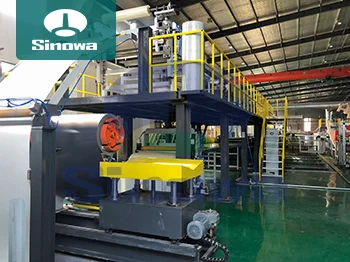
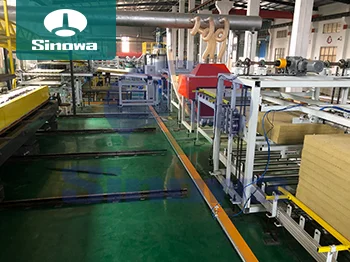
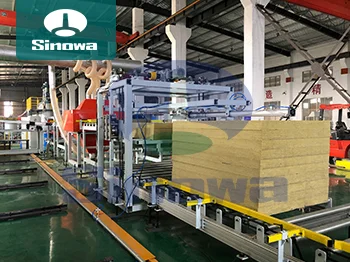
The high-tech pu edge sealing rock wool roof panel production line can meet a variety of production needs of customers, the whole pu edge sealing rock wool roof panel production line design concept of modularization enables all our components to be integrated and combined at will. Our high efficiency pu edge sealing rock wool roof panel production line can easily automate the production of roof sandwich panel, wall sandwich panel, cold storage sandwich panel and other products by different combination and configuration selection and siple switching. The inner core layer can be polyrethane or rock wool, glass wool, an so on. The precision servo hoisting mechanism employed by the main engine without hydraulic system makes the board thickness control flexible and the customer may conveniently change or adjust the board thickness. There will be not such troubles as hydraulic system adjustment, leakage, maintenance, etc.
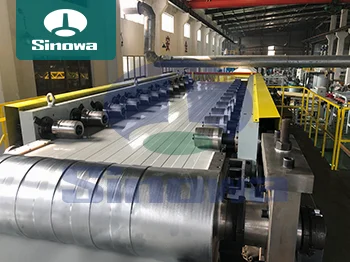
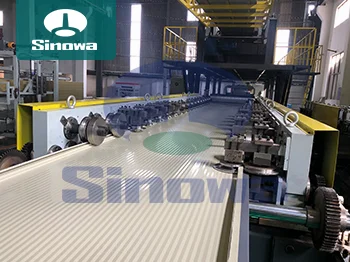
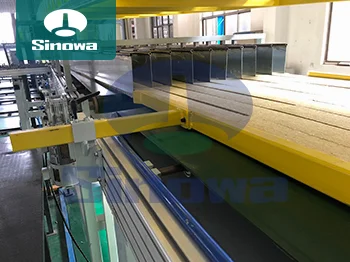
The high precision pu edge sealing rock wool roof panel production line has high adaptability, which may produce various sandwich panel of the PU, PIR and rock wool systems. We may design various products according to the customer’s requirements, including various configurations, so as to meet their demands with flexible price system. Highly integrated and linked control system centralizes all control points at the main central center, achieving parameter linkage, fault self-diagnosis controlled by the whole line and shipping distance control. High-level automatic control system also saves the manpower and reduces the manpower loss for customers. High-level energy saving and protection design makes the whole pu edge sealing rock wool roof panel production line possible to produce around the clock throughout the year and the customer will save huge budget. In addition, the isolated heat preservation room is constructed for warming the environment. The energy saving and protection design of our manufacturing line may guarantee that the customer’s production line may be freely heated and produce in the main time to save more costs for customers.
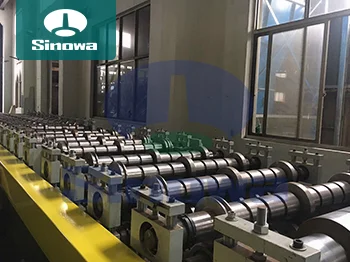
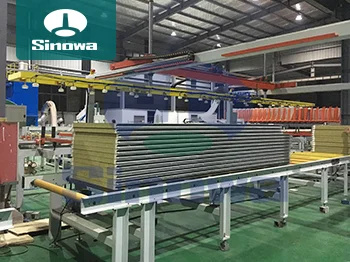
The high-power low-consumption design quickens the reaction of the cheap pu edge sealing rock wool roof panel production line while energy consumption is kept low. With the brand-new, fully sealed inner insulation design, the energy consumption is controlled at the minimum level to achieve the design objective of less than an hour for the insulation system to be activated from the room temperature above 5℃ to the production process temperature. The energy consumption is only 40% that of those similar products.
The PU edge sealing rock wool roof panel production line represents a sophisticated integration of advanced manufacturing technologies, designed to produce high-performance composite panels that combine the excellent fire resistance of rock wool with the superior sealing properties of polyurethane (PU). These composite panels have become indispensable in modern construction, particularly for roofing applications where thermal insulation, fire safety, and durability are paramount. The production line operates through a series of seamlessly connected processes, each meticulously engineered to ensure the final product meets the stringent requirements of various construction projects, from industrial warehouses and commercial shopping malls to public facilities such as airports and railway stations. Every stage of the production process, from raw material preparation to finished product packaging, is characterized by precision control and continuous optimization, reflecting the industry's pursuit of efficiency, quality, and sustainability.
Raw material preparation is the foundational stage of the production process, as the quality of raw materials directly determines the performance of the final PU edge sealing rock wool roof panels. The core materials required for production include high-quality basalt-based rock wool, galvanized or color-coated steel plates, and polyurethane raw materials (polyol and isocyanate). The rock wool, serving as the core insulation layer, is derived from high-quality basalt that undergoes high-temperature melting and fiberization. To ensure optimal thermal insulation and fire resistance, the rock wool used typically has a density of 120 kg/m³ or higher, with low slag ball content and uniform fiber distribution . This high-density rock wool not only provides excellent heat resistance but also exhibits superior sound absorption and moisture resistance properties. The steel plates, which form the upper and lower surfaces of the composite panel, are selected with a thickness ranging from 0.4 mm to 0.8 mm. These steel plates are usually galvanized or coated with high-performance coatings such as PVDF, SMP, or HDP to enhance corrosion resistance and UV protection, ensuring long-term durability in harsh environmental conditions . The polyurethane raw materials, used for edge sealing, must meet strict purity and reactivity standards to ensure the formation of a dense, uniform seal that effectively prevents moisture infiltration.
Before entering the main production line, the raw materials undergo preliminary processing to meet the specific requirements of the production process. The steel coils are first uncoiled using a decoiler, which ensures smooth and consistent feeding of the steel plates into subsequent processes. The uncoiled steel plates then pass through a leveling machine to eliminate any surface defects or deformations caused during transportation and storage, ensuring a flat and smooth surface for subsequent forming and bonding. Depending on the design requirements of the roof panel, the steel plates may also undergo a ribbing process, where uniform ribs are pressed into the surface to enhance the structural rigidity of the final panel. After ribbing, the steel plates are cut into predetermined widths using a precision shearing machine, ensuring accurate dimensions that match the production specifications. For the rock wool core, large rock wool blocks are cut into strips of specific widths and lengths using a horizontal and vertical cutting machine. A critical step in rock wool processing is the 90-degree flipping of the cut rock wool strips, which aligns the fiber direction perpendicular to the upper and lower steel plates . This fiber orientation maximizes the thermal insulation and load-bearing capacity of the composite panel, as the perpendicular fibers form a more effective barrier against heat transfer and provide enhanced structural support.
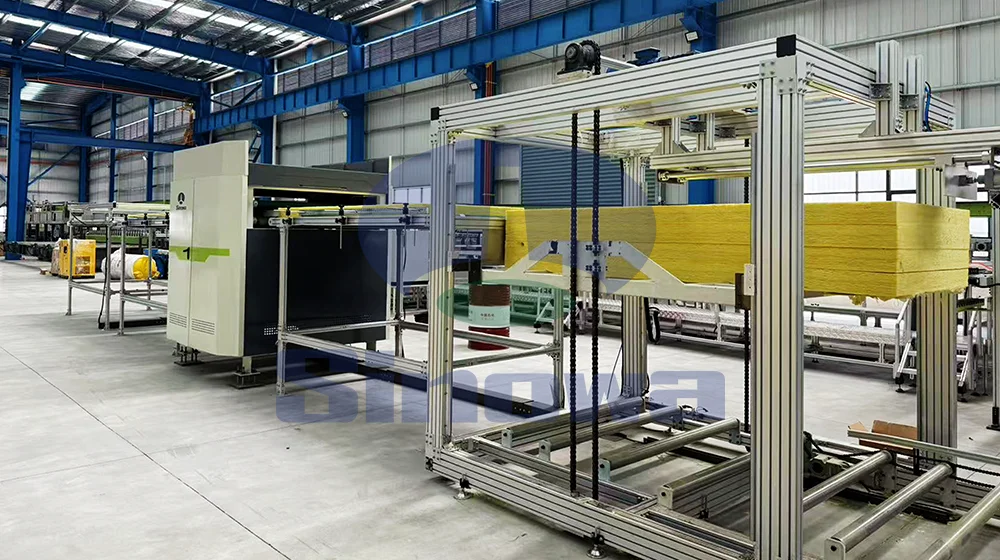
The forming and composite process is the core stage of the production line, where the steel plates and rock wool core are bonded together with PU edge sealing to form the final composite panel. First, the pre-cut and leveled steel plates (upper and lower) are fed into the main forming machine. The main forming machine uses cold roll forming technology to shape the steel plates into the desired profile, which may include flat surfaces, micro-ripples, or V-shaped ripples depending on the application requirements . The formed steel plates are then transported to the composite station, where the rock wool core is carefully placed between the upper and lower steel plates. To ensure uniform distribution and full filling, the rock wool strips are arranged in a staggered manner, with all vertical and horizontal surfaces of the core panel firmly filled . This staggered arrangement eliminates gaps between the rock wool strips, preventing heat loss and improving the overall insulation performance of the panel.
Immediately after the rock wool core is placed, the PU edge sealing process is initiated. High-pressure foaming machines are used to inject the polyurethane raw material into the edge gaps between the upper and lower steel plates and the rock wool core. The polyurethane raw material undergoes an instantaneous chemical reaction, expanding and curing to form a dense, rigid foam that completely seals the edges of the panel. The PU edge sealing serves multiple critical functions: it acts as a barrier against moisture, dust, and air infiltration, overcoming the inherent drawback of rock wool's tendency to absorb water and deliquesce ; it enhances the structural rigidity of the panel by bonding the steel plates and rock wool core into a single integrated unit; and it improves the thermal insulation performance by eliminating thermal bridges at the edges . The high-pressure foaming process is controlled with precision, ensuring that the PU foam fills the edge gaps uniformly without generating bubbles or voids. The temperature and pressure during the foaming process are strictly monitored, as variations in these parameters can affect the curing speed and quality of the PU seal.
After edge sealing, the composite panel enters the curing stage. The panel is transported to the curing oven, where it is subjected to controlled temperature and humidity conditions to facilitate the complete curing of the PU foam and the adhesive between the steel plates and rock wool core. The curing oven is equipped with a hot air circulation system that blows hot air evenly onto the panel, ensuring uniform curing throughout the entire panel thickness . The curing temperature typically ranges from 80°C to 120°C, and the curing time varies depending on the thickness of the panel and the type of adhesive used. During curing, the adhesive forms a strong bond between the steel plates and rock wool core, ensuring that the three components work together as a single unit. The strong bonding force between the high-density rock wool and the inner wall of the metal plates gives the composite panel excellent rigidity and load-bearing capacity . After complete curing, the panel exits the curing oven and enters the cooling stage, where it is cooled to room temperature using a cooling system. The cooling process is essential to stabilize the structure of the panel and prevent deformation due to thermal expansion and contraction.
The post-processing stage involves cutting, trimming, and quality inspection of the cured composite panels. First, the continuous composite panel is cut into predetermined lengths using an automatic tracking band saw . The automatic tracking system ensures that the cutting is precise and perpendicular to the panel edges, maintaining consistent dimensions across all finished products. After cutting, the panel edges are trimmed to remove any excess PU foam or uneven edges, ensuring a smooth and uniform appearance. The trimmed panels then undergo a rigorous quality inspection process. Quality inspectors check the panel dimensions (length, width, thickness) to ensure they meet the production specifications; examine the surface of the steel plates for scratches, dents, or coating defects; inspect the PU edge sealing for uniformity, completeness, and adhesion; and test the bonding strength between the steel plates and rock wool core. Panels that fail to meet the quality standards are rejected and sent for rework or recycling, ensuring that only high-quality products leave the production line.
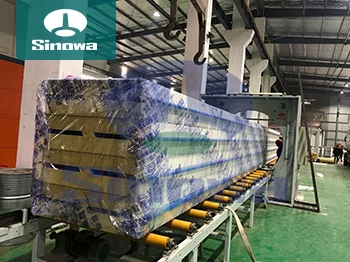
The final stage of the production process is packaging and storage. The qualified panels are transported to the automatic stacking machine, which stacks the panels neatly according to size and quantity. To protect the panels during transportation and storage, each stack is wrapped with waterproof PVC film and cardboard, which prevents moisture damage and surface scratches . The stacked and packaged panels are then moved to the warehouse for storage, where they are placed in a dry, well-ventilated area to avoid moisture accumulation. The warehouse is equipped with a proper inventory management system to track the quantity and specifications of the panels, ensuring efficient retrieval and delivery when orders are received.
The PU edge sealing rock wool roof panel production line is equipped with a range of advanced components and control systems that ensure efficient and high-quality production. Key components of the production line include decoilers, leveling machines, ribbing machines, main forming machines, high-pressure foaming machines, curing ovens, cooling systems, automatic cutting machines, and automatic stacking machines . These components are integrated into a continuous production line, minimizing manual intervention and maximizing production efficiency. The production line is also equipped with a centralized control system that monitors and controls every stage of the production process. The control system uses sensors to collect real-time data on temperature, pressure, speed, and dimensions, which is then analyzed by a computer to make automatic adjustments to the production parameters. This automated control ensures consistent product quality, reduces human error, and improves production efficiency.
The PU edge sealing rock wool roof panels produced by this line exhibit a range of outstanding performance characteristics that make them ideal for various roofing applications. In terms of fire safety, the rock wool core is a non-combustible material with a melting point higher than 1000°C, which can withstand high temperatures without releasing harmful fumes . This gives the panel a Class A fire resistance rating, making it suitable for buildings with strict fire protection requirements, such as industrial facilities, warehouses, and public buildings . The thermal insulation performance of the panels is excellent, with a thermal conductivity of ≤ 0.025 W/m·K . The combination of the high-density rock wool core and PU edge sealing effectively reduces heat transfer, helping to maintain a stable internal temperature and lower energy consumption for heating and cooling. This energy efficiency makes the panels an environmentally friendly choice, contributing to reduced carbon emissions in the construction industry.
Sound insulation is another significant advantage of these composite panels. The dense structure of the rock wool core effectively absorbs sound waves, reducing noise transmission between spaces . This makes the panels ideal for use in noisy environments, such as near airports, highways, or industrial areas, as well as in buildings where acoustic comfort is important, such as offices, conference rooms, and residential buildings. The sound insulation capacity of the panels can reach ≥ 30 dB, effectively reducing the interference of external noise . Additionally, the panels exhibit excellent durability and weather resistance. The galvanized or coated steel plates provide strong corrosion resistance, while the PU edge sealing protects the rock wool core from moisture and environmental damage . The panels are resistant to UV rays, harsh weather conditions, and chemical corrosion, ensuring a long service life with minimal maintenance requirements.
The versatility of the PU edge sealing rock wool roof panel production line allows for the production of panels with a wide range of specifications to meet the diverse needs of different construction projects. The effective width of the panels is typically 1 meter, and the length can be customized according to requirements . The thickness of the panels ranges from 50 mm to 150 mm, with the rock wool core thickness adjustable based on the desired thermal insulation performance . The production line can also produce panels with different surface textures, including flat, embossed, or corrugated, to suit various architectural designs and functional requirements. This versatility makes the production line suitable for a wide range of applications, from industrial roofing and exterior walls to interior partitions and cold storage facilities.
In terms of production efficiency, the continuous operation of the production line enables high-volume production with consistent quality. The automated processes reduce the need for manual labor, minimizing production time and labor costs. The production line is designed to optimize material usage, reducing waste and improving material efficiency . For example, the precision cutting of steel plates and rock wool core ensures that raw materials are used efficiently, with minimal scrap. The integration of advanced technologies, such as automatic tracking cutting and centralized control systems, further enhances production efficiency by reducing downtime and improving process stability.
The application of PU edge sealing rock wool roof panels produced by this line has a significant positive impact on the construction industry. By providing high-performance, energy-efficient, and fire-safe roofing solutions, these panels contribute to the development of sustainable and resilient buildings. The excellent thermal insulation properties of the panels help reduce building energy consumption, aligning with global efforts to mitigate climate change. The fire resistance and sound insulation capabilities improve the safety and comfort of buildings, enhancing the quality of life for occupants. Additionally, the lightweight construction of the panels simplifies installation, reducing construction time and labor costs . The panels can be installed horizontally or vertically using concealed fasteners, which not only improves the aesthetic appearance of the building but also enhances the watertightness and airtightness of the roof .
Looking to the future, the PU edge sealing rock wool roof panel production line is expected to undergo further technological advancements to meet the evolving needs of the construction industry. There will be a greater focus on improving energy efficiency in the production process, reducing carbon emissions, and using more environmentally friendly raw materials. The integration of artificial intelligence and big data analytics into the production control system will enable more precise process monitoring and optimization, further improving product quality and production efficiency. Additionally, the development of new composite materials and edge sealing technologies may enhance the performance of the panels, expanding their application range to more demanding environments, such as high-altitude areas, coastal regions with high salt spray, and extreme temperature conditions.
In conclusion, the PU edge sealing rock wool roof panel production line is a sophisticated and efficient manufacturing system that plays a crucial role in the construction industry. Through a series of well-coordinated processes, from raw material preparation to finished product packaging, the production line produces high-performance composite panels that combine excellent fire resistance, thermal insulation, sound absorption, and durability. The continuous advancement of production technologies ensures that these panels meet the increasingly stringent requirements of modern construction projects, contributing to the development of sustainable, safe, and comfortable buildings. As the construction industry continues to prioritize energy efficiency and environmental sustainability, the importance of the PU edge sealing rock wool roof panel production line will only continue to grow, driving further innovation and progress in the field of composite panel manufacturing.
« PU Edge Sealing Rock Wool Roof Panel Production Line » Update Date: 2026/1/12
URL: https://www.sinowamachine.com/tags/pu-edge-sealing-rock-wool-roof-panel-production-line.html