
Continuous Sandwich Panel Production Line
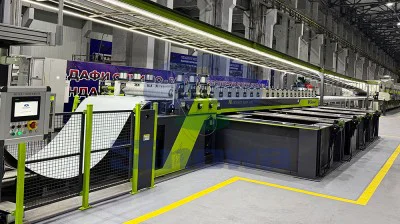
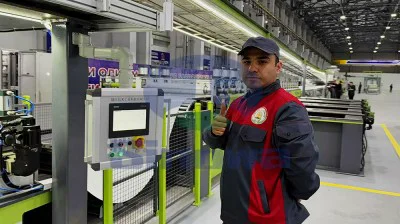
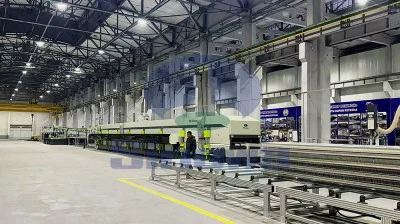
Sinowa is a continuous sandwich panel production line supplier from china, customized high-quality & high efficiency continuous sandwich panel production line at low price, the adoption of system integration technology and bus control technology accomplishes the full automatization of integrated and coordinated control of the continuous sandwich panel production line with accessible remote interactive communication. Ranking the first-class level in the world, it is currently the continuous sandwich panel production line in the market taking a comprehensive lead in high performance.
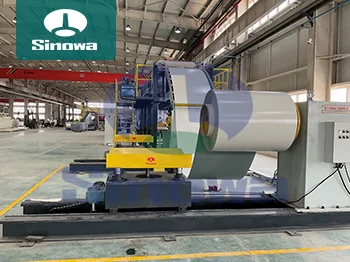
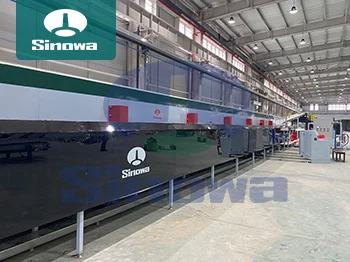
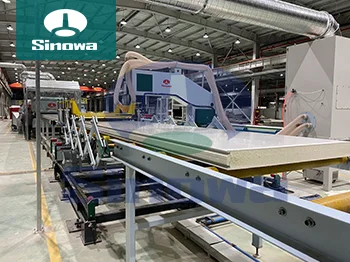
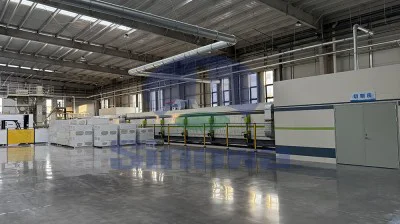
The high-tech continuous sandwich panel production line can meet a variety of production needs of customers, the whole continuous sandwich panel production line design concept of modularization enables all our components to be integrated and combined at will. Our high efficiency continuous sandwich panel production line can easily automate the production of roof sandwich panel, wall sandwich panel, cold storage sandwich panel and other products by different combination and configuration selection and siple switching. The inner core layer can be polyrethane or rock wool, glass wool, an so on.


The high precision continuous sandwich panel production line has high adaptability, which may produce various sandwich panel of the PU, PIR and rock wool systems. We may design various products according to the customer’s requirements, including various configurations, so as to meet their demands with flexible price system. Highly integrated and linked control system centralizes all control points at the main central center, achieving parameter linkage, fault self-diagnosis controlled by the whole line and shipping distance control. High-level automatic control system also saves the manpower and reduces the manpower loss for customers.


The precision servo hoisting mechanism employed by the main engine without hydraulic system makes the board thickness control flexible and the customer may conveniently change or adjust the board thickness. There will be not such troubles as hydraulic system adjustment, leakage, maintenance, etc.


High-level energy saving and protection design makes the whole continuous sandwich panel production line possible to produce around the clock throughout the year and the customer will save huge budget. In addition, the isolated heat preservation room is constructed for warming the environment. The energy saving and protection design of our manufacturing line may guarantee that the customer’s production line may be freely heated and produce in the main time to save more costs for customers.


The high-power low-consumption design quickens the reaction of the cheap continuous sandwich panel production line while energy consumption is kept low. With the brand-new, fully sealed inner insulation design, the energy consumption is controlled at the minimum level to achieve the design objective of less than an hour for the insulation system to be activated from the room temperature above 5℃ to the production process temperature. The energy consumption is only 40% that of those similar products.
A continuous sandwich panel production line is a highly automated industrial system designed for the mass production of high-quality composite sandwich panels, which are widely used in modern construction and related fields. This integrated production system realizes seamless operation from raw material feeding to finished product stacking, minimizing manual intervention and maximizing production efficiency. The production process starts with the uncoiling of surface materials, which are smoothly fed into the line through professional feeding equipment, followed by surface cleaning and pretreatment to ensure better adhesion with the core material. Next, the surface materials are formed into the desired shape through a series of rolling processes, and then sent to the foaming zone where core materials such as polyurethane or rock wool are precisely injected between the upper and lower surface layers. Under controlled temperature and pressure conditions, the core material undergoes foaming and curing to form a firm and uniform sandwich structure. After curing, the continuous panel is cut into set lengths by a high-precision cutting system, and the finished products are automatically stacked and prepared for subsequent processing. This production line features high flexibility, allowing for quick adjustment of parameters to produce panels of different thicknesses and specifications to meet diverse application needs. It also boasts stable product quality, with precise control over dimensions and material properties, making the produced sandwich panels lightweight, high-strength, and excellent in thermal insulation and sound insulation, suitable for industrial plants, cold storage, commercial buildings and other scenarios.
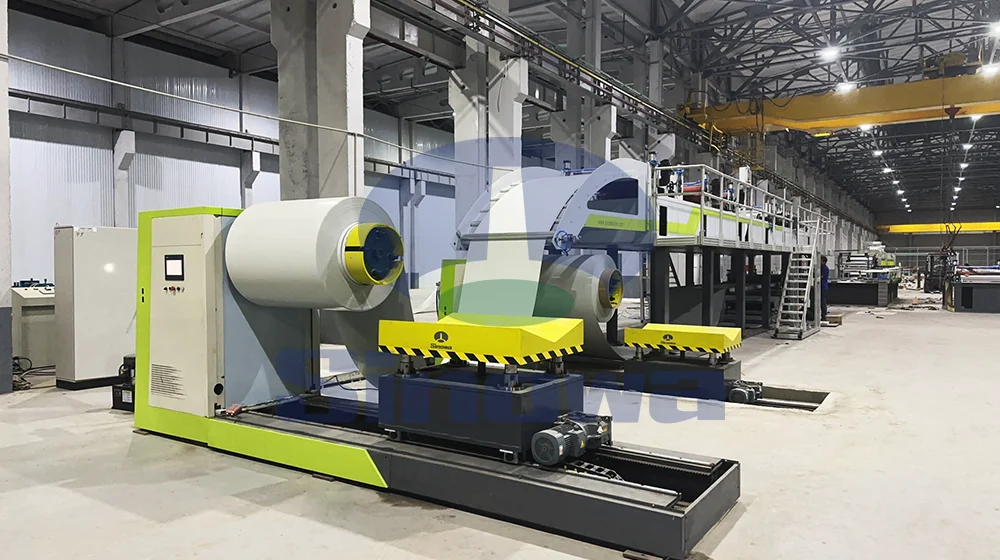
The continuous sandwich panel production line is a highly automated and integrated industrial system designed for the mass production of sandwich panels, which are composite materials consisting of two surface layers and a core layer bonded together. This production line has become an indispensable part of modern manufacturing, especially in the construction, industrial, and logistics sectors, due to its ability to produce high-quality, consistent, and efficient panels that meet diverse application needs. Unlike traditional intermittent production methods, the continuous production mode ensures seamless operation from raw material feeding to finished product stacking, minimizing manual intervention and maximizing production efficiency while maintaining stable product quality. To fully understand the value and functionality of this production line, it is essential to explore its structural composition, key performance characteristics, different types, and wide-ranging applications, as each aspect is closely interconnected and contributes to its overall effectiveness in various industries.
The structure of a continuous sandwich panel production line is a sophisticated combination of multiple functional modules that work in synchronization to complete the entire production process. Each module is designed to perform a specific task, and their coordinated operation ensures the smooth and efficient production of sandwich panels. The core structural components typically include the feeding system, surface material forming unit, core material processing system, composite bonding unit, curing system, cutting system, and stacking and handling system. The feeding system is the starting point of the production line, responsible for supplying surface materials and core materials continuously and stably. Surface materials, which are usually metal coils such as galvanized steel, galvalume, or aluminum, are fed into the line through uncoiling machines equipped with tension control systems to prevent deformation during the uncoiling process. These uncoiling machines often have dual stations, allowing for the connection of two coils without stopping the production line, thus ensuring uninterrupted operation. The feeding system also includes devices for pre-treating surface materials, such as cleaning and chemical treatment equipment, which removes dust, oil, and other impurities to enhance the bonding strength between the surface layers and the core material.
Following the feeding system is the surface material forming unit, which shapes the flat surface material coils into the desired profile. This unit consists of multiple sets of rolling rolls that gradually deform the flat metal sheets into specific waveforms or flat shapes through a series of rolling processes. The forming process is precise and adjustable, allowing for the production of panels with different surface patterns and thicknesses to meet various application requirements. Some advanced forming units are equipped with gradient forming technology and fast mold changing systems, enabling quick switching between different panel types and reducing downtime. After forming, the surface materials move to the composite bonding unit, where they are combined with the core material. The core material processing system, which varies according to the type of core material used, prepares the core material for bonding. For example, in the case of polyurethane (PU) or polyisocyanurate (PIR) core materials, the system includes a high-pressure foaming machine that mixes polyol and isocyanate in precise proportions and injects the mixture between the two surface layers. For mineral wool or glass wool core materials, the system includes equipment for laying and cutting the core material to the required thickness and width, ensuring uniform distribution between the surface layers.
The composite bonding unit is a critical part of the production line, as it ensures the strong and stable bonding between the surface layers and the core material. This unit typically uses a double belt conveyor system, which applies uniform pressure and temperature to the composite structure as it moves through the line. The double belt conveyor consists of two parallel belts that clamp the sandwich structure, maintaining consistent pressure throughout the bonding process to ensure that the core material is fully bonded to the surface layers without gaps or delamination. The temperature in the bonding zone is carefully controlled to facilitate the curing of the adhesive or the foaming of the core material, depending on the type of core used. After bonding, the composite panel enters the curing system, where it undergoes a controlled temperature and time process to achieve the required strength and stability. The curing system may include heating chambers or cooling zones, depending on the core material—for example, PU core materials require a heating process to accelerate foaming and curing, while mineral wool core materials may require cooling to prevent deformation.
Once the panel is fully cured, it moves to the cutting system, which trims the panel to the desired length and width. The cutting system is equipped with high-precision cutting tools, such as flying saws or laser cutters, which can make precise cuts without damaging the panel structure. The cutting process is automated and synchronized with the production speed, ensuring that each panel meets the specified dimensions with minimal waste. After cutting, the finished panels are transported to the stacking and handling system, which automatically stacks the panels in an orderly manner and prepares them for packaging or storage. This system includes conveyors, lifting devices, and stacking robots that handle the panels gently to avoid surface damage, ensuring that the finished products are in good condition when they leave the production line. Additionally, modern continuous sandwich panel production lines often include an intelligent control system that integrates all modules, allowing for real-time monitoring and adjustment of production parameters, fault self-diagnosis, and remote control, further enhancing the efficiency and reliability of the production process.
The performance of a continuous sandwich panel production line is determined by a combination of factors, including production efficiency, product quality stability, flexibility, energy efficiency, and environmental friendliness. These performance characteristics are crucial for meeting the demands of modern manufacturing and ensuring the competitiveness of the production line. Production efficiency is one of the most prominent advantages of continuous production lines, as they operate without interruption, significantly increasing the output compared to traditional intermittent lines. The production speed can vary depending on the type of core material and panel specifications, but modern lines can achieve speeds of up to 30 meters per minute, with an annual production capacity of hundreds of thousands of square meters. This high efficiency is particularly beneficial for large-scale projects that require a large number of sandwich panels in a short period.
Product quality stability is another key performance characteristic of continuous sandwich panel production lines. The automated and precise control of each production stage ensures that the panels produced have consistent thickness, density, bonding strength, and surface quality. Advanced lines are equipped with online testing devices, such as thickness detectors, density monitoring systems, and surface quality inspectors, which continuously monitor the product during production and make real-time adjustments to ensure compliance with quality standards. This consistency eliminates the variations in quality that are common with manual or intermittent production methods, ensuring that each panel meets the required performance specifications. For example, the bonding strength between the surface layers and the core material is carefully controlled, preventing delamination and ensuring the structural integrity of the panel in various applications.
Flexibility is another important performance feature, allowing the production line to adapt to different product specifications and market demands. Modern continuous production lines adopt a modular design, which means that different modules can be added or removed, and production parameters can be adjusted quickly to produce panels of different thicknesses, widths, surface patterns, and core materials. For example, a single production line can be configured to produce PU, PIR, mineral wool, or glass wool sandwich panels by changing the core material processing module and adjusting the bonding and curing parameters. This flexibility reduces the need for multiple production lines, saving space and investment costs for manufacturers. Additionally, fast mold changing systems allow for quick switching between different panel types, minimizing downtime and increasing production efficiency.
Energy efficiency and environmental friendliness are increasingly important performance considerations in modern manufacturing, and continuous sandwich panel production lines are designed to meet these requirements. Advanced lines adopt energy-saving technologies, such as heat recovery systems, which reuse the heat generated during the curing process to reduce energy consumption. The use of high-efficiency motors and closed-loop control systems also helps to minimize energy waste. Furthermore, modern lines are designed to reduce environmental pollution by using eco-friendly materials and processes. For example, the foaming systems for PU and PIR core materials use low-VOC (volatile organic compound) raw materials, and the production process is enclosed to prevent the release of harmful substances into the environment. Waste materials generated during production, such as excess core material or trimmed edges, are often recycled, further reducing environmental impact.
The types of continuous sandwich panel production lines are mainly classified based on the type of core material they process, as the core material determines the production process, equipment configuration, and end-use applications of the panels. The most common types include production lines for polyurethane (PU) sandwich panels, polyisocyanurate (PIR) sandwich panels, mineral wool sandwich panels, glass wool sandwich panels, and expanded polystyrene (EPS) sandwich panels. Each type has unique characteristics and is designed to produce panels with specific performance properties.
PU sandwich panel production lines are designed to produce panels with a polyurethane core, which is known for its excellent thermal insulation, lightweight, and high strength. The production process for PU panels involves the continuous mixing and foaming of polyol and isocyanate, which are injected between the two surface layers and cured under controlled temperature and pressure. PU sandwich panels have a closed-cell structure with a high closed-cell rate, which gives them superior thermal insulation performance, making them ideal for applications that require energy efficiency, such as cold storage, insulation rooms, and residential and commercial buildings. PU production lines are equipped with high-pressure foaming machines with precise metering systems to ensure the uniform mixing of raw materials and consistent foam density.
PIR sandwich panel production lines are similar to PU lines but process polyisocyanurate core materials, which have better fire resistance and thermal stability than PU. PIR is a thermosetting material that does not melt or drip when exposed to fire, making it suitable for applications that require high fire safety standards, such as industrial plants, public buildings, and high-rise structures. The production process for PIR panels is similar to that of PU panels, but the foaming and curing parameters are adjusted to ensure the formation of a stable, fire-resistant core. PIR production lines often include additional cooling systems to ensure the complete curing of the core material and prevent deformation.
Mineral wool sandwich panel production lines process mineral wool (such as rock wool) as the core material, which is known for its excellent fire resistance, sound insulation, and thermal insulation properties. Mineral wool is a non-combustible material that can withstand high temperatures, making it ideal for applications in industrial plants, warehouses, and buildings that require fire protection. The production process for mineral wool panels involves laying the mineral wool core between the two surface layers, applying adhesive, and bonding them together under pressure. Mineral wool production lines are equipped with specialized equipment for cutting and laying the mineral wool to ensure uniform thickness and distribution. Some advanced lines also include edge sealing systems to prevent moisture absorption and enhance the durability of the panels.
Glass wool sandwich panel production lines are designed for glass wool core materials, which are lighter than mineral wool and have good sound absorption and thermal insulation properties. Glass wool panels are often used in residential buildings, commercial buildings, and industrial facilities where lightweight and sound insulation are important. The production process for glass wool panels is similar to that of mineral wool panels, with a focus on ensuring the uniform distribution of the glass wool core and strong bonding with the surface layers. Glass wool production lines are often more compact than mineral wool lines, making them suitable for manufacturers with limited space.
EPS sandwich panel production lines process expanded polystyrene (EPS) as the core material, which is lightweight, cost-effective, and has good thermal insulation properties. EPS panels are widely used in low-rise buildings, temporary structures, and storage facilities. The production process for EPS panels involves bonding pre-formed EPS boards between two surface layers using adhesive, followed by pressing and curing. EPS production lines are relatively simple compared to PU or PIR lines, making them a cost-effective option for small to medium-sized manufacturers.
In addition to these main types, there are also hybrid production lines that combine the features of different core material processing systems, allowing manufacturers to produce multiple types of sandwich panels on a single line. These hybrid lines are highly flexible and suitable for manufacturers that need to meet diverse market demands without investing in multiple separate lines. Modular production lines are another type, which consist of separate modules that can be combined or reconfigured to adapt to different production needs. These lines are particularly suitable for small companies or startups that want to enter the sandwich panel market with minimal initial investment.
The applications of continuous sandwich panel production lines are wide-ranging, covering various industries and sectors, driven by the versatile performance of the sandwich panels they produce. The primary application area is the construction industry, where sandwich panels are used for walls, roofs, floors, and partitions in both residential and commercial buildings. Sandwich panels produced by continuous lines are preferred in construction due to their lightweight, high strength, quick installation, and excellent thermal insulation properties. For example, PU and PIR sandwich panels are widely used in the exterior walls and roofs of commercial buildings, residential complexes, and cold storage facilities, as they help to reduce energy consumption for heating and cooling. Mineral wool sandwich panels are used in industrial plants, warehouses, and public buildings, where fire resistance is a critical requirement. In high-rise buildings, sandwich panels are used as partition walls and curtain walls, providing sound insulation and thermal comfort while reducing the overall weight of the building.
The industrial sector is another important application area for continuous sandwich panel production lines. Sandwich panels are used in the construction of industrial plants, workshops, and storage facilities, where they provide a durable and cost-effective solution for building envelopes. The panels’ resistance to corrosion, moisture, and high temperatures makes them suitable for use in harsh industrial environments, such as chemical plants, power plants, and manufacturing facilities. Additionally, sandwich panels are used in the construction of clean rooms, which require strict control of dust, temperature, and humidity. In these applications, the panels are often made with specialized surface materials and core materials to meet the clean room standards, such as stainless steel surface layers and glass wool or PU cores with low dust emission.
The logistics and cold chain industry is a growing application area for continuous sandwich panel production lines. Sandwich panels with excellent thermal insulation properties, such as PU and PIR panels, are used in the construction of cold storage warehouses, refrigerated trucks, and shipping containers. These panels help to maintain a stable low temperature inside the storage or transportation unit, ensuring the quality and freshness of perishable goods, such as food, pharmaceuticals, and chemicals. The lightweight nature of the panels also helps to reduce the fuel consumption of refrigerated trucks and shipping containers, making them more energy-efficient.
Other application areas include the agricultural sector, where sandwich panels are used in the construction of greenhouses, livestock barns, and storage facilities. The panels’ thermal insulation properties help to maintain a stable internal environment for plants and animals, improving productivity. In the transportation sector, sandwich panels are used in the construction of train carriages, ship cabins, and aircraft interiors, due to their lightweight and high strength. Additionally, sandwich panels are used in the construction of temporary structures, such as mobile homes, construction site offices, and disaster relief shelters, as they can be quickly installed and disassembled.
As technology continues to advance, the continuous sandwich panel production line is expected to become more intelligent, efficient, and environmentally friendly. The integration of artificial intelligence and Internet of Things (IoT) technologies will enable real-time monitoring and optimization of the production process, further improving product quality and production efficiency. The development of new eco-friendly core materials and production processes will also expand the application range of sandwich panels and reduce the environmental impact of production. In conclusion, the continuous sandwich panel production line is a vital piece of equipment in modern manufacturing, with a sophisticated structure, excellent performance, diverse types, and wide-ranging applications. Its ability to produce high-quality, consistent, and efficient sandwich panels makes it an indispensable tool for meeting the growing demands of various industries, and its continued development will play a key role in shaping the future of construction and manufacturing.
« Continuous Sandwich Panel Production Line » Update Date: 2026/4/16
URL: https://www.sinowamachine.com/tags/continuous-sandwich-panel-production-line.html
![Continuous Sandwich Panel Production Line For Roof and Wall]()
Continuous Sandwich Panel Production Line For Roof and Wall
2026-08-29The continuous sandwich panel production line dedicated to roof and wall panels has become a pivotal automated manufacturing solution for the modern construction industry, catering to the surging demand for efficient, energy-saving and durable building enclosure materials. This integrated production …![Automatic and Continuous Sandwich Panel Production Line]()
Automatic and Continuous Sandwich Panel Production Line
2026-08-28The automatic and continuous sandwich panel production line is a highly integrated industrial manufacturing system designed for uninterrupted composite panel processing. It integrates precision mechanical transmission, intelligent material control, constant temperature regulation and automatic positi…![High Efficiency Continuous Sandwich Panel Production Line]()
High Efficiency Continuous Sandwich Panel Production Line
2026-05-08In the rapidly evolving modern construction and industrial manufacturing sectors, the demand for lightweight, thermally insulated, and structurally stable building panels has maintained a steady upward trend. Sandwich panels, as versatile composite building materials, are widely applied in industrial…![Continuous Sandwich Panel Production Line For Cold Room]()
Continuous Sandwich Panel Production Line For Cold Room
2026-05-08The rapid expansion of cold chain logistics, food preservation industries, and low-temperature storage infrastructure has steadily increased the global demand for high-performance thermal insulation building materials. Among various insulation products, sandwich panels dedicated to cold room construc…![High-quality Continuous Sandwich Panel Production Line]()
High-quality Continuous Sandwich Panel Production Line
2026-01-09In the evolving landscape of modern manufacturing, the high-quality continuous sandwich panel production line stands as a cornerstone of efficiency, consistency, and performance, catering to the growing demands of industries ranging from construction and logistics to cold chain and industrial infrast…
- Links:
- Sandwich Panel Continuous Production Line
- Automatic and Continuous Sandwich Panel Production Line
- Cheap and Low Price Sandwich Panel Production Line
- China Sandwich Panel Production Line Factory
- Color Steel Sandwich Panel Production Line For Cold Storage
- Continuous Composite Foam Sandwich Panel Production Line
- Continuous Production Line For Rockwool and Mineral Wool Sandwich Panels
- Continuous PU Phenolic Insulation Panel Production Line
- Continuous PU PIR Sandwich Panel Production Line
- Continuous PUF PUR Sandwich Panel Production Line
- Continuous Sandwich Panel Production Line For Roof and Wall
- Customized and Design Sandwich Panel Production Line
- Decorative Sandwich Panel Production Line For Glass Wool Boards
- High Quality Sandwich Panel Production Line For Sale
- Polyurethane(PU) Sandwich Panel Production Line
- Sandwich Panel Production Line Manufacturer and Supplier
- Sandwich Panel Production Machinery and Equipment