
PU Sandwich Panel Machine
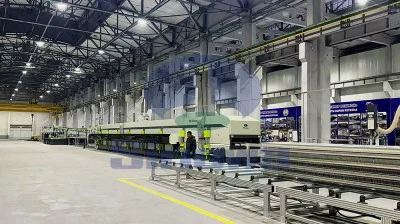
Sinowa is a pu sandwich panel machine supplier from china, customized high-quality & high efficiency pu sandwich panel machine at low price, the adoption of system integration technology and bus control technology accomplishes the full automatization of integrated and coordinated control of the pu sandwich panel machine with accessible remote interactive communication. Ranking the first-class level in the world, it is currently the pu sandwich panel machine in the market taking a comprehensive lead in high performance.
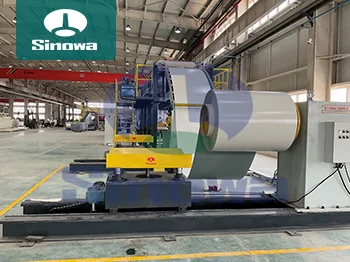
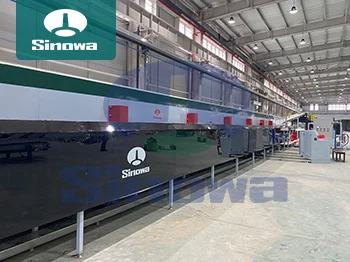
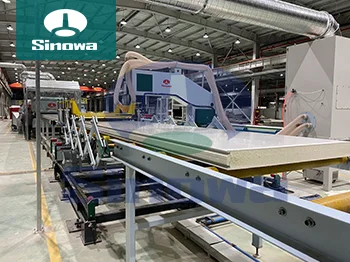
The high-tech pu sandwich panel machine can meet a variety of production needs of customers, the whole pu sandwich panel machine design concept of modularization enables all our components to be integrated and combined at will. Our high efficiency pu sandwich panel machine can easily automate the production of roof sandwich panel, wall sandwich panel, cold storage sandwich panel and other products by different combination and configuration selection and siple switching. The inner core layer can be polyrethane or rock wool, glass wool, an so on.


The high precision pu sandwich panel machine has high adaptability, which may produce various sandwich panel of the PU, PIR and rock wool systems. We may design various products according to the customer’s requirements, including various configurations, so as to meet their demands with flexible price system. Highly integrated and linked control system centralizes all control points at the main central center, achieving parameter linkage, fault self-diagnosis controlled by the whole line and shipping distance control. High-level automatic control system also saves the manpower and reduces the manpower loss for customers.


The precision servo hoisting mechanism employed by the main engine without hydraulic system makes the board thickness control flexible and the customer may conveniently change or adjust the board thickness. There will be not such troubles as hydraulic system adjustment, leakage, maintenance, etc.


High-level energy saving and protection design makes the whole pu sandwich panel machine possible to produce around the clock throughout the year and the customer will save huge budget. In addition, the isolated heat preservation room is constructed for warming the environment. The energy saving and protection design of our manufacturing line may guarantee that the customer’s production line may be freely heated and produce in the main time to save more costs for customers.


The high-power low-consumption design quickens the reaction of the cheap pu sandwich panel machine while energy consumption is kept low. With the brand-new, fully sealed inner insulation design, the energy consumption is controlled at the minimum level to achieve the design objective of less than an hour for the insulation system to be activated from the room temperature above 5℃ to the production process temperature. The energy consumption is only 40% that of those similar products.
In the modern construction and manufacturing industries, the demand for efficient and high-performance building materials has promoted the continuous development of production equipment, among which the pu sandwich panel machine plays an indispensable role. This specialized equipment is designed to realize the continuous and automated production of pu sandwich panels, which are composed of two outer facing materials and a polyurethane foam core, combining the strength of the facing materials with the thermal insulation, soundproofing and lightweight properties of the pu core. Unlike traditional manual or semi-automatic production methods, the pu sandwich panel machine integrates multiple processes such as raw material feeding, foam mixing, lamination, pressing and cutting, forming a seamless production workflow that greatly improves production efficiency. It ensures consistent product quality by reducing human errors, with precise control over panel dimensions and foam density, making the produced panels suitable for a wide range of applications including industrial workshops, warehouses, cold storage facilities and residential buildings. The machine is also highly versatile, capable of adjusting production parameters to produce panels of different sizes and thicknesses to meet diverse project needs. Its automated operation not only reduces labor intensity but also optimizes raw material utilization, contributing to more economical and environmentally friendly production. With its reliable performance and efficient workflow, it has become a key equipment in the production of high-quality pu sandwich panels, supporting the development of the modern construction industry.
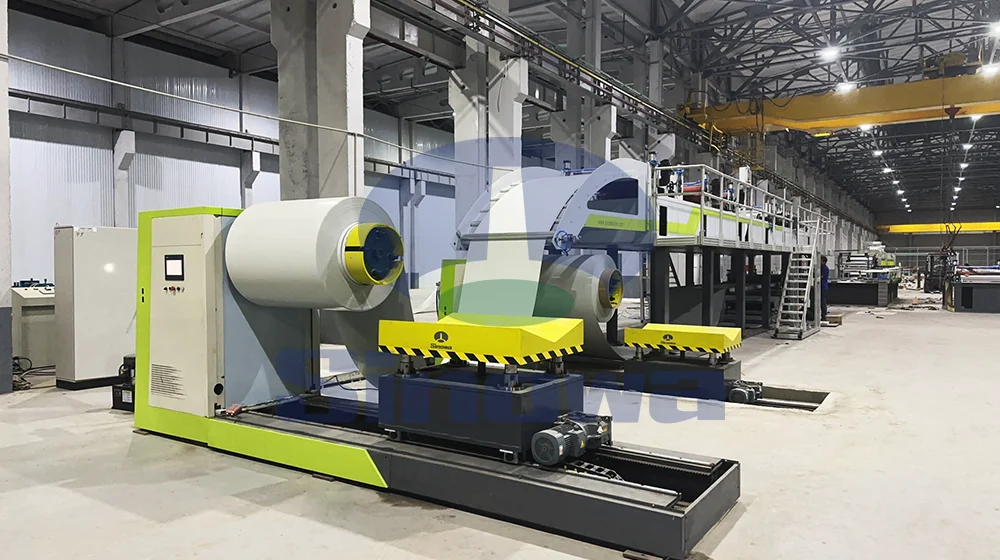
Polyurethane (PU) sandwich panel machines are advanced integrated production systems designed to manufacture high-performance composite panels, which consist of two outer facing layers and a polyurethane foam core sandwiched between them. These machines play a crucial role in modern construction, industrial manufacturing, and cold chain logistics, as they enable the mass production of panels with excellent thermal insulation, structural strength, and versatility. Understanding the structure, performance, types, and applications of these machines is essential for manufacturers, industry professionals, and anyone involved in the production and use of PU sandwich panels.
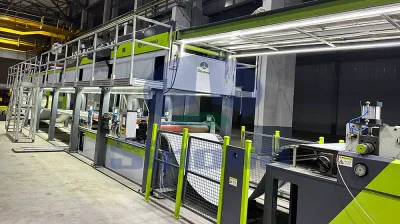
The structure of a PU sandwich panel machine is a complex assembly of functional units that work in harmony to complete the entire production process from raw material feeding to finished product output. Each component is designed to perform a specific task, ensuring the efficiency, precision, and consistency of the production line. The basic structure typically includes an uncoiling system, leveling and shaping device, preheating system, high-pressure foaming system, composite pressing mechanism, cooling and solidification unit, precision cutting equipment, and automatic conveying and stacking system. These components are connected through a precise transmission mechanism and controlled by a unified electrical control system, forming a seamless production workflow.
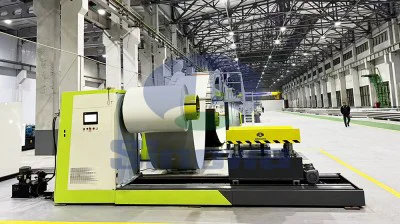
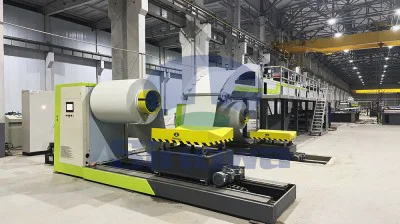
The uncoiling system is the starting point of the production line, responsible for feeding the coiled facing materials into the machine. Common facing materials include color steel plates, galvanized steel plates, aluminum alloy plates, and other metal sheets, which provide structural rigidity and protection to the final panel. The uncoiling system usually consists of double coil unwinding machines with automatic correction devices, ensuring that the facing materials are fed smoothly and evenly without wrinkles or deviations. Some advanced uncoiling systems are equipped with a 2+2 configuration, which allows for continuous feeding without stopping to load new coils, significantly improving production efficiency. The automatic correction device ensures that the deviation of the facing materials is controlled within ±0.5 mm, laying a solid foundation for the subsequent lamination process.
After uncoiling, the facing materials enter the leveling and shaping device, which flattens the materials and shapes them into the desired profiles. This device uses a series of rolling stands arranged in tandem, which gradually press and bend the metal sheets into specific shapes suitable for different applications, such as wall panels, roof panels, or cold storage panels. The shaping process is precise and adjustable, allowing manufacturers to produce panels with various profile designs by changing the rolling stands. The leveling function ensures that the surface of the facing materials is flat and smooth, which is crucial for the bonding between the facing layers and the PU foam core.
The preheating system is an essential component that prepares the facing materials and PU raw materials for the foaming and lamination process. The facing materials are preheated to an optimal temperature to enhance the adhesion between the metal sheets and the PU foam, ensuring a strong and durable bond. The preheating system often adopts a hot air circulation furnace, which strictly controls the temperature within a suitable range to avoid overheating or underheating. Some advanced systems use a multi-section independent temperature control module, which can adjust the temperature according to different climatic conditions and production requirements, improving the adaptability of the machine. Additionally, the PU raw materials, including polyol, isocyanate, foaming agent, and catalyst, are stored in constant temperature storage tanks and preheated to ensure the stability of the foaming reaction.
The high-pressure foaming system is the core of the PU sandwich panel machine, responsible for mixing and injecting the PU foam into the gap between the two facing layers. This system consists of a high-precision metering pump, dynamic mixing head, and raw material storage tanks. The metering pump accurately measures the PU raw materials in a specific ratio, usually 1.05:1, with a tolerance of ±0.3%, ensuring the consistency of the foam quality. The dynamic mixing head mixes the raw materials under high pressure, initiating the foaming reaction, and then evenly sprays the foaming mixture between the two facing layers. The foaming agent used in modern machines is environmentally friendly, such as 141b or cyclopentane, replacing traditional CFCs, which reduces environmental impact and meets global environmental protection standards. The high-pressure foaming system also features precise measurement and high stability, producing little dust during operation, which protects the health of workers.
Once the foaming mixture is injected, the composite pressing mechanism applies uniform pressure to the sandwich structure to ensure that the PU foam is evenly distributed between the facing layers and that the bonding is firm. The pressing mechanism is usually composed of a double belt conveyor or multiple pairs of pressing rollers. The double belt conveyor, with a special design, ensures that the surface of the panel is flat, the thickness is even, and the panel is resistant to deformation. The pressure applied by the pressing mechanism is adjustable, allowing manufacturers to produce panels of different thicknesses, ranging from 20 mm to 200 mm. Some advanced pressing systems adopt a continuous double track press, which achieves a pressure uniformity of over 95%, further improving the quality of the finished panels.
After pressing, the sandwich panel enters the cooling and solidification unit, where the PU foam is cooled and solidified into a solid core. The cooling system typically uses a maturation channel with a length of 50 to 80 meters, where the panel is conveyed at a constant speed to ensure sufficient cooling time. The cooling process is crucial for the performance of the PU foam, as it determines the density, thermal conductivity, and mechanical strength of the core. The temperature of the cooling unit is precisely controlled to avoid rapid cooling, which could cause cracks or uneven solidification. Once the foam is fully solidified, the panel moves to the precision cutting equipment, which cuts the continuous panel into the desired length using a CNC cutting system. The cutting precision is high, ensuring that the length deviation is within a reasonable range, and the cutting surface is smooth and flat. Some machines are also equipped with a trimming and edge sealing device to improve the appearance and performance of the panel edges.
The final component of the PU sandwich panel machine is the automatic conveying and stacking system, which transports the finished panels to the stacking area and stacks them neatly. This system reduces manual intervention, improves production efficiency, and prevents damage to the finished panels. The conveying system uses a chain plate conveyor made of high-strength weather-resistant steel, with bushings between the pins and chain plates to avoid wear and tear. The chain plate has a sloped edge on both sides, which prevents damage to the bearings and pins, extending the service life of the conveyor. The stacking system is usually equipped with an automatic stacker manipulator, which stacks the panels according to preset specifications, making it convenient for storage and transportation.
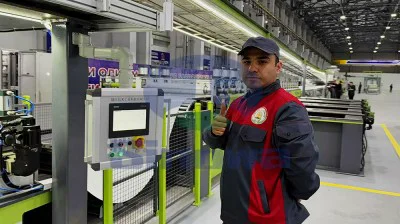
In addition to the core components, the PU sandwich panel machine also includes an electrical control system, which is responsible for controlling the entire production process. The control system typically uses a combination of a human-machine interface (HMI) and a programmable logic controller (PLC), allowing operators to set and adjust production parameters, monitor the operation status of the machine, and troubleshoot any issues. The user-friendly design of the control system makes it easy to operate, even for inexperienced operators. Some advanced control systems integrate AI-powered quality control systems that perform real-time inspections of the panels, detecting surface defects, thickness deviations, and other quality issues, ensuring that only high-quality panels are produced.
The performance of a PU sandwich panel machine is determined by its operational efficiency, production precision, energy consumption, environmental friendliness, and flexibility. These performance indicators are crucial for manufacturers, as they directly affect the production cost, product quality, and market competitiveness. Operational efficiency is one of the most important performance indicators, measured by the production speed and output. Modern PU sandwich panel machines can achieve production speeds of 8 to 15 meters per minute, with a high output capacity that meets the needs of large-scale production. The continuous production line, in particular, enables uninterrupted production, reducing downtime and improving overall efficiency. The 2+2 uncoiling system and automatic stacking system further enhance efficiency by minimizing manual intervention and reducing production time.
Production precision is another key performance indicator, which ensures that the finished panels meet the required specifications. The precision of the machine is reflected in the thickness uniformity, length accuracy, and surface flatness of the panels. The high-pressure foaming system with precise metering pumps ensures that the PU foam core has a uniform density, ranging from 15 to 45 kg/m³, which directly affects the thermal insulation and mechanical strength of the panel. The automatic correction device in the uncoiling system and the precise cutting equipment ensure that the panel dimensions are accurate, with a thickness deviation of less than ±0.5 mm and a length deviation within a few millimeters. The double belt conveyor and pressing system ensure that the panel surface is flat and free of defects, improving the overall quality of the product.
Energy consumption is an important consideration for manufacturers, as it affects the production cost and environmental impact. Modern PU sandwich panel machines are designed to be energy-efficient, adopting various energy-saving technologies to reduce energy consumption. For example, the heating system heats only the chain plate surface instead of the entire machine, which saves energy and improves efficiency while protecting the rolling bearings from damage. The hydraulic system is equipped with an energy regeneration unit, which recycles energy and reduces energy waste. The thermal energy recovery device in the preheating system can reduce energy consumption by more than 30%, further lowering the production cost. Additionally, the use of environmentally friendly foaming agents and closed-loop chemical systems reduces energy consumption and environmental pollution.
Environmental friendliness is becoming increasingly important in modern manufacturing, and PU sandwich panel machines are designed to meet strict environmental standards. The use of third-generation environmentally friendly foaming agents with a GWP (Global Warming Potential) value below 1 reduces the impact on the ozone layer and global warming. The closed cell rate of the PU foam produced by these machines is as high as 98%, which not only improves thermal insulation performance but also reduces VOC (Volatile Organic Compound) emissions by 60% compared to traditional processes. The closed-loop chemical system achieves 97% material utilization, reducing waste and environmental pollution. Additionally, the machines produce little dust during operation, protecting the health of workers and the surrounding environment.
Flexibility is another important performance indicator, as it allows manufacturers to produce panels of different sizes, thicknesses, and configurations to meet diverse customer needs. Modern PU sandwich panel machines are highly flexible, with adjustable production parameters that can be changed quickly. For example, the machine can switch from producing 50 mm-thick panels for residential insulation to 150 mm-thick panels for cold storage in a matter of minutes. The modular design of the machine allows for easy customization, supporting various material combinations, including different facing materials and core materials such as PU, PIR (Polyisocyanurate), and mineral wool. This flexibility makes the machine suitable for a wide range of applications, from small-scale residential projects to large industrial complexes.
PU sandwich panel machines can be classified into different types based on their production mode, structure, and application requirements. The most common classification is based on the production mode, which includes continuous PU sandwich panel production lines and discontinuous (batch) PU sandwich panel production lines. These two types have distinct characteristics and are suitable for different production scales and application scenarios.
Continuous PU sandwich panel production lines are designed for uninterrupted, high-efficiency production, making them ideal for large-scale manufacturing needs. These lines operate in a fully automated and streamlined manner, integrating all production processes into a continuous workflow. The production speed of continuous lines is high, typically 8 to 15 meters per minute, and they can produce panels of consistent quality in large quantities. Continuous lines require a higher initial investment but offer exceptional long-term performance and cost-efficiency, especially for manufacturers targeting mass production with minimal downtime. They are widely used in industries such as construction, cold storage, and industrial insulation, where large volumes of panels are required. Advanced continuous lines integrate AI-powered quality control systems, self-calibrating roller alignment systems, and real-time density monitoring, ensuring high precision and consistency.
Discontinuous PU sandwich panel production lines, also known as batch production lines, work in a batch-based process, where each panel is produced individually. These lines offer greater flexibility and lower upfront costs, making them suitable for small to medium-scale operations. They allow easy customization for different panel thicknesses, lengths, or core materials, making them ideal for producing specialized panels or low-volume production runs that cannot be handled by continuous lines. Discontinuous lines are often used by small manufacturers or businesses that need to produce a variety of panel types to meet specific customer requirements. Common types of discontinuous lines include the 2+2 and 3+3 configurations, which are designed to improve production efficiency while maintaining flexibility. The 2+2 configuration saves time for panel preparation and discharge, increasing production efficiency, while the 3+3 configuration is designed to produce high-quality panels with enhanced insulation properties.
Another classification of PU sandwich panel machines is based on the type of core material they produce. While most machines are designed to produce PU sandwich panels, some can also produce panels with other core materials, such as PIR, EPS (Expanded Polystyrene), and rock wool. These machines are often referred to as multi-purpose sandwich panel machines, as they can switch between different core materials with minimal adjustments. For example, a machine designed for PU and PIR panels can switch between the two core materials in 8 minutes, making it versatile and cost-effective. Machines that produce rock wool sandwich panels have additional components, such as a rock wool feeding system, to handle the rock wool core material.
PU sandwich panel machines can also be classified based on the level of automation, ranging from manual and semi-automatic to fully automatic. Manual machines require significant human intervention, with operators responsible for feeding materials, adjusting parameters, and handling finished products. These machines are suitable for small-scale production or workshops with limited budget. Semi-automatic machines integrate some automated components, such as automatic uncoiling and cutting, reducing manual intervention but still requiring operators to monitor and adjust the production process. Fully automatic machines are the most advanced, with complete automation of all production processes, from raw material feeding to finished product stacking. These machines minimize human intervention, enhance production consistency, and optimize resource utilization, making them ideal for large-scale, high-volume production. Fully automatic machines are equipped with advanced control systems, automatic stacker manipulators, and waste recycling devices, further improving efficiency and reducing production costs.
The applications of PU sandwich panel machines are diverse, covering various industries and sectors, thanks to the excellent performance of the PU sandwich panels they produce. The panels are widely used in construction, cold chain logistics, industrial manufacturing, and special environmental applications, among others. Each application sector has specific requirements for the panels, and the PU sandwich panel machines are designed to meet these requirements through adjustable parameters and customizable configurations.
In the construction industry, PU sandwich panels produced by these machines are widely used in building structures such as external walls, internal partitions, roofs, and prefabricated buildings. The panels offer excellent thermal insulation, sound insulation, and fire resistance, improving the energy efficiency and comfort of buildings. The heat transfer coefficient K value of the panels can reach below 0.20 W/(m²·K), meeting the requirements of passive room standards, which helps reduce energy consumption for heating and cooling. The lightweight nature of the panels, which is only 1/30 of that of concrete walls, reduces the overall weight of the building and simplifies the construction process, increasing installation speed by 5 to 8 times. Additionally, the panels have high mechanical strength and durability, ensuring the long-term stability of the building structure. They are also easy to install and maintain, reducing construction time and costs.
Cold chain logistics is another major application sector for PU sandwich panel machines. The panels produced by these machines are ideal for use as insulation materials in cold storage warehouses, refrigerated trucks, containers, and food processing facilities. The PU foam core has excellent thermal insulation properties, allowing the panels to maintain a constant temperature in an environment ranging from -40℃ to 120℃, ensuring the quality and safety of goods during storage and transportation. The high closed cell rate of the foam (up to 98%) reduces thermal conductivity, minimizing energy consumption for refrigeration. The panels also have good moisture resistance and corrosion resistance, making them suitable for use in humid and harsh environments. PU sandwich panel machines can produce panels with thick cores (up to 200 mm) and high-density foam, which are specifically designed for cold storage applications, ensuring stable temperature control and energy efficiency.
In the industrial manufacturing sector, PU sandwich panel machines are used to produce insulation panels for various refrigeration and freezing equipment, as well as enclosure materials for industrial plants, warehouses, garages, and mobile homes. The panels offer excellent thermal insulation and sound insulation, creating a comfortable and energy-efficient working environment for industrial facilities. They are also resistant to wear, corrosion, and impact, making them suitable for use in harsh industrial environments. The panels can be customized to meet the specific requirements of different industrial applications, such as fire resistance, moisture resistance, and chemical resistance. For example, in the metallurgy, petroleum, and mineral processing industries, the panels are used as insulation materials for equipment and pipelines, reducing energy loss and improving operational efficiency.
Special environmental applications are also an important area for PU sandwich panel machines. The panels produced by these machines are used in purification workshops, chemical and energy facilities, soundproof rooms, and other special environments. The excellent insulation performance and fire safety of the panels provide reliable protection for these environments. For example, in purification workshops, the panels are used to create a clean and sterile environment, as they are easy to clean and have good airtightness. In chemical and energy facilities, the panels are used as insulation layers for equipment and pipelines, protecting workers from high temperatures and chemical hazards. In soundproof rooms, the panels effectively block external noise, creating a quiet environment for recording studios, meeting rooms, and hospitals.
In addition to these major application sectors, PU sandwich panels produced by these machines are also used in other fields, such as transportation, agriculture, and civil engineering. In the transportation sector, the panels are used in the construction of railway carriages, ship cabins, and mobile homes, thanks to their lightweight and durable properties. In agriculture, the panels are used to build greenhouses, livestock sheds, and storage facilities, providing a stable and comfortable environment for plants and animals. In civil engineering, the panels are used as temporary buildings, such as construction site offices and dormitories, due to their quick installation and easy disassembly.
The widespread application of PU sandwich panel machines is driven by the growing demand for energy-efficient, lightweight, and durable building materials. As global attention to environmental protection and energy conservation increases, the demand for PU sandwich panels is expected to continue to grow, which will further promote the development and upgrading of PU sandwich panel machines. Future machines will likely integrate more advanced technologies, such as AI, IoT, and automation, to improve production efficiency, precision, and environmental friendliness. They will also become more flexible and customizable, able to meet the increasingly diverse needs of different industries and applications.
In conclusion, PU sandwich panel machines are complex and advanced production systems that play a vital role in modern manufacturing. Their structure consists of multiple functional units that work together to produce high-quality PU sandwich panels. The performance of these machines is characterized by high efficiency, precision, energy efficiency, environmental friendliness, and flexibility, making them suitable for various production scales and application scenarios. They can be classified into continuous and discontinuous lines, multi-purpose machines, and different automation levels, each with distinct characteristics and uses. The applications of PU sandwich panel machines are diverse, covering construction, cold chain logistics, industrial manufacturing, and special environments, among others. As technology continues to advance, these machines will continue to evolve, providing more efficient, sustainable, and cost-effective solutions for the production of PU sandwich panels, contributing to the development of energy-efficient and environmentally friendly industries.
« PU Sandwich Panel Machine » Update Date: 2026/4/17
URL: https://www.sinowamachine.com/tags/pu-sandwich-panel-machine.html
![Cheap PU Sandwich Panel Machine]()
Cheap PU Sandwich Panel Machine
2026-08-31Cheap PU sandwich panel machine has become a cost-effective and practical production solution for the modern building insulation and decoration industry, catering to the growing market demand for lightweight, energy-saving and durable building panels. This type of automated production equipment integ…![PU Sandwich Panel Machine In China]()
PU Sandwich Panel Machine In China
2026-08-28PU sandwich panel machines have emerged as core automated production equipment in the modern building material manufacturing sector, driving the rapid development of energy-saving composite panel production. As integrated industrial systems, these machines integrate multiple sophisticated processing …![High-tech PU Sandwich Panel Machine]()
High-tech PU Sandwich Panel Machine
2026-08-27High-tech PU sandwich panel machines represent advanced integrated manufacturing equipment tailored for the streamlined production of polyurethane composite sandwich panels, serving as a core pillar for modern lightweight building material production. This intelligent production system integrates pre…![PU Sandwich Panel Machine For Sale]()
PU Sandwich Panel Machine For Sale
2026-08-21PU sandwich panel machines have emerged as indispensable core equipment in the modern composite building material industry, catering to the booming market demand for high-performance, energy-saving, and easy-to-install construction panels. This automated production system integrates precision mechani…![PU Sandwich Panel Machine Supplier]()
PU Sandwich Panel Machine Supplier
2026-08-17PU sandwich panel machines have emerged as core automated manufacturing equipment for the modern lightweight building material industry, driving the standardized and large-scale production of high-performance composite panels. As the construction and cold chain industries continue to pursue energy ef…![Fully Automatic PU Sandwich Panel Machine Factory]()
Fully Automatic PU Sandwich Panel Machine Factory
2026-05-08In the rapidly evolving global construction and industrial insulation industry, the demand for high-efficiency, energy-saving, and durable building materials continues to surge, driving the continuous upgrading of panel manufacturing equipment. PU sandwich panels have emerged as one of the most versa…![Fully Automatic PU Sandwich Panel Machine]()
Fully Automatic PU Sandwich Panel Machine
2026-04-13A fully automatic PU sandwich panel machine is an integrated intelligent production system that combines mechanical, electronic, and chemical technologies, specifically designed for the continuous and efficient production of polyurethane (PU) sandwich panels. This advanced equipment realizes the seam…![PU Sandwich Panel Machine Manufacturer]()
PU Sandwich Panel Machine Manufacturer
2026-01-09In the realm of modern construction and industrial manufacturing, the demand for efficient, energy-saving, and versatile building materials has driven continuous innovation in production technology. Among these materials, polyurethane (PU) sandwich panels have emerged as a cornerstone in applications…![PU Sandwich Panel Machine Design]()
PU Sandwich Panel Machine Design
2026-01-09Polyurethane (PU) sandwich panels have become indispensable materials in modern construction, refrigeration, and industrial applications due to their excellent thermal insulation, structural strength, and lightweight properties. The performance and quality of PU sandwich panels are inherently determi…
- Links:
- Sandwich Panel Continuous Production Line
- Automatic and Continuous Sandwich Panel Production Line
- Cheap and Low Price Sandwich Panel Production Line
- China Sandwich Panel Production Line Factory
- Color Steel Sandwich Panel Production Line For Cold Storage
- Continuous Composite Foam Sandwich Panel Production Line
- Continuous Production Line For Rockwool and Mineral Wool Sandwich Panels
- Continuous PU Phenolic Insulation Panel Production Line
- Continuous PU PIR Sandwich Panel Production Line
- Continuous PUF PUR Sandwich Panel Production Line
- Continuous Sandwich Panel Production Line For Roof and Wall
- Customized and Design Sandwich Panel Production Line
- Decorative Sandwich Panel Production Line For Glass Wool Boards
- High Quality Sandwich Panel Production Line For Sale
- Polyurethane(PU) Sandwich Panel Production Line
- Sandwich Panel Production Line Manufacturer and Supplier
- Sandwich Panel Production Machinery and Equipment