
Phenolic Resin Panel Production Line
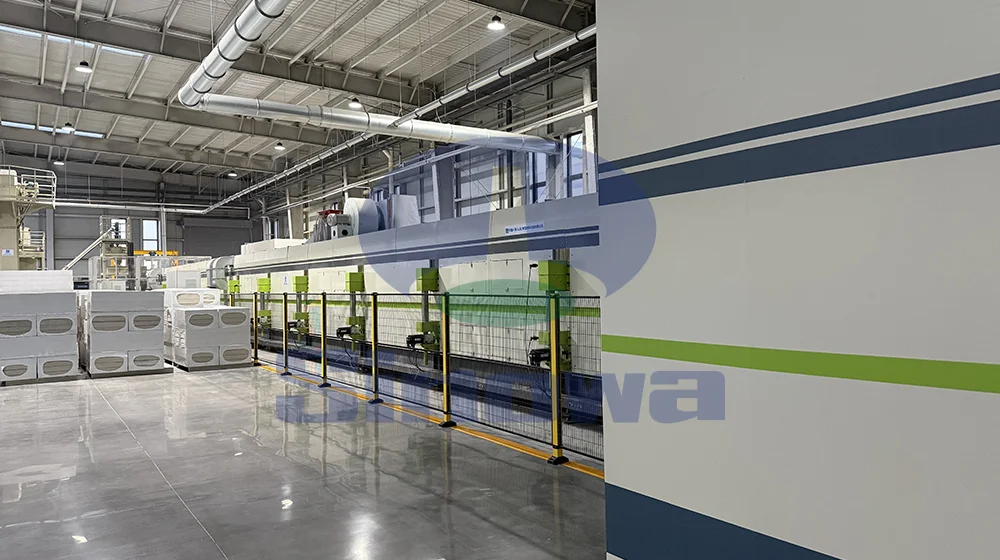
Sinowa is a phenolic resin panel production line supplier from china, customized high-quality & high efficiency phenolic resin panel production line at low price, phenolic resin panel production line has diversified and multifunctional production characteristics, which may produce products with different specifications such as PU, PF, PIR, etc. The surface material may be aluminum foil, colored steel, cement base cloth, kraft paper, non-woven fabrics, etc. The products are widely applied to such occasions as construction, decoration, pipeline ventilation, subway construction, etc.
The phenolic resin panel production line is able to continuously and efficiently produce high-quality PU and Phenolic insulation boards.
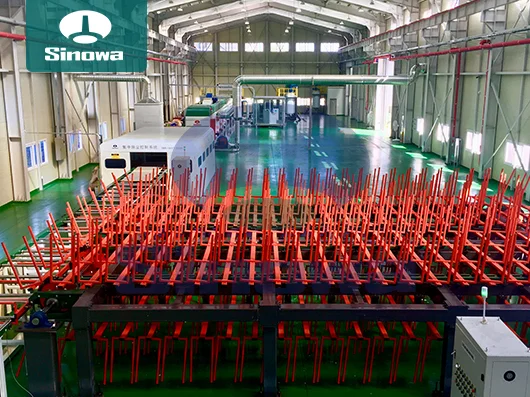
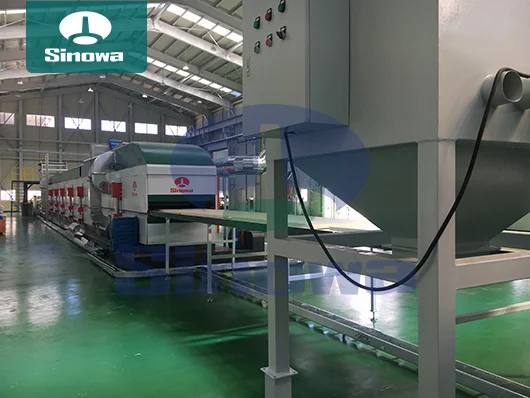
We spare no efforts to improve our product quality and technological reliability by employing the most cutting-edge and the most reliable support and processes to make our products highly reliable and endurable. As a result, the phenolic resin panel production line is highlighted by many perfect qualities. It is the core idea in Sinowa's product roadmap to surpass our competitors in terms of design philosophy, manufacture methods and service level, going for excellence and leading position and making constant improvement on our products and services, which is also our core value system to create efficiency and convenience for our customers.
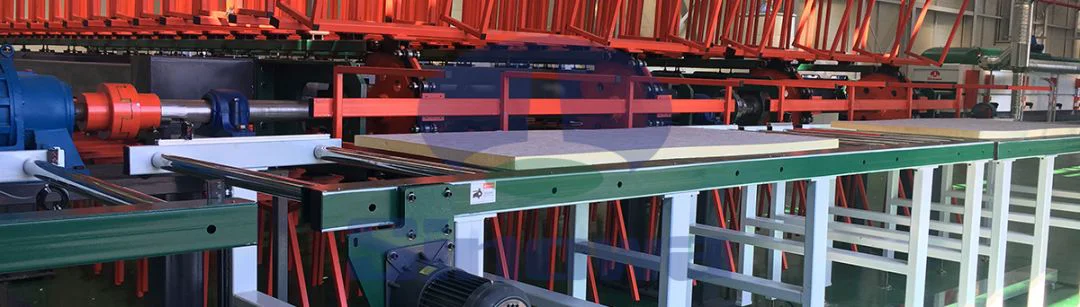
Well-grounded on our solid strength as a renowned large-scale enterprise, Sinowa has a high starting point in developing industrial assembly lines. Based on the advanced science and technology introduced from within and without the country and supported by a great number of first-grade parts and components from the home and aboard, the phenolic resin panel production line has a high-level configuration of supporting products in terms of machinery, electrical control, hydraulic pressure, automatic measurement and tracking, and so on. This is a strong proof of our product’s reliable quality and high efficiency.
The first-class appearance design and excellent energy saving measures make it unnecessary for customers to additionally construct the heat preservation and isolation room for production around the clock throughout the year, so that the customers may save lots of resources and costs.
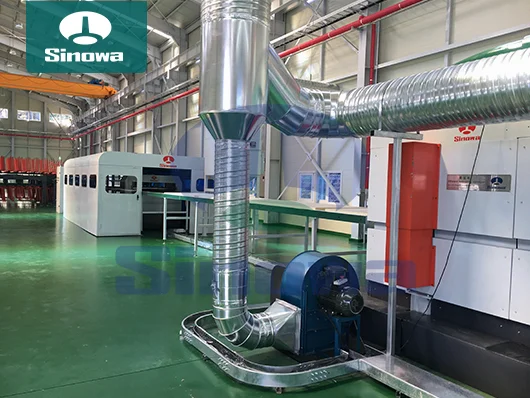
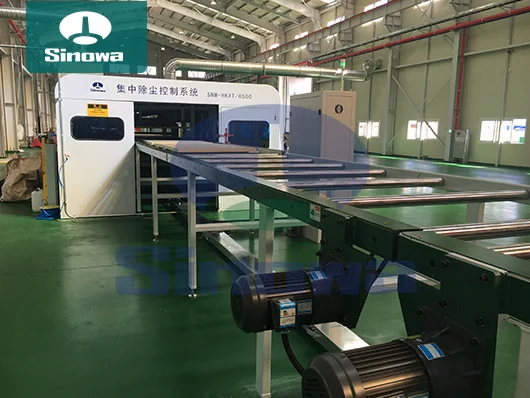
Modularized standard design and important parts machined with CNC machine tool make the phenolic resin panel production line have excellent quality assurance. Dependence on the man-made factors is eliminated. The operation is precision, with the highest operation speed of 30m/min. The phenolic resin panel production line has the world-class production efficiency.
The high performance and reliable multicomponent cyclopentane foaming technology and equipment of Sinowa may be also applied to the foaming process of the phenolic aldehyde board. Therefore, our customers may not only freely adjust the foaming matching according to the raw material, but also save lots of costs. Moreover, they are of significance for environmental protection.
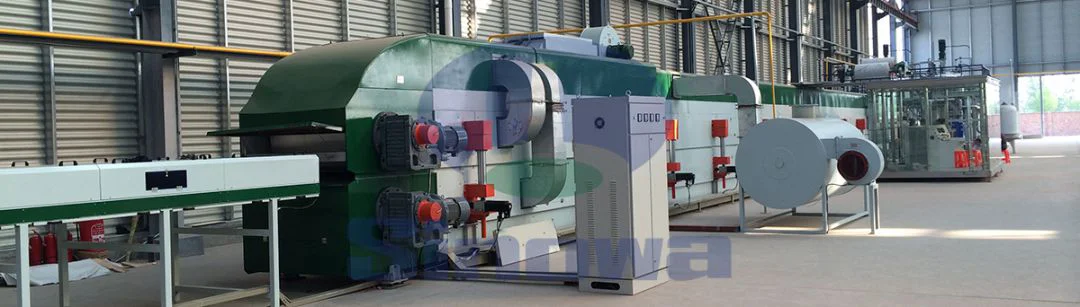
Sinowa's industrial production line of insulation panels is distinguished by its impressive performance of energy conservation. In each high point of energy consumption throughout the entire phenolic resin panel production line are implemented corresponding measures to considerably lower the consumption level. For example, the body of the lamination belt conveyer is covered with insulation panels in very reasonable structures, which doesn’t blemish the overall outlook but greatly increases the insulation performance. The entire phenolic resin panel production line is constantly optimized and improved so that the consumption of each power source is significantly reduced. The motor power of our lamination conveying system is only 3.0 kw, about 50% less than those of the same kind. All in all, the energy consumption of the whole industrial phenolic resin panel production line equals 40% or even less of the equivalent lines in the market.
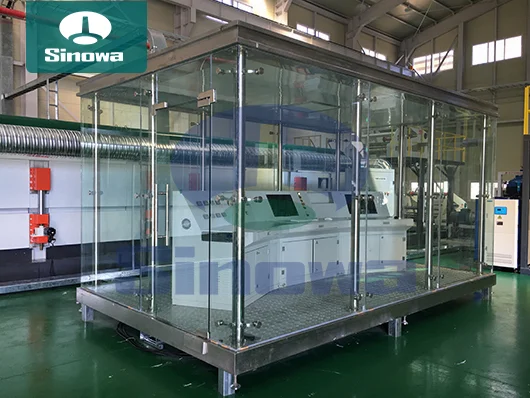
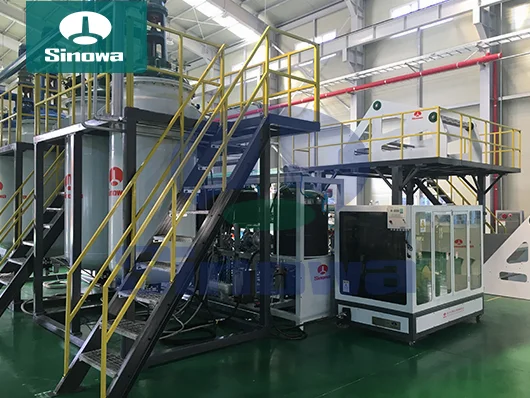
The phenolic resin panel production line of Sinowa adopts the most advanced concepts in the world to realize the modularized design with all the parts bolted together rather than welded. In standardized production, the parts can be dismantled and exchanged, so the production cycle is drastically shortened and the maintenance becomes by far easier. Through finite element analysis, the equipment design is greatly optimized to realize modularization, digitization, and weight-minimalization.
Phenolic resin panel production line is a highly integrated, automated manufacturing system designed for the continuous and efficient production of high-performance phenolic composite panels, which are widely recognized for their excellent heat resistance, chemical stability, mechanical toughness, and electrical insulation properties. This sophisticated production system integrates raw material processing, precise batching, resin impregnation, layered lamination, high-temperature hot pressing, cooling shaping, edge trimming, surface finishing, and quality inspection into a streamlined closed-loop process, realizing standardized and large-scale production of phenolic panels. Different from traditional intermittent manufacturing equipment, the modern phenolic resin panel production line adopts automated control technology throughout the entire process, effectively reducing manual intervention and production errors while ensuring consistent product performance and stable structural quality. Each functional module of the production line is precisely matched in operating rhythm and process parameters, which not only improves overall production efficiency but also optimizes the internal molecular structure and surface texture of finished panels, laying a solid foundation for the wide application of phenolic resin panels in industrial insulation, mechanical processing, electronic manufacturing, and construction protection fields.
The stable operation of a phenolic resin panel production line starts with standardized raw material preparation and scientific storage management, which serve as the fundamental guarantee for consistent product quality. The core raw materials of phenolic panels include phenolic resin base liquid, curing agents, functional fillers, and fiber reinforcement substrates, each with unique physical and chemical characteristics that require targeted pretreatment and storage measures. Modern production lines are equipped with fully enclosed constant-temperature and constant-humidity storage systems to isolate raw materials from external dust, moisture, and temperature fluctuations, preventing resin deterioration, substrate moisture absorption, and filler agglomeration that may affect subsequent processing effects. Before formal production, all raw materials undergo strict pretreatment procedures: solid fillers are crushed and screened to ensure uniform particle size distribution, fiber substrates are dried to remove residual moisture and improve resin adhesion, and phenolic resin liquid is filtered to eliminate impurities and adjust viscosity to the optimal processing state. Meanwhile, the automated conveying system transports pretreated raw materials to each processing station in a sealed manner, avoiding secondary pollution and ensuring the purity and activity of all raw materials throughout the production process, which directly determines the bonding performance and structural uniformity of the final phenolic panels.
Precision automatic batching and homogeneous mixing are key preliminary processes that determine the formulation stability and comprehensive performance of phenolic resin panels. The production line is equipped with high-precision gravimetric batching devices that accurately measure each raw material component according to preset production formulas, effectively controlling the proportion of resin, curing agent, filler, and auxiliary materials with extremely low measurement errors. This precise batching mode completely avoids the formula deviation caused by manual operation in traditional production modes, ensuring that each batch of mixed materials maintains consistent chemical composition and reaction activity. After accurate batching, all materials are sent to closed high-speed mixing equipment for full homogenization treatment. The mixing system adopts circulating stirring and turbulent mixing technology to disperse solid fillers evenly in the phenolic resin liquid, fully fuse curing agents and functional additives, and form a uniform and stable composite mixed material without local component concentration or precipitation. The entire mixing process is carried out in a sealed environment with real-time monitoring of mixing temperature, speed, and time to prevent premature chemical cross-linking of materials and ensure that the mixed materials maintain excellent fluidity and infiltration performance for the subsequent impregnation process.
Resin impregnation is one of the core processes of the entire production line, directly affecting the bonding strength, compactness, and service life of phenolic resin panels. After uniform mixing, the qualified resin composite material is transported to the automated impregnation unit, which is specially designed for full infiltration of fiber reinforcement substrates. The production line adopts a sealed pressure impregnation mode, which sends continuous fiber substrates into the impregnation tank filled with mixed resin materials, and uses stable mechanical pressure to promote the resin liquid to fully penetrate every tiny gap inside the fiber layers. This process effectively solves the problem of incomplete infiltration and uneven resin distribution in traditional manual or semi-automatic impregnation processes. During the impregnation process, the system dynamically adjusts impregnation speed and pressure according to the thickness and density of different substrates to ensure that the surface and interior of the substrates can obtain uniform resin coverage and infiltration depth. After impregnation, the excess resin on the surface of the substrate is evenly scraped off by precision roller sets to control the optimal resin content, avoiding product defects such as excessive resin brittleness or insufficient bonding strength caused by too high or too low resin content. The impregnated semi-finished substrates are then preliminarily dried to remove volatile components and lock the resin infiltration state.
Pre-drying and material aging treatment are essential transitional processes to optimize the molding effect of phenolic resin panels and eliminate potential quality defects. After completing resin impregnation, the wet semi-finished substrates contain a certain amount of volatile substances and free moisture, which need to be removed through graded pre-drying treatment to avoid bubbling, delamination, and deformation of panels during high-temperature hot pressing. The production line is equipped with a segmented constant-temperature drying tunnel, which adopts gradient temperature rise and uniform air supply technology to dry the impregnated materials step by step. The low-temperature preliminary drying stage removes surface free moisture, and the medium-temperature deep drying stage volatilizes internal residual volatile components, ensuring that the moisture content of the materials meets the molding standard without causing premature curing of the resin. After drying, the semi-finished materials enter the aging area for temporary standing treatment, which can balance the internal temperature and humidity of the materials, stabilize the resin molecular activity, and eliminate the internal stress generated in the impregnation and drying processes. Scientific aging treatment makes the resin distribution inside the materials more uniform, improves the flexibility and moldability of the semi-finished products, and lays a good material foundation for the subsequent precise lamination and hot pressing molding processes.
Automatic lamination and blank assembly processes determine the thickness uniformity and structural stability of finished phenolic resin panels. According to the preset thickness specifications of products, the production line adopts an intelligent layered stacking system to accurately stack multiple layers of impregnated and aged semi-finished materials in an orderly manner. The automated stacking equipment can precisely control the number of material layers and the alignment accuracy of each layer, avoiding layer deviation, dislocation, and uneven thickness that are common in manual stacking operations. In the stacking process, the system optimizes the fiber orientation of each material layer according to the mechanical performance requirements of phenolic panels, effectively improving the overall tensile strength, bending resistance, and structural uniformity of the finished products. After layered stacking, the panel blanks are neatly assembled and positioned by the automatic positioning device to ensure that the overall size and flatness of the blanks meet the molding requirements. The entire lamination and assembly process realizes unmanned automatic operation with high stacking efficiency and high precision, which not only greatly improves production speed but also ensures that the thickness and structural consistency of each panel blank are completely unified, eliminating product performance differences caused by manual operation errors.
High-temperature and high-pressure hot pressing curing is the core molding process of phenolic resin panels, which completes the chemical cross-linking and structural shaping of materials. The production line is equipped with a large-scale precision hydraulic hot pressing unit, which provides stable and controllable high temperature and high pressure environment for the laminated panel blanks. When the panel blanks enter the hot press, the system closes the pressing die and applies continuous and uniform hydraulic pressure, while raising the temperature to the optimal curing range required for phenolic resin cross-linking reaction. Under the dual action of high temperature and high pressure, the phenolic resin inside the panel blanks undergoes thorough chemical cross-linking reaction, changing from a linear molecular structure to a stable three-dimensional network structure, so that the loose layered materials are tightly bonded into a dense and integral plate structure. The production line adopts intelligent closed-loop control for hot pressing temperature, pressure, and holding time, dynamically adjusting process parameters according to different panel thicknesses and performance requirements to ensure complete curing reaction without overheating damage or insufficient curing. The real-time data monitoring system records all hot pressing process parameters, realizing traceable process management and providing data support for subsequent quality optimization and problem troubleshooting.
Gradual cooling and pressure maintaining shaping processes are crucial to eliminate internal stress and ensure the dimensional stability of phenolic resin panels. After the completion of high-temperature curing and heat preservation, the newly molded high-temperature panels contain huge internal molecular stress due to the rapid temperature difference and pressure change. Direct rapid cooling will lead to uneven stress release, resulting in panel warping, bending, cracking, and other quality defects. Therefore, the production line is equipped with a special slow cooling and pressure maintaining module, which adopts a gradient cooling mode to slowly reduce the temperature and pressure of the panels in a closed environment. During the cooling process, appropriate pressure is maintained all the time to restrict the free deformation of the panels, so that the internal stress of the panels can be released evenly and gradually. This scientific cooling and shaping mode can effectively lock the flat shape and accurate size of the panels, stabilize the internal molecular structure and mechanical properties of the products, and greatly improve the flatness, dimensional accuracy and long-term service stability of the finished phenolic panels. After cooling to room temperature, the panels are stably output from the hot pressing equipment to complete the preliminary molding work.
Precision edge trimming and size calibration are important post-processing procedures to optimize the appearance quality and dimensional accuracy of phenolic resin panels. The molded raw panels have irregular rough edges and slight dimensional deviations on all sides due to die gaps and material shrinkage during hot pressing. The cooled panels are automatically transported to the trimming and calibration station of the production line, where high-precision cutting and trimming equipment cuts off the redundant rough edges on all sides according to preset dimensional parameters. The automated trimming system has high positioning accuracy and cutting stability, which can ensure that the cutting surface of the panels is smooth and flat without burrs, cracks, and edge collapse defects. After edge trimming, the intelligent size detection device conducts all-round dimensional calibration on the length, width, and thickness of the panels, accurately identifying and fine-tuning slight dimensional errors to ensure that all finished panels meet uniform size specifications. This process not only improves the appearance finish of phenolic panels but also ensures the assembly adaptability of products in subsequent application scenarios, avoiding installation and use problems caused by dimensional inconsistencies.
Surface finishing and polishing treatment further enhance the surface quality and application performance of phenolic resin panels. After trimming and sizing, the surface of individual panels may have slight unevenness, fine scratches, and residual tiny particles, which affect the surface finish and later use effect. The production line is equipped with an automatic surface polishing and finishing system, which adopts multi-stage fine polishing processes to treat the upper and lower surfaces of the panels in an all-round way. The coarse polishing stage removes surface protrusions and residual burrs, the medium polishing stage flattens tiny uneven areas, and the fine polishing stage optimizes the surface smoothness to form a smooth and uniform panel surface. For products with special application requirements, the production line can also complete targeted surface treatment processes such as dust removal and anti-oxidation protection. The entire surface finishing process is automated and standardized, which effectively improves the surface texture and aesthetic degree of phenolic panels, while enhancing the surface wear resistance, stain resistance, and weather resistance of the products, expanding the applicable scenarios and service life of the panels.
Online quality inspection and performance screening are key links to control the finished product quality of the phenolic resin panel production line. The production line is equipped with a full-process intelligent online detection system, which conducts real-time non-destructive testing on each finished panel after surface finishing. The detection items include surface flatness, internal compactness, bonding integrity, thickness uniformity, and structural stability, which can accurately identify internal defects such as delamination, bubbles, and cracks that cannot be observed by the naked eye, as well as surface quality problems. The intelligent detection system automatically classifies products according to detection data, screening out qualified products and isolating defective products for reprocessing or recycling. Different from manual sampling inspection, the full online inspection mode realizes full inspection of all products, completely avoiding the omission of defective products. Meanwhile, the system sorts and analyzes all detection data, summarizes common quality problems in the production process, and provides targeted optimization suggestions for process parameters, realizing continuous iterative optimization of production technology and stable improvement of product quality.
Automatic finished product sorting and standardized packaging warehousing complete the whole closed-loop production process of phenolic resin panels. After passing the quality inspection, the qualified panels are automatically classified and sorted by the production line according to product specifications, thicknesses, and performance parameters. The intelligent sorting system can accurately distinguish different types of products and transport them to corresponding packaging stations in a classified manner, avoiding product mixing and specification confusion. In the packaging link, the production line adopts fully automatic packaging equipment to carry out dustproof, moisture-proof, and anti-collision packaging for the panels. The professional packaging materials can effectively protect the surface and structure of the panels, prevent dust pollution, moisture absorption, and extrusion deformation during transportation and storage. After packaging, the finished products are automatically labeled with product specification information and production batch data, and then transported to the finished product warehouse by automated handling equipment for standardized stacking and storage. The whole sorting, packaging and warehousing process realizes unmanned intelligent operation, which not only improves the efficiency of finished product output and management level but also ensures the intact state of products leaving the factory, providing reliable high-quality products for downstream industrial application fields.
« Phenolic Resin Panel Production Line » Update Date: 2026/8/27
URL: https://www.sinowamachine.com/tags/phenolic-resin-panel-production-line.html
- Links:
- Sandwich Panel Continuous Production Line
- Automatic and Continuous Sandwich Panel Production Line
- Cheap and Low Price Sandwich Panel Production Line
- China Sandwich Panel Production Line Factory
- Color Steel Sandwich Panel Production Line For Cold Storage
- Continuous Composite Foam Sandwich Panel Production Line
- Continuous Production Line For Rockwool and Mineral Wool Sandwich Panels
- Continuous PU Phenolic Insulation Panel Production Line
- Continuous PU PIR Sandwich Panel Production Line
- Continuous PUF PUR Sandwich Panel Production Line
- Continuous Sandwich Panel Production Line For Roof and Wall
- Customized and Design Sandwich Panel Production Line
- Decorative Sandwich Panel Production Line For Glass Wool Boards
- High Quality Sandwich Panel Production Line For Sale
- Polyurethane(PU) Sandwich Panel Production Line
- Sandwich Panel Production Line Manufacturer and Supplier
- Sandwich Panel Production Machinery and Equipment