
Phenolic Foam Production Line
Sinowa is a phenolic foam production line supplier from china, customized high-quality & high efficiency phenolic foam production line at low price, phenolic foam production line has diversified and multifunctional production characteristics, which may produce products with different specifications such as PU, PF, PIR, etc. The surface material may be aluminum foil, colored steel, cement base cloth, kraft paper, non-woven fabrics, etc. The products are widely applied to such occasions as construction, decoration, pipeline ventilation, subway construction, etc.
The phenolic foam production line is able to continuously and efficiently produce high-quality PU and Phenolic insulation boards.
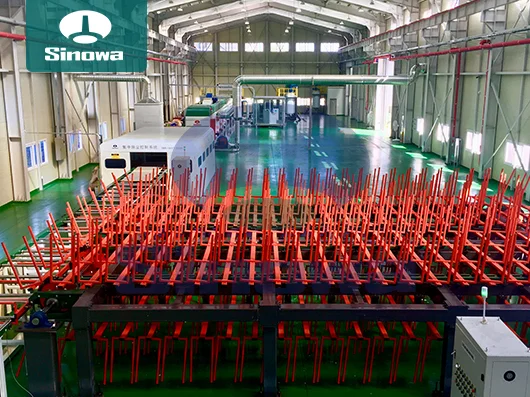
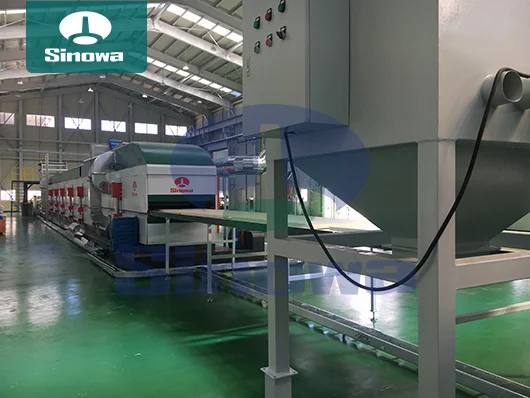
We spare no efforts to improve our product quality and technological reliability by employing the most cutting-edge and the most reliable support and processes to make our products highly reliable and endurable. As a result, the phenolic foam production line is highlighted by many perfect qualities. It is the core idea in Sinowa's product roadmap to surpass our competitors in terms of design philosophy, manufacture methods and service level, going for excellence and leading position and making constant improvement on our products and services, which is also our core value system to create efficiency and convenience for our customers.
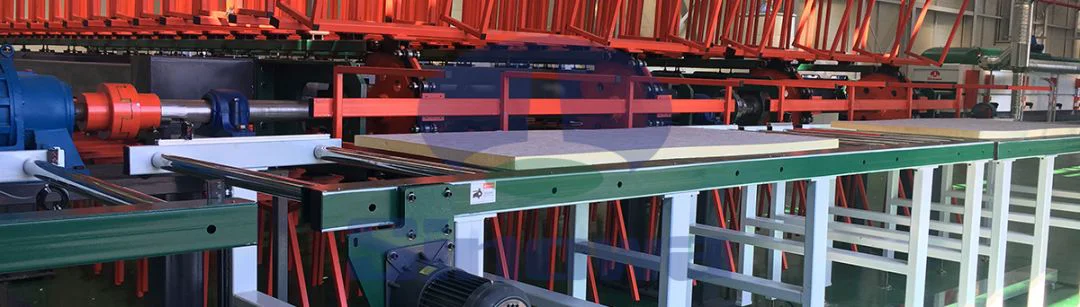
Well-grounded on our solid strength as a renowned large-scale enterprise, Sinowa has a high starting point in developing industrial assembly lines. Based on the advanced science and technology introduced from within and without the country and supported by a great number of first-grade parts and components from the home and aboard, the phenolic foam production line has a high-level configuration of supporting products in terms of machinery, electrical control, hydraulic pressure, automatic measurement and tracking, and so on. This is a strong proof of our product’s reliable quality and high efficiency.
The first-class appearance design and excellent energy saving measures make it unnecessary for customers to additionally construct the heat preservation and isolation room for production around the clock throughout the year, so that the customers may save lots of resources and costs.
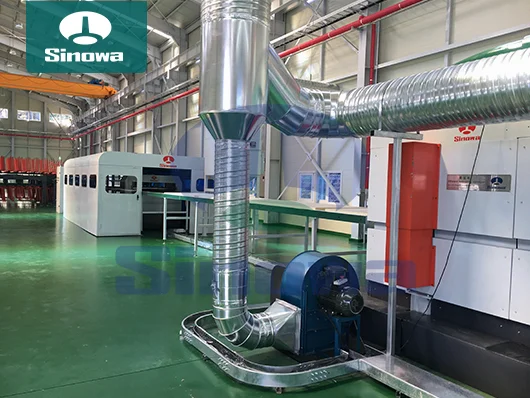
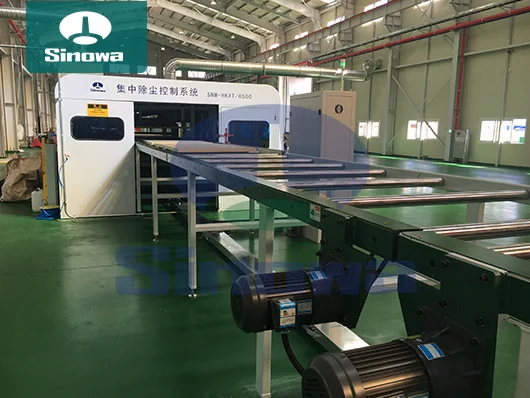
Modularized standard design and important parts machined with CNC machine tool make the phenolic foam production line have excellent quality assurance. Dependence on the man-made factors is eliminated. The operation is precision, with the highest operation speed of 30m/min. The phenolic foam production line has the world-class production efficiency.
The high performance and reliable multicomponent cyclopentane foaming technology and equipment of Sinowa may be also applied to the foaming process of the phenolic aldehyde board. Therefore, our customers may not only freely adjust the foaming matching according to the raw material, but also save lots of costs. Moreover, they are of significance for environmental protection.
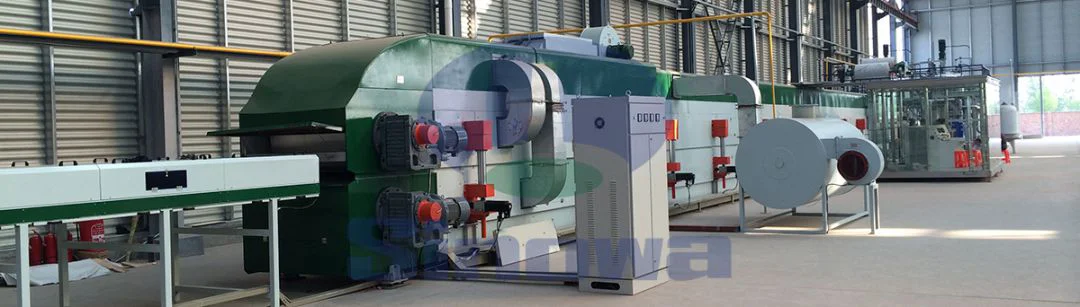
Sinowa's industrial production line of insulation panels is distinguished by its impressive performance of energy conservation. In each high point of energy consumption throughout the entire phenolic foam production line are implemented corresponding measures to considerably lower the consumption level. For example, the body of the lamination belt conveyer is covered with insulation panels in very reasonable structures, which doesn’t blemish the overall outlook but greatly increases the insulation performance. The entire phenolic foam production line is constantly optimized and improved so that the consumption of each power source is significantly reduced. The motor power of our lamination conveying system is only 3.0 kw, about 50% less than those of the same kind. All in all, the energy consumption of the whole industrial phenolic foam production line equals 40% or even less of the equivalent lines in the market.
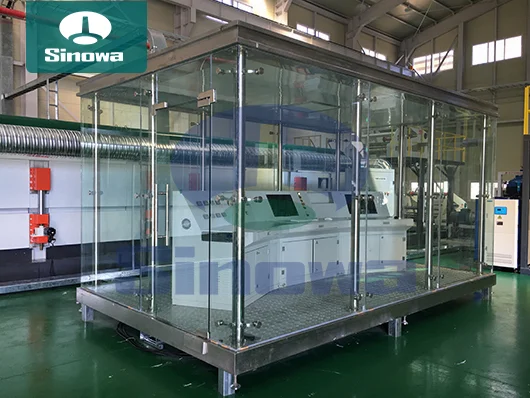
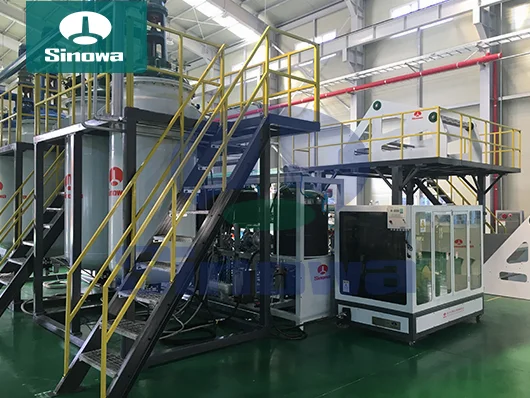
The phenolic foam production line of Sinowa adopts the most advanced concepts in the world to realize the modularized design with all the parts bolted together rather than welded. In standardized production, the parts can be dismantled and exchanged, so the production cycle is drastically shortened and the maintenance becomes by far easier. Through finite element analysis, the equipment design is greatly optimized to realize modularization, digitization, and weight-minimalization.
Phenolic foam has emerged as one of the most reliable lightweight thermal insulation materials in modern industrial manufacturing, owing to its exceptional inherent properties including low thermal conductivity, stable chemical inertness, outstanding flame resistance, and minimal water absorption. The production of high-performance phenolic foam relies entirely on scientifically structured and precisely controlled phenolic foam production lines, which integrate mechanical transmission, chemical reaction regulation, temperature and pressure monitoring, and automated material processing to convert raw chemical materials into standardized foam products with uniform pore structures and stable physical performance. Every functional section of the production line is designed to coordinate with the chemical characteristics of phenolic resin and auxiliary additives, ensuring that each production procedure proceeds under optimal physical and chemical conditions while eliminating unstable factors that may compromise product quality. The systematic operation mode of the production line not only improves production efficiency and consistency but also reduces unnecessary material waste during the manufacturing process, making large-scale continuous production of phenolic foam feasible and sustainable.
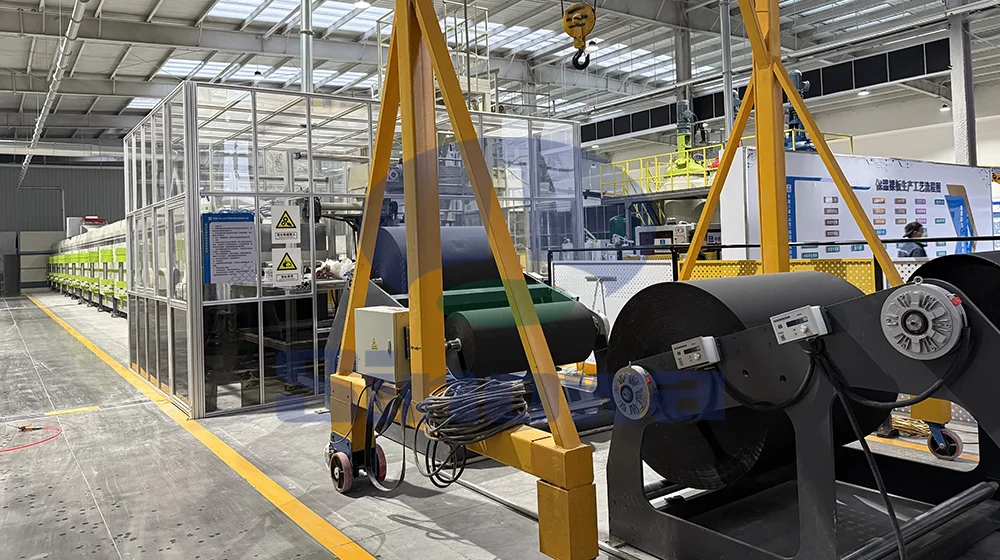
The overall composition of a phenolic foam production line follows a sequential production logic, covering raw material pretreatment, accurate metering, homogeneous mixing, continuous foaming, constant-temperature curing, fixed-size cutting, surface finishing, and finished product conveying. Each functional unit is closely connected through automated transmission structures, forming an uninterrupted production flow that avoids manual intervention errors and ensures the homogeneity of batches of foam products. In the initial raw material pretreatment stage, the production line is equipped with sealed storage and constant-temperature regulation modules for various raw materials. Phenolic resin, as the core base material of the foam, requires stable temperature maintenance to prevent viscosity fluctuations caused by ambient temperature changes, which would otherwise affect subsequent mixing uniformity and foaming efficiency. Auxiliary raw materials include curing agents, foaming agents, surfactants, and inorganic fillers, each of which is stored in independent sealed containers to prevent chemical contamination caused by mutual contact between different raw materials. The internal circulation pipeline of the storage module realizes slow material circulation, effectively avoiding raw material precipitation and component stratification during long-term static storage, laying a stable foundation for subsequent precise batching.
Accurate raw material metering is an indispensable core link in the entire production line, directly determining the pore structure density, mechanical strength, and thermal insulation performance of finished phenolic foam. The production line adopts high-precision metering devices with real-time flow monitoring functions, which can dynamically adjust the feeding rate of each raw material according to preset process parameters. Different from manual batching in small-scale experimental production, the automated metering system of the production line maintains a narrow tolerance range for the proportion of each component. Slight deviations in the ratio of resin to curing agent will lead to incomplete curing reactions or excessive brittleness of foam products, while unreasonable foaming agent dosage will cause uneven pore distribution, including oversized pores, collapsed pores, or dense solid areas inside the foam. The metering system transmits real-time feeding data to the central control unit, which automatically calibrates the metering parameters to offset minor fluctuations in raw material density and viscosity, ensuring that the material ratio of each production cycle remains consistent and eliminating quality differences between different product batches.
After metering, all raw materials are transported to the high-efficiency mixing unit of the production line, where homogeneous blending of liquid raw materials is completed within a short time. The mixing unit is equipped with a sealed mixing chamber and high-speed stirring components, and the internal mixing pressure is kept within a stable range to promote the rapid fusion of various raw materials. Surfactants in the raw materials can reduce the surface tension of the mixed liquid, enabling the foaming gas generated in the subsequent reaction to form tiny and uniformly dispersed bubbles. During the mixing process, the temperature of the mixing chamber is strictly controlled within a specific interval; excessively high temperatures will trigger premature chemical cross-linking reactions of phenolic resin, leading to material solidification before foaming, while excessively low temperatures will reduce molecular activity, resulting in insufficient mixing uniformity and slow reaction progress. The sealed structural design of the mixing unit effectively prevents the volatilization of volatile components in the raw materials, reduces material loss, and avoids the diffusion of irritating gases into the external production environment, optimizing the safety and environmental protection level of the production process.
The continuous foaming unit is the key functional area where liquid mixed materials are converted into porous foam structures, and it is also the most sensitive link to temperature and pressure parameters in the entire production line. The uniformly mixed raw materials are evenly spread on the continuous conveying carrier through a fixed-width discharge port, and the low-temperature foaming reaction starts immediately under the set environmental conditions. As the conveying device moves forward at a constant speed, the foaming agent decomposes steadily to generate gas, and the phenolic resin undergoes cross-linking and curing reactions simultaneously. The dual progress of gas generation and resin curing forms a closed and uniform microporous structure inside the foam. The internal space of the foaming unit is equipped with multi-group temperature sensing elements and pressure detection components, which monitor the microenvironment changes during the foaming process in real time. The central control system dynamically adjusts the heating power and conveying speed according to the detected data to maintain the balance between foaming expansion rate and resin curing speed. This precise control mode avoids common defects such as foam surface cracking, internal hollowing, and uneven thickness, ensuring that the foam maintains a flat surface and stable structural density during continuous foaming molding.
Following the preliminary foaming molding, the semi-finished foam products enter the constant-temperature curing unit for deep curing and structural stabilization. The internal space of the curing unit forms a closed constant-temperature and constant-humidity environment, which provides sufficient reaction time for the residual cross-linking components in the phenolic resin. In this stage, the molecular chain structure of the resin is further tightened, the bonding force between internal molecules is enhanced, and the mechanical strength and structural stability of the foam are significantly improved. The temperature gradient inside the curing unit is distributed evenly without local overheating or low-temperature dead zones, preventing inconsistent curing degrees of foam products in different spatial positions. The curing time is intelligently matched with the conveying speed of the production line; excessively short curing time will lead to incomplete internal reaction and easy deformation of finished products, while overly long curing cycles will reduce the overall production efficiency of the line. After systematic curing treatment, the foam gradually loses its fluidity, forms a rigid and stable solid structure, and lays a structural foundation for subsequent cutting and processing.
The fixed-size cutting unit undertakes the shaping and sizing processing of cured semi-finished foam products, realizing the conversion of continuous foam blanks into finished products of standardized specifications. This unit is equipped with high-speed cutting components and intelligent positioning systems, which can accurately set the cutting length, width, and thickness according to production requirements. The cutting components adopt smooth and wear-resistant structural materials to ensure flat and burr-free cutting sections, avoiding cell damage and structural cracks at the cutting edges. Before formal cutting, the positioning system scans the surface flatness and thickness of the foam blank in real time, automatically correcting minor position deviations to ensure that the dimensional error of each finished product is controlled within a tiny range. In addition to basic fixed-size cutting, the cutting unit can also complete simple edge trimming processing to remove irregular residual materials on the edges of the foam, making the appearance of finished products more neat and uniform. The waste materials generated during the cutting process are collected through a centralized recovery pipeline, which can be crushed and reprocessed after centralized treatment to improve the comprehensive utilization rate of raw materials.
The surface finishing unit is designed to optimize the surface performance and appearance quality of phenolic foam products. After cutting, the surface of individual foam products has tiny uneven textures and residual floating dust, which will affect the fitting effect in subsequent application scenarios. The finishing unit adopts a combination of physical polishing and dust removal structures to gently polish the foam surface to remove raised fine particles and smooth tiny pits. Meanwhile, the high-efficiency dust removal system absorbs floating dust and tiny debris generated during processing to keep the product surface clean. For products requiring surface composite treatment, the finishing unit is equipped with auxiliary composite structures, which can realize the laminating treatment of flat protective materials on the foam surface. The composite processing is carried out at a moderate temperature to ensure that the bonding material is evenly attached without damaging the internal pore structure of the foam. The finished foam products after finishing have smooth surfaces, stable surface adhesion, and stronger adaptability to different installation and use environments.
Automation and intelligent control technology run through the entire operation process of the phenolic foam production line, which is the core guarantee for realizing large-scale stable production. The production line is equipped with an integrated central control system, which collects real-time data of temperature, pressure, flow rate, conveying speed, and cutting parameters of each functional unit through various sensing elements. The system displays the operating status of each module on the interactive interface, enabling production operators to intuitively grasp the overall production progress and product parameter changes. The intelligent control system has an automatic parameter adjustment function; when external environmental factors such as ambient temperature and humidity change slightly, the system will autonomously correct the operating parameters of the metering, mixing, and foaming units to offset the impact of environmental changes on product quality. In addition, the system is embedded with an early warning and fault diagnosis mechanism. When abnormal fluctuations occur in the operating data of individual components, the system will send prompt information and automatically locate the fault area, providing convenient maintenance guidance for operators and reducing the downtime caused by equipment failure.
In terms of structural design, the phenolic foam production line takes operational stability and daily maintenance convenience into full consideration. The main frame of the production line is made of high-rigidity metal materials, which can resist vibration interference during long-term continuous operation and avoid structural displacement of each functional unit. The connecting parts between various modules adopt detachable assembly structures, which facilitates daily cleaning, component replacement, and equipment maintenance. All pipelines transporting raw materials are equipped with anti-corrosion and sealing structures to adapt to the chemical characteristics of acidic and weakly corrosive raw materials, extending the service life of pipeline components. The production line is also equipped with a sound insulation and noise reduction structure to reduce mechanical vibration noise generated during high-speed operation, improving the comfort of the on-site working environment. The overall layout of the production line follows the principle of compact and reasonable spatial distribution, which reduces the occupied area while ensuring smooth material transmission between adjacent units, optimizing the spatial utilization efficiency of the production workshop.
The phenolic foam production line also has prominent advantages in energy consumption control and environmental protection processing. Each heating and temperature control unit is equipped with an independent energy-saving circulation structure, which can recycle residual heat generated during the reaction process to preheat raw materials, effectively reducing additional energy consumption. The sealed design adopted by the entire production process avoids the volatilization of harmful volatile substances into the air, and the waste gas generated in a small amount during the reaction is filtered and purified through a dedicated gas treatment device to meet environmental discharge standards. The solid waste generated in the production process, such as cutting scraps and unqualified foam blanks, is recycled and reused after crushing treatment, which reduces solid waste emissions. The circulating cooling system is used for temperature reduction of high-temperature components, which avoids excessive water consumption caused by direct water cooling and realizes efficient utilization of water resources. These environmentally friendly and energy-saving designs not only reduce the comprehensive operating cost of the production line but also make the production process conform to the sustainable development requirements of modern manufacturing industries.
With the continuous expansion of the application scope of phenolic foam materials in construction thermal insulation, industrial pipeline protection, cold chain transportation equipment, and special fire-resistant engineering fields, the market demand for high-quality phenolic foam products continues to grow steadily. As the core carrier of foam manufacturing, the phenolic foam production line is constantly optimized and upgraded in structural design and functional configuration. The iterative upgrading of production line technology focuses on improving production continuity, enhancing parameter control accuracy, and expanding the adjustable range of product specifications, to meet the customized production needs of different industries for foam density, thickness, and surface structure. In the future, with the further integration of intelligent manufacturing technology and chemical foaming technology, the phenolic foam production line will develop towards higher automation intelligence, lower energy consumption, and stronger production flexibility, continuously providing high-quality and stable phenolic foam materials for various industrial fields and promoting the long-term development of the lightweight thermal insulation material industry.
« Phenolic Foam Production Line » Update Date: 2026/5/8
URL: https://www.sinowamachine.com/tags/phenolic-foam-production-line.html
![High-end Phenolic Foam Production Line]()
High-end Phenolic Foam Production Line
2026-09-01High-end phenolic foam production lines represent advanced automated manufacturing systems tailored for producing high-performance phenolic foam insulation materials, integrating precision chemical control, intelligent mechanical operation, and continuous forming technology. Unlike conventional ordin…
- Links:
- Sandwich Panel Continuous Production Line
- Automatic and Continuous Sandwich Panel Production Line
- Cheap and Low Price Sandwich Panel Production Line
- China Sandwich Panel Production Line Factory
- Color Steel Sandwich Panel Production Line For Cold Storage
- Continuous Composite Foam Sandwich Panel Production Line
- Continuous Production Line For Rockwool and Mineral Wool Sandwich Panels
- Continuous PU Phenolic Insulation Panel Production Line
- Continuous PU PIR Sandwich Panel Production Line
- Continuous PUF PUR Sandwich Panel Production Line
- Continuous Sandwich Panel Production Line For Roof and Wall
- Customized and Design Sandwich Panel Production Line
- Decorative Sandwich Panel Production Line For Glass Wool Boards
- High Quality Sandwich Panel Production Line For Sale
- Polyurethane(PU) Sandwich Panel Production Line
- Sandwich Panel Production Line Manufacturer and Supplier
- Sandwich Panel Production Machinery and Equipment