
PU Panel Machine
Sinowa is a pu panel machine supplier from china, customized high-quality & high efficiency pu panel machine at low price, the adoption of system integration technology and bus control technology accomplishes the full automatization of integrated and coordinated control of the pu panel machine with accessible remote interactive communication. Ranking the first-class level in the world, it is currently the pu panel machine in the market taking a comprehensive lead in high performance.
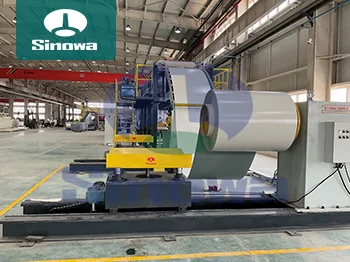
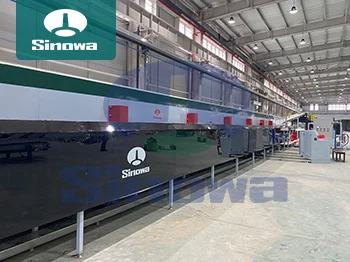
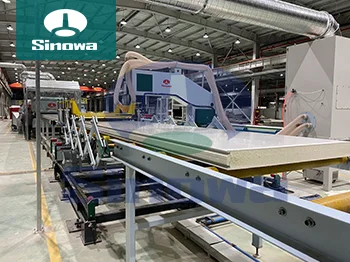
The high-tech pu panel machine can meet a variety of production needs of customers, the whole pu panel machine design concept of modularization enables all our components to be integrated and combined at will. Our high efficiency pu panel machine can easily automate the production of roof sandwich panel, wall sandwich panel, cold storage sandwich panel and other products by different combination and configuration selection and siple switching. The inner core layer can be polyrethane or rock wool, glass wool, an so on.


The high precision pu panel machine has high adaptability, which may produce various sandwich panel of the PU, PIR and rock wool systems. We may design various products according to the customer’s requirements, including various configurations, so as to meet their demands with flexible price system. Highly integrated and linked control system centralizes all control points at the main central center, achieving parameter linkage, fault self-diagnosis controlled by the whole line and shipping distance control. High-level automatic control system also saves the manpower and reduces the manpower loss for customers.


The precision servo hoisting mechanism employed by the main engine without hydraulic system makes the board thickness control flexible and the customer may conveniently change or adjust the board thickness. There will be not such troubles as hydraulic system adjustment, leakage, maintenance, etc.


High-level energy saving and protection design makes the whole pu panel machine possible to produce around the clock throughout the year and the customer will save huge budget. In addition, the isolated heat preservation room is constructed for warming the environment. The energy saving and protection design of our manufacturing line may guarantee that the customer’s production line may be freely heated and produce in the main time to save more costs for customers.


The high-power low-consumption design quickens the reaction of the cheap pu panel machine while energy consumption is kept low. With the brand-new, fully sealed inner insulation design, the energy consumption is controlled at the minimum level to achieve the design objective of less than an hour for the insulation system to be activated from the room temperature above 5℃ to the production process temperature. The energy consumption is only 40% that of those similar products.
In the modern manufacturing sector focused on energy efficiency and structural stability, the production equipment for polyurethane panels has become an indispensable core facility in the building and industrial material industries. This type of specialized manufacturing equipment is engineered to complete continuous integrated production of composite panels with polyurethane as the core thermal insulation layer, achieving seamless combination of surface protective layers and foam insulation substrates through automated mechanical processes. With the continuous upgrading of industrial construction standards and the growing global demand for environmentally friendly and energy-saving building materials, this processing machinery has gradually evolved from simple manual auxiliary production to highly integrated automated production lines, laying a solid equipment foundation for the standardized production of high-performance insulation panels. The operational logic and structural design of the equipment are closely aligned with the physical characteristics of polyurethane materials, realizing precise control over material foaming, compounding, shaping and cutting, which effectively guarantees the consistent quality of finished panels in batch production.
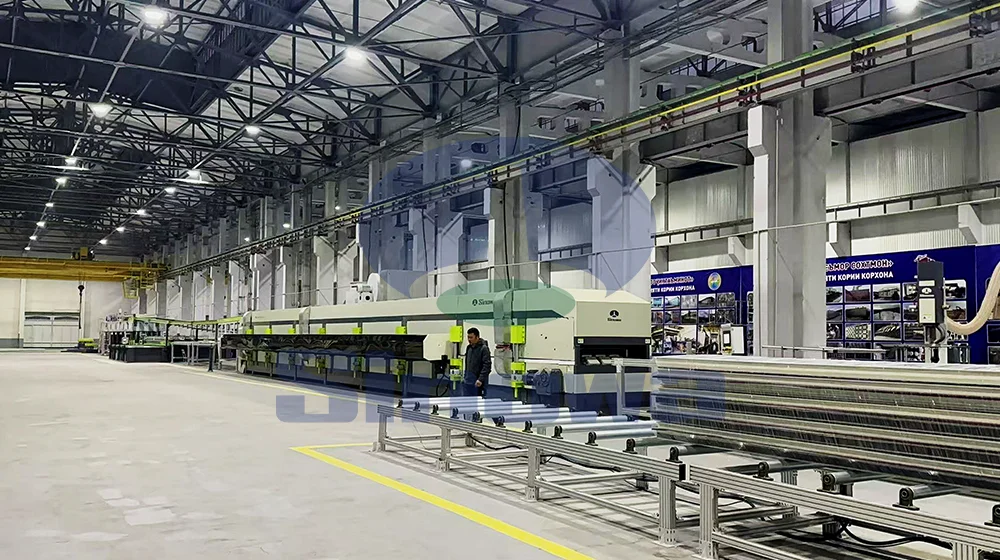
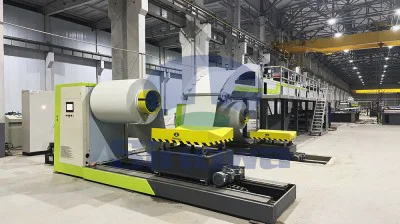
The overall structural composition of the PU panel machine follows a modular integrated design concept, and each functional module works in coordination to complete the entire production workflow without excessive manual intervention. The feeding module is the initial functional unit of the equipment, responsible for the stable conveying of upper and lower surface base materials. During the operation, flat raw materials are steadily transported to the processing station through adjustable roller sets, and the conveying speed can be dynamically adjusted according to the material thickness and production rhythm to avoid material deviation and wrinkling. Closely connected to the feeding unit is the material mixing and pouring module, which undertakes the core process of polyurethane raw material treatment. This module mixes polyether polyol and isocyanate in a specific proportion through high-precision mixing components, and the mixed liquid raw materials are evenly poured on the surface of the lower base material. The internal mixing structure is optimized to ensure uniform fusion of different raw materials, avoiding uneven foaming density caused by insufficient mixing, which is crucial for maintaining the thermal insulation performance of finished panels.
Following the pouring process, the foaming and curing module becomes the key link to determine the internal structure of the panel. After the liquid polyurethane raw materials are covered on the base material, the equipment uses a closed constant-temperature curing channel to create a stable thermal environment for raw material foaming. The temperature inside the channel is kept within a reasonable range through an intelligent temperature control system, which can effectively control the foaming expansion rate of polyurethane materials and prevent structural defects such as internal voids and uneven pore sizes. During the foaming process, the upper and lower pressing structures of the equipment keep the surface materials tightly fitted with the foamed intermediate layer. The adjustable pressing pressure can adapt to panels of different thickness specifications, ensuring that the bonding interface between the surface layer and the intermediate insulation layer is completely compact without gaps. This continuous flat pressing molding method not only improves the flatness of the panel surface but also significantly enhances the overall structural adhesion, making the panel resistant to delamination during long-term use.
The post-processing functional modules located at the rear of the equipment include trimming, cutting and stacking components, which undertake the finishing work of semi-finished panels. After curing and molding, the continuous long-strip panels are transported to the trimming unit, where the irregular edges on both sides are neatly trimmed by high-speed cutting tools to ensure consistent panel width. The fixed-length cutting device can automatically complete positioning and cutting according to preset size parameters, realizing standardized production of panels of different specifications. The stacked transmission structure at the tail of the equipment can orderly arrange the cut finished panels, and the automated stacking mode reduces manual handling errors while improving the neatness of finished product storage. All functional modules are connected by synchronous transmission systems, and the operation rhythm of each link maintains precise coordination, avoiding production stagnation caused by mismatched transmission speeds.
The working performance of the PU panel machine is mainly reflected in production stability, molding accuracy and material utilization efficiency. In terms of production stability, the equipment adopts a mechanical transmission structure with low failure rate, and the wearing parts are made of high-strength alloy materials, which can maintain long-term continuous operation in high-intensity production scenarios. The intelligent monitoring system built into the equipment can track real-time operating parameters such as material flow, processing temperature and transmission speed. Once abnormal data fluctuations occur, the system will trigger automatic adjustment mechanisms to quickly correct parameter deviations, effectively reducing the defective rate of products. In terms of molding accuracy, the precision control components inside the equipment control the feeding error of raw materials within a tiny range, and the pressure balance system ensures that the thickness of each batch of panels is uniform, meeting the high-precision size requirements of modern engineering for building insulation panels.
Material utilization is another prominent advantage of this type of processing equipment. In the traditional manual or semi-automated panel production mode, the excessive pouring of polyurethane raw materials and edge trimming wastes cause serious material loss. The optimized pouring and metering structure of the modern PU panel machine can accurately calculate the raw material dosage according to the panel area and thickness, realizing quantitative pouring and greatly reducing the waste of chemical raw materials. At the same time, the edge trimming waste generated during the post-processing stage can be centrally collected and recycled through the auxiliary recovery device of the equipment, which not only improves the comprehensive utilization rate of raw materials but also reduces the generation of production waste, conforming to the environmental protection development concept of modern manufacturing industry. The efficient material utilization mode effectively lowers the comprehensive production consumption and creates better production benefits for processing enterprises.
In terms of application scenarios, panels produced by PU panel machines have broad coverage in multiple industrial fields, and the excellent performance of finished panels is inseparable from the precise processing of professional equipment. In the construction industry, such panels are widely used in the exterior wall insulation, roof waterproof insulation and interior partition engineering of civil buildings. The panels processed by automated equipment have uniform internal foam structures, which can effectively block heat conduction and reduce the energy consumption of building temperature regulation. In cold northern regions and high-temperature tropical areas, this kind of insulation panel has become a conventional building material for energy-saving renovation of buildings. In addition, the stable bonding structure of the panels ensures good wind resistance and compression resistance, which can adapt to complex outdoor climatic environments and maintain stable service performance for a long time.
The cold chain logistics industry is also an important application field for polyurethane composite panels. Special storage environments such as cold storage, constant-temperature warehouses and fresh-keeping transportation compartments require materials with ultra-low thermal conductivity and good airtightness. The PU panel machine can produce high-density insulation panels suitable for cold chain scenarios by adjusting production parameters. The panels processed under precise temperature and pressure control have dense internal foam pores, which can effectively isolate external temperature changes and reduce the cold loss of cold storage spaces. Meanwhile, the smooth and easy-to-clean surface of the panels meets the hygienic management requirements of food and pharmaceutical storage environments. With the rapid development of the global cold chain logistics system, the market demand for high-quality cold storage insulation panels continues to rise, which further promotes the technological iteration and performance upgrading of PU panel production equipment.
In addition to the construction and cold chain industries, industrial factory buildings and special facility construction also rely heavily on panels produced by PU panel machines. Large-span industrial workshops, clean workshops and temporary prefabricated buildings need light-weight, high-strength and easy-to-install composite panels. The equipment can realize integrated molding of multi-layer composite structures, and the produced panels have the characteristics of light overall weight and high structural strength, which is convenient for rapid assembly and construction. In some special industrial scenarios requiring sound insulation and fire resistance, the equipment can also complete the composite processing of functional auxiliary materials, so that the finished panels have enhanced sound insulation and flame-retardant properties, meeting the diversified use needs of industrial production. The flexible parameter adjustment capability enables the equipment to adapt to the customized production requirements of different industries, expanding its application boundary in the industrial material market.
With the continuous progress of industrial manufacturing technology, the technological development trend of PU panel machines is gradually moving towards intelligent automation, energy conservation and emission reduction, and multi-functional integration. In terms of intelligent upgrading, more production links have realized automated electronic control. The human-computer interaction interface simplifies the parameter setting process, and workers can complete the switching of production specifications and the adjustment of operating parameters through simple operations. The remote monitoring function enables technical personnel to grasp the equipment operation status in real time, which is convenient for timely maintenance and fault troubleshooting, reducing the downtime loss caused by equipment failure. The intelligent sensing components can also collect production data, providing data support for enterprises to optimize production plans and improve production efficiency.
Energy conservation and emission reduction is another important development direction of modern PU panel machines. The traditional production equipment has problems such as high energy consumption in the heating system and large heat loss during operation. The upgraded equipment optimizes the internal thermal insulation structure of the curing channel, reduces heat dissipation during material foaming, and uses energy-saving motors and transmission components to lower the power consumption of mechanical operation. At the same time, the optimized raw material mixing process reduces the volatilization of harmful substances during polyurethane reaction, optimizes the production workshop environment, and realizes coordinated development of production efficiency and environmental protection performance. Under the background of global emphasis on green manufacturing, energy-saving and low-consumption processing equipment has become the mainstream choice of panel processing enterprises.
In terms of multi-functional integration, the new generation of PU panel machines breaks through the limitation of single production function. A single device can complete the processing of panels with different surface materials and different core layer densities, realizing one-line multi-purpose production. The expandable structural design allows the equipment to add functional components such as surface embossing and anti-corrosion coating according to production needs, enriching the surface processing forms of finished panels. This highly flexible production mode enables processing enterprises to quickly respond to market demand changes, adjust product types in a timely manner, and improve market competitiveness. In addition, the modular assembly structure of the equipment simplifies the later maintenance and upgrade work, and the damaged components can be replaced independently without affecting the overall operation of the production line, reducing the maintenance cost of the equipment.
In the actual production and application process, the correct use and daily maintenance of PU panel machines are crucial to extend the service life of the equipment and maintain stable product quality. Before the equipment starts operation, staff need to check the tightness of transmission parts, the cleanliness of the mixing pipeline and the sensitivity of the temperature control system to eliminate potential safety hazards. During the production process, it is necessary to regularly observe the material mixing state and panel molding effect, and adjust the operating parameters in time according to the subtle changes of raw material characteristics. After the daily production is completed, the residual raw materials inside the mixing pipeline shall be cleaned to avoid material solidification blocking the pipeline, and the wearing parts such as cutting tools and pressure rollers shall be regularly lubricated and maintained. Scientific daily management can effectively reduce the failure probability of the equipment, keep the production efficiency at a stable level, and help enterprises maintain long-term and stable production operation.
From the perspective of the industrial chain, the development of PU panel machines drives the iterative upgrading of the entire polyurethane insulation material industry. As the core processing equipment of composite panels, its technological level directly determines the performance ceiling of finished panels. The continuous optimization of equipment structure and processing technology promotes the improvement of panel thermal insulation performance, structural strength and environmental protection characteristics. At the same time, the popularization of automated production equipment lowers the technical threshold for panel production, promotes the standardized and large-scale development of the insulation material industry, and makes high-quality polyurethane composite panels more widely used in various industries. With the continuous growth of the global new construction industry and the cold chain transportation market, the market demand for PU panel machines will continue to expand, and the equipment will usher in more diversified technological innovations in the future.
In conclusion, the PU panel machine, as a professional automated processing equipment for polyurethane composite panels, has irreplaceable important value in the modern manufacturing industry. Its scientific modular structure, stable production performance and flexible production capacity meet the diversified production needs of different industries for insulation panels. From raw material feeding and mixing to panel foaming, molding and post-processing, each production link is precisely controlled by mechanical systems to ensure excellent and consistent product quality. With the dual promotion of market demand and technological innovation, this type of equipment will continue to evolve towards higher intelligence, lower energy consumption and stronger versatility. It will continuously provide reliable equipment support for the development of the construction, cold chain and industrial manufacturing industries, and play an important role in promoting the progress of green energy-saving building materials and the high-quality development of the composite material processing industry.
« PU Panel Machine » Update Date: 2026/5/8
URL: https://www.sinowamachine.com/tags/pu-panel-machine.html
![PU Panel Machine Supplier]()
PU Panel Machine Supplier
2026-08-28PU panel machines have emerged as core manufacturing equipment in the modern construction and insulation material industry, serving as the foundational equipment for producing high-performance polyurethane sandwich panels widely applied in thermal insulation buildings, clean room facilities, cold sto…
- Links:
- Sandwich Panel Continuous Production Line
- Automatic and Continuous Sandwich Panel Production Line
- Cheap and Low Price Sandwich Panel Production Line
- China Sandwich Panel Production Line Factory
- Color Steel Sandwich Panel Production Line For Cold Storage
- Continuous Composite Foam Sandwich Panel Production Line
- Continuous Production Line For Rockwool and Mineral Wool Sandwich Panels
- Continuous PU Phenolic Insulation Panel Production Line
- Continuous PU PIR Sandwich Panel Production Line
- Continuous PUF PUR Sandwich Panel Production Line
- Continuous Sandwich Panel Production Line For Roof and Wall
- Customized and Design Sandwich Panel Production Line
- Decorative Sandwich Panel Production Line For Glass Wool Boards
- High Quality Sandwich Panel Production Line For Sale
- Polyurethane(PU) Sandwich Panel Production Line
- Sandwich Panel Production Line Manufacturer and Supplier
- Sandwich Panel Production Machinery and Equipment