
Polyurethane Foam Production Line
Sinowa is a polyurethane foam production line supplier from china, customized high-quality & high efficiency polyurethane foam production line at low price, the adoption of system integration technology and bus control technology accomplishes the full automatization of integrated and coordinated control of the polyurethane foam production line with accessible remote interactive communication. Ranking the first-class level in the world, it is currently the polyurethane foam production line in the market taking a comprehensive lead in high performance.
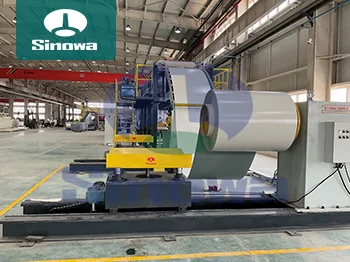
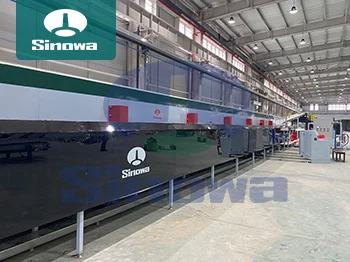
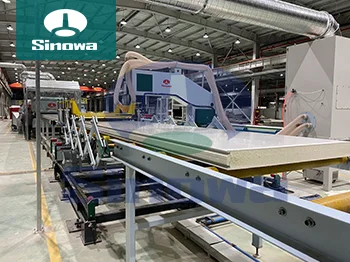
The high-tech polyurethane foam production line can meet a variety of production needs of customers, the whole polyurethane foam production line design concept of modularization enables all our components to be integrated and combined at will. Our high efficiency polyurethane foam production line can easily automate the production of roof sandwich panel, wall sandwich panel, cold storage sandwich panel and other products by different combination and configuration selection and siple switching. The inner core layer can be polyrethane or rock wool, glass wool, an so on.


The high precision polyurethane foam production line has high adaptability, which may produce various sandwich panel of the PU, PIR and rock wool systems. We may design various products according to the customer’s requirements, including various configurations, so as to meet their demands with flexible price system. Highly integrated and linked control system centralizes all control points at the main central center, achieving parameter linkage, fault self-diagnosis controlled by the whole line and shipping distance control. High-level automatic control system also saves the manpower and reduces the manpower loss for customers.


The precision servo hoisting mechanism employed by the main engine without hydraulic system makes the board thickness control flexible and the customer may conveniently change or adjust the board thickness. There will be not such troubles as hydraulic system adjustment, leakage, maintenance, etc.


High-level energy saving and protection design makes the whole polyurethane foam production line possible to produce around the clock throughout the year and the customer will save huge budget. In addition, the isolated heat preservation room is constructed for warming the environment. The energy saving and protection design of our manufacturing line may guarantee that the customer’s production line may be freely heated and produce in the main time to save more costs for customers.


The high-power low-consumption design quickens the reaction of the cheap polyurethane foam production line while energy consumption is kept low. With the brand-new, fully sealed inner insulation design, the energy consumption is controlled at the minimum level to achieve the design objective of less than an hour for the insulation system to be activated from the room temperature above 5℃ to the production process temperature. The energy consumption is only 40% that of those similar products.
The production of polyurethane foam is a sophisticated and precisely controlled process that relies on advanced production lines to transform a blend of chemical components into a versatile material used across countless industries. A polyurethane foam production line is a integrated system of equipment and processes designed to handle the complex chemical reactions and physical transformations that define foam creation, ensuring consistency, efficiency, and adaptability to various product requirements. From the storage of raw materials to the final cutting and packaging of finished foam products, every stage of the production line plays a critical role in determining the quality and performance of the end product.
At the heart of any polyurethane foam production line lies the raw material handling system, which is responsible for the storage, preparation, and precise delivery of the chemical components that form the basis of polyurethane foam. The primary raw materials include polyols and isocyanates, along with a range of additives such as catalysts, blowing agents, surfactants, and specialized modifiers. These materials must be stored in conditions that preserve their chemical stability, as even minor changes in temperature or contamination can disrupt the subsequent reaction processes. Storage tanks are typically constructed from corrosion-resistant materials like stainless steel, with jacketed or coiled systems to allow for heating or cooling as needed to maintain optimal temperatures. For certain components, such as isocyanates, which are sensitive to moisture, sealed storage with inert gas blanketing is often required to prevent degradation.
The raw material system also includes metering units that ensure each component is delivered in the exact proportions specified by the foam formulation. Precision metering is essential because the ratio of polyols to isocyanates, known as the isocyanate index, directly affects the mechanical properties of the foam, such as its hardness, resilience, and durability. A deviation from the optimal ratio can result in foam that is too soft and prone to deformation or too rigid and brittle. Modern metering systems use positive displacement pumps with independent control mechanisms, allowing for accurate flow rate adjustments and real-time monitoring of material delivery. Some advanced production lines can handle up to 12 different raw materials simultaneously, enabling the creation of complex, multi-functional foam formulations tailored to specific applications.
Once the raw materials are properly metered, they move to the mixing system, where the chemical reaction that forms polyurethane foam is initiated. The mixing process must achieve thorough and uniform blending of the components in a very short time frame, as the reaction between polyols and isocyanates begins immediately upon contact. There are two primary types of mixing technologies used in polyurethane foam production lines: low-pressure and high-pressure mixing. Low-pressure systems use mechanical stirrers to combine the materials, while high-pressure systems rely on the force of compressed materials colliding in a mixing head to achieve homogenization. High-pressure mixing is often preferred for large-scale production or for formulations requiring precise control, as it results in more consistent mixing and reduces the risk of material waste.
Surfactants added to the raw material blend play a crucial role in the mixing and foaming process by reducing surface tension, allowing the gas generated during the reaction to form uniform bubbles. Without proper surfactant action, the bubbles may coalesce or collapse, resulting in foam with irregular cell structure and compromised properties. The mixing head is designed to distribute the reacting mixture evenly onto a conveyor belt (for continuous production) or into a mold (for batch production), depending on the type of foam being produced. For continuous foam production, the mixing head may move in an oscillatory motion to ensure uniform coverage across the width of the conveyor, while mold-based systems deliver the mixture directly into cavity-shaped tools for precision-shaped products.
The foaming and curing stage is where the physical transformation of the liquid mixture into a solid foam occurs. This stage involves two simultaneous processes: the blowing reaction, which generates the gas that creates the foam's cellular structure, and the gelation reaction, which forms the polyurethane polymer network that gives the foam its strength and shape. Blowing agents can be either chemical or physical: chemical blowing agents, most commonly water, react with isocyanates to produce carbon dioxide gas, while physical blowing agents rely on the evaporation of a low-boiling-point liquid, such as pentane, to generate gas. The choice of blowing agent depends on the type of foam (flexible or rigid) and environmental considerations, with many modern production lines adopting low-global-warming-potential (GWP) blowing agents to meet sustainability requirements.
Catalysts are added to control the rate of both the blowing and gelation reactions, ensuring that they proceed in sync. Amine catalysts typically accelerate the blowing reaction, promoting rapid gas generation, while organotin catalysts speed up gelation, allowing the polymer network to form quickly enough to trap the gas bubbles. The balance between these two reactions is critical: if blowing occurs too quickly, the foam may expand uncontrollably and collapse; if gelation is too fast, the foam may not expand sufficiently, resulting in high density and poor insulation properties. The curing process is influenced by temperature and humidity, with many production lines incorporating heated conveyor zones or curing ovens to facilitate complete reaction and foam stabilization. For flexible foams, the curing process may take several minutes, while rigid foams often require additional time in a controlled environment to achieve full structural integrity.
Continuous foam production lines, which are commonly used for manufacturing large blocks of flexible foam (such as those used in furniture and bedding), incorporate a series of drop plates after the mixing head. These plates are adjustable to control the foam's rise and cell structure. By modifying the angle and height of the drop plates, operators can reduce density gradients in the foam block, prevent material backflow and splashing, and ensure uniform vertical expansion. The final drop plate is often set at a steeper angle to help flatten the top surface of the foam, increasing yield and improving the quality of the finished block. As the foam travels along the conveyor, it continues to cure and expand until it reaches its final dimensions, at which point it is cut into manageable lengths by automated cutting systems.
In contrast, mold-based production lines are used for creating shaped foam products, such as automotive seats, cushioning for medical devices, or insulation panels. These lines include a mold system with automatic opening and closing mechanisms, as well as temperature control to regulate the curing process within the mold. The mold cavity is designed to the exact specifications of the finished product, and the reacting foam mixture expands to fill the cavity completely. After curing, the mold opens automatically, and the finished product is removed for post-processing. Mold-based production lines offer greater flexibility for custom shapes and sizes but typically operate at lower production volumes compared to continuous lines.
Post-processing is an essential part of the polyurethane foam production line, as it prepares the foam for its final application. For continuous foam blocks, post-processing includes cutting the large blocks into smaller pieces of specified thickness using horizontal or vertical cutting machines equipped with fine blades or wire cutters. Some production lines incorporate computer-controlled cutting systems that can create complex shapes with high precision, reducing material waste and improving production efficiency. For molded products, post-processing may involve trimming excess foam (flash) from the edges of the product, as well as additional curing if needed to ensure optimal performance.
Quality control systems are integrated throughout the production line to monitor and maintain product consistency. These systems use a combination of sensors and automated testing equipment to measure key foam properties, such as density, cell structure, tensile strength, and resilience. Real-time monitoring allows operators to make immediate adjustments to process parameters, such as material proportions, mixing speed, or curing temperature, if deviations from the desired specifications are detected. For example, density sensors can identify variations in foam thickness, prompting adjustments to the mixing head speed or material flow rates. Some advanced production lines use machine vision systems to inspect the foam's surface for defects, such as cracks, uneven cell structure, or contamination, ensuring that only high-quality products move to the final packaging stage.
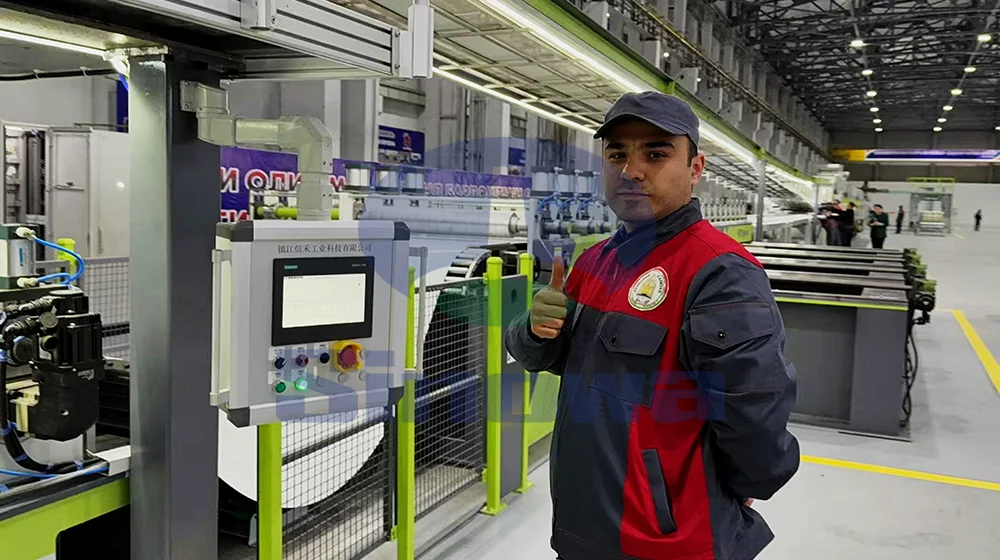
Automation and control systems have revolutionized polyurethane foam production lines, improving efficiency, reducing human error, and enabling greater flexibility in product formulation. Modern production lines are equipped with programmable logic controllers (PLCs) and user-friendly touchscreen interfaces that allow operators to manage all aspects of the production process from a central control station. The PLC system stores multiple foam formulations, enabling quick changeover between different product types with minimal downtime—a valuable feature for manufacturers producing a wide range of foam products. Real-time data collection from sensors throughout the line provides insights into production efficiency, material usage, and product quality, allowing for continuous process optimization.
Technological advancements in polyurethane foam production lines are increasingly focused on sustainability and environmental performance. One of the most significant developments is the adoption of bio-based polyols, which are derived from renewable resources such as vegetable oils, instead of petroleum-based polyols. These bio-based materials reduce the carbon footprint of foam production and decrease reliance on fossil fuels. Another promising innovation is the use of carbon dioxide (CO₂) as a raw material component, with research showing that up to 20 percent of petroleum-based polyols can be replaced with CO₂-derived polyols in rigid foam production. This not only reduces greenhouse gas emissions but also provides a sustainable use for a byproduct of industrial processes.
Environmental improvements are also being made in blowing agent technology, with the phase-out of high-GWP fluorinated blowing agents in favor of more sustainable alternatives like pentane or water. Pentane-based blowing agents have zero ozone depletion potential (ODP) and low GWP, making them an environmentally friendly choice for rigid foam production used in insulation applications. Additionally, production lines are being designed with more efficient energy use in mind, incorporating heat recovery systems that capture waste heat from curing ovens and reuse it to heat raw materials, reducing overall energy consumption. Waste reduction is another focus, with automated systems minimizing material spillage and precise metering reducing overuse of raw materials.
The versatility of polyurethane foam production lines is evident in the wide range of foam types they can produce, each tailored to specific applications. Flexible polyurethane foam, characterized by its open cell structure and high resilience, is used in furniture, bedding, automotive seating, and carpet underlay. Rigid polyurethane foam, with its closed cell structure and excellent insulation properties, is a key material in construction (for wall and roof insulation), refrigeration (for refrigerator and cold storage units), and transportation (for thermal insulation in vehicles). Semi-rigid foam, which combines properties of both flexible and rigid foam, is used in applications such as automotive interior components and packaging materials. Specialized foam formulations, such as flame-retardant, anti-static, or memory foam (viscoelastic foam), are produced using modified production line setups and raw material blends to achieve the required performance characteristics.
Memory foam production, in particular, requires precise control over the foaming and curing process to achieve the slow recovery and pressure-relief properties that define this material. Production lines for memory foam often use adjusted catalyst ratios and cooling systems to control the glass transition temperature (Tg) of the foam, which determines its performance across different environmental conditions. Advances in memory foam technology have led to the development of hybrid foams that combine the pressure-relief properties of viscoelastic foam with the breathability and support of conventional flexible foam, requiring production lines that can handle complex multi-component formulations and precise process control.
The adaptability of polyurethane foam production lines is further enhanced by their modular design, which allows manufacturers to expand or modify the line as production needs change. Modular components, such as additional metering units, alternative mixing heads, or specialized cutting systems, can be integrated into existing lines without major downtime, enabling manufacturers to respond quickly to market demands for new foam products. This flexibility is particularly valuable in industries with rapidly changing trends, such as the automotive or bedding sectors, where new performance requirements or design innovations often require adjustments to foam formulations or production processes.
Safety is a paramount consideration in polyurethane foam production lines, given the handling of potentially hazardous chemical components. Production facilities are equipped with comprehensive safety systems, including ventilation systems to remove volatile organic compounds (VOCs) and other harmful emissions, emergency shutdown systems to stop production in case of leaks or equipment failure, and protective equipment for operators. For production lines using flammable blowing agents like pentane, additional safety measures such as explosion-proof equipment, gas detection systems, and fire suppression systems are implemented to minimize risks. Regular maintenance and safety inspections are essential to ensure that all equipment operates correctly and that safety protocols are followed.
In conclusion, polyurethane foam production lines are complex, integrated systems that combine chemical engineering, mechanical design, and advanced automation to produce a material that has become indispensable in modern life. From the precise handling of raw materials to the final post-processing of finished products, every stage of the production line is designed to ensure consistency, efficiency, and product quality. Technological advancements continue to drive improvements in sustainability, with innovations in bio-based materials, CO₂ utilization, and energy efficiency reducing the environmental impact of foam production. The modular design and flexibility of modern production lines enable manufacturers to adapt to changing market demands, producing a wide range of foam types tailored to specific applications. As industries continue to seek materials that are lightweight, durable, and energy-efficient, polyurethane foam production lines will remain a critical component of the global manufacturing landscape, evolving to meet new challenges and opportunities in the years to come. The ongoing development of more sustainable processes and materials will further solidify the role of polyurethane foam as a versatile and environmentally responsible solution for a diverse range of applications.
« Polyurethane Foam Production Line » Update Date: 2026/1/16
URL: https://www.sinowamachine.com/tags/polyurethane-foam-production-line.html
- Links:
- Sandwich Panel Continuous Production Line
- Automatic and Continuous Sandwich Panel Production Line
- Cheap and Low Price Sandwich Panel Production Line
- China Sandwich Panel Production Line Factory
- Color Steel Sandwich Panel Production Line For Cold Storage
- Continuous Composite Foam Sandwich Panel Production Line
- Continuous Production Line For Rockwool and Mineral Wool Sandwich Panels
- Continuous PU Phenolic Insulation Panel Production Line
- Continuous PU PIR Sandwich Panel Production Line
- Continuous PUF PUR Sandwich Panel Production Line
- Continuous Sandwich Panel Production Line For Roof and Wall
- Customized and Design Sandwich Panel Production Line
- Decorative Sandwich Panel Production Line For Glass Wool Boards
- High Quality Sandwich Panel Production Line For Sale
- Polyurethane(PU) Sandwich Panel Production Line
- Sandwich Panel Production Line Manufacturer and Supplier
- Sandwich Panel Production Machinery and Equipment