
Wall Sandwich Panel Production Line
Sinowa is a wall sandwich panel production line supplier from china, customized high-quality & high efficiency wall sandwich panel production line at low price, the adoption of system integration technology and bus control technology accomplishes the full automatization of integrated and coordinated control of the wall sandwich panel production line with accessible remote interactive communication. Ranking the first-class level in the world, it is currently the wall sandwich panel production line in the market taking a comprehensive lead in high performance.
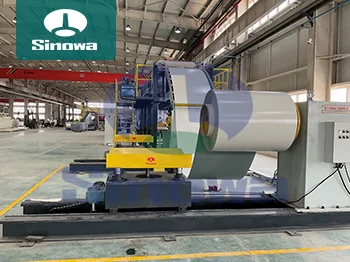
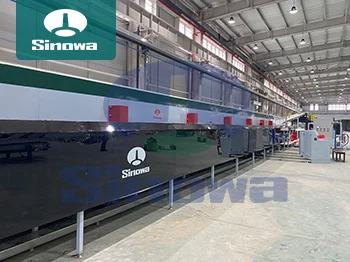
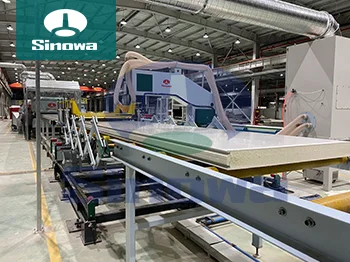
The high-tech wall sandwich panel production line can meet a variety of production needs of customers, the whole wall sandwich panel production line design concept of modularization enables all our components to be integrated and combined at will. Our high efficiency wall sandwich panel production line can easily automate the production of roof sandwich panel, wall sandwich panel, cold storage sandwich panel and other products by different combination and configuration selection and siple switching. The inner core layer can be polyrethane or rock wool, glass wool, an so on.


The high precision wall sandwich panel production line has high adaptability, which may produce various sandwich panel of the PU, PIR and rock wool systems. We may design various products according to the customer’s requirements, including various configurations, so as to meet their demands with flexible price system. Highly integrated and linked control system centralizes all control points at the main central center, achieving parameter linkage, fault self-diagnosis controlled by the whole line and shipping distance control. High-level automatic control system also saves the manpower and reduces the manpower loss for customers.


The precision servo hoisting mechanism employed by the main engine without hydraulic system makes the board thickness control flexible and the customer may conveniently change or adjust the board thickness. There will be not such troubles as hydraulic system adjustment, leakage, maintenance, etc.


High-level energy saving and protection design makes the whole wall sandwich panel production line possible to produce around the clock throughout the year and the customer will save huge budget. In addition, the isolated heat preservation room is constructed for warming the environment. The energy saving and protection design of our manufacturing line may guarantee that the customer’s production line may be freely heated and produce in the main time to save more costs for customers.


The high-power low-consumption design quickens the reaction of the cheap wall sandwich panel production line while energy consumption is kept low. With the brand-new, fully sealed inner insulation design, the energy consumption is controlled at the minimum level to achieve the design objective of less than an hour for the insulation system to be activated from the room temperature above 5℃ to the production process temperature. The energy consumption is only 40% that of those similar products.
A wall sandwich panel production line is an integrated automated system designed specifically for the continuous manufacturing of sandwich panels used in building walls, combining surface materials with insulation core materials through precise and efficient composite processes. This kind of production line represents the advanced level of automation in modern building material manufacturing, realizing the full-process mechanized operation from raw material feeding to finished product stacking, which greatly improves production efficiency while ensuring the stability and consistency of product quality. Unlike traditional manual or semi-automatic production methods, the wall sandwich panel production line achieves seamless connection between each process link, minimizes manual intervention, and adapts to the large-scale and diversified production needs of the construction industry. The core design concept of the production line is to integrate mechanical structure, electrical control, and material processing technology, forming a modular and flexible production system that can be customized according to different product specifications, core material types, and application scenarios. With the continuous development of green building and prefabricated construction industries, the wall sandwich panel production line has become an indispensable key equipment in the field of building material production, providing high-quality, efficient, and energy-saving solutions for the construction of various buildings.
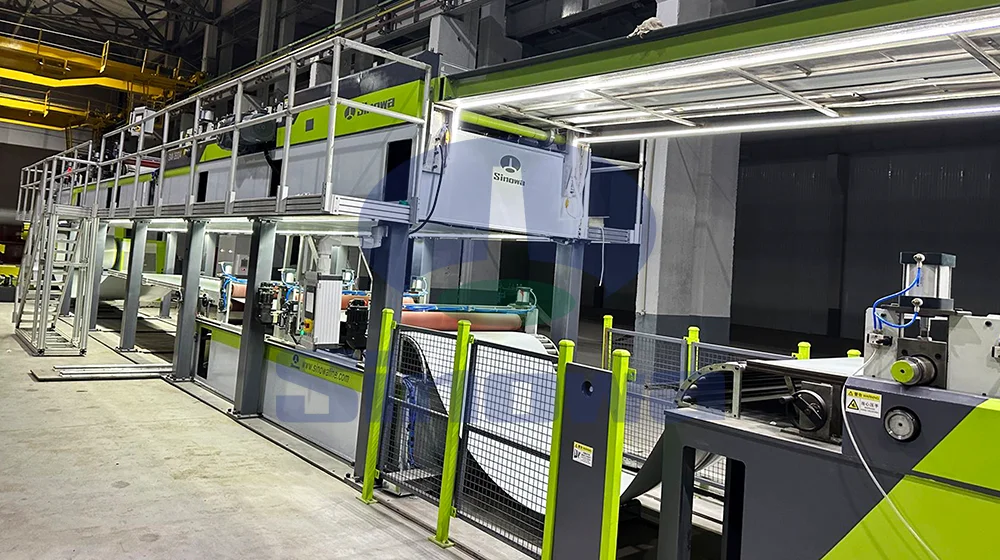
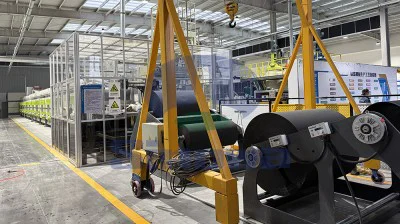
The structure of a wall sandwich panel production line is composed of multiple functional modules that work in coordination, each undertaking specific production tasks and forming a complete production chain. The basic structural components include unwinding systems, leveling and cutting devices, forming units, core material processing systems, gluing and compounding mechanisms, curing systems, cutting units, stacking systems, and control systems. Each module adopts a modular design, which not only facilitates installation and maintenance but also allows flexible combination and configuration according to production needs, enabling the production line to adapt to different types of wall sandwich panel production. The unwinding system is the starting link of the production line, mainly composed of uncoilers, tension control devices, and feeding guides. It is responsible for stably unwinding the surface material coils (such as color steel plates, aluminum foils, or non-woven fabrics) and conveying them to the next process. The uncoilers are usually designed with double winding machines, which can support simultaneous feeding of two different materials or colors of surface panels, and realize automatic switching without stopping the machine, improving production continuity. The tension control device can effectively adjust the tension of the surface material during the unwinding process to prevent material deformation and ensure the flatness of the surface material.
The leveling and cutting device is connected to the unwinding system, mainly used to eliminate the internal stress of the surface material coils and cut the material into the required width. The leveling machine usually adopts a 7-9 roll structure, which can effectively correct the unevenness of the surface material, reduce the flatness error to no more than 0.3 mm per meter, laying a foundation for the subsequent forming process. The cutting device is equipped with high-precision cutting tools, which can accurately cut the surface material according to the preset width, and the cutting error is controlled within a small range to ensure the consistency of the material size. The forming unit is the core part of the surface material shaping, mainly composed of roll forming machines, servo drive systems, and quick mold changing devices. The roll forming machine adopts servo-driven roll forming technology, through 20-30 forming rollers to gradually deform the surface material, ensuring the precise size and shape of the panel. The quick mold changing system allows the replacement of board types within 30 minutes, supporting the production of surface materials with various cross-sections such as corrugated boards and flat boards, meeting the diversified needs of different building designs.
The core material processing system is specially designed for the processing and feeding of insulation core materials, which varies according to the type of core material. For loose core materials such as rock wool and glass wool, the system is equipped with automatic feeding devices, leveling mechanisms, and precision cutting units. The automatic feeding device can stably convey the core material to the compounding area, and the leveling mechanism ensures the uniform thickness of the core material. The precision cutting unit adopts laser thickness measurement and servo knife group, with a cutting accuracy of ±0.5 mm, ensuring that the length and thickness of the core material match the surface material. For foaming core materials such as polyurethane (PU) and polyisocyanurate (PIR), the core material processing system includes a high-pressure foaming machine, mixing head, and foaming density control device. The high-pressure mixing head can fully mix the foaming raw materials, and the foaming density can be adjusted between 30-60 kg/m³ according to the product requirements, ensuring the insulation performance of the core material. In addition, some production lines are also equipped with edge sealing systems, which use PU foam to seal the edges of the panels, improving the overall rigidity and thermal insulation effect of the panels.
The gluing and compounding mechanism is responsible for bonding the surface material and the core material into an integrated sandwich panel. The gluing device usually adopts a double-sided adhesive coating machine, which can spray hot melt adhesive or polyurethane adhesive evenly on the surface of the surface material or core material. The adhesive quantity control accuracy is ±5 g/m², ensuring sufficient bonding force between the layers while avoiding excessive adhesive waste. The compounding mechanism is mainly composed of multi-layer presses and synchronous traction devices. The multi-layer press adopts segmented pressure control, and the pressure can be adjusted between 0.1-0.5 MPa according to the type of core material and surface material, ensuring that the surface material and core material are closely bonded without gaps. The synchronous traction device is driven by a servo motor, with a speed matching error of less than 0.1%, ensuring that the surface material and core material move synchronously during the compounding process, avoiding layer offset. The curing system is used to solidify the adhesive and the foaming core material, ensuring the structural stability and durability of the sandwich panel. For panels using PU or PIR foaming core materials, the curing system is usually equipped with an infrared heating device and a constant temperature control system, which can control the curing temperature and time according to the foaming characteristics, ensuring that the core material is fully foamed and cured. For panels using rock wool or glass wool core materials, the curing system mainly plays the role of drying and bonding reinforcement, removing the moisture in the core material and improving the bonding strength between the core material and the surface material.
The cutting unit is used to cut the continuous composite sandwich panel into finished products of preset length. It is usually equipped with a CNC cutting system, which can adopt flying saw or waterjet cutting methods. The length accuracy of the cutting is ±1 mm, and the angle error is less than 0.5°, ensuring that the size of each finished product meets the design requirements. The cutting process can be carried out continuously without stopping the machine, which effectively improves production efficiency. The stacking system is the final link of the production line, mainly composed of automatic stacker cranes, conveyor belts, and packaging devices. The automatic stacker crane can adopt a robotic arm or vacuum suction cup type, which can automatically stack the cut finished panels to a maximum height of 2.5 meters, reducing manual handling and avoiding damage to the panels. The packaging device can wrap the stacked panels with plastic film or packaging paper, preventing the panels from being contaminated or damaged during transportation and storage. The control system is the "brain" of the entire production line, mainly composed of a PLC controller, touch screen, and sensor system. It can realize centralized control of all modules, set and adjust production parameters (such as production speed, panel thickness, cutting length, etc.), and monitor the operation status of each module in real time. The control system also has functions such as fault self-diagnosis and parameter linkage, which can promptly alarm when a fault occurs, and provide fault location and handling suggestions, reducing the maintenance time and improving the operational stability of the production line. Some advanced production lines also support remote control and data monitoring, enabling operators to monitor and adjust the production line in real time through mobile devices or computers, further improving the convenience of operation.
The performance of the wall sandwich panel production line is reflected in multiple aspects such as production efficiency, processing accuracy, stability, flexibility, and energy conservation, which directly determine the quality of the finished sandwich panels and the economic benefits of production. In terms of production efficiency, the continuous production mode of the production line enables the production speed to reach 5-15 meters per minute, and the maximum daily output can exceed 5000 square meters, which is far higher than the traditional manual production mode. The annual production capacity can reach hundreds of thousands to over one million square meters, meeting the large-scale production needs of building material manufacturers. The processing accuracy is one of the core performance indicators of the production line. Through the precise control of the servo drive system, laser measurement technology, and CNC cutting system, the production line can ensure that the thickness error of the sandwich panel is within ±0.5 mm, the length error is within ±1 mm, and the flatness of the surface material is within 0.3 mm per meter. This high-precision processing ensures the consistency of the finished panels, making them easier to install and improving the overall construction quality.
The operational stability of the production line is guaranteed by the modular design, high-quality components, and advanced control system. The key components of the production line are made of high-strength materials and undergo strict quality testing, which can withstand long-term continuous operation and reduce the frequency of failures. The fault self-diagnosis function of the control system can promptly find and handle potential faults, ensuring the continuity of production. The flexibility of the production line is reflected in its strong adaptability to different product specifications and core material types. Through the adjustment of parameters and the replacement of molds, the production line can produce sandwich panels with thicknesses ranging from 50-300 mm, widths ranging from 600-1200 mm, and various lengths, and can adapt to different core materials such as rock wool, glass wool, PU, PIR, and EPS. This flexibility enables manufacturers to quickly respond to market changes and meet the diversified needs of different customers. Energy conservation and environmental protection are important performance characteristics of modern wall sandwich panel production lines. The production line adopts frequency conversion speed regulation technology, which can adjust the motor speed according to the production load, reducing energy consumption. Some production lines also adopt thermal recycling technology, which recycles the waste heat generated during the production process, further reducing energy consumption. The energy consumption of the entire line is only 40% of that of similar traditional products, and the heating system can reach the process temperature within 1 hour when the room temperature is above 5℃. In terms of environmental protection, the production line adopts environmentally friendly adhesives and foaming media (such as pentane), reducing the emission of harmful substances. At the same time, the production process is fully enclosed, reducing dust and noise pollution, complying with green building and environmental protection standards.
Wall sandwich panel production lines can be divided into different types according to the type of core material, the type of surface material, and the degree of automation, each with its own characteristics and applicable scenarios. According to the type of core material, the production line can be divided into rock wool wall sandwich panel production lines, PU/PIR wall sandwich panel production lines, EPS wall sandwich panel production lines, and glass wool wall sandwich panel production lines. Rock wool wall sandwich panel production lines are mainly used to produce sandwich panels with rock wool as the core material. Rock wool has excellent fire resistance, heat insulation, and sound insulation performance, so the panels produced by this type of production line are widely used in buildings with strict fire safety requirements, such as industrial plants, high-rise buildings, and public buildings. The production line is equipped with a special rock wool feeding and cutting system, which can ensure the uniform thickness and tight bonding of the rock wool core material. The rock wool sandwich panels produced have a fire resistance limit of up to 240 minutes, meeting the high fire protection requirements of various buildings.
PU/PIR wall sandwich panel production lines are designed for the production of sandwich panels with PU or PIR as the core material. PU and PIR have excellent thermal insulation performance, light weight, and good structural strength, making them suitable for buildings that require high thermal insulation, such as cold storage, purification workshops, and low-energy-consumption buildings. The production line is equipped with a high-pressure foaming system, which can accurately control the foaming density and foaming speed, ensuring the thermal insulation effect and structural stability of the core material. The PU/PIR sandwich panels produced have a closed-cell rate of up to 95%, which not only has good thermal insulation performance but also has certain waterproof and moisture-proof properties. EPS wall sandwich panel production lines produce sandwich panels with EPS (expanded polystyrene) as the core material. EPS has the characteristics of light weight, low cost, and good thermal insulation, making it suitable for ordinary industrial plants, warehouses, and residential buildings. The production line is equipped with an EPS feeding and cutting system, which can process EPS core materials of different densities and thicknesses, meeting the needs of different building scenarios. Glass wool wall sandwich panel production lines are mainly used to produce sandwich panels with glass wool as the core material. Glass wool has good heat insulation, sound absorption, and corrosion resistance, and is suitable for buildings such as workshops, warehouses, and exhibition halls that require sound insulation and heat insulation.
According to the type of surface material, the production line can be divided into color steel wall sandwich panel production lines, aluminum foil wall sandwich panel production lines, and non-woven fabric wall sandwich panel production lines. Color steel wall sandwich panel production lines use color steel plates as the surface material, which has the characteristics of beautiful appearance, corrosion resistance, and high structural strength. The production line is equipped with a surface treatment unit, which can perform online cleaning and passivation treatment on the color steel plates, improving the adhesive strength between the surface material and the core material. The color steel sandwich panels produced are widely used in the exterior walls and interior partitions of various buildings. Aluminum foil wall sandwich panel production lines use aluminum foil as the surface material, which has good thermal reflection and moisture-proof performance, making them suitable for buildings that require heat insulation and moisture-proof, such as cold storage and food processing workshops. Non-woven fabric wall sandwich panel production lines use non-woven fabrics as the surface material, which has good air permeability and sound absorption, and is suitable for interior decoration and sound insulation partitions.
According to the degree of automation, the production line can be divided into fully automatic wall sandwich panel production lines, semi-automatic wall sandwich panel production lines, and manual production lines. Fully automatic production lines realize the full-process automation from raw material feeding to finished product stacking, with minimal manual intervention, high production efficiency, and stable product quality, suitable for large-scale production. Semi-automatic production lines require a small amount of manual operation in some links (such as material feeding and stacking), with moderate production efficiency and lower equipment investment, suitable for small and medium-sized manufacturers. Manual production lines rely on manual operation for most processes, with low production efficiency and unstable product quality, and are gradually being eliminated by the market.
The application of wall sandwich panel production lines is closely related to the development of the construction industry, and they are widely used in various fields such as industrial buildings, civil buildings, public buildings, and special buildings, providing high-quality wall materials for the construction industry. In the field of industrial buildings, wall sandwich panel production lines are widely used in the construction of industrial plants, warehouses, workshops, and other buildings. The sandwich panels produced by the production line have the characteristics of light weight, high strength, fast construction speed, and good thermal insulation and sound insulation, which can effectively reduce the construction cost and improve the working environment of the workshop. For example, in the construction of heavy industrial plants, rock wool sandwich panels produced by rock wool wall sandwich panel production lines are used as exterior walls, which can not only meet the fire protection requirements but also reduce the energy consumption of the plant. In the construction of light industrial plants and warehouses, EPS or PU sandwich panels are often used, which are light in weight and good in thermal insulation, reducing the load of the building structure and saving energy.
In the field of civil buildings, wall sandwich panel production lines are used in the construction of residential buildings, villas, prefabricated houses, and other buildings. With the development of prefabricated construction, sandwich panels produced by the production line have become an important component of prefabricated walls, which can realize on-site assembly, greatly shortening the construction period and improving the construction efficiency. The sandwich panels have good thermal insulation and sound insulation performance, which can improve the living comfort of residential buildings and reduce energy consumption for heating and cooling. For example, in the construction of low-energy-consumption residential buildings, PU/PIR sandwich panels are used as exterior walls, which can effectively reduce heat loss and meet the requirements of energy conservation and emission reduction. Prefabricated houses built with sandwich panels are widely used in temporary buildings such as construction sites and disaster relief resettlement houses due to their fast construction speed, portability, and reusability.
In the field of public buildings, wall sandwich panel production lines are used in the construction of hospitals, schools, shopping malls, exhibition halls, and other buildings. These buildings have high requirements for fire protection, thermal insulation, sound insulation, and hygiene. The sandwich panels produced by the production line can meet these requirements. For example, in the construction of hospitals, rock wool sandwich panels with good fire resistance and sound insulation are used as interior partitions and exterior walls, which can not only ensure fire safety but also reduce noise pollution and create a quiet medical environment. In the construction of shopping malls and exhibition halls, color steel sandwich panels with beautiful appearance and high structural strength are used, which can improve the overall aesthetic effect of the building and meet the needs of large-span space construction.
In the field of special buildings, wall sandwich panel production lines are used in the construction of cold storage, purification workshops, high-altitude buildings, and coastal buildings. Cold storage requires high thermal insulation and waterproof performance, so PU/PIR sandwich panels produced by PU/PIR wall sandwich panel production lines are usually used, which have excellent thermal insulation performance and can effectively maintain the low temperature environment inside the cold storage. Purification workshops (such as pharmaceutical workshops and electronic workshops) require high airtightness and cleanliness, so sandwich panels with good airtightness and corrosion resistance are used, and the production line can adjust the surface material and core material according to the requirements of the purification level to meet the special needs of the workshop. High-altitude buildings and coastal buildings have high requirements for wind resistance, corrosion resistance, and durability. The sandwich panels produced by the production line are light in weight and high in strength, which can reduce the load of the building structure, and the surface material can be treated with anti-corrosion to improve the durability of the building.
In addition to the above application fields, wall sandwich panel production lines also have broad application prospects in the field of green building and energy-saving construction. With the increasing emphasis on environmental protection and energy conservation, green building materials have become the development trend of the construction industry. The sandwich panels produced by the production line are energy-saving, environmentally friendly, and recyclable, complying with the requirements of green building standards. The production line itself also adopts energy-saving and environmental protection technologies, reducing energy consumption and environmental pollution. With the advancement of modular buildings and intelligent manufacturing, the wall sandwich panel production line will continue to iterate and upgrade, moving towards higher integration, intelligence, and energy conservation, and will play a more important role in the construction industry. It will not only meet the diversified needs of the market for wall materials but also promote the sustainable development of the construction industry, contributing to the realization of energy conservation and emission reduction goals.
« Wall Sandwich Panel Production Line » Update Date: 2026/4/13
URL: https://www.sinowamachine.com/tags/wall-sandwich-panel-production-line.html
![Wall Sandwich Panel Production Line Supplier]()
Wall Sandwich Panel Production Line Supplier
2026-08-31Wall sandwich panel production lines have emerged as essential integrated manufacturing systems for the modern construction industry, dedicated to the continuous and standardized production of high-performance composite wall panels. These automated production systems integrate multiple sophisticated …
- Links:
- Sandwich Panel Continuous Production Line
- Automatic and Continuous Sandwich Panel Production Line
- Cheap and Low Price Sandwich Panel Production Line
- China Sandwich Panel Production Line Factory
- Color Steel Sandwich Panel Production Line For Cold Storage
- Continuous Composite Foam Sandwich Panel Production Line
- Continuous Production Line For Rockwool and Mineral Wool Sandwich Panels
- Continuous PU Phenolic Insulation Panel Production Line
- Continuous PU PIR Sandwich Panel Production Line
- Continuous PUF PUR Sandwich Panel Production Line
- Continuous Sandwich Panel Production Line For Roof and Wall
- Customized and Design Sandwich Panel Production Line
- Decorative Sandwich Panel Production Line For Glass Wool Boards
- High Quality Sandwich Panel Production Line For Sale
- Polyurethane(PU) Sandwich Panel Production Line
- Sandwich Panel Production Line Manufacturer and Supplier
- Sandwich Panel Production Machinery and Equipment