
Sandwich Panel Making Equipment
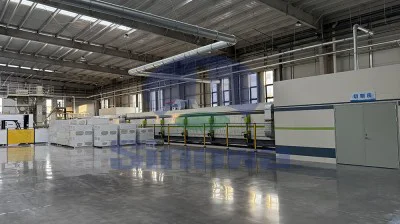
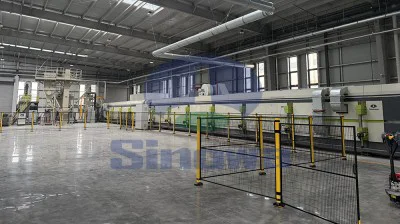
Sinowa is a sandwich panel making equipment supplier from china, customized high-quality & high efficiency sandwich panel making equipment at low price, the adoption of system integration technology and bus control technology accomplishes the full automatization of integrated and coordinated control of the sandwich panel making equipment with accessible remote interactive communication. Ranking the first-class level in the world, it is currently the sandwich panel making equipment in the market taking a comprehensive lead in high performance.
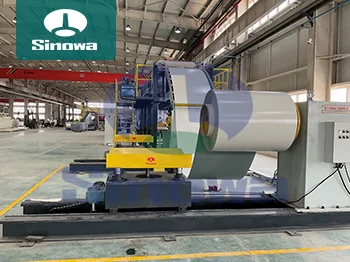
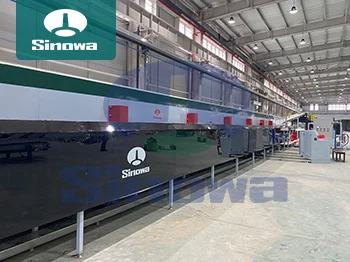
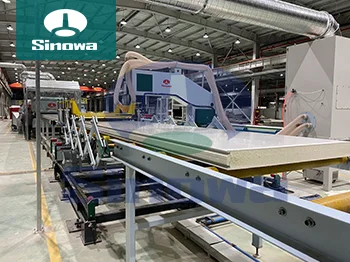
The high-tech sandwich panel making equipment can meet a variety of production needs of customers, the whole sandwich panel making equipment design concept of modularization enables all our components to be integrated and combined at will. Our high efficiency sandwich panel making equipment can easily automate the production of roof sandwich panel, wall sandwich panel, cold storage sandwich panel and other products by different combination and configuration selection and siple switching. The inner core layer can be polyrethane or rock wool, glass wool, an so on.


The high precision sandwich panel making equipment has high adaptability, which may produce various sandwich panel of the PU, PIR and rock wool systems. We may design various products according to the customer’s requirements, including various configurations, so as to meet their demands with flexible price system. Highly integrated and linked control system centralizes all control points at the main central center, achieving parameter linkage, fault self-diagnosis controlled by the whole line and shipping distance control. High-level automatic control system also saves the manpower and reduces the manpower loss for customers.


The precision servo hoisting mechanism employed by the main engine without hydraulic system makes the board thickness control flexible and the customer may conveniently change or adjust the board thickness. There will be not such troubles as hydraulic system adjustment, leakage, maintenance, etc.


High-level energy saving and protection design makes the whole sandwich panel making equipment possible to produce around the clock throughout the year and the customer will save huge budget. In addition, the isolated heat preservation room is constructed for warming the environment. The energy saving and protection design of our manufacturing line may guarantee that the customer’s production line may be freely heated and produce in the main time to save more costs for customers.


The high-power low-consumption design quickens the reaction of the cheap sandwich panel making equipment while energy consumption is kept low. With the brand-new, fully sealed inner insulation design, the energy consumption is controlled at the minimum level to achieve the design objective of less than an hour for the insulation system to be activated from the room temperature above 5℃ to the production process temperature. The energy consumption is only 40% that of those similar products.
Sandwich panel making equipment is a set of integrated industrial machinery designed to produce sandwich panels, which are composite materials consisting of two outer facing layers and a middle core layer bonded together. These panels are widely used in various fields due to their excellent comprehensive performance, and the equipment that manufactures them plays a crucial role in ensuring the quality, efficiency and stability of the production process. The structure of sandwich panel making equipment is complex and systematic, integrating multiple functional modules that work together to complete the entire production process from raw material input to finished product output. Each component of the equipment has a specific function, and the rationality of its structure directly affects the production efficiency and product quality.
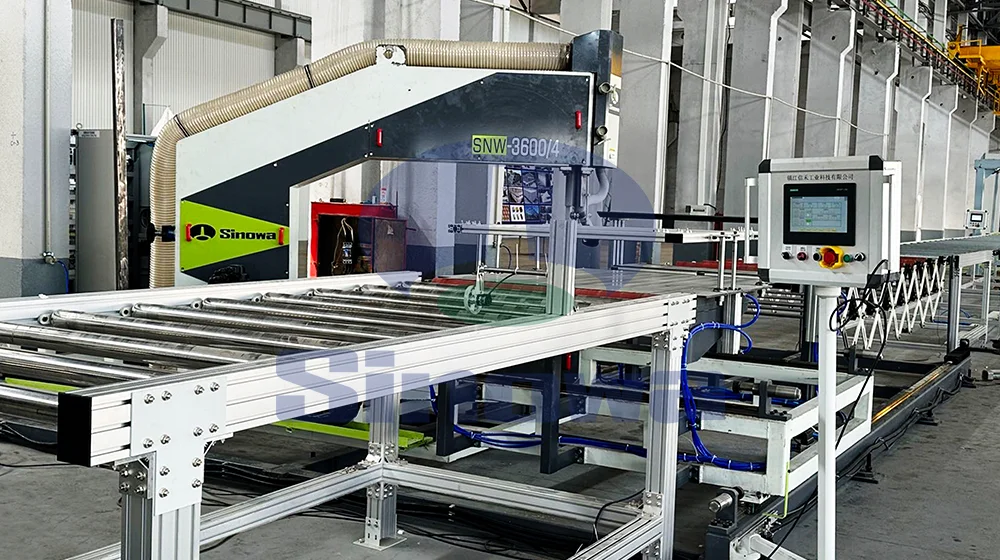
The basic structure of sandwich panel making equipment usually includes an uncoiling and leveling system, a forming system, a core material feeding and mixing system, a composite pressing system, a cutting system, a stacking system, and a control system. The uncoiling and leveling system is the starting part of the production line, mainly composed of uncoilers, leveling machines and guiding devices. Uncoilers are used to hold the coiled facing materials, such as color steel coils, aluminum coils or other metal coils, and feed them into the subsequent process at a stable speed. The dual winding machine configuration is often adopted to realize uninterrupted production, which avoids the need to stop the machine when replacing coils and greatly improves production efficiency. Leveling machines are equipped with high-precision leveling units, which can eliminate the internal stress of the coiled materials and ensure the flatness of the facing materials. The automatic centering device in the system can keep the materials moving stably, preventing deviation during the conveying process and ensuring the accuracy of subsequent processing. In addition, the shear welding system in this module can realize seamless connection of coil materials, ensuring the continuity of the facing materials and avoiding gaps that may affect the bonding effect with the core material.
The forming system is responsible for shaping the facing materials into the required cross-sectional shape, which is an important part affecting the appearance and structural strength of the sandwich panels. This system usually includes a multi-roll precision forming unit, servo drive technology and an online molding monitoring system. The multi-roll precision forming unit can gradually deform the facing materials through a series of rollers with specific shapes, and can quickly replace molds to meet the production needs of different types of panels, such as corrugated panels, flat panels or other special-shaped panels. Servo drive technology ensures high molding accuracy, with an error range of ±0.1 mm, which can effectively guarantee the consistency of the panel size. The online molding monitoring system can real-time monitor the forming process, adjust parameters in time when deviations are found, and avoid defective products caused by molding errors. The modular design of the forming system also makes it more flexible, which can be flexibly configured according to different product specifications and requirements.
The core material feeding and mixing system is tailored according to the type of core material, and its main function is to accurately feed and evenly mix the core material, ensuring that the core material can be tightly bonded with the facing materials. For polyurethane core materials, the system is equipped with a high-pressure foaming machine, an accurate metering mixing system and a temperature and pressure closed-loop control system. The high-pressure foaming machine can inject the mixed polyurethane raw materials into the gap between the two facing materials, and the accurate metering mixing system ensures that the mixing ratio of the raw materials is accurate, with an error of less than 1%. The temperature and pressure closed-loop control system can effectively control the foaming temperature and pressure, ensuring the foam quality and avoiding problems such as uneven foaming or insufficient foaming. For rock wool, glass wool and other fibrous core materials, the system is equipped with an automatic laying device, which can evenly lay the core material between the two facing materials, ensuring the uniformity of the core material thickness. For EPS core materials, the system is equipped with a special feeding device and a glue providing system, which can realize the uniform bonding of the EPS core material and the facing materials, and the glue is applied evenly without pollution.
The composite pressing system is the key link to realize the bonding of the facing materials and the core material, which directly affects the bonding strength and overall performance of the sandwich panels. This system usually adopts a double belt continuous press or a multi-roll composite system, with an adjustable pressure range of 5-50 tons, which can be adjusted according to different core materials and panel thicknesses. The temperature zoning control function allows the system to adapt to different core materials, as different core materials have different curing temperature requirements. For example, polyurethane core materials need a higher curing temperature, while rock wool core materials have lower requirements on temperature but higher requirements on pressure. The automatic thickness adjustment function of the composite pressing system can ensure the thickness accuracy of the sandwich panels, with an error of ±0.2 mm, which can meet the different thickness requirements of various application scenarios. During the pressing process, the system can realize continuous and stable pressing, ensuring that the facing materials and the core material are tightly bonded, without delamination or hollowing.
The cutting system is used to cut the continuous sandwich panels into the required length, which requires high cutting accuracy and efficiency. Common cutting devices include CNC flying saws, laser cutting machines and band saws. CNC flying saws and laser cutting machines have high cutting accuracy, with a length measurement accuracy of ±1 mm, and can realize automatic cutting without stopping the machine, which is suitable for large-scale continuous production. The laser cutting machine also has the advantages of smooth cutting surface and no burrs, which can improve the appearance quality of the finished products. The cutting system is also equipped with an automatic length measurement system, which can accurately measure the length of the panels and adjust the cutting position in real time according to the set length. In addition, the moving stroke of the cutting system is designed to be long, which can extend the service life of the cutting tool and reduce the frequency of tool replacement.
The stacking system is responsible for automatically stacking the cut finished panels, which can reduce manual labor and improve production efficiency. This system usually adopts robotic arms or vacuum suction cups to realize automated stacking, and can automatically count and sort the finished products. The maximum stacking height can reach 2.5 meters, which saves storage space. The stacking system is also equipped with a conveying device, which can transport the stacked panels to the packaging area or the storage area, realizing the continuity of the production process. Some advanced stacking systems also have the function of automatic packaging, which can wrap the stacked panels to prevent damage during transportation and storage.
The control system is the "brain" of the entire sandwich panel making equipment, which integrates PLC, industrial computer and other control technologies to realize the automatic control of the entire production process. The PLC + industrial computer dual control system can ensure the stability and reliability of the equipment operation, and can realize the cloud storage and analysis of production data, which is convenient for operators to monitor and manage the production process. The control system also has a fault self-diagnosis and remote maintenance function, which can quickly find out the fault location and cause when the equipment fails, and realize remote maintenance through the network, reducing the maintenance time and cost. The intelligent optimization algorithm of process parameters can automatically adjust the production parameters according to the raw material characteristics and product requirements, ensuring the stability of product quality. The control panel of the system is simple and easy to operate, and operators can complete the setting and adjustment of parameters through the touch screen, reducing the difficulty of operation.
In addition to the basic structure, the performance of sandwich panel making equipment is also reflected in many aspects, such as production efficiency, precision, energy saving and environmental protection, and flexibility. Production efficiency is an important performance index of the equipment, which is usually reflected by the production speed and daily output. The production speed of modern sandwich panel making equipment can reach 5-15 meters per minute, and the maximum daily output can exceed 5000 square meters, which can meet the large-scale production needs of enterprises. The precision of the equipment is mainly reflected in the molding accuracy, thickness accuracy and cutting accuracy, which are guaranteed by the high-precision components and advanced control system. The molding accuracy of the equipment can reach ±0.1 mm, the thickness accuracy can reach ±0.2 mm, and the cutting accuracy can reach ±1 mm, which can ensure the consistency and stability of the product size.
Energy saving and environmental protection are important development trends of modern industrial equipment, and sandwich panel making equipment is no exception. The equipment adopts a variety of energy-saving technologies, such as thermal energy recovery technology and frequency conversion energy-saving technology. The utilization rate of thermal energy recovery is over 85%, which can effectively recover the waste heat generated during the production process and reduce energy waste. Frequency conversion energy-saving technology can comprehensively save 30% of electricity, which reduces the production cost of enterprises. In addition, the equipment is also equipped with an exhaust gas treatment system, which can treat the exhaust gas generated during the production process to meet the emission standards and reduce environmental pollution. Some equipment also uses industrial waste such as phosphogypsum and lightweight steel slag as raw materials, realizing the resource utilization of waste and conforming to the concept of green production.
Flexibility is another important performance of sandwich panel making equipment, which refers to the ability of the equipment to adapt to different production needs. The modular design of the equipment allows operators to flexibly configure the functional modules according to the type of core material, the specification of the panel and the production scale. For example, the equipment can be adjusted to produce polyurethane sandwich panels, rock wool sandwich panels, EPS sandwich panels and other different types of panels by replacing the core material feeding system and the forming mold. The quick mold change technology allows the equipment to complete the mold change within 15-30 minutes, which greatly improves the production efficiency of different types of products. In addition, the equipment can also adjust the production parameters according to the customer's customized requirements, such as panel thickness, length, width and surface shape, to meet the diverse needs of the market.
The types of sandwich panel making equipment are diverse, and can be divided into different categories according to different classification standards. According to the type of core material, the equipment can be divided into polyurethane sandwich panel production lines, rock wool sandwich panel production lines, EPS sandwich panel production lines, phenolic sandwich panel production lines, glass wool sandwich panel production lines and so on. Polyurethane sandwich panel production lines are specially used to produce polyurethane sandwich panels, which have excellent thermal insulation performance and are widely used in cold chain logistics, building insulation and other fields. The production line is equipped with a high-pressure foaming system and a temperature and pressure control system to ensure the quality of polyurethane foam. Rock wool sandwich panel production lines are used to produce rock wool sandwich panels, which have excellent fire resistance and sound insulation performance, and are suitable for industrial plants, high-rise buildings and other fields that have high requirements for fire safety. The production line is equipped with an automatic rock wool laying device and a special adhesive system to ensure the bonding strength between rock wool and facing materials.
EPS sandwich panel production lines are used to produce EPS sandwich panels, which are lightweight, low-cost and have good thermal insulation performance, and are widely used in residential buildings, warehouses and other fields. The production line is equipped with an EPS feeding device and a glue providing system, which can realize the uniform bonding of EPS core material and facing materials. Phenolic sandwich panel production lines are used to produce phenolic sandwich panels, which have excellent fire resistance, high temperature resistance and corrosion resistance, and are suitable for special environments such as chemical plants and high-temperature workshops. Glass wool sandwich panel production lines are used to produce glass wool sandwich panels, which have good sound insulation and thermal insulation performance, and are suitable for indoor decoration, noise reduction projects and other fields.
According to the degree of automation, sandwich panel making equipment can be divided into fully automatic production lines and semi-automatic production lines. Fully automatic production lines integrate mechanical, electrical, hydraulic, pneumatic and computer control technologies, realizing a fully automated production process from raw material input to finished product output. The entire production process only needs a small number of operators to monitor and operate, which greatly reduces manual labor and improves production efficiency and product quality stability. Fully automatic production lines are suitable for large-scale continuous production, and are widely used in large enterprises with high production volume requirements. Semi-automatic production lines require a certain amount of manual operation, such as manual feeding of core materials, manual stacking of finished products, etc. The equipment has the advantages of low investment cost and high flexibility, and is suitable for small-scale production or customized production needs, such as small enterprises or workshops that produce a variety of small-batch products.
According to the production process, sandwich panel making equipment can be divided into continuous production lines and discontinuous production lines. Continuous production lines adopt a continuous production mode, which can realize uninterrupted production of sandwich panels, with high production efficiency and stable product quality. The production process is fully automated, and the panels are produced in a continuous flow, which is suitable for large-scale production. Discontinuous production lines adopt an intermittent production mode, which needs to stop the machine when replacing raw materials or adjusting parameters. The production efficiency is relatively low, but the equipment has high flexibility and can produce customized products of different specifications and types, which is suitable for small-batch and multi-variety production.
The application scope of sandwich panel making equipment is very wide, covering construction, cold chain logistics, industrial manufacturing, transportation, environmental protection and other fields. In the construction field, sandwich panels produced by the equipment are widely used in building walls, roofs, partitions, prefabricated houses and other structures. Due to their excellent thermal insulation, sound insulation, fire resistance and lightweight performance, they can improve the overall performance and comfort of buildings, and reduce the construction cost and construction period. For example, in the construction of industrial plants, sandwich panels are used as wall and roof materials, which can not only achieve good thermal insulation effect, but also have high structural strength and corrosion resistance, adapting to the harsh working environment of industrial plants. In the construction of prefabricated houses, sandwich panels are used as the main building materials, which can realize rapid assembly, shorten the construction period and reduce the construction cost.
In the cold chain logistics field, sandwich panels produced by the equipment are widely used as insulation materials for cold storage, refrigerated trucks, containers and other facilities. Polyurethane sandwich panels, in particular, have excellent thermal insulation performance and can maintain a constant temperature in an environment of -40 ℃ to 120 ℃, ensuring the quality and safety of goods during transportation and storage. The production line of refrigerated carriage panels is a special type of sandwich panel making equipment, which is specially designed for the production of refrigerated truck compartment panels, and can meet the special requirements of refrigerated truck compartment panels for thermal insulation and moisture resistance.
In the industrial manufacturing field, sandwich panel making equipment is used to produce insulation panels for various refrigeration and freezing equipment, as well as enclosure materials for industrial plants, garages, mobile homes and other structures. For example, in the chemical industry, phenolic sandwich panels produced by the equipment are used as enclosure materials for chemical facilities, which have excellent corrosion resistance and high temperature resistance, and can provide reliable protection for chemical production. In the automobile manufacturing industry, sandwich panels are used as interior decoration and sound insulation materials, which can improve the comfort and noise reduction effect of automobiles.
In the transportation field, sandwich panels are used in the construction of highways, railways, airports and other transportation hubs, such as sound insulation walls, partition walls and other structures. The sound insulation performance of sandwich panels can effectively reduce the noise generated by transportation, improving the environmental quality around the transportation hub. In the environmental protection field, sandwich panels are used in the construction of sewage treatment plants, garbage treatment plants and other facilities, which have good corrosion resistance and durability, and can adapt to the harsh environment of environmental protection facilities.
In addition, sandwich panel making equipment is also used in some special fields, such as purification workshops, hospitals, laboratories and other places that have high requirements for cleanliness and hygiene. The purification color steel sandwich panel automatic production line is a special type of sandwich panel making equipment, which is used to produce color steel sandwich panels required for purification workshops. The equipment is equipped with an advanced automation control system and a surface treatment system, which can ensure the cleanliness and antibacterial performance of the panels, meeting the requirements of ISO-class cleanliness.
With the continuous development of industrial technology and the increasing demand for energy conservation and environmental protection, sandwich panel making equipment is also constantly upgrading and improving. The integration of intelligent technology makes the equipment more automated and intelligent, which can realize real-time monitoring, fault diagnosis and parameter optimization of the production process, improving production efficiency and product quality. The application of new materials and new processes also makes the equipment more energy-saving and environmental protection, reducing energy consumption and environmental pollution. In the future, with the continuous expansion of the application scope of sandwich panels, the demand for sandwich panel making equipment will also continue to grow, and the equipment will develop in the direction of high precision, high efficiency, energy saving, environmental protection and intelligence, providing strong support for the development of related industries.
« Sandwich Panel Making Equipment » Update Date: 2026/4/13
URL: https://www.sinowamachine.com/tags/sandwich-panel-making-equipment.html
![Sandwich Panel Making Equipment For Sale]()
Sandwich Panel Making Equipment For Sale
2026-09-03Sandwich panel making equipment stands as a fully integrated and automated production system tailored for manufacturing high-performance composite sandwich panels, which are indispensable materials in modern construction, industrial insulation, and modular building projects. This sophisticated equipm…![Sandwich Panel Making Equipment Manufacturer]()
Sandwich Panel Making Equipment Manufacturer
2026-08-13Sandwich panel making equipment represents a sophisticated integrated automated production system designed for the efficient manufacturing of composite sandwich panels, which are widely adopted in modern construction, industrial manufacturing and cold chain industries. Unlike discrete processing mach…
- Links:
- Sandwich Panel Continuous Production Line
- Automatic and Continuous Sandwich Panel Production Line
- Cheap and Low Price Sandwich Panel Production Line
- China Sandwich Panel Production Line Factory
- Color Steel Sandwich Panel Production Line For Cold Storage
- Continuous Composite Foam Sandwich Panel Production Line
- Continuous Production Line For Rockwool and Mineral Wool Sandwich Panels
- Continuous PU Phenolic Insulation Panel Production Line
- Continuous PU PIR Sandwich Panel Production Line
- Continuous PUF PUR Sandwich Panel Production Line
- Continuous Sandwich Panel Production Line For Roof and Wall
- Customized and Design Sandwich Panel Production Line
- Decorative Sandwich Panel Production Line For Glass Wool Boards
- High Quality Sandwich Panel Production Line For Sale
- Polyurethane(PU) Sandwich Panel Production Line
- Sandwich Panel Production Line Manufacturer and Supplier
- Sandwich Panel Production Machinery and Equipment