
PIR Insulated Panel Production Line
Sinowa is a pir insulated panel production line supplier from china, customized high-quality & high efficiency pir insulated panel production line at low price, the adoption of system integration technology and bus control technology accomplishes the full automatization of integrated and coordinated control of the pir insulated panel production line with accessible remote interactive communication. Ranking the first-class level in the world, it is currently the pir insulated panel production line in the market taking a comprehensive lead in high performance.
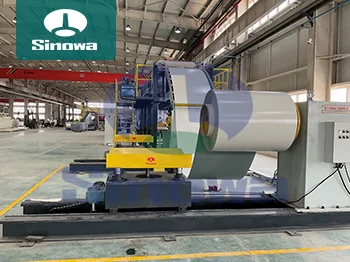
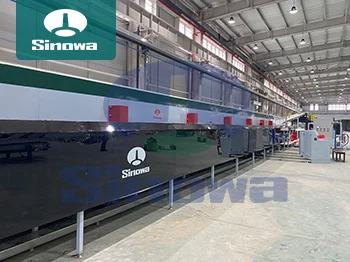
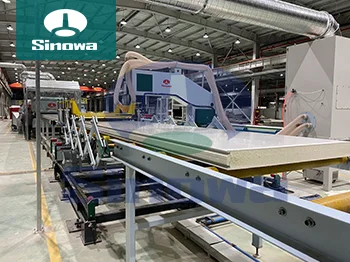
The high-tech pir insulated panel production line can meet a variety of production needs of customers, the whole pir insulated panel production line design concept of modularization enables all our components to be integrated and combined at will. Our high efficiency pir insulated panel production line can easily automate the production of roof sandwich panel, wall sandwich panel, cold storage sandwich panel and other products by different combination and configuration selection and siple switching. The inner core layer can be polyrethane or rock wool, glass wool, an so on.


The high precision pir insulated panel production line has high adaptability, which may produce various sandwich panel of the PU, PIR and rock wool systems. We may design various products according to the customer’s requirements, including various configurations, so as to meet their demands with flexible price system. Highly integrated and linked control system centralizes all control points at the main central center, achieving parameter linkage, fault self-diagnosis controlled by the whole line and shipping distance control. High-level automatic control system also saves the manpower and reduces the manpower loss for customers.


The precision servo hoisting mechanism employed by the main engine without hydraulic system makes the board thickness control flexible and the customer may conveniently change or adjust the board thickness. There will be not such troubles as hydraulic system adjustment, leakage, maintenance, etc.


High-level energy saving and protection design makes the whole pir insulated panel production line possible to produce around the clock throughout the year and the customer will save huge budget. In addition, the isolated heat preservation room is constructed for warming the environment. The energy saving and protection design of our manufacturing line may guarantee that the customer’s production line may be freely heated and produce in the main time to save more costs for customers.


The high-power low-consumption design quickens the reaction of the cheap pir insulated panel production line while energy consumption is kept low. With the brand-new, fully sealed inner insulation design, the energy consumption is controlled at the minimum level to achieve the design objective of less than an hour for the insulation system to be activated from the room temperature above 5℃ to the production process temperature. The energy consumption is only 40% that of those similar products.
In the context of global energy conservation and emission reduction, the construction and industrial sectors are undergoing a profound transformation towards sustainability, and the demand for high-performance thermal insulation materials is growing increasingly. Polyisocyanurate (PIR) insulated panels have become the preferred choice in many fields due to their excellent fire resistance, ultra-low thermal conductivity, light weight and high strength, and the core equipment supporting the large-scale and standardized production of such high-performance materials is the PIR insulated panel production line. This integrated production system that combines mechanical automation, material science and precision control realizes the continuous conversion from raw materials to finished products through a series of coherent process links, providing reliable material support for building energy conservation, cold chain logistics, industrial plants and other fields. The rational design and precise operation of the production line are the key to ensuring the stable output of high-quality PIR insulated panels, and its structure, performance, types and application fields are closely related to the quality, efficiency and scope of application of the final products.
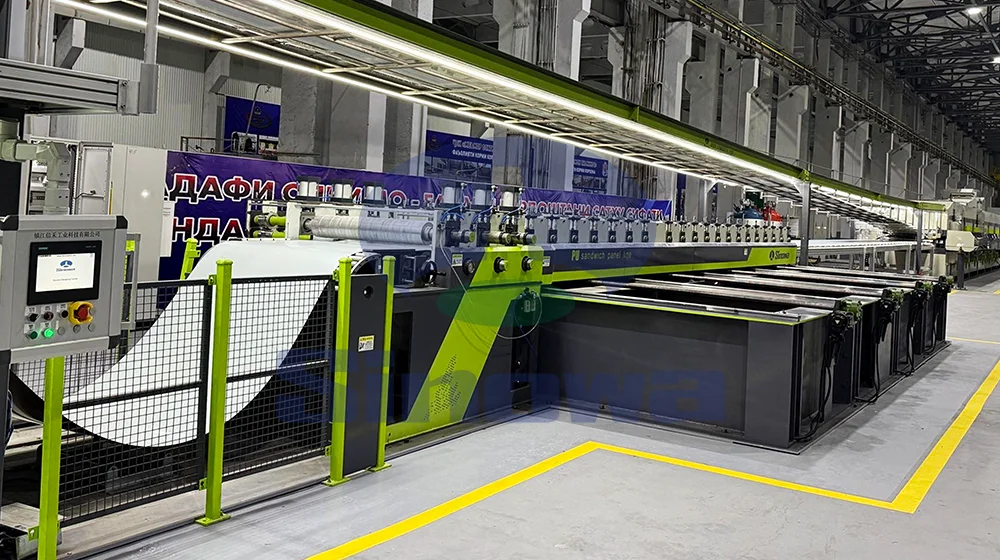
The structure of the PIR insulated panel production line is a highly integrated modular system, which is composed of several core functional modules that cooperate closely to form a complete production chain from raw material pretreatment to finished product stacking. The whole production line is usually composed of raw material processing system, mixing and foaming device, forming and compounding system, curing and shaping unit, cutting and trimming mechanism, automatic control system and finished product handling equipment, and each module undertakes specific production tasks to ensure the smooth operation of the whole production process. The raw material processing system is the starting link of the production line, mainly responsible for the storage, transportation and pretreatment of surface materials and core materials. The surface materials of PIR insulated panels are usually galvanized steel sheets, color steel sheets, aluminum alloy sheets or stainless steel sheets, which need to be uncoiled, leveled, cleaned and preheated before entering the compounding link. The uncoiling unit adopts hydraulic tension control technology to stably uncoil the coiled surface materials and avoid material deformation caused by uneven tension; the leveling unit uses multi-roller leveling technology to correct the unevenness of the surface materials and ensure the flatness of the final product; the cleaning device removes oil stains and impurities on the surface of the panels to improve the bonding firmness between the surface materials and the core materials; the preheating unit heats the surface materials to a specific temperature to create favorable conditions for the subsequent foaming and bonding process. The core material processing part is mainly used for the storage, metering and mixing of PIR raw materials. The PIR core material is a modified polyurethane material formed by the reaction of polyisocyanate and polyol, and its raw materials also include catalysts, flame retardants, foaming agents and other additives. The production line is equipped with a special raw material storage and conveying system, which can accurately convey liquid raw materials to the mixing link, and strictly control the mixing ratio and temperature of the raw materials to ensure the performance of the core material.
The mixing and foaming device is the core technical part of the PIR insulated panel production line, which directly determines the quality of the PIR core material. The device is usually composed of a high-pressure foaming machine, a mixing chamber and a conveying pipeline. The high-pressure foaming machine injects the proportioned raw materials into the mixing chamber at a certain pressure and speed, and the raw materials are fully mixed in the mixing chamber to produce a chemical reaction. In order to avoid foaming defects such as uneven foaming and surface pitting caused by the viscosity of raw materials, many production lines adopt bottom injection foaming technology, which sprays foaming materials from the bottom of the mold cavity through the discharge component, so that the raw materials can be evenly filled and raised from bottom to top, and the top is shaped by a movable plate, which effectively improves the uniformity of the core material. At the same time, the application of multi-component foaming technology allows the raw material ratio to be flexibly adjusted according to product requirements, and the adaptation of environmentally friendly foaming agents such as cyclopentane responds to the global environmental protection requirements of ozone layer protection, balancing performance and green development. The foaming process requires precise control of temperature and pressure. The production line creates a stable curing environment through a double-belt press, so that the PIR raw materials can foam and cure under controllable conditions to form a core material with a dense structure and stable performance.
The forming and compounding system is responsible for combining the pretreated surface materials with the foamed PIR core material to form the initial shape of the PIR insulated panel. This system is mainly composed of a composite conveyor belt, a double-belt press and a roll forming device. The upper and lower surface materials that have completed the pretreatment are continuously conveyed to the composite area, and at the same time, the foamed PIR raw materials are evenly injected between the two layers of panels. The double-belt press applies a certain pressure to the composite panel to ensure the close fit between the surface materials and the core material, and controls the thickness and flatness of the panel. The roll forming device processes the metal surface materials into corrugated or flat shapes according to the application needs, which not only enhances the structural strength of the panel but also improves the aesthetic appearance. In order to further improve the bonding strength between the surface materials and the core material, the production line is also equipped with a special adhesive coating device, and some advanced production lines adopt rotary brushing technology to accurately distribute the adhesive on the inner side of the upper and lower panels, ensuring the bonding effect while avoiding material waste.
The curing and shaping unit is an important link to ensure the dimensional stability and performance of PIR insulated panels. After the composite forming, the panels need to enter the curing and shaping area for full curing. The curing process can be divided into natural curing and forced cooling curing. For continuous production lines, forced cooling technology is usually adopted, which uses cooling fans or cooling water circulation systems to quickly cool the panels, so that the PIR core material can be fully cured in a short time, ensuring the dimensional stability of the products and improving production efficiency. During the curing process, the production line will monitor the temperature and humidity of the curing environment in real time through sensors to ensure that the curing conditions meet the technical requirements and avoid quality problems such as core material cracking and panel deformation caused by improper curing.
The cutting and trimming mechanism is used to cut the continuously produced PIR insulated panels into finished products of specified lengths and trim the redundant parts of the edges to ensure the dimensional accuracy of the products. The cutting equipment usually adopts flying saw cutting technology or CNC laser cutting technology, which can realize precise cutting without damaging the structure of the core material, and the cutting speed can be adjusted according to the production efficiency. The trimming device trims the edges of the cut panels to make the edges smooth and neat, reducing material waste and improving the appearance quality of the products. After cutting and trimming, the finished products will go through a surface cleaning and inspection process to remove impurities generated during the production process, and check for appearance defects and performance parameter deviations through online testing equipment to ensure that the finished products meet the application requirements.
The automatic control system is the "brain" of the PIR insulated panel production line, which realizes the integrated linkage control of the whole production process. The system is composed of a control terminal, sensors, actuators and other components, which can real-time monitor key parameters such as raw material ratio, foaming temperature, conveying speed, pressure and curing time, and feed back the data to the control terminal. The operator can set and adjust the production parameters through the control terminal, and the system can automatically adjust the operation of each module according to the set parameters, realizing the full-process automatic production from raw material feeding to finished product output. This automatic design not only reduces the dependence on manual operation, reduces the error caused by human factors, but also greatly improves production efficiency and product consistency. For example, during the movement of the injection head, the rubber plate in the through hole can automatically scrape and clean to avoid raw material residue and blockage, ensuring continuous production; the temperature sensor real-time monitors the mold cavity environment to ensure that the foaming reaction is carried out at an appropriate temperature, maintaining the consistency of product performance.
The performance of the PIR insulated panel production line is mainly reflected in aspects such as production efficiency, product quality stability, energy saving and environmental protection, and flexibility. In terms of production efficiency, the continuous production line can realize 24-hour continuous operation, and the production speed can be adjusted according to the actual needs, with a maximum production speed of up to 30 meters per minute, which can meet the needs of large-scale mass production. The production line adopts modular design and CNC machine tool processing of key components, which reduces the dependence on human factors, ensures the stable operation of the equipment, and reduces the failure rate, thus improving the overall production efficiency. In terms of product quality stability, the production line achieves precise control of each production link through advanced automatic control technology and precise detection equipment, ensuring that the thickness, density, thermal conductivity, fire resistance and other performance parameters of each batch of PIR insulated panels are consistent, avoiding quality fluctuations caused by manual operation. The core material mixing and foaming system of the production line can accurately control the raw material ratio and reaction conditions, making the PIR core material have a uniform pore structure, excellent thermal insulation performance and fire resistance.
Energy saving and environmental protection are important performance characteristics of modern PIR insulated panel production lines. In the context of global energy conservation and emission reduction, the production line adopts a series of energy-saving technologies to reduce energy consumption. For example, some production lines adopt closed-loop heating technology, which collects and recycles the waste heat generated during the production process, improving the overall thermal efficiency of the system. Compared with the traditional open-loop heating system, the closed-loop heating system can reduce heat loss by 40% to 50%, greatly reducing energy consumption. At the same time, the production line uses environmentally friendly foaming agents and adhesives, reducing the emission of harmful substances such as volatile organic compounds, meeting environmental protection standards. The equipment itself also adopts energy-saving design, such as the motor power of the lamination conveyor is only 3.0 kilowatts, which is about 50% of the same type of equipment, and the comprehensive energy consumption of the whole production line is equivalent to 40% or even lower than the market average level.
Flexibility is another important performance of the PIR insulated panel production line. The production line can be flexibly adjusted and configured according to the needs of different customers and application scenarios, realizing the production of PIR insulated panels of different specifications, thicknesses and types. For example, by replacing the roll forming mold, the production line can produce roof panels, wall panels, cold storage panels and other products; by adjusting the raw material ratio and foaming parameters, it can produce PIR core materials with different densities and performance characteristics to meet the needs of different application fields. The modular design of the production line makes the combination and adjustment of each equipment module more flexible. All components are connected by bolts instead of welding, which is fully standardized production, detachable and replaceable, which not only shortens the production cycle but also makes maintenance and repair more convenient. In addition, the production line can also produce composite panels with different core materials such as polyurethane (PU) and rock wool by simple configuration switching, further expanding the scope of product production.
According to different classification standards, the PIR insulated panel production line can be divided into various types. According to the production mode, it can be divided into continuous production lines and intermittent production lines. Continuous production lines are the mainstream of the current market, which realize seamless connection of the whole production process through advanced electrical control systems and mechanical transmission mechanisms, with high production efficiency and stable product quality, suitable for large-scale mass production. Intermittent production lines require manual intervention in multiple links, with low production efficiency and large quality fluctuations, and are mainly suitable for small-batch production or special specification products. According to the degree of automation, it can be divided into fully automatic production lines, semi-automatic production lines and manual production lines. Fully automatic production lines realize full-process automatic production from raw material feeding to finished product stacking, with minimal manual intervention, high production efficiency and stable product quality, which are widely used in large-scale production enterprises. Semi-automatic production lines need manual operation in some links such as raw material feeding and finished product handling, with moderate production efficiency and investment cost, suitable for medium-sized enterprises. Manual production lines have low investment cost but low production efficiency and poor product quality consistency, which are gradually eliminated by the market.
According to the type of products produced, the PIR insulated panel production line can be divided into roof panel production lines, wall panel production lines, cold storage panel production lines and decorative integrated panel production lines. The roof panel production line is specially designed for the production of PIR insulated roof panels, which pays more attention to the load-bearing capacity and weather resistance of the panels. The roll forming device of the production line can process the surface materials into special shapes to enhance the waterproof and wind-resistant performance of the roof panels. The wall panel production line is used to produce PIR insulated wall panels, which focuses on the thermal insulation performance and decorative effect of the panels. The production line can produce flat or decorative wall panels of different colors and patterns to meet the needs of building exterior walls and interior partitions. The cold storage panel production line is specially used for the production of PIR insulated panels for cold storage, which has higher requirements for the thermal insulation performance and airtightness of the panels. The production line adopts special foaming technology and sealing process to ensure that the panels have excellent thermal insulation effect, which can effectively maintain the low-temperature environment in the cold storage and reduce energy consumption. The decorative integrated panel production line integrates the production of PIR insulation layer and decorative surface layer, which can directly produce decorative integrated panels with thermal insulation and decorative functions, reducing the construction links and improving the construction efficiency.
In addition, according to the width and thickness of the produced panels, the PIR insulated panel production line can be divided into different specifications. The production line can produce panels with a width of 1000mm to 1200mm and a thickness of 10mm to 200mm, which can be flexibly adjusted according to the actual needs of customers. According to the type of surface materials, it can also be divided into color steel PIR insulated panel production lines, aluminum alloy PIR insulated panel production lines, stainless steel PIR insulated panel production lines, etc., to meet the needs of different application scenarios for surface material performance.
The application scope of the PIR insulated panel production line is very wide, covering construction, cold chain logistics, industrial manufacturing, agricultural production and other fields, which is closely related to the excellent performance of PIR insulated panels produced by it. In the construction field, PIR insulated panels produced by the production line are widely used in the exterior walls, roofs, interior partitions and other parts of industrial plants, commercial buildings, residential buildings, public facilities and other buildings. With the continuous improvement of building energy efficiency requirements, the application of PIR insulated panels in building energy conservation is becoming more and more widespread. The panels can effectively improve the thermal insulation performance of buildings, reduce energy consumption of heating and air conditioning, and at the same time have excellent fire resistance and sound insulation performance, which can improve the safety and comfort of buildings. For example, in the construction of high-rise buildings, PIR insulated panels are used as exterior wall insulation materials, which not only have good thermal insulation effect but also have light weight, which can reduce the load of the building structure and improve the safety of the building.
In the field of cold chain logistics, the PIR insulated panel production line plays an important role. The cold storage industry is an important part of the cold chain logistics system, and the thermal insulation performance of the cold storage directly affects the quality of stored goods and operational costs. PIR insulated panels produced by the production line have excellent thermal insulation performance, low thermal conductivity and good airtightness, which are ideal materials for cold storage construction. These panels can effectively maintain the low-temperature environment in the cold storage, reduce the energy consumption of refrigeration equipment, and extend the shelf life of stored goods. The production line can produce cold storage panels of different specifications and thicknesses according to the needs of cold storage construction, which are widely used in the construction of food cold storage, pharmaceutical cold storage, chemical cold storage and other types of cold storage. In addition, PIR insulated panels are also used in the production of refrigerated trucks and containers, which can improve the thermal insulation effect of the transportation equipment and ensure the quality of goods during transportation.
In the industrial manufacturing field, the PIR insulated panel production line provides important support for the construction of industrial plants and equipment insulation. Many industrial plants have special requirements for the indoor temperature and environment, such as chemical plants, electronics factories, textile factories, etc. PIR insulated panels produced by the production line can be used for the walls and roofs of the plants to maintain the stability of the indoor temperature, reduce energy consumption, and at the same time have good corrosion resistance and fire resistance, which can adapt to the harsh industrial environment. In addition, PIR insulated panels are also used for the insulation of industrial equipment and pipelines, such as boilers, pipelines, and reaction vessels, which can reduce heat loss, improve the efficiency of equipment operation, and extend the service life of equipment.
In the field of agricultural production, the PIR insulated panel production line is widely used in the construction of greenhouses, livestock houses and other agricultural facilities. Greenhouses need to maintain a stable temperature and humidity environment to ensure the normal growth of crops. PIR insulated panels produced by the production line have excellent thermal insulation performance and can effectively maintain the temperature inside the greenhouse, reduce the energy consumption of heating and cooling equipment, and extend the planting cycle of crops. Livestock houses built with PIR insulated panels can maintain a comfortable living environment for livestock, improve the survival rate and production performance of livestock, and at the same time have good moisture-proof and anti-corrosion performance, which is conducive to the health of livestock.
In addition, the PIR insulated panel production line also has applications in other fields, such as the construction of prefabricated buildings, mobile houses, and temporary facilities. Prefabricated buildings have the advantages of fast construction speed, energy saving and environmental protection, and PIR insulated panels are important components of prefabricated buildings. The production line can produce prefabricated wall panels, roof panels and other components with standardized specifications, which can be directly assembled on the construction site, greatly improving the construction efficiency. Mobile houses and temporary facilities built with PIR insulated panels have the advantages of light weight, easy installation and disassembly, and good thermal insulation performance, which are widely used in construction sites, field operations, disaster relief and other occasions.
With the continuous development of science and technology and the increasing emphasis on energy conservation and environmental protection, the PIR insulated panel production line is also constantly upgrading and improving. In the future, the production line will develop in the direction of higher automation, intelligence, energy saving and environmental protection. The integration of intelligent technologies such as the Internet of Things and artificial intelligence will make the production line realize real-time monitoring, fault early warning and intelligent adjustment, further improving production efficiency and product quality. At the same time, the research and development of new environmentally friendly materials and processes will further reduce the energy consumption and environmental impact of the production line, making the production of PIR insulated panels more green and sustainable. With the continuous expansion of the application field of PIR insulated panels, the market demand for PIR insulated panel production lines will also continue to grow, and the production line will play a more important role in promoting the development of the thermal insulation material industry and the realization of global energy conservation and emission reduction goals.
« PIR Insulated Panel Production Line » Update Date: 2026/4/13
URL: https://www.sinowamachine.com/tags/pir-insulated-panel-production-line.html
- Links:
- Sandwich Panel Continuous Production Line
- Automatic and Continuous Sandwich Panel Production Line
- Cheap and Low Price Sandwich Panel Production Line
- China Sandwich Panel Production Line Factory
- Color Steel Sandwich Panel Production Line For Cold Storage
- Continuous Composite Foam Sandwich Panel Production Line
- Continuous Production Line For Rockwool and Mineral Wool Sandwich Panels
- Continuous PU Phenolic Insulation Panel Production Line
- Continuous PU PIR Sandwich Panel Production Line
- Continuous PUF PUR Sandwich Panel Production Line
- Continuous Sandwich Panel Production Line For Roof and Wall
- Customized and Design Sandwich Panel Production Line
- Decorative Sandwich Panel Production Line For Glass Wool Boards
- High Quality Sandwich Panel Production Line For Sale
- Polyurethane(PU) Sandwich Panel Production Line
- Sandwich Panel Production Line Manufacturer and Supplier
- Sandwich Panel Production Machinery and Equipment