
High-quality Polyurethane Sandwich Panel Manufacturing Line
Sinowa is a well-known manufacturer and technical service provider of high-end polyurethane sandwich panel manufacturing line, learn more about high-quality polyurethane sandwich panel manufacturing line, please contact Sinowa's technical engineer, tell us what you need, we will contact you as soon as possible!
Sinowa is committed to the development and manufacturing of high-end and high-efficiency polyurethane sandwich panel manufacturing line. Our polyurethane sandwich panel manufacturing line are leading the way in efficiency, automatic control, human-computer interaction, environmental protection and energy consumption. Using system integration and bus control technology, it realizes the automatic integrated linkage control of the entire polyurethane sandwich panel manufacturing line, and can achieve remote interactive communication, which has the world-class level and a comprehensive leading high-performance polyurethane sandwich panel manufacturing line in the market.
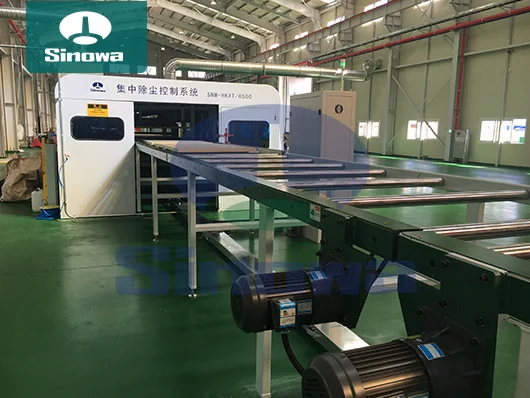
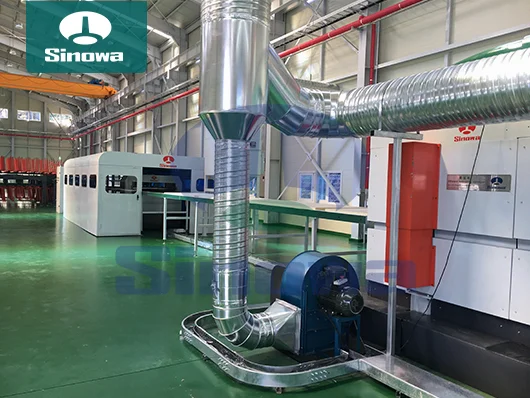
For more than ten years, relying on our innovative manufacturing concept and excellence in quality, reliable and trustworthy service to customers, we cooperate with customers all over the world, exported products to Canada, South Korea, Israel, Australia, the Middle East and other more than 20 countries and regions. contributed to building energy conservation and low-carbon production and have won widespread praise.
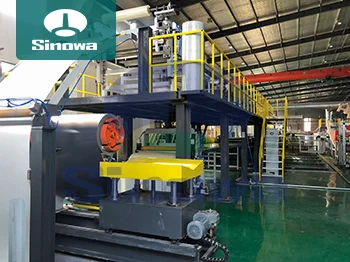
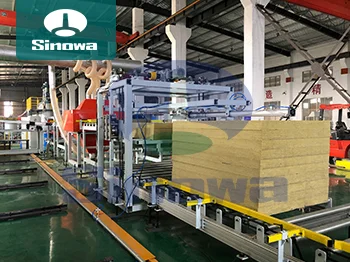
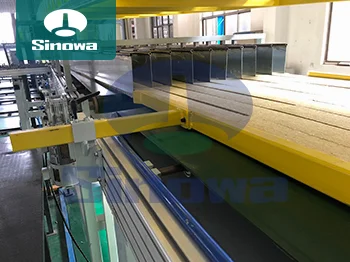
Sinowa has invested outstanding efforts in polyurethane sandwich panel manufacturing line, this is why our products are more efficiency, quality, automatic control technology, environmental protection, energy consumption indicators and the appearance and safety protection are comprehensively leading, some subversive design changes in many major technical points, these major innovations make our products excellent in price/performance and user experience.
High-quality polyurethane sandwich panel manufacturing lines represent a sophisticated and integrated industrial production system designed for the continuous and standardized fabrication of high-performance composite building panels. This automated production setup integrates mechanical transmission, precision chemical metering, constant-temperature curing, and intelligent molding control technologies, forming a seamless production workflow that converts raw surface materials and polyurethane chemical materials into finished sandwich panels with stable structural performance, excellent thermal insulation, and durable bonding strength. Compared with traditional intermittent production equipment, modern polyurethane sandwich panel manufacturing lines feature higher operational continuity, stricter dimensional accuracy control, and more consistent product quality, making them the core production equipment for mainstream thermal insulation and structural composite panels in the construction, cold storage, and industrial enclosure industries.
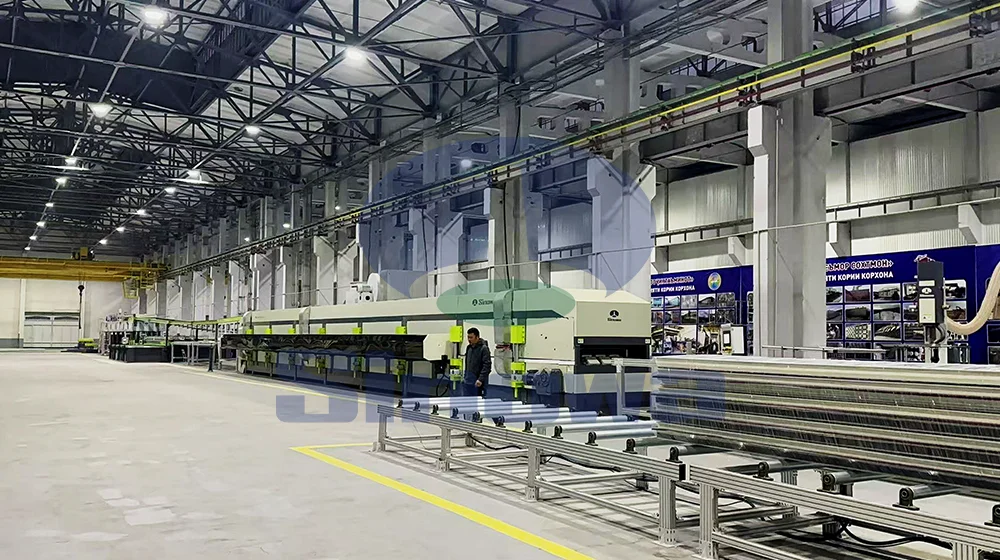
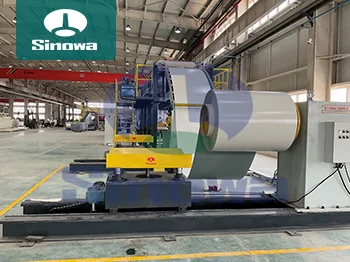
The entire manufacturing operation of the sandwich panel production line follows a fully continuous processing logic, with every procedure interconnected and synchronously operated to eliminate intermittent production errors and efficiency losses. The production workflow starts with the automatic feeding and pretreatment of surface materials, covering metal and non-metal surface substrates that serve as the outer protective layers of the sandwich panels. The surface material feeding unit adopts a stable unwinding structure that releases coiled raw materials at a constant speed, avoiding tension fluctuations and material deviation that may cause uneven panel surfaces and dimensional errors. Equipped with automatic guiding and deviation correction structures, this unit dynamically adjusts the material transmission track during operation to ensure the flatness and linearity of surface materials entering the subsequent processing links, laying a solid foundation for the overall dimensional consistency of finished panels.
After unwinding and guiding, the surface materials enter the professional pretreatment module, a pivotal procedure that determines the long-term bonding stability and surface quality of polyurethane sandwich panels. This module systematically removes surface floating dust, fine metal debris, oil stains, and oxide layers through high-pressure air circulation and static elimination structures. Impurities remaining on the surface of substrates will directly hinder the bonding reaction between surface materials and polyurethane foam core materials, easily causing hollowing, delamination, and cracking of panels during long-term service. The standardized pretreatment process thoroughly cleans the bonding interface and activates the surface activity of substrates, effectively enhancing the molecular adhesion between the outer layer and the foam core, and significantly improving the overall structural firmness and service life of composite panels. For different types of surface materials, the pretreatment intensity and process parameters can be adaptively adjusted to match the surface characteristics of diverse substrates and meet the bonding requirements of different composite structures.
The pretreated surface materials proceed to the roll forming and shaping stage, where flat coiled materials are processed into standardized profiled structures through multi-group rolling units. The roll forming system adopts a modular rolling design with adjustable spacing and pressure parameters, enabling flexible shaping of surface materials to form various common panel profiles. Each rolling group operates in synchronous coordination to ensure uniform stress on the material surface, avoiding indentation, deformation, and uneven thickness caused by inconsistent rolling pressure. Meanwhile, the system is equipped with a width adaptive adjustment mechanism, which can quickly adapt to production requirements of panels with different widths without extensive equipment reconfiguration or manual parameter debugging, greatly improving the production line’s flexibility in responding to diversified product demands. After roll forming, the surface materials maintain stable structural rigidity and precise dimensional accuracy, meeting the assembly and installation standard requirements of finished panels.
As the core functional unit of the entire sandwich panel line, the polyurethane raw material metering, mixing, and foaming system directly determines the thermal insulation performance, structural uniformity, and core layer stability of finished sandwich panels. Polyurethane foam core materials are formed by the chemical reaction and foaming of two main raw material components, and the precision ratio of raw materials is the key to ensuring stable foaming quality. The high-precision metering device of the production line realizes constant-pressure and quantitative conveying of raw materials, with ultra-low error control in proportioning, which avoids performance defects caused by excessive or insufficient single-component raw materials. The fully enclosed mixing structure completes the rapid and uniform blending of raw materials in a closed environment, eliminating external air interference and raw material volatilization loss during the mixing process.
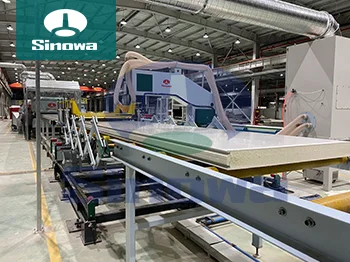
The uniformly mixed polyurethane liquid materials are evenly poured between the upper and lower surface materials through a continuous spraying and distributing structure. The intelligent distributing system realizes full coverage and uniform laying of liquid materials in the panel width direction, effectively preventing local material accumulation or shortage. This balanced material distribution ensures that the foam core of each panel maintains consistent thickness and density in all areas, avoiding local thermal insulation attenuation and structural weak points. The entire foaming reaction process is carried out in a relatively closed and temperature-controlled space, which stabilizes the chemical reaction rate of polyurethane foaming, makes the bubble structure inside the foam core fine and uniform, and greatly improves the thermal insulation, sound insulation, and compression resistance of the core layer. Reasonable foaming parameter setting can also effectively reduce the shrinkage rate of foam materials, ensuring that the core layer does not deform or shrink after molding.
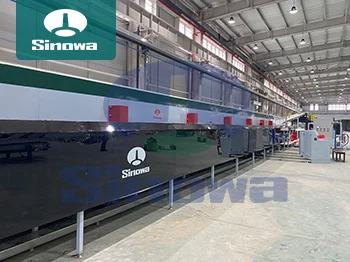
Following the foaming material distribution process, the semi-finished panels enter the composite pressing and constant-temperature curing stage, which is a key link to realize the integrated bonding and fixed molding of surface materials and foam core. The double-track composite pressing structure adopts constant-pressure and constant-temperature working mode, applying uniform and stable pressure to the upper and lower layers of panels to tightly fit the surface materials with the polyurethane foam core in the initial foaming stage. Continuous and stable pressure avoids bonding gaps and interface looseness, while the constant-temperature curing environment provides optimal reaction conditions for polyurethane foaming and curing, promoting the complete cross-linking reaction of internal molecular structures.
The curing temperature and pressure parameters are dynamically adjusted according to panel thickness, core material formula, and production speed to ensure thorough curing and molding of panels of different specifications. Sufficient constant-temperature curing enables the polyurethane foam core to form a stable three-dimensional network structure, endowing the panel with excellent structural stability, compressive strength, and dimensional stability. Panels after curing molding will not undergo obvious thermal expansion and contraction in conventional temperature change environments, and can maintain stable overall flatness and structural integrity during long-term use. The integrated pressing and curing process realizes one-time composite molding of surface layer and core layer, eliminating secondary processing procedures and improving the overall production efficiency and structural integration of panels.
After completing curing and preliminary molding, the continuous long-strip panels are transmitted to the fixed-length cutting and edge trimming unit. The high-precision cutting system automatically identifies the set panel length specifications and implements stable and fast fixed-length cutting. Equipped with a high-stability cutting tool and intelligent positioning system, this unit ensures flat and smooth cutting sections without burrs, cracks, or edge warping, meeting the precise size requirements of finished panels. The edge trimming mechanism further polishes and corrects the panel edges to eliminate tiny deformation and residual burrs generated during cutting and molding, ensuring that the edge dimensions of each panel are unified and consistent, which facilitates seamless assembly and installation in subsequent engineering applications.
The cut single panels are then transported to the cooling and shaping conveying unit, where the panels after high-temperature curing are gradually cooled to room temperature through staged natural cooling and auxiliary air cooling. The slow and uniform cooling mode effectively releases the internal stress generated during high-temperature molding and pressing, avoiding panel bending, warping, and dimensional deviation caused by rapid temperature change and stress concentration. The cooling conveying speed is synchronized with the front-end production rhythm to ensure that each panel obtains sufficient cooling and shaping time, further stabilizing the overall structural performance and flatness of finished products.
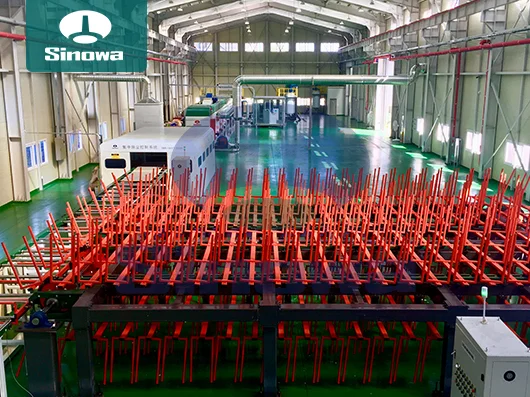
The final stage of the production process covers automatic stacking and finished product sorting. The intelligent stacking device automatically absorbs, lifts, and stacks cooled qualified panels according to set specifications, realizing orderly arrangement and centralized collection of finished products. The automated stacking operation avoids surface scratches, collision deformation, and manual placement errors caused by manual handling, effectively protecting the surface integrity and structural stability of finished panels. The entire production process from raw material feeding to finished product stacking is highly automated, with all links operating in synchronous linkage, which reduces manual intervention, lowers the probability of human error, and ensures the stability and consistency of batch production quality.
The inherent structural and process advantages of high-quality polyurethane sandwich panel line lay a solid foundation for the excellent comprehensive performance of finished panels. The precise raw material proportioning and uniform foaming process enable the foam core to have ultra-low thermal conductivity, endowing the panels with outstanding thermal insulation and heat preservation performance, which can effectively reduce indoor and outdoor heat exchange and meet the energy-saving insulation needs of various buildings and special industrial spaces. The integrated composite bonding structure makes the surface layer and core layer form an inseparable whole, so the panels have high overall structural strength, good compression resistance, and bending resistance, and can adapt to complex installation environments and long-term load-bearing use requirements.
In terms of production adaptability, this type of PU sandwich panel production line has strong product compatibility, capable of producing sandwich panels with different surface material types, different thickness specifications, and different structural strengths by adjusting process parameters and equipment states. It can meet the diversified application demands of architectural exterior wall enclosure, roof thermal insulation, cold storage constant temperature preservation, industrial workshop partition, and special facility sound insulation and fire prevention. The continuous production mode greatly improves production efficiency, realizes large-scale and batch standardized production, and effectively reduces the comprehensive production cost while ensuring stable product quality.
In addition, the modernized design of the sandwich panel manufacturing line focuses on operational stability and production safety. The fully enclosed raw material conveying and foaming structure reduces the volatilization and diffusion of chemical materials in the production process, optimizing the on-site production environment. The synchronous linkage control system realizes real-time monitoring and adaptive adjustment of production speed, pressure, temperature, and material flow parameters. Once abnormal parameter fluctuations occur in a single link, the system will automatically adjust or trigger early warning protection to avoid defective products and equipment operation failures, ensuring the long-term stable and safe operation of the production line. The modular equipment structure also facilitates daily maintenance and later equipment upgrading, reducing equipment maintenance costs and downtime loss, and improving the overall operational efficiency and service life of the production line.
With the continuous upgrading of industrial manufacturing standards and the increasing market demand for high-performance energy-saving building materials, high-quality polyurethane sandwich panel production line has become increasingly prominent in industrial production value. Its standardized, automated, and intelligent production mode completely changes the drawbacks of traditional semi-manual production, such as unstable product quality, low production efficiency, and high defective rate. Through precise process control and integrated production management, the manufacturing line ensures that each batch of finished polyurethane sandwich panels has consistent performance, stable structure, and reliable quality, providing high-quality basic material support for the upgrading of modern construction engineering, energy-saving buildings, and industrial supporting facilities. In the future, with the continuous innovation of material formulas and manufacturing technologies, the performance of polyurethane sandwich panel manufacturing lines will be further optimized, with higher production accuracy, stronger product adaptability, and more energy-saving and environmentally friendly production processes, to adapt to the increasingly stringent industrial production and application requirements.
« High-quality Polyurethane Sandwich Panel Manufacturing Line » Update Date: 2026/7/10
- Glass Wool Sandwich Panel Machine Manufacturer
- Sandwich Wall Panel Production Line Factory
- PUF Panel Making Machine Price
- Sandwich Panel Manufacturing Line Supplier
- Cheap PUR Sandwich Panel Line
- PU Sandwich Panel Line For Building
- Glass Wool Production Line Design
- Foam Sandwich Panel Machine On Sales
- Custom PUR Sandwich Panel Production Line
- High-tech Sandwich Wall Panel Production Line
- Low Price PIR Sandwich Panel Machine
- PU Sandwich Panel Line For Construction
- Customized Composite Panel Production Line
- PIR Sandwich Panel Machine Price
- Cheap Foam Sandwich Panel Machine
- High Efficiency Polyurethane Insulation Panel Production Line
- Low Price Fully Automatic PU Sandwich Panel Machine
- High-tech Decorative PU Sandwich Panel Production Line
- Polyurethane Sandwich Panel Machinery Factory
- Low Price Composite Panel Production Line
- Links:
- Sandwich Panel Continuous Production Line
- Automatic and Continuous Sandwich Panel Production Line
- Cheap and Low Price Sandwich Panel Production Line
- China Sandwich Panel Production Line Factory
- Color Steel Sandwich Panel Production Line For Cold Storage
- Continuous Composite Foam Sandwich Panel Production Line
- Continuous Production Line For Rockwool and Mineral Wool Sandwich Panels
- Continuous PU Phenolic Insulation Panel Production Line
- Continuous PU PIR Sandwich Panel Production Line
- Continuous PUF PUR Sandwich Panel Production Line
- Continuous Sandwich Panel Production Line For Roof and Wall
- Customized and Design Sandwich Panel Production Line
- Decorative Sandwich Panel Production Line For Glass Wool Boards
- High Quality Sandwich Panel Production Line For Sale
- Polyurethane(PU) Sandwich Panel Production Line
- Sandwich Panel Production Line Manufacturer and Supplier